By: Lloyd Christopher M. Esteban
• Define key concepts (communication, messages, media, and
information).
• Describe how much media and information affect
communication.
• Create a log that reflects your current use and interaction
with media and information.
•Communication is a process of
exchanging information and the
expression of feeling that can result
in understanding.
http://dictionary.Cambridge.org
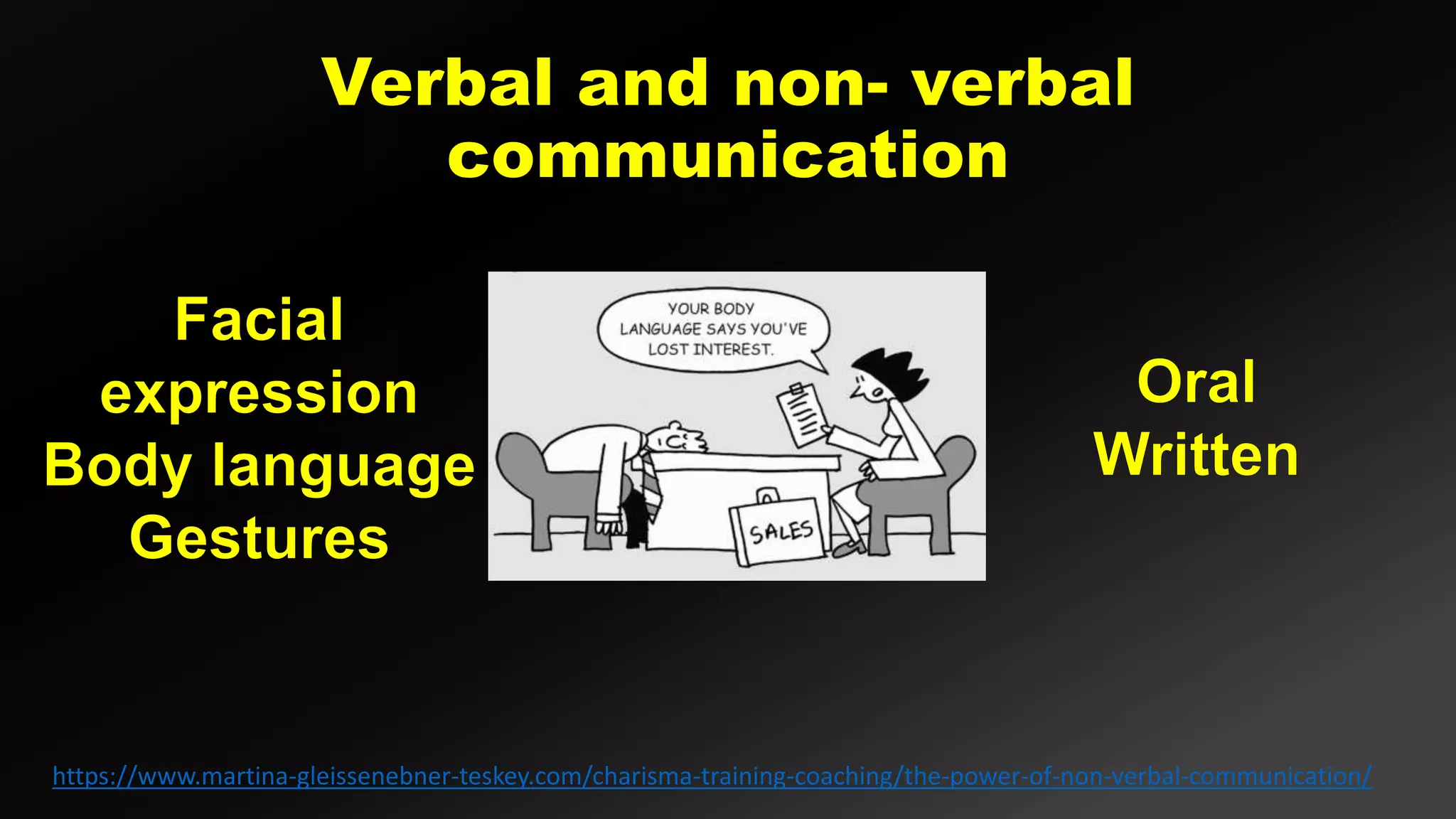
https://www.martina-gleissenebner-teskey.com/charisma-training-coaching/the-power-of-non-verbal-communication/
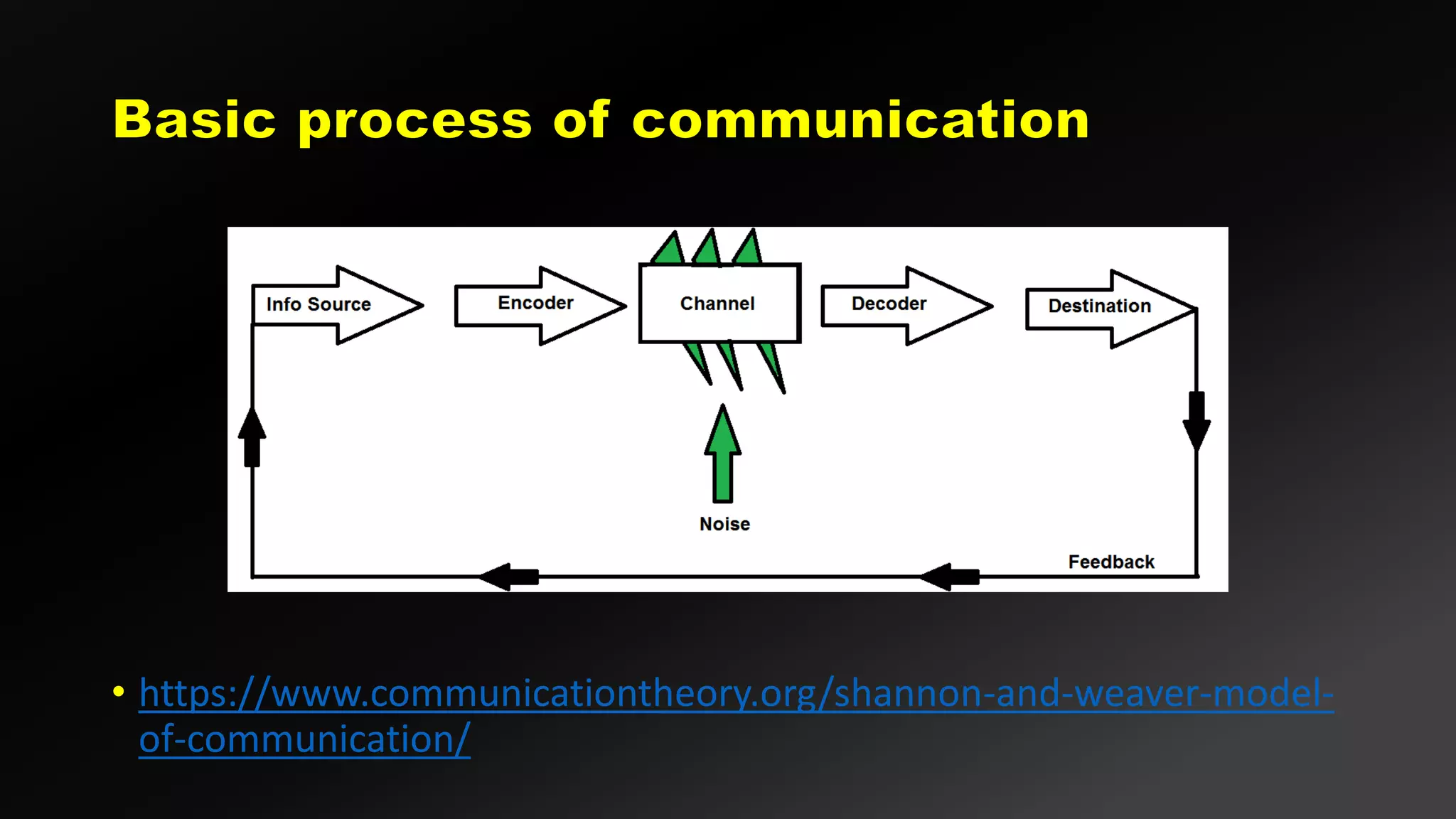
• https://www.communicationtheory.org/shannon-and-weaver-model-
of-communication/
CHECK UP
How information is transmitted?
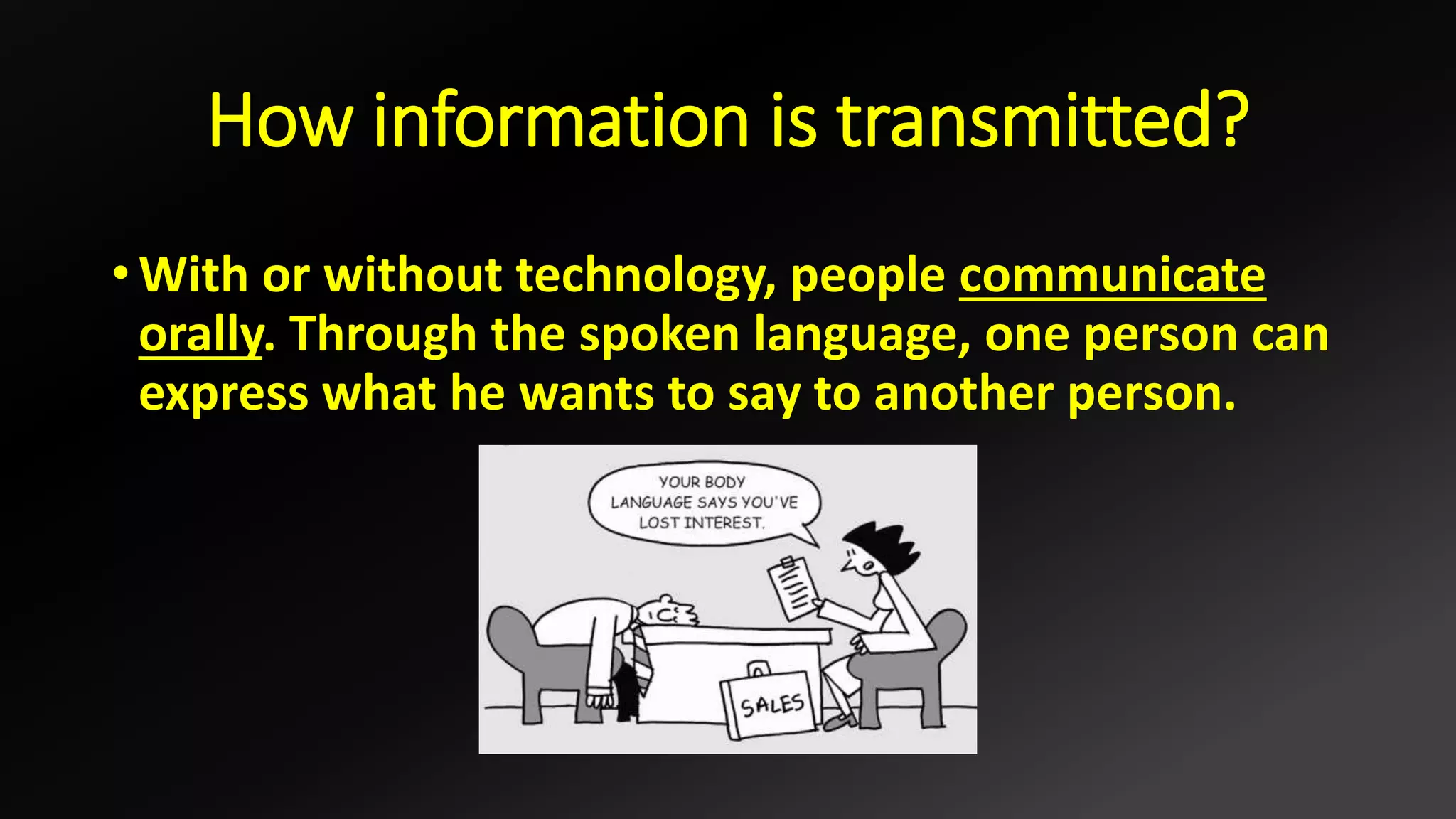
• With or without technology, people communicate
orally. Through the spoken language, one person can
express what he wants to say to another person.
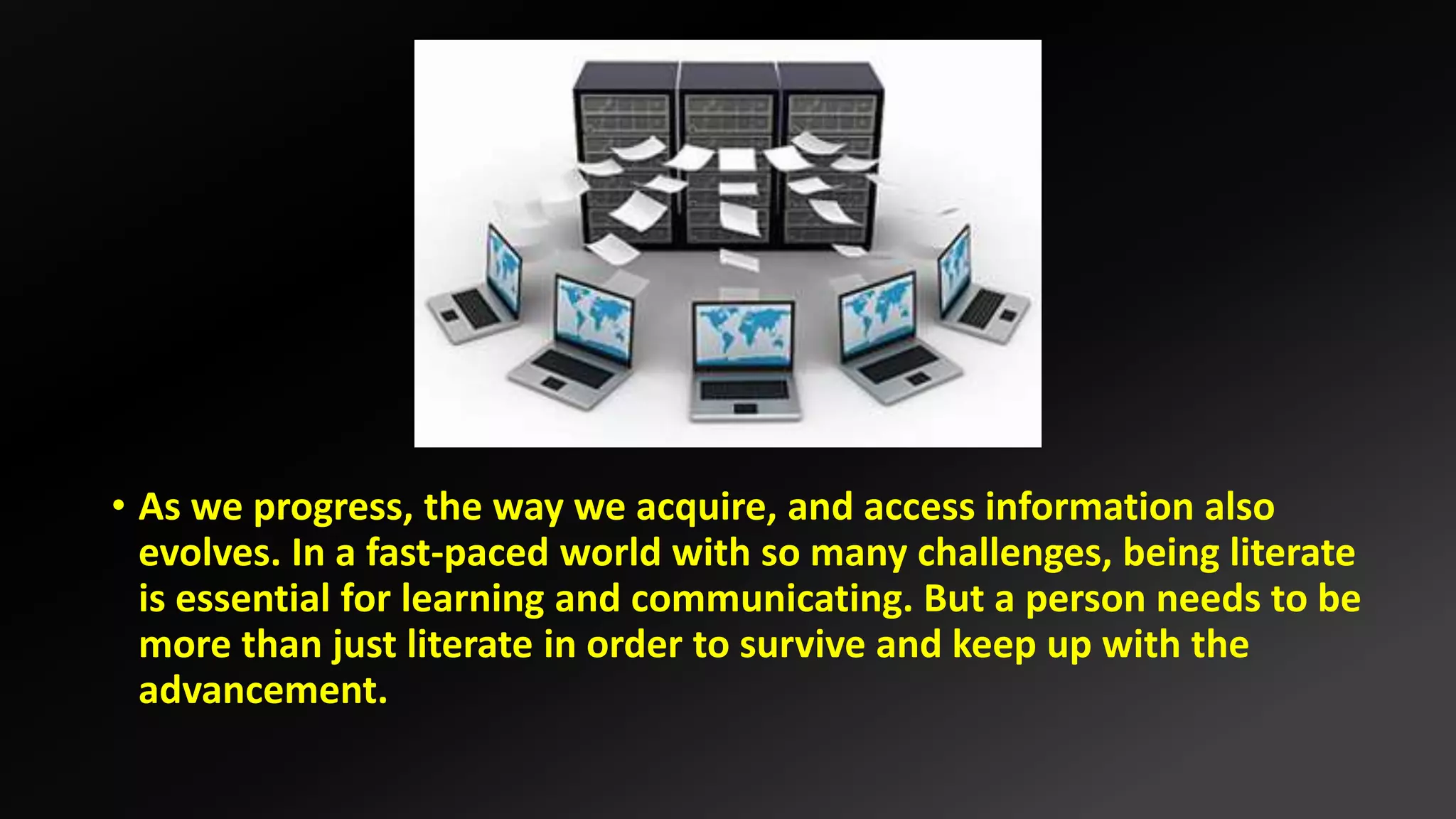
• As we progress, the way we acquire, and access information also
evolves. In a fast-paced world with so many challenges, being literate
is essential for learning and communicating. But a person needs to be
more than just literate in order to survive and keep up with the
advancement.
HOW COMMUNICATION AFFECTED BY MEDIA AND
INFORMATION
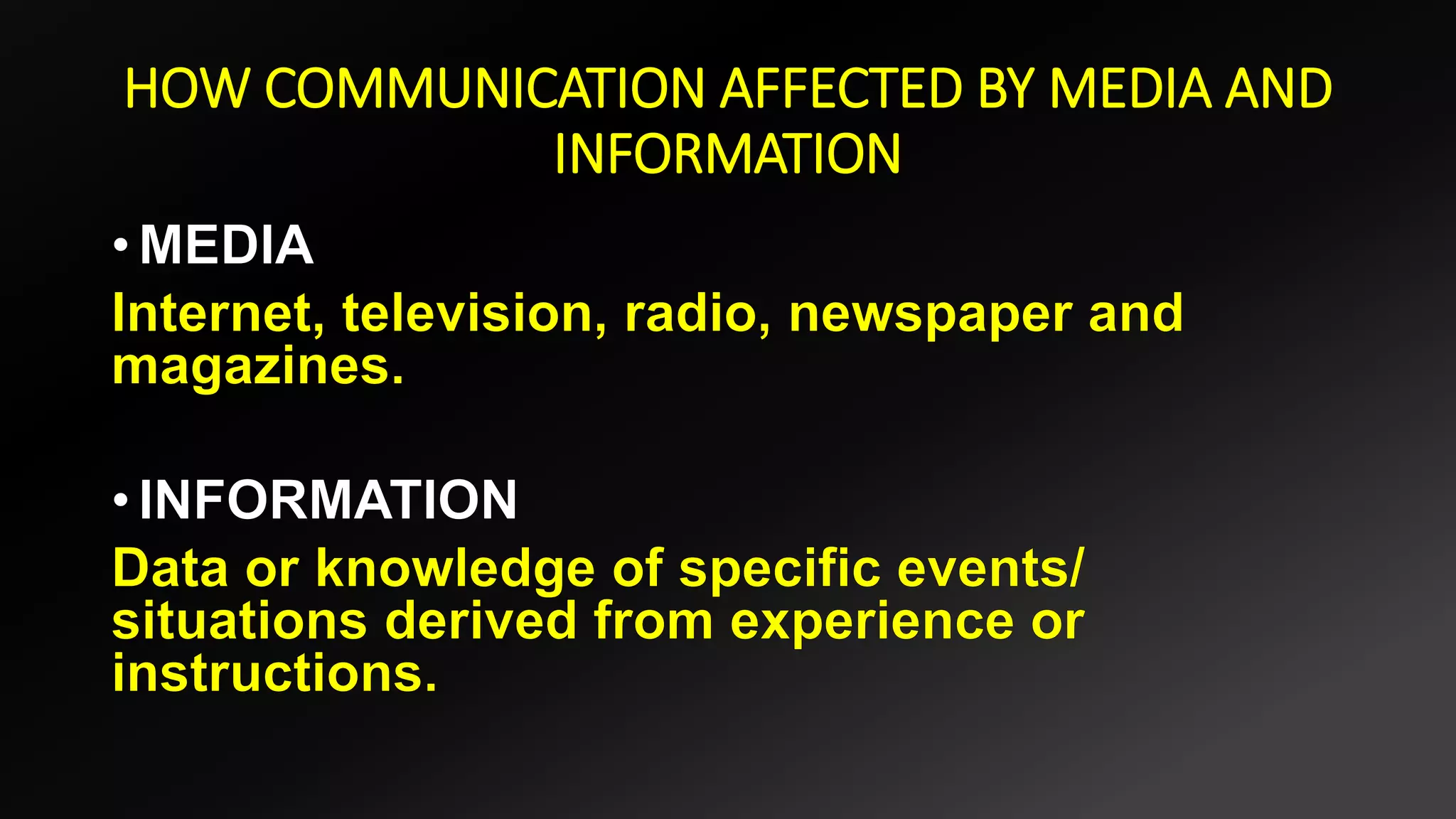
• In ancient Rome, exchange of information was relayed by a
horseback rider who delivers the letter or message to its recipient.
In 1970s, when the mailing system was developed it was common
that postmen get lost because of the long journey or to fail to
deliver to the correct address.
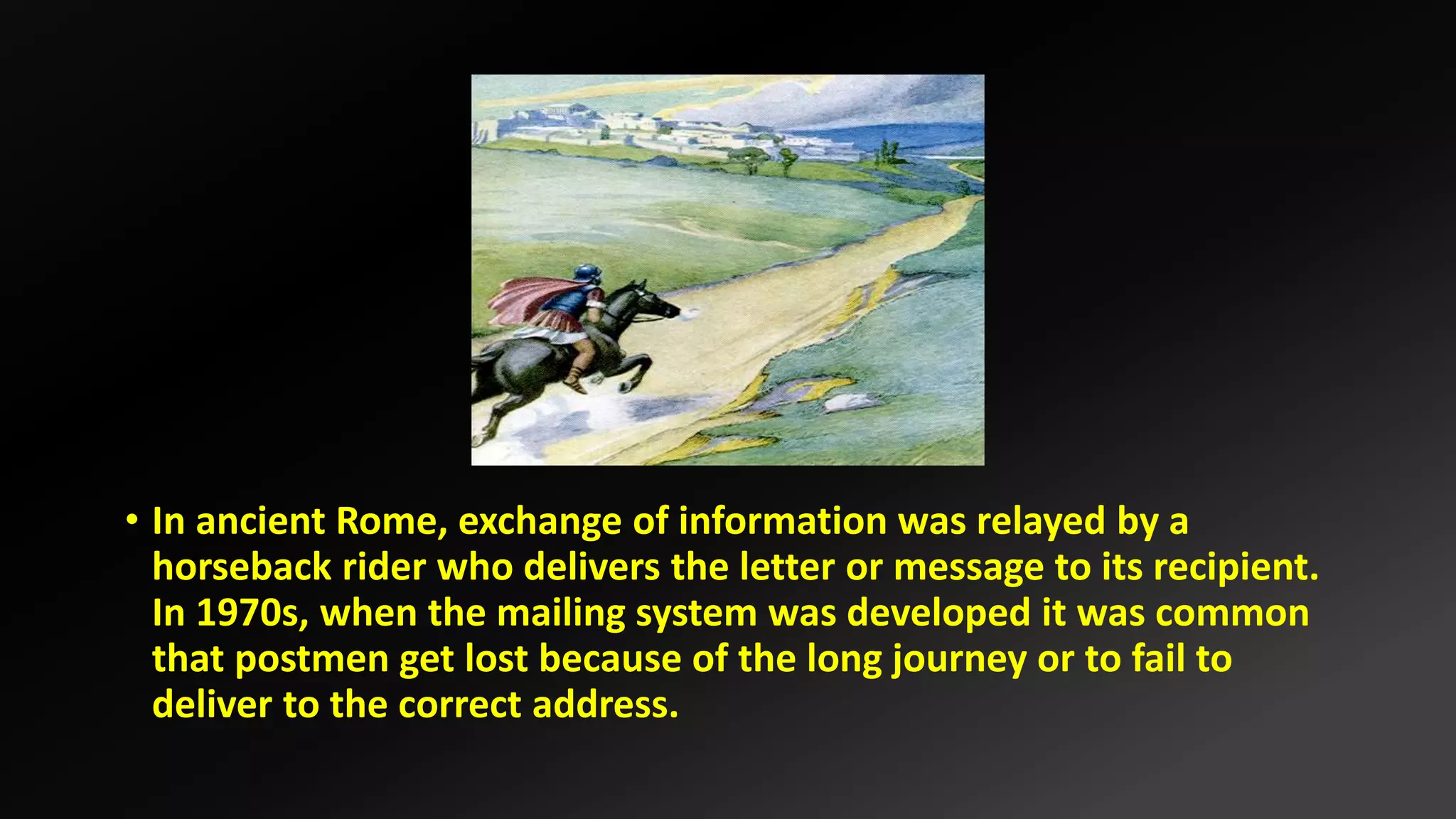
• In the 1970’s up to the early 1990’s communicate with family
members or friends who are in the province or overseas was
difficult as the modes for communication were inadequate.
Overseas phone calls costs too much while letters took so long to be
delivered, thus delaying the relay of information.
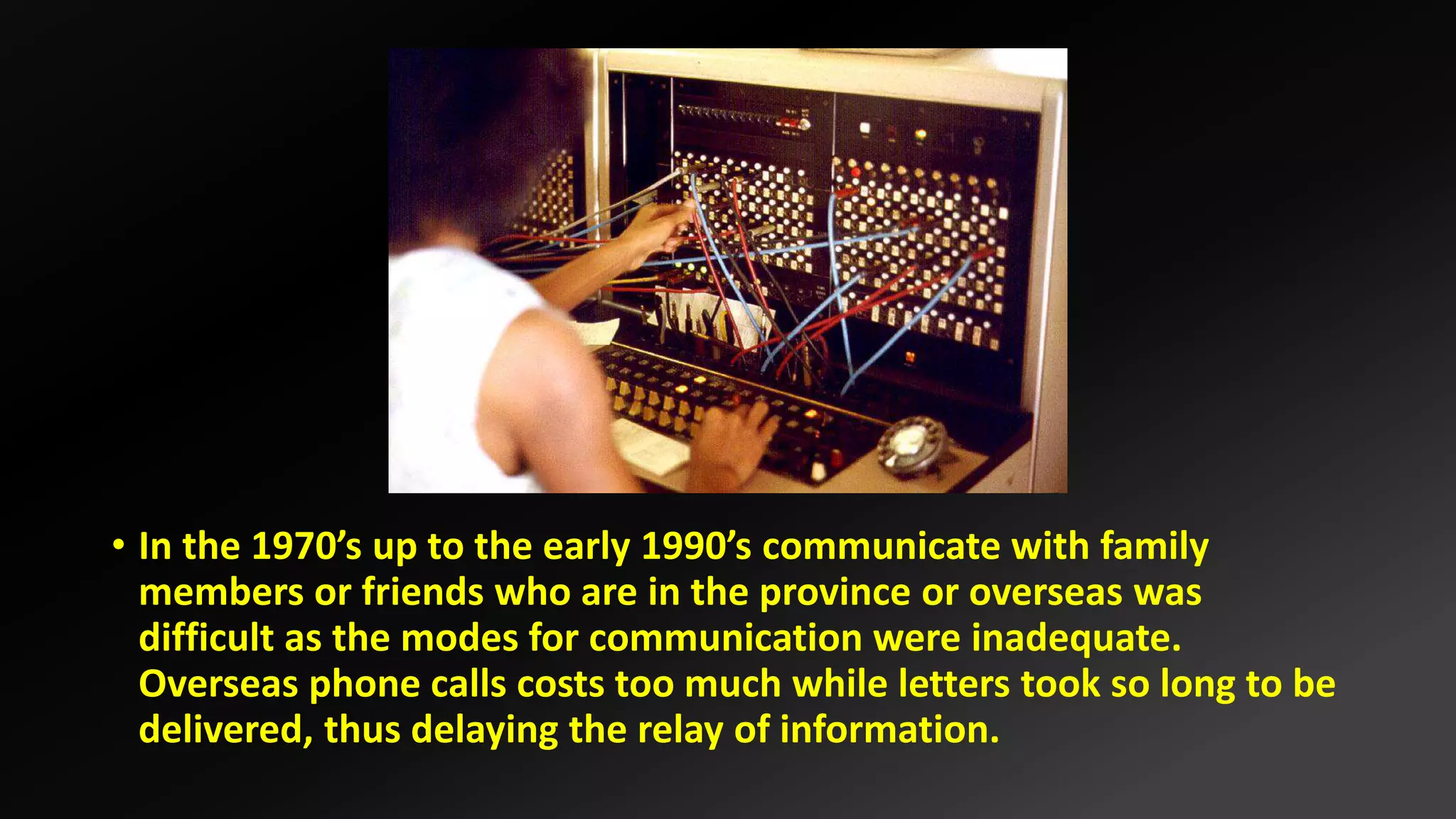
• Nowadays, we can send messages and converse regardless of
distance in just a matter of seconds via e-mail or instant messaging
system. There are also special apps (applications), such as
Messenger and Viber.
Relevance of media and
information literacy to
students
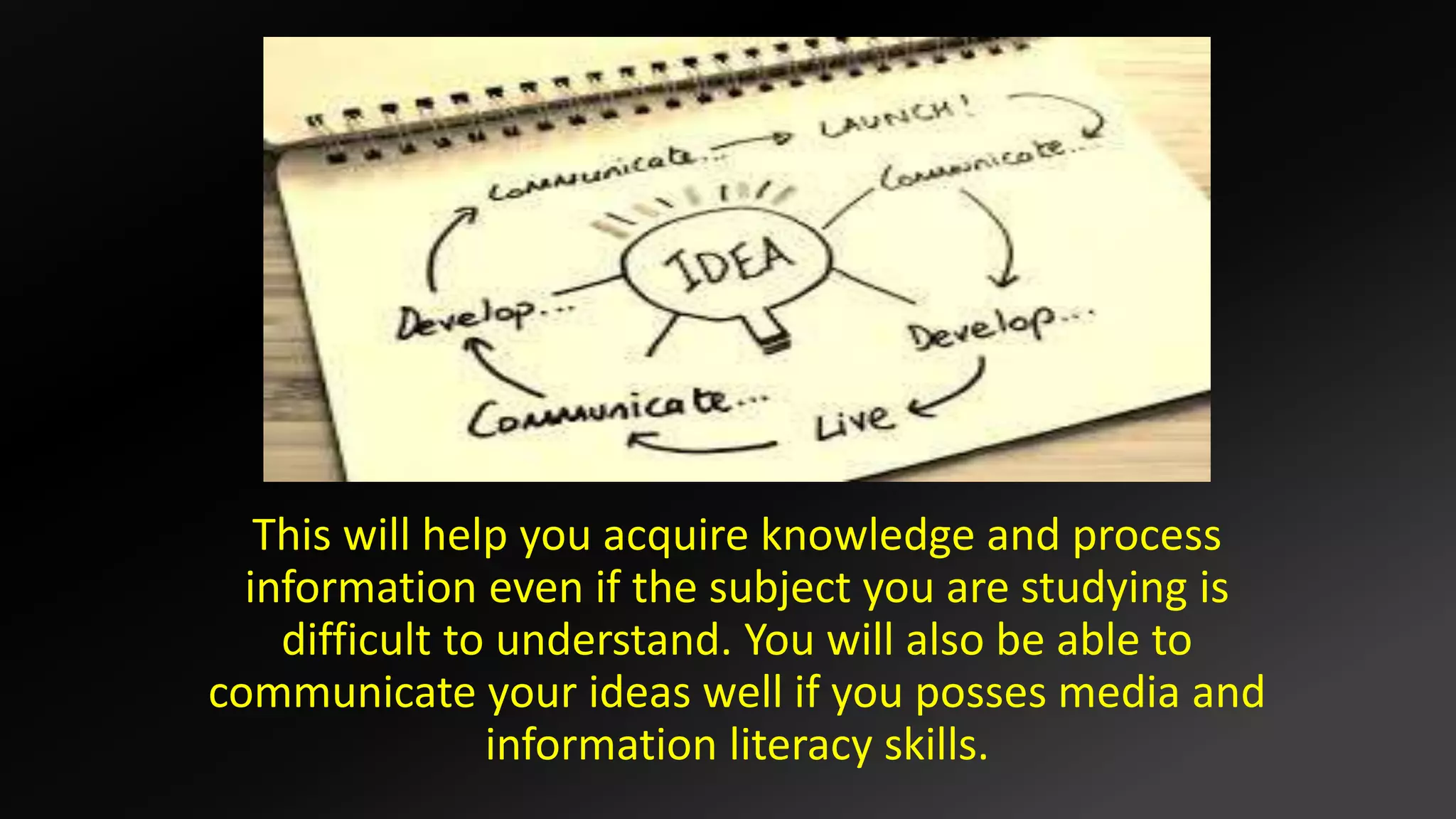
This will help you acquire knowledge and process
information even if the subject you are studying is
difficult to understand. You will also be able to
communicate your ideas well if you posses media and
information literacy skills.
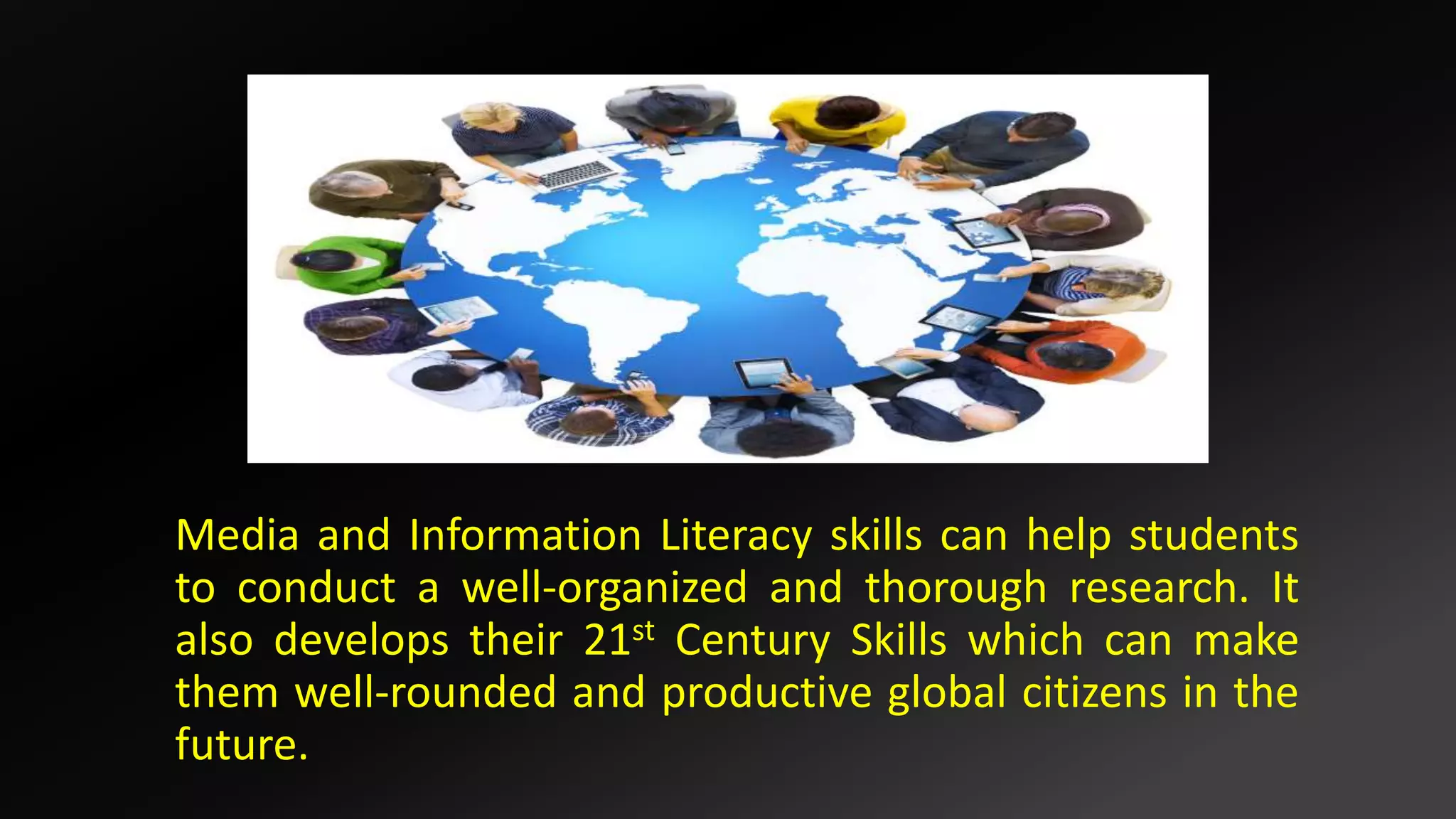
Media and Information Literacy skills can help students
to conduct a well-organized and thorough research. It
also develops their 21st Century Skills which can make
them well-rounded and productive global citizens in the
future.
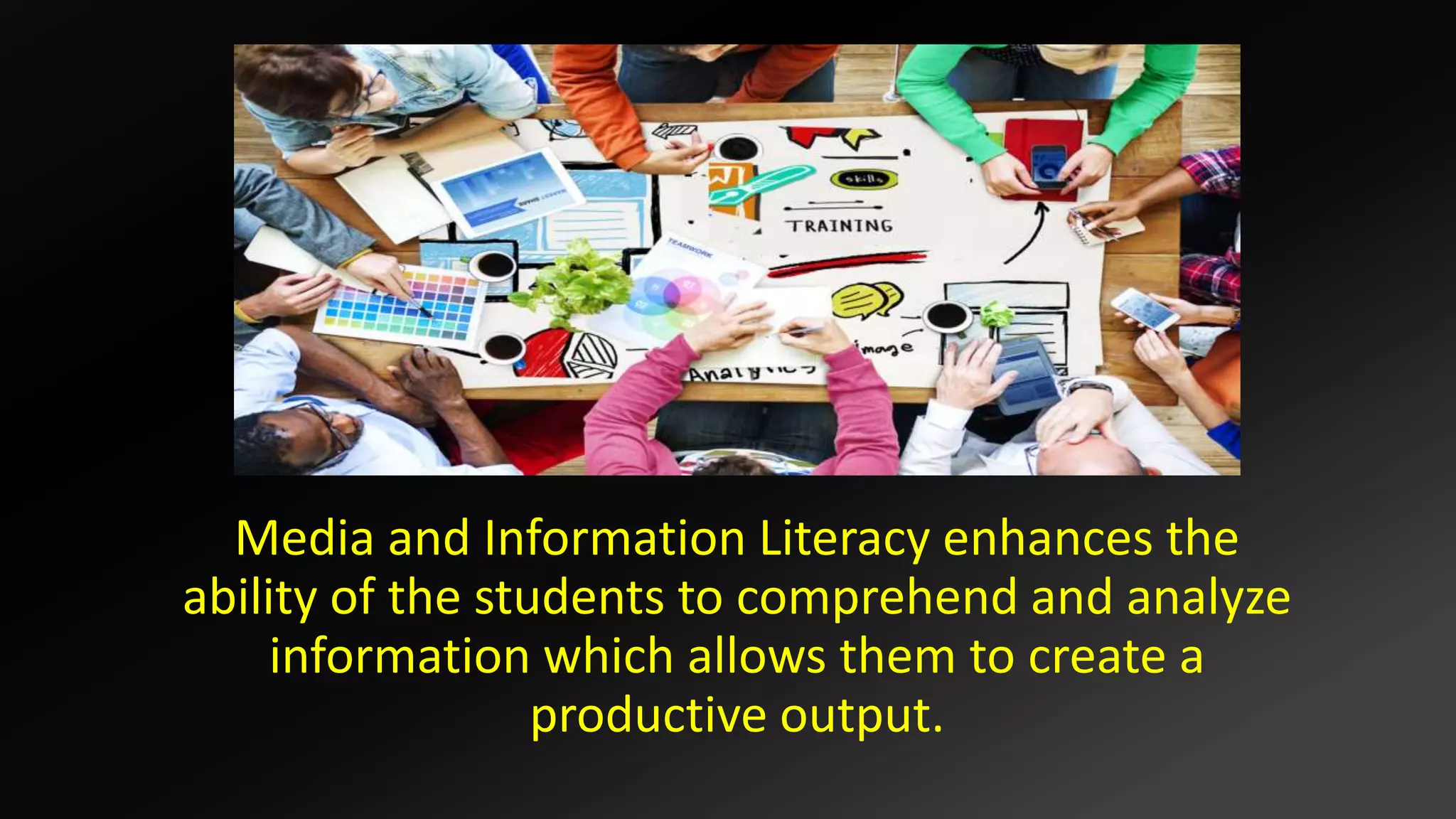
Media and Information Literacy enhances the
ability of the students to comprehend and analyze
information which allows them to create a
productive output.
•As a student how will you use your knowledge in
M.I.L in the near future?

Introduction to Media and Information Literacy

  • 1.
  • 2.
    • Define keyconcepts (communication, messages, media, and information). • Describe how much media and information affect communication. • Create a log that reflects your current use and interaction with media and information.
  • 3.
    •Communication is aprocess of exchanging information and the expression of feeling that can result in understanding. http://dictionary.Cambridge.org
  • 4.
  • 5.
  • 6.
  • 7.
    How information istransmitted? • With or without technology, people communicate orally. Through the spoken language, one person can express what he wants to say to another person.
  • 8.
    • As weprogress, the way we acquire, and access information also evolves. In a fast-paced world with so many challenges, being literate is essential for learning and communicating. But a person needs to be more than just literate in order to survive and keep up with the advancement.
  • 9.
    HOW COMMUNICATION AFFECTEDBY MEDIA AND INFORMATION
  • 10.
    • In ancientRome, exchange of information was relayed by a horseback rider who delivers the letter or message to its recipient. In 1970s, when the mailing system was developed it was common that postmen get lost because of the long journey or to fail to deliver to the correct address.
  • 11.
    • In the1970’s up to the early 1990’s communicate with family members or friends who are in the province or overseas was difficult as the modes for communication were inadequate. Overseas phone calls costs too much while letters took so long to be delivered, thus delaying the relay of information.
  • 12.
    • Nowadays, wecan send messages and converse regardless of distance in just a matter of seconds via e-mail or instant messaging system. There are also special apps (applications), such as Messenger and Viber.
  • 16.
    Relevance of mediaand information literacy to students
  • 17.
    This will helpyou acquire knowledge and process information even if the subject you are studying is difficult to understand. You will also be able to communicate your ideas well if you posses media and information literacy skills.
  • 18.
    Media and InformationLiteracy skills can help students to conduct a well-organized and thorough research. It also develops their 21st Century Skills which can make them well-rounded and productive global citizens in the future.
  • 19.
    Media and InformationLiteracy enhances the ability of the students to comprehend and analyze information which allows them to create a productive output.
  • 20.
    •As a studenthow will you use your knowledge in M.I.L in the near future?