Introduction to Vital Signs and
Basic Laboratory Tests
Joel N. Kniep, M.D.
Dept. of Pathology
Objectives
• Introduce vital signs and their use in
clinical practice
• Introduce basic laboratory tests and their
use in clinical practice
• Discuss normal values and test
interpretation
Clinical Vital Signs (Vitals)
• Temperature
• Pulse rate
• Respiration rate (RR)
• Blood pressure (bp)
Temp
• Measure of body’s core temp (temp of
internal organs)
– in ° F (or ° C)
– Locations: oral, rectum, axilla, ear
– Rectal = 0.5 – 0.7° F higher than oral temp
– Axilla = 0.3 – 0.4° F lower than oral temp
• Normal: 97.8 – 99° F (36.5 – 37.2° C)
• Critical: > 98.6° F orally or 99.8° F rectally
(pyrexia [fever]); < 95° F (hypothermia)
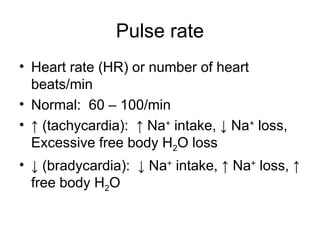
Pulse rate
• Heart rate (HR) or number of heart
beats/min
• Normal: 60 – 100/min
• ↑ (tachycardia): ↑ Na+
intake, ↓ Na+
loss,
Excessive free body H2O loss
• ↓ (bradycardia): ↓ Na+
intake, ↑ Na+
loss, ↑
free body H2O
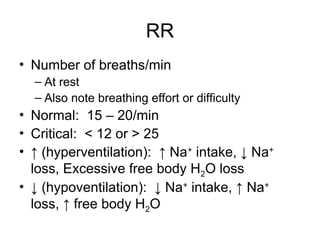
RR
• Number of breaths/min
– At rest
– Also note breathing effort or difficulty
• Normal: 15 – 20/min
• Critical: < 12 or > 25
• ↑ (hyperventilation): ↑ Na+
intake, ↓ Na+
loss, Excessive free body H2O loss
• ↓ (hypoventilation): ↓ Na+
intake, ↑ Na+
loss, ↑ free body H2O
Bp
• Measures the force of blood against the arterial vessel
walls
– Measured while seated, after resting for 5 mins, arm resting @
heart level (if possible)
– Reported as a fraction (systolic/diastolic) & consists of 2
separate measurements:
• Systolic – pressure within artery during cardiac contraction
• Diastolic – pressure within artery during cardiac relaxation and filling
• Normal: < 120 mm Hg systolic and < 80 mm Hg diastolic
• Critical: > 220 mm Hg systolic or > 125 mm Hg diastolic
• ↑ (hypertension [htn]): ↑ Na+
intake, ↓ Na+
loss,
Excessive free body H2O loss
• ↓ (hypotention): ↓ Na+
intake, ↑ Na+
loss, ↑ free body
H2O
Complete Blood Count (CBC)
• Provides information on cellular
components of blood
• Includes RBC count, Hemoglobin (Hgb),
Hematocrit (Hct), RBC indices, White
blood cell (WBC) count and differential,
Platelet count
Total WBCs (leukocytes)
• Measurement of total WBC count
– Consists of total # of WBCs/mm3
of peripheral venous blood
– Part of “routine” testing
– Useful for evaluation of infection, neoplasm, allergy &
immunosuppression
• Normal: 4,000 – 10,000/mm3
• Critical: < 2,500 or > 30,000/mm3
• ↑ (leukocytosis): infection, malignancy, trauma, stress,
hemorrhage, tissue necrosis, inflammation, dehydration,
thyroid storm
• ↓ (leukopenia): drug toxicity, bone marrow failure,
overwhelming infections, dietary deficiency, congenital
marrow aplasia, bone marrow infiltration, autoimmune
disease, hypersplenism
Erythrocyte count (RBC)
• Measures # of circulating RBCs/mm3
of peripheral
venous blood
– Direct measure of RBC count
– Part of “routine” testing and anemia evaluation
• Normal: 3.5 – 5.5 x 10⁶
/μL
• ↑: erythrocytosis, congenital heart disease, severe
COPD, polycythemia vera, severe dehydration,
hemoglobinopathies
• ↓: anemia, hemoglobinopathy, hemorrhage, bone
marrow failure, renal disease, leukemia, prosthetic
valves, normal pregnancy, multiple myeloma, Hodgkin
disease, lymphoma, dietary deficiency
Hgb
• Measures total amount of Hgb in blood
– Indirect measure of RBC count
– Part of “routine” testing and anemia evaluation
• Normal: 12 – 15 g/dL
• Critical: < 5 or > 20 g/dL
• ↑: erythrocytosis, congenital heart disease, severe
COPD, polycythemia vera, severe dehydration
↓: anemia, hemoglobinopathy, hemorrhage, bone marrow
failure, renal disease, leukemia, prosthetic valves,
normal pregnancy, multiple myeloma, Hodgkin disease,
lymphoma, dietary deficiency
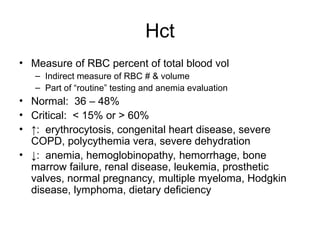
Hct
• Measure of RBC percent of total blood vol
– Indirect measure of RBC # & volume
– Part of “routine” testing and anemia evaluation
• Normal: 36 – 48%
• Critical: < 15% or > 60%
• ↑: erythrocytosis, congenital heart disease, severe
COPD, polycythemia vera, severe dehydration
• ↓: anemia, hemoglobinopathy, hemorrhage, bone
marrow failure, renal disease, leukemia, prosthetic
valves, normal pregnancy, multiple myeloma, Hodgkin
disease, lymphoma, dietary deficiency
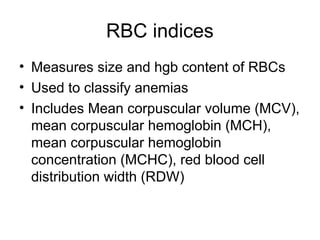
RBC indices
• Measures size and hgb content of RBCs
• Used to classify anemias
• Includes Mean corpuscular volume (MCV),
mean corpuscular hemoglobin (MCH),
mean corpuscular hemoglobin
concentration (MCHC), red blood cell
distribution width (RDW)
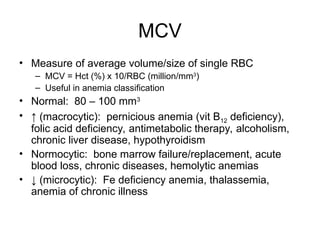
MCV
• Measure of average volume/size of single RBC
– MCV = Hct (%) x 10/RBC (million/mm3
)
– Useful in anemia classification
• Normal: 80 – 100 mm3
• ↑ (macrocytic): pernicious anemia (vit B12 deficiency),
folic acid deficiency, antimetabolic therapy, alcoholism,
chronic liver disease, hypothyroidism
• Normocytic: bone marrow failure/replacement, acute
blood loss, chronic diseases, hemolytic anemias
• ↓ (microcytic): Fe deficiency anemia, thalassemia,
anemia of chronic illness
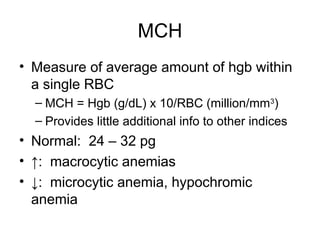
MCH
• Measure of average amount of hgb within
a single RBC
– MCH = Hgb (g/dL) x 10/RBC (million/mm3
)
– Provides little additional info to other indices
• Normal: 24 – 32 pg
• ↑: macrocytic anemias
• ↓: microcytic anemia, hypochromic
anemia
MCHC
• Measure of average [hgb] within a single RBC
– MCHC = Hgb (g/dL) x 100/Hct (%)
– 37 g/dL = maximum Hgb able to fit into an RBC
(cannot be hyperchromic)
• Normal (normochromic): 32 – 36 g/dL
• ↑: spherocytosis, intravascular hemolysis, cold
agglutinins
• ↓ (hypochromic): Fe deficiency anemia,
thalassemia
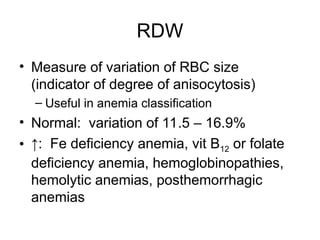
RDW
• Measure of variation of RBC size
(indicator of degree of anisocytosis)
– Useful in anemia classification
• Normal: variation of 11.5 – 16.9%
• ↑: Fe deficiency anemia, vit B12 or folate
deficiency anemia, hemoglobinopathies,
hemolytic anemias, posthemorrhagic
anemias
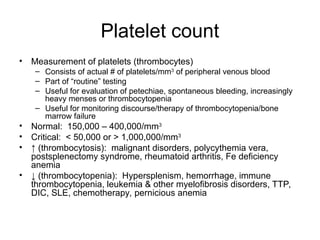
Platelet count
• Measurement of platelets (thrombocytes)
– Consists of actual # of platelets/mm3
of peripheral venous blood
– Part of “routine” testing
– Useful for evaluation of petechiae, spontaneous bleeding, increasingly
heavy menses or thrombocytopenia
– Useful for monitoring discourse/therapy of thrombocytopenia/bone
marrow failure
• Normal: 150,000 – 400,000/mm3
• Critical: < 50,000 or > 1,000,000/mm3
• ↑ (thrombocytosis): malignant disorders, polycythemia vera,
postsplenectomy syndrome, rheumatoid arthritis, Fe deficiency
anemia
• ↓ (thrombocytopenia): Hypersplenism, hemorrhage, immune
thrombocytopenia, leukemia & other myelofibrosis disorders, TTP,
DIC, SLE, chemotherapy, pernicious anemia
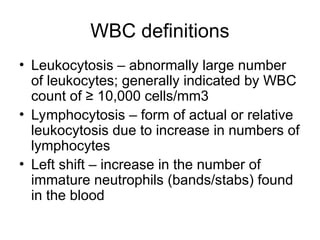
WBC definitions
• Leukocytosis – abnormally large number
of leukocytes; generally indicated by WBC
count of ≥ 10,000 cells/mm3
• Lymphocytosis – form of actual or relative
leukocytosis due to increase in numbers of
lymphocytes
• Left shift – increase in the number of
immature neutrophils (bands/stabs) found
in the blood
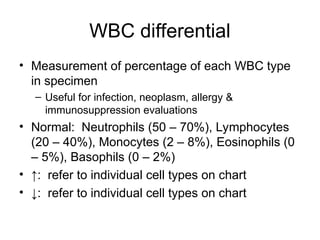
WBC differential
• Measurement of percentage of each WBC type
in specimen
– Useful for infection, neoplasm, allergy &
immunosuppression evaluations
• Normal: Neutrophils (50 – 70%), Lymphocytes
(20 – 40%), Monocytes (2 – 8%), Eosinophils (0
– 5%), Basophils (0 – 2%)
• ↑: refer to individual cell types on chart
• ↓: refer to individual cell types on chart
Basic Metabolic Panel (BMP)
• Measures electrolytes, chemicals,
metabolic end products & substrates
• Consists of Glucose, Blood Urea Nitrogen
(BUN), Creatinine, Na+
, K+
, Cl-
,
Bicarbonate (HCO3
-
), Ca2+
Glucose
• Direct measure of blood glucose
– Commonly used to evaluate diabetic pts
– Part of “routine” testing
• Normal: 70 - 100 mg/dL
• Critical: < 50 and > 400 mg/dL (♂) or < 40 and > 400
mg/dL (♀)
• ↑ (hyperglycemia): DM, acute stress response, Cushing
syndrome, pheochromocytoma, chronic renal failure,
acute pancreatitis, acromegaly, corticosteroid therapy
• ↓ (hypoglycemia): insulinoma, hypothyroidism,
hypopituitarism, Addison disease, extensive liver
disease, insulin overdose, starvation
BUN
• Measures urea nitrogen in blood
– End product of protein metabolism (produced in liver)
– Indirect measure of renal function & glomerular function
(excretion)
– Measure of liver metabolic function
– Part of routine labs
– Usually interpreted along with Cr (less accurate than Cr for renal
disease)
• Normal: 6 -21 mg/dL
• Critical: > 100 mg/dL
• ↑: prerenal causes, renal causes, postrenal azotemia
• ↓: liver failure, overhydration because of SIADH, neg
nitrogen balance, pregnancy, nephrotic syndrome
Creatinine
• Measures serum creatinine
– Catabolic product of creatine phosphate (skeletal muscle
contraction)
– Excreted entirely by kidneys → direct measure of renal function
– Minimally affected by liver function
– Elevation occurs slower than BUN
– Doubling ≈ 50% reduction in GFR
• Normal: 0.44 – 1.03 mg/dL
• Critical: > 4 mg/dL
• ↑: diseases affecting renal function (glomerulonephritis,
pyelonephritis, ATN, urinary tract obstruction, reduced
renal blood flow, diabetic nephropathy, nephritis),
rhabdomyolysis, acromegaly, gigantism
• ↓: debilitation, decreased muscle mass
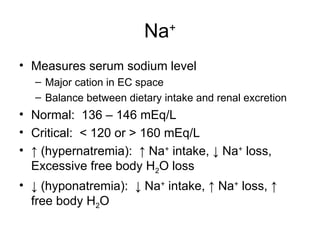
Na+
• Measures serum sodium level
– Major cation in EC space
– Balance between dietary intake and renal excretion
• Normal: 136 – 146 mEq/L
• Critical: < 120 or > 160 mEq/L
• ↑ (hypernatremia): ↑ Na+
intake, ↓ Na+
loss,
Excessive free body H2O loss
• ↓ (hyponatremia): ↓ Na+
intake, ↑ Na+
loss, ↑
free body H2O
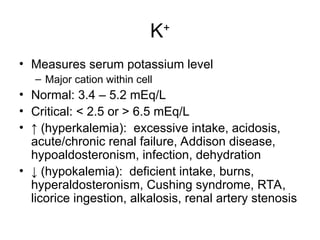
K+
• Measures serum potassium level
– Major cation within cell
• Normal: 3.4 – 5.2 mEq/L
• Critical: < 2.5 or > 6.5 mEq/L
• ↑ (hyperkalemia): excessive intake, acidosis,
acute/chronic renal failure, Addison disease,
hypoaldosteronism, infection, dehydration
• ↓ (hypokalemia): deficient intake, burns,
hyperaldosteronism, Cushing syndrome, RTA,
licorice ingestion, alkalosis, renal artery stenosis
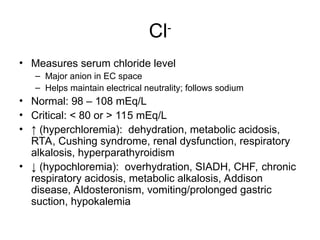
Cl-
• Measures serum chloride level
– Major anion in EC space
– Helps maintain electrical neutrality; follows sodium
• Normal: 98 – 108 mEq/L
• Critical: < 80 or > 115 mEq/L
• ↑ (hyperchloremia): dehydration, metabolic acidosis,
RTA, Cushing syndrome, renal dysfunction, respiratory
alkalosis, hyperparathyroidism
• ↓ (hypochloremia): overhydration, SIADH, CHF, chronic
respiratory acidosis, metabolic alkalosis, Addison
disease, Aldosteronism, vomiting/prolonged gastric
suction, hypokalemia
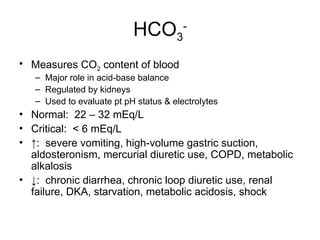
HCO3
-
• Measures CO2 content of blood
– Major role in acid-base balance
– Regulated by kidneys
– Used to evaluate pt pH status & electrolytes
• Normal: 22 – 32 mEq/L
• Critical: < 6 mEq/L
• ↑: severe vomiting, high-volume gastric suction,
aldosteronism, mercurial diuretic use, COPD, metabolic
alkalosis
• ↓: chronic diarrhea, chronic loop diuretic use, renal
failure, DKA, starvation, metabolic acidosis, shock
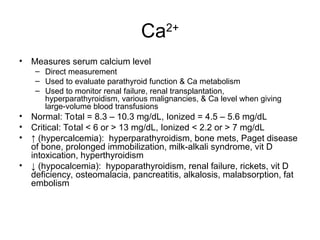
Ca2+
• Measures serum calcium level
– Direct measurement
– Used to evaluate parathyroid function & Ca metabolism
– Used to monitor renal failure, renal transplantation,
hyperparathyroidism, various malignancies, & Ca level when giving
large-volume blood transfusions
• Normal: Total = 8.3 – 10.3 mg/dL, Ionized = 4.5 – 5.6 mg/dL
• Critical: Total < 6 or > 13 mg/dL, Ionized < 2.2 or > 7 mg/dL
• ↑ (hypercalcemia): hyperparathyroidism, bone mets, Paget disease
of bone, prolonged immobilization, milk-alkali syndrome, vit D
intoxication, hyperthyroidism
• ↓ (hypocalcemia): hypoparathyroidism, renal failure, rickets, vit D
deficiency, osteomalacia, pancreatitis, alkalosis, malabsorption, fat
embolism
Comprehensive Metabolic Panel
(CMP)
• Includes all components of BMP plus
Albumin, Total protein, Alkaline
phosphatase (ALP), Alanine
aminotransferase (ALT), Aspartate
aminotransferase (AST) and Bilirubin
Albumin
• Measures amount of albumin in blood
– Formed within liver & comprises 60% of total protein in blood
– Maintains colloidal osmotic pressure & transports blood
constituents
– Measure of both hepatic function and nutritional state
• Normal: 3.5 – 5 g/dL
• ↑: dehydration
• ↓: malnutrition, pregnancy, liver disease, protein-losing
enteropathies, protein-losing nephropathies, 3rd
space
losses, overhydration, ↑ capillary permeability,
inflammatory disease, familial idiopathic dysproteinemia
Total Protein
• Measures total protein in blood
– Combination of prealbumin, albumin &
globulins
• Normal: 6.4 – 8.3 g/dL
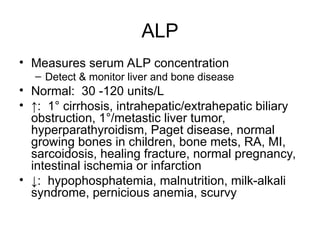
ALP
• Measures serum ALP concentration
– Detect & monitor liver and bone disease
• Normal: 30 -120 units/L
• ↑: 1° cirrhosis, intrahepatic/extrahepatic biliary
obstruction, 1°/metastic liver tumor,
hyperparathyroidism, Paget disease, normal
growing bones in children, bone mets, RA, MI,
sarcoidosis, healing fracture, normal pregnancy,
intestinal ischemia or infarction
• ↓: hypophosphatemia, malnutrition, milk-alkali
syndrome, pernicious anemia, scurvy
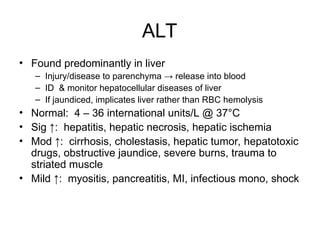
ALT
• Found predominantly in liver
– Injury/disease to parenchyma → release into blood
– ID & monitor hepatocellular diseases of liver
– If jaundiced, implicates liver rather than RBC hemolysis
• Normal: 4 – 36 international units/L @ 37°C
• Sig ↑: hepatitis, hepatic necrosis, hepatic ischemia
• Mod ↑: cirrhosis, cholestasis, hepatic tumor, hepatotoxic
drugs, obstructive jaundice, severe burns, trauma to
striated muscle
• Mild ↑: myositis, pancreatitis, MI, infectious mono, shock
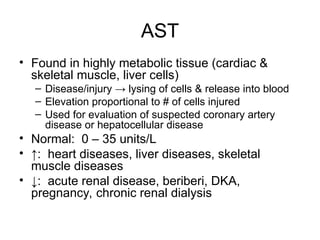
AST
• Found in highly metabolic tissue (cardiac &
skeletal muscle, liver cells)
– Disease/injury → lysing of cells & release into blood
– Elevation proportional to # of cells injured
– Used for evaluation of suspected coronary artery
disease or hepatocellular disease
• Normal: 0 – 35 units/L
• ↑: heart diseases, liver diseases, skeletal
muscle diseases
• ↓: acute renal disease, beriberi, DKA,
pregnancy, chronic renal dialysis
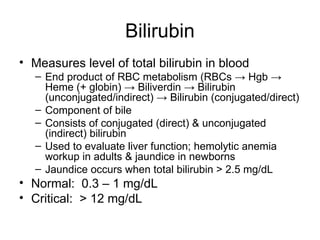
Bilirubin
• Measures level of total bilirubin in blood
– End product of RBC metabolism (RBCs → Hgb →
Heme (+ globin) → Biliverdin → Bilirubin
(unconjugated/indirect) → Bilirubin (conjugated/direct)
– Component of bile
– Consists of conjugated (direct) & unconjugated
(indirect) bilirubin
– Used to evaluate liver function; hemolytic anemia
workup in adults & jaundice in newborns
– Jaundice occurs when total bilirubin > 2.5 mg/dL
• Normal: 0.3 – 1 mg/dL
• Critical: > 12 mg/dL
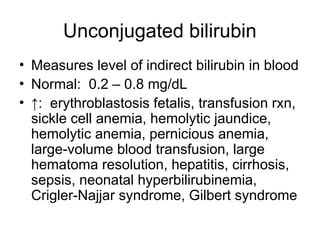
Unconjugated bilirubin
• Measures level of indirect bilirubin in blood
• Normal: 0.2 – 0.8 mg/dL
• ↑: erythroblastosis fetalis, transfusion rxn,
sickle cell anemia, hemolytic jaundice,
hemolytic anemia, pernicious anemia,
large-volume blood transfusion, large
hematoma resolution, hepatitis, cirrhosis,
sepsis, neonatal hyperbilirubinemia,
Crigler-Najjar syndrome, Gilbert syndrome
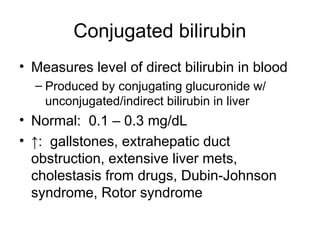
Conjugated bilirubin
• Measures level of direct bilirubin in blood
– Produced by conjugating glucuronide w/
unconjugated/indirect bilirubin in liver
• Normal: 0.1 – 0.3 mg/dL
• ↑: gallstones, extrahepatic duct
obstruction, extensive liver mets,
cholestasis from drugs, Dubin-Johnson
syndrome, Rotor syndrome
Urinary Analysis (UA)
• Provides information about kidneys &
other metabolic processes
• Used for diagnosis, screening &
monitoring
• Frequently used to test for urinary tract
infections (UTIs)
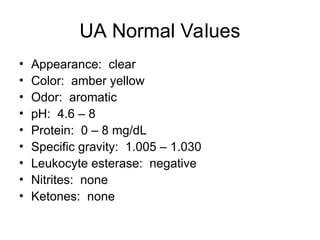
UA Normal Values
• Appearance: clear
• Color: amber yellow
• Odor: aromatic
• pH: 4.6 – 8
• Protein: 0 – 8 mg/dL
• Specific gravity: 1.005 – 1.030
• Leukocyte esterase: negative
• Nitrites: none
• Ketones: none
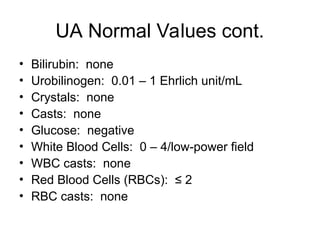
UA Normal Values cont.
• Bilirubin: none
• Urobilinogen: 0.01 – 1 Ehrlich unit/mL
• Crystals: none
• Casts: none
• Glucose: negative
• White Blood Cells: 0 – 4/low-power field
• WBC casts: none
• Red Blood Cells (RBCs): ≤ 2
• RBC casts: none
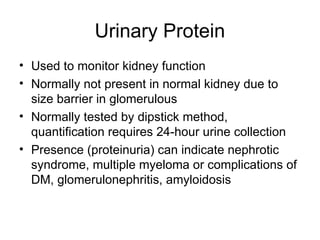
Urinary Protein
• Used to monitor kidney function
• Normally not present in normal kidney due to
size barrier in glomerulous
• Normally tested by dipstick method,
quantification requires 24-hour urine collection
• Presence (proteinuria) can indicate nephrotic
syndrome, multiple myeloma or complications of
DM, glomerulonephritis, amyloidosis
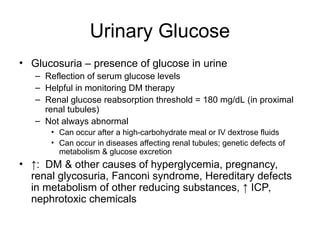
Urinary Glucose
• Glucosuria – presence of glucose in urine
– Reflection of serum glucose levels
– Helpful in monitoring DM therapy
– Renal glucose reabsorption threshold = 180 mg/dL (in proximal
renal tubules)
– Not always abnormal
• Can occur after a high-carbohydrate meal or IV dextrose fluids
• Can occur in diseases affecting renal tubules; genetic defects of
metabolism & glucose excretion
• ↑: DM & other causes of hyperglycemia, pregnancy,
renal glycosuria, Fanconi syndrome, Hereditary defects
in metabolism of other reducing substances, ↑ ICP,
nephrotoxic chemicals
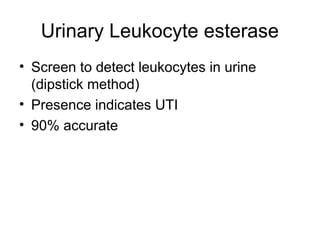
Urinary Leukocyte esterase
• Screen to detect leukocytes in urine
(dipstick method)
• Presence indicates UTI
• 90% accurate
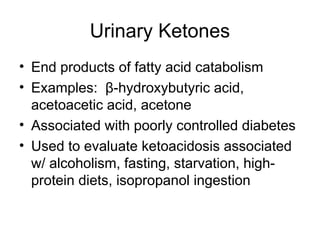
Urinary Ketones
• End products of fatty acid catabolism
• Examples: β-hydroxybutyric acid,
acetoacetic acid, acetone
• Associated with poorly controlled diabetes
• Used to evaluate ketoacidosis associated
w/ alcoholism, fasting, starvation, high-
protein diets, isopropanol ingestion
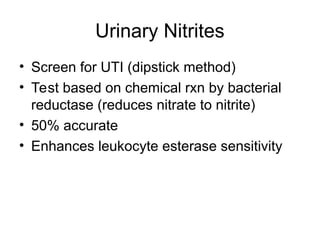
Urinary Nitrites
• Screen for UTI (dipstick method)
• Test based on chemical rxn by bacterial
reductase (reduces nitrate to nitrite)
• 50% accurate
• Enhances leukocyte esterase sensitivity
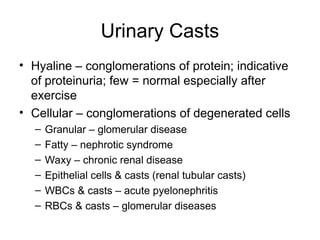
Urinary Casts
• Hyaline – conglomerations of protein; indicative
of proteinuria; few = normal especially after
exercise
• Cellular – conglomerations of degenerated cells
– Granular – glomerular disease
– Fatty – nephrotic syndrome
– Waxy – chronic renal disease
– Epithelial cells & casts (renal tubular casts)
– WBCs & casts – acute pyelonephritis
– RBCs & casts – glomerular diseases
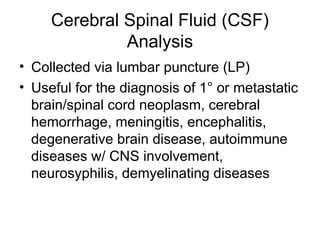
Cerebral Spinal Fluid (CSF)
Analysis
• Collected via lumbar puncture (LP)
• Useful for the diagnosis of 1° or metastatic
brain/spinal cord neoplasm, cerebral
hemorrhage, meningitis, encephalitis,
degenerative brain disease, autoimmune
diseases w/ CNS involvement,
neurosyphilis, demyelinating diseases
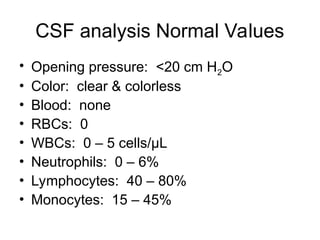
CSF analysis Normal Values
• Opening pressure: <20 cm H2O
• Color: clear & colorless
• Blood: none
• RBCs: 0
• WBCs: 0 – 5 cells/μL
• Neutrophils: 0 – 6%
• Lymphocytes: 40 – 80%
• Monocytes: 15 – 45%
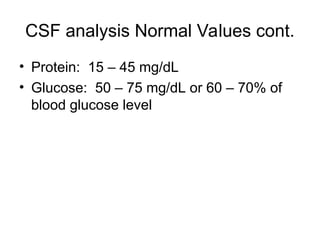
CSF analysis Normal Values cont.
• Protein: 15 – 45 mg/dL
• Glucose: 50 – 75 mg/dL or 60 – 70% of
blood glucose level
CSF WBC count
• Pleocytosis – turbidity of CSF due to
increased #s of cells
CSF PMNs
• Causes of ↑ PMNs: bacterial meningitis,
tubercular meningitis, cerebral abscess,
subarachnoid bleeding, tumor
CSF Lymphs
• Causes of ↑ lymphs/plasma cells: viral,
tubercular, fungal or syphilitic meningitis;
multiple sclerosis (MS), Guillain-Barré
syndrome
CSF Monos
• Causes of ↑ monos: tubercular or fungal
meningitis, hemorrhage, brain infarction
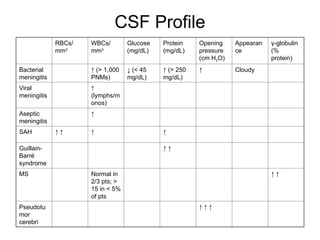
CSF Profile
RBCs/
mm3
WBCs/
mm3
Glucose
(mg/dL)
Protein
(mg/dL)
Opening
pressure
(cm H2O)
Appearan
ce
γ-globulin
(%
protein)
Bacterial
meningitis
↑ (> 1,000
PNMs)
↓ (< 45
mg/dL)
↑ (> 250
mg/dL)
↑ Cloudy
Viral
meningitis
↑
(lymphs/m
onos)
Aseptic
meningitis
↑
SAH ↑ ↑ ↑ ↑
Guillain-
Barré
syndrome
↑ ↑
MS Normal in
2/3 pts; >
15 in < 5%
of pts
↑ ↑
Pseudotu
mor
cerebri
↑ ↑ ↑
References
• Pagana, K.D. & Pagna, T.J. (2006). Mosby’s Manual of
Diagnostic and Laboratory Tests. St. Louis: Mosby
Elsevier.
• 27th
edition (2000). Stedman’s Medical Dictionary.
Baltimore: Lippincott Williams & Wilkins.
• UpToDate. Retrieved July 26, 2009, from
http://www.uptodateonline.com
• Urinalysis. Retrieved July 17, 2009, from
http://library.med.utah.edu/WebPath/TUTORIAL/URINE/
URINE.html
• Vital Signs. Retrieved July 17, 2009, from
http://www.healthsystem.virginia.edu/uvahealth/adult_no
ntrauma/vital.cfm
Additional Resources
• Corbett, J.V. (2008). Laboratory Tests and Diagnostic Procedures
with Nursing Diagnoses 7th
Edition. Upper Saddle River: Prentice
Hall.
• Fischbach, F.T. & Dunning, M.B. (2008). A Manual of Laboratory &
Diagnostic Tests 8th
Edition. Philadelphia: Lippincott Williams &
Wilkins.
• Jacobs, D.S., De Mott, W.R. & Oxley, D.K. (2001). Jacobs & DeMott
Laboratory Test Handbook with Key Word Index 5th
Edition. Hudson:
Lexi Comp, Inc.
• Wu, A. (2006). Tietz Clinical Guide to Laboratory Tests 4th
Edition.
St. Louis: Saunders Elsevier.
• Young, R.H. & Hicks, J. (2002). Directory of Rare Analyses 2000-
2002. St. Louis: AACC Press.
• http://www.labtestsonline.org/
Special Thanks
• Dr. Amira F. Gohara, M.D.
• Dr. Carol Bennett-Clarke, Ph.D.
• Dr. Constance Shriner, Ph.D.
• Cynthia R. O’Connell, BSMT (ASCP)


Introduction to Laboratory Tests Handout Version.ppt

  • 1.
    Introduction to VitalSigns and Basic Laboratory Tests Joel N. Kniep, M.D. Dept. of Pathology
  • 2.
    Objectives • Introduce vitalsigns and their use in clinical practice • Introduce basic laboratory tests and their use in clinical practice • Discuss normal values and test interpretation
  • 3.
    Clinical Vital Signs(Vitals) • Temperature • Pulse rate • Respiration rate (RR) • Blood pressure (bp)
  • 4.
    Temp • Measure ofbody’s core temp (temp of internal organs) – in ° F (or ° C) – Locations: oral, rectum, axilla, ear – Rectal = 0.5 – 0.7° F higher than oral temp – Axilla = 0.3 – 0.4° F lower than oral temp • Normal: 97.8 – 99° F (36.5 – 37.2° C) • Critical: > 98.6° F orally or 99.8° F rectally (pyrexia [fever]); < 95° F (hypothermia)
  • 5.
    Pulse rate • Heartrate (HR) or number of heart beats/min • Normal: 60 – 100/min • ↑ (tachycardia): ↑ Na+ intake, ↓ Na+ loss, Excessive free body H2O loss • ↓ (bradycardia): ↓ Na+ intake, ↑ Na+ loss, ↑ free body H2O
  • 6.
    RR • Number ofbreaths/min – At rest – Also note breathing effort or difficulty • Normal: 15 – 20/min • Critical: < 12 or > 25 • ↑ (hyperventilation): ↑ Na+ intake, ↓ Na+ loss, Excessive free body H2O loss • ↓ (hypoventilation): ↓ Na+ intake, ↑ Na+ loss, ↑ free body H2O
  • 7.
    Bp • Measures theforce of blood against the arterial vessel walls – Measured while seated, after resting for 5 mins, arm resting @ heart level (if possible) – Reported as a fraction (systolic/diastolic) & consists of 2 separate measurements: • Systolic – pressure within artery during cardiac contraction • Diastolic – pressure within artery during cardiac relaxation and filling • Normal: < 120 mm Hg systolic and < 80 mm Hg diastolic • Critical: > 220 mm Hg systolic or > 125 mm Hg diastolic • ↑ (hypertension [htn]): ↑ Na+ intake, ↓ Na+ loss, Excessive free body H2O loss • ↓ (hypotention): ↓ Na+ intake, ↑ Na+ loss, ↑ free body H2O
  • 8.
    Complete Blood Count(CBC) • Provides information on cellular components of blood • Includes RBC count, Hemoglobin (Hgb), Hematocrit (Hct), RBC indices, White blood cell (WBC) count and differential, Platelet count
  • 9.
    Total WBCs (leukocytes) •Measurement of total WBC count – Consists of total # of WBCs/mm3 of peripheral venous blood – Part of “routine” testing – Useful for evaluation of infection, neoplasm, allergy & immunosuppression • Normal: 4,000 – 10,000/mm3 • Critical: < 2,500 or > 30,000/mm3 • ↑ (leukocytosis): infection, malignancy, trauma, stress, hemorrhage, tissue necrosis, inflammation, dehydration, thyroid storm • ↓ (leukopenia): drug toxicity, bone marrow failure, overwhelming infections, dietary deficiency, congenital marrow aplasia, bone marrow infiltration, autoimmune disease, hypersplenism
  • 10.
    Erythrocyte count (RBC) •Measures # of circulating RBCs/mm3 of peripheral venous blood – Direct measure of RBC count – Part of “routine” testing and anemia evaluation • Normal: 3.5 – 5.5 x 10⁶ /μL • ↑: erythrocytosis, congenital heart disease, severe COPD, polycythemia vera, severe dehydration, hemoglobinopathies • ↓: anemia, hemoglobinopathy, hemorrhage, bone marrow failure, renal disease, leukemia, prosthetic valves, normal pregnancy, multiple myeloma, Hodgkin disease, lymphoma, dietary deficiency
  • 11.
    Hgb • Measures totalamount of Hgb in blood – Indirect measure of RBC count – Part of “routine” testing and anemia evaluation • Normal: 12 – 15 g/dL • Critical: < 5 or > 20 g/dL • ↑: erythrocytosis, congenital heart disease, severe COPD, polycythemia vera, severe dehydration ↓: anemia, hemoglobinopathy, hemorrhage, bone marrow failure, renal disease, leukemia, prosthetic valves, normal pregnancy, multiple myeloma, Hodgkin disease, lymphoma, dietary deficiency
  • 12.
    Hct • Measure ofRBC percent of total blood vol – Indirect measure of RBC # & volume – Part of “routine” testing and anemia evaluation • Normal: 36 – 48% • Critical: < 15% or > 60% • ↑: erythrocytosis, congenital heart disease, severe COPD, polycythemia vera, severe dehydration • ↓: anemia, hemoglobinopathy, hemorrhage, bone marrow failure, renal disease, leukemia, prosthetic valves, normal pregnancy, multiple myeloma, Hodgkin disease, lymphoma, dietary deficiency
  • 13.
    RBC indices • Measuressize and hgb content of RBCs • Used to classify anemias • Includes Mean corpuscular volume (MCV), mean corpuscular hemoglobin (MCH), mean corpuscular hemoglobin concentration (MCHC), red blood cell distribution width (RDW)
  • 14.
    MCV • Measure ofaverage volume/size of single RBC – MCV = Hct (%) x 10/RBC (million/mm3 ) – Useful in anemia classification • Normal: 80 – 100 mm3 • ↑ (macrocytic): pernicious anemia (vit B12 deficiency), folic acid deficiency, antimetabolic therapy, alcoholism, chronic liver disease, hypothyroidism • Normocytic: bone marrow failure/replacement, acute blood loss, chronic diseases, hemolytic anemias • ↓ (microcytic): Fe deficiency anemia, thalassemia, anemia of chronic illness
  • 15.
    MCH • Measure ofaverage amount of hgb within a single RBC – MCH = Hgb (g/dL) x 10/RBC (million/mm3 ) – Provides little additional info to other indices • Normal: 24 – 32 pg • ↑: macrocytic anemias • ↓: microcytic anemia, hypochromic anemia
  • 16.
    MCHC • Measure ofaverage [hgb] within a single RBC – MCHC = Hgb (g/dL) x 100/Hct (%) – 37 g/dL = maximum Hgb able to fit into an RBC (cannot be hyperchromic) • Normal (normochromic): 32 – 36 g/dL • ↑: spherocytosis, intravascular hemolysis, cold agglutinins • ↓ (hypochromic): Fe deficiency anemia, thalassemia
  • 17.
    RDW • Measure ofvariation of RBC size (indicator of degree of anisocytosis) – Useful in anemia classification • Normal: variation of 11.5 – 16.9% • ↑: Fe deficiency anemia, vit B12 or folate deficiency anemia, hemoglobinopathies, hemolytic anemias, posthemorrhagic anemias
  • 18.
    Platelet count • Measurementof platelets (thrombocytes) – Consists of actual # of platelets/mm3 of peripheral venous blood – Part of “routine” testing – Useful for evaluation of petechiae, spontaneous bleeding, increasingly heavy menses or thrombocytopenia – Useful for monitoring discourse/therapy of thrombocytopenia/bone marrow failure • Normal: 150,000 – 400,000/mm3 • Critical: < 50,000 or > 1,000,000/mm3 • ↑ (thrombocytosis): malignant disorders, polycythemia vera, postsplenectomy syndrome, rheumatoid arthritis, Fe deficiency anemia • ↓ (thrombocytopenia): Hypersplenism, hemorrhage, immune thrombocytopenia, leukemia & other myelofibrosis disorders, TTP, DIC, SLE, chemotherapy, pernicious anemia
  • 19.
    WBC definitions • Leukocytosis– abnormally large number of leukocytes; generally indicated by WBC count of ≥ 10,000 cells/mm3 • Lymphocytosis – form of actual or relative leukocytosis due to increase in numbers of lymphocytes • Left shift – increase in the number of immature neutrophils (bands/stabs) found in the blood
  • 20.
    WBC differential • Measurementof percentage of each WBC type in specimen – Useful for infection, neoplasm, allergy & immunosuppression evaluations • Normal: Neutrophils (50 – 70%), Lymphocytes (20 – 40%), Monocytes (2 – 8%), Eosinophils (0 – 5%), Basophils (0 – 2%) • ↑: refer to individual cell types on chart • ↓: refer to individual cell types on chart
  • 21.
    Basic Metabolic Panel(BMP) • Measures electrolytes, chemicals, metabolic end products & substrates • Consists of Glucose, Blood Urea Nitrogen (BUN), Creatinine, Na+ , K+ , Cl- , Bicarbonate (HCO3 - ), Ca2+
  • 22.
    Glucose • Direct measureof blood glucose – Commonly used to evaluate diabetic pts – Part of “routine” testing • Normal: 70 - 100 mg/dL • Critical: < 50 and > 400 mg/dL (♂) or < 40 and > 400 mg/dL (♀) • ↑ (hyperglycemia): DM, acute stress response, Cushing syndrome, pheochromocytoma, chronic renal failure, acute pancreatitis, acromegaly, corticosteroid therapy • ↓ (hypoglycemia): insulinoma, hypothyroidism, hypopituitarism, Addison disease, extensive liver disease, insulin overdose, starvation
  • 23.
    BUN • Measures ureanitrogen in blood – End product of protein metabolism (produced in liver) – Indirect measure of renal function & glomerular function (excretion) – Measure of liver metabolic function – Part of routine labs – Usually interpreted along with Cr (less accurate than Cr for renal disease) • Normal: 6 -21 mg/dL • Critical: > 100 mg/dL • ↑: prerenal causes, renal causes, postrenal azotemia • ↓: liver failure, overhydration because of SIADH, neg nitrogen balance, pregnancy, nephrotic syndrome
  • 24.
    Creatinine • Measures serumcreatinine – Catabolic product of creatine phosphate (skeletal muscle contraction) – Excreted entirely by kidneys → direct measure of renal function – Minimally affected by liver function – Elevation occurs slower than BUN – Doubling ≈ 50% reduction in GFR • Normal: 0.44 – 1.03 mg/dL • Critical: > 4 mg/dL • ↑: diseases affecting renal function (glomerulonephritis, pyelonephritis, ATN, urinary tract obstruction, reduced renal blood flow, diabetic nephropathy, nephritis), rhabdomyolysis, acromegaly, gigantism • ↓: debilitation, decreased muscle mass
  • 25.
    Na+ • Measures serumsodium level – Major cation in EC space – Balance between dietary intake and renal excretion • Normal: 136 – 146 mEq/L • Critical: < 120 or > 160 mEq/L • ↑ (hypernatremia): ↑ Na+ intake, ↓ Na+ loss, Excessive free body H2O loss • ↓ (hyponatremia): ↓ Na+ intake, ↑ Na+ loss, ↑ free body H2O
  • 26.
    K+ • Measures serumpotassium level – Major cation within cell • Normal: 3.4 – 5.2 mEq/L • Critical: < 2.5 or > 6.5 mEq/L • ↑ (hyperkalemia): excessive intake, acidosis, acute/chronic renal failure, Addison disease, hypoaldosteronism, infection, dehydration • ↓ (hypokalemia): deficient intake, burns, hyperaldosteronism, Cushing syndrome, RTA, licorice ingestion, alkalosis, renal artery stenosis
  • 27.
    Cl- • Measures serumchloride level – Major anion in EC space – Helps maintain electrical neutrality; follows sodium • Normal: 98 – 108 mEq/L • Critical: < 80 or > 115 mEq/L • ↑ (hyperchloremia): dehydration, metabolic acidosis, RTA, Cushing syndrome, renal dysfunction, respiratory alkalosis, hyperparathyroidism • ↓ (hypochloremia): overhydration, SIADH, CHF, chronic respiratory acidosis, metabolic alkalosis, Addison disease, Aldosteronism, vomiting/prolonged gastric suction, hypokalemia
  • 28.
    HCO3 - • Measures CO2content of blood – Major role in acid-base balance – Regulated by kidneys – Used to evaluate pt pH status & electrolytes • Normal: 22 – 32 mEq/L • Critical: < 6 mEq/L • ↑: severe vomiting, high-volume gastric suction, aldosteronism, mercurial diuretic use, COPD, metabolic alkalosis • ↓: chronic diarrhea, chronic loop diuretic use, renal failure, DKA, starvation, metabolic acidosis, shock
  • 29.
    Ca2+ • Measures serumcalcium level – Direct measurement – Used to evaluate parathyroid function & Ca metabolism – Used to monitor renal failure, renal transplantation, hyperparathyroidism, various malignancies, & Ca level when giving large-volume blood transfusions • Normal: Total = 8.3 – 10.3 mg/dL, Ionized = 4.5 – 5.6 mg/dL • Critical: Total < 6 or > 13 mg/dL, Ionized < 2.2 or > 7 mg/dL • ↑ (hypercalcemia): hyperparathyroidism, bone mets, Paget disease of bone, prolonged immobilization, milk-alkali syndrome, vit D intoxication, hyperthyroidism • ↓ (hypocalcemia): hypoparathyroidism, renal failure, rickets, vit D deficiency, osteomalacia, pancreatitis, alkalosis, malabsorption, fat embolism
  • 30.
    Comprehensive Metabolic Panel (CMP) •Includes all components of BMP plus Albumin, Total protein, Alkaline phosphatase (ALP), Alanine aminotransferase (ALT), Aspartate aminotransferase (AST) and Bilirubin
  • 31.
    Albumin • Measures amountof albumin in blood – Formed within liver & comprises 60% of total protein in blood – Maintains colloidal osmotic pressure & transports blood constituents – Measure of both hepatic function and nutritional state • Normal: 3.5 – 5 g/dL • ↑: dehydration • ↓: malnutrition, pregnancy, liver disease, protein-losing enteropathies, protein-losing nephropathies, 3rd space losses, overhydration, ↑ capillary permeability, inflammatory disease, familial idiopathic dysproteinemia
  • 32.
    Total Protein • Measurestotal protein in blood – Combination of prealbumin, albumin & globulins • Normal: 6.4 – 8.3 g/dL
  • 33.
    ALP • Measures serumALP concentration – Detect & monitor liver and bone disease • Normal: 30 -120 units/L • ↑: 1° cirrhosis, intrahepatic/extrahepatic biliary obstruction, 1°/metastic liver tumor, hyperparathyroidism, Paget disease, normal growing bones in children, bone mets, RA, MI, sarcoidosis, healing fracture, normal pregnancy, intestinal ischemia or infarction • ↓: hypophosphatemia, malnutrition, milk-alkali syndrome, pernicious anemia, scurvy
  • 34.
    ALT • Found predominantlyin liver – Injury/disease to parenchyma → release into blood – ID & monitor hepatocellular diseases of liver – If jaundiced, implicates liver rather than RBC hemolysis • Normal: 4 – 36 international units/L @ 37°C • Sig ↑: hepatitis, hepatic necrosis, hepatic ischemia • Mod ↑: cirrhosis, cholestasis, hepatic tumor, hepatotoxic drugs, obstructive jaundice, severe burns, trauma to striated muscle • Mild ↑: myositis, pancreatitis, MI, infectious mono, shock
  • 35.
    AST • Found inhighly metabolic tissue (cardiac & skeletal muscle, liver cells) – Disease/injury → lysing of cells & release into blood – Elevation proportional to # of cells injured – Used for evaluation of suspected coronary artery disease or hepatocellular disease • Normal: 0 – 35 units/L • ↑: heart diseases, liver diseases, skeletal muscle diseases • ↓: acute renal disease, beriberi, DKA, pregnancy, chronic renal dialysis
  • 36.
    Bilirubin • Measures levelof total bilirubin in blood – End product of RBC metabolism (RBCs → Hgb → Heme (+ globin) → Biliverdin → Bilirubin (unconjugated/indirect) → Bilirubin (conjugated/direct) – Component of bile – Consists of conjugated (direct) & unconjugated (indirect) bilirubin – Used to evaluate liver function; hemolytic anemia workup in adults & jaundice in newborns – Jaundice occurs when total bilirubin > 2.5 mg/dL • Normal: 0.3 – 1 mg/dL • Critical: > 12 mg/dL
  • 37.
    Unconjugated bilirubin • Measureslevel of indirect bilirubin in blood • Normal: 0.2 – 0.8 mg/dL • ↑: erythroblastosis fetalis, transfusion rxn, sickle cell anemia, hemolytic jaundice, hemolytic anemia, pernicious anemia, large-volume blood transfusion, large hematoma resolution, hepatitis, cirrhosis, sepsis, neonatal hyperbilirubinemia, Crigler-Najjar syndrome, Gilbert syndrome
  • 38.
    Conjugated bilirubin • Measureslevel of direct bilirubin in blood – Produced by conjugating glucuronide w/ unconjugated/indirect bilirubin in liver • Normal: 0.1 – 0.3 mg/dL • ↑: gallstones, extrahepatic duct obstruction, extensive liver mets, cholestasis from drugs, Dubin-Johnson syndrome, Rotor syndrome
  • 39.
    Urinary Analysis (UA) •Provides information about kidneys & other metabolic processes • Used for diagnosis, screening & monitoring • Frequently used to test for urinary tract infections (UTIs)
  • 40.
    UA Normal Values •Appearance: clear • Color: amber yellow • Odor: aromatic • pH: 4.6 – 8 • Protein: 0 – 8 mg/dL • Specific gravity: 1.005 – 1.030 • Leukocyte esterase: negative • Nitrites: none • Ketones: none
  • 41.
    UA Normal Valuescont. • Bilirubin: none • Urobilinogen: 0.01 – 1 Ehrlich unit/mL • Crystals: none • Casts: none • Glucose: negative • White Blood Cells: 0 – 4/low-power field • WBC casts: none • Red Blood Cells (RBCs): ≤ 2 • RBC casts: none
  • 42.
    Urinary Protein • Usedto monitor kidney function • Normally not present in normal kidney due to size barrier in glomerulous • Normally tested by dipstick method, quantification requires 24-hour urine collection • Presence (proteinuria) can indicate nephrotic syndrome, multiple myeloma or complications of DM, glomerulonephritis, amyloidosis
  • 43.
    Urinary Glucose • Glucosuria– presence of glucose in urine – Reflection of serum glucose levels – Helpful in monitoring DM therapy – Renal glucose reabsorption threshold = 180 mg/dL (in proximal renal tubules) – Not always abnormal • Can occur after a high-carbohydrate meal or IV dextrose fluids • Can occur in diseases affecting renal tubules; genetic defects of metabolism & glucose excretion • ↑: DM & other causes of hyperglycemia, pregnancy, renal glycosuria, Fanconi syndrome, Hereditary defects in metabolism of other reducing substances, ↑ ICP, nephrotoxic chemicals
  • 44.
    Urinary Leukocyte esterase •Screen to detect leukocytes in urine (dipstick method) • Presence indicates UTI • 90% accurate
  • 45.
    Urinary Ketones • Endproducts of fatty acid catabolism • Examples: β-hydroxybutyric acid, acetoacetic acid, acetone • Associated with poorly controlled diabetes • Used to evaluate ketoacidosis associated w/ alcoholism, fasting, starvation, high- protein diets, isopropanol ingestion
  • 46.
    Urinary Nitrites • Screenfor UTI (dipstick method) • Test based on chemical rxn by bacterial reductase (reduces nitrate to nitrite) • 50% accurate • Enhances leukocyte esterase sensitivity
  • 47.
    Urinary Casts • Hyaline– conglomerations of protein; indicative of proteinuria; few = normal especially after exercise • Cellular – conglomerations of degenerated cells – Granular – glomerular disease – Fatty – nephrotic syndrome – Waxy – chronic renal disease – Epithelial cells & casts (renal tubular casts) – WBCs & casts – acute pyelonephritis – RBCs & casts – glomerular diseases
  • 48.
    Cerebral Spinal Fluid(CSF) Analysis • Collected via lumbar puncture (LP) • Useful for the diagnosis of 1° or metastatic brain/spinal cord neoplasm, cerebral hemorrhage, meningitis, encephalitis, degenerative brain disease, autoimmune diseases w/ CNS involvement, neurosyphilis, demyelinating diseases
  • 49.
    CSF analysis NormalValues • Opening pressure: <20 cm H2O • Color: clear & colorless • Blood: none • RBCs: 0 • WBCs: 0 – 5 cells/μL • Neutrophils: 0 – 6% • Lymphocytes: 40 – 80% • Monocytes: 15 – 45%
  • 50.
    CSF analysis NormalValues cont. • Protein: 15 – 45 mg/dL • Glucose: 50 – 75 mg/dL or 60 – 70% of blood glucose level
  • 51.
    CSF WBC count •Pleocytosis – turbidity of CSF due to increased #s of cells
  • 52.
    CSF PMNs • Causesof ↑ PMNs: bacterial meningitis, tubercular meningitis, cerebral abscess, subarachnoid bleeding, tumor
  • 53.
    CSF Lymphs • Causesof ↑ lymphs/plasma cells: viral, tubercular, fungal or syphilitic meningitis; multiple sclerosis (MS), Guillain-Barré syndrome
  • 54.
    CSF Monos • Causesof ↑ monos: tubercular or fungal meningitis, hemorrhage, brain infarction
  • 55.
    CSF Profile RBCs/ mm3 WBCs/ mm3 Glucose (mg/dL) Protein (mg/dL) Opening pressure (cm H2O) Appearan ce γ-globulin (% protein) Bacterial meningitis ↑(> 1,000 PNMs) ↓ (< 45 mg/dL) ↑ (> 250 mg/dL) ↑ Cloudy Viral meningitis ↑ (lymphs/m onos) Aseptic meningitis ↑ SAH ↑ ↑ ↑ ↑ Guillain- Barré syndrome ↑ ↑ MS Normal in 2/3 pts; > 15 in < 5% of pts ↑ ↑ Pseudotu mor cerebri ↑ ↑ ↑
  • 56.
    References • Pagana, K.D.& Pagna, T.J. (2006). Mosby’s Manual of Diagnostic and Laboratory Tests. St. Louis: Mosby Elsevier. • 27th edition (2000). Stedman’s Medical Dictionary. Baltimore: Lippincott Williams & Wilkins. • UpToDate. Retrieved July 26, 2009, from http://www.uptodateonline.com • Urinalysis. Retrieved July 17, 2009, from http://library.med.utah.edu/WebPath/TUTORIAL/URINE/ URINE.html • Vital Signs. Retrieved July 17, 2009, from http://www.healthsystem.virginia.edu/uvahealth/adult_no ntrauma/vital.cfm
  • 57.
    Additional Resources • Corbett,J.V. (2008). Laboratory Tests and Diagnostic Procedures with Nursing Diagnoses 7th Edition. Upper Saddle River: Prentice Hall. • Fischbach, F.T. & Dunning, M.B. (2008). A Manual of Laboratory & Diagnostic Tests 8th Edition. Philadelphia: Lippincott Williams & Wilkins. • Jacobs, D.S., De Mott, W.R. & Oxley, D.K. (2001). Jacobs & DeMott Laboratory Test Handbook with Key Word Index 5th Edition. Hudson: Lexi Comp, Inc. • Wu, A. (2006). Tietz Clinical Guide to Laboratory Tests 4th Edition. St. Louis: Saunders Elsevier. • Young, R.H. & Hicks, J. (2002). Directory of Rare Analyses 2000- 2002. St. Louis: AACC Press. • http://www.labtestsonline.org/
  • 58.
    Special Thanks • Dr.Amira F. Gohara, M.D. • Dr. Carol Bennett-Clarke, Ph.D. • Dr. Constance Shriner, Ph.D. • Cynthia R. O’Connell, BSMT (ASCP)