QUIZ
1. The main part or foundation of a word
2. The plane that separates the front from the back.
3. Tissues combine to form these
4. Suffix meaning inflammation
5. The transverse plane separates the _____ from the
________.
6. Tonsillitis
7. Leukemia
8. Cephalgia
9. Dental
10.Postmortem
Integumentary System
What is the Integument?
• The INTEGUMENTARY SYSTEM includes all the
structures and tissues related to the skin.
• This includes:
1. skin
a. Epidermis
b. Dermis
2. accessory organs
a. Hair
b. Nails
c. Glands
• The skin covers the entire body and
provides protection against injuries,
infection, and toxic compounds.
• The system contains many nerve endings
that act as RECEPTORS for pain,
temperature, touch, and pressure.
Anatomy of the Skin
• Upper layer of skin is called EPIDERMIS
EPI- means on top of
DERMIS means skin
• The lower layer of skin is called the
DERMIS.
The Epidermis
• Is multilayered.
• Contains is superficial layer of dead skin
cells called STRATUM CORNEUM.
• The stratum corneum is composed of cells
called KERATIN.
• Is AVASCULAR (no blood vessels)
• Has no nerve tissue (can’t feel pain)
The Dermis
• Has two distinct layers:
1. Papillary Layer (more superficial)
2. Reticular Layer (deeper)
• Accessory organs begin the dermis.
• Some of the accessory organs end or
cross into the epidermis.
• The dermis contains blood vessels and
nerve tissue.
Subcutaneous Fat and Superficial
Fascia
• The SubQ fat is found deep to the dermis.
• It contains the larger blood vessels of the
skin.
• It is composed of adipose (fat) tissue, a
form of connective tissue.
• Deep to the subQ layer is the fascial layer
that covers the muscles beneath.
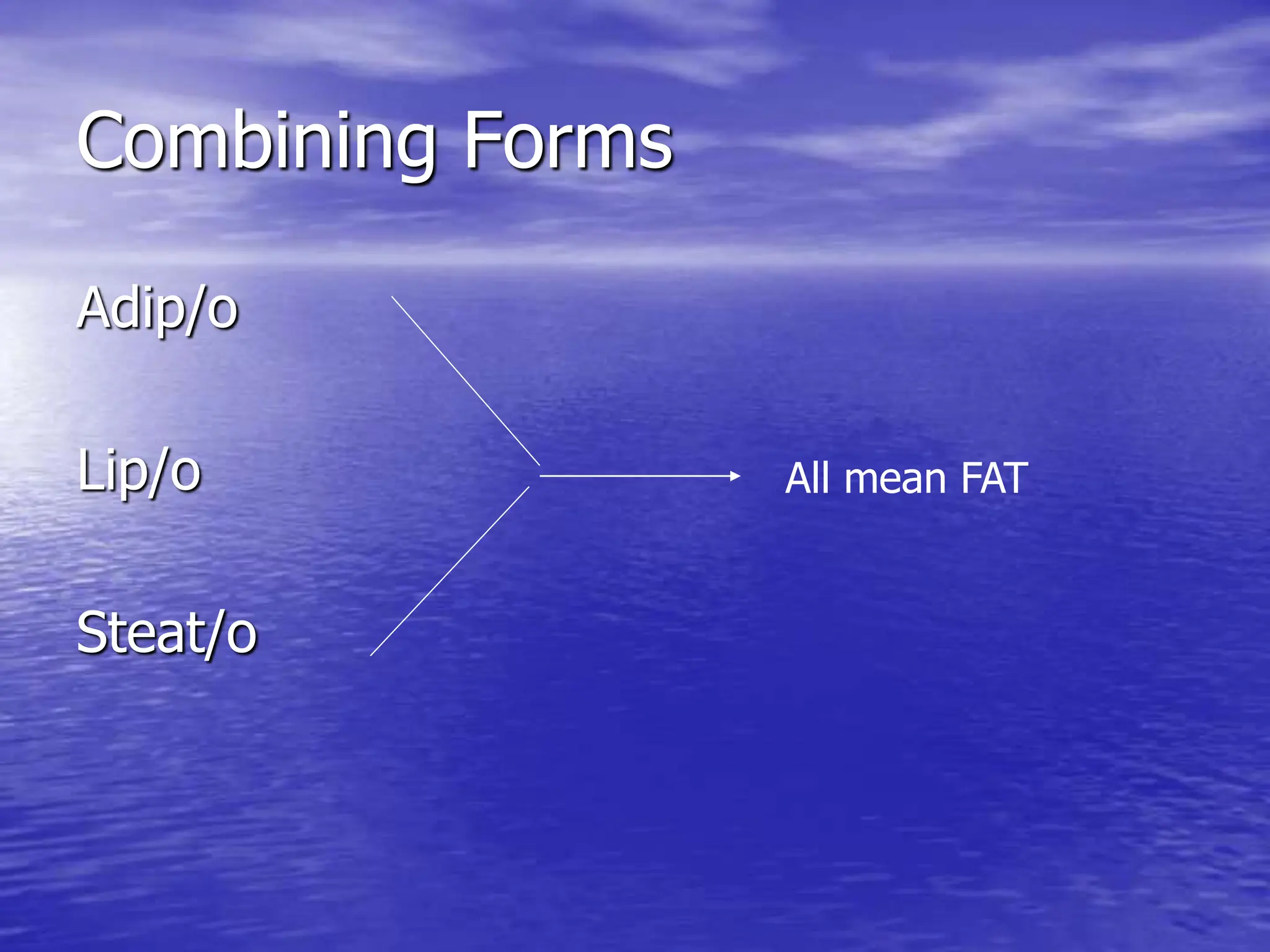
Combining Forms
Adip/o
Lip/o
Steat/o
All mean FAT
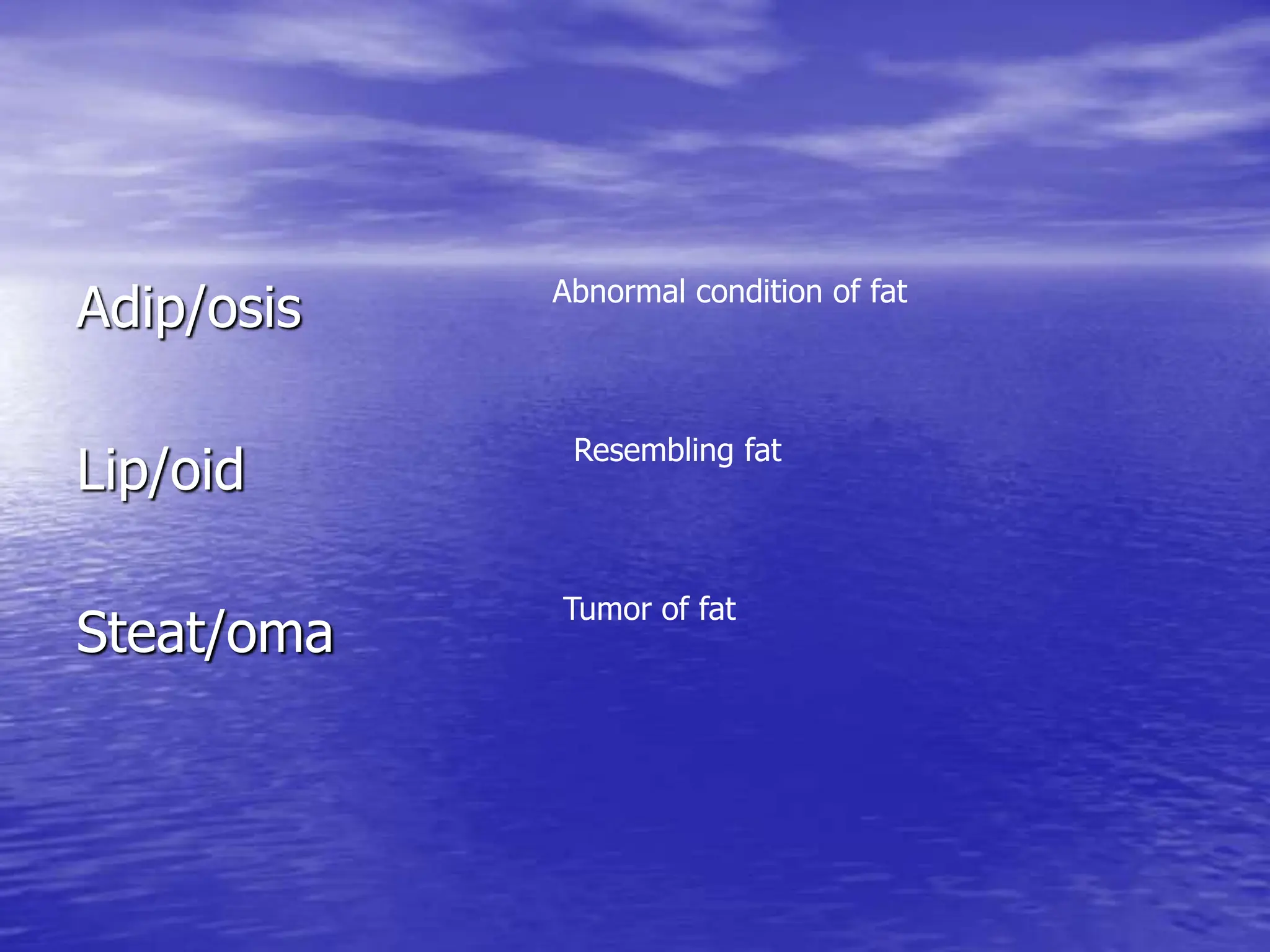
Adip/osis
Lip/oid
Steat/oma
Abnormal condition of fat
Resembling fat
Tumor of fat
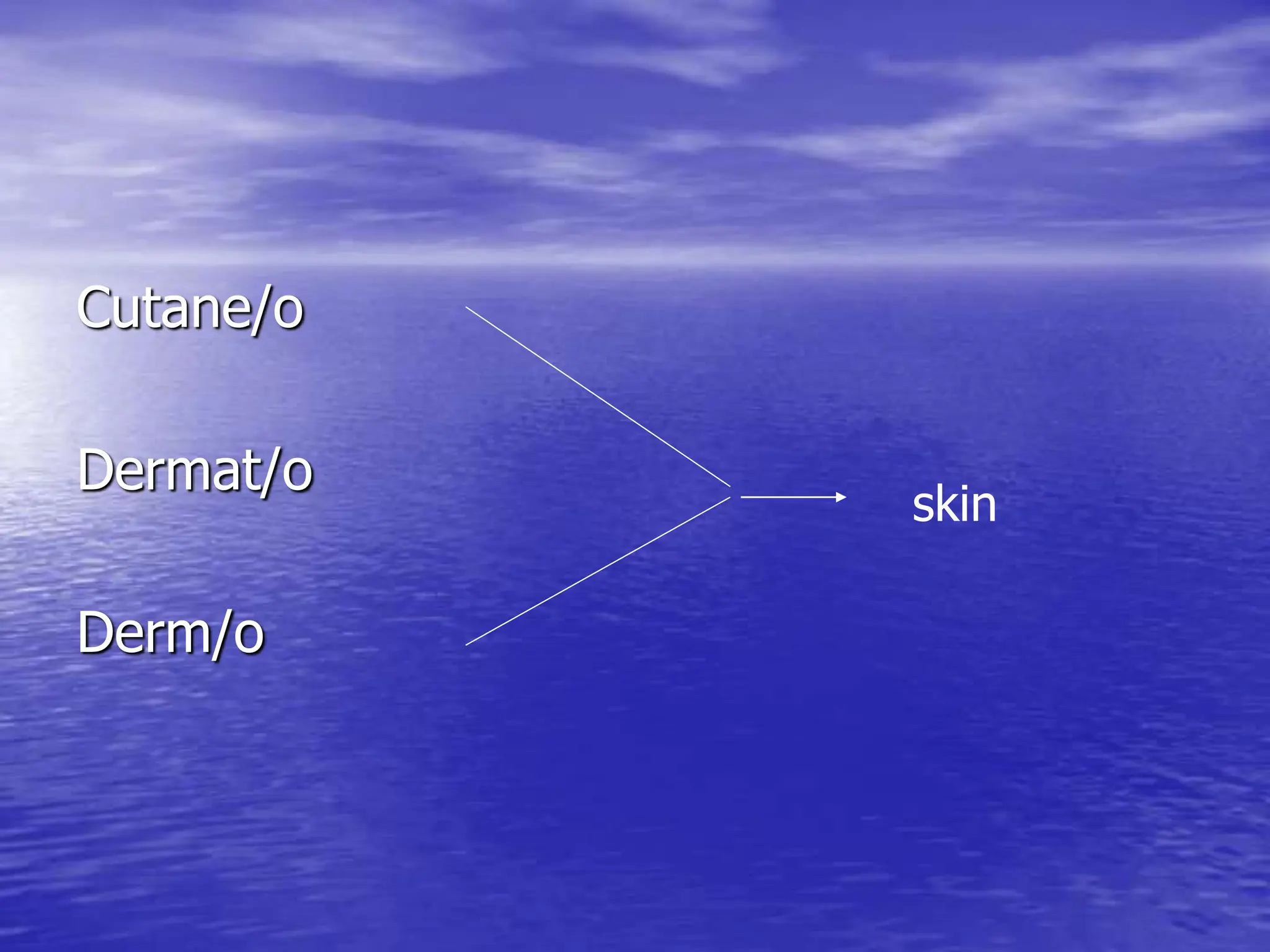
Cutane/o
Dermat/o
Derm/o
skin
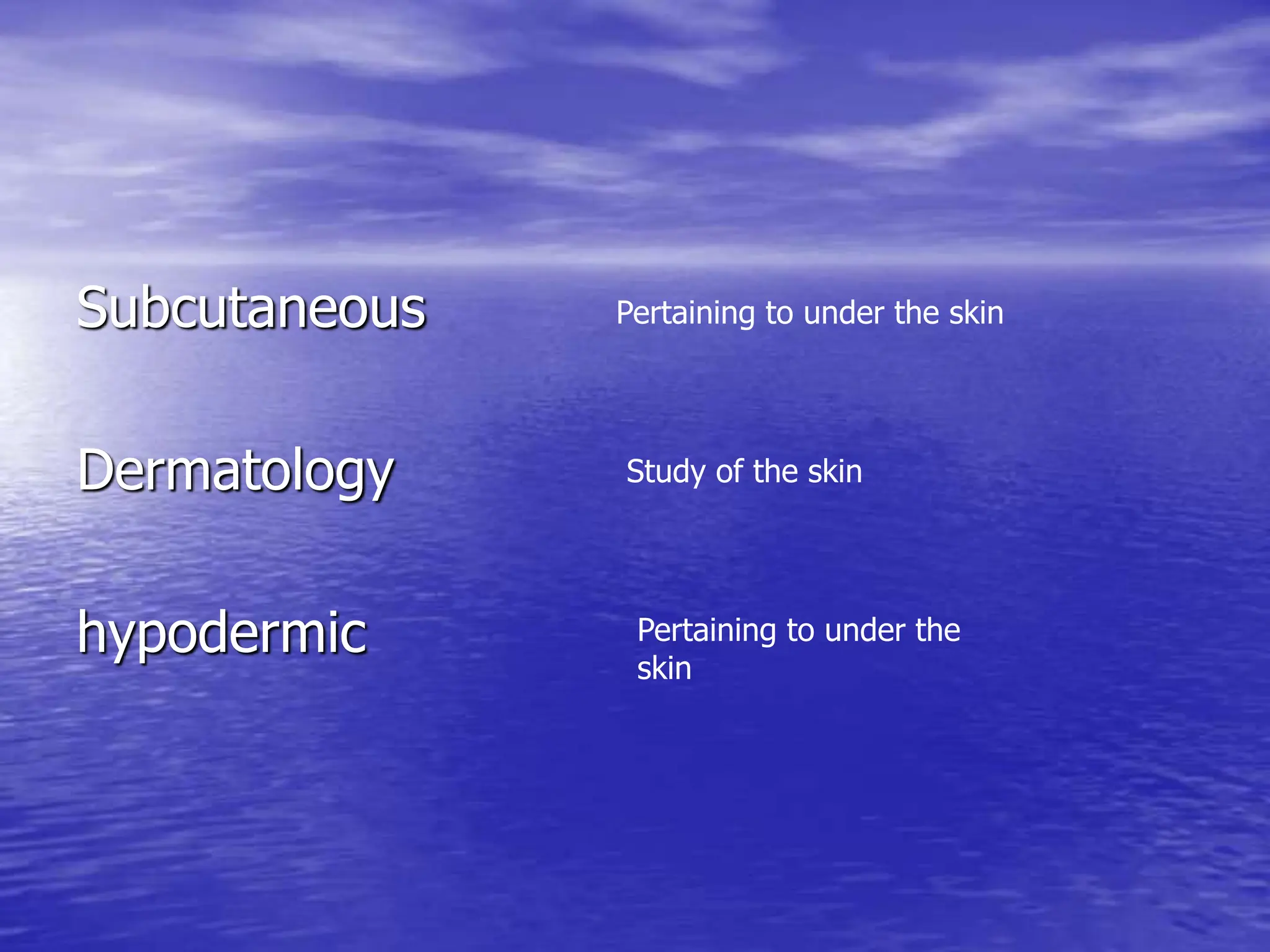
Subcutaneous
Dermatology
hypodermic
Pertaining to under the skin
Study of the skin
Pertaining to under the
skin
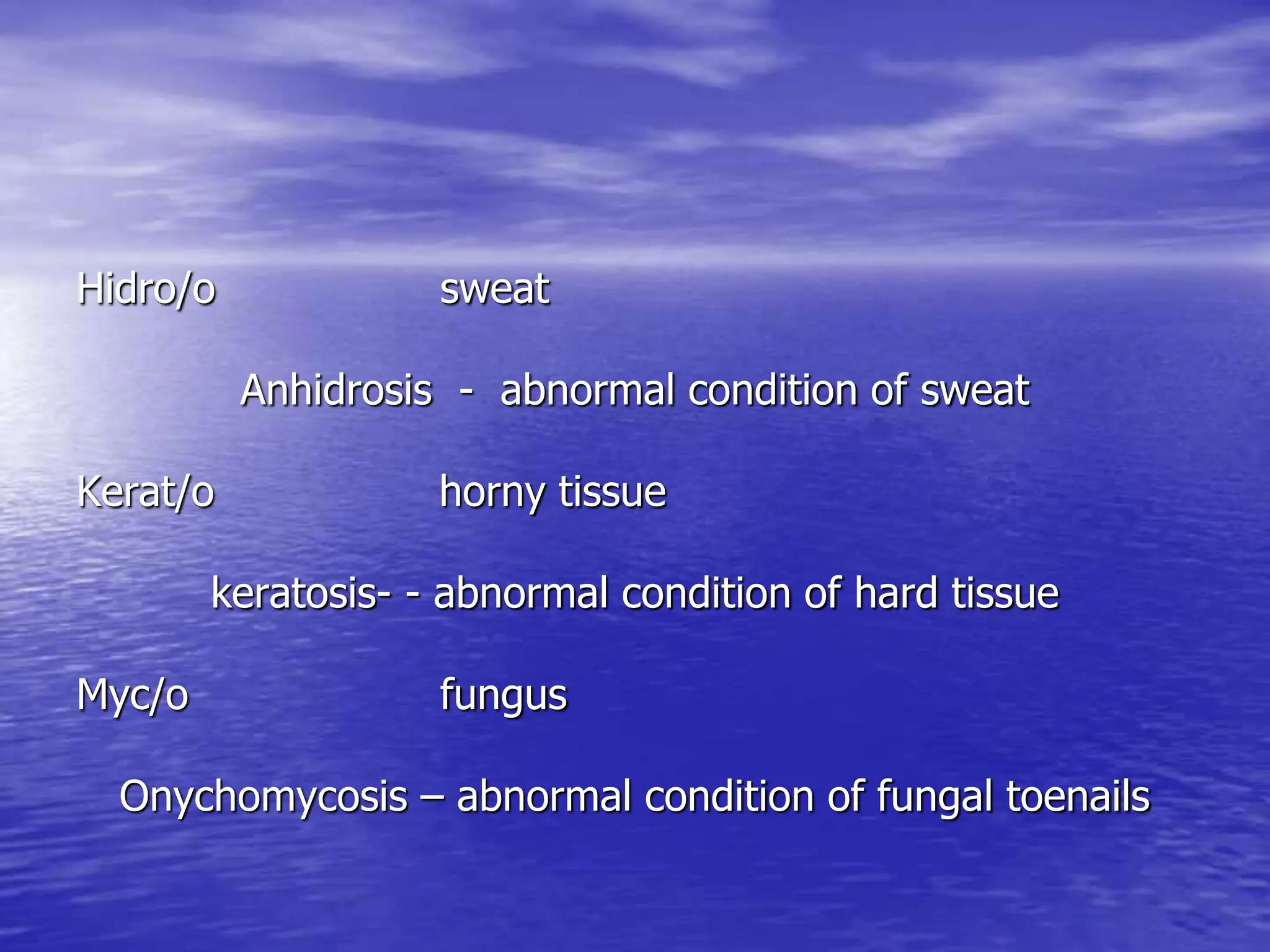
Hidro/o sweat
Anhidrosis - abnormal condition of sweat
Kerat/o horny tissue
keratosis- - abnormal condition of hard tissue
Myc/o fungus
Onychomycosis – abnormal condition of fungal toenails
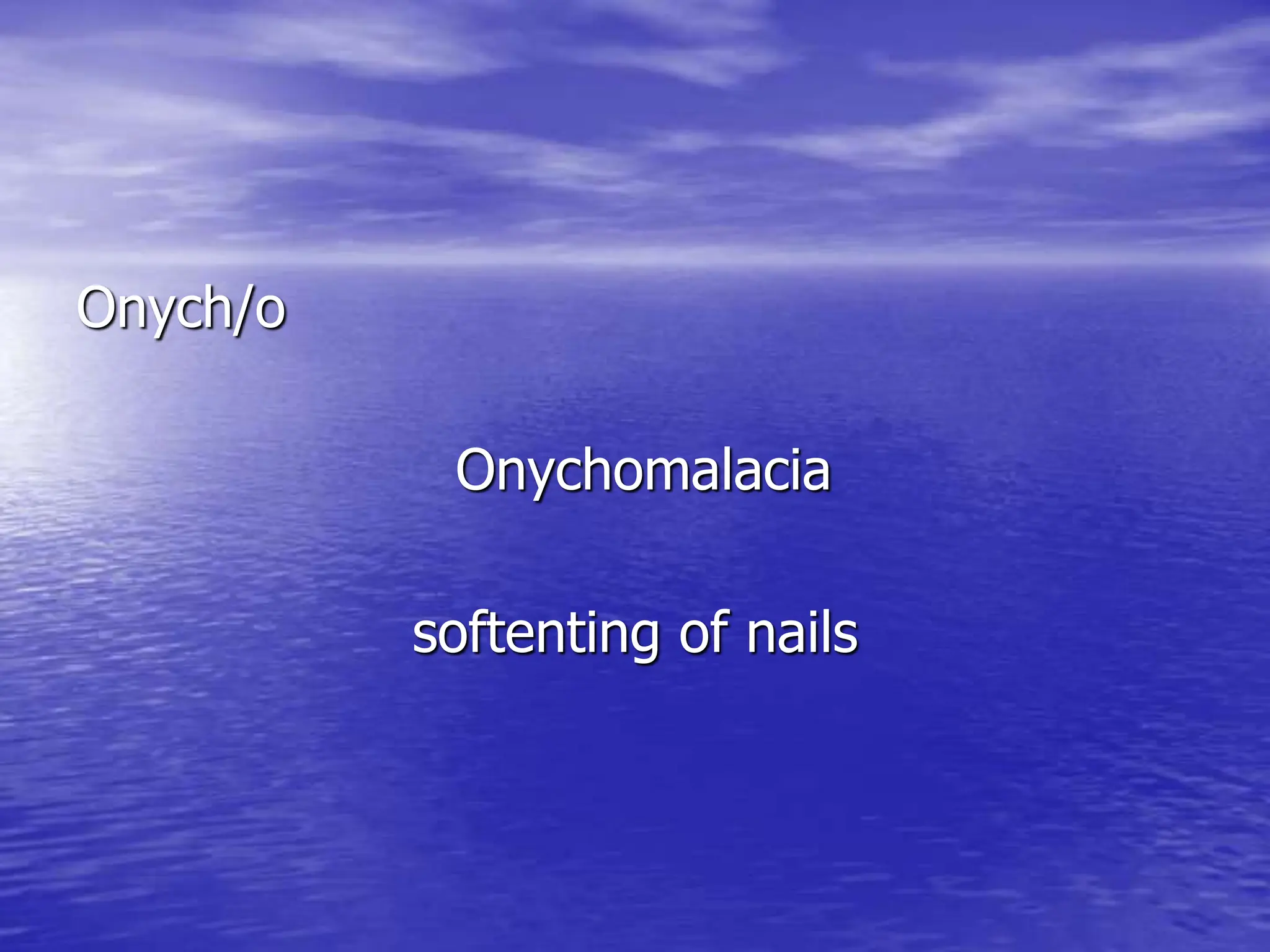
Onych/o
Onychomalacia
softenting of nails
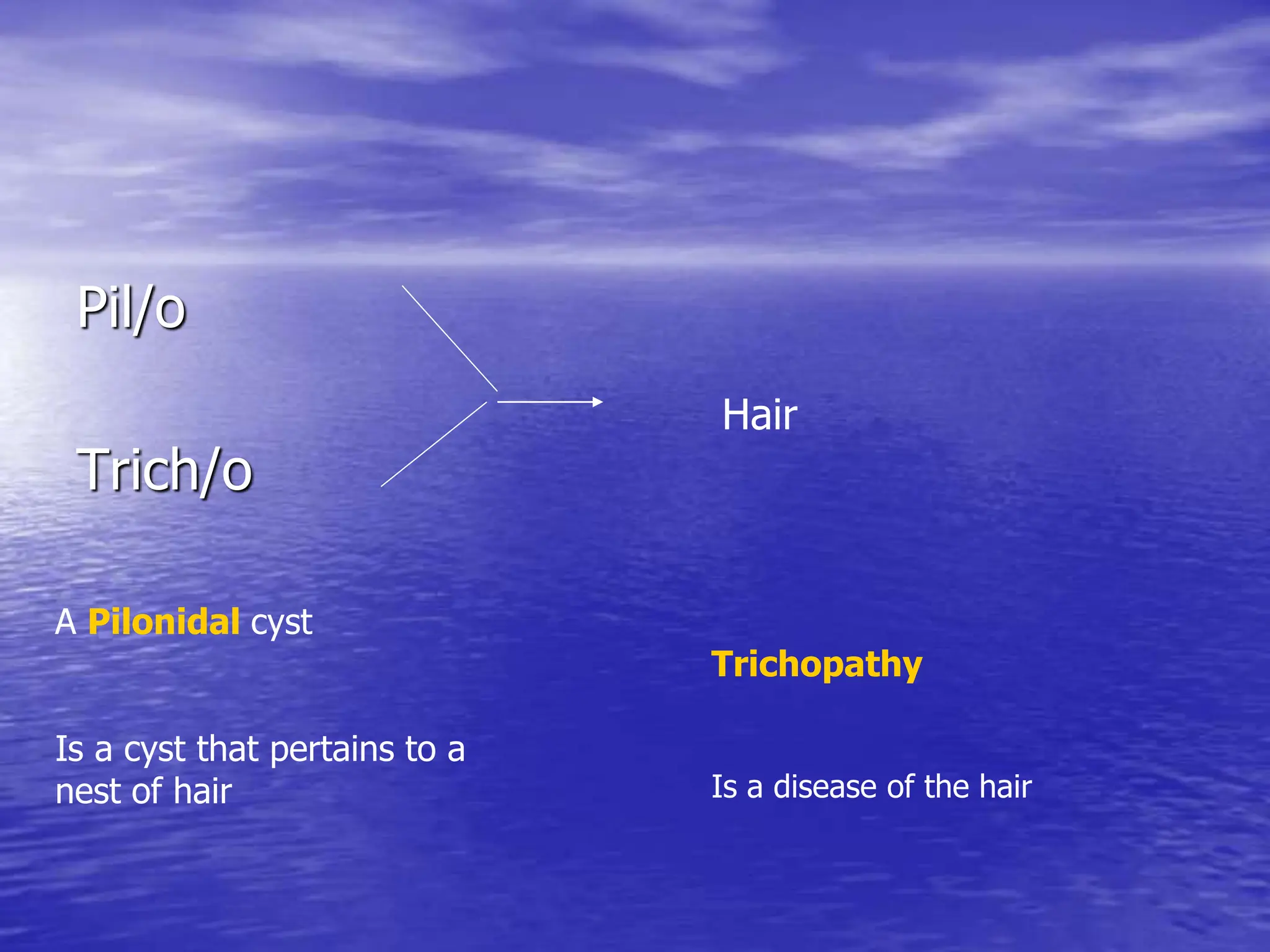
Pil/o
Trich/o
Hair
A Pilonidal cyst
Is a cyst that pertains to a
nest of hair
Trichopathy
Is a disease of the hair
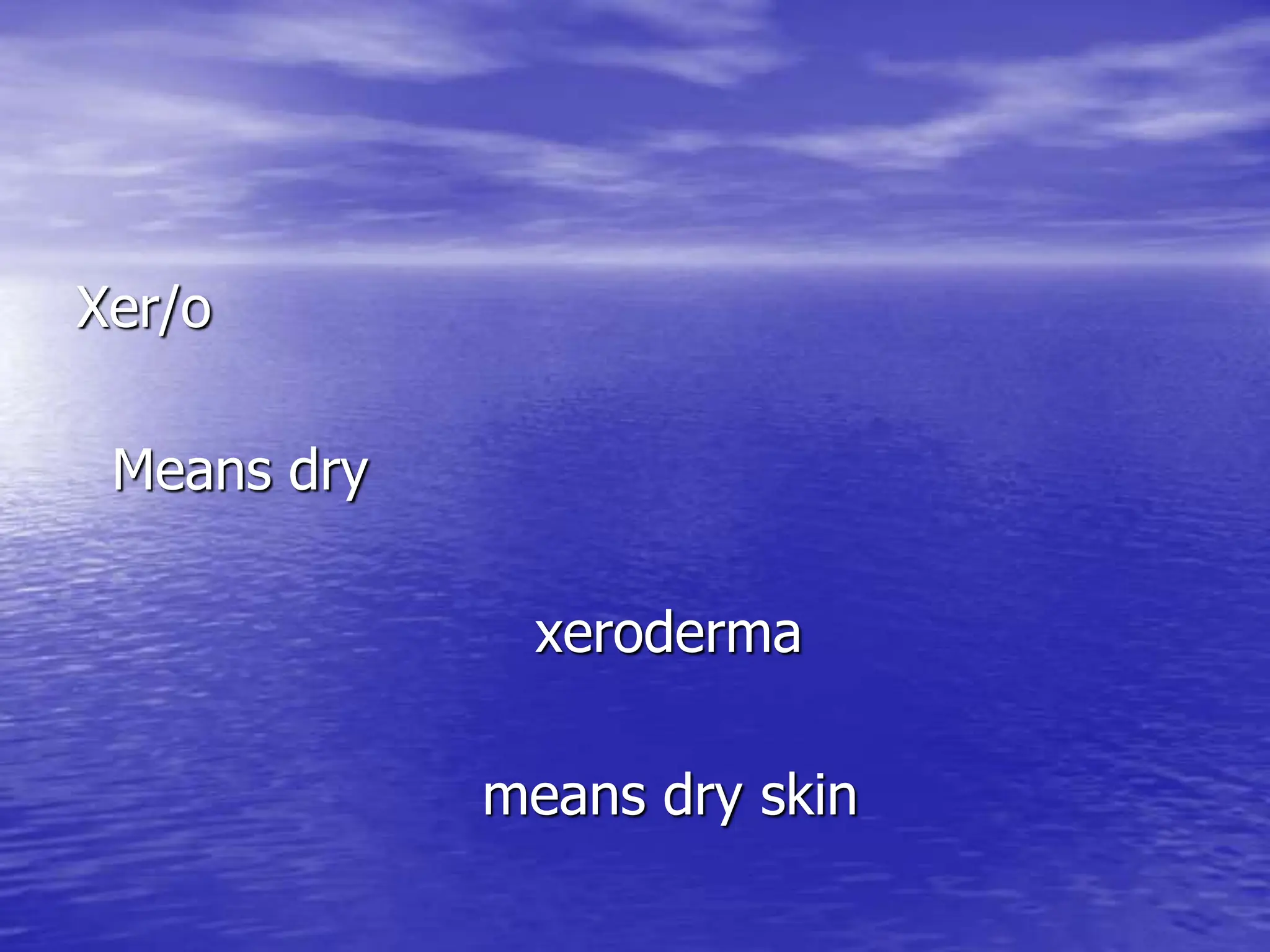
Xer/o
Means dry
xeroderma
means dry skin
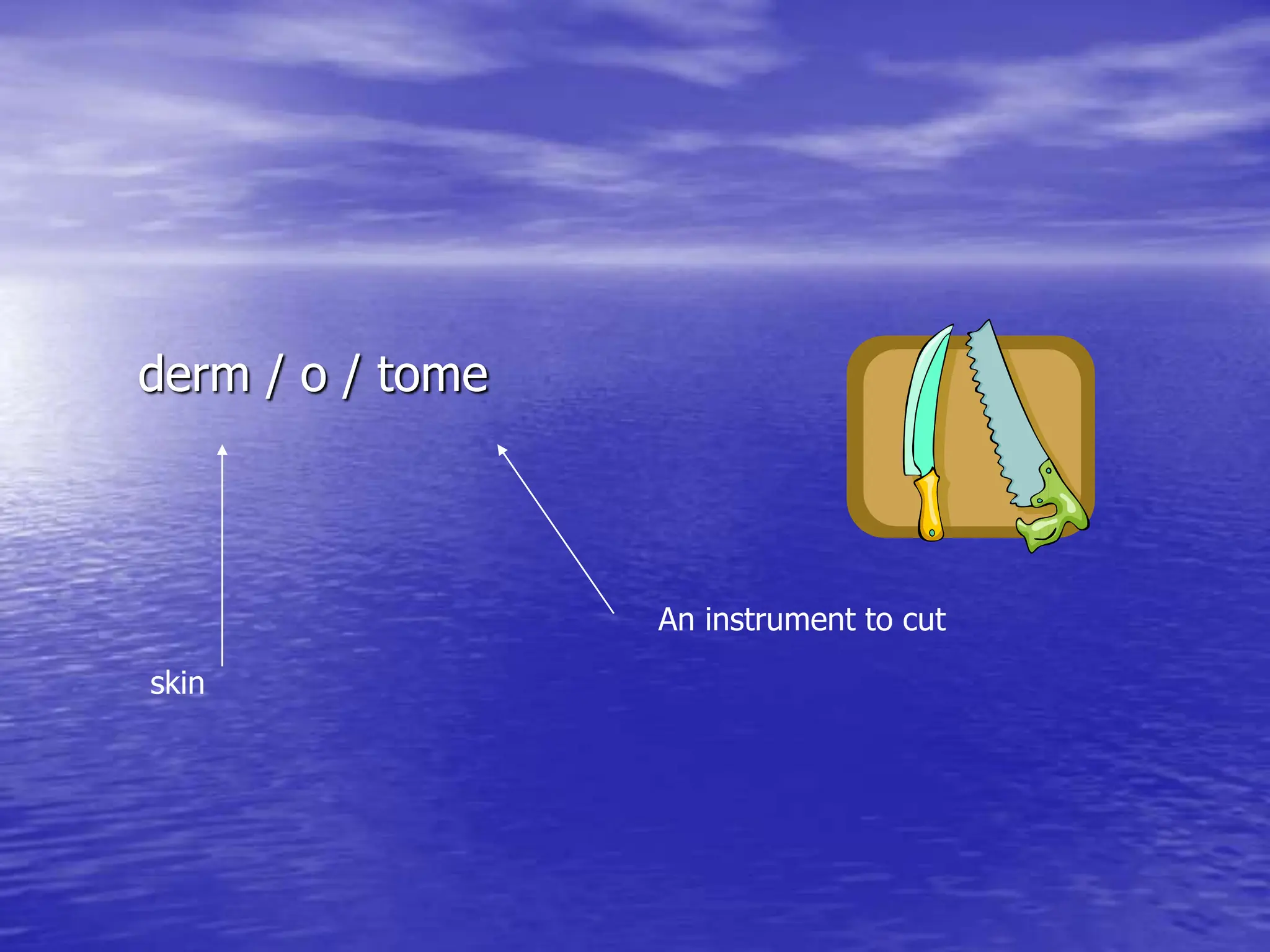
derm / o / tome
An instrument to cut
skin
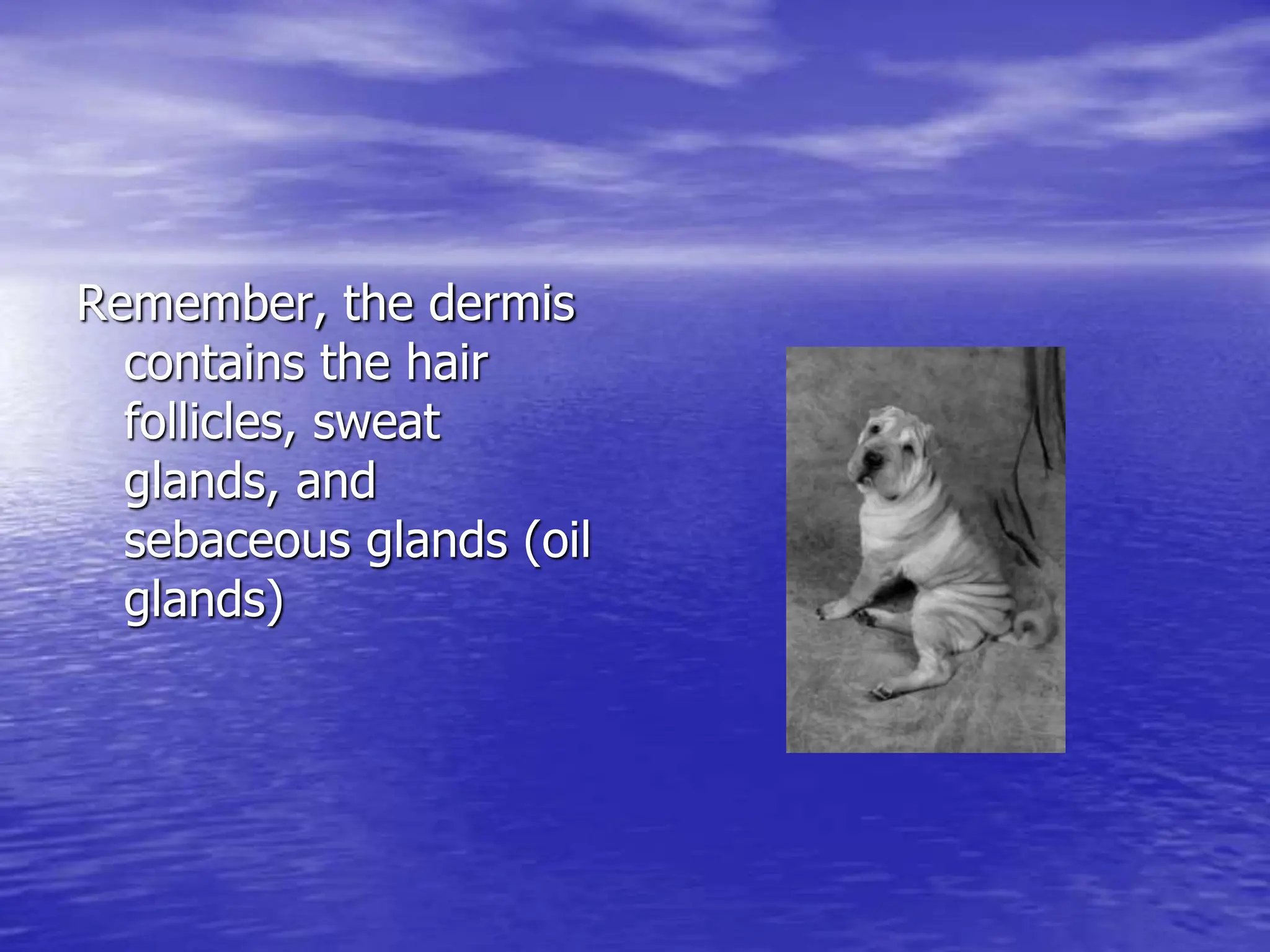
Remember, the dermis
contains the hair
follicles, sweat
glands, and
sebaceous glands (oil
glands)
The term “diaphoresis” is meant to denote
excessive sweating.
The combining form for sweat is
hidr/o
Don’t get confused!!!
Hidr/o means sweat
Hydr/o means water
Hidrosis is an abnormal condition of sweat
that causes blistering and peeling of the
palms and soles.
Anhidrosis is an abnormal condition of
diminished or absent sweat.
A hidradenoma is a
tumor of the sweat
gland.
Recall, the dermis is
attached to the
underlying structures
of the skin by
subcutaneous tissue.
The subcutaneous
tissue forms
lip/o/cytes, or fat
cells.
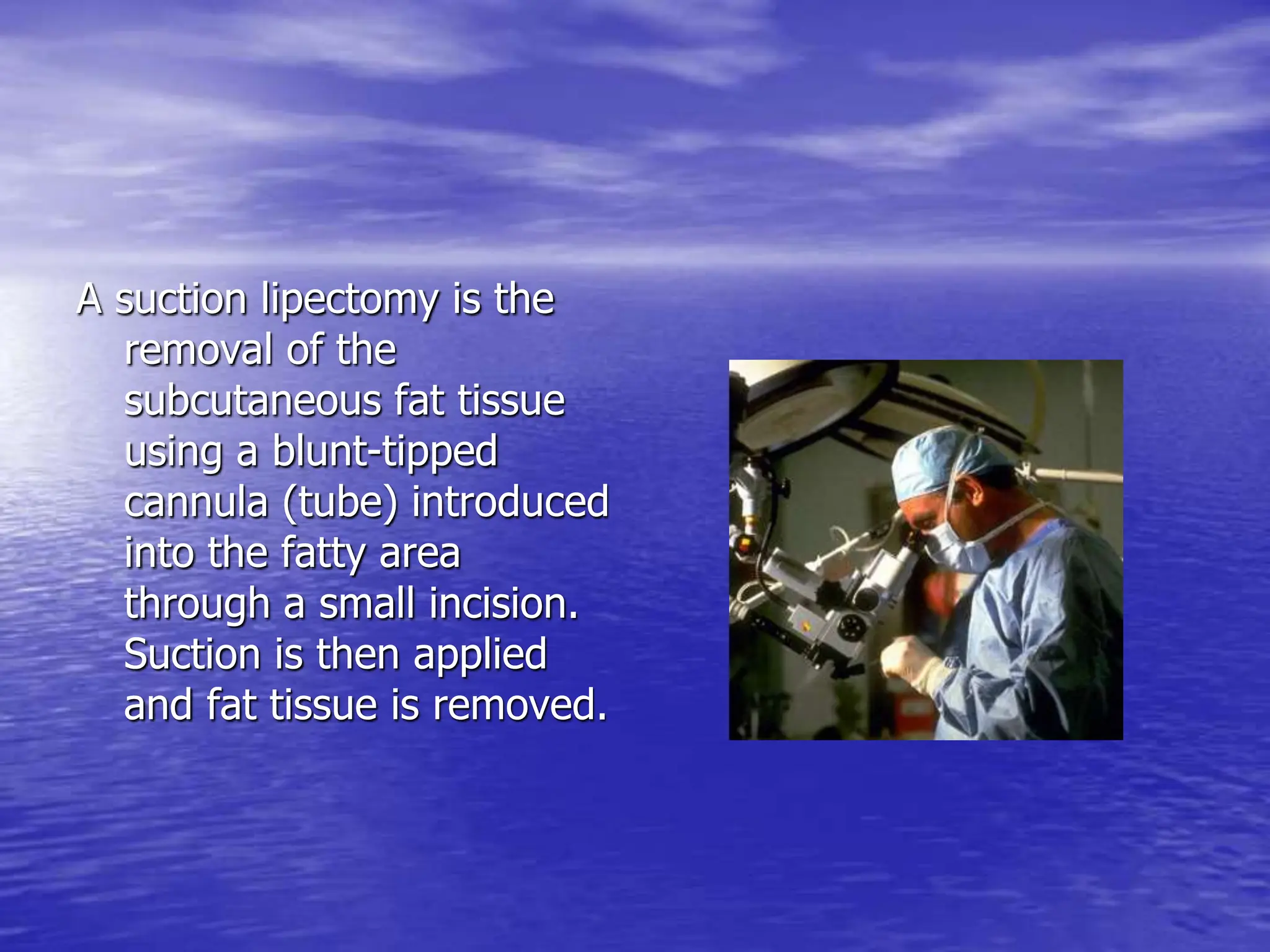
A suction lipectomy is the
removal of the
subcutaneous fat tissue
using a blunt-tipped
cannula (tube) introduced
into the fatty area
through a small incision.
Suction is then applied
and fat tissue is removed.
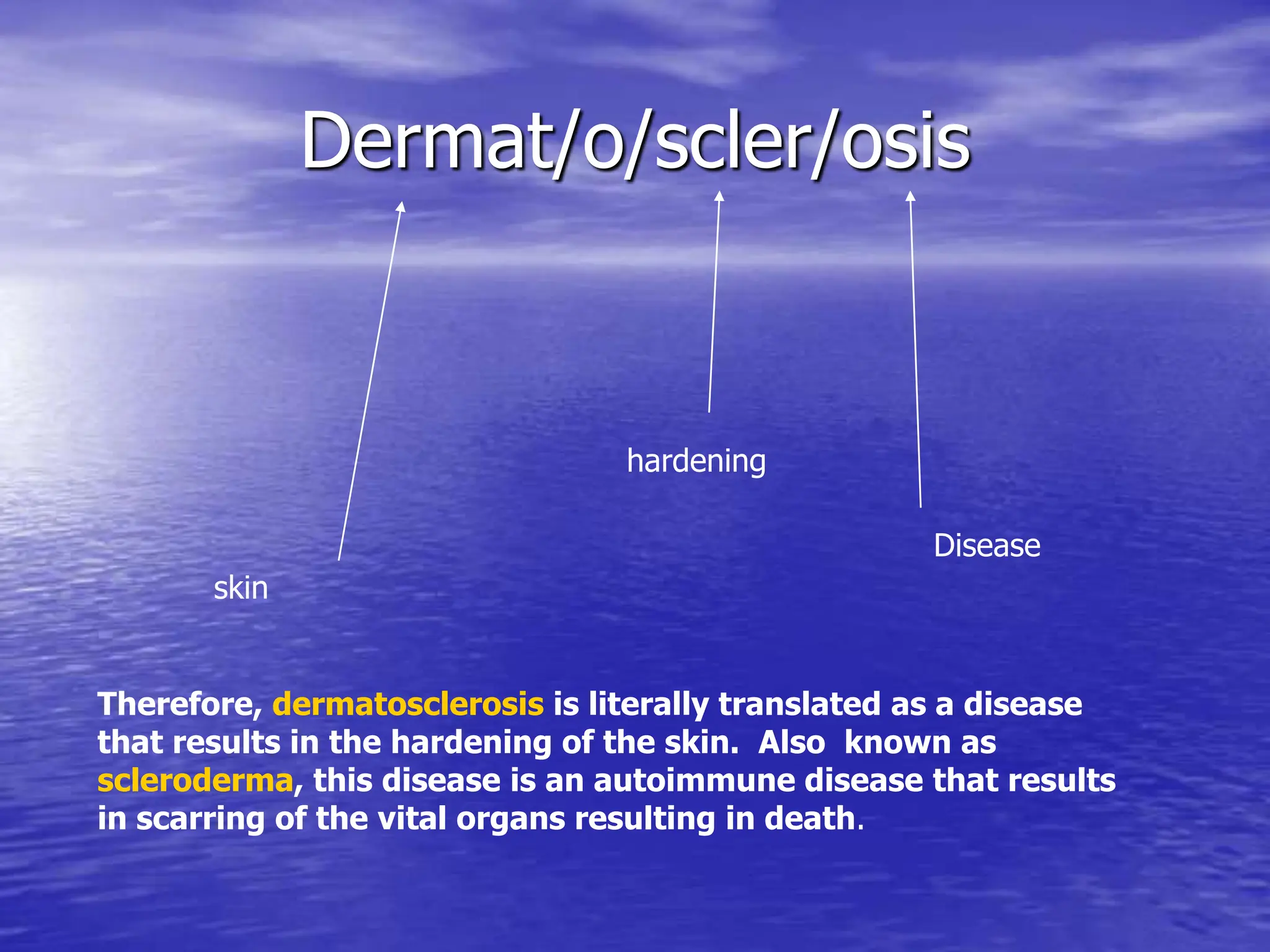
Dermat/o/scler/osis
skin
hardening
Disease
Therefore, dermatosclerosis is literally translated as a disease
that results in the hardening of the skin. Also known as
scleroderma, this disease is an autoimmune disease that results
in scarring of the vital organs resulting in death.
• The oil secreting glands of the skin are
called the SEBACEOUS GLANDS.
• The sweat glands are known as
SUDORIFEROUS GLANDS.
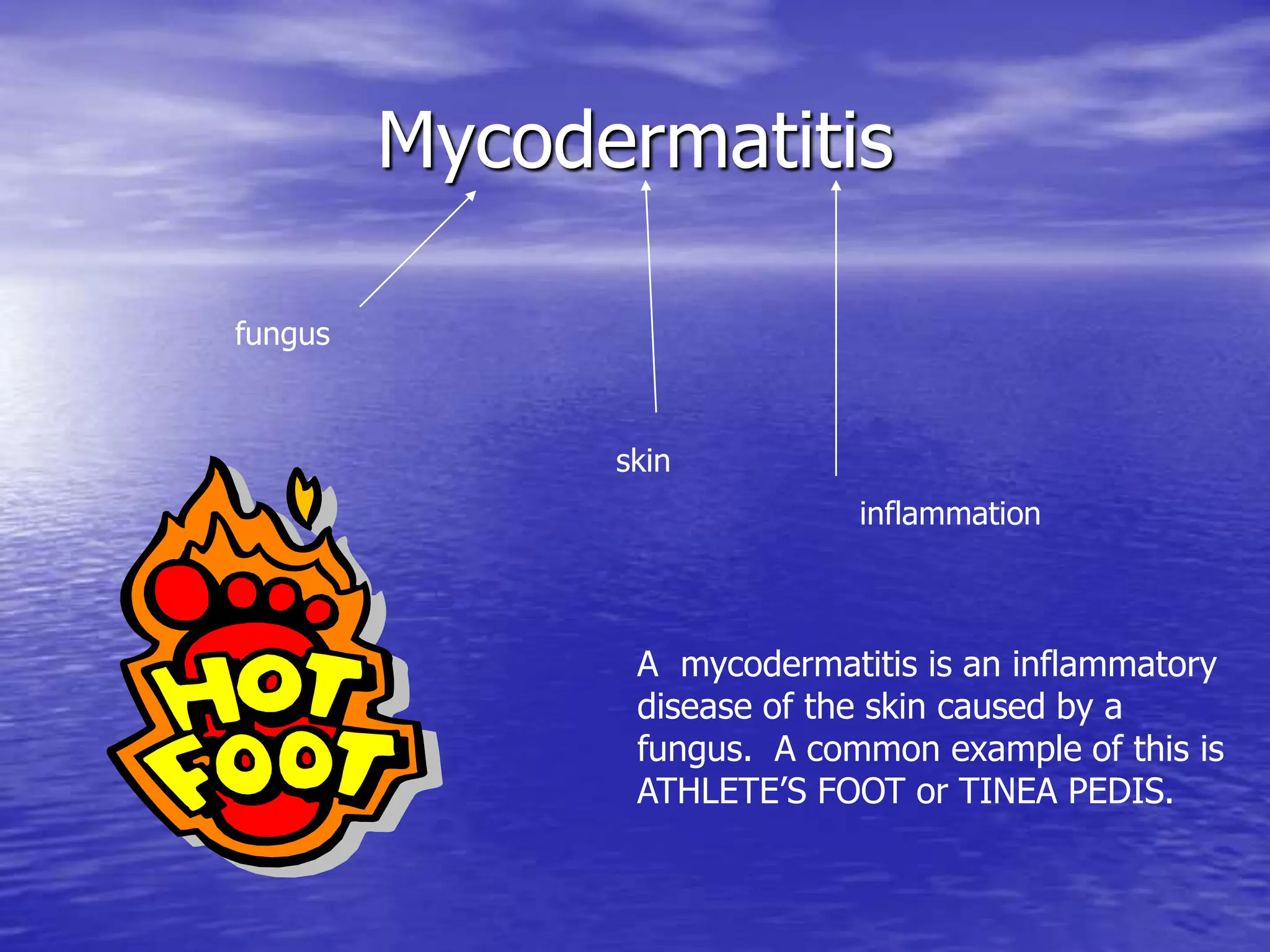
Mycodermatitis
inflammation
skin
fungus
A mycodermatitis is an inflammatory
disease of the skin caused by a
fungus. A common example of this is
ATHLETE’S FOOT or TINEA PEDIS.
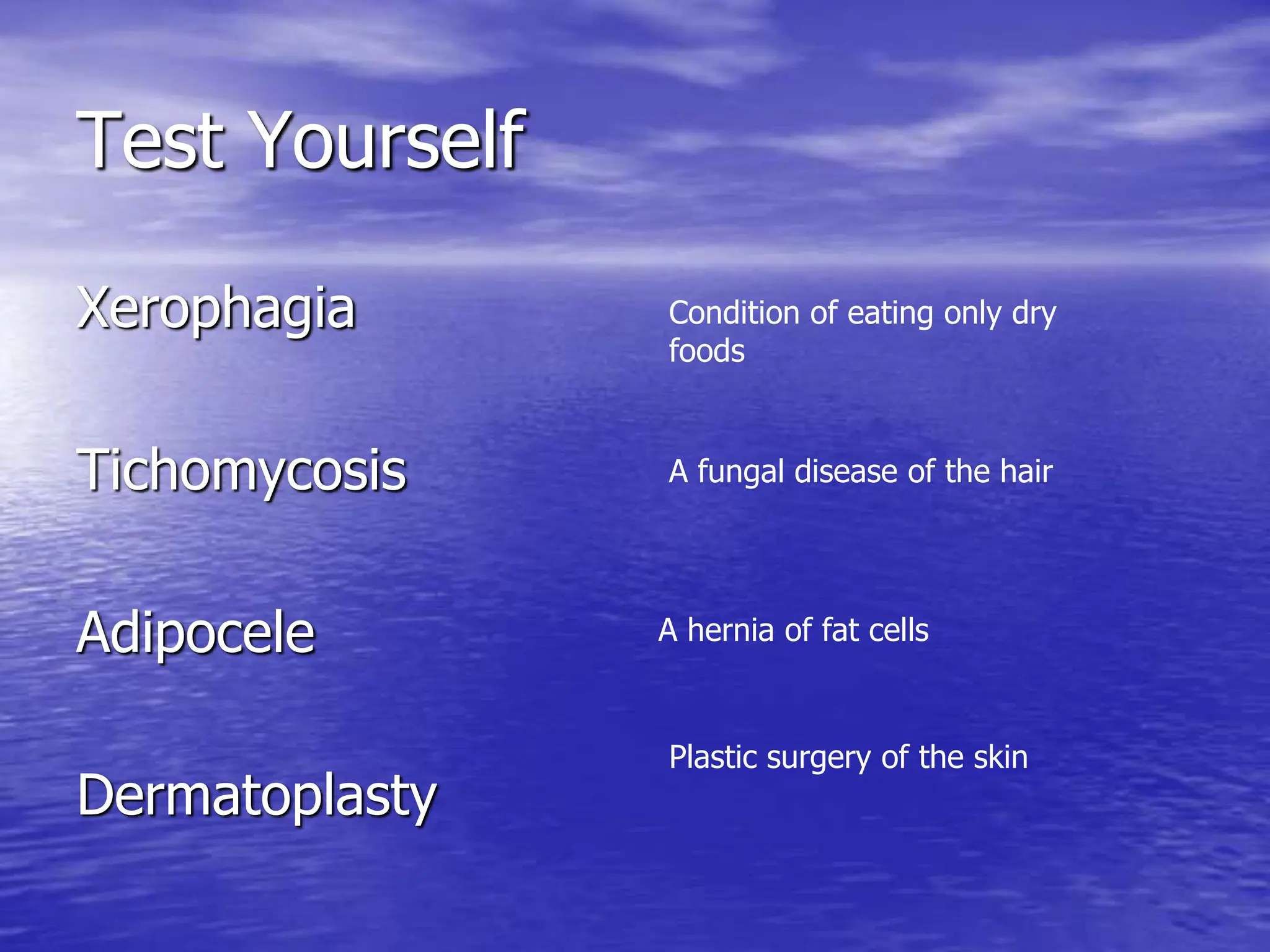
Test Yourself
Xerophagia
Tichomycosis
Adipocele
Dermatoplasty
Condition of eating only dry
foods
A fungal disease of the hair
A hernia of fat cells
Plastic surgery of the skin
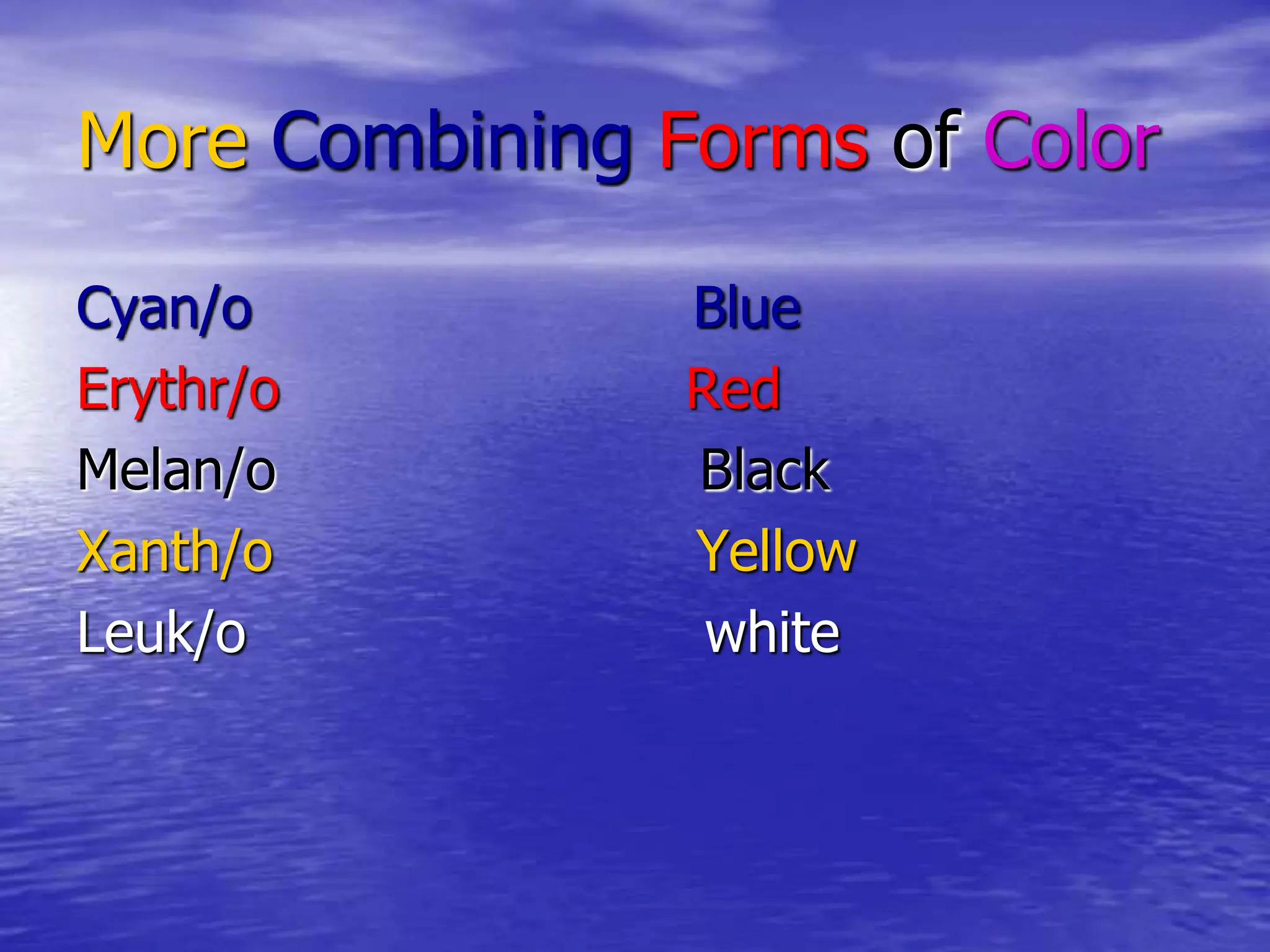
More Combining Forms of Color
Cyan/o Blue
Erythr/o Red
Melan/o Black
Xanth/o Yellow
Leuk/o white
The pigment that causes skin coloration is
MELANIN
Melanosis is the abnormal condition of
black.
A melanoma is a tumor of black pigment.
A person with bluish discoloration of the
skin exhibits
Cyanosis or cyanoderma
• A BASAL CELL CARCINOMA is a type of skin
cancer that affects the basal skin layer of the
epidermis.
• A MELANOMA is characterized by asymmetry,
irregular borders, and lack of a uniform
coloration.
• A DECUBITUS ULCER is a bedsore that
penetrates both epidermis and dermis.
SOME DISEASE SPECIFICS
PSORIASIS is a chronic disease that is
characterized by red lesions covered by silvery
scales.
ABRASIONS are scrapes
ALOPECIA is an absence or loss of hair.
CONTUSION is a collection of dried blood beneath
the skin. Commonly called bruises.
CYSTs are closed sacs containing fluid or solid
material.
ECCHYMOSIS is discoloration of the skin due to a
bruise.
ECZEMA is an inflammatory skin disease with red,
itchy skin. Sometimes has associated blisters
(bullae)
FISSURE is a crack in the skin. Usually associated with dry,
scaly skin.
HIRSUTISM is a condition characterized by excessive hair
growth.
IMPETIGO is an inflammatory skin disease with isolated
pustules that rupture.
LACERATION is a tearing of the skin. Irregular borders.
MACULEs are flat, discolored lesions.
NODULEs are palpable lesions larger than a
macule. Usually between 1-2 cm
PAPULEs are solid elevated lesions

Introduction to Integumentary System y dr jamil anwar

  • 1.
    QUIZ 1. The mainpart or foundation of a word 2. The plane that separates the front from the back. 3. Tissues combine to form these 4. Suffix meaning inflammation 5. The transverse plane separates the _____ from the ________.
  • 2.
    6. Tonsillitis 7. Leukemia 8.Cephalgia 9. Dental 10.Postmortem
  • 3.
  • 4.
    What is theIntegument? • The INTEGUMENTARY SYSTEM includes all the structures and tissues related to the skin. • This includes: 1. skin a. Epidermis b. Dermis 2. accessory organs a. Hair b. Nails c. Glands
  • 5.
    • The skincovers the entire body and provides protection against injuries, infection, and toxic compounds. • The system contains many nerve endings that act as RECEPTORS for pain, temperature, touch, and pressure.
  • 6.
    Anatomy of theSkin • Upper layer of skin is called EPIDERMIS EPI- means on top of DERMIS means skin • The lower layer of skin is called the DERMIS.
  • 7.
    The Epidermis • Ismultilayered. • Contains is superficial layer of dead skin cells called STRATUM CORNEUM. • The stratum corneum is composed of cells called KERATIN. • Is AVASCULAR (no blood vessels) • Has no nerve tissue (can’t feel pain)
  • 8.
    The Dermis • Hastwo distinct layers: 1. Papillary Layer (more superficial) 2. Reticular Layer (deeper) • Accessory organs begin the dermis. • Some of the accessory organs end or cross into the epidermis. • The dermis contains blood vessels and nerve tissue.
  • 9.
    Subcutaneous Fat andSuperficial Fascia • The SubQ fat is found deep to the dermis. • It contains the larger blood vessels of the skin. • It is composed of adipose (fat) tissue, a form of connective tissue. • Deep to the subQ layer is the fascial layer that covers the muscles beneath.
  • 10.
  • 11.
  • 12.
  • 13.
    Subcutaneous Dermatology hypodermic Pertaining to underthe skin Study of the skin Pertaining to under the skin
  • 14.
    Hidro/o sweat Anhidrosis -abnormal condition of sweat Kerat/o horny tissue keratosis- - abnormal condition of hard tissue Myc/o fungus Onychomycosis – abnormal condition of fungal toenails
  • 15.
  • 16.
    Pil/o Trich/o Hair A Pilonidal cyst Isa cyst that pertains to a nest of hair Trichopathy Is a disease of the hair
  • 17.
  • 18.
    derm / o/ tome An instrument to cut skin
  • 19.
    Remember, the dermis containsthe hair follicles, sweat glands, and sebaceous glands (oil glands)
  • 20.
    The term “diaphoresis”is meant to denote excessive sweating. The combining form for sweat is hidr/o
  • 21.
    Don’t get confused!!! Hidr/omeans sweat Hydr/o means water
  • 22.
    Hidrosis is anabnormal condition of sweat that causes blistering and peeling of the palms and soles. Anhidrosis is an abnormal condition of diminished or absent sweat.
  • 23.
    A hidradenoma isa tumor of the sweat gland.
  • 24.
    Recall, the dermisis attached to the underlying structures of the skin by subcutaneous tissue. The subcutaneous tissue forms lip/o/cytes, or fat cells.
  • 25.
    A suction lipectomyis the removal of the subcutaneous fat tissue using a blunt-tipped cannula (tube) introduced into the fatty area through a small incision. Suction is then applied and fat tissue is removed.
  • 26.
    Dermat/o/scler/osis skin hardening Disease Therefore, dermatosclerosis isliterally translated as a disease that results in the hardening of the skin. Also known as scleroderma, this disease is an autoimmune disease that results in scarring of the vital organs resulting in death.
  • 27.
    • The oilsecreting glands of the skin are called the SEBACEOUS GLANDS. • The sweat glands are known as SUDORIFEROUS GLANDS.
  • 28.
    Mycodermatitis inflammation skin fungus A mycodermatitis isan inflammatory disease of the skin caused by a fungus. A common example of this is ATHLETE’S FOOT or TINEA PEDIS.
  • 29.
    Test Yourself Xerophagia Tichomycosis Adipocele Dermatoplasty Condition ofeating only dry foods A fungal disease of the hair A hernia of fat cells Plastic surgery of the skin
  • 30.
    More Combining Formsof Color Cyan/o Blue Erythr/o Red Melan/o Black Xanth/o Yellow Leuk/o white
  • 31.
    The pigment thatcauses skin coloration is MELANIN Melanosis is the abnormal condition of black. A melanoma is a tumor of black pigment.
  • 32.
    A person withbluish discoloration of the skin exhibits Cyanosis or cyanoderma
  • 33.
    • A BASALCELL CARCINOMA is a type of skin cancer that affects the basal skin layer of the epidermis. • A MELANOMA is characterized by asymmetry, irregular borders, and lack of a uniform coloration. • A DECUBITUS ULCER is a bedsore that penetrates both epidermis and dermis. SOME DISEASE SPECIFICS
  • 34.
    PSORIASIS is achronic disease that is characterized by red lesions covered by silvery scales. ABRASIONS are scrapes ALOPECIA is an absence or loss of hair. CONTUSION is a collection of dried blood beneath the skin. Commonly called bruises.
  • 35.
    CYSTs are closedsacs containing fluid or solid material. ECCHYMOSIS is discoloration of the skin due to a bruise. ECZEMA is an inflammatory skin disease with red, itchy skin. Sometimes has associated blisters (bullae)
  • 36.
    FISSURE is acrack in the skin. Usually associated with dry, scaly skin. HIRSUTISM is a condition characterized by excessive hair growth. IMPETIGO is an inflammatory skin disease with isolated pustules that rupture. LACERATION is a tearing of the skin. Irregular borders.
  • 37.
    MACULEs are flat,discolored lesions. NODULEs are palpable lesions larger than a macule. Usually between 1-2 cm PAPULEs are solid elevated lesions