Introduction to Financial
Management
Understanding the Basics
Agenda
Overview of Financial Management
Importance of Financial
Management
Key Concepts in Financial
Management
Financial Statements
Financial Ratios
Conclusion
Overview of Financial Management
Definition of Financial Management: Financial management involves planning,
organizing, directing, and controlling the financial activities of an organization.
Objectives of Financial Management: To maximize shareholder wealth, ensure
liquidity, minimize financial risks, and optimize the utilization of funds.
Scope of Financial Management: It encompasses financial planning, budgeting,
capital investment decisions, financing decisions, and monitoring financial
performance.
Importance of Financial Management
Ensures Business Sustainability: By effectively managing finances, businesses
can sustain operations and remain competitive in the long term.
Facilitates Decision Making: Financial management provides crucial
information for making strategic decisions related to investments, expansions,
and resource allocation.
Maximizes Shareholder Wealth: Sound financial management practices
contribute to increasing shareholder value and profitability.
Enhances Credibility with Stakeholders: Well-managed finances improve
credibility with investors, creditors, and other stakeholders, leading to better
business relationships.
Key Concepts in Financial Management
Time Value of Money: The principle that money has different values at different
points in time, emphasizing the importance of considering the timing of cash flows.
Risk and Return: The relationship between the risk associated with an investment
and the potential return it offers.
Cost of Capital: The required rate of return that a firm must earn on its investments
to maintain or increase the value of the company.
Capital Budgeting: The process of evaluating and selecting long-term investment
projects that are consistent with the firm's goal of maximizing shareholder wealth.
Working Capital Management: Managing the company's short-term assets and
liabilities to ensure smooth operations and sufficient liquidity.
Financial Statements
Balance Sheet
Definition: A financial statement that provides a snapshot of a company's financial position at a specific point in
time.
Components: Assets, Liabilities, and Equity.
Income Statement
Purpose: Summarizes the company's revenues, expenses, and net income or loss over a specific period.
Components: Revenue, Cost of Goods Sold, Operating Expenses, and Net Income.
Cash Flow Statement
Importance: Tracks the inflow and outflow of cash and cash equivalents during a specific period.
Components: Operating Activities, Investing Activities, and Financing Activities.
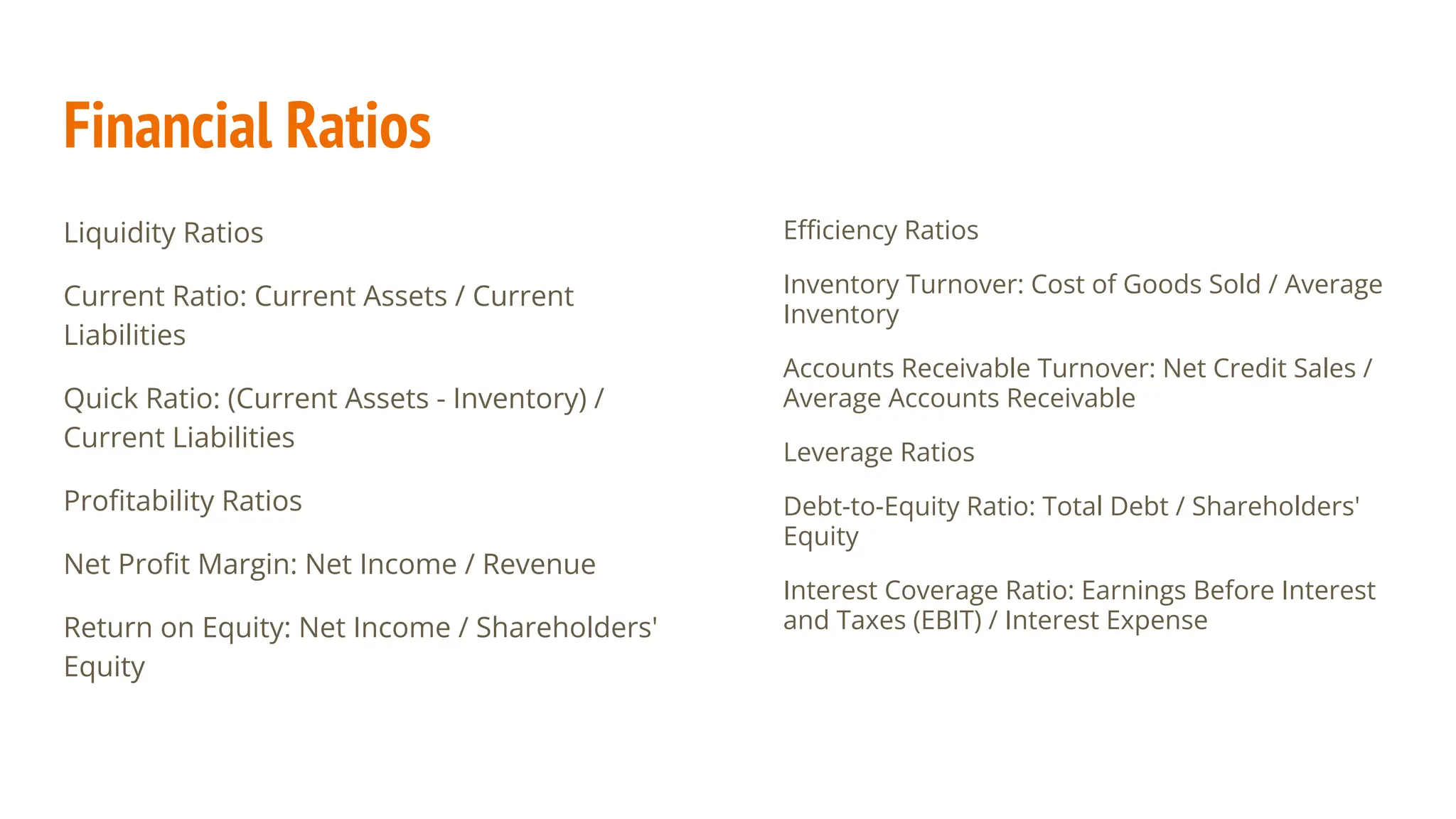
Financial Ratios
Liquidity Ratios
Current Ratio: Current Assets / Current
Liabilities
Quick Ratio: (Current Assets - Inventory) /
Current Liabilities
Profitability Ratios
Net Profit Margin: Net Income / Revenue
Return on Equity: Net Income / Shareholders'
Equity
Efficiency Ratios
Inventory Turnover: Cost of Goods Sold / Average
Inventory
Accounts Receivable Turnover: Net Credit Sales /
Average Accounts Receivable
Leverage Ratios
Debt-to-Equity Ratio: Total Debt / Shareholders'
Equity
Interest Coverage Ratio: Earnings Before Interest
and Taxes (EBIT) / Interest Expense
Conclusion
Financial management is essential
for business success as it helps in
maximizing shareholder wealth,
ensuring sustainability, and
facilitating informed decision
making.
Importance of financial
management in business success:
Effective financial management
practices contribute to long-term
growth, profitability, and stability.

Introduction to Financial Management.pdf

  • 1.
  • 2.
    Agenda Overview of FinancialManagement Importance of Financial Management Key Concepts in Financial Management Financial Statements Financial Ratios Conclusion
  • 3.
    Overview of FinancialManagement Definition of Financial Management: Financial management involves planning, organizing, directing, and controlling the financial activities of an organization. Objectives of Financial Management: To maximize shareholder wealth, ensure liquidity, minimize financial risks, and optimize the utilization of funds. Scope of Financial Management: It encompasses financial planning, budgeting, capital investment decisions, financing decisions, and monitoring financial performance.
  • 4.
    Importance of FinancialManagement Ensures Business Sustainability: By effectively managing finances, businesses can sustain operations and remain competitive in the long term. Facilitates Decision Making: Financial management provides crucial information for making strategic decisions related to investments, expansions, and resource allocation. Maximizes Shareholder Wealth: Sound financial management practices contribute to increasing shareholder value and profitability. Enhances Credibility with Stakeholders: Well-managed finances improve credibility with investors, creditors, and other stakeholders, leading to better business relationships.
  • 5.
    Key Concepts inFinancial Management Time Value of Money: The principle that money has different values at different points in time, emphasizing the importance of considering the timing of cash flows. Risk and Return: The relationship between the risk associated with an investment and the potential return it offers. Cost of Capital: The required rate of return that a firm must earn on its investments to maintain or increase the value of the company. Capital Budgeting: The process of evaluating and selecting long-term investment projects that are consistent with the firm's goal of maximizing shareholder wealth. Working Capital Management: Managing the company's short-term assets and liabilities to ensure smooth operations and sufficient liquidity.
  • 6.
    Financial Statements Balance Sheet Definition:A financial statement that provides a snapshot of a company's financial position at a specific point in time. Components: Assets, Liabilities, and Equity. Income Statement Purpose: Summarizes the company's revenues, expenses, and net income or loss over a specific period. Components: Revenue, Cost of Goods Sold, Operating Expenses, and Net Income. Cash Flow Statement Importance: Tracks the inflow and outflow of cash and cash equivalents during a specific period. Components: Operating Activities, Investing Activities, and Financing Activities.
  • 7.
    Financial Ratios Liquidity Ratios CurrentRatio: Current Assets / Current Liabilities Quick Ratio: (Current Assets - Inventory) / Current Liabilities Profitability Ratios Net Profit Margin: Net Income / Revenue Return on Equity: Net Income / Shareholders' Equity Efficiency Ratios Inventory Turnover: Cost of Goods Sold / Average Inventory Accounts Receivable Turnover: Net Credit Sales / Average Accounts Receivable Leverage Ratios Debt-to-Equity Ratio: Total Debt / Shareholders' Equity Interest Coverage Ratio: Earnings Before Interest and Taxes (EBIT) / Interest Expense
  • 8.
    Conclusion Financial management isessential for business success as it helps in maximizing shareholder wealth, ensuring sustainability, and facilitating informed decision making. Importance of financial management in business success: Effective financial management practices contribute to long-term growth, profitability, and stability.