Introduction to
Computer Science
Engineering
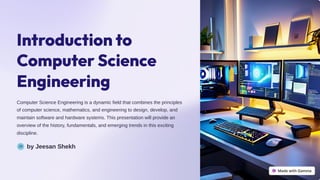
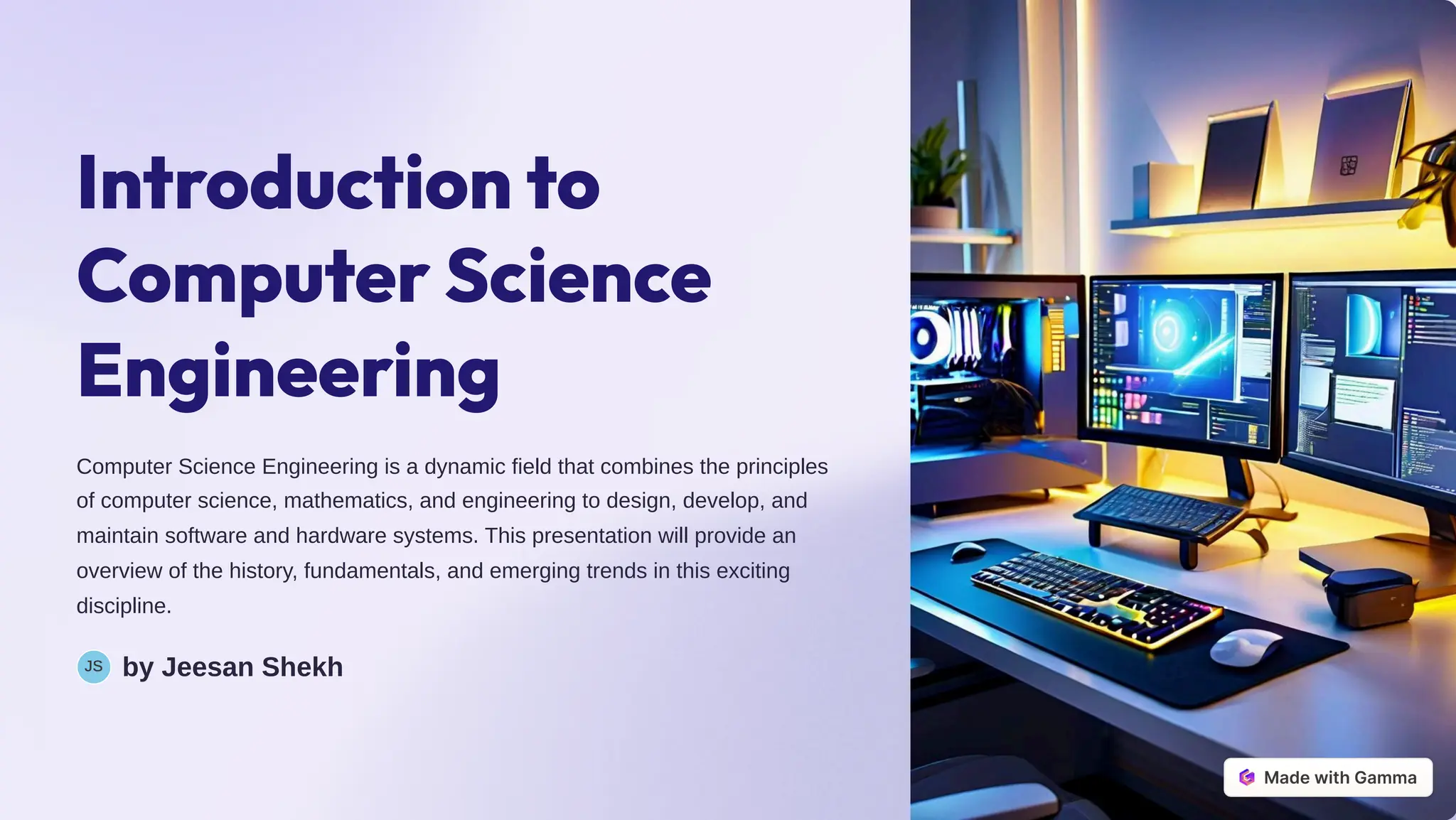
Computer Science Engineering is a dynamic field that combines the principles
of computer science, mathematics, and engineering to design, develop, and
maintain software and hardware systems. This presentation will provide an
overview of the history, fundamentals, and emerging trends in this exciting
discipline.
by Jeesan Shekh
JS
History and Development of
Computer Science
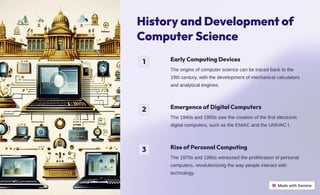
1 Early Computing Devices
The origins of computer science can be traced back to the
19th century, with the development of mechanical calculators
and analytical engines.
2 Emergence of Digital Computers
The 1940s and 1950s saw the creation of the first electronic
digital computers, such as the ENIAC and the UNIVAC I.
3 Rise of Personal Computing
The 1970s and 1980s witnessed the proliferation of personal
computers, revolutionizing the way people interact with
technology.
Fundamentals of Computer Hardware
Central Processing Unit
(CPU)
The CPU is the "brain" of the
computer, responsible for executing
instructions and performing
calculations.
Memory (RAM and Storage)
Memory components, such as RAM
and storage devices, store data and
instructions for the CPU to access.
Input/Output Devices
Devices like keyboards, mice,
monitors, and printers enable users
to interact with the computer system.
Fundamentals of Computer
Software
1 Operating Systems
Manage the computer's hardware and provide a user interface, such
as Windows, macOS, or Linux.
2 Application Software
Programs designed for specific tasks, like word processors,
spreadsheets, and media players.
3 System Software
Low-level programs that control the computer's hardware and facilitate
the execution of application software.
4 Software Development
The process of designing, implementing, and testing computer
programs to meet user requirements.
Programming Languages and Paradigms
Imperative Languages
C, Java, and Python, which focus on
step-by-step instructions to
accomplish tasks.
Declarative Languages
SQL and Prolog, which describe
what the program should do rather
than how to do it.
Functional Languages
Lisp and Haskell, which treat
computation as the evaluation of
mathematical functions.
Data Structures and
Algorithms
Data Structures
Organized ways of storing and manipulating data, such as arrays, linked
lists, and hash tables.
Algorithms
Step-by-step procedures for solving problems, like sorting, searching,
and graph traversal.
Efficiency Analysis
Evaluating the time and space complexity of algorithms to optimize their
performance.
Algorithm Design
Developing new algorithms or modifying existing ones to solve complex
problems efficiently.
Computer Networks and Communication
1
Network Protocols
Standardized rules that govern the
exchange of data between devices,
such as TCP/IP and HTTP.
2
Network Topologies
The physical and logical
arrangement of network
components, including bus, star,
and mesh topologies.
3
Network Security
Techniques and technologies used
to protect networks and data from
unauthorized access and threats.
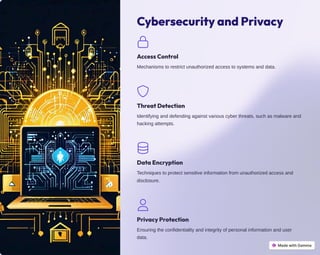
Cybersecurity and Privacy
Access Control
Mechanisms to restrict unauthorized access to systems and data.
Threat Detection
Identifying and defending against various cyber threats, such as malware and
hacking attempts.
Data Encryption
Techniques to protect sensitive information from unauthorized access and
disclosure.
Privacy Protection
Ensuring the confidentiality and integrity of personal information and user
data.
Emerging Trends in Computer Science
1 Artificial Intelligence
The development of machines and algorithms that
can perform tasks typically requiring human
intelligence.
2 Quantum Computing
The use of quantum-mechanical phenomena to
perform computations that are intractable for
classical computers.
3 Internet of Things (IoT)
The interconnection of everyday devices and
appliances, enabling them to communicate and
exchange data.
4 Big Data and Analytics
The collection, processing, and analysis of large,
complex datasets to uncover insights and patterns.
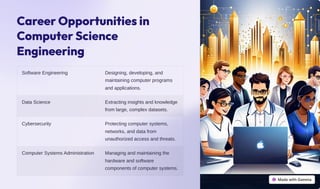
Career Opportunities in
Computer Science
Engineering
Software Engineering Designing, developing, and
maintaining computer programs
and applications.
Data Science Extracting insights and knowledge
from large, complex datasets.
Cybersecurity Protecting computer systems,
networks, and data from
unauthorized access and threats.
Computer Systems Administration Managing and maintaining the
hardware and software
components of computer systems.

Introduction-to-Computer-Science-Engineering (1).pdf

  • 1.
    Introduction to Computer Science Engineering ComputerScience Engineering is a dynamic field that combines the principles of computer science, mathematics, and engineering to design, develop, and maintain software and hardware systems. This presentation will provide an overview of the history, fundamentals, and emerging trends in this exciting discipline. by Jeesan Shekh JS
  • 2.
    History and Developmentof Computer Science 1 Early Computing Devices The origins of computer science can be traced back to the 19th century, with the development of mechanical calculators and analytical engines. 2 Emergence of Digital Computers The 1940s and 1950s saw the creation of the first electronic digital computers, such as the ENIAC and the UNIVAC I. 3 Rise of Personal Computing The 1970s and 1980s witnessed the proliferation of personal computers, revolutionizing the way people interact with technology.
  • 3.
    Fundamentals of ComputerHardware Central Processing Unit (CPU) The CPU is the "brain" of the computer, responsible for executing instructions and performing calculations. Memory (RAM and Storage) Memory components, such as RAM and storage devices, store data and instructions for the CPU to access. Input/Output Devices Devices like keyboards, mice, monitors, and printers enable users to interact with the computer system.
  • 4.
    Fundamentals of Computer Software 1Operating Systems Manage the computer's hardware and provide a user interface, such as Windows, macOS, or Linux. 2 Application Software Programs designed for specific tasks, like word processors, spreadsheets, and media players. 3 System Software Low-level programs that control the computer's hardware and facilitate the execution of application software. 4 Software Development The process of designing, implementing, and testing computer programs to meet user requirements.
  • 5.
    Programming Languages andParadigms Imperative Languages C, Java, and Python, which focus on step-by-step instructions to accomplish tasks. Declarative Languages SQL and Prolog, which describe what the program should do rather than how to do it. Functional Languages Lisp and Haskell, which treat computation as the evaluation of mathematical functions.
  • 6.
    Data Structures and Algorithms DataStructures Organized ways of storing and manipulating data, such as arrays, linked lists, and hash tables. Algorithms Step-by-step procedures for solving problems, like sorting, searching, and graph traversal. Efficiency Analysis Evaluating the time and space complexity of algorithms to optimize their performance. Algorithm Design Developing new algorithms or modifying existing ones to solve complex problems efficiently.
  • 7.
    Computer Networks andCommunication 1 Network Protocols Standardized rules that govern the exchange of data between devices, such as TCP/IP and HTTP. 2 Network Topologies The physical and logical arrangement of network components, including bus, star, and mesh topologies. 3 Network Security Techniques and technologies used to protect networks and data from unauthorized access and threats.
  • 8.
    Cybersecurity and Privacy AccessControl Mechanisms to restrict unauthorized access to systems and data. Threat Detection Identifying and defending against various cyber threats, such as malware and hacking attempts. Data Encryption Techniques to protect sensitive information from unauthorized access and disclosure. Privacy Protection Ensuring the confidentiality and integrity of personal information and user data.
  • 9.
    Emerging Trends inComputer Science 1 Artificial Intelligence The development of machines and algorithms that can perform tasks typically requiring human intelligence. 2 Quantum Computing The use of quantum-mechanical phenomena to perform computations that are intractable for classical computers. 3 Internet of Things (IoT) The interconnection of everyday devices and appliances, enabling them to communicate and exchange data. 4 Big Data and Analytics The collection, processing, and analysis of large, complex datasets to uncover insights and patterns.
  • 10.
    Career Opportunities in ComputerScience Engineering Software Engineering Designing, developing, and maintaining computer programs and applications. Data Science Extracting insights and knowledge from large, complex datasets. Cybersecurity Protecting computer systems, networks, and data from unauthorized access and threats. Computer Systems Administration Managing and maintaining the hardware and software components of computer systems.