Jazz
• Jazz was born in African American communities in
America during the late 1800s and early 1900s.
• Improvisation is a very important part of jazz
(playing what you feel in that moment).
• There are many different jazz styles, including
ragtime, swing, cool jazz and be-bop.
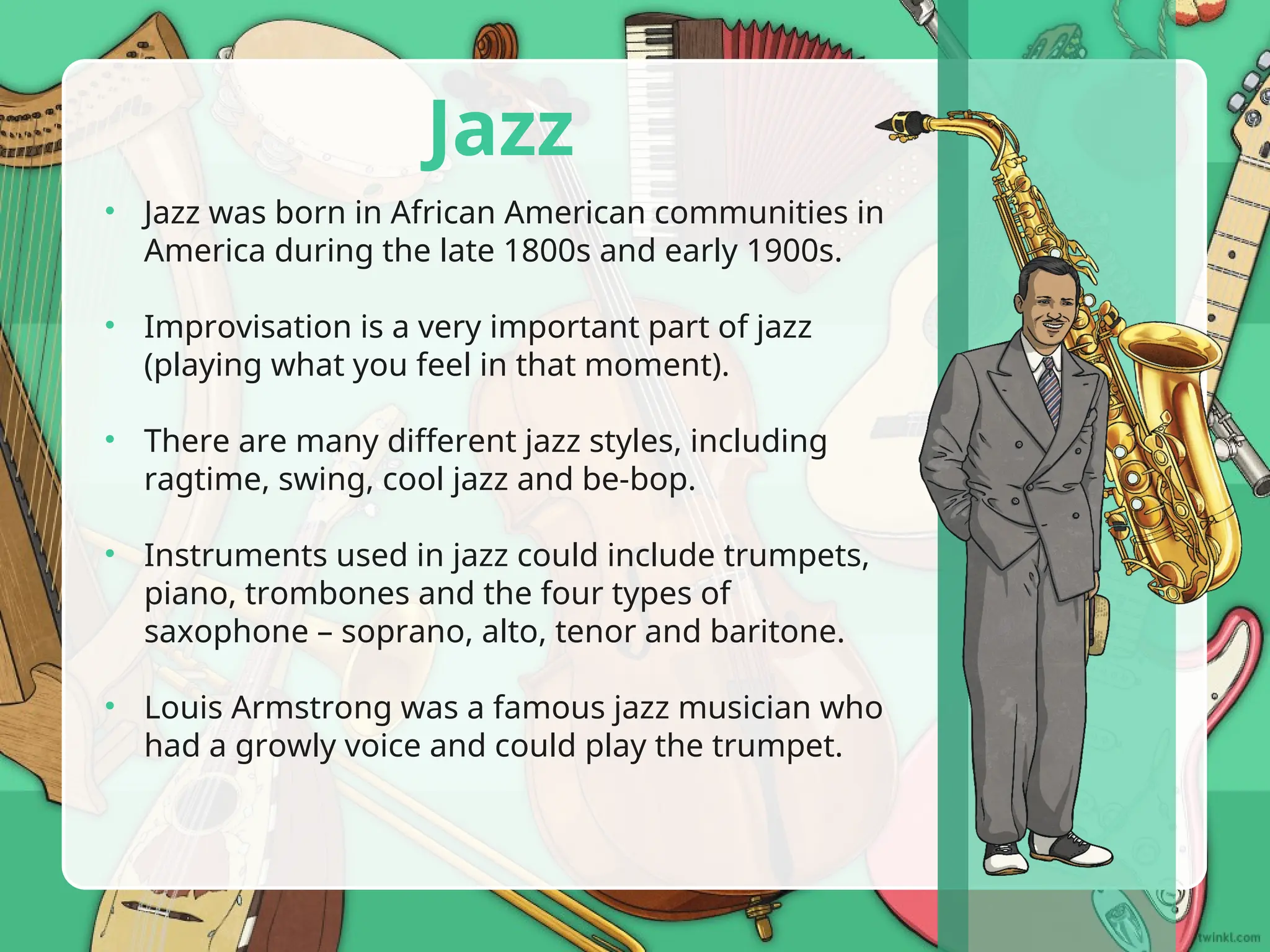
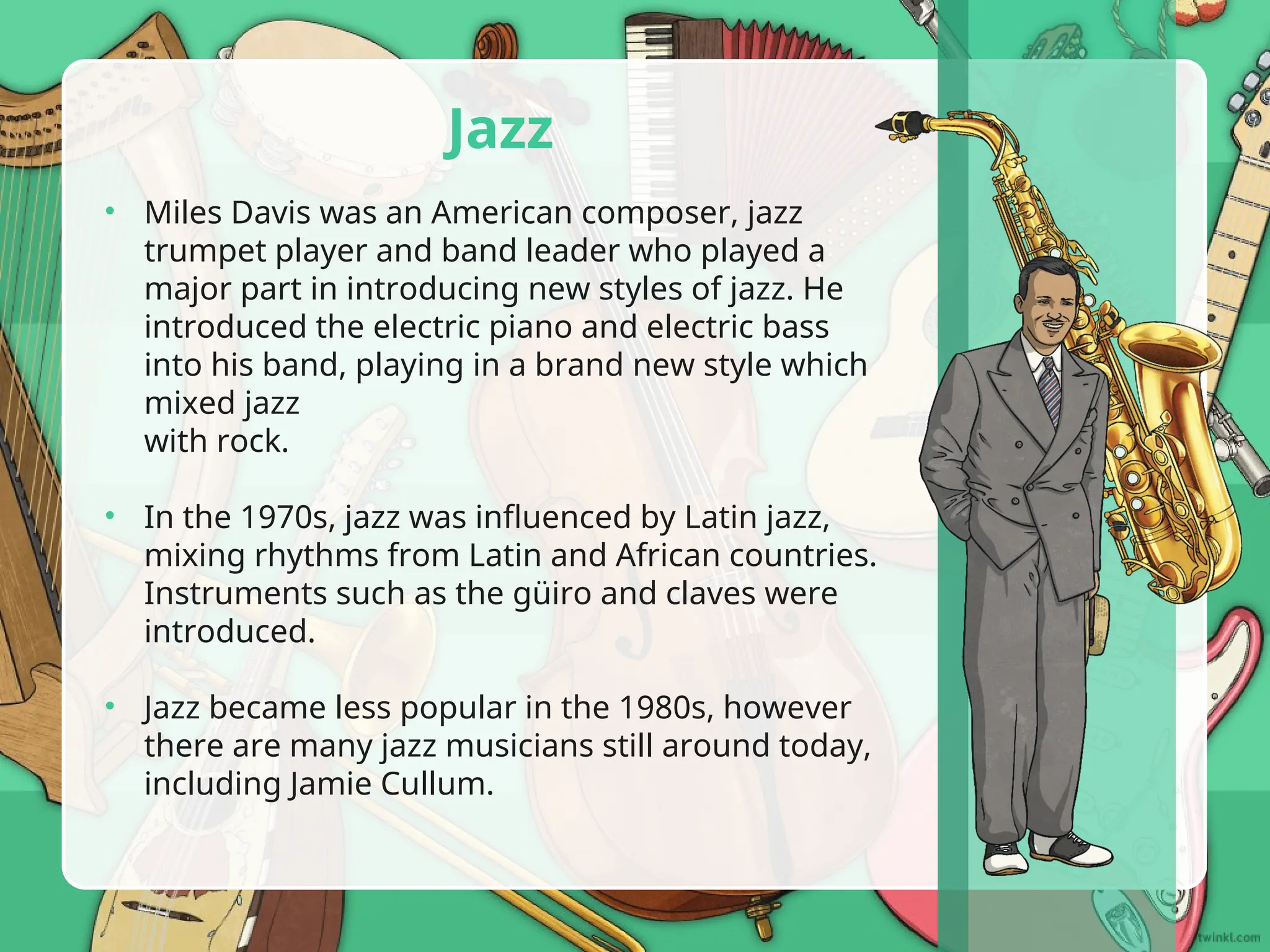
• Instruments used in jazz could include trumpets,
piano, trombones and the four types of
saxophone – soprano, alto, tenor and baritone.
• Louis Armstrong was a famous jazz musician who
had a growly voice and could play the trumpet.
• Miles Davis was an American composer, jazz
trumpet player and band leader who played a
major part in introducing new styles of jazz. He
introduced the electric piano and electric bass
into his band, playing in a brand new style which
mixed jazz
with rock.
• In the 1970s, jazz was influenced by Latin jazz,
mixing rhythms from Latin and African countries.
Instruments such as the güiro and claves were
introduced.
• Jazz became less popular in the 1980s, however
there are many jazz musicians still around today,
including Jamie Cullum.
Jazz
• Swing began in the late 1920s but it was between
1935 and 1946 when big band swing music
became the most popular music in America, also
known as the Swing Era.
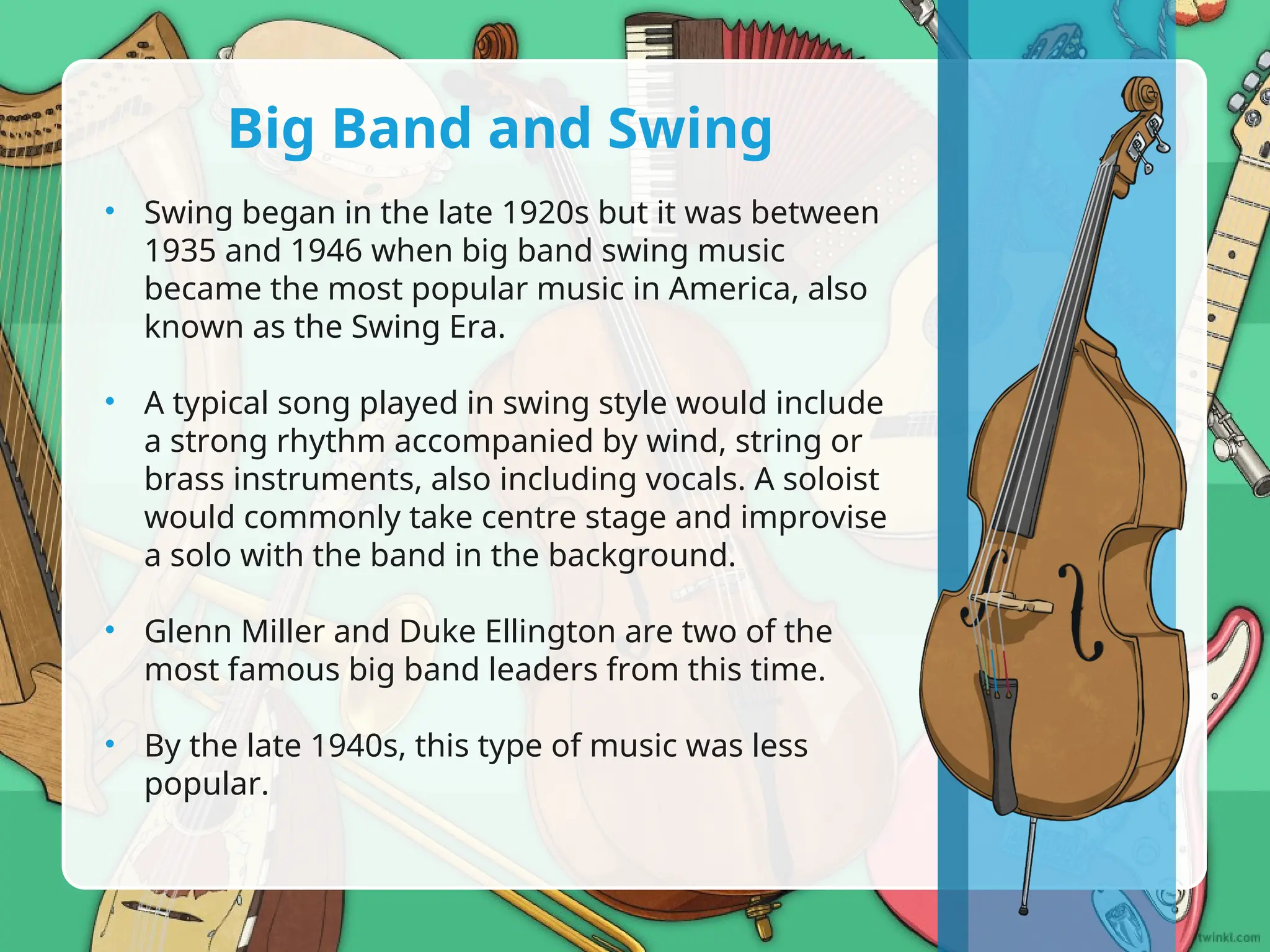
• A typical song played in swing style would include
a strong rhythm accompanied by wind, string or
brass instruments, also including vocals. A soloist
would commonly take centre stage and improvise
a solo with the band in the background.
• Glenn Miller and Duke Ellington are two of the
most famous big band leaders from this time.
• By the late 1940s, this type of music was less
popular.
Big Band and Swing
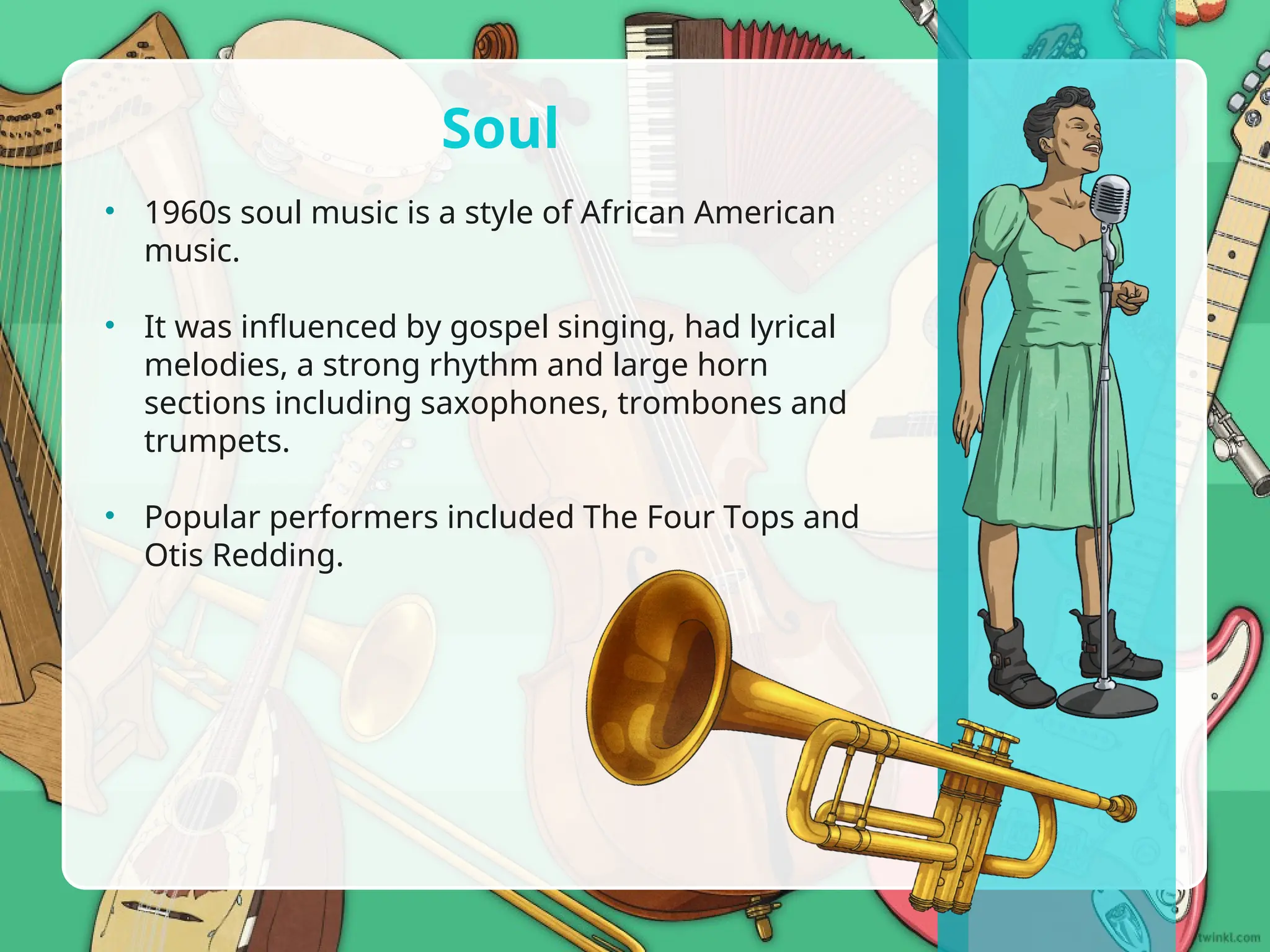
• 1960s soul music is a style of African American
music.
• It was influenced by gospel singing, had lyrical
melodies, a strong rhythm and large horn
sections including saxophones, trombones and
trumpets.
• Popular performers included The Four Tops and
Otis Redding.
Soul
• Rock ‘n’ roll is a popular music style which came
from America during the late 1940s and early
1950s.
• It developed out of other African American
musical styles, such as boogie woogie, blues,
country music and gospel music.
• In the early 1940s, the saxophone or piano were
often the lead instrument but this was replaced
with the guitar in the 50s.
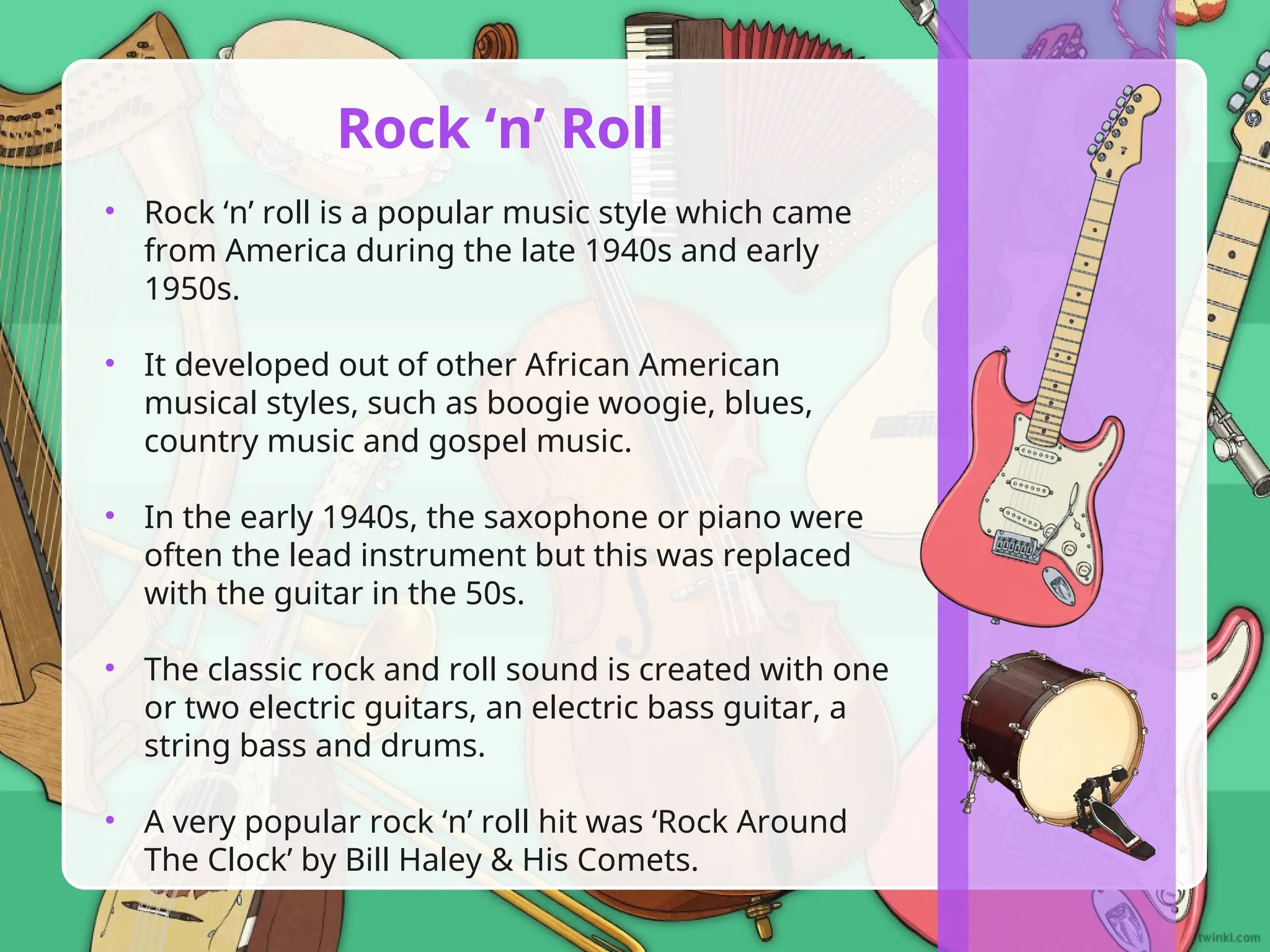
• The classic rock and roll sound is created with one
or two electric guitars, an electric bass guitar, a
string bass and drums.
• A very popular rock ‘n’ roll hit was ‘Rock Around
The Clock’ by Bill Haley & His Comets.
Rock ‘n’ Roll
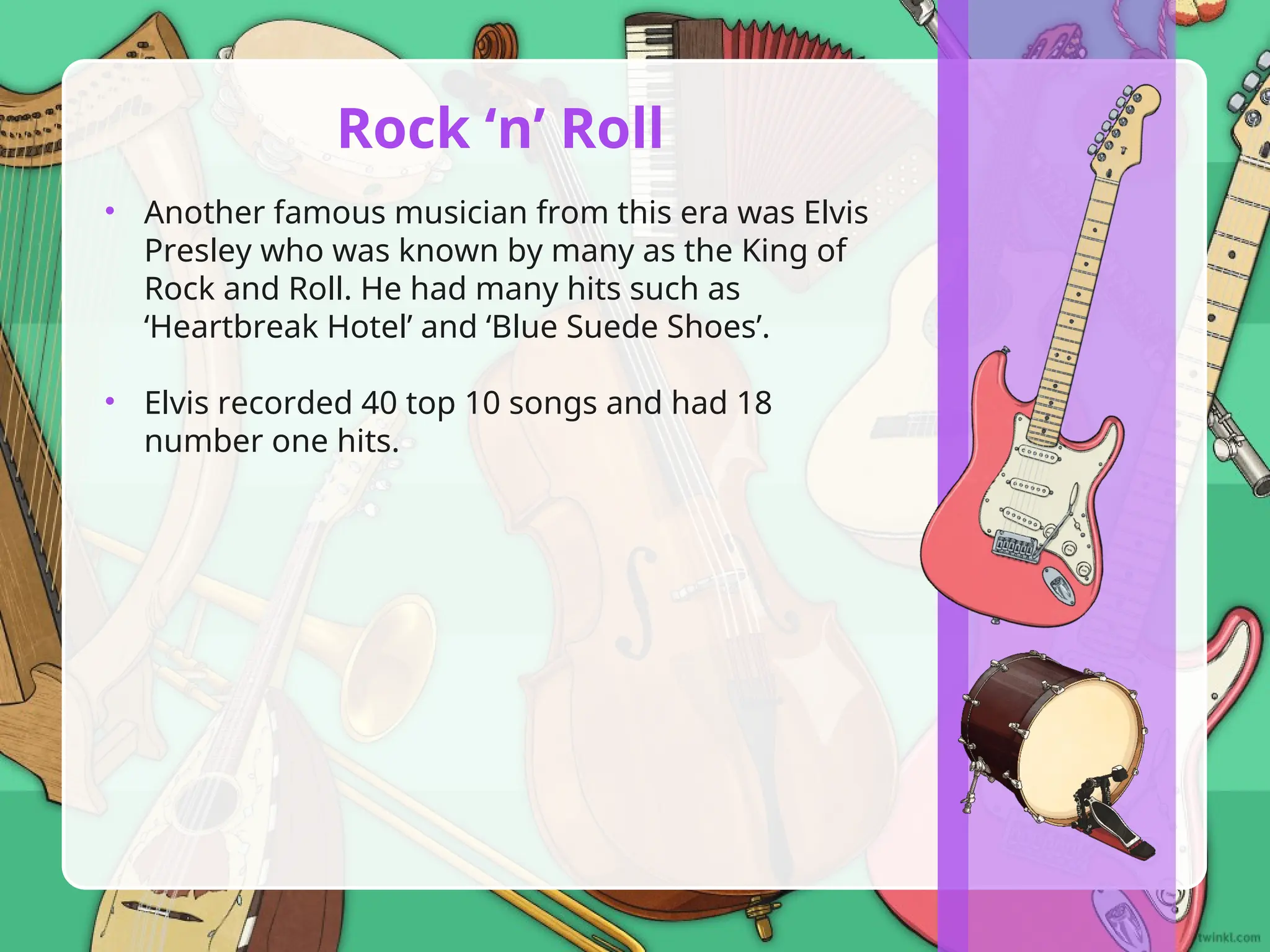
• Another famous musician from this era was Elvis
Presley who was known by many as the King of
Rock and Roll. He had many hits such as
‘Heartbreak Hotel’ and ‘Blue Suede Shoes’.
• Elvis recorded 40 top 10 songs and had 18
number one hits.
Rock ‘n’ Roll
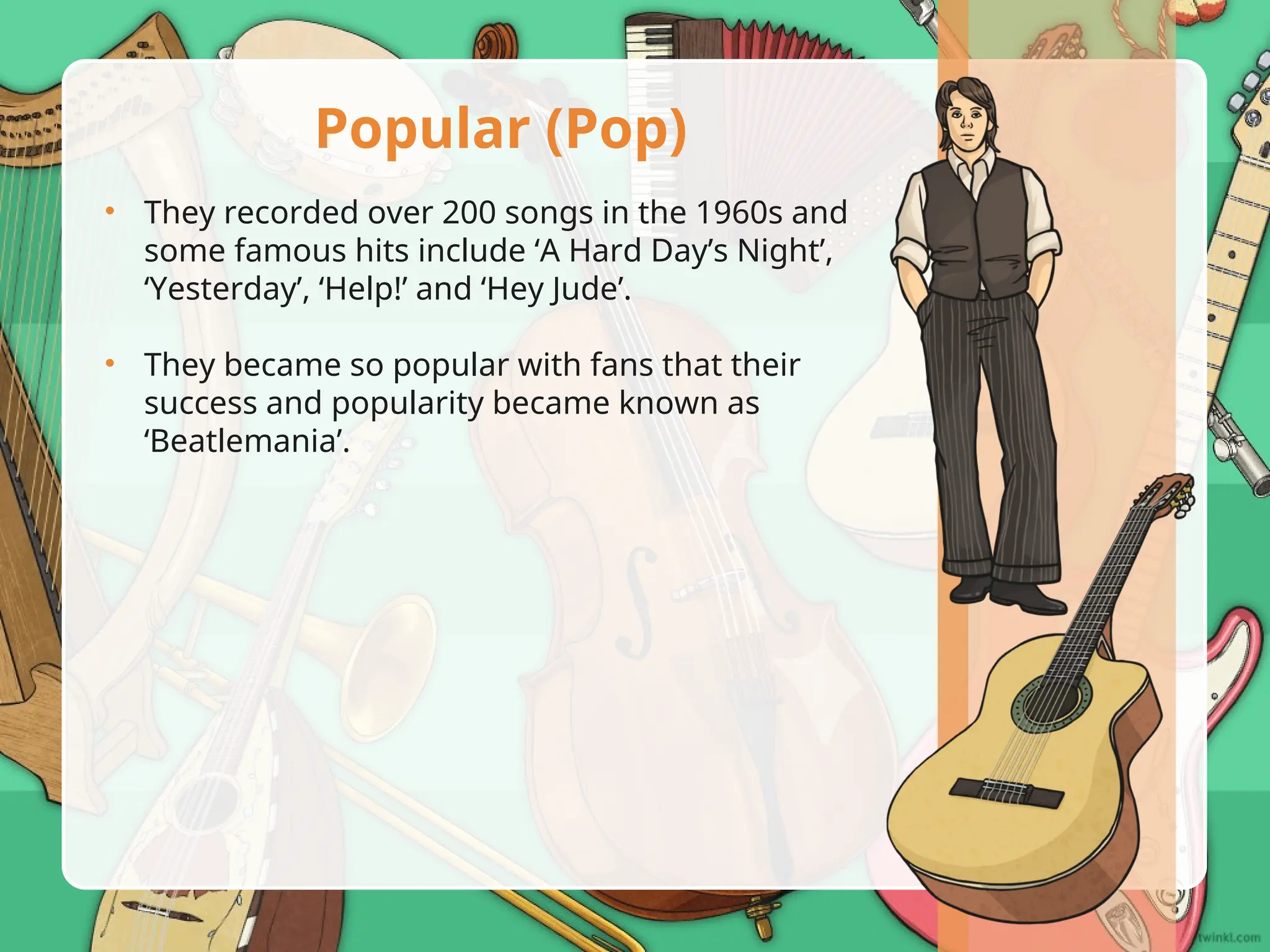
• The 60s was the beginnings of popular music or
‘pop’ music.
• The rock and roll age of Elvis and Bill Haley & His
Comets was taken over by popular music groups
such as The Monkees and The Beatles.
• Both bands achieved fame in the UK and America.
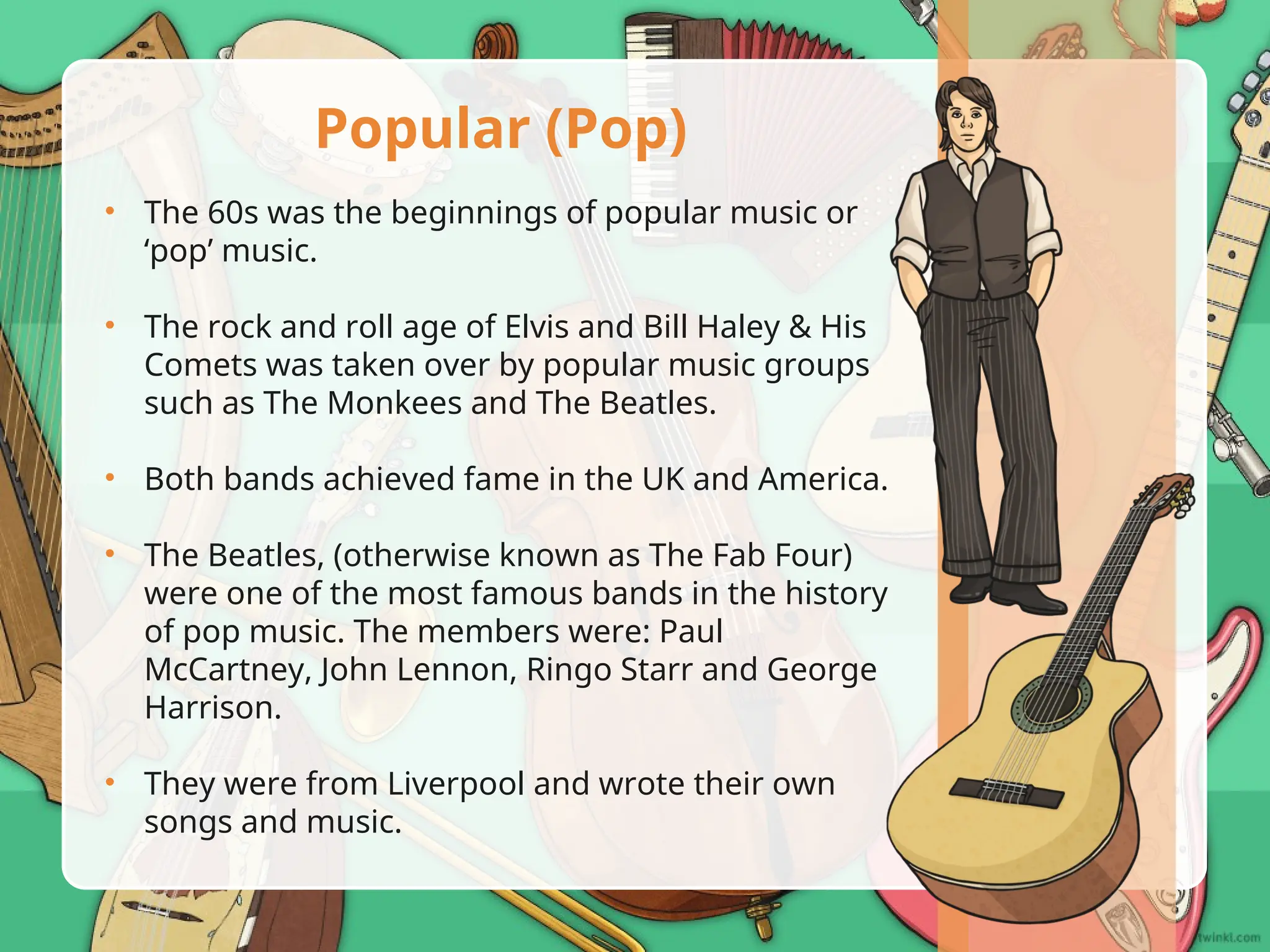
• The Beatles, (otherwise known as The Fab Four)
were one of the most famous bands in the history
of pop music. The members were: Paul
McCartney, John Lennon, Ringo Starr and George
Harrison.
• They were from Liverpool and wrote their own
songs and music.
Popular (Pop)
• They recorded over 200 songs in the 1960s and
some famous hits include ‘A Hard Day’s Night’,
‘Yesterday’, ‘Help!’ and ‘Hey Jude’.
• They became so popular with fans that their
success and popularity became known as
‘Beatlemania’.
Popular (Pop)
• Funk music was popular in the late 1960s and
1970s with performers such as James Brown and
Kool & The Gang.
• Funk began when African American musicians
created music which didn’t focus on melody or
harmony but had a strong rhythmic groove.
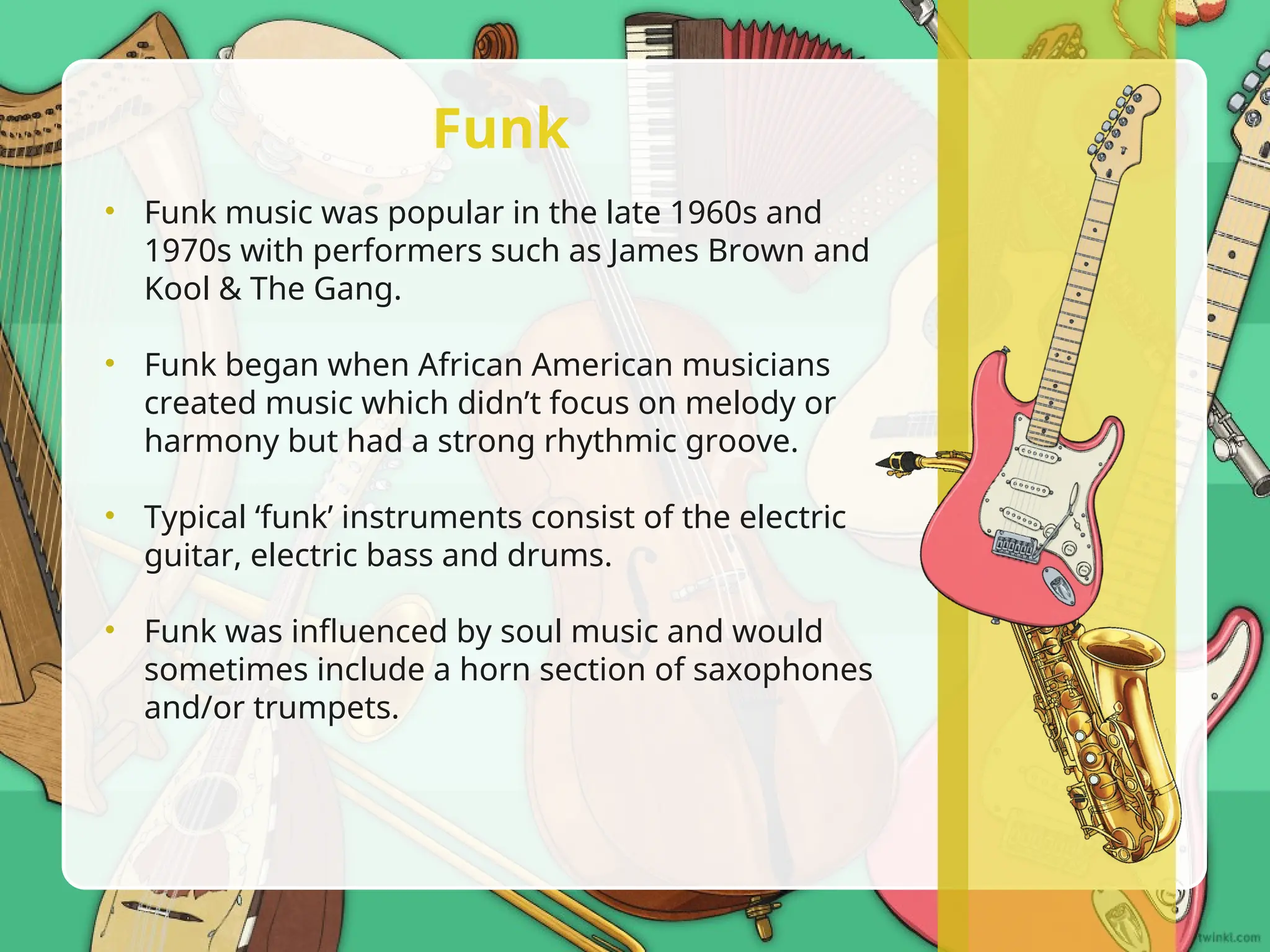
• Typical ‘funk’ instruments consist of the electric
guitar, electric bass and drums.
• Funk was influenced by soul music and would
sometimes include a horn section of saxophones
and/or trumpets.
Funk
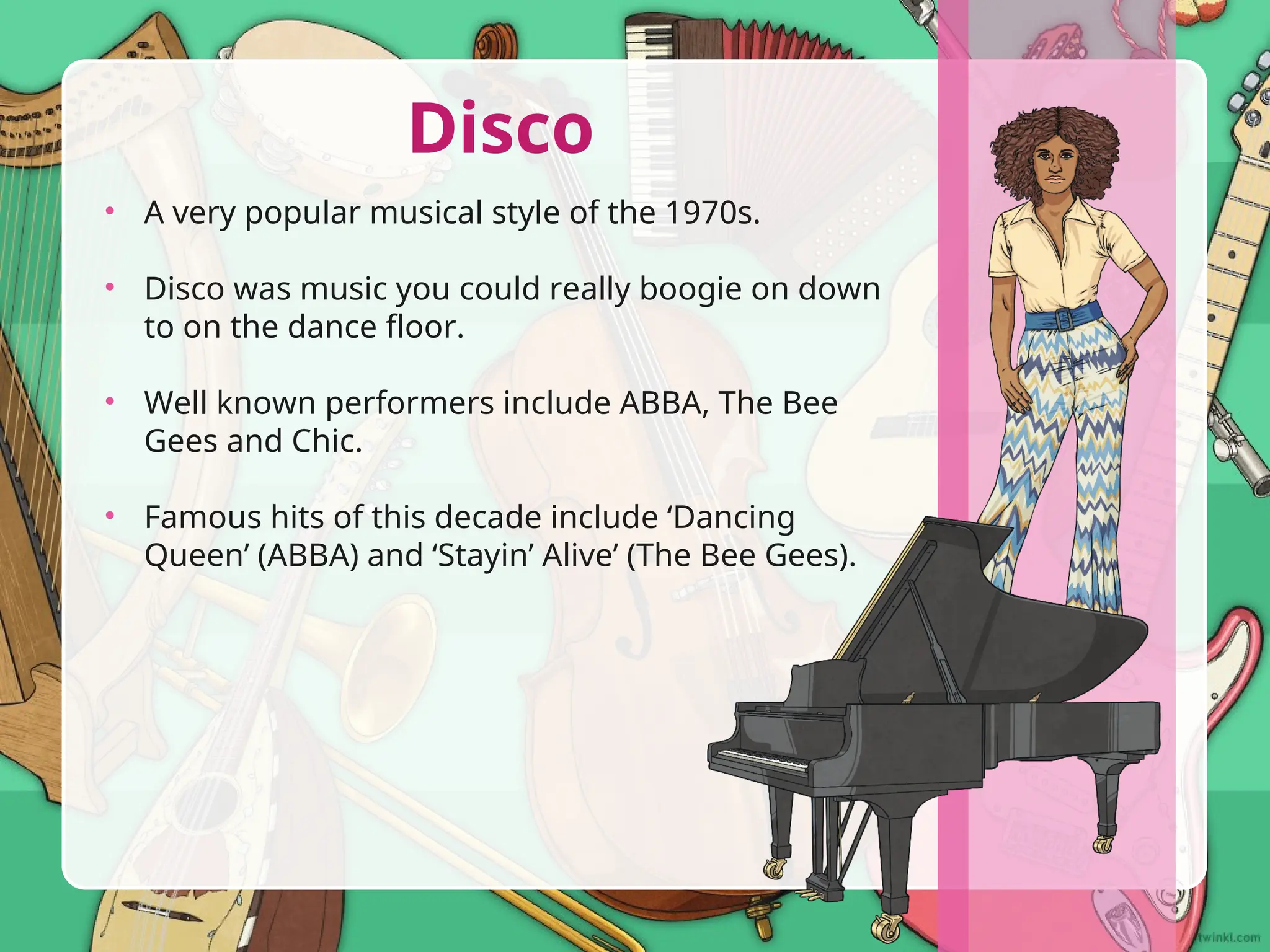
• A very popular musical style of the 1970s.
• Disco was music you could really boogie on down
to on the dance floor.
• Well known performers include ABBA, The Bee
Gees and Chic.
• Famous hits of this decade include ‘Dancing
Queen’ (ABBA) and ‘Stayin’ Alive’ (The Bee Gees).
Disco
• Hip hop began in America in the 1970s.
• This musical style began with block parties in New
York, where music was brought outside.
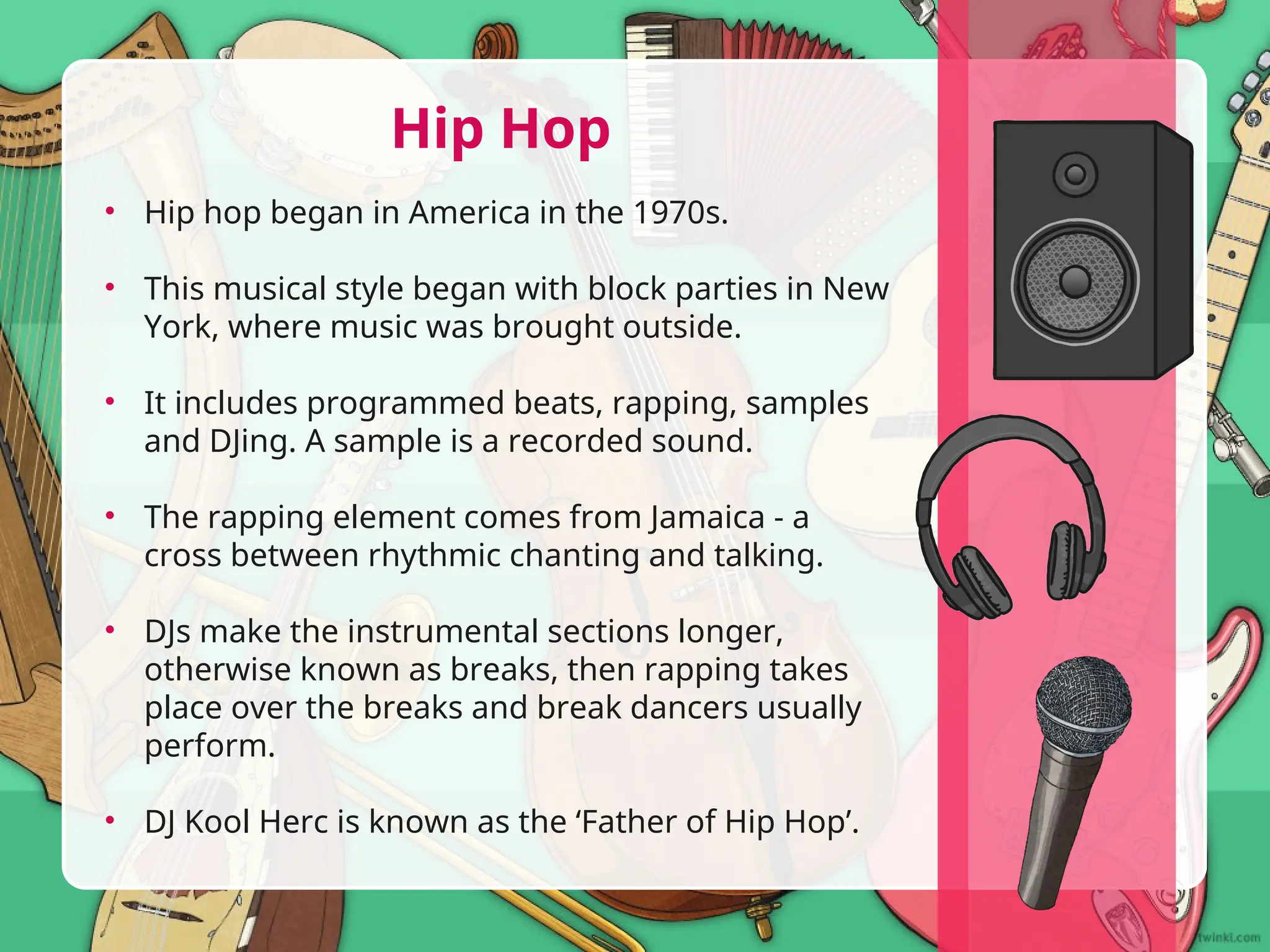
• It includes programmed beats, rapping, samples
and DJing. A sample is a recorded sound.
• The rapping element comes from Jamaica - a
cross between rhythmic chanting and talking.
• DJs make the instrumental sections longer,
otherwise known as breaks, then rapping takes
place over the breaks and break dancers usually
perform.
• DJ Kool Herc is known as the ‘Father of Hip Hop’.
Hip Hop
• Hip Hop has become increasingly popular since
the 1970s and is still a style of music loved by
people all over the world today.
Hip Hop
• Indie music or ‘indie pop’ became popular in the
1980s.
• Indie music stands for ‘independent music’ which
means that the music doesn’t fit into one style.
• Popular UK bands of the time included The Smiths,
made up of Morrissey (singer), Johnny Marr
(guitarist), Andy Rourke (bassist) and Mike Joyce
(drummer).
• Many music critics believe that they were the voice
of the 80s and the most influential British guitar
group of that decade.
• Bands of the 90s and 00s, such as Blur, and more
recently Bastille, are put into the category of ‘indie
rock’- a type of alternative rock.
Indie
• R 'n' B began in America during the late 1980s
with artists such as Whitney Houston and Janet
Jackson (the sister of Michael Jackson).
• Contemporary R ‘n’ B shouldn’t be confused with
earlier R&B (rhythm and blues), African American
music which began in the 1940’s combining jazz
and blues.
• R ‘n’ B music mixes elements of hip-hop and soul.
• Popular R 'n' B artists of the 90’s included Eternal.
• Today, Rihanna is a popular R ‘n’ B artist.
Contemporary R ‘n’ B
Intro to Music Styles an Introduction to Music Styles

Intro to Music Styles an Introduction to Music Styles

  • 2.
    Jazz • Jazz wasborn in African American communities in America during the late 1800s and early 1900s. • Improvisation is a very important part of jazz (playing what you feel in that moment). • There are many different jazz styles, including ragtime, swing, cool jazz and be-bop. • Instruments used in jazz could include trumpets, piano, trombones and the four types of saxophone – soprano, alto, tenor and baritone. • Louis Armstrong was a famous jazz musician who had a growly voice and could play the trumpet.
  • 3.
    • Miles Daviswas an American composer, jazz trumpet player and band leader who played a major part in introducing new styles of jazz. He introduced the electric piano and electric bass into his band, playing in a brand new style which mixed jazz with rock. • In the 1970s, jazz was influenced by Latin jazz, mixing rhythms from Latin and African countries. Instruments such as the güiro and claves were introduced. • Jazz became less popular in the 1980s, however there are many jazz musicians still around today, including Jamie Cullum. Jazz
  • 4.
    • Swing beganin the late 1920s but it was between 1935 and 1946 when big band swing music became the most popular music in America, also known as the Swing Era. • A typical song played in swing style would include a strong rhythm accompanied by wind, string or brass instruments, also including vocals. A soloist would commonly take centre stage and improvise a solo with the band in the background. • Glenn Miller and Duke Ellington are two of the most famous big band leaders from this time. • By the late 1940s, this type of music was less popular. Big Band and Swing
  • 5.
    • 1960s soulmusic is a style of African American music. • It was influenced by gospel singing, had lyrical melodies, a strong rhythm and large horn sections including saxophones, trombones and trumpets. • Popular performers included The Four Tops and Otis Redding. Soul
  • 6.
    • Rock ‘n’roll is a popular music style which came from America during the late 1940s and early 1950s. • It developed out of other African American musical styles, such as boogie woogie, blues, country music and gospel music. • In the early 1940s, the saxophone or piano were often the lead instrument but this was replaced with the guitar in the 50s. • The classic rock and roll sound is created with one or two electric guitars, an electric bass guitar, a string bass and drums. • A very popular rock ‘n’ roll hit was ‘Rock Around The Clock’ by Bill Haley & His Comets. Rock ‘n’ Roll
  • 7.
    • Another famousmusician from this era was Elvis Presley who was known by many as the King of Rock and Roll. He had many hits such as ‘Heartbreak Hotel’ and ‘Blue Suede Shoes’. • Elvis recorded 40 top 10 songs and had 18 number one hits. Rock ‘n’ Roll
  • 8.
    • The 60swas the beginnings of popular music or ‘pop’ music. • The rock and roll age of Elvis and Bill Haley & His Comets was taken over by popular music groups such as The Monkees and The Beatles. • Both bands achieved fame in the UK and America. • The Beatles, (otherwise known as The Fab Four) were one of the most famous bands in the history of pop music. The members were: Paul McCartney, John Lennon, Ringo Starr and George Harrison. • They were from Liverpool and wrote their own songs and music. Popular (Pop)
  • 9.
    • They recordedover 200 songs in the 1960s and some famous hits include ‘A Hard Day’s Night’, ‘Yesterday’, ‘Help!’ and ‘Hey Jude’. • They became so popular with fans that their success and popularity became known as ‘Beatlemania’. Popular (Pop)
  • 10.
    • Funk musicwas popular in the late 1960s and 1970s with performers such as James Brown and Kool & The Gang. • Funk began when African American musicians created music which didn’t focus on melody or harmony but had a strong rhythmic groove. • Typical ‘funk’ instruments consist of the electric guitar, electric bass and drums. • Funk was influenced by soul music and would sometimes include a horn section of saxophones and/or trumpets. Funk
  • 11.
    • A verypopular musical style of the 1970s. • Disco was music you could really boogie on down to on the dance floor. • Well known performers include ABBA, The Bee Gees and Chic. • Famous hits of this decade include ‘Dancing Queen’ (ABBA) and ‘Stayin’ Alive’ (The Bee Gees). Disco
  • 12.
    • Hip hopbegan in America in the 1970s. • This musical style began with block parties in New York, where music was brought outside. • It includes programmed beats, rapping, samples and DJing. A sample is a recorded sound. • The rapping element comes from Jamaica - a cross between rhythmic chanting and talking. • DJs make the instrumental sections longer, otherwise known as breaks, then rapping takes place over the breaks and break dancers usually perform. • DJ Kool Herc is known as the ‘Father of Hip Hop’. Hip Hop
  • 13.
    • Hip Hophas become increasingly popular since the 1970s and is still a style of music loved by people all over the world today. Hip Hop
  • 14.
    • Indie musicor ‘indie pop’ became popular in the 1980s. • Indie music stands for ‘independent music’ which means that the music doesn’t fit into one style. • Popular UK bands of the time included The Smiths, made up of Morrissey (singer), Johnny Marr (guitarist), Andy Rourke (bassist) and Mike Joyce (drummer). • Many music critics believe that they were the voice of the 80s and the most influential British guitar group of that decade. • Bands of the 90s and 00s, such as Blur, and more recently Bastille, are put into the category of ‘indie rock’- a type of alternative rock. Indie
  • 15.
    • R 'n'B began in America during the late 1980s with artists such as Whitney Houston and Janet Jackson (the sister of Michael Jackson). • Contemporary R ‘n’ B shouldn’t be confused with earlier R&B (rhythm and blues), African American music which began in the 1940’s combining jazz and blues. • R ‘n’ B music mixes elements of hip-hop and soul. • Popular R 'n' B artists of the 90’s included Eternal. • Today, Rihanna is a popular R ‘n’ B artist. Contemporary R ‘n’ B