InterLab 2006  Open-process web design through WIKI  October 27 , 2006 Dmitry Sklyar, CIS-WEB
Crystal Web Project Overview  Need for change:   Current Intranet design is organically grown, resulting in inefficient layout, fractioned content structure, and visually unengaging presentation Goal:  To develop an Intranet web design basis that works for everyone: unified, flexible, modern for web content and web applications works for many web technologies cross-divisional application – design for universal use across different divisions and applications Future projects  will focus on: adapting this design for public-facing web sites developing tools and infrastructure for supporting Argonne’s web space
Involving Argonne Web Community Who is the Argonne Web Community?  – People with many different roles, most of which are not directly web-related.  Who can participate?   – Lab-wide involvement in creating the most popular design that will suit most aspects of the lab's web requirements What are we looking for?   – ANY ideas or suggestions for look-and-feel concepts or improvements for design, layout, color, navigation, etc.   What are we going to be doing? Interviewing groups within Argonne’s web community for their input Asking interested employees to submit a design concept Involving the web community and the Lab at large in the evaluation process Taking the best of the submissions and creating a final design
Deliverables A new Argonne Intranet web design based on community involvement   An Argonne Intranet style guide defines the required and optional elements of the design recommends best practices   An implementation of the web design  as a set of HTML/CSS files   Reference implementations   as a set of Dreamweaver templates  as a set of includes that can be adapted for multiple environments   A web architecture process   for developing and reviewing additions and changes to Argonne's web standards and best practices   Identification of alternate site maintenance tools for future projects
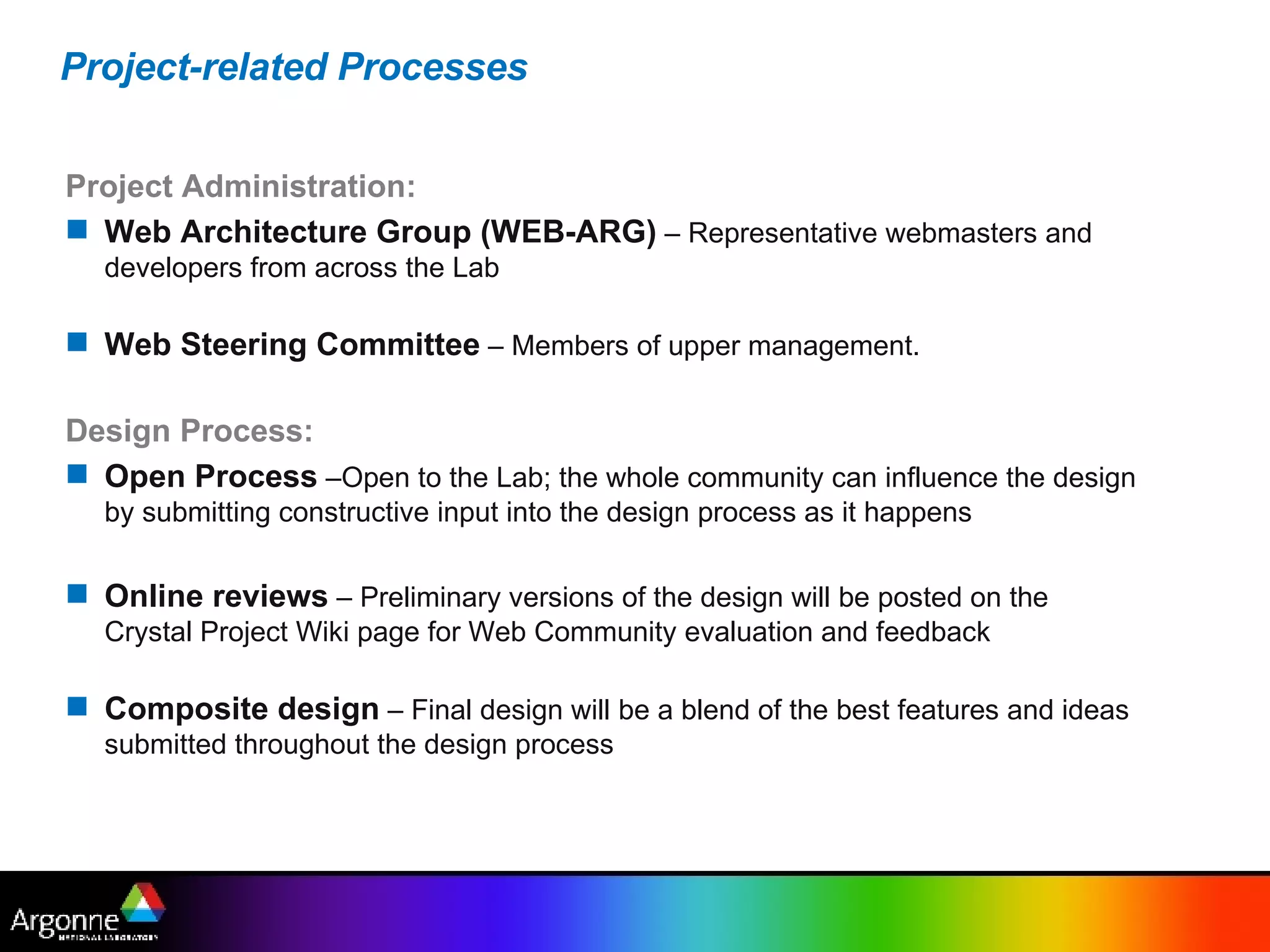
Project-related Processes Project Administration: Web Architecture Group (WEB-ARG)  – Representative webmasters and developers from across the Lab  Web Steering Committee  – Members of upper management. Design Process: Open Process  –Open to the Lab; the whole community can influence the design by submitting constructive input into the design process as it happens Online reviews  – Preliminary versions of the design will be posted on the Crystal Project Wiki page for Web Community evaluation and feedback Composite design  – Final design will be a blend of the best features and ideas submitted throughout the design process
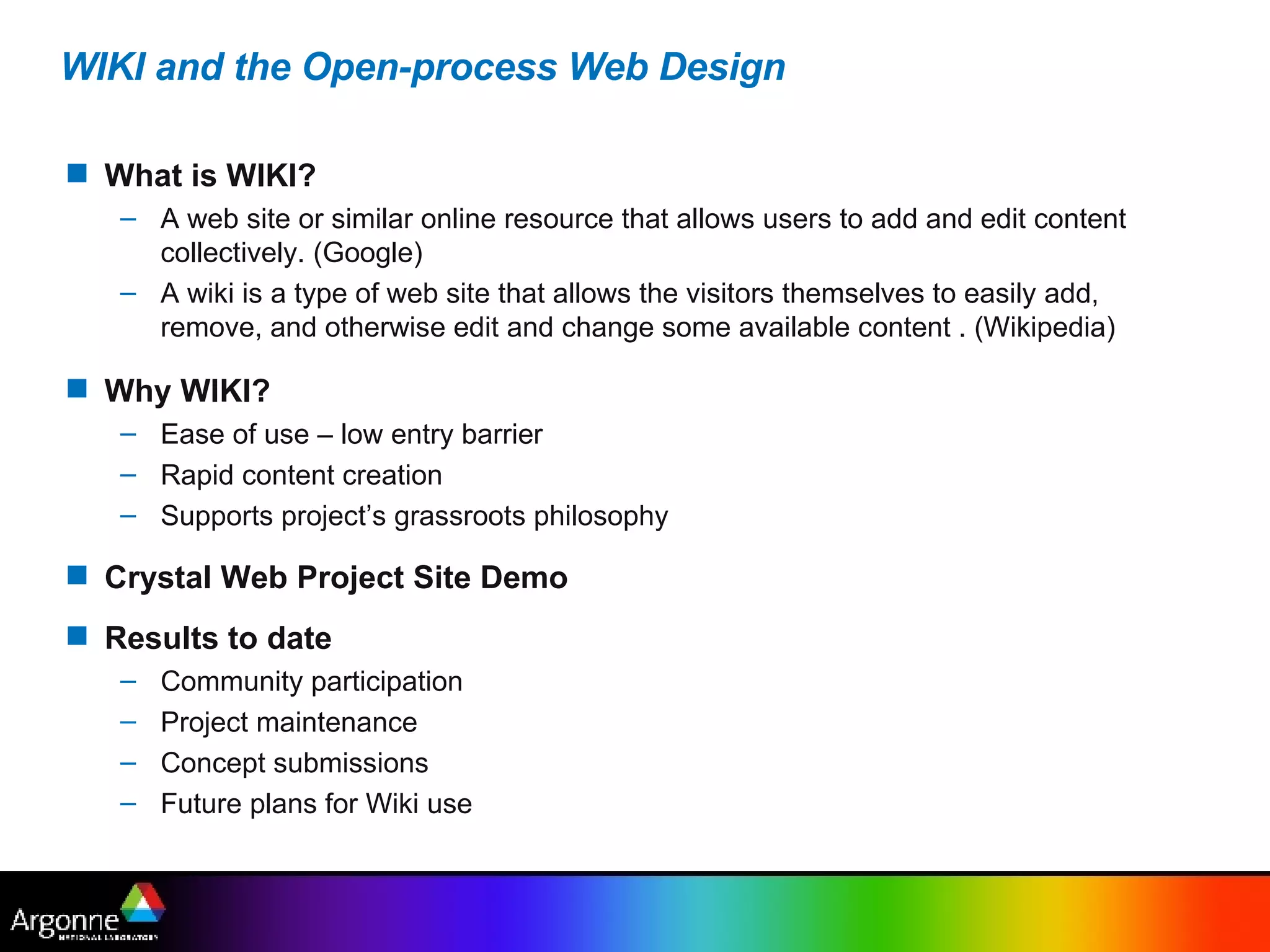
WIKI and the Open-process Web Design What is WIKI? A web site or similar online resource that allows users to add and edit content collectively. (Google) A wiki is a type of web site that allows the visitors themselves to easily add, remove, and otherwise edit and change some available content . (Wikipedia) Why WIKI? Ease of use – low entry barrier Rapid content creation Supports project’s grassroots philosophy Crystal Web Project Site Demo   Results to date Community participation Project maintenance Concept submissions Future plans for Wiki use

Inter Lab 2006 Open Process Web Design Through W I K I

  • 1.
    InterLab 2006 Open-process web design through WIKI October 27 , 2006 Dmitry Sklyar, CIS-WEB
  • 2.
    Crystal Web ProjectOverview Need for change: Current Intranet design is organically grown, resulting in inefficient layout, fractioned content structure, and visually unengaging presentation Goal: To develop an Intranet web design basis that works for everyone: unified, flexible, modern for web content and web applications works for many web technologies cross-divisional application – design for universal use across different divisions and applications Future projects will focus on: adapting this design for public-facing web sites developing tools and infrastructure for supporting Argonne’s web space
  • 3.
    Involving Argonne WebCommunity Who is the Argonne Web Community? – People with many different roles, most of which are not directly web-related. Who can participate? – Lab-wide involvement in creating the most popular design that will suit most aspects of the lab's web requirements What are we looking for? – ANY ideas or suggestions for look-and-feel concepts or improvements for design, layout, color, navigation, etc. What are we going to be doing? Interviewing groups within Argonne’s web community for their input Asking interested employees to submit a design concept Involving the web community and the Lab at large in the evaluation process Taking the best of the submissions and creating a final design
  • 4.
    Deliverables A newArgonne Intranet web design based on community involvement An Argonne Intranet style guide defines the required and optional elements of the design recommends best practices An implementation of the web design as a set of HTML/CSS files Reference implementations as a set of Dreamweaver templates as a set of includes that can be adapted for multiple environments A web architecture process for developing and reviewing additions and changes to Argonne's web standards and best practices Identification of alternate site maintenance tools for future projects
  • 5.
    Project-related Processes ProjectAdministration: Web Architecture Group (WEB-ARG) – Representative webmasters and developers from across the Lab Web Steering Committee – Members of upper management. Design Process: Open Process –Open to the Lab; the whole community can influence the design by submitting constructive input into the design process as it happens Online reviews – Preliminary versions of the design will be posted on the Crystal Project Wiki page for Web Community evaluation and feedback Composite design – Final design will be a blend of the best features and ideas submitted throughout the design process
  • 6.
    WIKI and theOpen-process Web Design What is WIKI? A web site or similar online resource that allows users to add and edit content collectively. (Google) A wiki is a type of web site that allows the visitors themselves to easily add, remove, and otherwise edit and change some available content . (Wikipedia) Why WIKI? Ease of use – low entry barrier Rapid content creation Supports project’s grassroots philosophy Crystal Web Project Site Demo Results to date Community participation Project maintenance Concept submissions Future plans for Wiki use