Pulse crops are:
COMMON NAME SCIENTIFIC NAME
Red Gram (Pigeon Pea, Arhar) Cajanus cajan(L.)
Black Gram (Urd, Mash) Phaseolus mungo R.
Bengal-gram Cicer arietinum L.
Cowpea Vigna sinensis (L.)
Green-gram (Mung) Phaseolus aureus R
Lentil Lens culinaris M.
Peas Pisum sativum L.
Moth bean Phaseolus aconitifolius J.
Horse-gram Dolichos biflorus L.
Chickling Pea Lathyrus sativus L.
(Handbook of Agriculture, 2003)
4.
Pulses, rich inproteins form an important part of
Indian dietary.
Average yield level of pulses are 550-650 kg/ha
in India ; 1140 kg in China, 1600 kg in USA and
a world average of 900 kg/ha.
(Atwal et al., 2003)
Insect Pests, about 200 species found feeding,
but one dozen cause significant and consistent
damage to pulse crops.
(Reed and Lateef, 1990)
5.
Problems Associated WithInsecticide Use
Toxicity Dangers
Natural Enemy Destruction
Resistance to Insecticides
Host Plant Resistance
Differences in Susceptibility
Why Practice IPM?
Keep a Balanced Ecosystem
Pesticides can be Ineffective
IPM is not Difficult
Save Money
Promote a Healthy Environment
Maintain a Good Public Image
6.
Integrated Pest Management:
“IntegratedPest Control is a pest management that, in the context of the
associated environment and the population dynamics of the pest species,
utilizes all suitable techniques and methods in as compatible a manner as
possible and maintains the pest population at levels below those causing
economic injury.”
(FAO, 1975)
7.
Pod borer
Helicoverpa (Heliothis)armigera, Helicoverpa assulta, Heliothis
viriplaca, Heliothis peltigera
(Lepidoptera: Noctuidae)
Distribution
Helicoverpa armigera is commonly found throughout the tropics
and subtropics in Asia.
It is the single most important constraint to pulses.
High level of insecticide resistance, make this species one of the
most difficult pest to manage.
INSECTS PESTS OF PULSES
8.
Description
Adult H.armigera have a wing span of about 40 mm with dull brown
forewings.
A single female lay up to 2000 small white eggs usually singly.
In pigeonpea,eggs are laid on flower buds and young pods while in
chickpea eggs are usually deposited on foliage.
Full-grown larvae are 30 to 40 mm long and may have various body
color and banding patterns.
Pupation occurs in the soil or in plant debris.
Symptoms
The Helicoverpa spp. destroys buds,
flowers,
and pods.
If flowers and pods are not available, larvae
will feed upon foliage
9.
Legume (or Cowpea)Pod borer
Maruca vitrata (Lepidoptera: Pyralidae)
Distribution
Maruca vitrata attacks several leguminous crops throughout Asia.
Description
Eggs are laid in small clusters of 10 to 15 on leaves, buds, and flowers.
A full-grown larva measures 15 mm in length, with a pale body lined by rows
of conspicuous black spots on its dorsal surface.
Adults have distinctive white bands on forewings with a wing span of
20 mm.
M. vitrata becomes a menace in early-season pigeonpea especially in areas
with high relative humidity.
10.
Symptoms
Larvae feedfrom inside a webbed mass of leaves, buds, and pods.
This behaviour makes Maruca a foliage feeder and pod borer.
Pod-Sucking Bugs
Clavigralla gibbosa Spinola, Clavigralla scutellaris, Anoplocnemis
spp , Riptortus spp (Hemiptera:Coreidae)
Nezara viridula (Hemiptera:Pentatomidae )
Distribution
Several species and genera of pod-sucking bugs attack pigeon pea
and other legumes in Asia.
For pigeonpea, the most dangerous genera are the Clavigralla
gibbosa and Nezara viridula, the green stinkbug,found on many
legumes and other hosts throughout the tropics and subtropics.
11.
Description
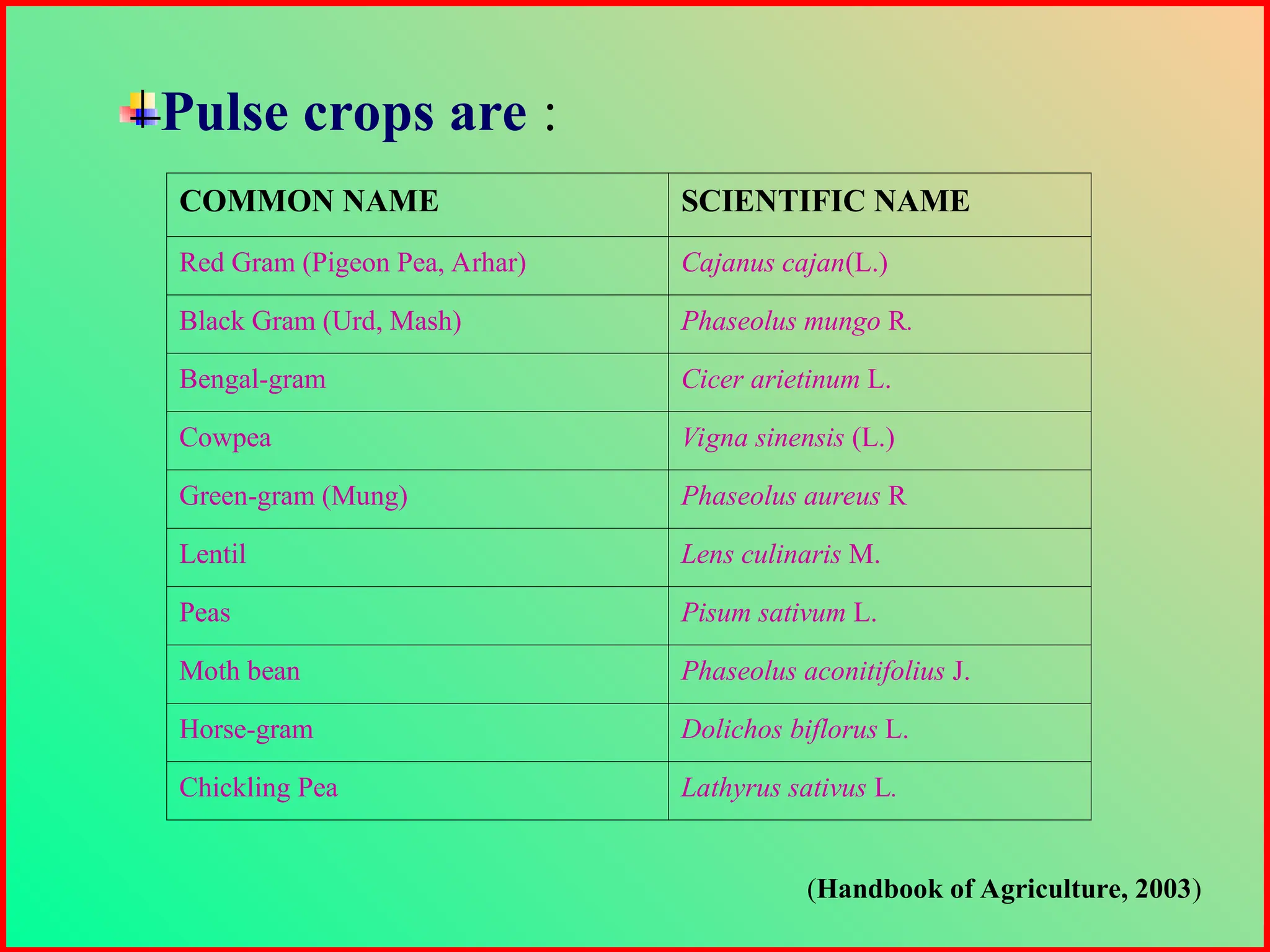
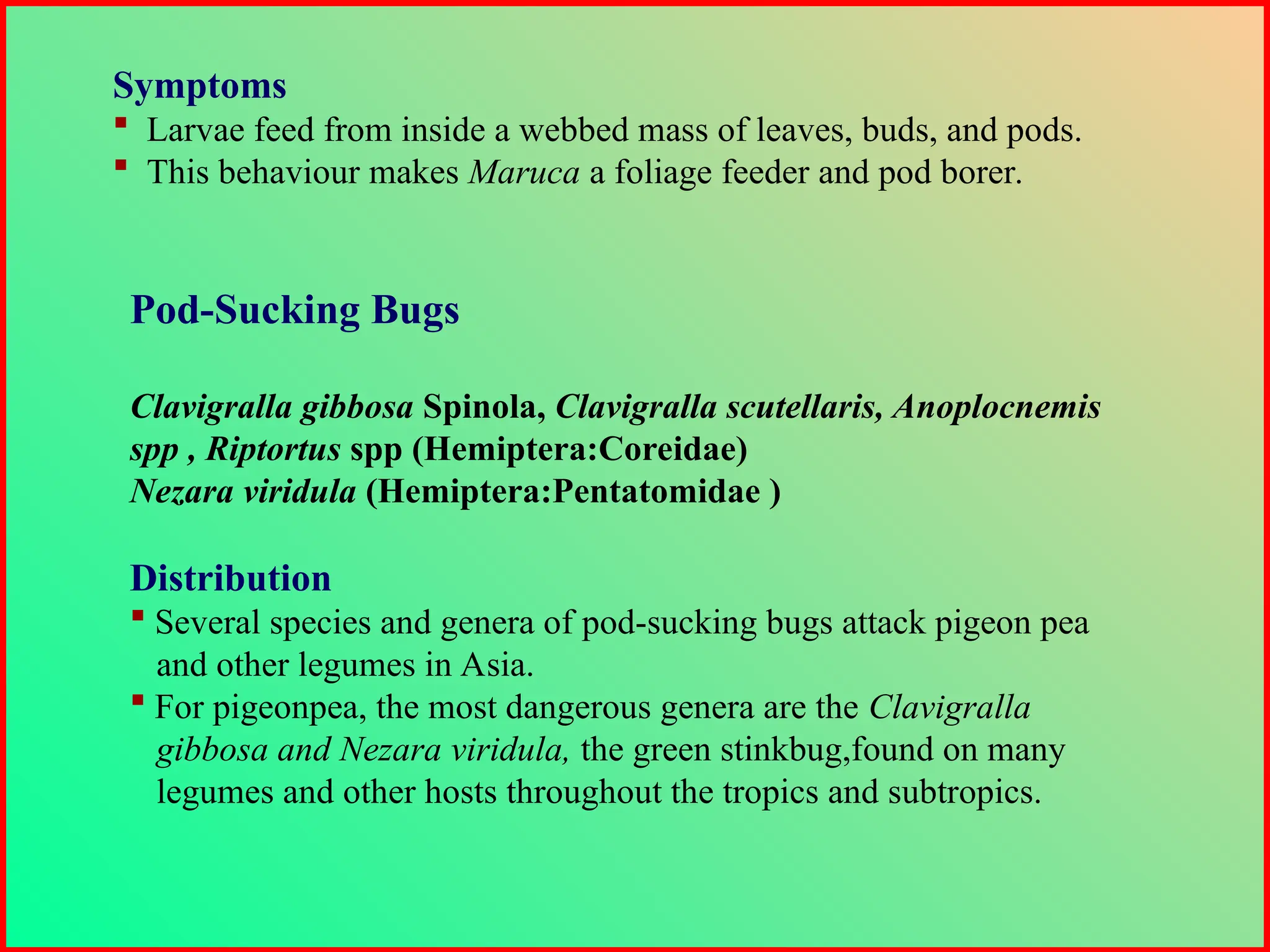
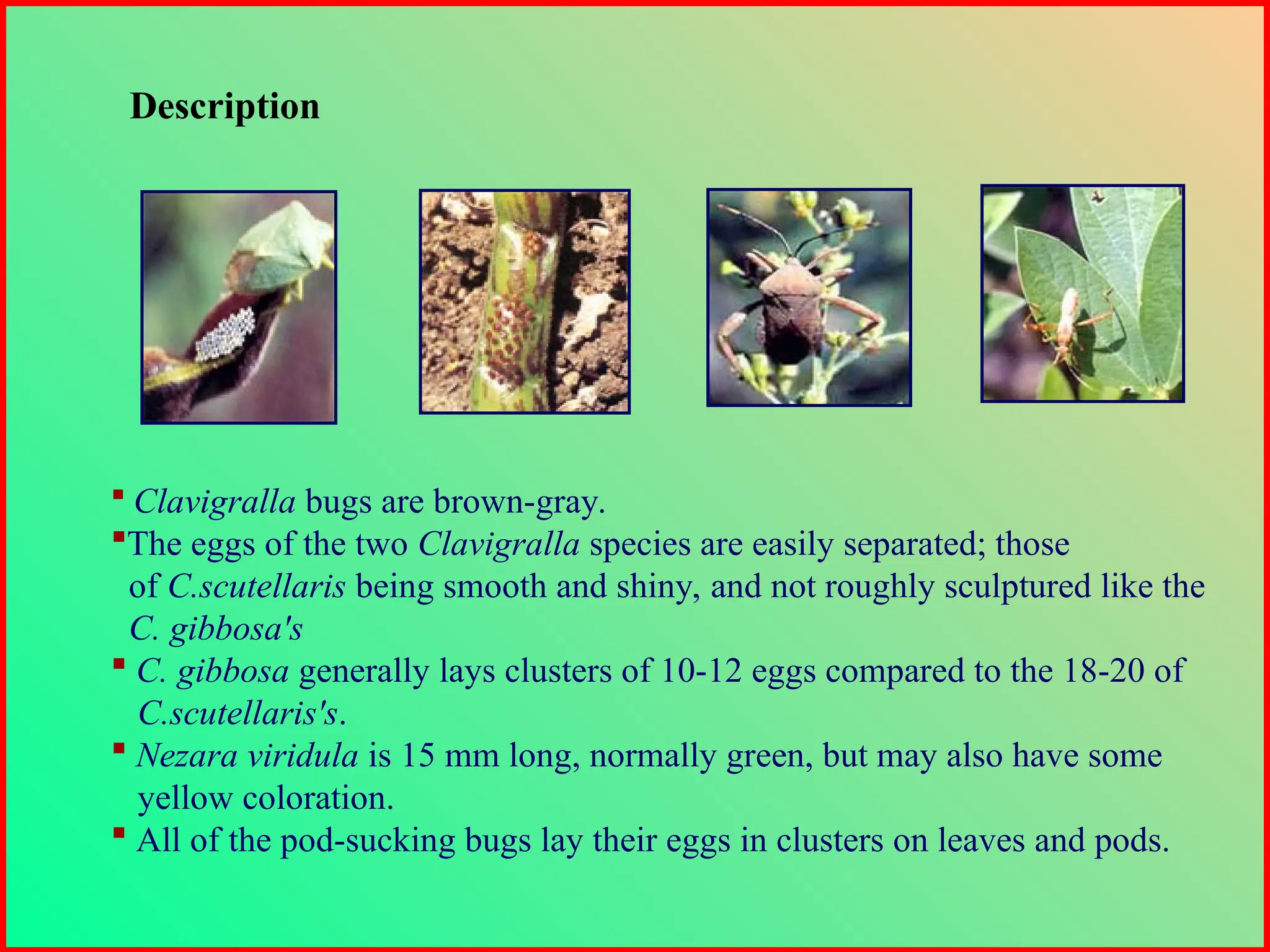
Clavigralla bugsare brown-gray.
The eggs of the two Clavigralla species are easily separated; those
of C.scutellaris being smooth and shiny, and not roughly sculptured like the
C. gibbosa's
C. gibbosa generally lays clusters of 10-12 eggs compared to the 18-20 of
C.scutellaris's.
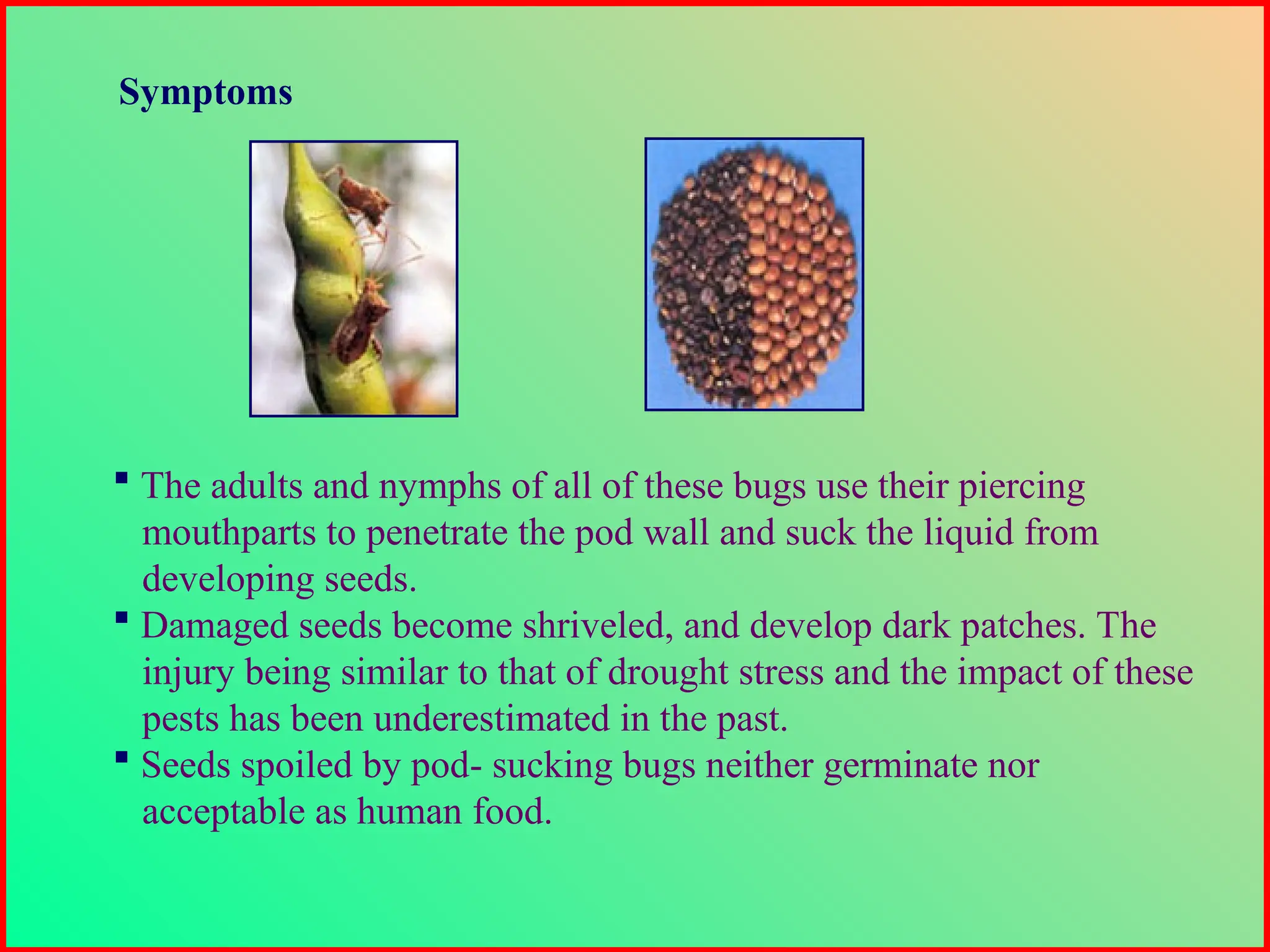
Nezara viridula is 15 mm long, normally green, but may also have some
yellow coloration.
All of the pod-sucking bugs lay their eggs in clusters on leaves and pods.
12.
The adultsand nymphs of all of these bugs use their piercing
mouthparts to penetrate the pod wall and suck the liquid from
developing seeds.
Damaged seeds become shriveled, and develop dark patches. The
injury being similar to that of drought stress and the impact of these
pests has been underestimated in the past.
Seeds spoiled by pod- sucking bugs neither germinate nor
acceptable as human food.
Symptoms
13.
Melanagromyza obtusa (Diptera:Agromyzidae)
Distribution
Melanagromyza obtusa is a widespread and major pest of pigeonpea
in Asia.
It has a narrow host range and only feeds on pigeonpea and closely
related species.
Podfly
The small, black fly is about 5 mm in length.
Eggs are laid in the wall of an immature pod.
The white maggots feed on the developing
seed
and reach a length of 3 mm before pupating.
Description
14.
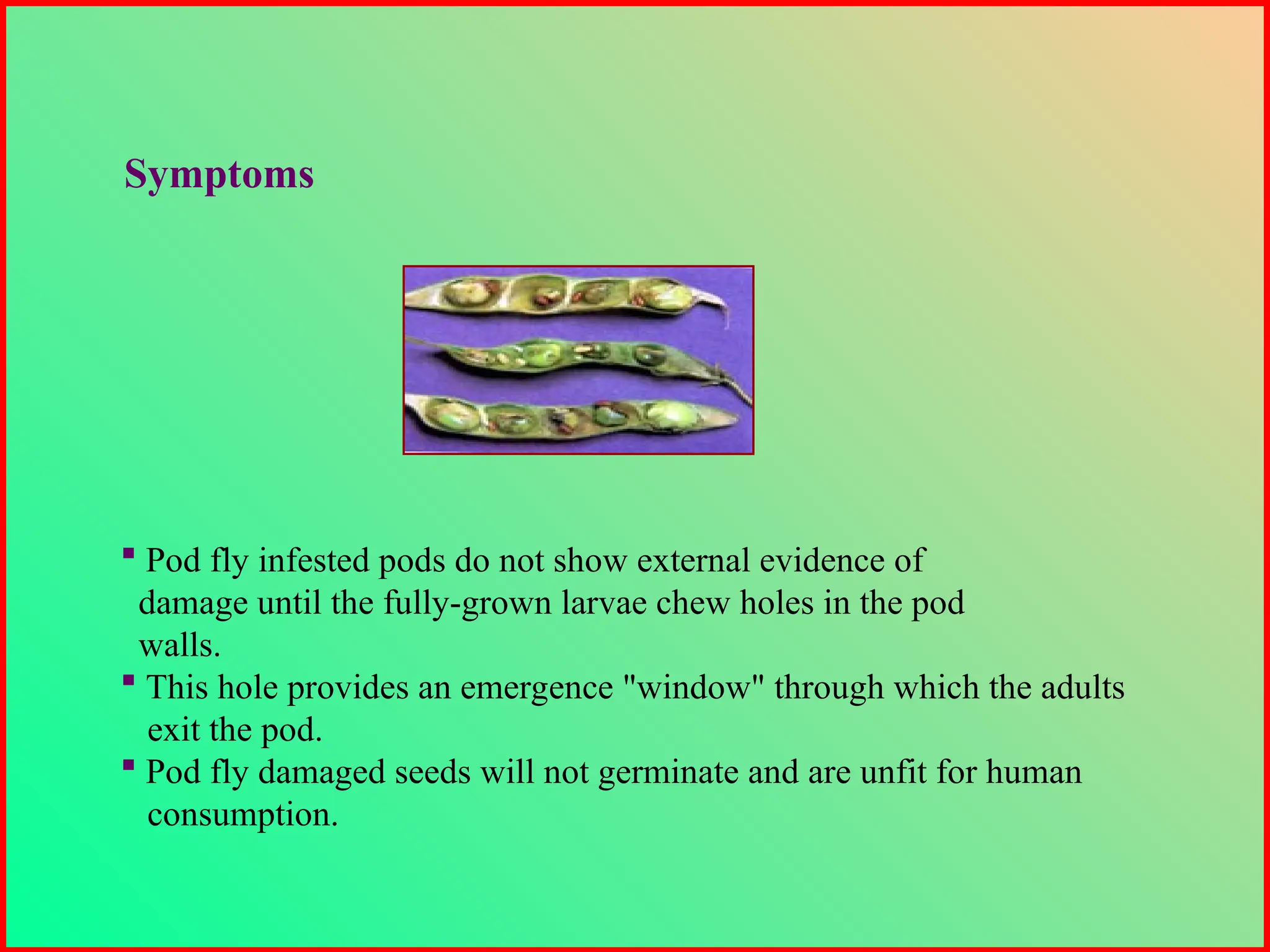
Pod flyinfested pods do not show external evidence of
damage until the fully-grown larvae chew holes in the pod
walls.
This hole provides an emergence "window" through which the adults
exit the pod.
Pod fly damaged seeds will not germinate and are unfit for human
consumption.
Symptoms
15.
Plume moth
Exelastis atomosa( Lepidoptera: Pterophoridae)
Distribution
This species is widely distributed on several legumes in Asia.
It is common in pigeonpea and is a major pest in several areas of
India.
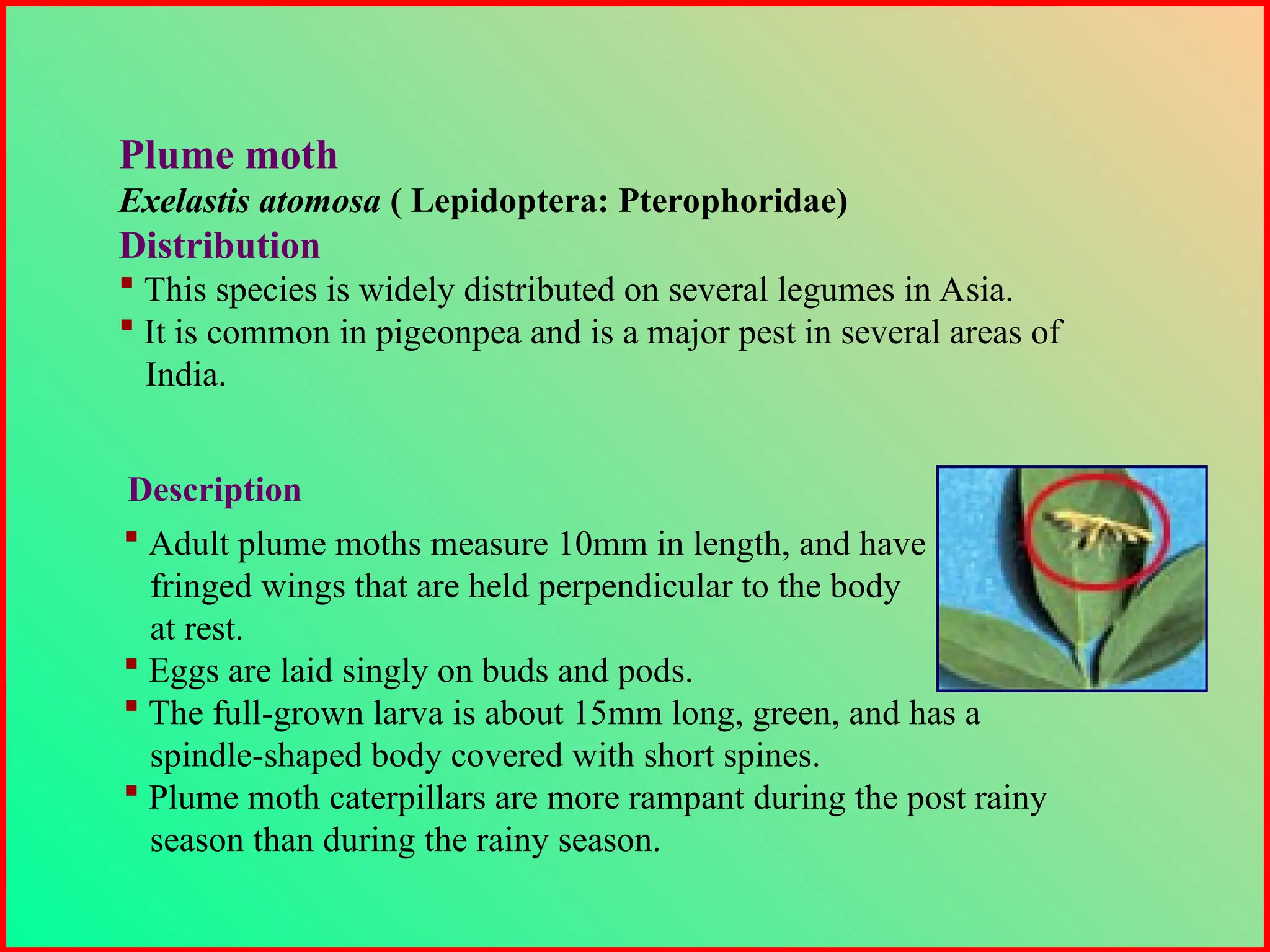
Adult plume moths measure 10mm in length, and have
fringed wings that are held perpendicular to the body
at rest.
Eggs are laid singly on buds and pods.
The full-grown larva is about 15mm long, green, and has a
spindle-shaped body covered with short spines.
Plume moth caterpillars are more rampant during the post rainy
season than during the rainy season.
Description
16.
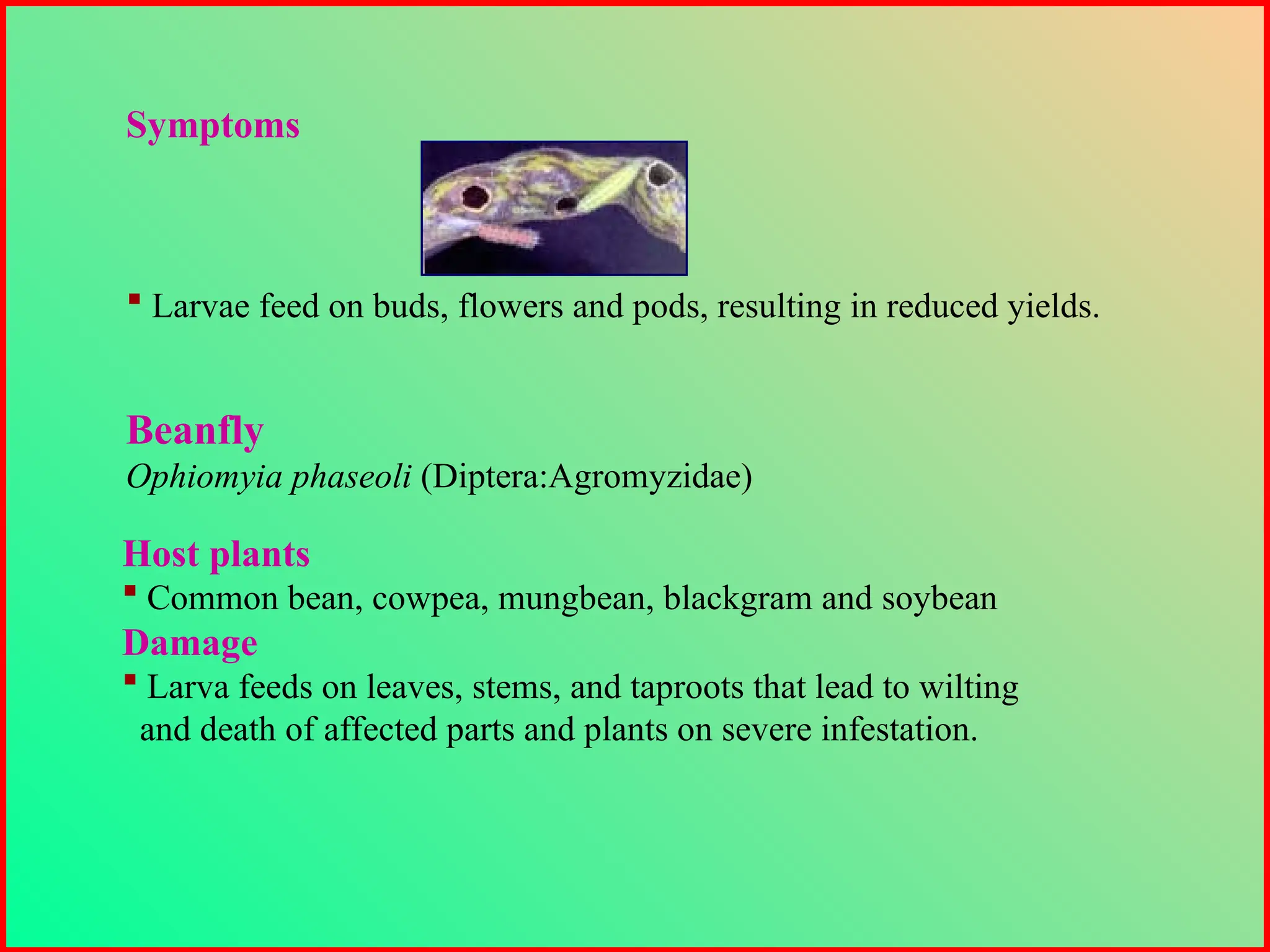
Larvae feedon buds, flowers and pods, resulting in reduced yields.
Symptoms
Beanfly
Ophiomyia phaseoli (Diptera:Agromyzidae)
Host plants
Common bean, cowpea, mungbean, blackgram and soybean
Damage
Larva feeds on leaves, stems, and taproots that lead to wilting
and death of affected parts and plants on severe infestation.
17.
The pupa isbarrel-shaped, yellow with a
brownish-tinge and distinctly darker ends. It
has well-defined segments with black
anterior
and posterior breathing organs. It becomes
dark-brown before the adult emergence.
The adult has metallic-black color about ¼ in
size than that of a common housefly.
Description
The eggs are oval, clear, and milky-
white in color. These are laid in holes of
leaves near the petiole.
The maggot is small and white in color
with brown head.
18.
Eriophyid mite Aceriacajani( Acarina :Eriophyidae )
Red spider mite Schizotetranychus cajani
(Acarina: Tetranychidae)
Distribution
These mites are widespread and common in pigeon pea
throughout South Asia.
Both eriophyid and spider mites are generally found on the lower
leaf surface.
The eriophyid mite, A. cajani, is the vector of the pigeon pea
sterility mosaic disease, the most serious viral disease of this crop.
Mites
19.
Plants infectedwith sterility mosaic disease develop light green, chlorotic
foliage.
Leaves have a mosaic pattern and early infection results in reproductively
sterile plants.
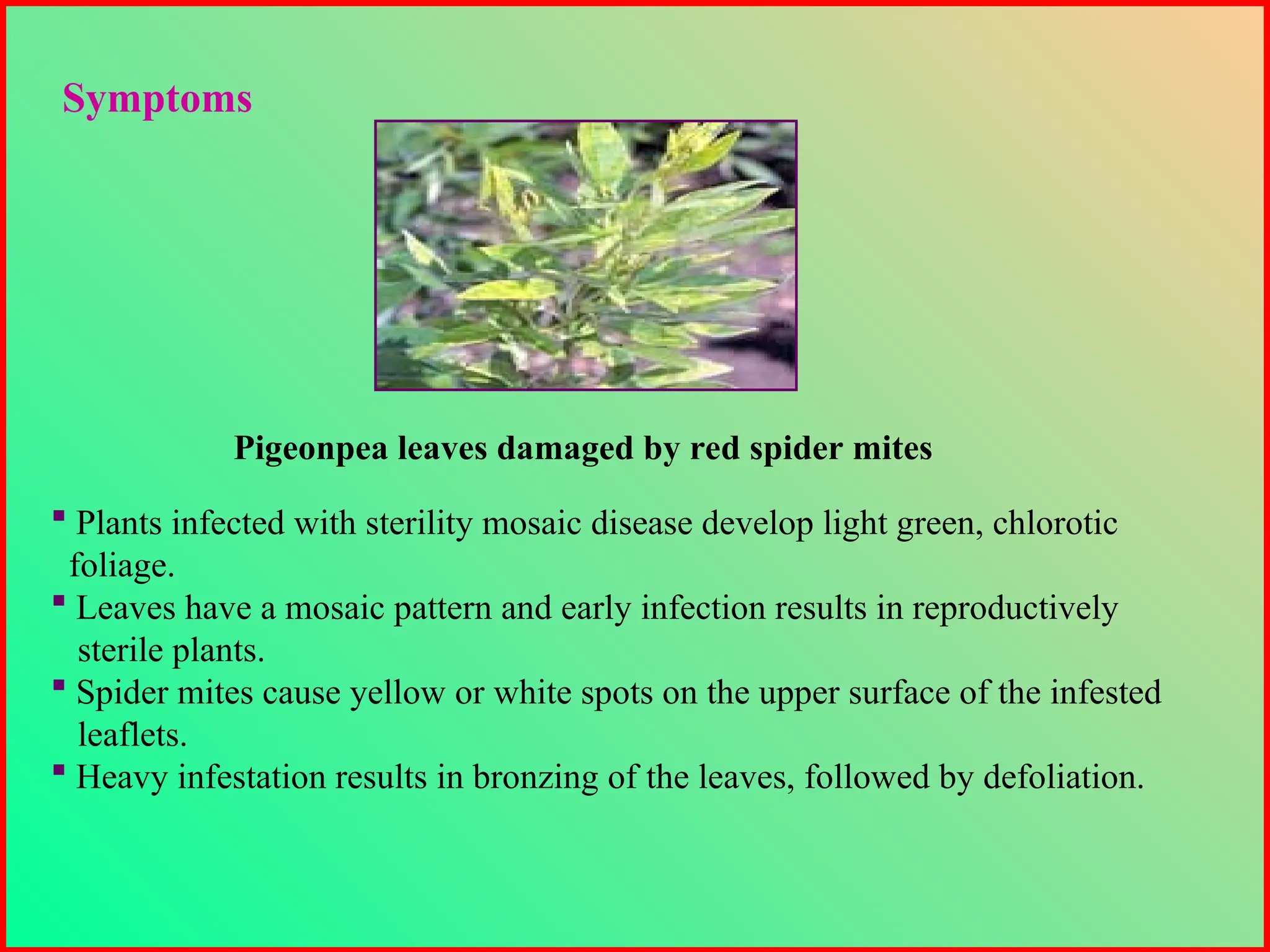
Spider mites cause yellow or white spots on the upper surface of the infested
leaflets.
Heavy infestation results in bronzing of the leaves, followed by defoliation.
Symptoms
Pigeonpea leaves damaged by red spider mites
20.
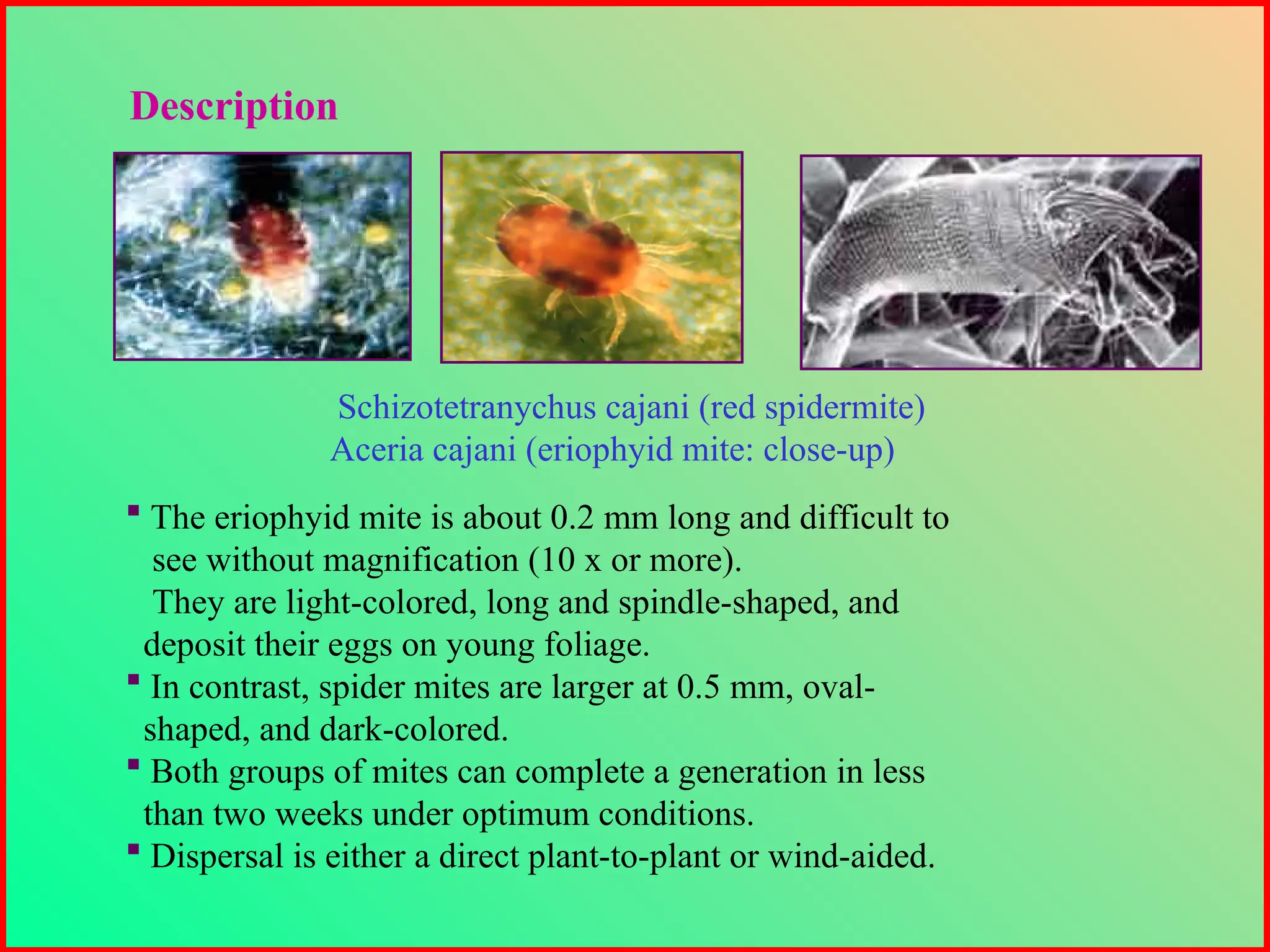
The eriophyidmite is about 0.2 mm long and difficult to
see without magnification (10 x or more).
They are light-colored, long and spindle-shaped, and
deposit their eggs on young foliage.
In contrast, spider mites are larger at 0.5 mm, oval-
shaped, and dark-colored.
Both groups of mites can complete a generation in less
than two weeks under optimum conditions.
Dispersal is either a direct plant-to-plant or wind-aided.
Schizotetranychus cajani (red spidermite)
Aceria cajani (eriophyid mite: close-up)
Description
21.
Aphids (Hemiptera: Aphididae)
Aphis craccivora Koch in pigeonpea and
chickpea,
Aphis fabae Scopoli in pigeonpea
Myzus persicae (Sulzer) in pigeonpea,
Macrosiphum spp in pigeon pea
Acrythosiphon pisum (Harris) in chickpea
Distribution
Several species of aphids have been reported in
pigeonpea and chickpea, among which A.
craccivora is the most prevalent.
This species is widely distributed and has a broad
host range.
MINOR PESTS
22.
A. craccivorais common in a number of leguminous crops.
The adults are black and shiny, up to 2 mm long and some are winged. The nymphs are
similar to the adults but smaller.
Aphids colonize the young shoots, flowers, and pods of crops.
Young leaves of seedlings become twisted under heavy infestation.
Seedlings may wilt, particularly under moisture-stressed conditions.
However, a more notable issue in chickpea (yellow in kabuli-types).is stunt disease,
caused by the bean leaf-roll virus transmitted by these aphids.
Scraping the lower part of the stem reveals brown phloem, a characteristic of the
disease.
Description
23.
Description
Adults areabout 1mm long. Both adults and nymphs feed on
flowers.
Minute eggs are laid in flowers and flower bud tissues.
When flowers begin to senescence the thrips move to new flowers
A generation takes about 3 weeks.
Thrips (Thysanoptera: Thripidae)
Distribution
Several genera and species of thrips attack pigeonpea flowers in
Asia.
The most common species is Megalurothrips usitatus
24.
Symptoms
A largenumber of (up to 50) thrips may
be present in each pigeonpea flower.
This species also occurs in the flowers of
a number of annual and perennial crops.
Heavy thrip infestations may result in
flower drop.
Distribution
This species is widely distributed on several legumes in Asia.
Description
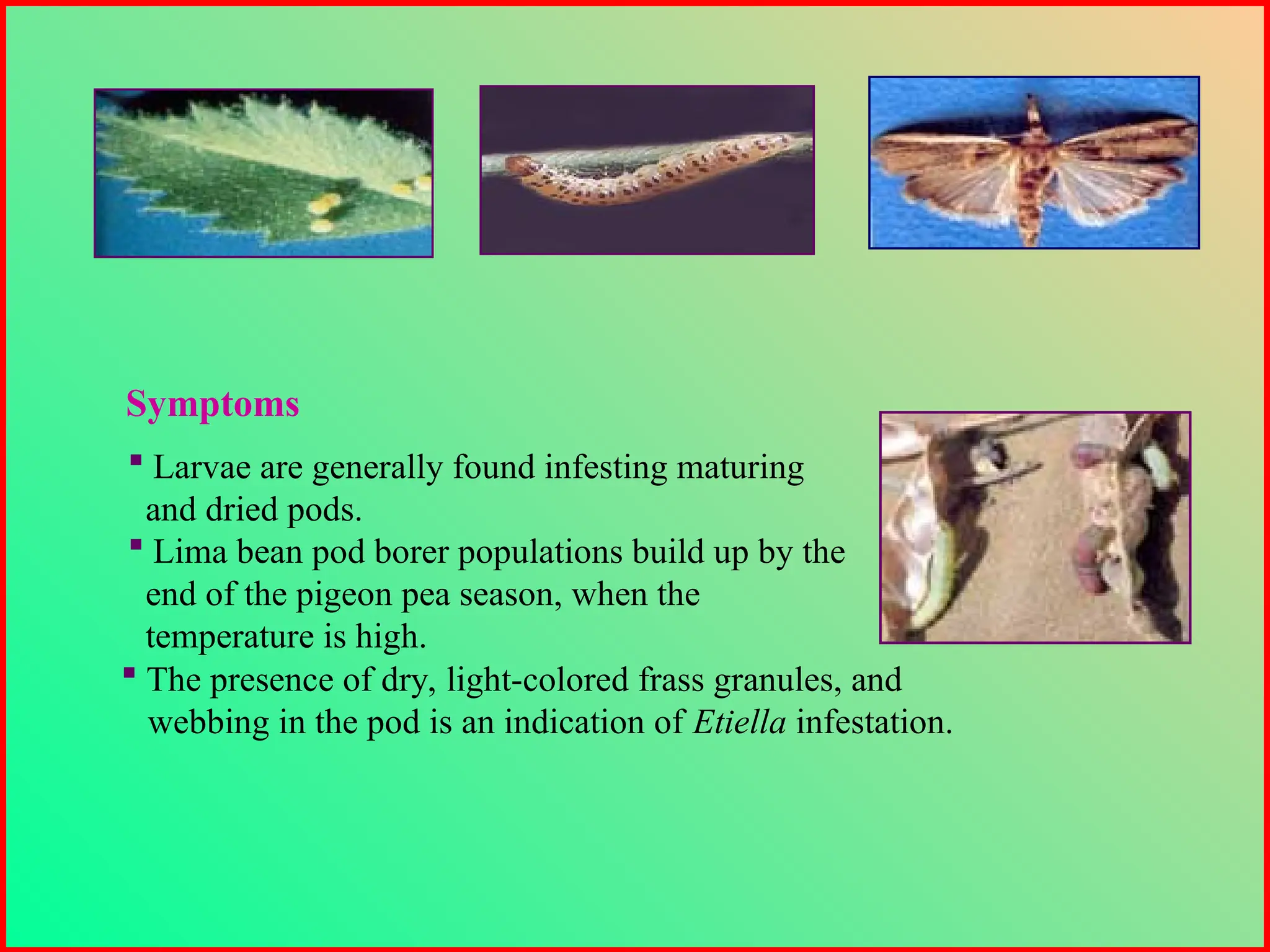
Adults are small, brown moths with a wingspan of about 20 mm.
Eggs are laid in clusters of 2-12 on fully mature pods.
The young larvae are green, but become pinkish- red, as they get
older.
Larvae feed inside the pod, reaching a maximum length of 15 mm.
Lima bean pod borer
Etiella zinckenella (Lepidoptera: Pyralidae)
25.
The presenceof dry, light-colored frass granules, and
webbing in the pod is an indication of Etiella infestation.
Symptoms
Larvae are generally found infesting maturing
and dried pods.
Lima bean pod borer populations build up by the
end of the pigeon pea season, when the
temperature is high.
26.
Whitefly
Bemisia tabaci (Homoptera:Aleyrodidae)
Damage
Whiteflies, both the nymph and adults, pierce and suck the sap of
the leaves, causes the weakening,yellowing, early
wilting of the plant resulting in reduced plant growth.
Whitefly produces honeydews that serve as the substrates for the
growth of black sooty molds on leaves and fruit. The mold
reduces photosynthesis causing the poor plant growth of the
plant.
27.
Description
Eggs areoval-shaped, stand vertically on the leaf surface. They are
deposited on the underside of leaves, sometimes in a circle or oval-
shaped patterns.
Nymph are transparent, ovate, and about 0.3 to 0.7 mm in size and they
move around on the plants looking for a feeding site upon hatching.
Adults are about 1mm long with two pairs of white wings and light-
yellow bodies.
Their bodies are covered with waxy powdery materials.
28.
Empoasca kerri Pruthi(Hemiptera: Cicadellidae)
Distribution
In most areas where pigeonpea is grown, jassids are found feeding on this
crop.
In India, Empoasca kerri is the species most commonly reported from
pigeonpea and other legumes.
It is a serious pest of mungbean in almost all part of the country.
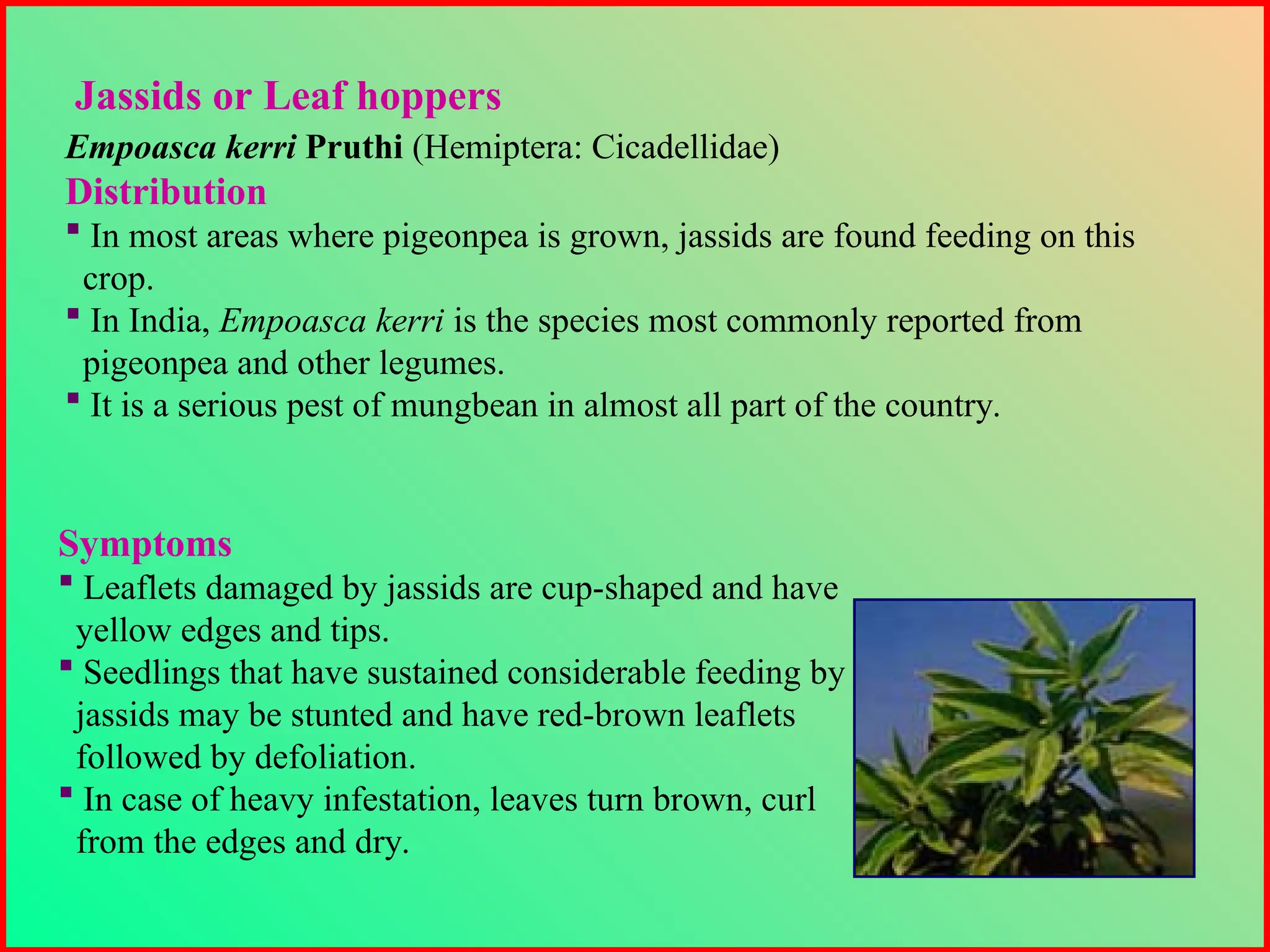
Jassids or Leaf hoppers
Symptoms
Leaflets damaged by jassids are cup-shaped and have
yellow edges and tips.
Seedlings that have sustained considerable feeding by
jassids may be stunted and have red-brown leaflets
followed by defoliation.
In case of heavy infestation, leaves turn brown, curl
from the edges and dry.
29.
These smallgreen insects 2.5 mm long suck sap from both the
upper and lower surface of the leaflets.
The nymphs and adults have similar shape and color, but the
nymphs do not have wings and run sideways when disturbed.
Eggs are laid along veins on the underside of leaflets.
One generation requires 2 weeks under optimum conditions.
Description
Nymph Adult
30.
Tobacco caterpillar (Lepidoptera:Noctuidae)
Spodopteralitura, S. littoralis, S. frugiperda, S. eridania
Damage
Seedlings are often cut off at ground level.
Larvae can be found in the soil (up to a depth of about 5 cm)
near
the plant host.
They always curl-up when disturbed.
Cutworms feed only at night. Generally, they are not found on
plants or on the soil surface during the day.
Young caterpillars eat the soft leaves of the plant. The full grown
caterpillars are capable of eating the entire plant. The newly
hatched larvae feed from the base towards the tip of the leaf. At
this stage, they first feed on the epidermis and may discolor the
entire leaf surface.
31.
Description
Eggs aretiny pearl white, round, and have a ridged surface.
Newly hatched larvae are greenish and about 1 mm long,full-grown
larva has a cylindrical body, brown or brownish-black with a tinge of
orange.
The adult has dark brown forewings with distinctive black spots and
white and yellow wavy stripes. The hind wings are whitish with grayish
margins.
Mylabris pustulata Thunberg, Mylabris thunbergii Billberg,
Mylabris spp
(Coleoptera: Meloidae)
Distribution
Blister beetles are widespread in pigeonpea in Asia.
Blister beetles
32.
Symptoms
Adult beetles feedon flowers and tender pods, and may have a
significant impact on yields, especially of short-duration genotypes.
Description
Thus, while the adults may cause considerable damage,
the larvae are beneficial.
Mylabris pustulata adults measure about
25 mm in length and have red and black
alternating bands on the elytra.
Other species may vary in size but all are
brightly colored.
Eggs are usually laid in the soil and the
diet of the larvae consists of other soil
insects, including major pests.
33.
Amsacta albistriga Walker,Spilosoma (Diacrisia) obliqua (Walker)
(Lepidoptera: Arctiidae ) Euproctis subnotata
(Lepidoptera:Lymantriidae)
Distribution
Larvae of a number of widely distributed, polyphagous lepidopterans
feed on pigeonpea leaves.
Three of the most dominant listed above, the damage caused by
them is similar.
Lepidopteran defoliators
34.
Description
Larvae of Amsactaspp. and S. obliqua are up to 50 mm long with reddish-
brown hairs.E. subnotata are smaller, up to 25 mm long, darker, and less hairy.
Symptoms
Amsacta albistriga and Spilosoma obliqua are the two most common of several
species of "hairy caterpillars" that attack pigeonpea during the vegetative phase.
Euproctis subnotata, also attack pigeonpea.
Leaf webber
Grapholita (Cydia) critica ( Lepidoptera: Tortricidae)
Distribution
Grapholita (Cydia) critica is commonly found in pigeonpea throughout
South Asia.
35.
Description
G. criticais an inconspicuous, brown moth with a wingspan of 10-15
mm.
The cream-yellow larva reaches a length of about 10mm before
pupating within the webbed plant material.
36.
Symptoms
Larvae producesilk and use it to hold leaflets together.
They feed from inside a web of leaflets, flowers, and pods.
When infestation includes the terminal bud, further growth of that
shoot may be severely impaired.
Infestations may begin as early as the seedling stage and continue
through to the flowering and podding stages.
Though primarily a foliage feeder, G. critica may also attack
reproductive structures, especially when infestation occurs late in
the development of the crop.
In such cases, the leaf webber also behaves as a pod borer.
37.
Distribution
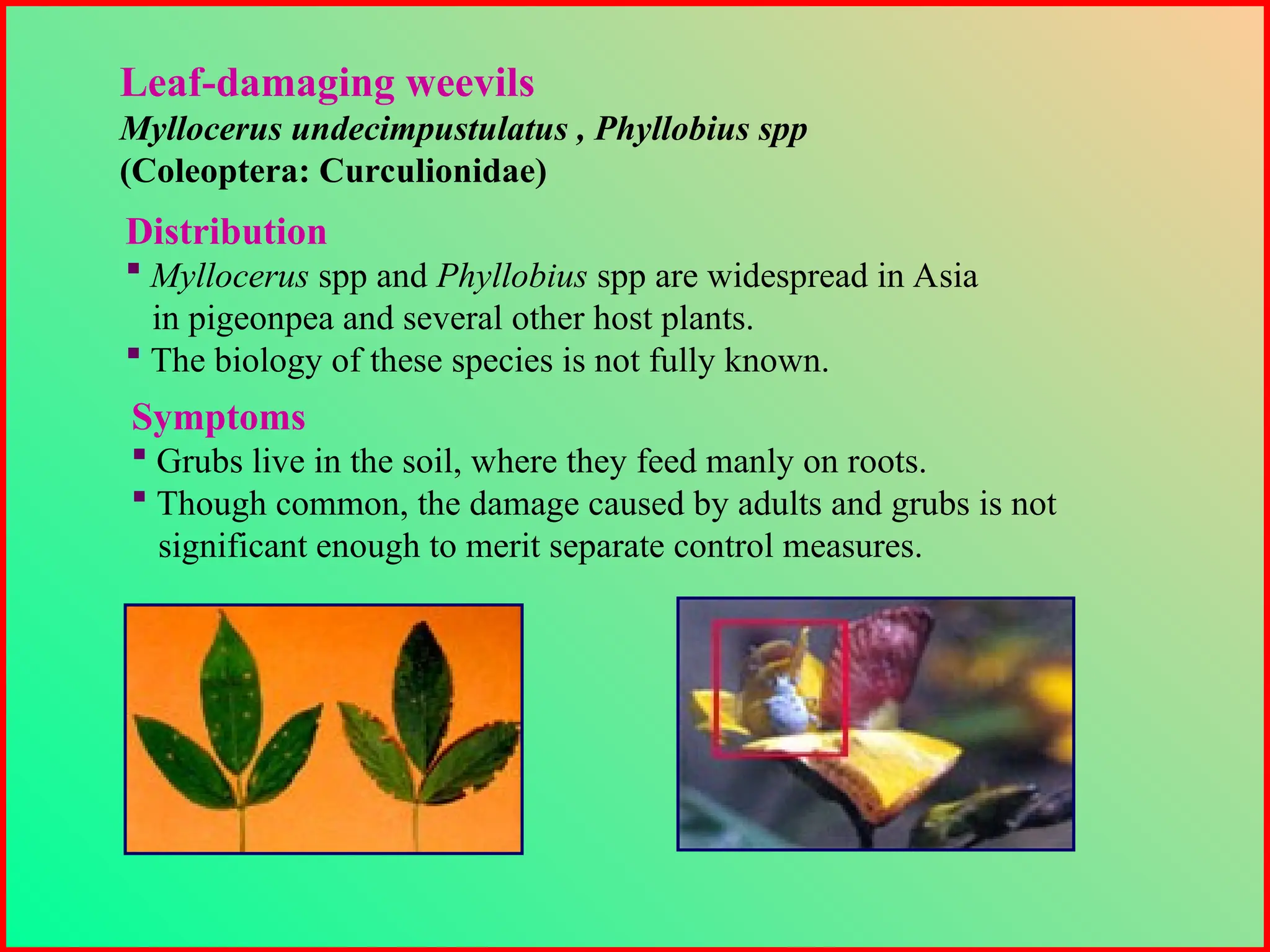
Myllocerus sppand Phyllobius spp are widespread in Asia
in pigeonpea and several other host plants.
The biology of these species is not fully known.
Leaf-damaging weevils
Myllocerus undecimpustulatus , Phyllobius spp
(Coleoptera: Curculionidae)
Symptoms
Grubs live in the soil, where they feed manly on roots.
Though common, the damage caused by adults and grubs is not
significant enough to merit separate control measures.
38.
Pod wasp
Tanaostigmodes cajaninae( Hymenoptera: Tanaostigmatidae)
Distribution
Pod wasp is a minor but widely encountered pest of pigeonpea in
India.
Its incidence outside of India is not known.
Symptoms
Eggs are laid very early in pod development. Feeding by the
grubs produces malformed pods that do not grow at all.
Locules containing pod wasp remain undeveloped giving an
abnormal appearance to the pod.
39.
The Basic Methodsof IPM:
All of the components of an IPM approach can be grouped into Four major steps.
1. Preventative Measures to prevent pest buildup
• Cultural Controls
• Pest-Resistant Varieties
• Biological Controls
• Physical Barriers
• Use of Pheromones
2. Monitoring (Scouting) of pests:
o Regular checking of the area;
o Early detection of pests;
o Proper identification of pests;
o Identification of the effects of biological control agents.
3. Assessment of Pest situation
Forecasting
Economic Thresholds
4. Best Action (Control Measures) to be taken
When To Apply The Pesticide
Choice Of Insecticides
Calendar-Based Application
LEGAL APPROACHES
APPROACHES TO PEST MANAGEMENT
40.
Integrated PestManagement of Tobacco caterpillar on Blackgram
I. Cultural :
Timely tillage to expose pupae
Removal of alternate hosts
Early sowing to escape severe broods
Raise trap crops like castor for oviposition, larval development.
II. Mechanical
Monitor with Pheromone traps @ 10/ha
Remove egg masses / skeletonized leaves
Pick and destroy the grown up larvae.
Pest Management in Pulses
41.
III. Biological
SprayNPV @ 500 LE/ha
Spray BT @ 1kg/ha
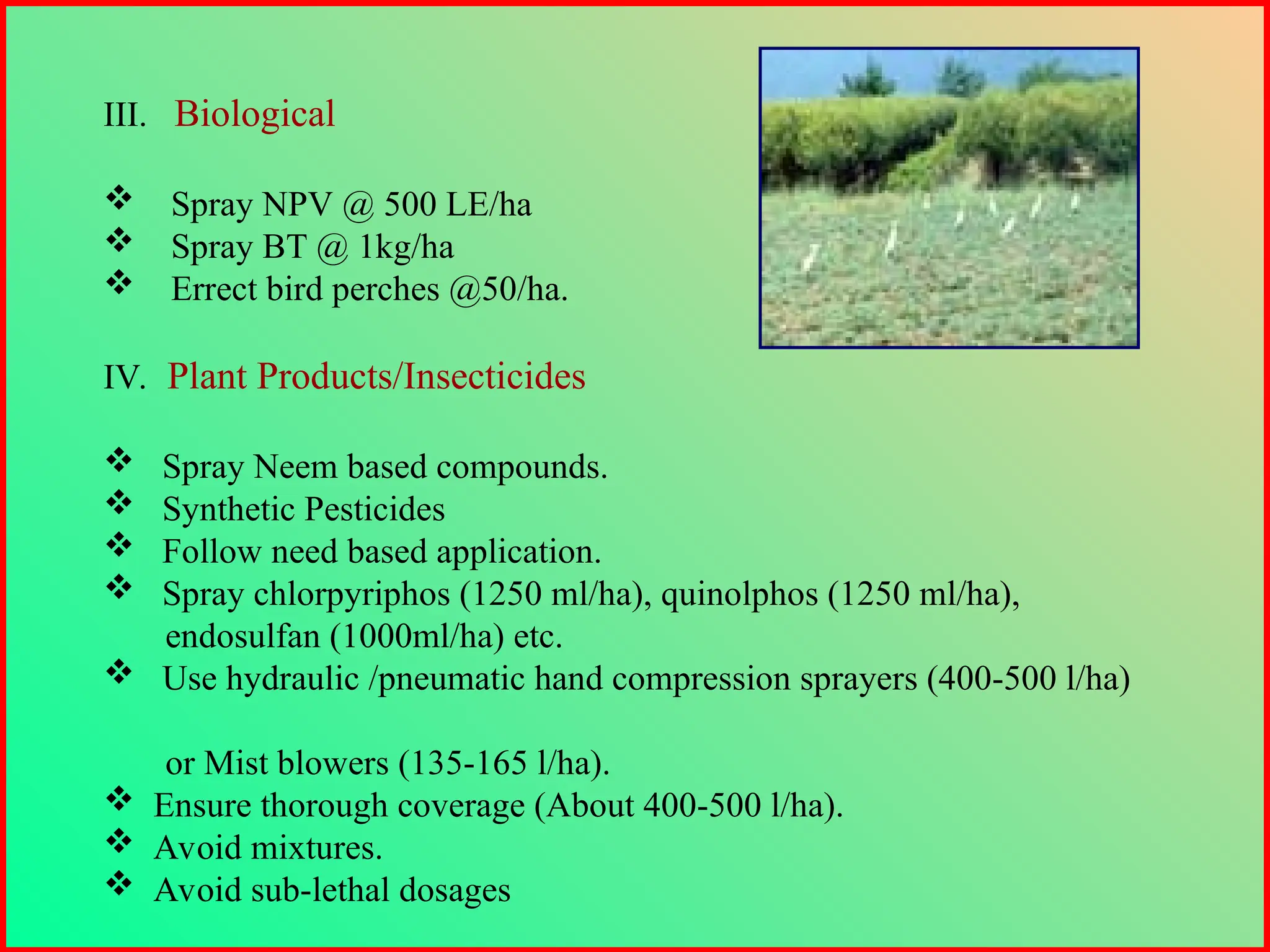
Errect bird perches @50/ha.
IV. Plant Products/Insecticides
Spray Neem based compounds.
Synthetic Pesticides
Follow need based application.
Spray chlorpyriphos (1250 ml/ha), quinolphos (1250 ml/ha),
endosulfan (1000ml/ha) etc.
Use hydraulic /pneumatic hand compression sprayers (400-500 l/ha)
or Mist blowers (135-165 l/ha).
Ensure thorough coverage (About 400-500 l/ha).
Avoid mixtures.
Avoid sub-lethal dosages
42.
Integrated Pest Managementof Helicoverpa on Blackgram
I. Cultural
Summer ploughing
Avoid monocropping
Follow crop rotation
Avoid staggered sowing
Adopt wider row spacing (more than 2 metres)
Use recommended dose of fertilizers
Cultivate tolerant / recouping varieties(Sharad,Bahar,ICP-4,PDA-2).
Grow intercrops
Kharif : sorghum, soybeany, greengram, blackgram, bajra
Rabi : coriander, cowpea, greengram, groundnut.
Discourage synthetic pyrethroids.
Cultivate short duration varieties.
Adopt community approach
43.
II. Mechanical
Monitorwith Pheromone traps @10/ha
Dislodge the larvae by shaking the plants and destroy.
III. Biological
Release Trichogramma chilonis twice at weekly intervals @65000/ha.
Keep bird perches @50/ha.
Spray HaNPV @500 LE /ha or B.T. @ 1kg/ha in pigeonpea, and 250
LE in chickpea at egg hatch is potent,can be repeated at 15-20 days
intervals.
IV. Plant Products
Use Neem oil @5ml/l or Repelin @ 10ml/l or NSKE @ 50g/l
44.
V. Synthetic Pesticides
The recommended action threshold for Helicoverpa in chickpea
is
2 small larvae per plant.
Plant protection operations should be initiated in pigeon pea
when
one notices.
1 small larva or 3 eggs per plant in short-duration.
3 small larvae or 5 eggs per plant in medium-duration. 5
small larvae or 10 eggs per plant in long-duration.
Follow need based application
Avoid cocktail mixtures
Aim the sprayings at early instars
Apply endosulfan @ 2.0 l/ha or chlorpyriphos @ 2.5 l/ha or
quinalphos @ 2.0 l/ha or acephate @ 1.0kg/ha alternatively
during flowering & pod formation stage.
Ensure thorough coverage (900-1000 l/ha).
Use hydraulic / pneumatic hand compression sprayers (900-1000
l/ha).
Discourage synthetic pyrethroids
Avoid sublethal dosages
45.
Cultural Method
To effectivelycontrol pests the use of pesticides may be necessary.
However,
the following practices may be useful in suppressing the pest population.
(Chandra et al.,
1983)
Sowing early or at the normal time. Late sowing results in more pest
infestation and damage.
Deep plowing of the field in summer. Ploughing just before chickpea sowing
will destroy cocoons. Deep summer ploughing to expose the pupae of cut
worm and pod-borer for natural enemies and scorching sunlight.
Wider spacing of 45 cm rows. The plant has a physiological compensation
therefore a density of 50 to 80 plants/m2 may not affect the yield.
Ratoon crop and volunteer plants of pigeonpea are major sources of pest
carry-over. They need to be destroyed.
Intercropping with mustard, wheat, barley, linseed, safflower and sorghum
tend to reduce the infestation.
Integrated Pest Management
46.
Mechanical Method
Useof pheromone trap for monitoring of adult male population. A
threshold
level of 5-6 moths/trap during March-April is recommended to start control
operations.
Mechanical collection and destruction can be successfully carried out only
when the pest attack just starts in case of Heliothis armigera and gram
semilooper and cut worms.
Mixed cropping with mustard or linseed is advised as it minimises the
infestation of pod-borer.
Resistant varieties like G 130,C 124,Avrodhi,ICC 506,C 235 are less
susceptible to Heliothis armigera.
Practice crop rotation, Planting non-leguminous crops every cropping
season breaks the life cycle of bean pod borers.
Blister beetle , grey weevils, brown bug, leaf tier, and hairy caterpillars
can be manually controlled on a limited scale by handpicking, shaking,
bagging or catching in nets
47.
Various parasiteslike Microbracon and Apanteles parasitize the caterpillars
of gram cut worm and Trichogramma minutum has proved very successful
as an egg parasitoid of Heliothis armigera in USA.
Bacillus thuringiensis bacterium is also known to damage midgut of
epithelium of Plucea orichalcea (Gram semilooper).
Use Spinosads and Avermectins produced by actinomycetes.
Light traps are also used to control cutworms.
Neem seed kernel extract (5%) is more effective.
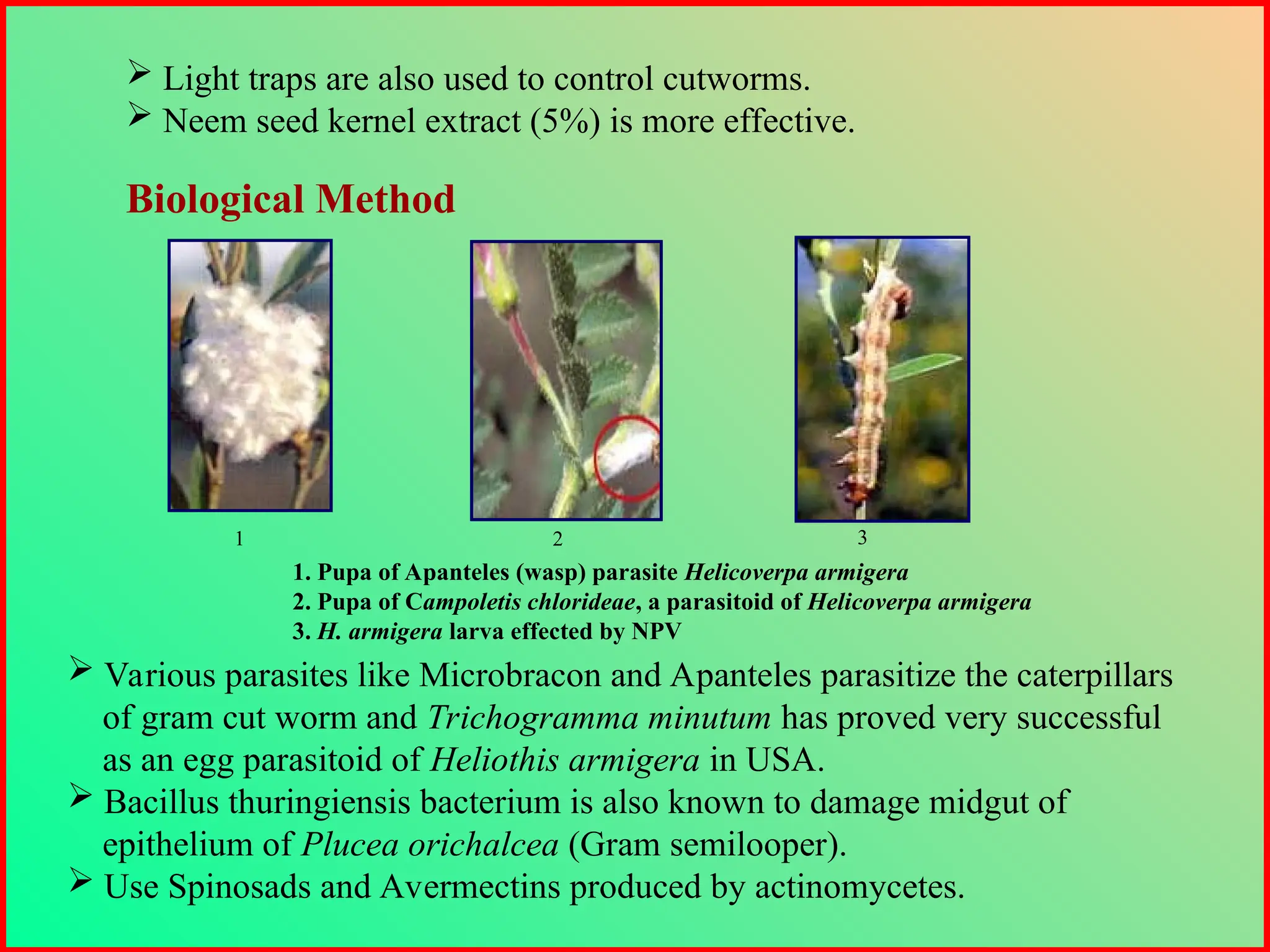
Biological Method
1 2 3
1. Pupa of Apanteles (wasp) parasite Helicoverpa armigera
2. Pupa of Campoletis chlorideae, a parasitoid of Helicoverpa armigera
3. H. armigera larva effected by NPV
48.
Chemical Method
Theinsecticide application is essential at the appropriate time to
discourage a pest population increase, especially at the initiation of
flowering and at pod formation.
In cutworm prone areas, presowing treatment of soil with broadcasting
of chlorphyriphos (20 EC) 3 litre or lindane (20EC) 4 litre/ha in 10 kg of
sand may be used to control the pest.
Spraying indoxacarb (Avaunt 14.5 SC) @250 ml/ha and 0.07%
endosulfan 35 EC @ 3 litre /ha against Heliothis armigera and gram
semilooper infesting the crop at ETL.
Antifeedants
Triphenyl tin hydroxide (TTH) and Triphenyl tin acetate(TTA)
effectively deterred the caterpillars of Heliothis armigera from feeding.
Brestan had been found effective against the larvae of cut worms.
49.
Aphids
The wingedadults that land on chickpea may be deterred and fly off,
or be killed by the acid exudates on leaves and pods.
Chickpea genotypes with little or no exudates maintain the largest
colonies.
Aphids are seldom key economic pests for either pigeonpea or
chickpea crops.
Natural enemies and abiotic factors generally keep aphid populations
in check. Both general predators and specific parasitoids, such
as the Aphytis spp. inflict heavy mortality on aphid colonies.
Among abiotic factors, rain and wind can dramatically reduce aphid
infestations.
Management for Other Pests
50.
Jassids
Jassids areusually a minor pest of pigeonpea.
They can become a serious threat if the seedling stage is heavily infested.
Under these conditions, application of any contact or systemic insecticide is
adequate restraint.
Plume moth
Exelastis atomosa can be quelled by the same insecticides, excluding
HaNPV, employed to suppress outbreaks of H. armigera.
Pod Sucking Bugs
Because pod-sucking bugs are highly mobile, insecticides may be
inadequate in repressing the extent of their spread, especially in small fields.
Natural enemies, in particular various species of egg parasitoids can cause
high levels of bug mortality by the end of the season. e.g. Gryon
clavigrallae
and Gryon fulviventre. Antilochus coqueberti (Hemiptera:Pyrrhocoidae) and
a predatory mite,Bochartia sp.(Acarina:Erythraeidae) prey on nymphs and
adults.
51.
Podfly
No specificcontrol strategy has been universally implemented for podfly
management.
However, use of systemic insecticides can lessen the extent of podfly
damage.
Work on developing podfly-resistant pigeonpea genotypes is in progress
and
may provide the ultimate solution to this problem.
Parasitic Hymenopteran that attack the larval stage are Euderus
spp. (Hymenoptera:Eulophidae) and Ormyrus spp.
(Hymenoptera:Ormyridea).
Pod wasp
This species is probably a secondary pest resulting from the increasing use
of pesticides on pigeonpea which have destroyed its natural enemies.
In India, pod wasp populations do not cause appreciable harm to warrant
any control.
52.
Thrips
Populations ofthrips can become quite large, though there is no evidence
that thrips cause losses in yield.
Pigeonpea plants produce more flowers than the plant can sustain, so many
are lost naturally.
Economic threshold level is: 20% of the plant population is infested with
thrips.
No specific control measures are needed for the management of thrips.
Marcua vitrata
This is a leading pest of pigeonpea and other grain legumes in many areas
of Asia.
Indeterminate pigeonpea genotypes suffer less damage than the
determinate-type.
This difference in susceptibility among genotypes may be used to develop
cultivars resistant to this insect.
Relatively few natural enemies (no egg parasitoids) have been reported
to attack M. vitrata.
Chemical control is complicated by the fact that larvae live in well-
protected webs.
Systemic pesticides may accomplish more restraint than contact
53.
Lima bean podborer
In India, E. zinckenella is not ranked a noteworthy offender of
pigeonpea, deserving any explicit course of action.
Leaf webber
The leaf webber damage is very conspicuous, causing farmers anxiety
about possible yield losses.
Although leaf-webber infestation being highly visible may induce the
use
of chemical pesticides, its impact on yield is usually negligible.
In fact, plants may produce side branches to compensate for the loss of
terminal buds.
A large number of parasites and predators are also associated with this
pest (e.g. Spiders and mites)
Inappropriate use of chemical pesticides may have a negative impact on
the natural enemies that attack major pigeonpea pest and little effect on
well-protected, leaf webber larvae housed in the webbed leaves.
54.
Mite
In general,mite attack by itself does not pose an economic problem in Asia.
However, the transmission of sterility mosaic disease by mites can cause
significant yield reductions.
The selective use of resistant cultivars is the most effective solution.
Rain can also substantially reduce mite populations.
Attack by red spider mites may become severe in pigeonpea plants grown in
greenhouses as the intensive chemical apraying eradicates diseases that red
spider mites would otherwise succumb to. A number of generalist predators
such as Spiders and Coccinellids that feed on mites keep their population
under control.
Several Tetranychus spp have developed high levels of resistance to one or
more pesticides, hence caution is advised in their use as a preventive step
against further mite outbreaks.
55.
Blister beetles
Inlocations where pigeonpea is a primary crop, the after effect of blister
beetles is inconsequential because their numbers are diluted over a large
area.
Pigeonpea genotypes that flower early or crops cultivated on small
holdings, may suffer substantial injury inflicted by these insects.
Chemical control may fail because the beetles are large and robust, and
highly mobile.
Manual picking and destruction of adult blister beetles is often the only
practical control measure.
Bean fly
Intercropping legumes with corn lessens the attack of bean fly.
Mulching plants with rice straw.
Hilling-up or ridging of young plants 4-5 weeks after planting.
Crop rotation with non leguminous crops.
Avoid late planting if infestation is prevalent in the area.
Plant at the same time as with other farmers in the area.
Plough under all plant residues from the field after harvest.
56.
Table. Cost ofplant protection in IPM and non-IPM fields at different locations in India, 1997-
2000.
Cost of Plant Protection
(Rs/ha)
Location, State IPM Non IPM Cost reduction in IPM over
control(%)
Hamsanpalli, AndhraPradesh 898 1144 21.5
Bollibaithanda, Andhra Pradesh 1194 1870 36.1
Chincholi, Andhra Pradesh 859 1618 46.9
Kanjar, Andhra Pradesh 649 1467 55.8
Punukula, Andhra Pradesh 458 1017 55.0
Itagi, Karnataka 846 1448 41.6
Ashta,Maharastra 800 - -
All farmers in the village implemented IPM Rs 100=US$ 2.25 approx.
Source: IFAD-ICRISAT, IPM Project Technical Report 2003
57.
Table. Development ofGenetically modified crops at ICRISAT for
resistance to Insect pests.
Crop Constraint Genes Status
Pigeonpe
a
Pod borer -
Helicoverpa
cry1Ab,cry1
Ac
T3-T4 plants under contained field
testing in 2003-05
Chickpea Pod borer –
Helicoverpa
cry1Ab,cry1
Ac
T2 plants under contained field
testing in 2004-05
Table. Screening techniques, genetic information and material generated at ICRISAT
with a potential for IPM in the semi-arid tropics.
Crop Screening
techniques
Resistance source/
released cultivar
Mechanisms/ inheritance
Pigeonpea-
Helicoverpa
Field screening ICP 7203-1 / ICPL
332
Trichomes, flavonoids
Chickpea-
Helicoverpa
Field screening,
cage and detached
leaf assay
ICC 506 / ICCV 10 Oxalic and malic acids. Additive gene
action
(Sharma, H. C., 2006)
(Sharma, H. C., 2006)
58.
CONCLUSION
*Arthropod management includes,in order of preference:-
Preventive tactics (i.e. enhancement of natural controls, cultural
methods, plant resistance, behavioural controls).
Remedial tactics ( i.e. augmentative or inundative releases of
natural enemies,mechanical or physical methods,microbial
pesticides,biorational pesticides, selective pesticides and lowest
effective dosage of broad spectrum pesticides).
* A successful IPM programme takes time, money, patience, short
and long term planning, flexibility and commitment.
* Must contribute to producers’ economic goals and requisites for
acceptance by society.