The Indus Valleycivilization flourished around 2,500 B.C. in
the western part of South Asia, in what today is Pakistan and
western India. It is often referred to as Harappan Civilization
after its first discovered city, Harappa.
The nearby city of Mohenjo Daro is the largest and most
familiar archaeological dig in this region.
The Indus Valley was home to the largest of the four ancient
urban civilizations of Egypt, Mesopotamia, India (modern day
Pakistan) and China. This ancient civilization was not
discovered until the 1920's. Most of its ruins, including major
cities, remain to be excavated.
5.
Indus River ValleyCivilization
• This civilization is still
mysterious.
• The writing has not
been deciphered or
translated.
• This was greater in
area compare to other
civilizations.
6.
Indus River civilization
•We do know the cities
were sophisticated
enough to have brick
walls surrounding
them for protection
against flooding from
the Indus River.
7.
Harappa Culture
Developedwritten language
Division of labor within the culture
Ruled as a theocracy
Conducted thriving trade
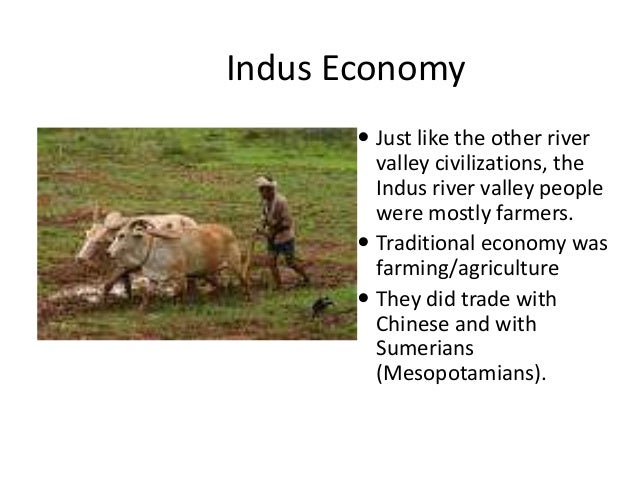
Indus Economy
Justlike the other river
valley civilizations, the
Indus river valley people
were mostly farmers.
Traditional economy was
farming/agriculture
They did trade with
Chinese and with
Sumerians
(Mesopotamians).
11.
Three Theories aboutdemolish of IVC
around 1500 BCE
• Natural Disaster: The river may have changed
course, heavy rain fall due to monsoon
• The people may have overworked the land
(overcutting trees, overgrazed, over farmed
land)
• Invaders (Aryan migrations from 2000 BCE to
1500 BCE)