12.1
Lecture 24 & 25
Controlled Access &
Channelization
12.2
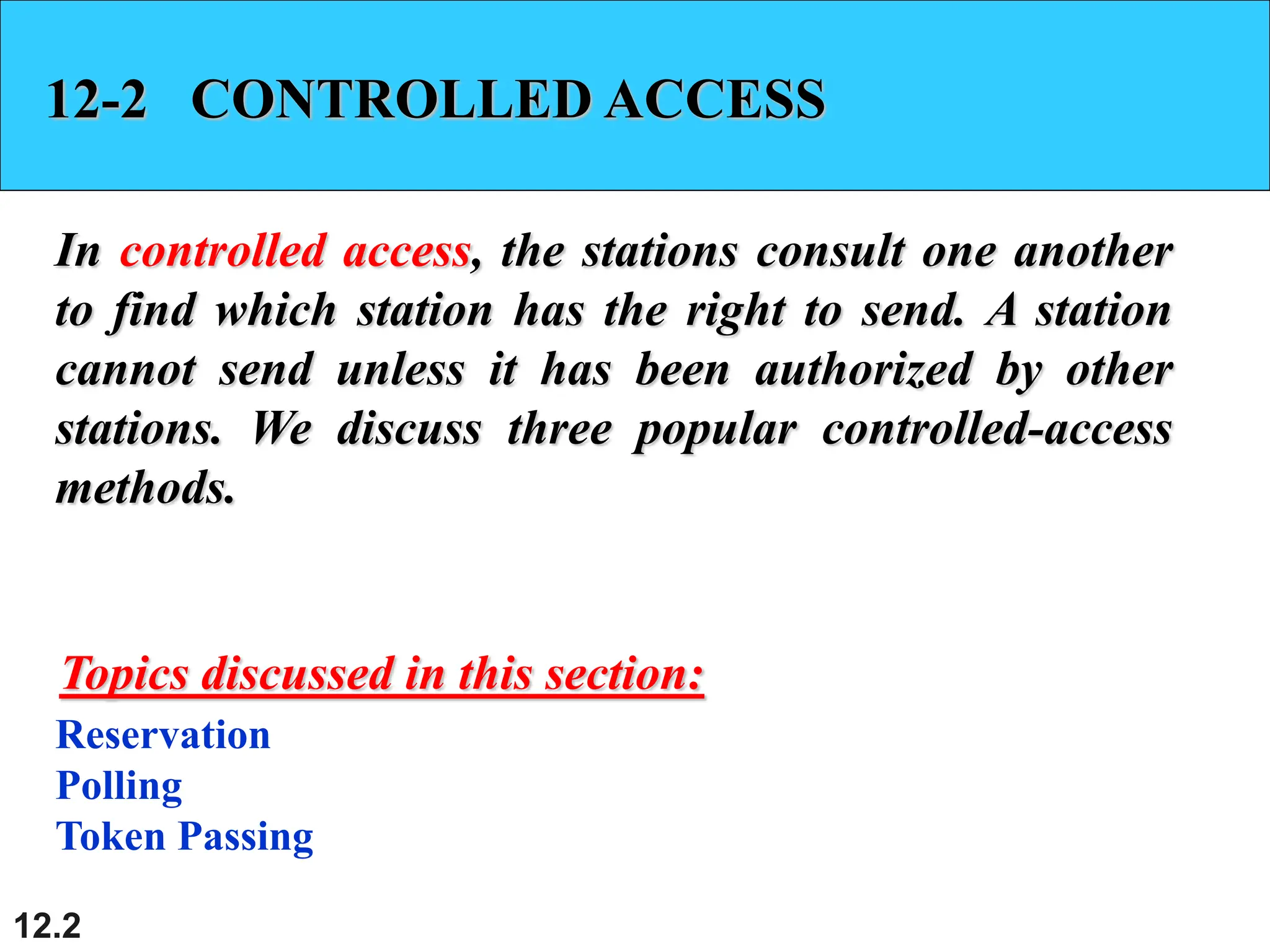
12-2 CONTROLLED ACCESS
In controlled access, the stations consult one another
to find which station has the right to send. A station
cannot send unless it has been authorized by other
stations. We discuss three popular controlled-access
methods.
Reservation
Polling
Token Passing
Topics discussed in this section:
12.3
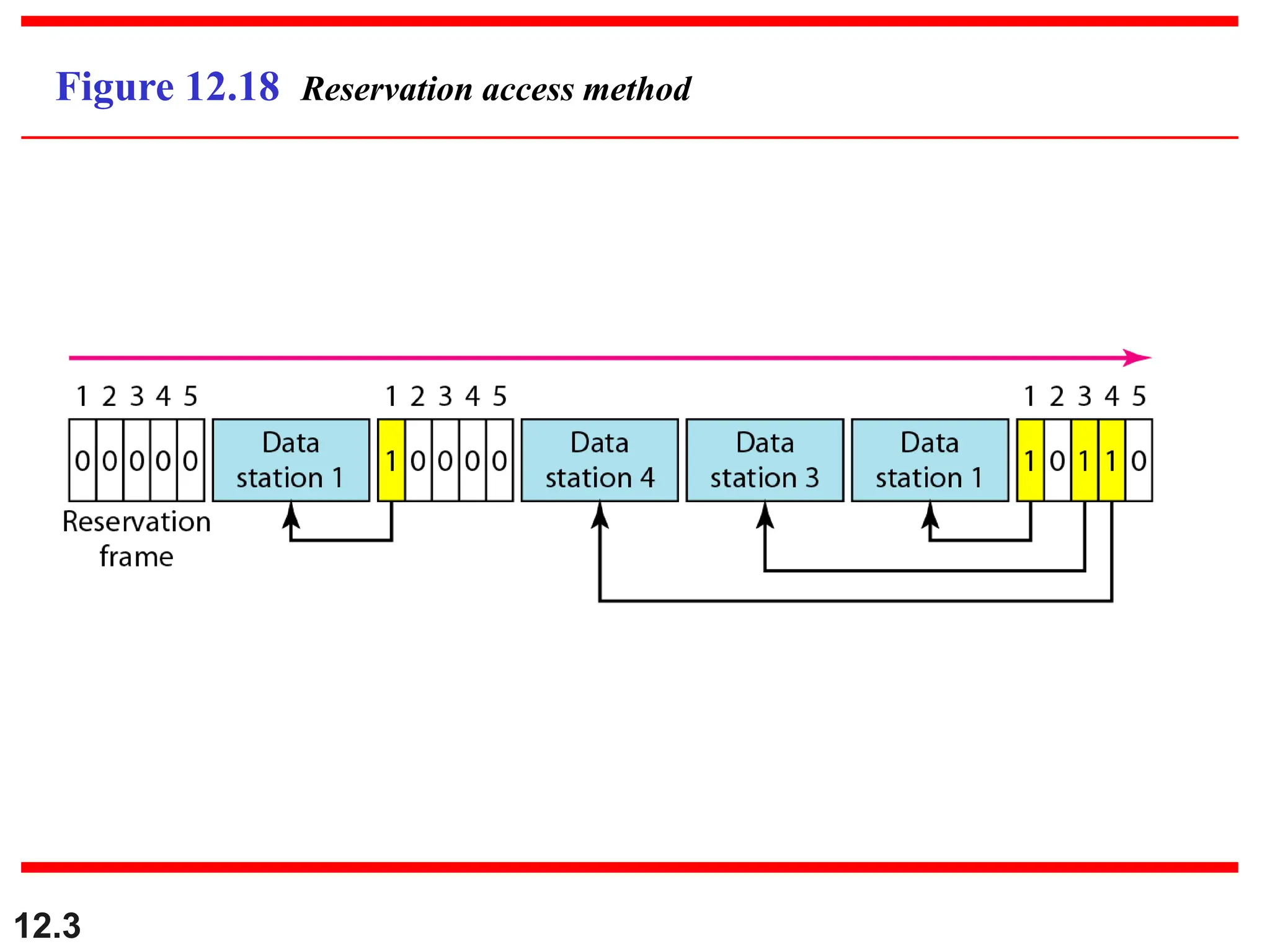
Figure 12.18 Reservation access method
12.4
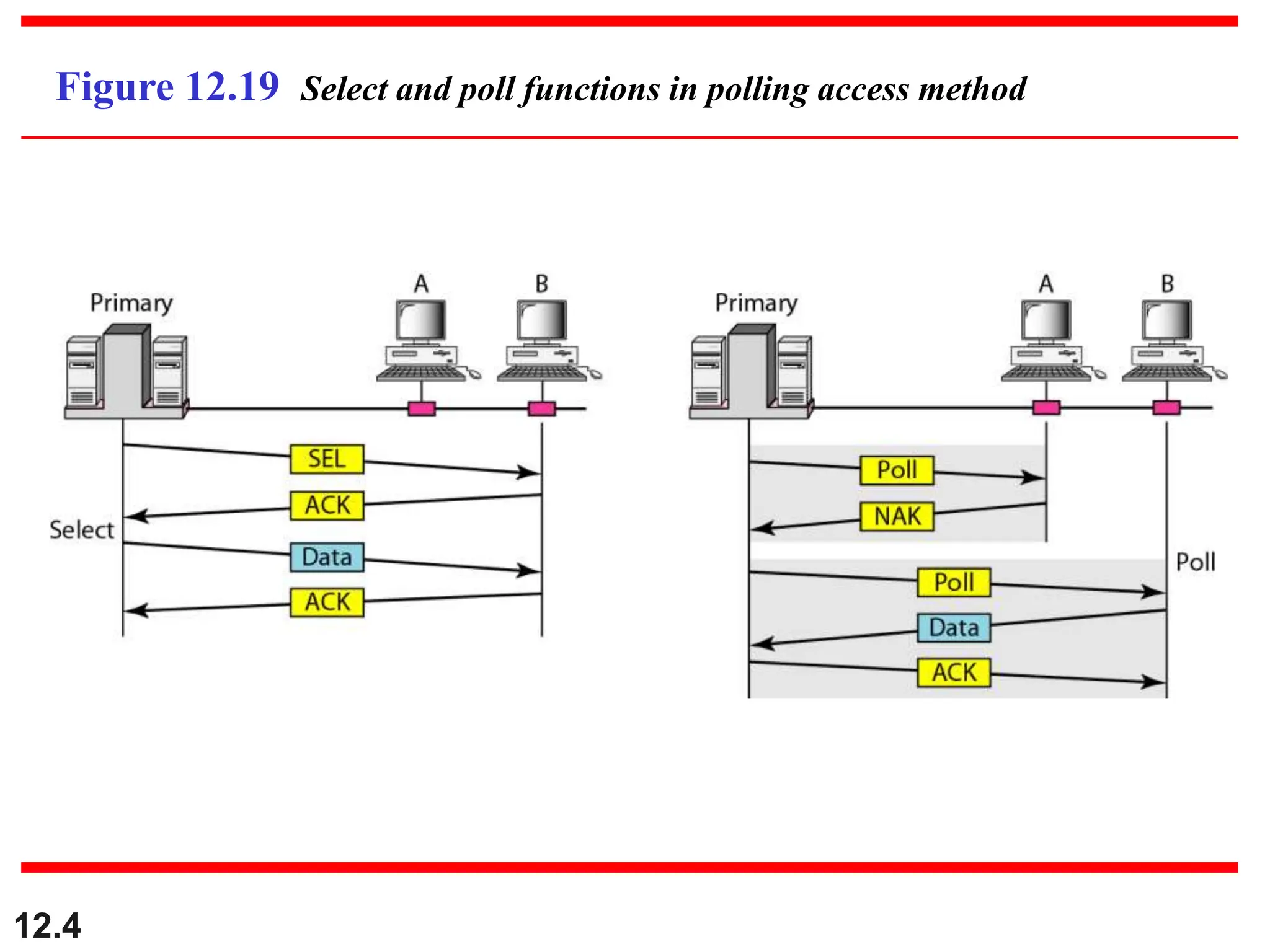
Figure 12.19 Select and poll functions in polling access method
12.5
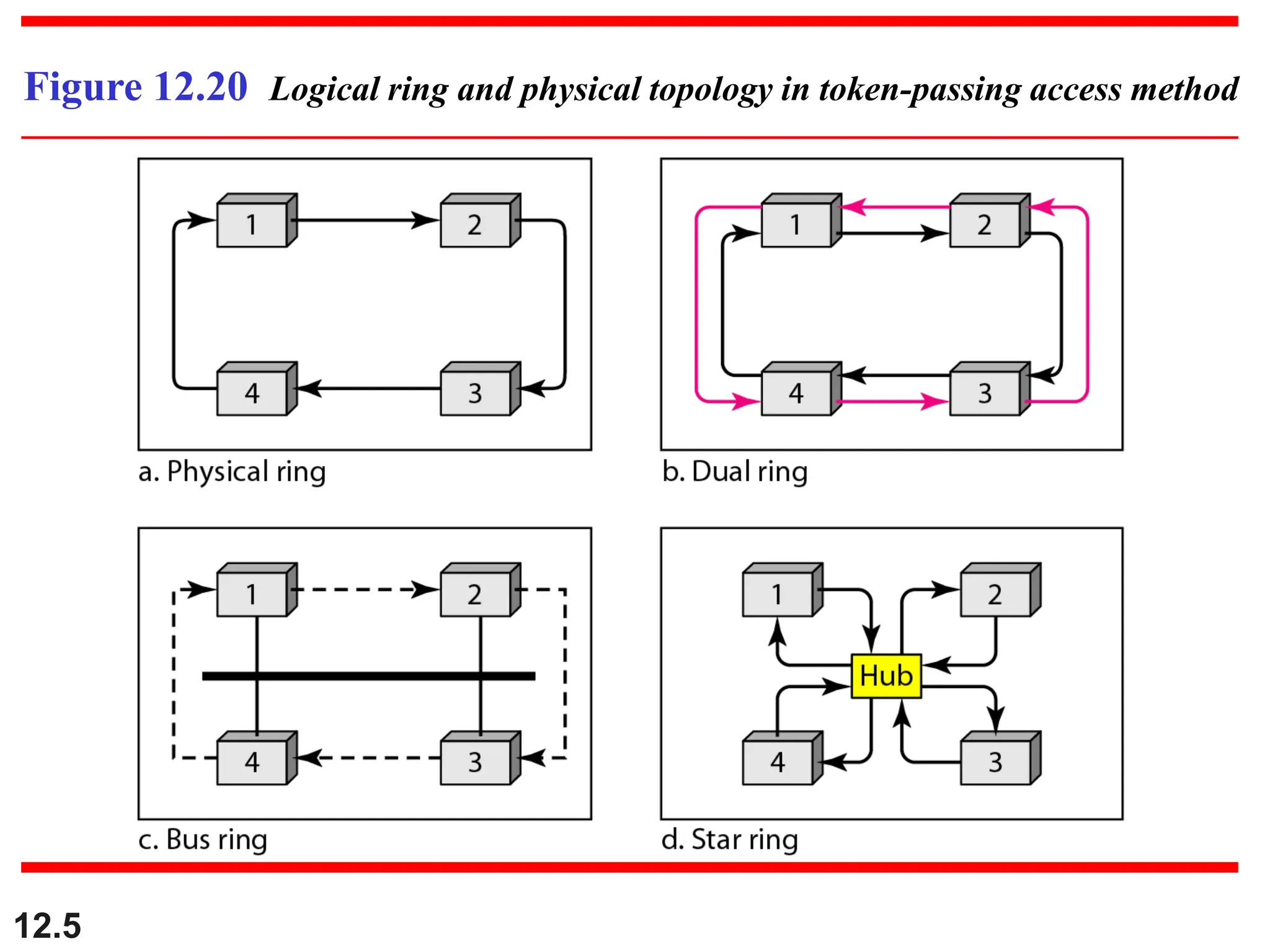
Figure 12.20 Logical ring and physical topology in token-passing access method
12.6
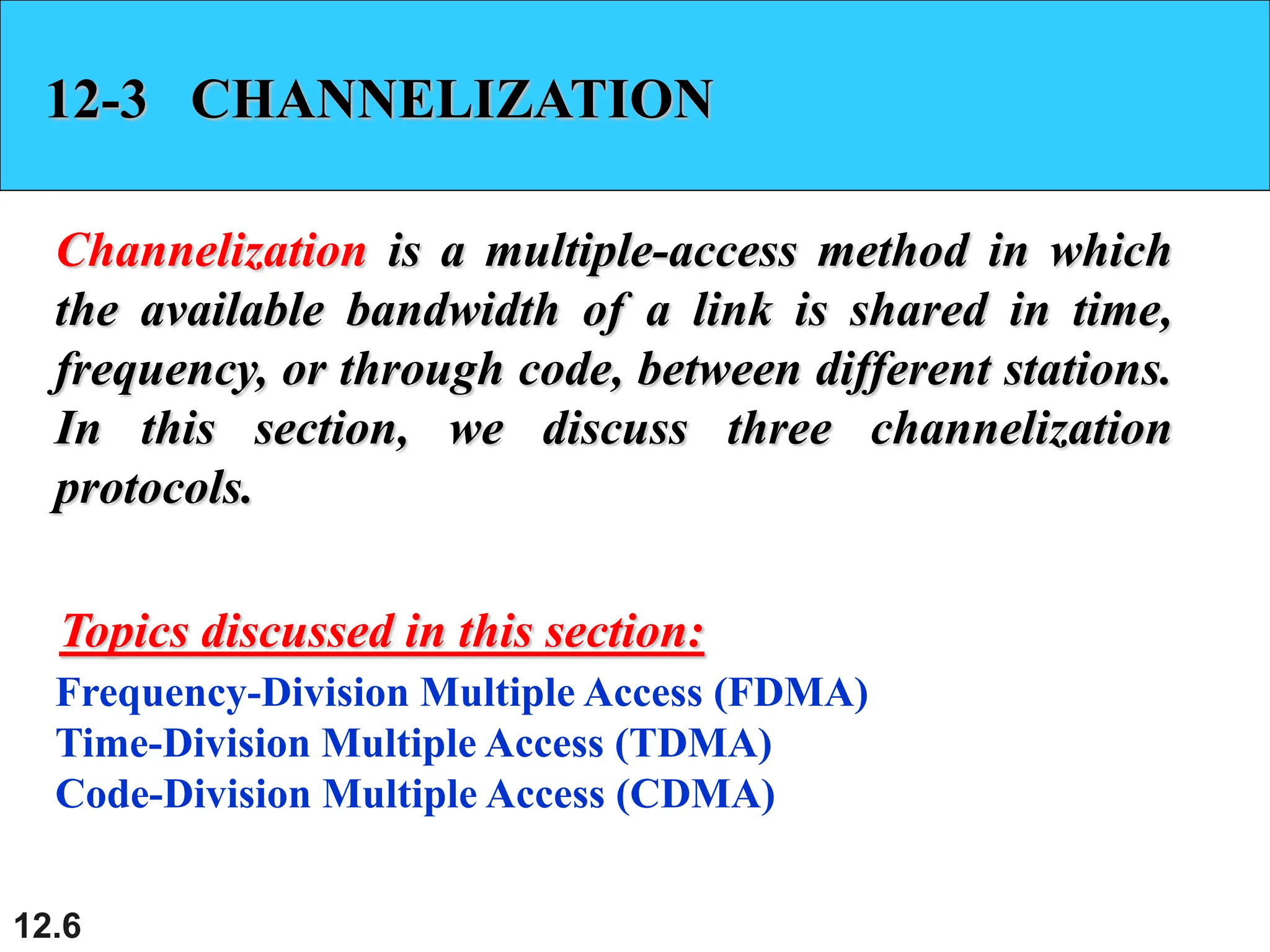
12-3 CHANNELIZATION
Channelization is a multiple-access method in which
the available bandwidth of a link is shared in time,
frequency, or through code, between different stations.
In this section, we discuss three channelization
protocols.
Frequency-Division Multiple Access (FDMA)
Time-Division Multiple Access (TDMA)
Code-Division Multiple Access (CDMA)
Topics discussed in this section:
12.7
We see the application of all these
methods in Chapter 16 when
we discuss cellular phone systems.
Note
12.8
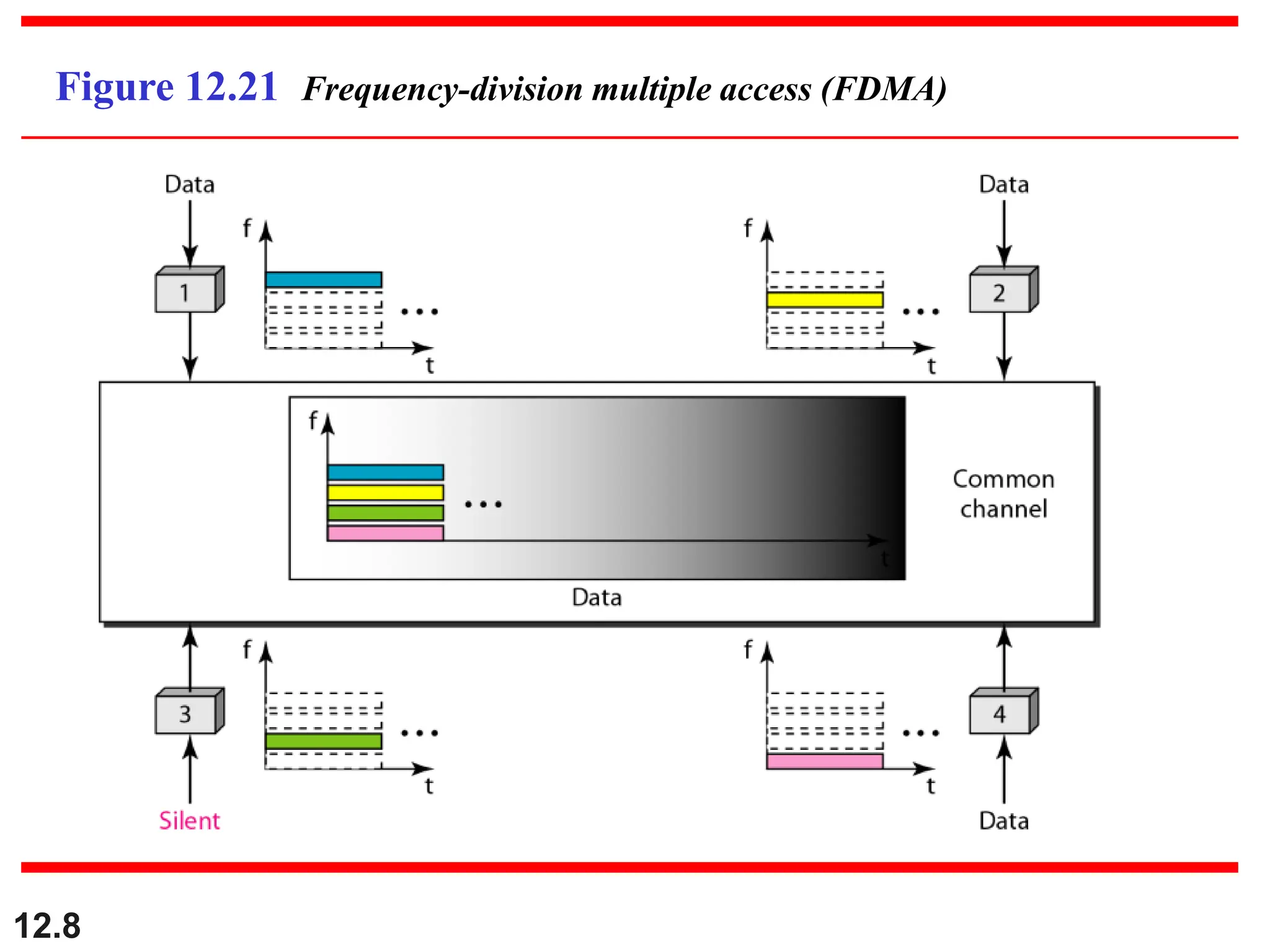
Figure 12.21 Frequency-division multiple access (FDMA)
12.9
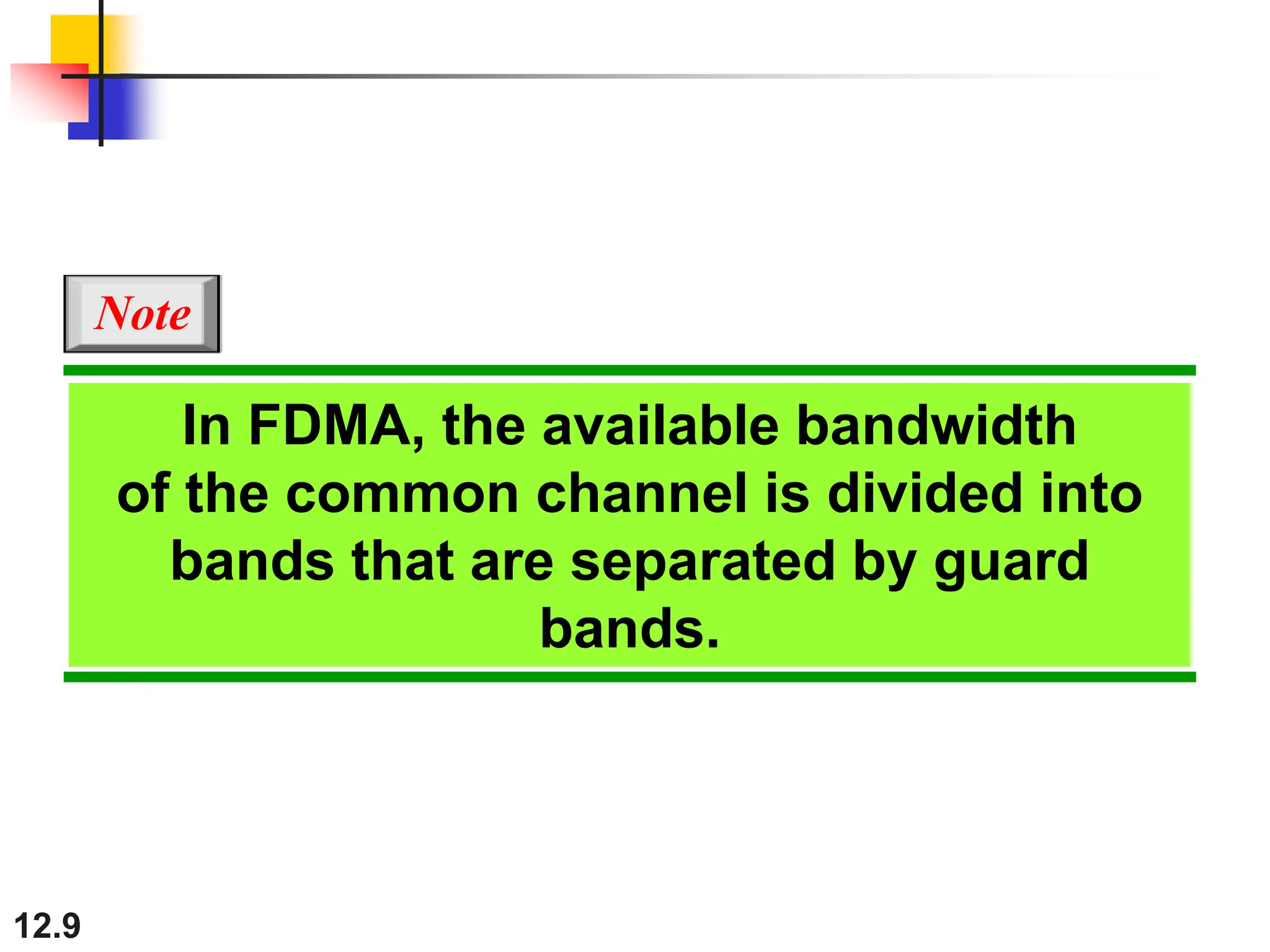
In FDMA, the available bandwidth
of the common channel is divided into
bands that are separated by guard
bands.
Note
12.10
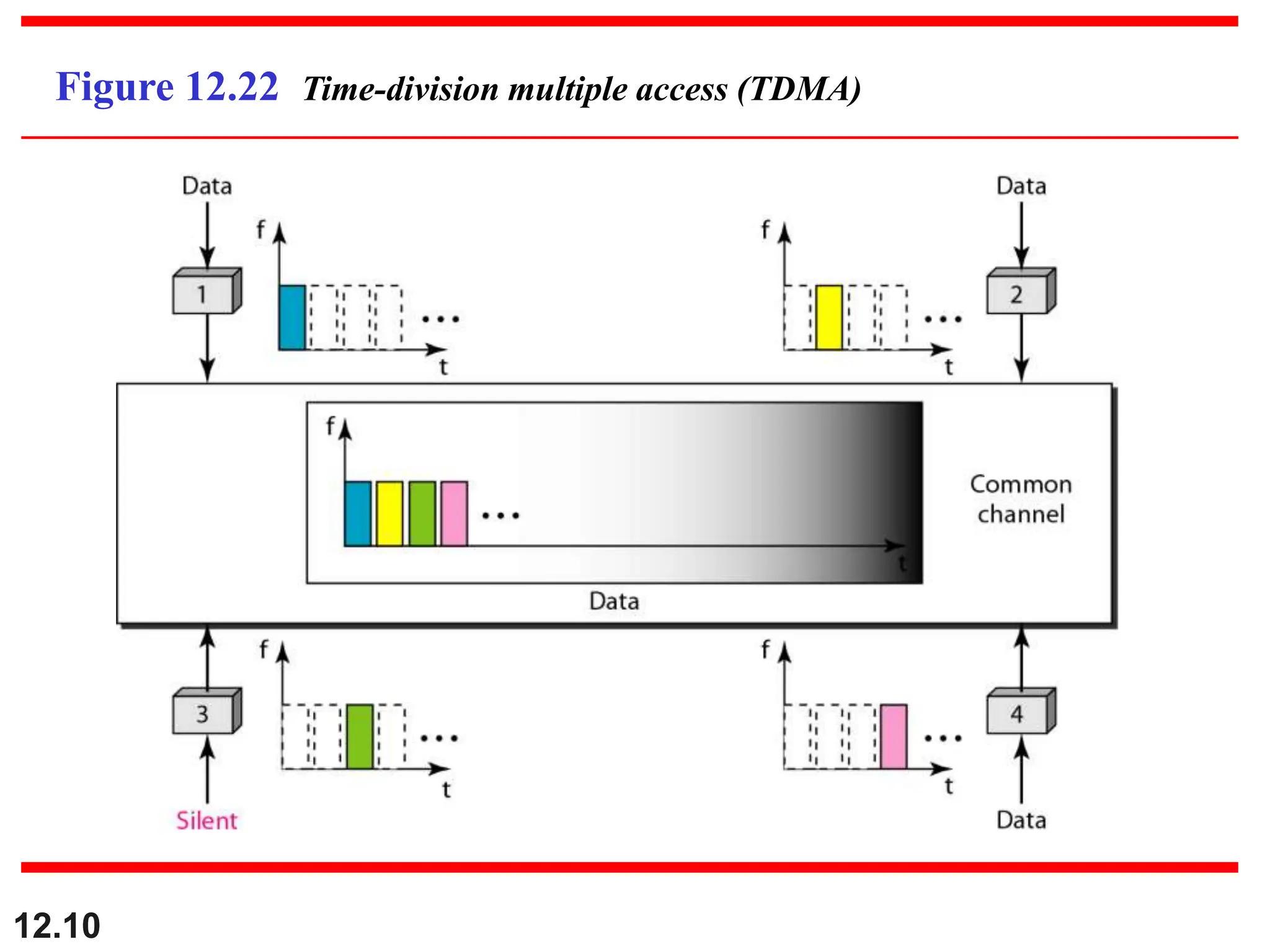
Figure 12.22 Time-division multiple access (TDMA)
12.11
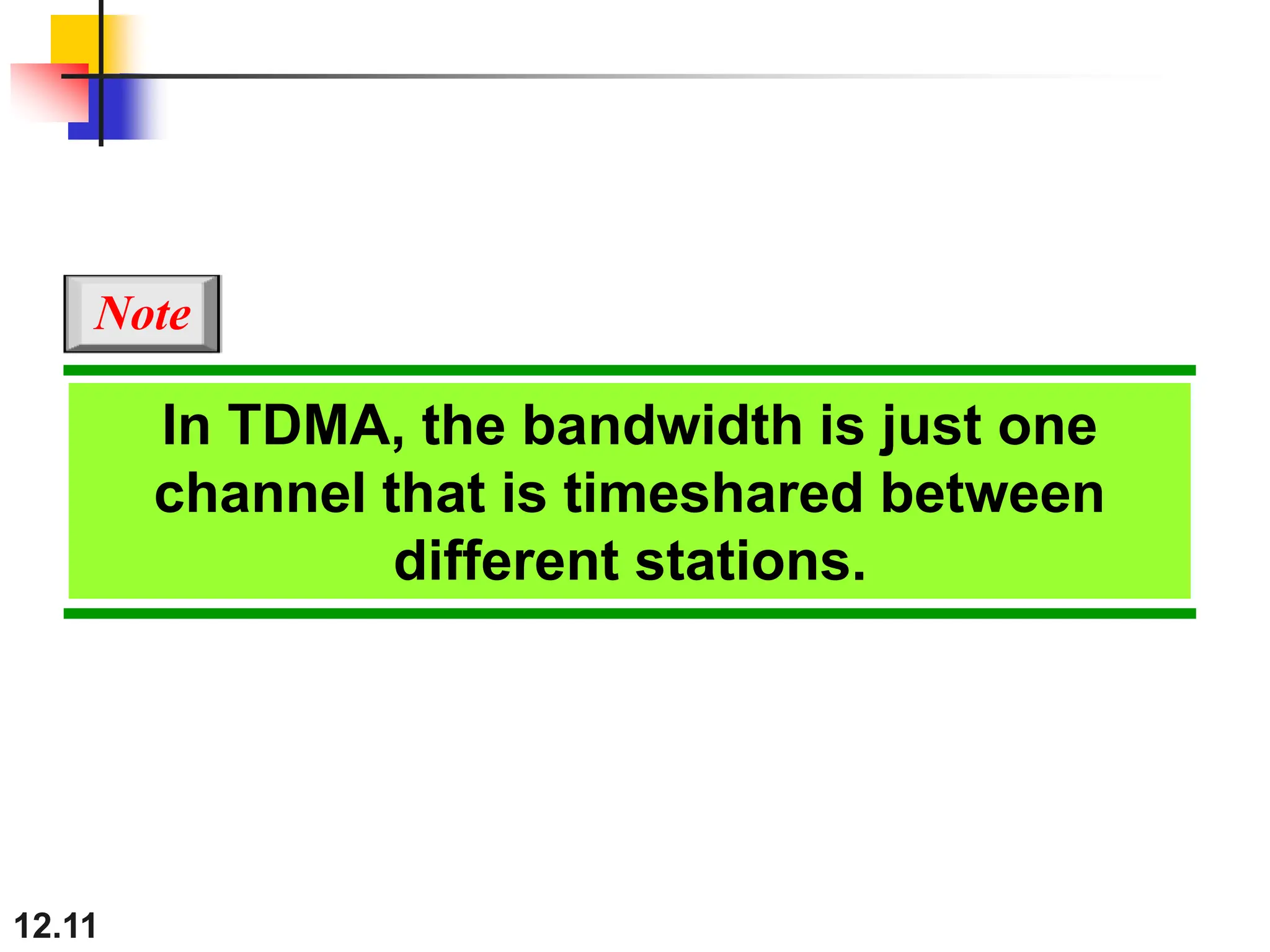
In TDMA, the bandwidth is just one
channel that is timeshared between
different stations.
Note
12.12
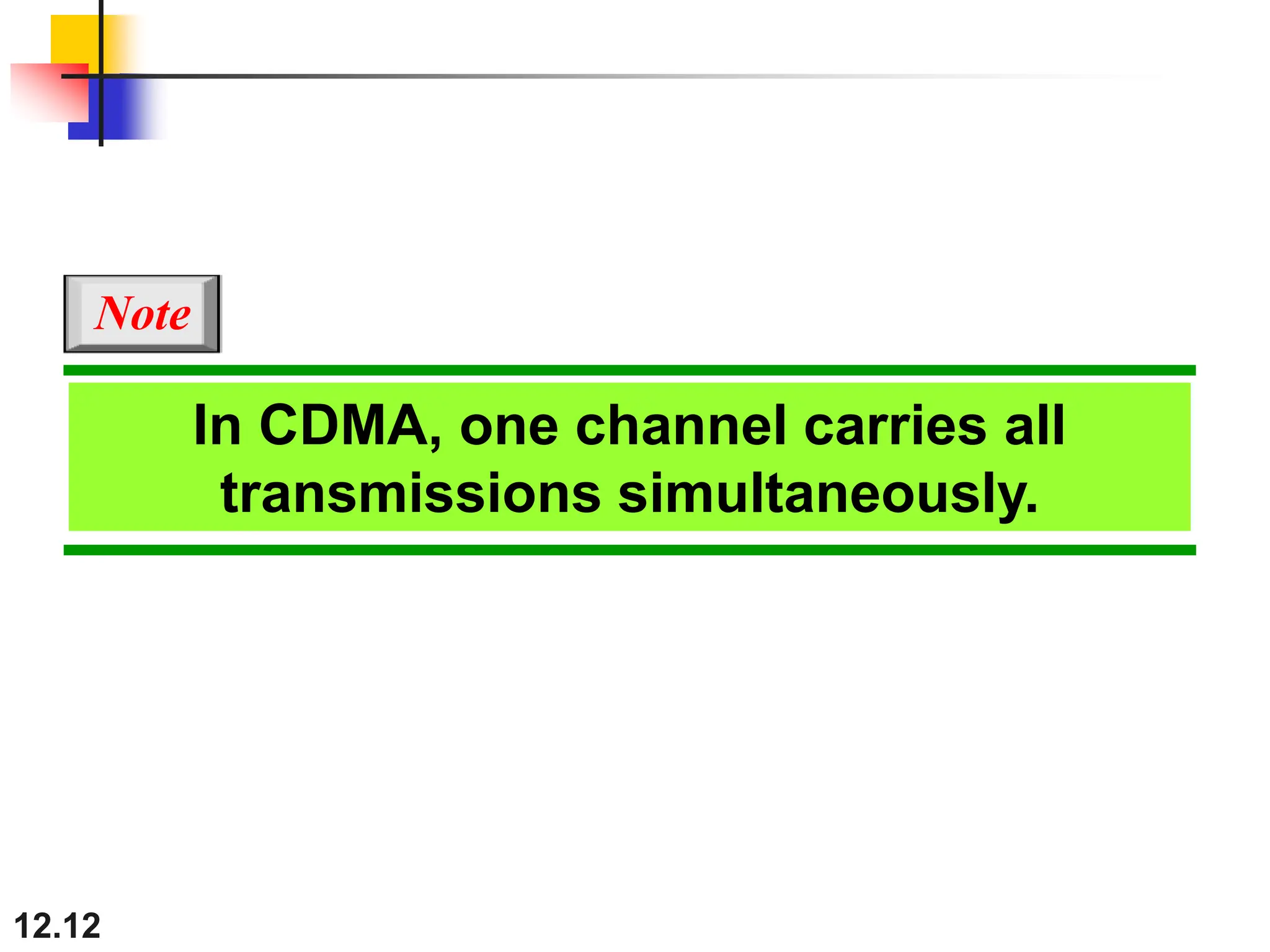
In CDMA, one channel carries all
transmissions simultaneously.
Note
12.13
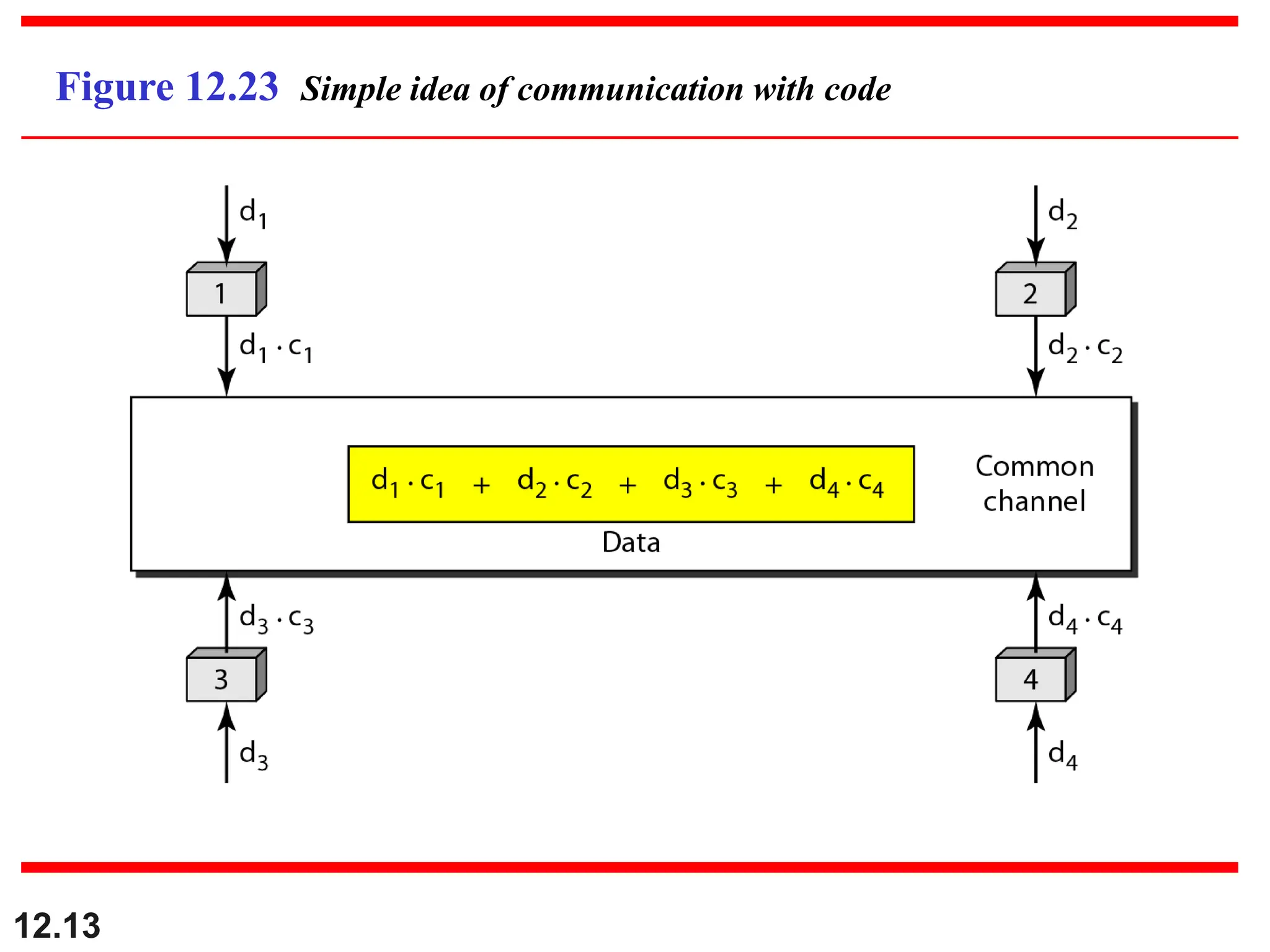
Figure 12.23 Simple idea of communication with code
12.14
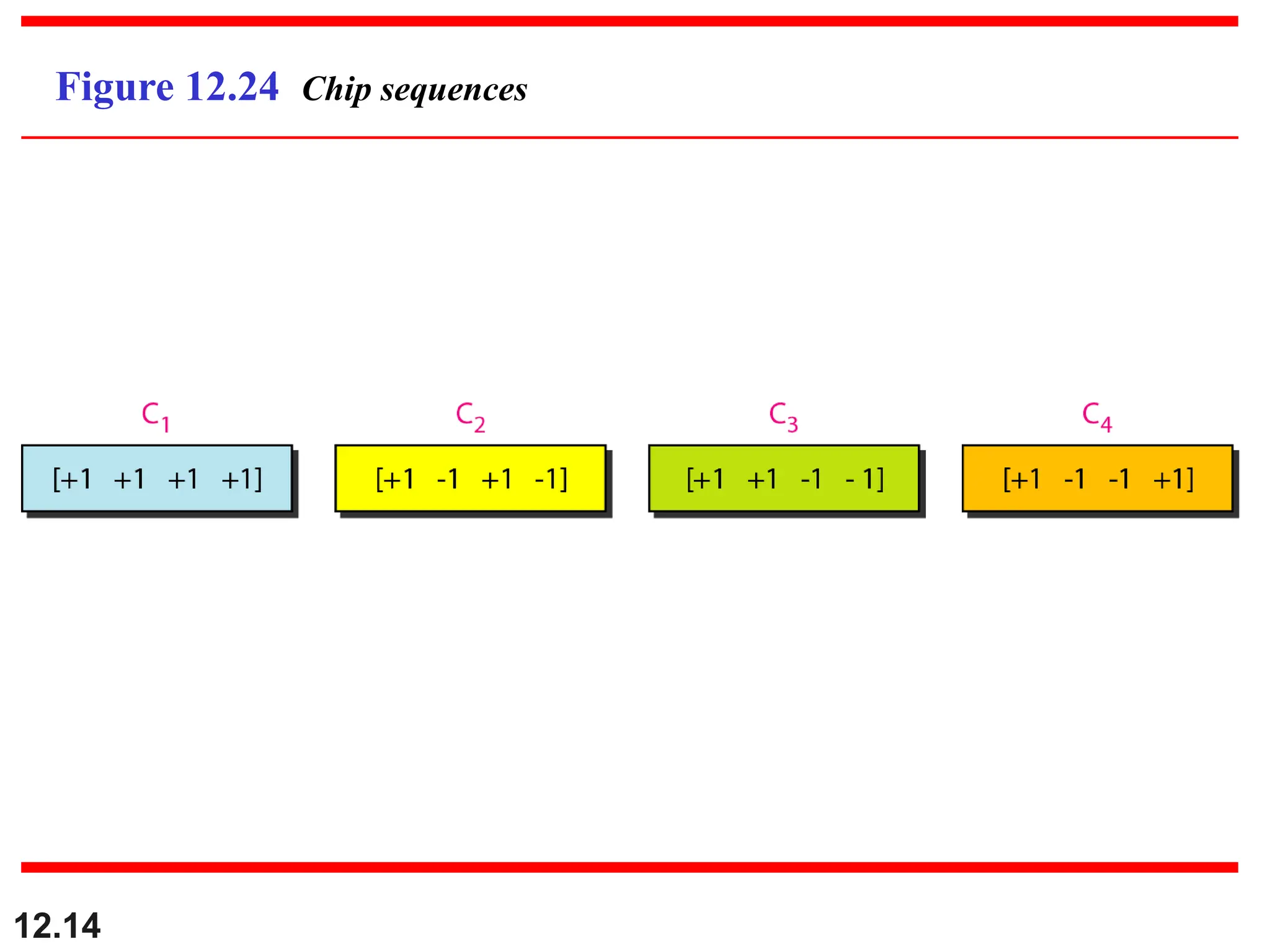
Figure 12.24 Chip sequences
12.15
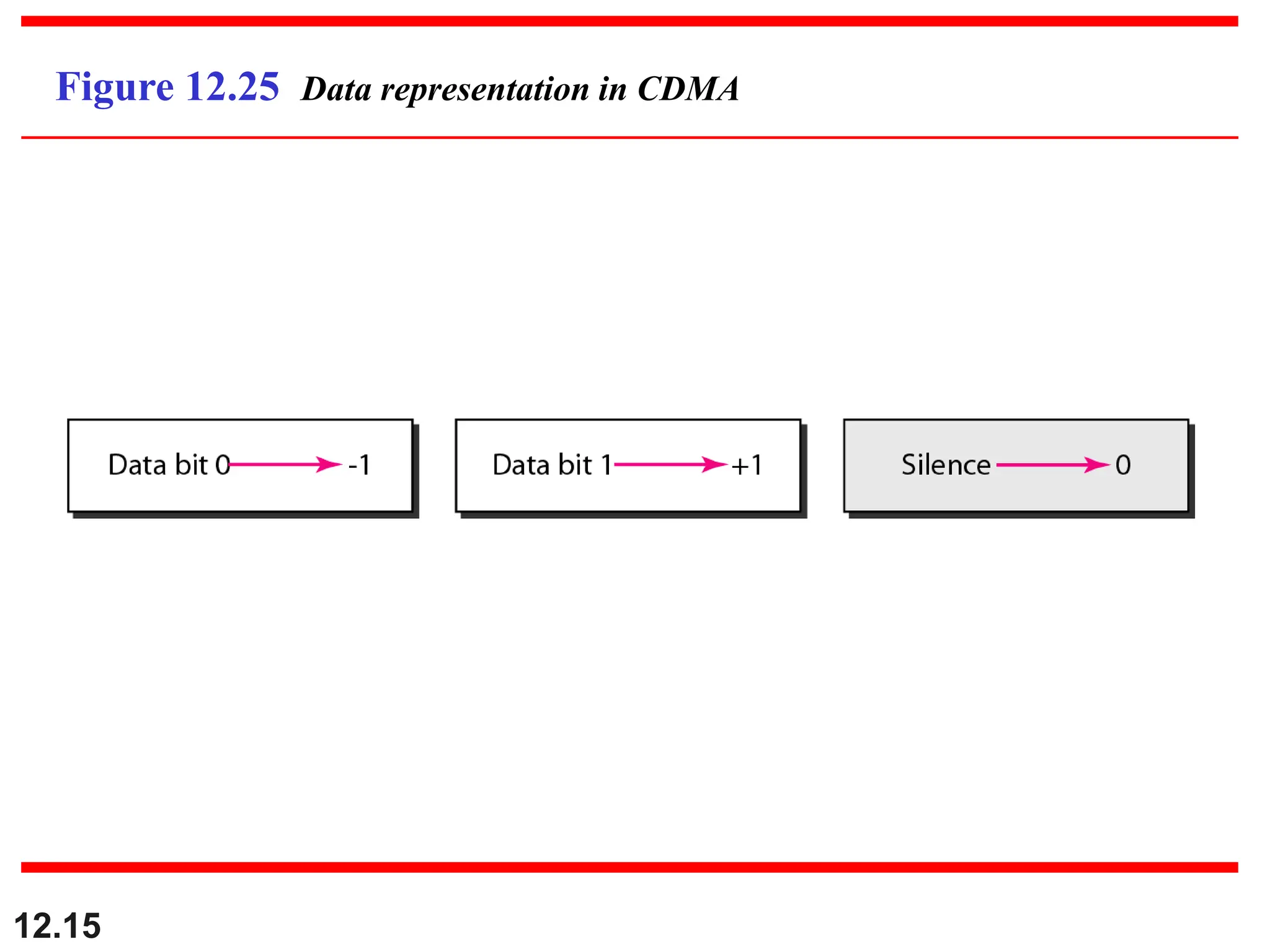
Figure 12.25 Data representation in CDMA
12.16
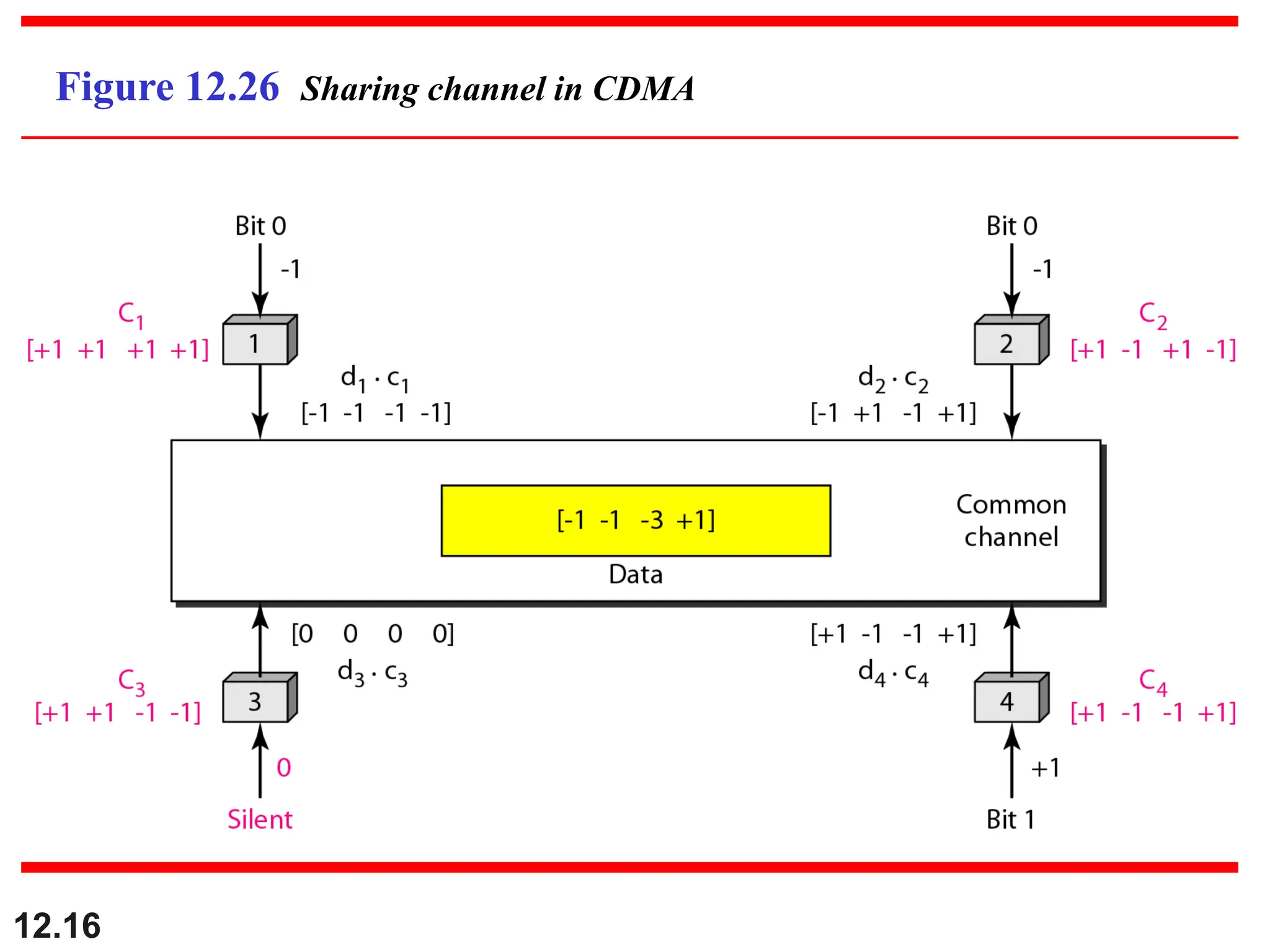
Figure 12.26 Sharing channel in CDMA
12.17
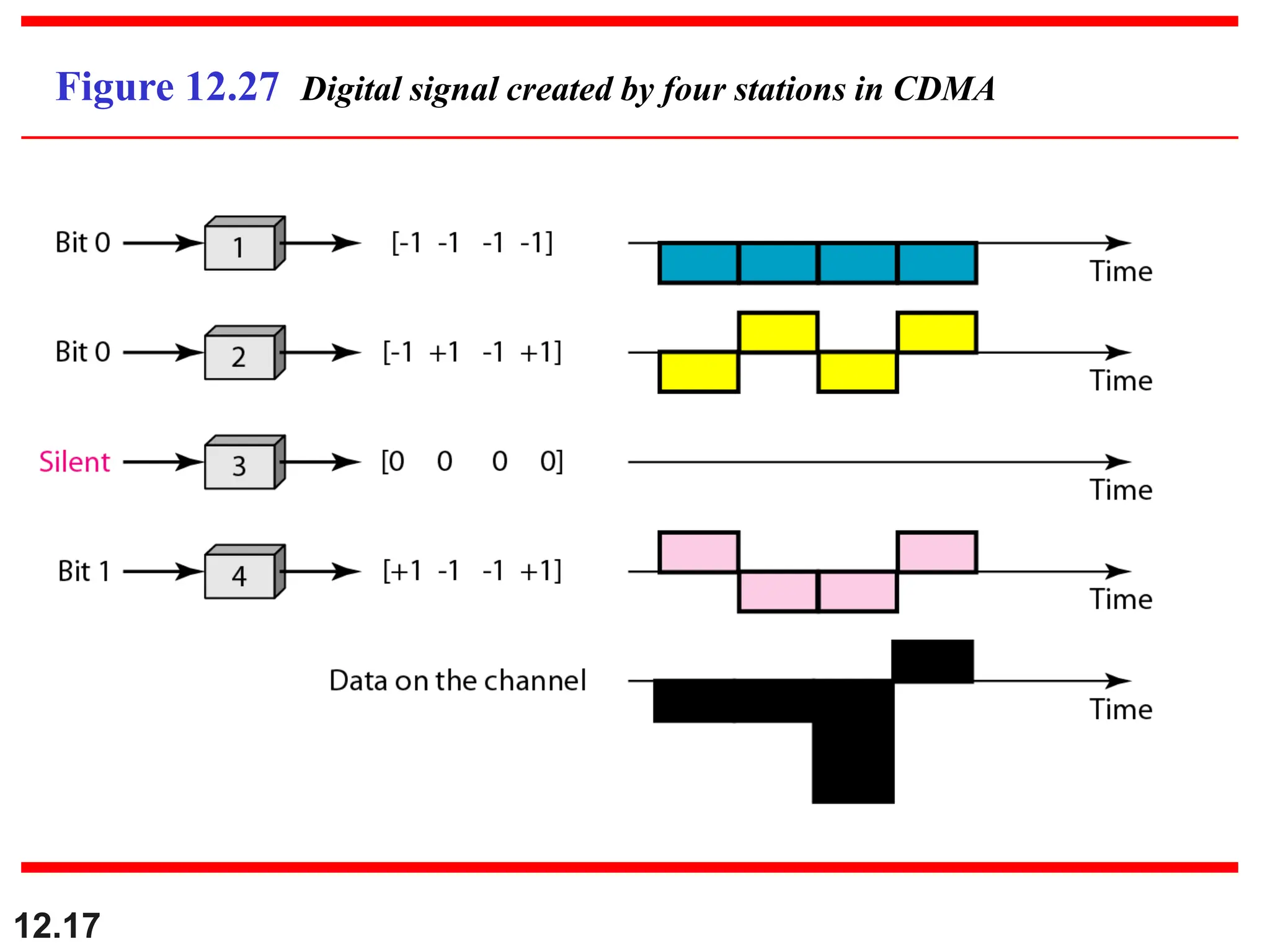
Figure 12.27 Digital signal created by four stations in CDMA
12.18
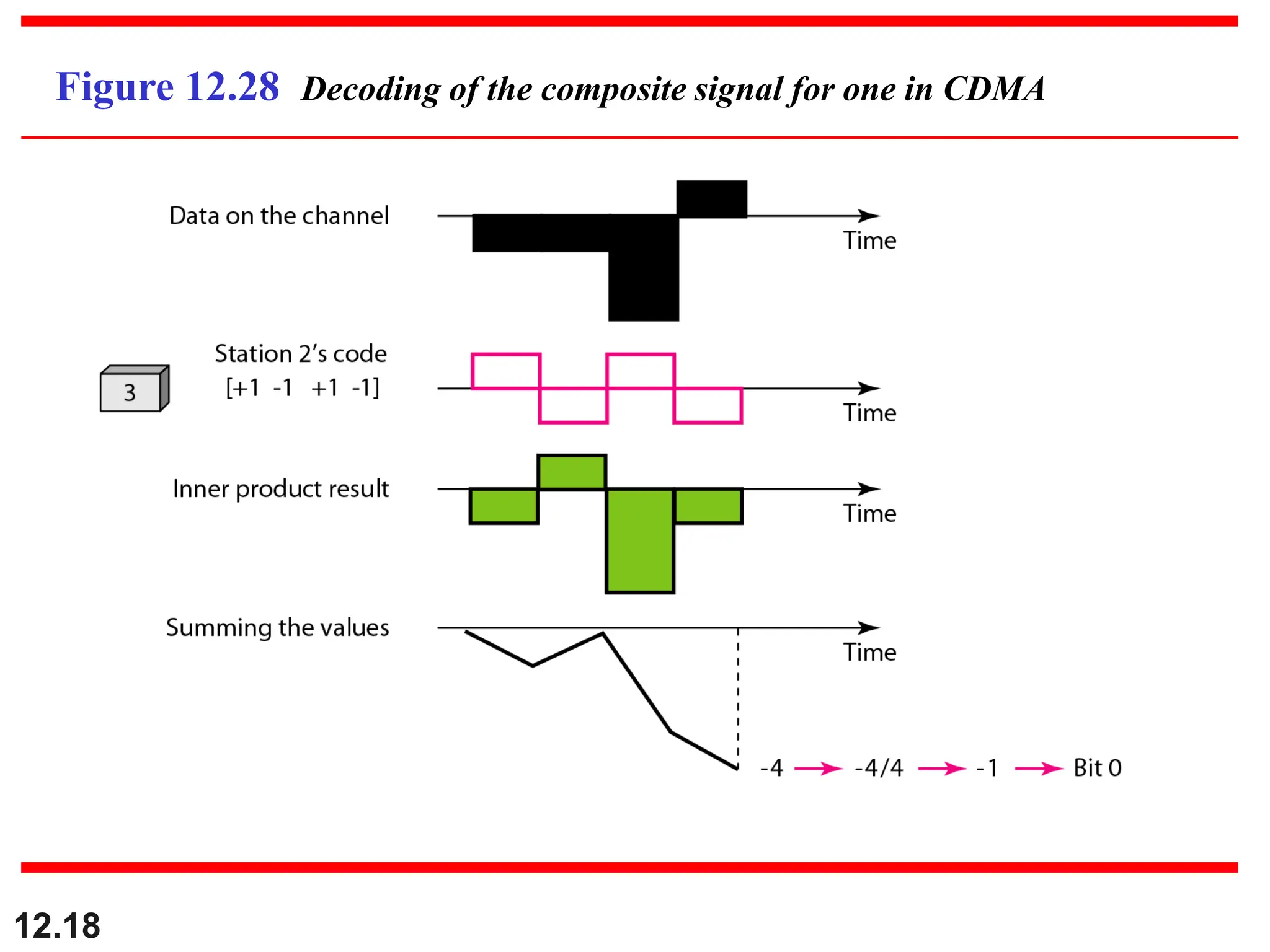
Figure 12.28 Decoding of the composite signal for one in CDMA
12.19
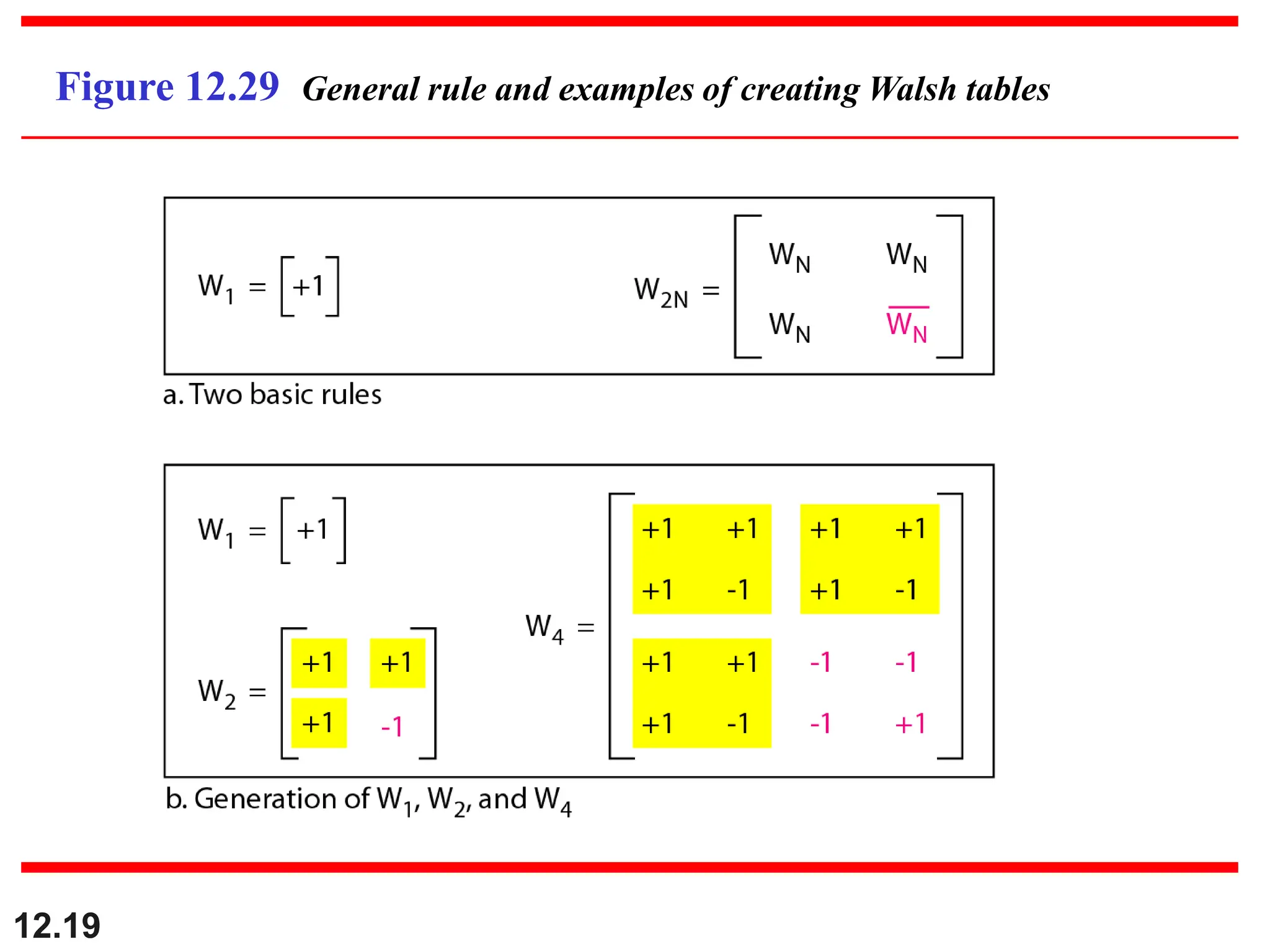
Figure 12.29 General rule and examples of creating Walsh tables
12.20
The number of sequences in a Walsh
table needs to be N = 2m.
Note
12.21
Find the chips for a network with
a. Two stations b. Four stations
Example 12.6
Solution
We can use the rows of W2 and W4 in Figure 12.29:
a. For a two-station network, we have
[+1 +1] and [+1 −1].
b. For a four-station network we have
[+1 +1 +1 +1], [+1 −1 +1 −1],
[+1 +1 −1 −1], and [+1 −1 −1 +1].
12.22
What is the number of sequences if we have 90 stations in
our network?
Example 12.7
Solution
The number of sequences needs to be 2m. We need to
choose m = 7 and N = 27 or 128. We can then use 90
of the sequences as the chips.
12.23
Prove that a receiving station can get the data sent by a
specific sender if it multiplies the entire data on the
channel by the sender’s chip code and then divides it by
the number of stations.
Example 12.8
Solution
Let us prove this for the first station, using our previous
four-station example. We can say that the data on the
channel
D = (d1 ⋅ c1 + d2 ⋅ c2 + d3 ⋅ c3 + d4 ⋅ c4).
The receiver which wants to get the data sent by station 1
multiplies these data by c1.
12.24
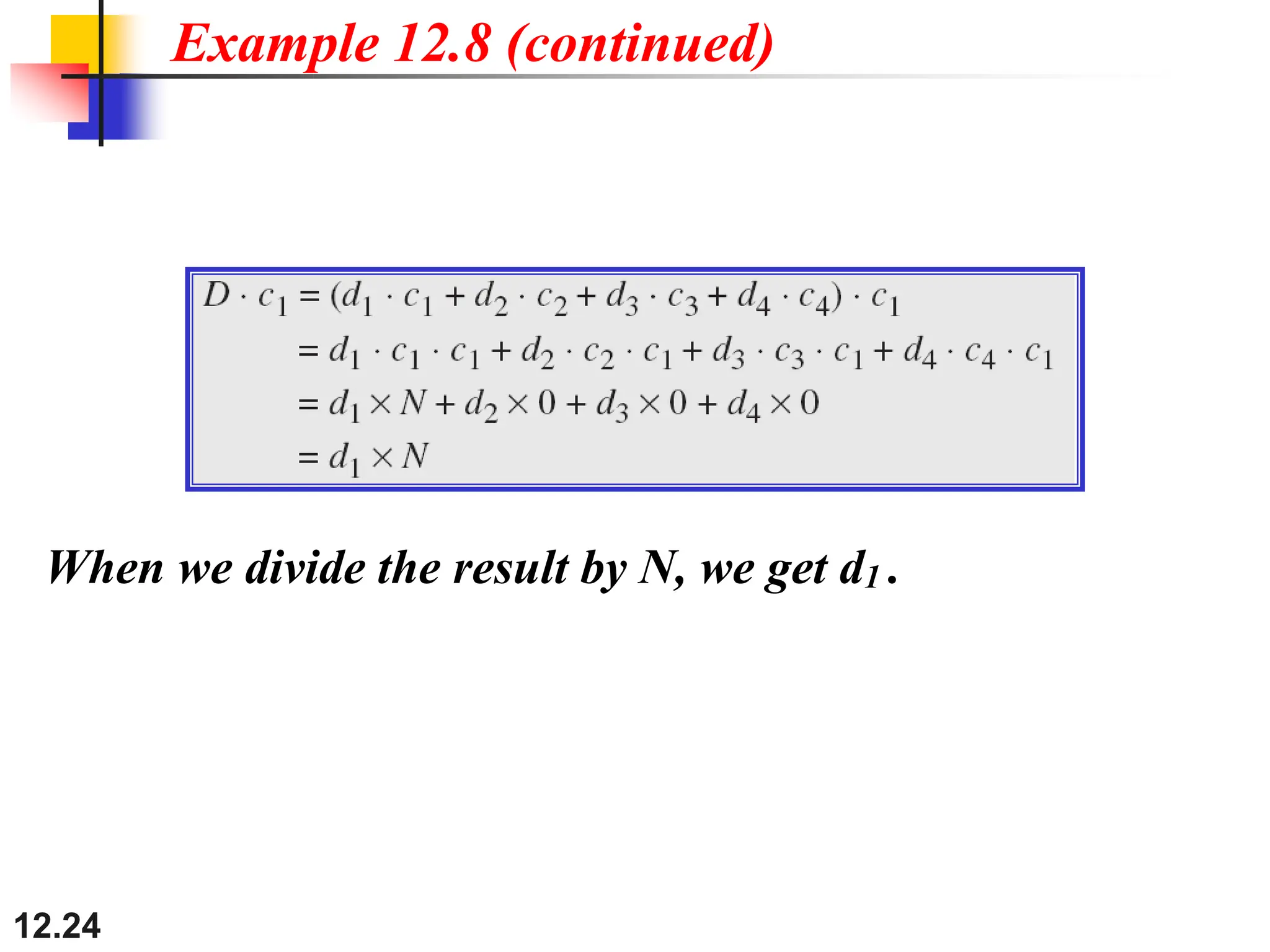
Example 12.8 (continued)
When we divide the result by N, we get d1 .

In controlled access, the stations consult one another to find which station has the right to send. A station cannot send unless it has been authorized by other stations. We discuss three popular controlled-access methods.

  • 1.
    12.1 Lecture 24 &25 Controlled Access & Channelization
  • 2.
    12.2 12-2 CONTROLLED ACCESS Incontrolled access, the stations consult one another to find which station has the right to send. A station cannot send unless it has been authorized by other stations. We discuss three popular controlled-access methods. Reservation Polling Token Passing Topics discussed in this section:
  • 3.
  • 4.
    12.4 Figure 12.19 Selectand poll functions in polling access method
  • 5.
    12.5 Figure 12.20 Logicalring and physical topology in token-passing access method
  • 6.
    12.6 12-3 CHANNELIZATION Channelization isa multiple-access method in which the available bandwidth of a link is shared in time, frequency, or through code, between different stations. In this section, we discuss three channelization protocols. Frequency-Division Multiple Access (FDMA) Time-Division Multiple Access (TDMA) Code-Division Multiple Access (CDMA) Topics discussed in this section:
  • 7.
    12.7 We see theapplication of all these methods in Chapter 16 when we discuss cellular phone systems. Note
  • 8.
  • 9.
    12.9 In FDMA, theavailable bandwidth of the common channel is divided into bands that are separated by guard bands. Note
  • 10.
    12.10 Figure 12.22 Time-divisionmultiple access (TDMA)
  • 11.
    12.11 In TDMA, thebandwidth is just one channel that is timeshared between different stations. Note
  • 12.
    12.12 In CDMA, onechannel carries all transmissions simultaneously. Note
  • 13.
    12.13 Figure 12.23 Simpleidea of communication with code
  • 14.
  • 15.
    12.15 Figure 12.25 Datarepresentation in CDMA
  • 16.
  • 17.
    12.17 Figure 12.27 Digitalsignal created by four stations in CDMA
  • 18.
    12.18 Figure 12.28 Decodingof the composite signal for one in CDMA
  • 19.
    12.19 Figure 12.29 Generalrule and examples of creating Walsh tables
  • 20.
    12.20 The number ofsequences in a Walsh table needs to be N = 2m. Note
  • 21.
    12.21 Find the chipsfor a network with a. Two stations b. Four stations Example 12.6 Solution We can use the rows of W2 and W4 in Figure 12.29: a. For a two-station network, we have [+1 +1] and [+1 −1]. b. For a four-station network we have [+1 +1 +1 +1], [+1 −1 +1 −1], [+1 +1 −1 −1], and [+1 −1 −1 +1].
  • 22.
    12.22 What is thenumber of sequences if we have 90 stations in our network? Example 12.7 Solution The number of sequences needs to be 2m. We need to choose m = 7 and N = 27 or 128. We can then use 90 of the sequences as the chips.
  • 23.
    12.23 Prove that areceiving station can get the data sent by a specific sender if it multiplies the entire data on the channel by the sender’s chip code and then divides it by the number of stations. Example 12.8 Solution Let us prove this for the first station, using our previous four-station example. We can say that the data on the channel D = (d1 ⋅ c1 + d2 ⋅ c2 + d3 ⋅ c3 + d4 ⋅ c4). The receiver which wants to get the data sent by station 1 multiplies these data by c1.
  • 24.
    12.24 Example 12.8 (continued) Whenwe divide the result by N, we get d1 .