IMAGE COMPRESSION STANDARDS
BY,
M.SUJITHA,
II-M.SC(CS&IT),
Nadar Sarawathi College Of Arts And Science,
Theni.
INTRODUCTION
 Image compression is a type of data
compression applied to digital images.
 It is used to reduce their cost
for storage or transmission.
 Algorithms may take advantage of visual perception.
 Types of Compressions are:
 Lossy image Compression
 Lossless image compression
IMAGE COMPRESSION STANDARDS
International Standards
 Binary image compression standards
 CCITT Group 3 Standard (G3)
 CCITT Group 4 Standard (G4)
Continuous one image and video compression standards
 JPEG, JPEG 2000
 MPEG-1, MPEG-2, MPEG-4
 ITU-T H.261, H.263
THE JPEG STANDARD
 JPEG is an image compression standard.
 It was developed by “Joint Photographic Experts
Group”.
 JPEG is a lossy image compression method.
 It employs transform coding method using the DCT
(Discrete Cosine Transform).
 JPEG was formally accepted as an international standard
in 1992.
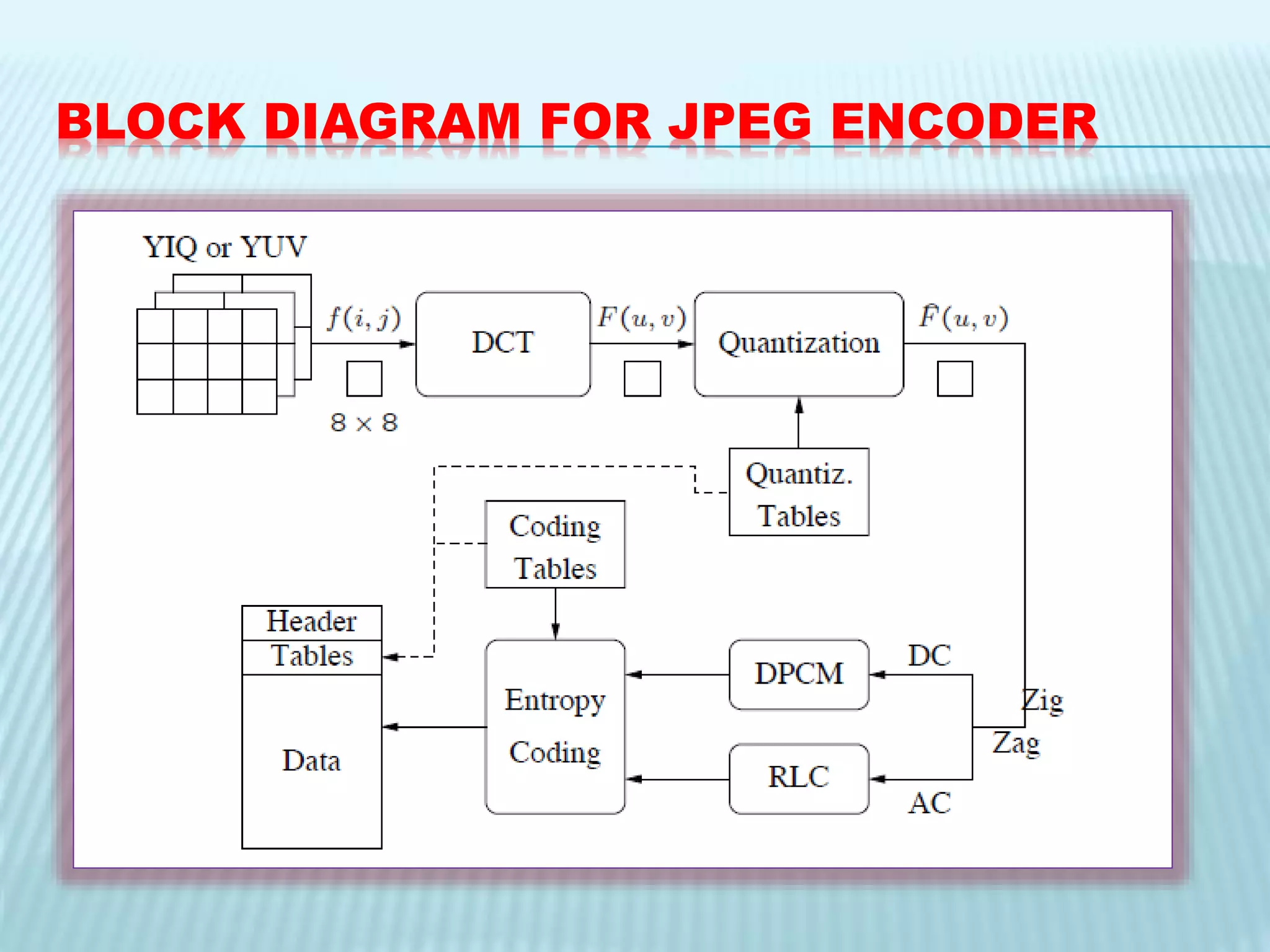
BLOCK DIAGRAM FOR JPEG ENCODER
MAIN STEPS IN JPEG IMAGE
COMPRESSION
Transform RGB to YIQ or YUV and subsample color.
 DCT on image blocks.
 Quantization.
 Zig- zag ordering and run-length encoding.
 Entropy coding.
FOUR COMMONLY USED JPEG MODES
 Sequential Mode
 It is the default JPEG mode
 Each gray level image or color image
component is encoded in a single left-to-right,
top-to-bottom scan.
 Progressive Mode
 Hierarchical Mode
 Lossless Mode
 JPEG-LS
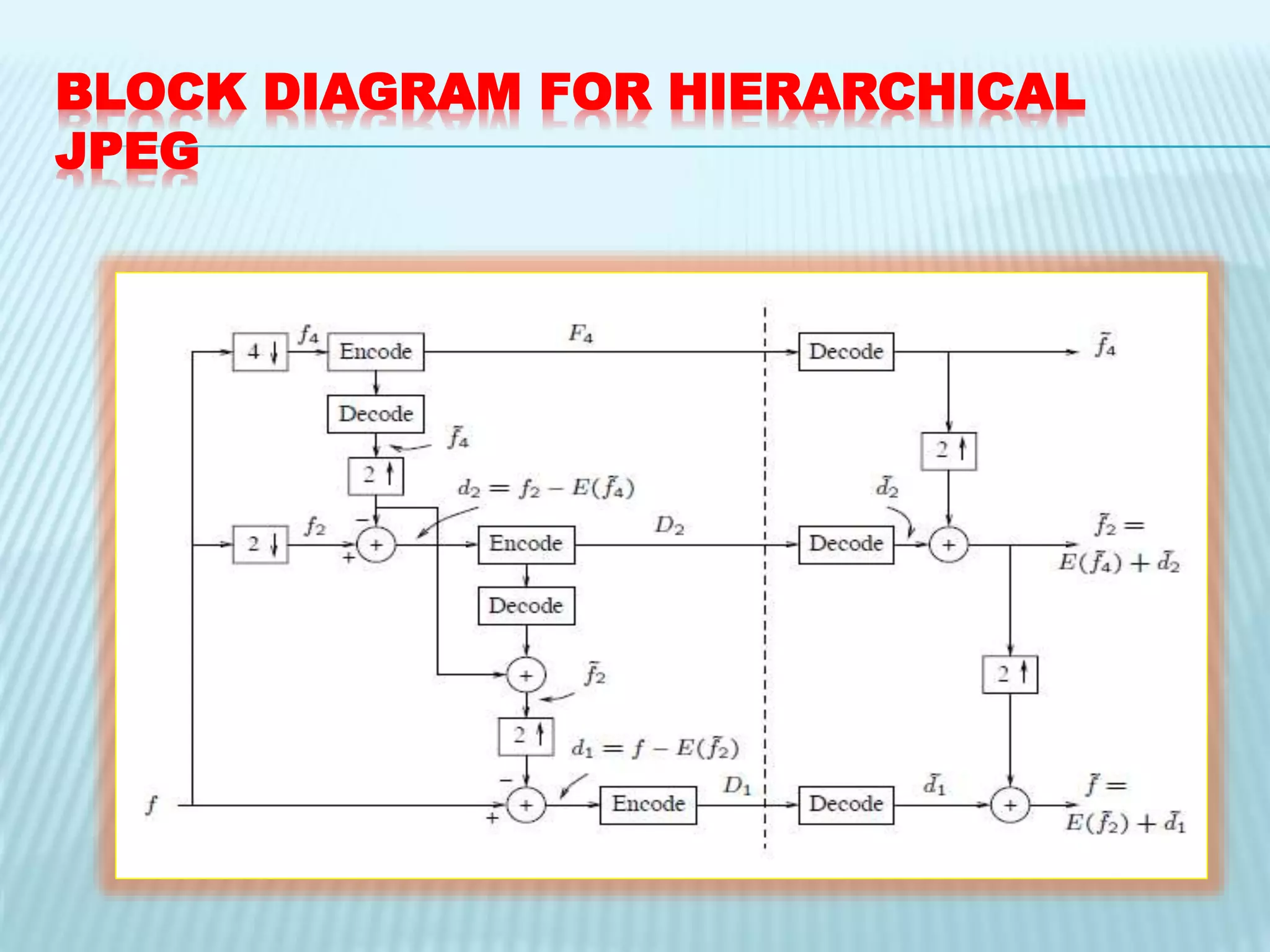
HIERARCHICAL MODE
 The encoded image at the lowest resolution is a
compressed low-pass filtered image.
 The higher resolutions provide additional details.
 Progressive JPEG, the Hierarchical JPEG images can be
transmitted in multiple passes progressively by
improving the quality.
BLOCK DIAGRAM FOR HIERARCHICAL
JPEG
USE OF MOTION IN SEGMENTATION
 Stationary camera
 Background modeling
 Human tracking & extraction
 Moving camera
 3D Reconstruction
 Moving target detecting
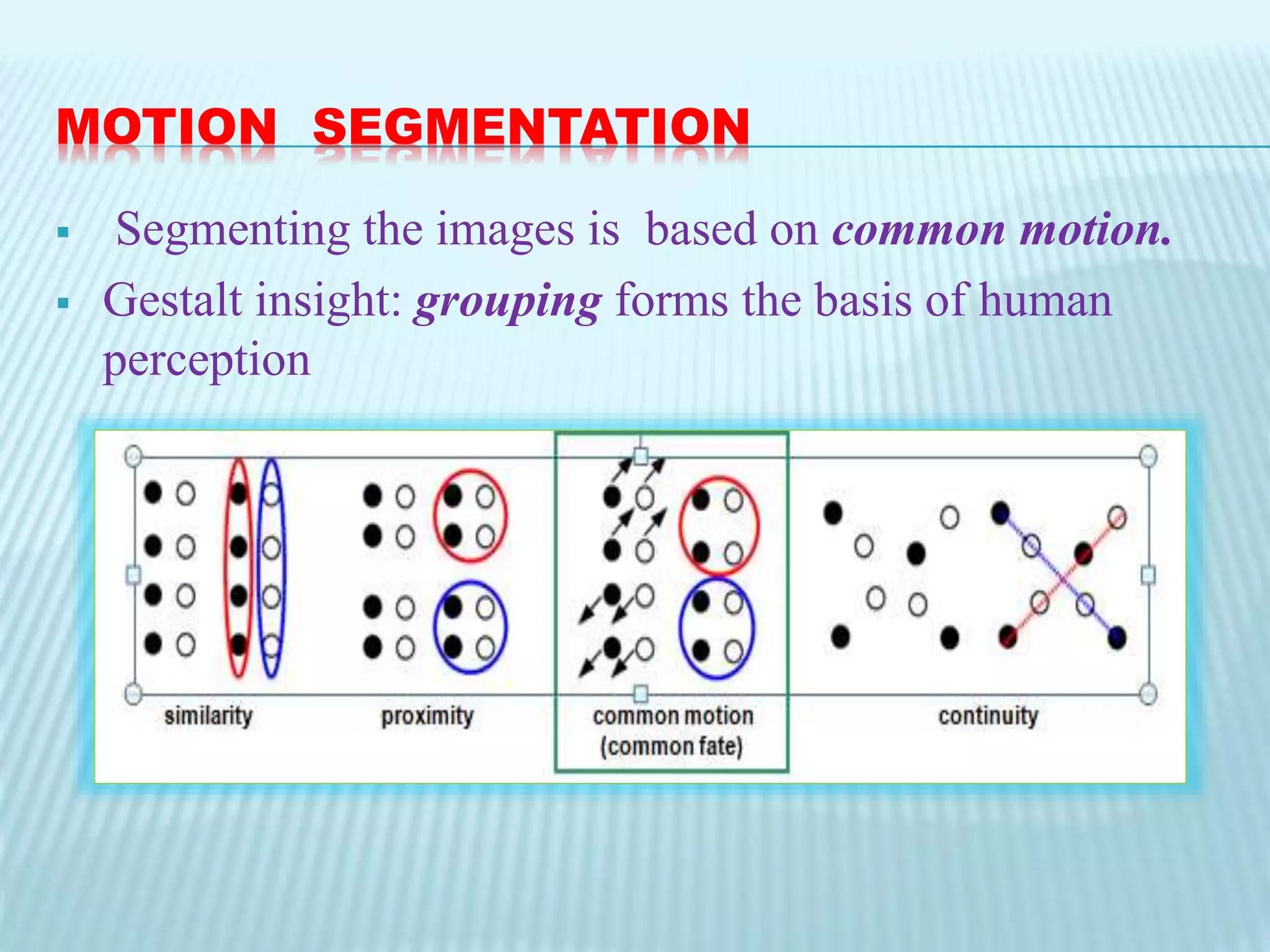
MOTION SEGMENTATION
 Segmenting the images is based on common motion.
 Gestalt insight: grouping forms the basis of human
perception
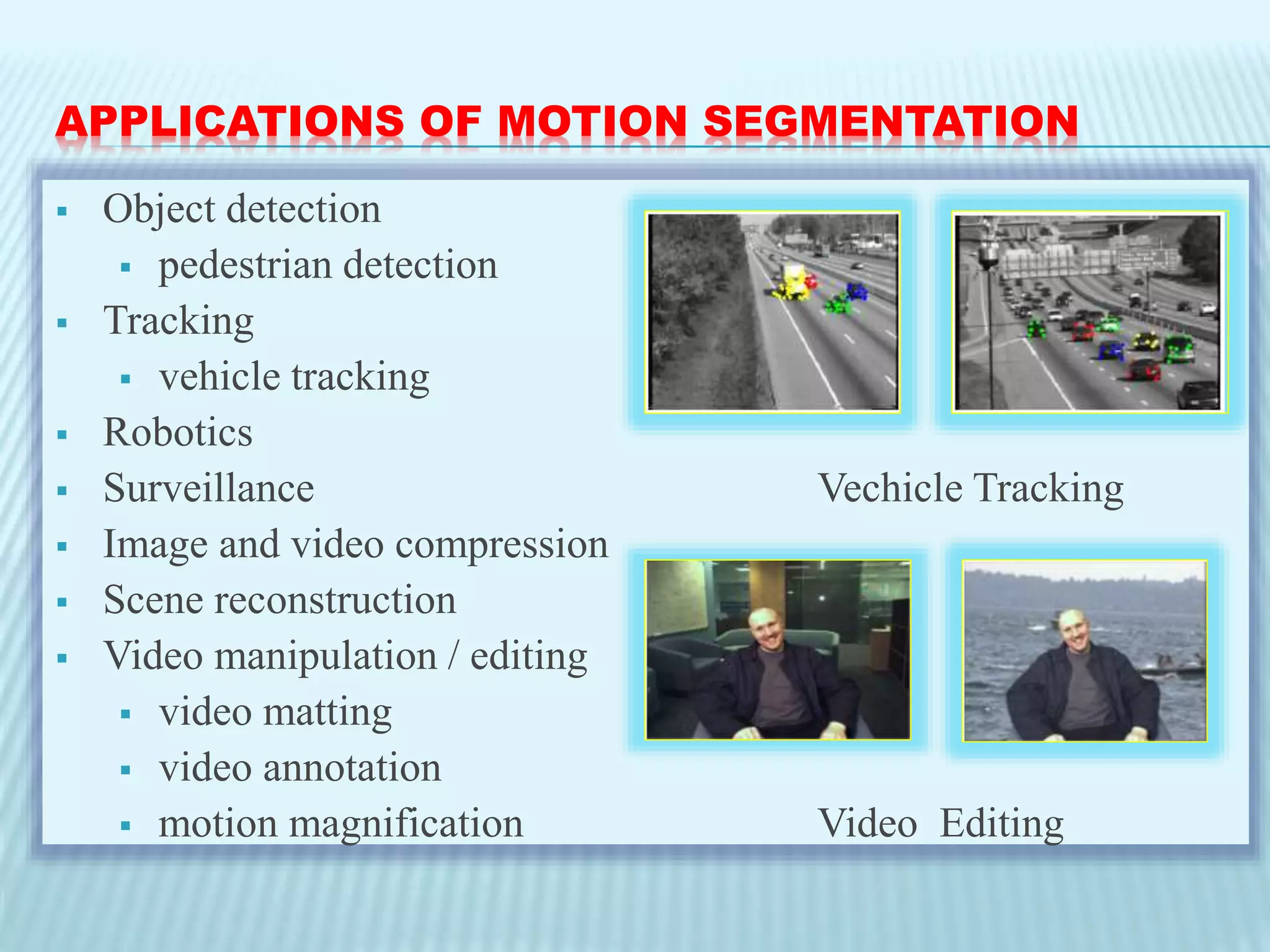
APPLICATIONS OF MOTION SEGMENTATION
 Object detection
 pedestrian detection
 Tracking
 vehicle tracking
 Robotics
 Surveillance Vechicle Tracking
 Image and video compression
 Scene reconstruction
 Video manipulation / editing
 video matting
 video annotation
 motion magnification Video Editing
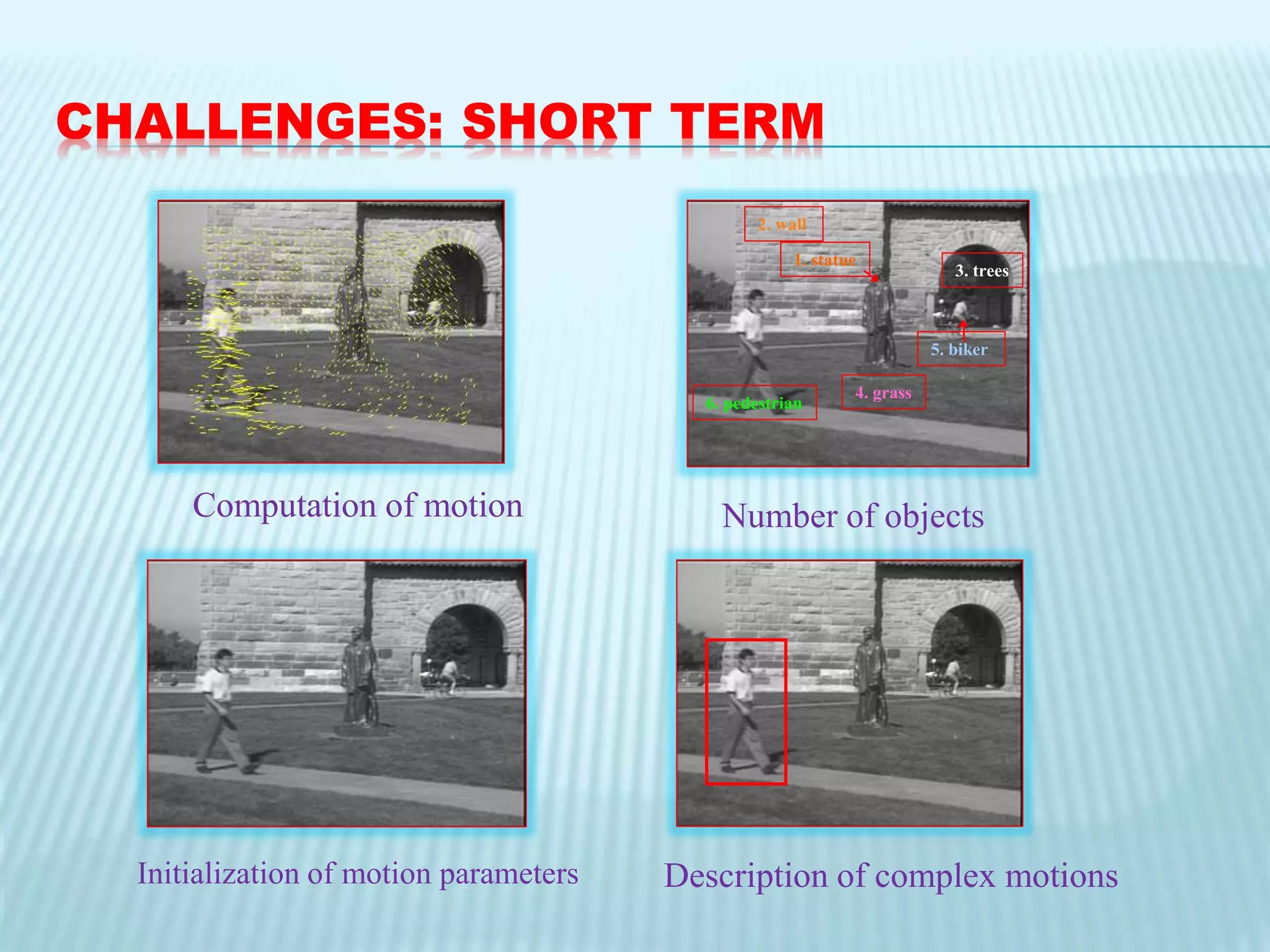
CHALLENGES: SHORT TERM
1. statue
2. wall
4. grass
3. trees
5. biker
6. pedestrian
Computation of motion Number of objects
Initialization of motion parameters Description of complex motions
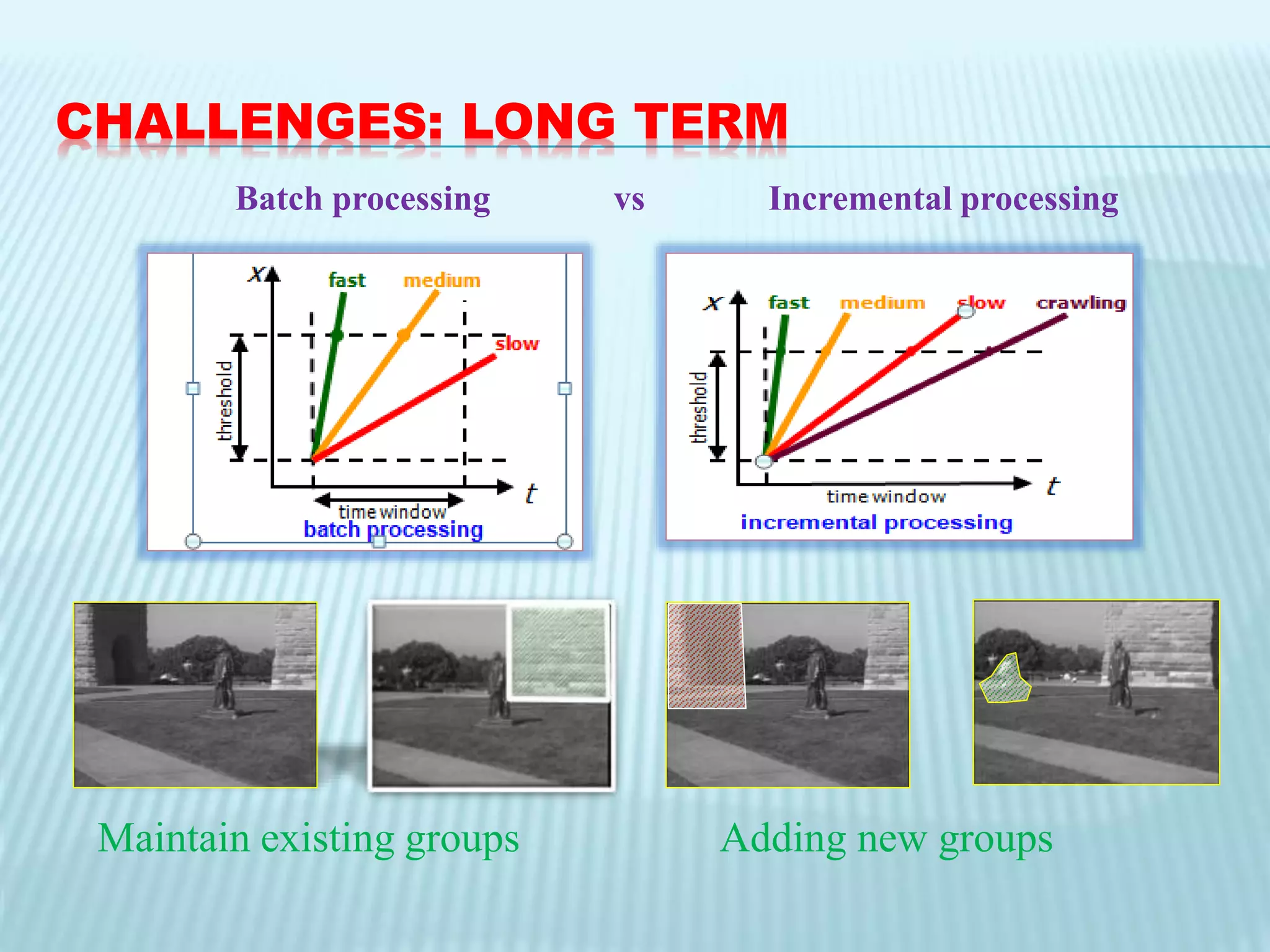
CHALLENGES: LONG TERM
Batch processing vs Incremental processing
Maintain existing groups Adding new groups
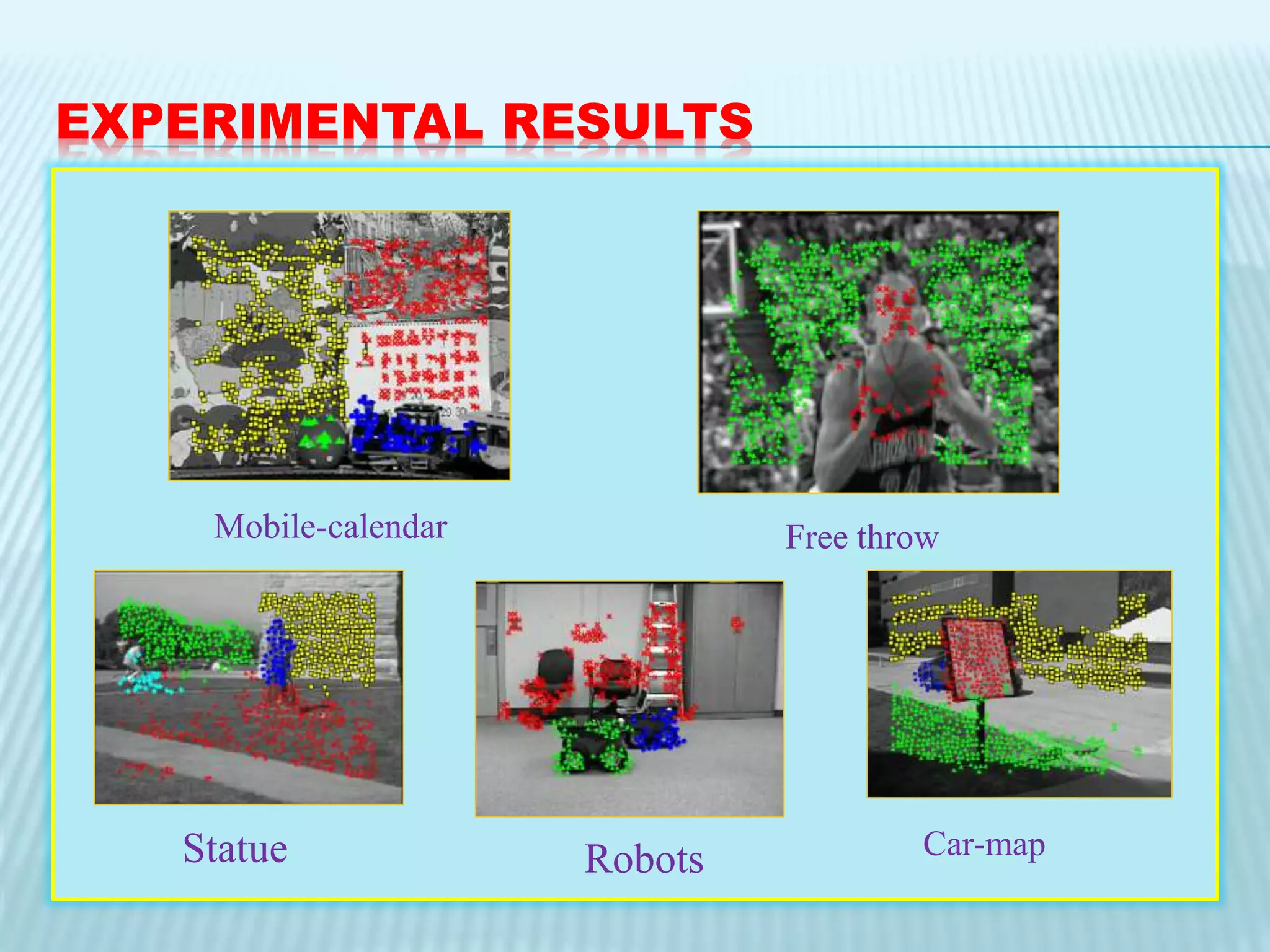
EXPERIMENTAL RESULTS
Mobile-calendar Free throw
Statue Robots Car-map
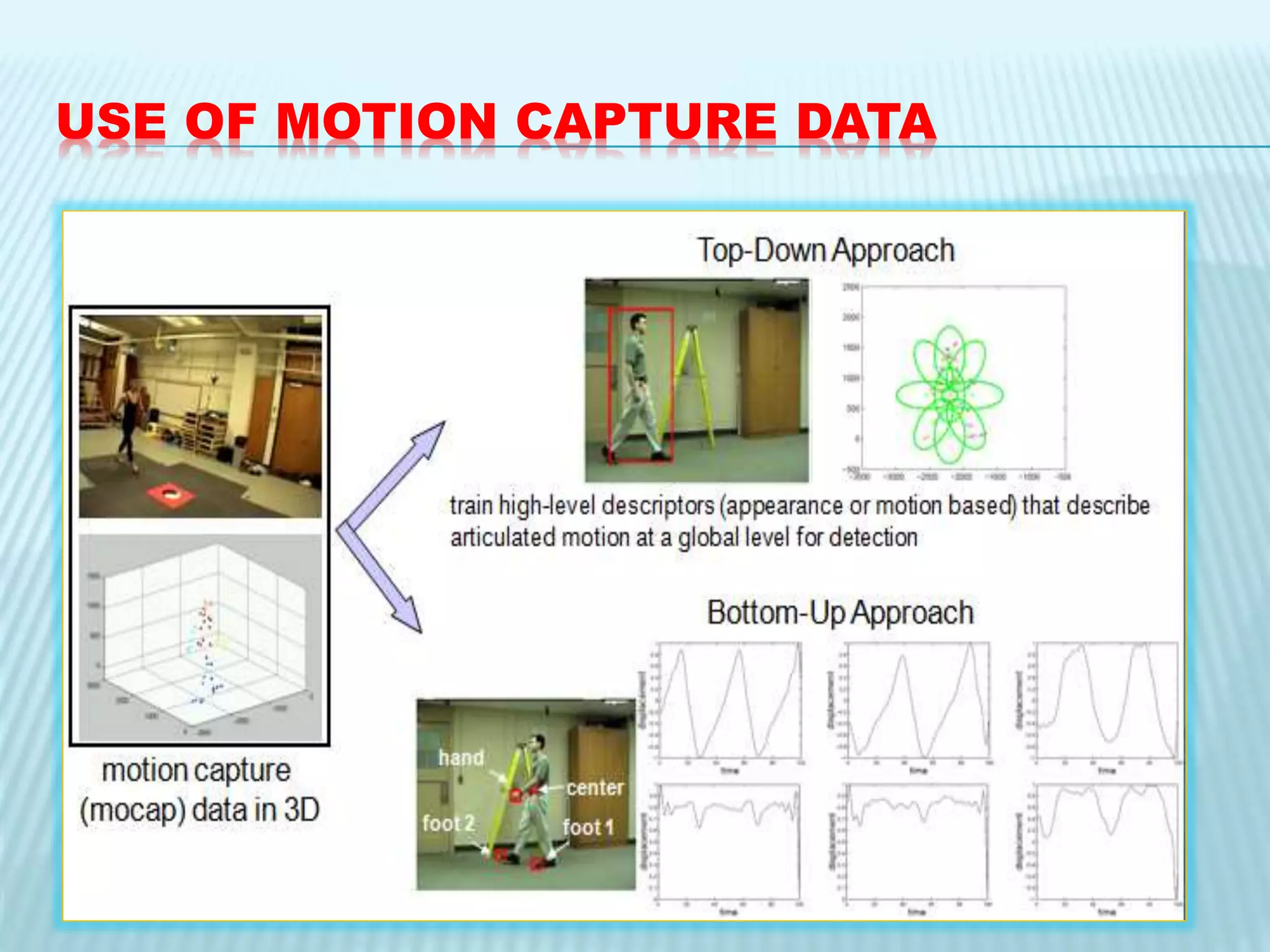
USE OF MOTION CAPTURE DATA
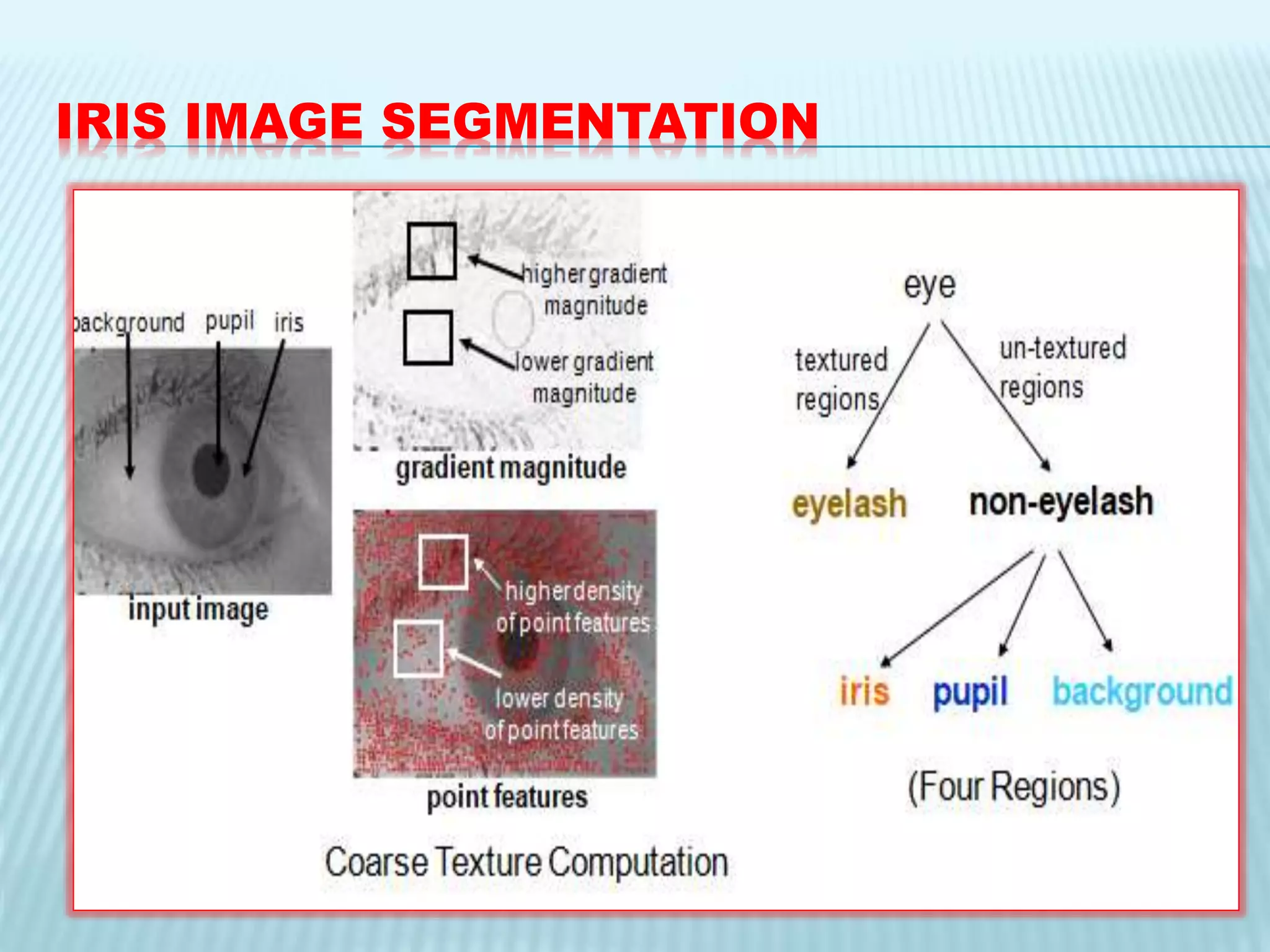
IRIS IMAGE SEGMENTATION
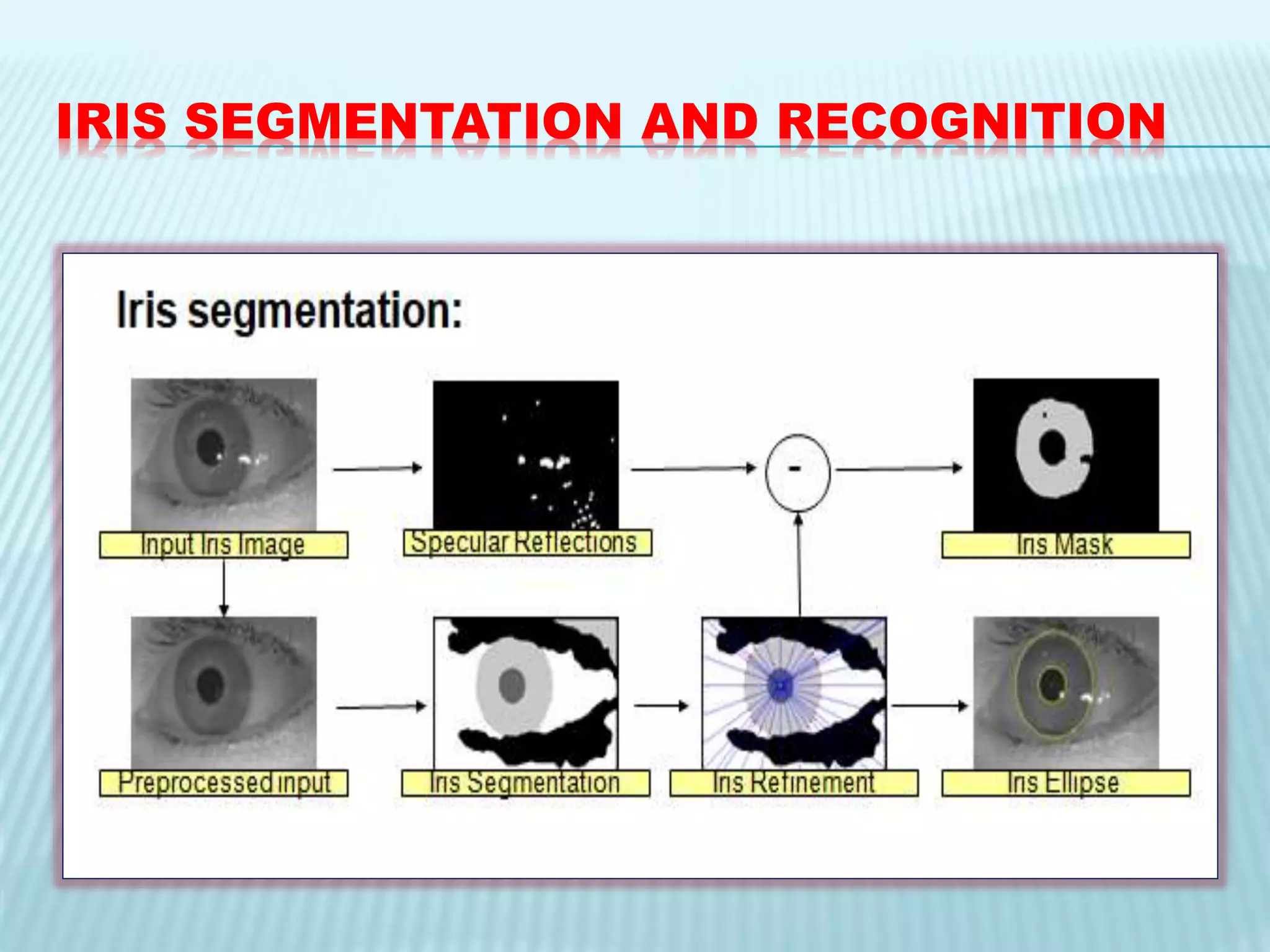
IRIS SEGMENTATION AND RECOGNITION
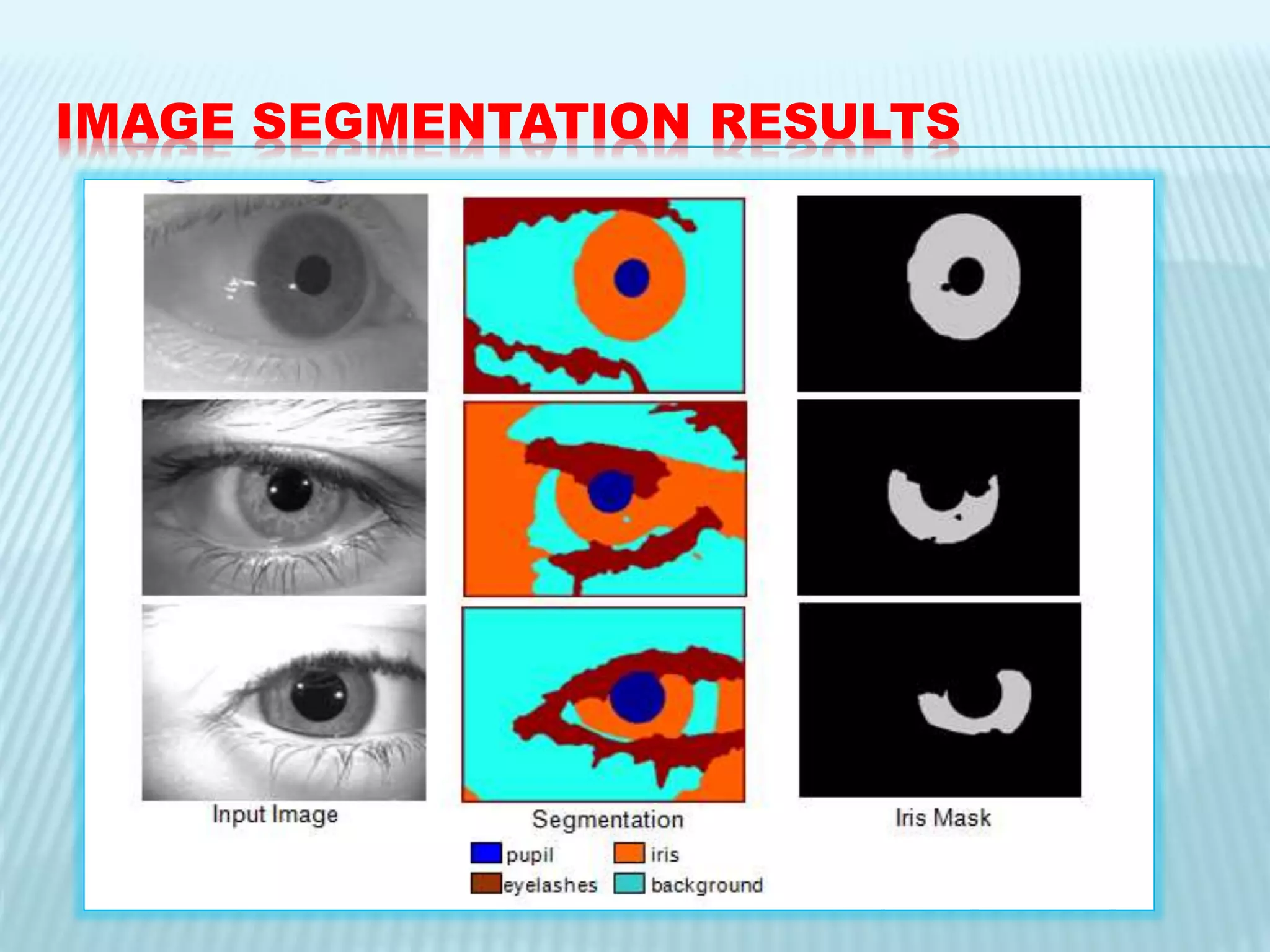
IMAGE SEGMENTATION RESULTS
Joint feature tracking
 Incorporation of neighboring feature motion
 Improved performance in areas of low-texture or repetitive texture
Detection of articulated motion
 Motion based approach for learning high-level human motion models
 Segment and track human motion in varying pose, scale, and lighting
conditions
 View invariant pose estimation
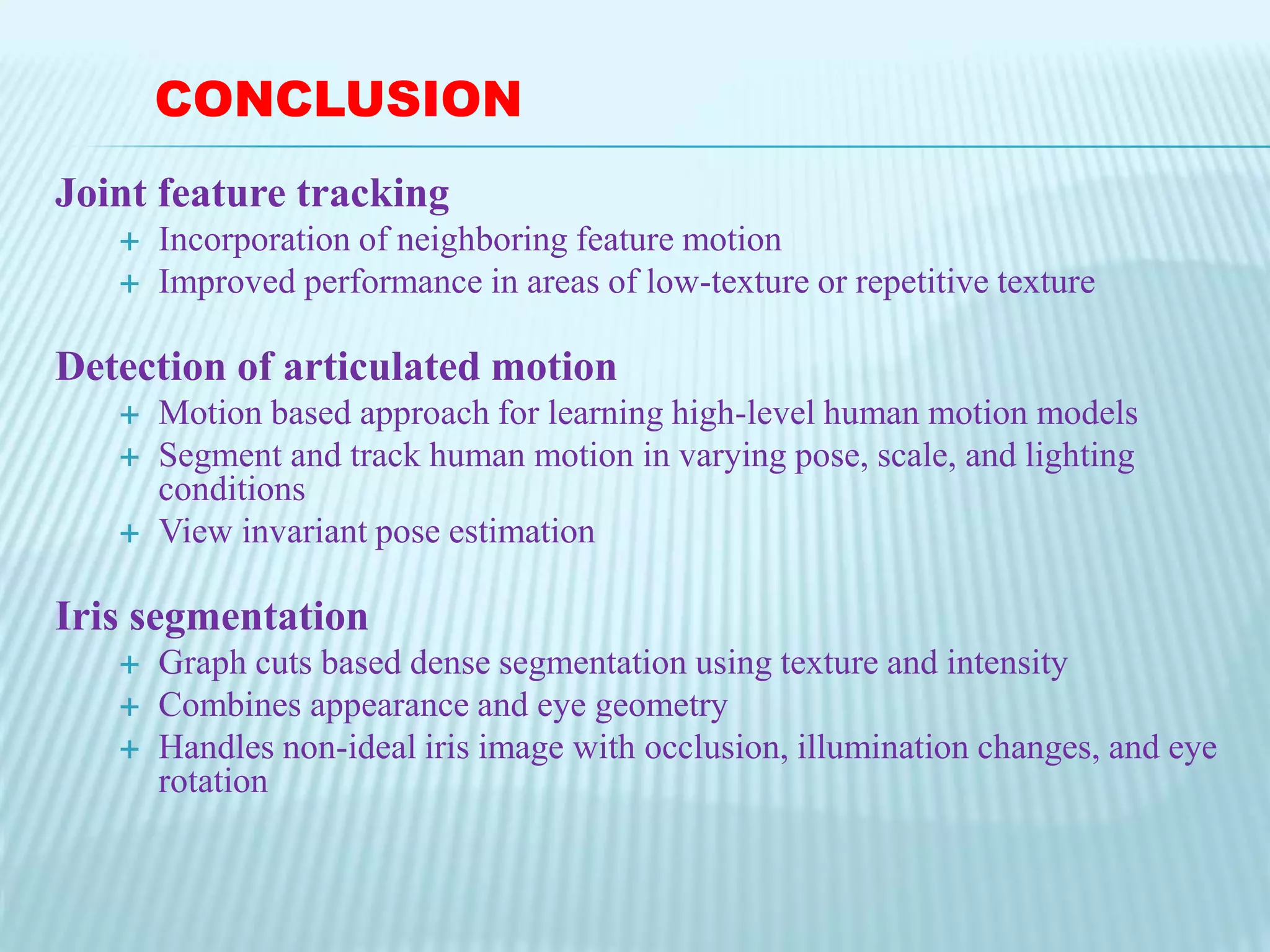
Iris segmentation
 Graph cuts based dense segmentation using texture and intensity
 Combines appearance and eye geometry
 Handles non-ideal iris image with occlusion, illumination changes, and eye
rotation
CONCLUSION
THANKYOU….

Image compression standards

  • 1.
    IMAGE COMPRESSION STANDARDS BY, M.SUJITHA, II-M.SC(CS&IT), NadarSarawathi College Of Arts And Science, Theni.
  • 2.
    INTRODUCTION  Image compressionis a type of data compression applied to digital images.  It is used to reduce their cost for storage or transmission.  Algorithms may take advantage of visual perception.  Types of Compressions are:  Lossy image Compression  Lossless image compression
  • 3.
    IMAGE COMPRESSION STANDARDS InternationalStandards  Binary image compression standards  CCITT Group 3 Standard (G3)  CCITT Group 4 Standard (G4) Continuous one image and video compression standards  JPEG, JPEG 2000  MPEG-1, MPEG-2, MPEG-4  ITU-T H.261, H.263
  • 4.
    THE JPEG STANDARD JPEG is an image compression standard.  It was developed by “Joint Photographic Experts Group”.  JPEG is a lossy image compression method.  It employs transform coding method using the DCT (Discrete Cosine Transform).  JPEG was formally accepted as an international standard in 1992.
  • 5.
    BLOCK DIAGRAM FORJPEG ENCODER
  • 6.
    MAIN STEPS INJPEG IMAGE COMPRESSION Transform RGB to YIQ or YUV and subsample color.  DCT on image blocks.  Quantization.  Zig- zag ordering and run-length encoding.  Entropy coding.
  • 7.
    FOUR COMMONLY USEDJPEG MODES  Sequential Mode  It is the default JPEG mode  Each gray level image or color image component is encoded in a single left-to-right, top-to-bottom scan.  Progressive Mode  Hierarchical Mode  Lossless Mode  JPEG-LS
  • 8.
    HIERARCHICAL MODE  Theencoded image at the lowest resolution is a compressed low-pass filtered image.  The higher resolutions provide additional details.  Progressive JPEG, the Hierarchical JPEG images can be transmitted in multiple passes progressively by improving the quality.
  • 9.
    BLOCK DIAGRAM FORHIERARCHICAL JPEG
  • 10.
    USE OF MOTIONIN SEGMENTATION  Stationary camera  Background modeling  Human tracking & extraction  Moving camera  3D Reconstruction  Moving target detecting
  • 11.
    MOTION SEGMENTATION  Segmentingthe images is based on common motion.  Gestalt insight: grouping forms the basis of human perception
  • 12.
    APPLICATIONS OF MOTIONSEGMENTATION  Object detection  pedestrian detection  Tracking  vehicle tracking  Robotics  Surveillance Vechicle Tracking  Image and video compression  Scene reconstruction  Video manipulation / editing  video matting  video annotation  motion magnification Video Editing
  • 13.
    CHALLENGES: SHORT TERM 1.statue 2. wall 4. grass 3. trees 5. biker 6. pedestrian Computation of motion Number of objects Initialization of motion parameters Description of complex motions
  • 14.
    CHALLENGES: LONG TERM Batchprocessing vs Incremental processing Maintain existing groups Adding new groups
  • 15.
    EXPERIMENTAL RESULTS Mobile-calendar Freethrow Statue Robots Car-map
  • 16.
    USE OF MOTIONCAPTURE DATA
  • 17.
  • 18.
  • 19.
  • 20.
    Joint feature tracking Incorporation of neighboring feature motion  Improved performance in areas of low-texture or repetitive texture Detection of articulated motion  Motion based approach for learning high-level human motion models  Segment and track human motion in varying pose, scale, and lighting conditions  View invariant pose estimation Iris segmentation  Graph cuts based dense segmentation using texture and intensity  Combines appearance and eye geometry  Handles non-ideal iris image with occlusion, illumination changes, and eye rotation CONCLUSION
  • 21.

Editor's Notes