IDENTIFYING RESEARCH
GAPS AND GRAY AREAS
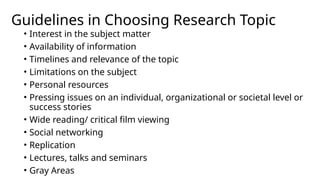
Guidelines in Choosing Research Topic
• Interest in the subject matter
• Availability of information
• Timelines and relevance of the topic
• Limitations on the subject
• Personal resources
• Pressing issues on an individual, organizational or societal level or
success stories
• Wide reading/ critical film viewing
• Social networking
• Replication
• Lectures, talks and seminars
• Gray Areas
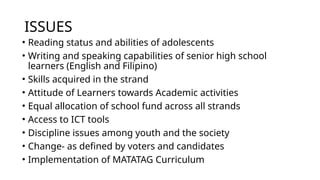
ISSUES
• Reading status and abilities of adolescents
• Writing and speaking capabilities of senior high school
learners (English and Filipino)
• Skills acquired in the strand
• Attitude of Learners towards Academic activities
• Equal allocation of school fund across all strands
• Access to ICT tools
• Discipline issues among youth and the society
• Change- as defined by voters and candidates
• Implementation of MATATAG Curriculum
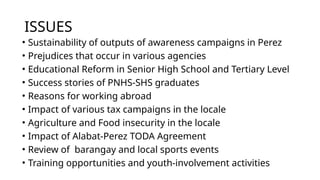
ISSUES
• Sustainability of outputs of awareness campaigns in Perez
• Prejudices that occur in various agencies
• Educational Reform in Senior High School and Tertiary Level
• Success stories of PNHS-SHS graduates
• Reasons for working abroad
• Impact of various tax campaigns in the locale
• Agriculture and Food insecurity in the locale
• Impact of Alabat-Perez TODA Agreement
• Review of barangay and local sports events
• Training opportunities and youth-involvement activities
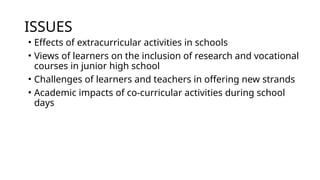
ISSUES
• Effects of extracurricular activities in schools
• Views of learners on the inclusion of research and vocational
courses in junior high school
• Challenges of learners and teachers in offering new strands
• Academic impacts of co-curricular activities during school
days
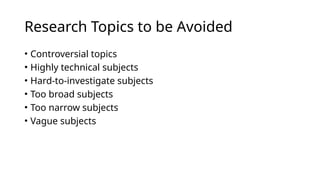
Research Topics to be Avoided
• Controversial topics
• Highly technical subjects
• Hard-to-investigate subjects
• Too broad subjects
• Too narrow subjects
• Vague subjects
Sources
• Media
• Books
• Journals
• Periodicals
• Social networks
IDENTIFYING RESEARCH GAPS AND GRAY AREAS.pptx

IDENTIFYING RESEARCH GAPS AND GRAY AREAS.pptx

  • 1.
  • 2.
    Guidelines in ChoosingResearch Topic • Interest in the subject matter • Availability of information • Timelines and relevance of the topic • Limitations on the subject • Personal resources • Pressing issues on an individual, organizational or societal level or success stories • Wide reading/ critical film viewing • Social networking • Replication • Lectures, talks and seminars • Gray Areas
  • 3.
    ISSUES • Reading statusand abilities of adolescents • Writing and speaking capabilities of senior high school learners (English and Filipino) • Skills acquired in the strand • Attitude of Learners towards Academic activities • Equal allocation of school fund across all strands • Access to ICT tools • Discipline issues among youth and the society • Change- as defined by voters and candidates • Implementation of MATATAG Curriculum
  • 4.
    ISSUES • Sustainability ofoutputs of awareness campaigns in Perez • Prejudices that occur in various agencies • Educational Reform in Senior High School and Tertiary Level • Success stories of PNHS-SHS graduates • Reasons for working abroad • Impact of various tax campaigns in the locale • Agriculture and Food insecurity in the locale • Impact of Alabat-Perez TODA Agreement • Review of barangay and local sports events • Training opportunities and youth-involvement activities
  • 5.
    ISSUES • Effects ofextracurricular activities in schools • Views of learners on the inclusion of research and vocational courses in junior high school • Challenges of learners and teachers in offering new strands • Academic impacts of co-curricular activities during school days
  • 6.
    Research Topics tobe Avoided • Controversial topics • Highly technical subjects • Hard-to-investigate subjects • Too broad subjects • Too narrow subjects • Vague subjects
  • 7.
    Sources • Media • Books •Journals • Periodicals • Social networks