1
Knowledge is essential
Applied, it is Wisdom
Wisdom is Happiness
Int.Dr : WAEL ALHALABI
 The thyroid gland is a butterfly-shaped organ located in
the base of your neck. It releases hormones that control
metabolism—the way your body uses energy. The thyroid's
hormones regulate vital body functions, including:
 Breathing
 Heart rate
 Central and peripheral nervous systems
 Body weight
 Muscle strength
 Menstrual cycles
 Body temperature
 Cholesterol levels
3
Where to look for Thyroid ?
4
 How the Thyroid Gland Works
The thyroid is part of the endocrine system, which is
made up of glands that produce, store, and release
hormones into the bloodstream so the hormones can
reach the body's cells. The thyroid gland uses iodine
from the foods you eat to make two main hormones:
 Triiodothyronine (T3)
 Thyroxine (T4)
5
Thyroid Gland
6
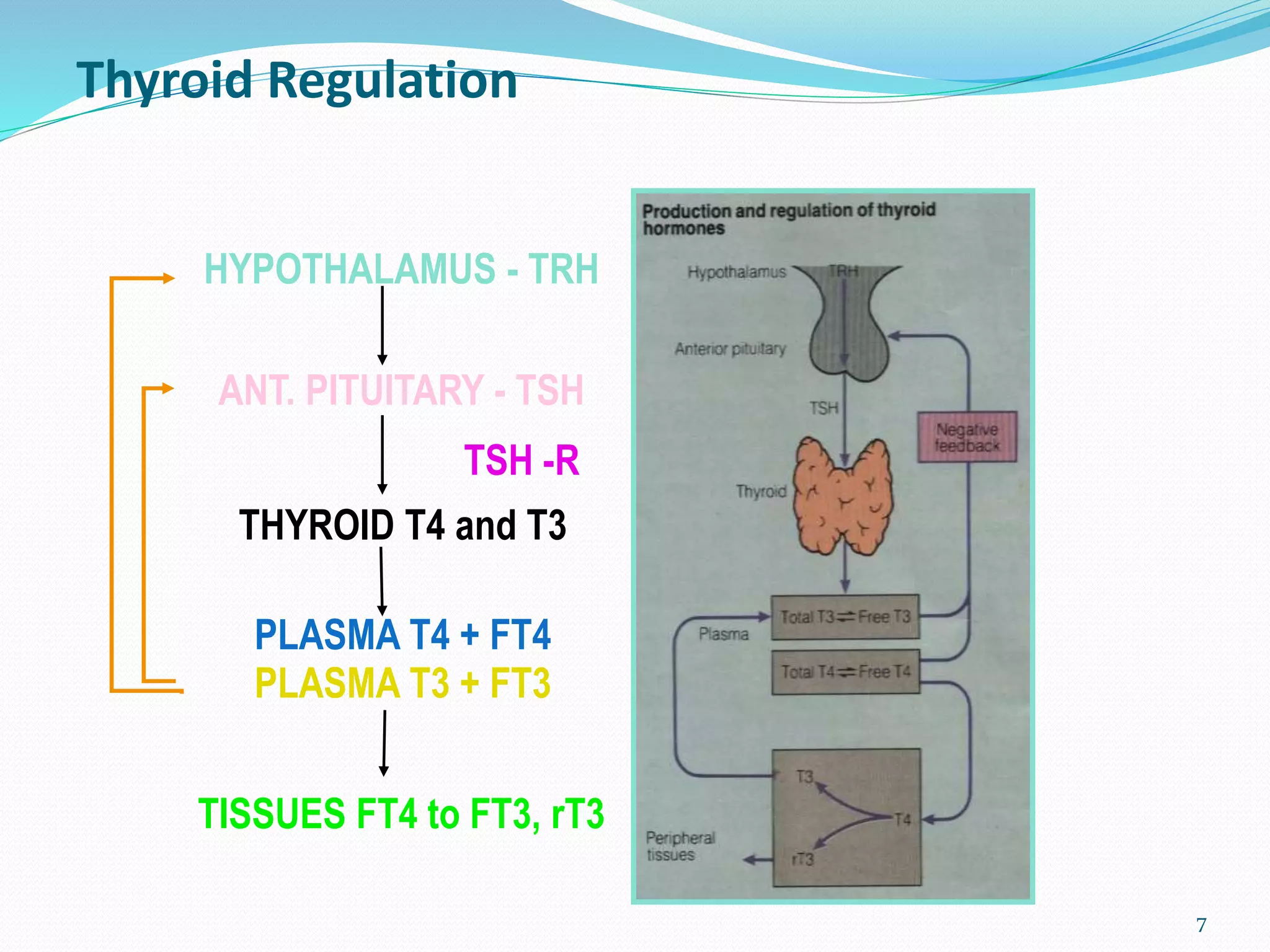
Thyroid Regulation
7
PLASMA T4 + FT4
HYPOTHALAMUS - TRH
ANT. PITUITARY - TSH
THYROID T4 and T3
PLASMA T3 + FT3
TISSUES FT4 to FT3, rT3
TSH -R
8
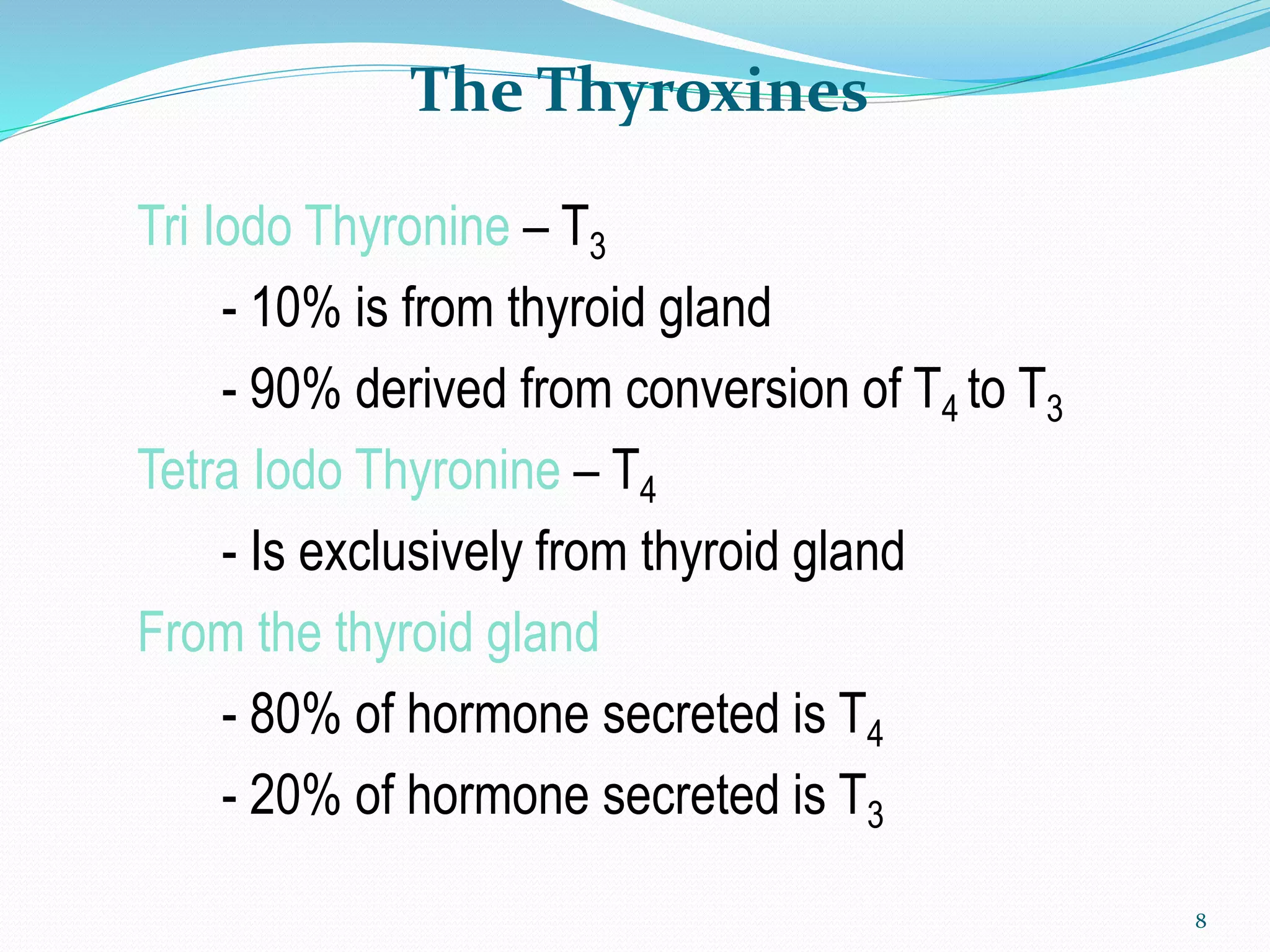
The Thyroxines
Tri Iodo Thyronine – T3
- 10% is from thyroid gland
- 90% derived from conversion of T4 to T3
Tetra Iodo Thyronine – T4
- Is exclusively from thyroid gland
From the thyroid gland
- 80% of hormone secreted is T4
- 20% of hormone secreted is T3
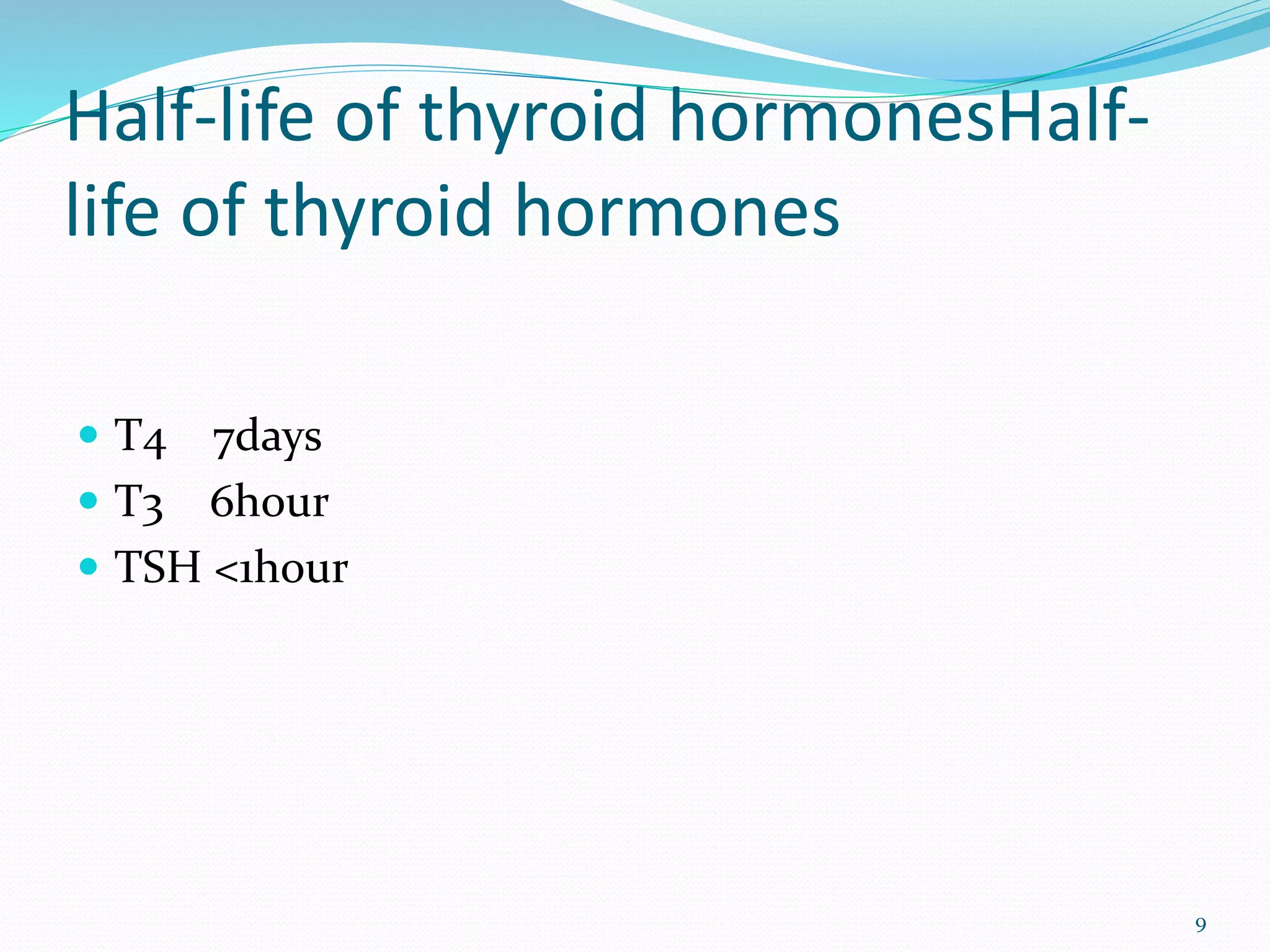
Half-life of thyroid hormonesHalf-
life of thyroid hormones
 T4 7days
 T3 6hour
 TSH <1hour
9
Thyroid Function Tests
10
Thyroid Function Tests
1. TSH
2. Free T4
3. Free T3
4. Anti-Thyroid Antibodies
5. Nuclear Scintigraphy
6. FNAC of nodule
11
12
Current Trends in Dx. and Rx.
HYPOTHYROIDISM
General Considerations
13
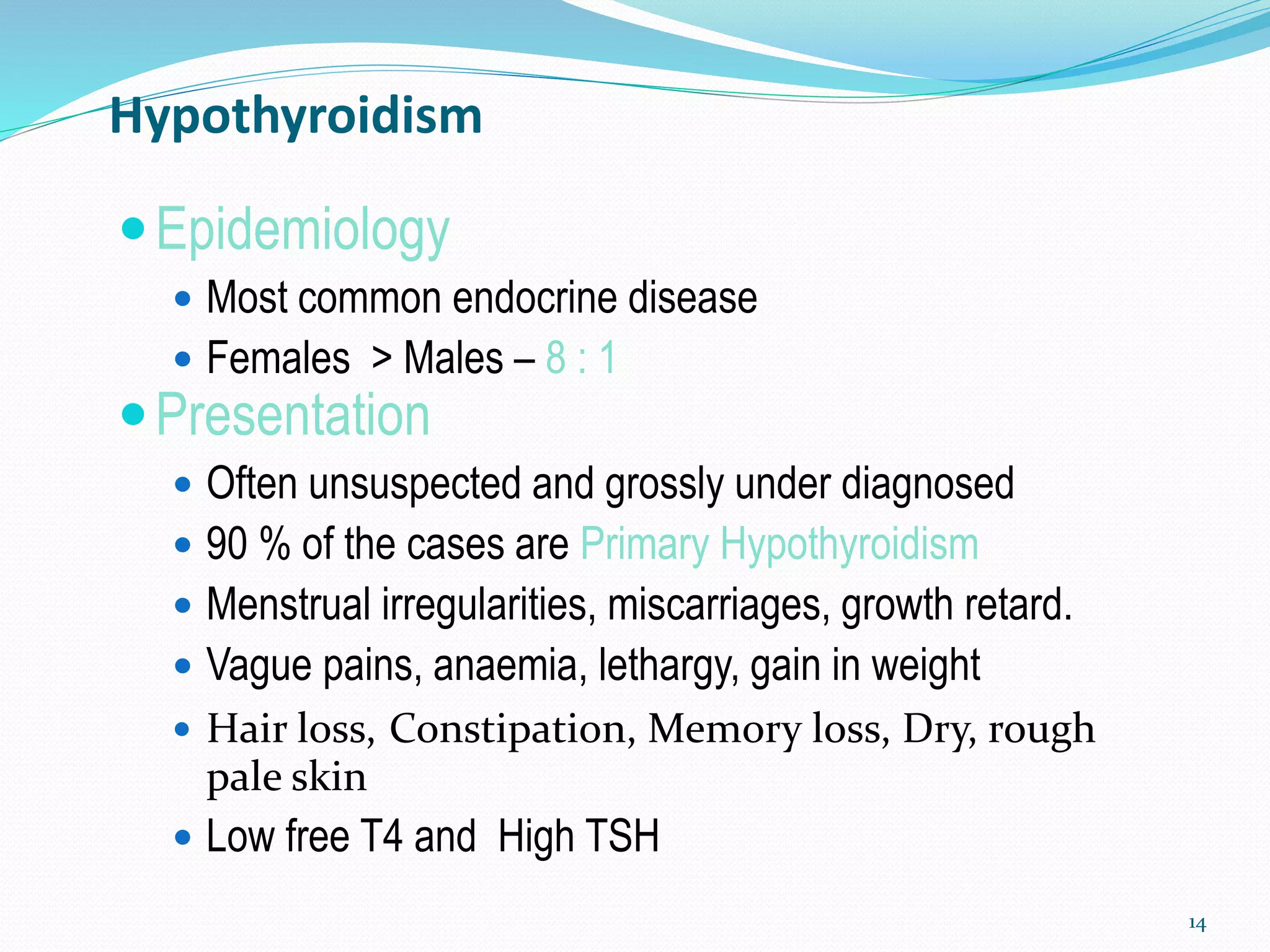
Hypothyroidism
Epidemiology
 Most common endocrine disease
 Females > Males – 8 : 1
Presentation
 Often unsuspected and grossly under diagnosed
 90 % of the cases are Primary Hypothyroidism
 Menstrual irregularities, miscarriages, growth retard.
 Vague pains, anaemia, lethargy, gain in weight
 Hair loss, Constipation, Memory loss, Dry, rough
pale skin
 Low free T4 and High TSH
14
Suspect Hypothyroidism
1. Amenorrhea
2. Oligomenorrhea
3. Menorrhogia
4. Galactorrhea
5. Premature ovarian failure
6. Infertility
7. Decreased libido
8. Precocious / delayed puberty
9. Chronic urticaria
15
Classification
16
Classification of Hypothyroidism
A. Primary
1. Enlarged Thyroid
- Hashimoto’s (65%)
- Iodine Deficiency (25%)
- Drug-induced (Lithium)
- Dysharmonogenesis
2. Normal Thyroid
- Spontaneous Atrophic
Primary contd..
3. Post Ablative
- Permanent
- Transient
- Sub-clinical
4. Congenital
B. Secondary / Central
Pituitary/ hypothalamic
17
How to interpret results ?
18
The Nine Square Game
19
To evaluate our Thyroid patient
20
LOW NORMAL HIGH
THYROID STIMULATING HORMONE - TSH
FREETHYROXINEorFT4
BASIC THYROID EVALUATION
21
FREETHYROXINEorFT4
EUTHYROID
LOW NORMAL HIGH
THYROID STIMULATING HORMONE - TSH
BASIC THYROID EVALUATION
22
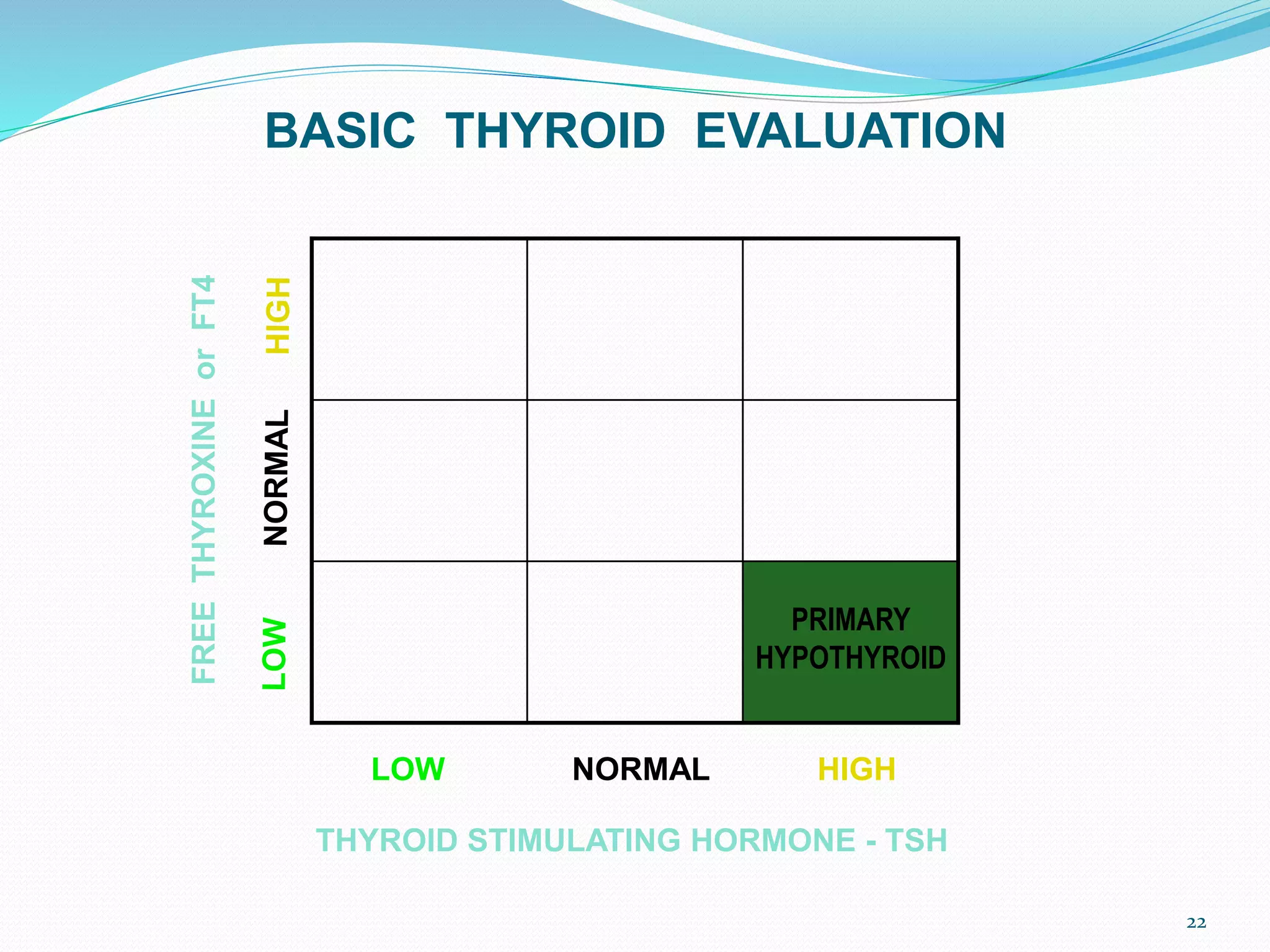
FREETHYROXINEorFT4
PRIMARY
HYPOTHYROID
LOW NORMAL HIGH
THYROID STIMULATING HORMONE - TSH
BASIC THYROID EVALUATION
23
FREETHYROXINEorFT4
PRIMARY
HYPERTHYROID
LOW NORMAL HIGH
THYROID STIMULATING HORMONE - TSH
BASIC THYROID EVALUATION
24
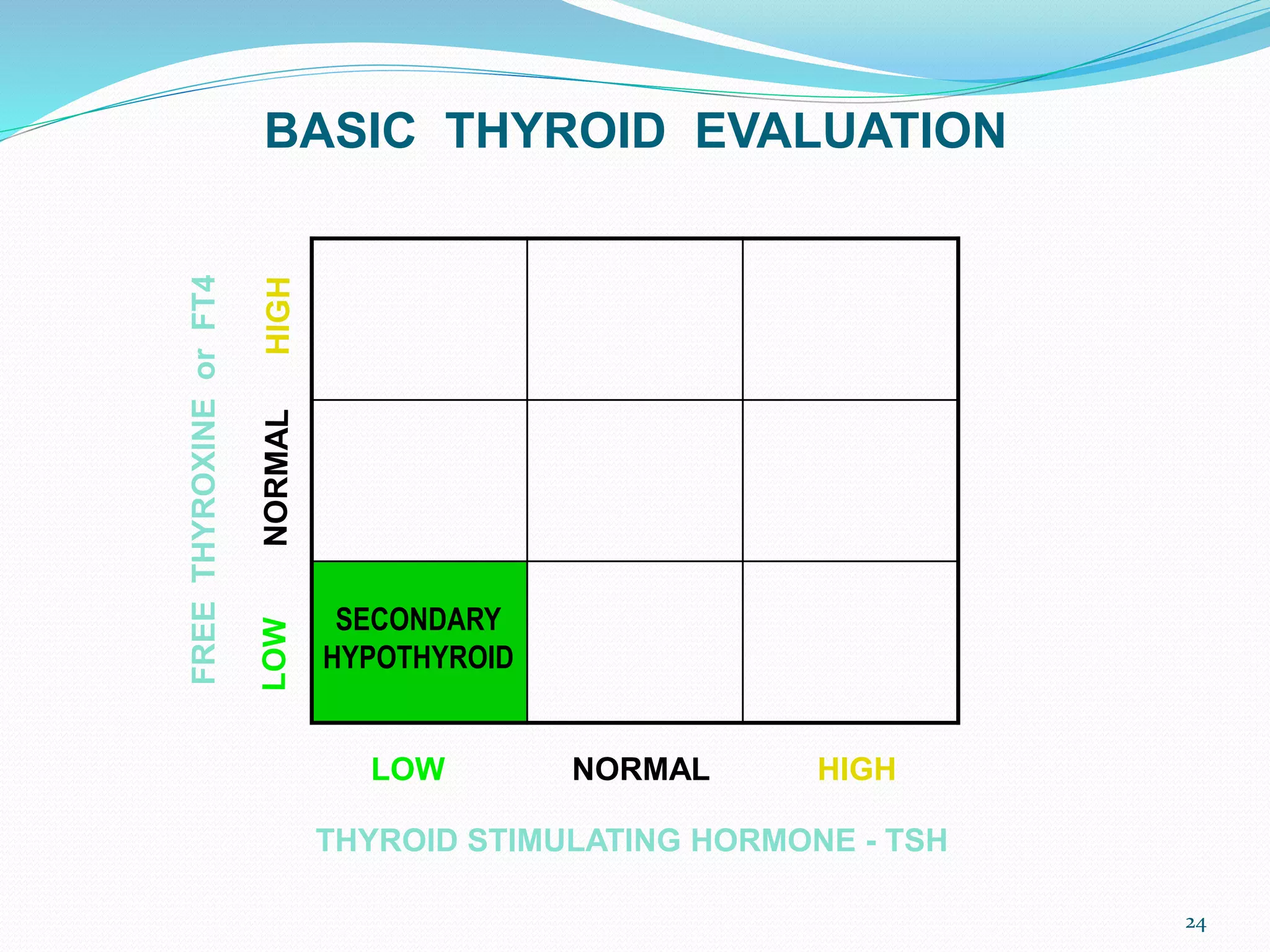
FREETHYROXINEorFT4
SECONDARY
HYPOTHYROID
LOW NORMAL HIGH
THYROID STIMULATING HORMONE - TSH
BASIC THYROID EVALUATION
25
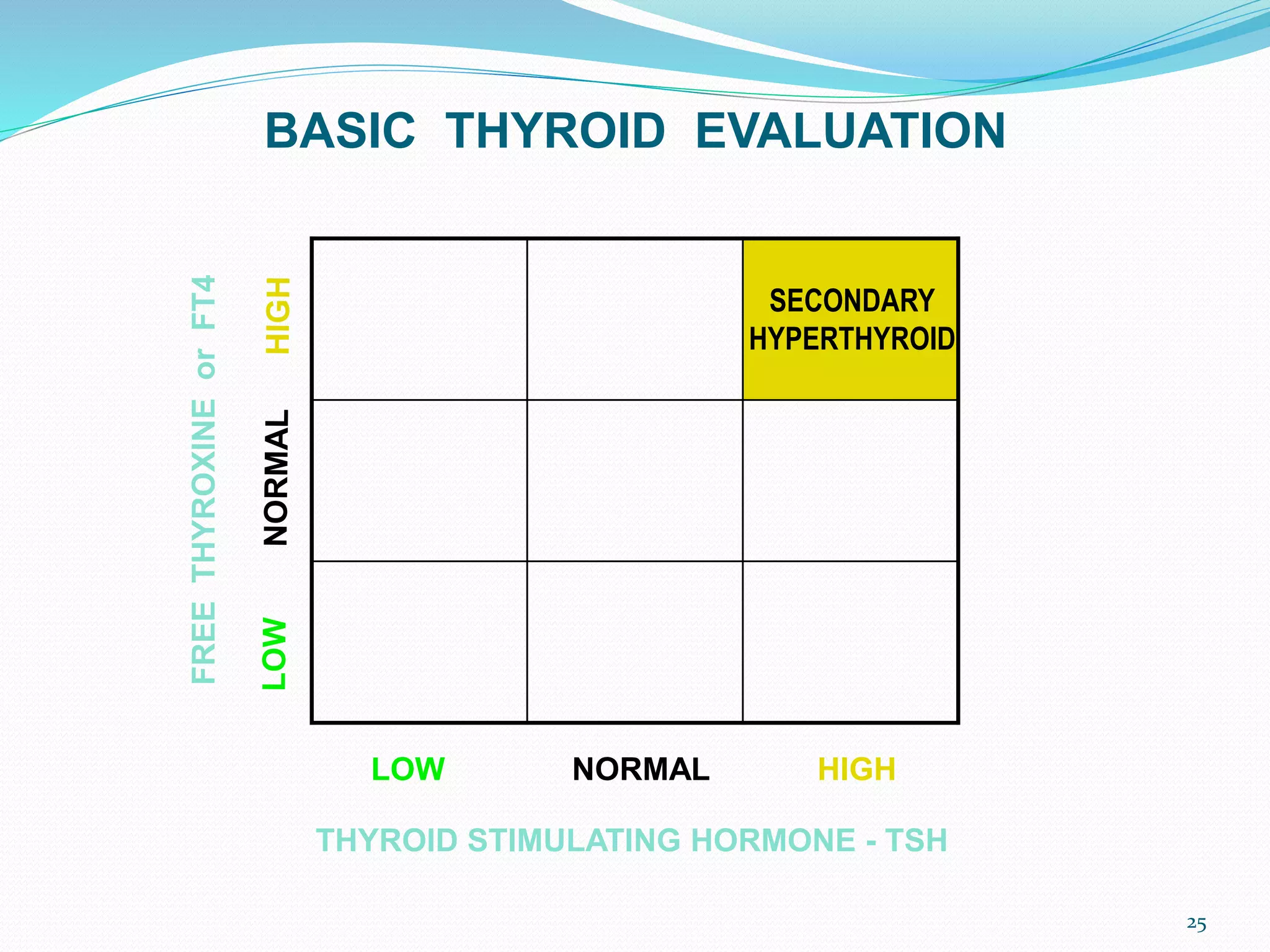
FREETHYROXINEorFT4
SECONDARY
HYPERTHYROID
LOW NORMAL HIGH
THYROID STIMULATING HORMONE - TSH
BASIC THYROID EVALUATION
26
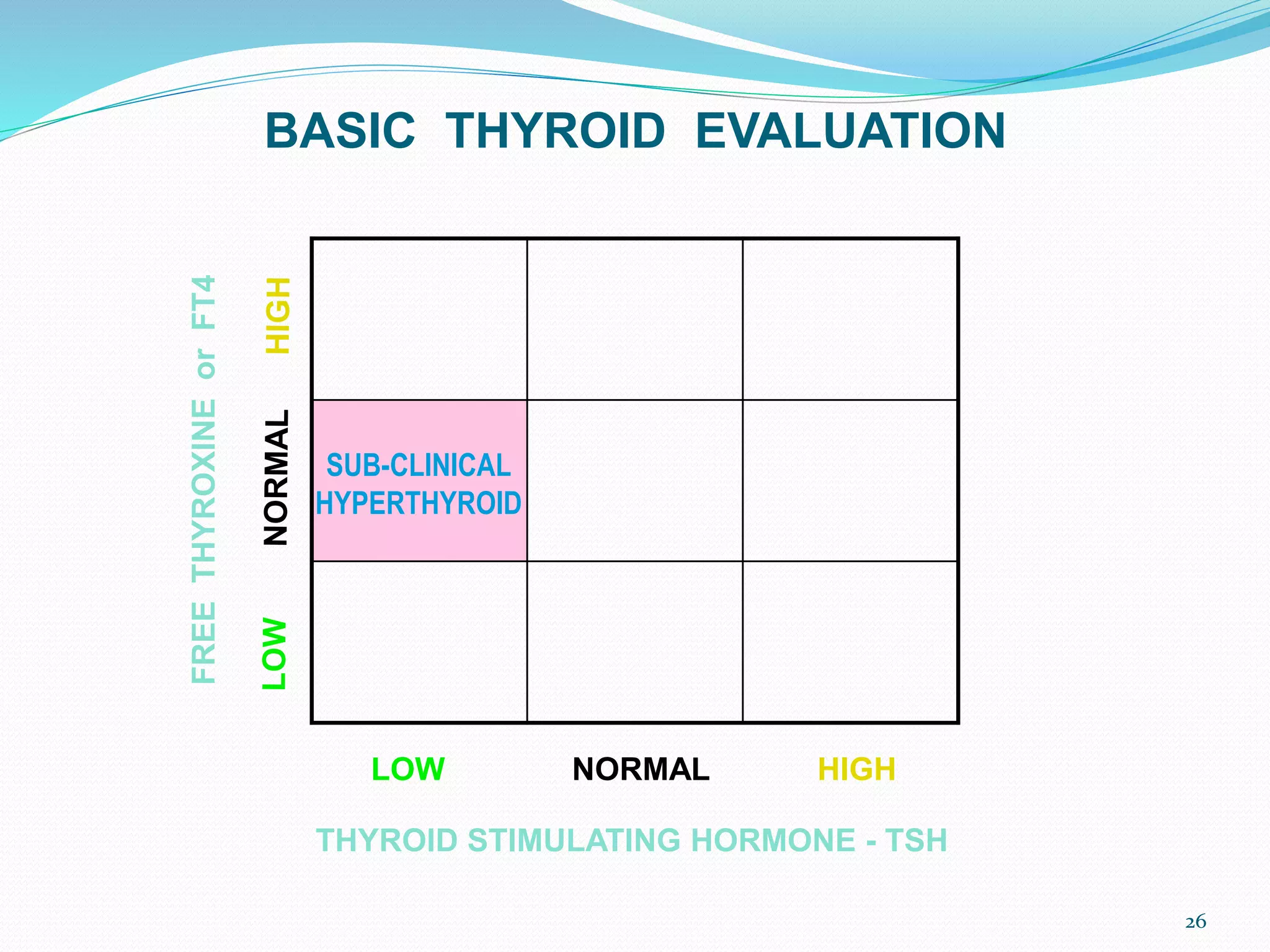
FREETHYROXINEorFT4
SUB-CLINICAL
HYPERTHYROID
LOW NORMAL HIGH
THYROID STIMULATING HORMONE - TSH
BASIC THYROID EVALUATION
27
FREETHYROXINEorFT4
SUB-CLINICAL
HYPOTHYROID
LOW NORMAL HIGH
THYROID STIMULATING HORMONE - TSH
BASIC THYROID EVALUATION
28
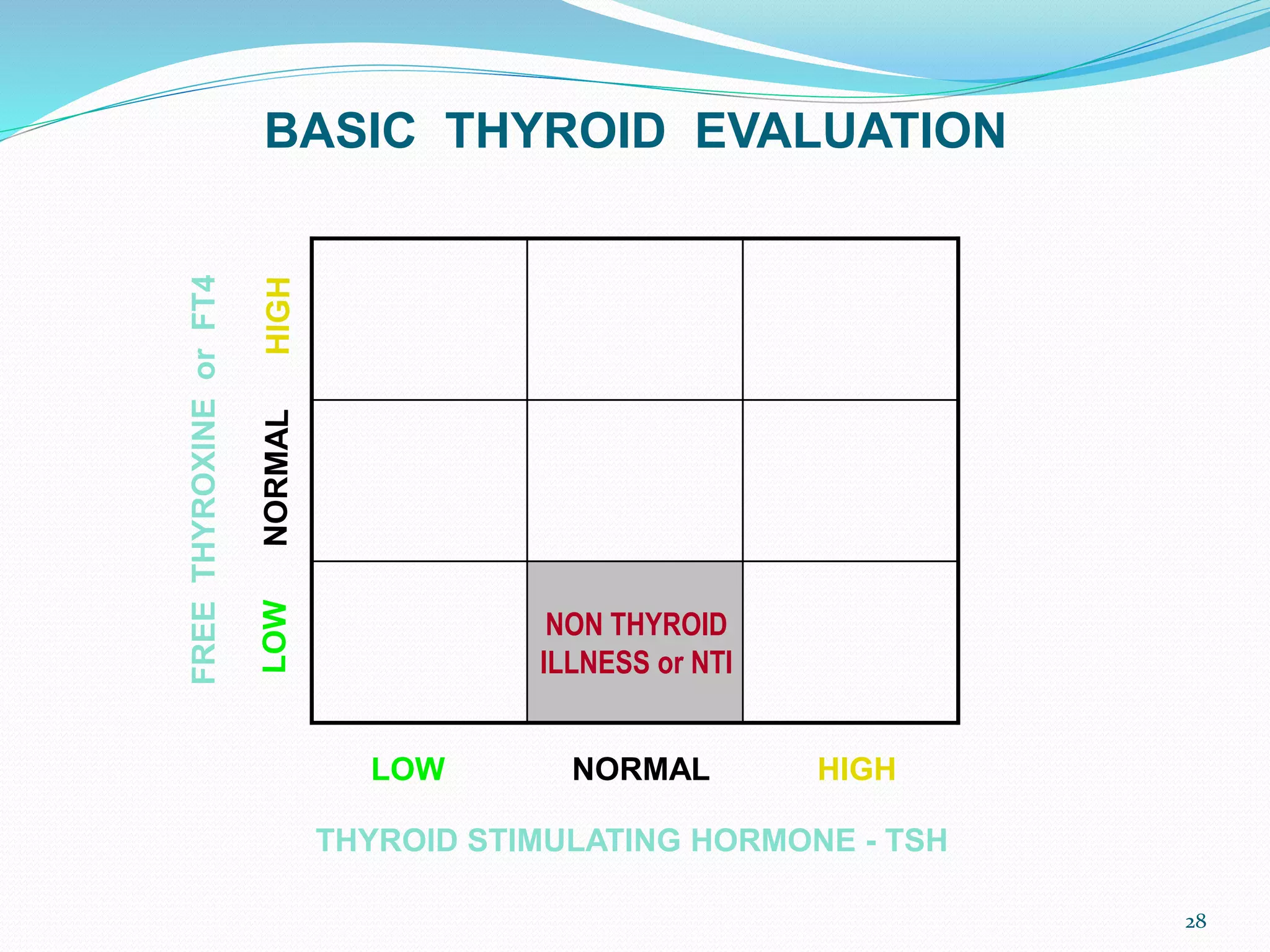
FREETHYROXINEorFT4
NON THYROID
ILLNESS or NTI
LOW NORMAL HIGH
THYROID STIMULATING HORMONE - TSH
BASIC THYROID EVALUATION
29
FREETHYROXINEorFT4
NTI or Pt.
on ELTROXIN
LOW NORMAL HIGH
THYROID STIMULATING HORMONE - TSH
BASIC THYROID EVALUATION
30
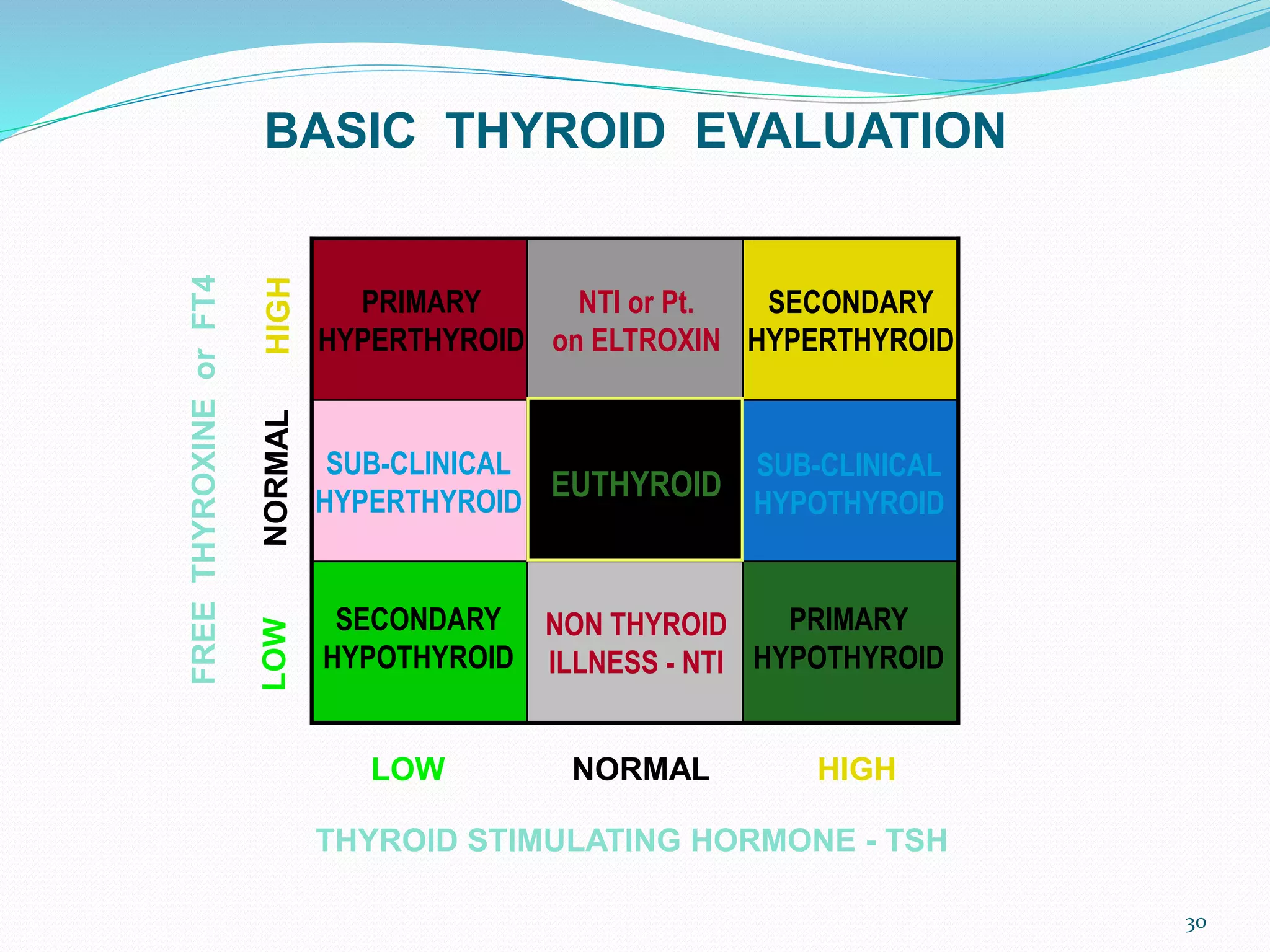
FREETHYROXINEorFT4
EUTHYROID
SUB-CLINICAL
HYPERTHYROID
NON THYROID
ILLNESS - NTI
NTI or Pt.
on ELTROXIN
SUB-CLINICAL
HYPOTHYROID
SECONDARY
HYPERTHYROID
SECONDARY
HYPOTHYROID
PRIMARY
HYPERTHYROID
PRIMARY
HYPOTHYROID
LOW NORMAL HIGH
THYROID STIMULATING HORMONE - TSH
BASIC THYROID EVALUATION
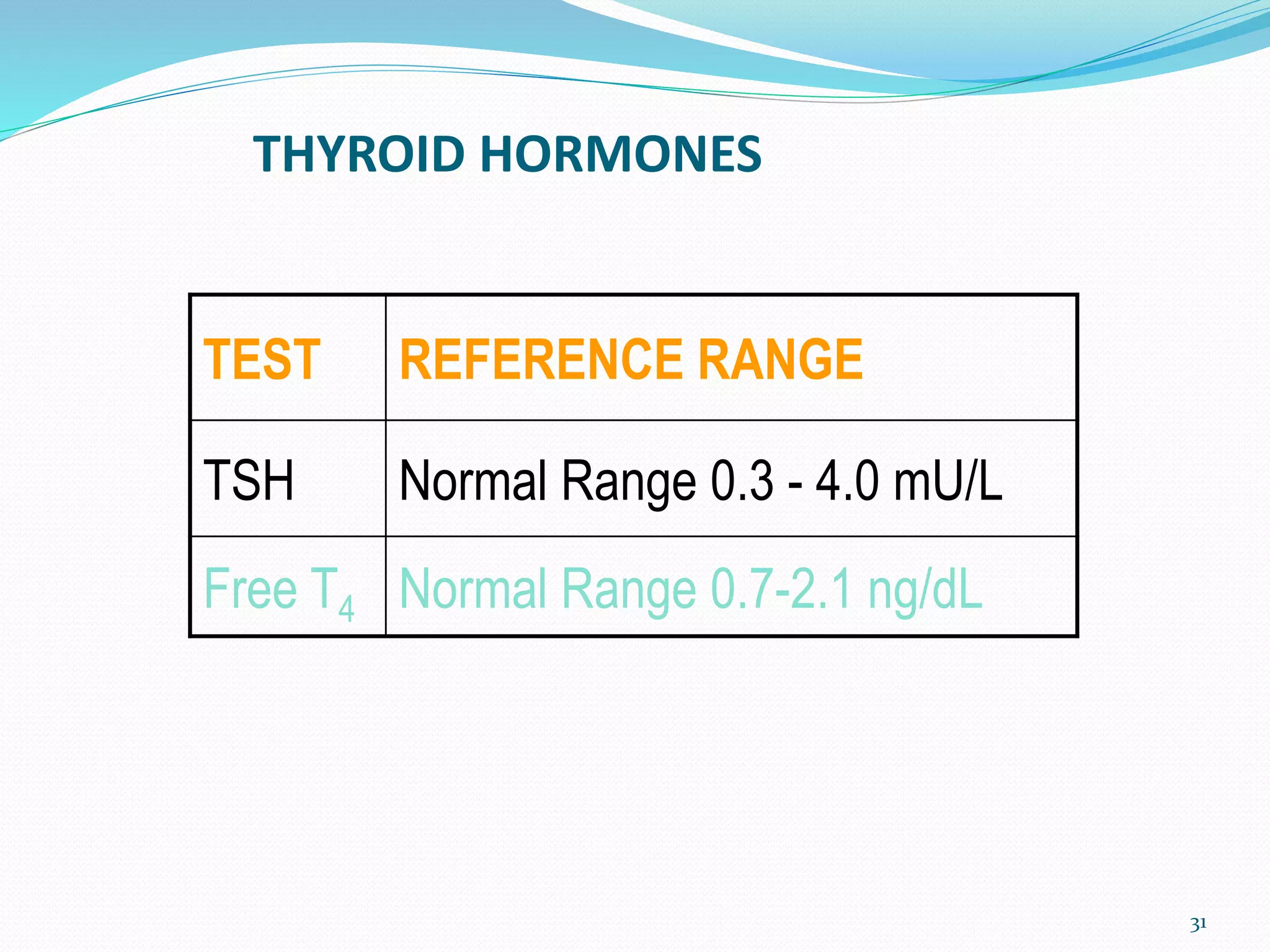
THYROID HORMONES
TEST REFERENCE RANGE
TSH Normal Range 0.3 - 4.0 mU/L
Free T4 Normal Range 0.7-2.1 ng/dL
31
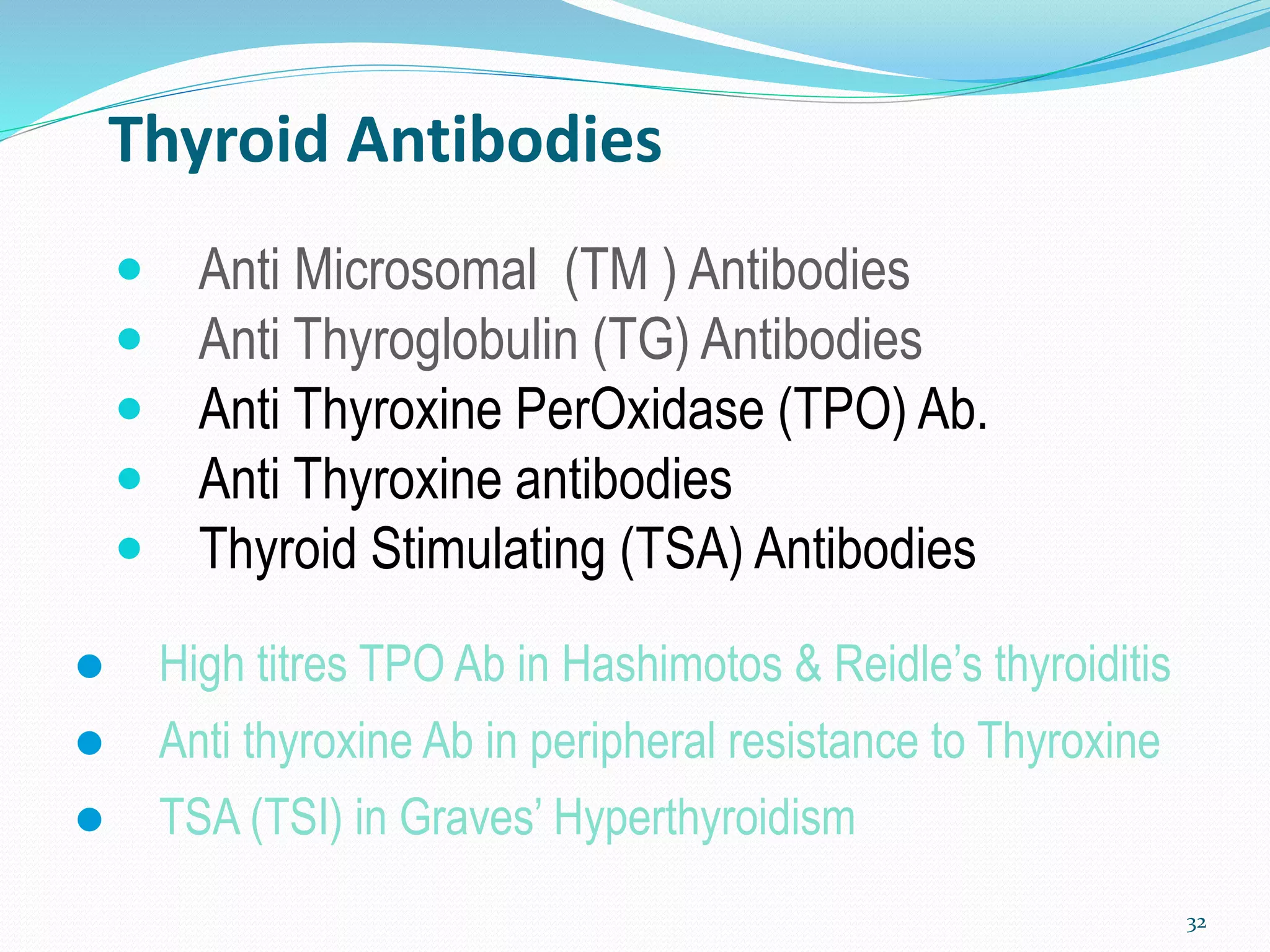
Thyroid Antibodies
 Anti Microsomal (TM ) Antibodies
 Anti Thyroglobulin (TG) Antibodies
 Anti Thyroxine PerOxidase (TPO) Ab.
 Anti Thyroxine antibodies
 Thyroid Stimulating (TSA) Antibodies
32
 High titres TPO Ab in Hashimotos & Reidle’s thyroiditis
 Anti thyroxine Ab in peripheral resistance to Thyroxine
 TSA (TSI) in Graves’ Hyperthyroidism
Other Investigations
 CPK
 AST
 LDH
 Cholestrol
 Triglycerides
 Anemia: Normochromic normocytic/macrocytic /
microcytic
 Increased serum prolactin
 Hyponatremia
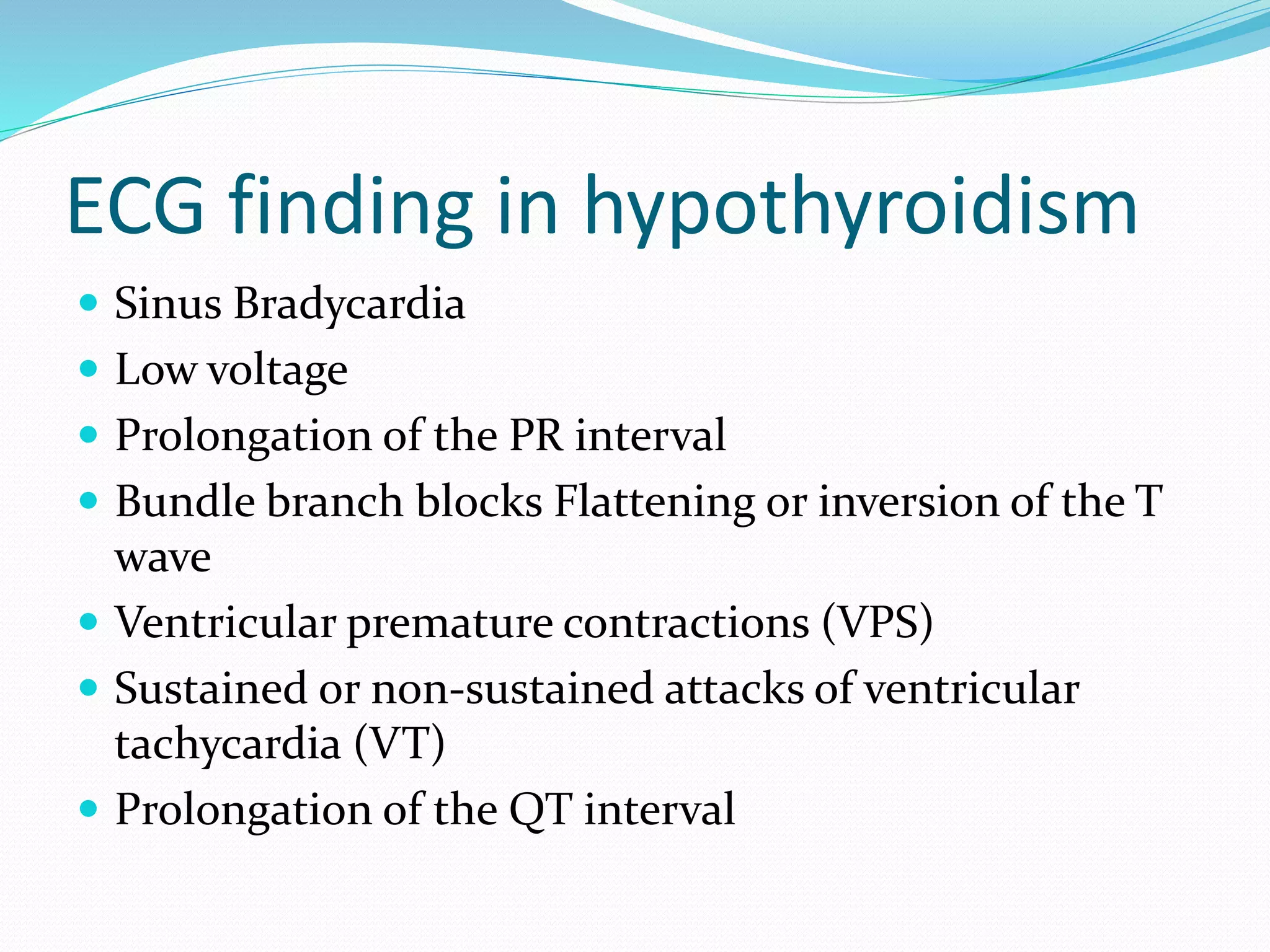
ECG finding in hypothyroidism
 Sinus Bradycardia
 Low voltage
 Prolongation of the PR interval
 Bundle branch blocks Flattening or inversion of the T
wave
 Ventricular premature contractions (VPS)
 Sustained or non-sustained attacks of ventricular
tachycardia (VT)
 Prolongation of the QT interval
35
36
Algorithm for Hypothyroidism
Measure TSH
Elevated TSH Normal TSH
Measure FT4 Considering Pituitary
Normal Low No Yes
Sub-clinical hypo
TPO + TPO -
T4 repl Annual FU
Primary hypothyroid
TPO + TPO -
No tests Measure FT4
Low Normal
No tests
Evaluate Pituitary
Sick Euthyroid
Drugs effect
Hashimoto
Others
TREATMENT
 The goal of hypothyroidism therapy is to replace
thyroxine to mimic normal, physiologic levels and
alleviate signs, symptoms, and biochemical
abnormalities
37
 Treatment of choice:
 levothyroxine (synthetic levothyroxine, LT4)
 Dose of Levothyroxine depends on the degree of Hypothyroidism, Age &
General health condition of the patient
 Usually daily replacement dose is 1.6µgm/Kg body weight
 Start with Low Dose
 Patients under age 60, without cardiac disease can be started on 50 – 100
μg/day. Dose adjusted according to TSH levels
 Chemically stable
 In elderly patients or those with heart disease, start low and go slow (12.5–25.0
μg/day; then slowly ↑ the dose by 25-μg increments every month until
euthyroid).
 Other therapies (T3 or T3 and T4 mixtures)
 no advantages versus levothyroxine
38
Factors That May Reduce
Levothyroxine Effectiveness
 Malabsorption Syndromes
 Postjejunoileal bypass
surgery
 Short bowel syndrome
 Drugs That Increase Clearance
 Rifampin
 Carbamazepine
 Phenytoin
 Factors That Reduced T4 to T3 conversion
 Amiodarone
 Selenium deficiency
39
Follow up
 Serum TSH levels should be measured after 6-8 weeks
of therapy and dosages should be adjusted accordingly
 Target TSH levels should be between 1-2 mU/l
 Once a stable TSH is achieved, it should be estimated
every year
41
How the patient improves
 Feels better in 2 – 3 weeks
 Reduction in weight is the first improvement
 Facial puffiness then starts coming down
 Skin changes, hair changes take long time to regress
 TSH starts showing decrements from the high values
 TSH returns to normal eventually
COMPLICATIONS
 Myxedema coma: Characterized by weakness,
hypothermia, hypoventilation with hypercapnia,
hypoglycemia, hyponatremia, water intoxication, shock,
and death. Treatment is supportive therapy with
rewarming, intubation, and IV LT4. Often precipitated by
infection or other forms of stress. Consider glucocorticoids
for AI, which can coexist with thyroid disease.
 Other complications: Anemia (normocytic), CHF,
depression, and lipid abnormalities (elevated LDL and TG)
42
Myxedema
43
Myxedema
44
Macroglossia
45
Xanthomata
46
Xanthelasma
Tuberous Xanthoma
47
Solid Oedema Xanthomata
48
Myxoedema with Carotenemia
49
Recovery after L-Thyroxine
50
Pituitary Tumor – Secondary HypoNormal Pituitary Fossa
51
Massive Pericardial Effusion in Hypo
20.2.98
52
Clearing of Pericardial Effusion with Rx.
26.7.98
53
Reappearance of Pericardial Effusion
after treatment is discontinued
14.9.99
54
We need to apply the current knowledge

Hypothyroidism