Presentation 2023
6 Ways Tracking Software Helps
With Hybrid Workplace
Hybrid Workforce Management
6 Ways
Tracking
Software
Helps With
Hybrid
Workplace
Attendance and Time Tracking
Hybrid workforce management
involves optimizing the
coordination of remote and in-
office employees, leveraging
technology for productivity,
maintaining communication,
monitoring performance, and
ensuring flexibility to adapt to
changing workplace dynamics.
Hybrid Workforce
Management
Task and Project
Management
Performance Monitoring
Resource Allocation
Communication and
Collaboration
Tracking software can play a crucial role in managing a hybrid workplace effectively, where
employees split their time between remote work and in-office work. Here are six ways tracking
software can help in a hybrid workplace:
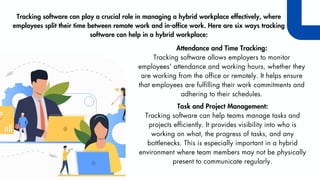
Attendance and Time Tracking:
Tracking software allows employers to monitor
employees' attendance and working hours, whether they
are working from the office or remotely. It helps ensure
that employees are fulfilling their work commitments and
adhering to their schedules.
Task and Project Management:
Tracking software can help teams manage tasks and
projects efficiently. It provides visibility into who is
working on what, the progress of tasks, and any
bottlenecks. This is especially important in a hybrid
environment where team members may not be physically
present to communicate regularly.
Performance Monitoring:
By tracking key performance metrics, employers can assess the productivity and performance of
employees, regardless of their work location. This data can be used to identify areas where
improvement is needed and to recognize high-performing individuals.
Resource Allocation:
Tracking software can help organizations allocate
resources effectively. It provides insights into how much
time and effort different tasks and projects require, helping
businesses optimize resource allocation for both remote
and in-office employees.
Communication and Collaboration:
Hybrid workplaces often rely heavily on digital
communication and collaboration tools. Tracking software
can integrate with these tools to monitor communication
patterns and collaboration activities, ensuring that teams
stay connected and aligned.
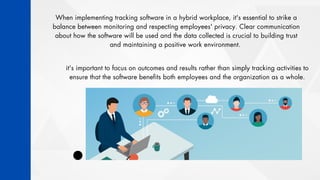
When implementing tracking software in a hybrid workplace, it's essential to strike a
balance between monitoring and respecting employees' privacy. Clear communication
about how the software will be used and the data collected is crucial to building trust
and maintaining a positive work environment.
it's important to focus on outcomes and results rather than simply tracking activities to
ensure that the software benefits both employees and the organization as a whole.
Reach out.
CONTACT US
sales@serialio.com
512-994-3630 cloud-in-hand.com/

Hybrid Workforce Management.pdf

  • 1.
    Presentation 2023 6 WaysTracking Software Helps With Hybrid Workplace Hybrid Workforce Management
  • 2.
    6 Ways Tracking Software Helps With Hybrid Workplace Attendanceand Time Tracking Hybrid workforce management involves optimizing the coordination of remote and in- office employees, leveraging technology for productivity, maintaining communication, monitoring performance, and ensuring flexibility to adapt to changing workplace dynamics. Hybrid Workforce Management Task and Project Management Performance Monitoring Resource Allocation Communication and Collaboration
  • 3.
    Tracking software canplay a crucial role in managing a hybrid workplace effectively, where employees split their time between remote work and in-office work. Here are six ways tracking software can help in a hybrid workplace: Attendance and Time Tracking: Tracking software allows employers to monitor employees' attendance and working hours, whether they are working from the office or remotely. It helps ensure that employees are fulfilling their work commitments and adhering to their schedules. Task and Project Management: Tracking software can help teams manage tasks and projects efficiently. It provides visibility into who is working on what, the progress of tasks, and any bottlenecks. This is especially important in a hybrid environment where team members may not be physically present to communicate regularly.
  • 4.
    Performance Monitoring: By trackingkey performance metrics, employers can assess the productivity and performance of employees, regardless of their work location. This data can be used to identify areas where improvement is needed and to recognize high-performing individuals. Resource Allocation: Tracking software can help organizations allocate resources effectively. It provides insights into how much time and effort different tasks and projects require, helping businesses optimize resource allocation for both remote and in-office employees. Communication and Collaboration: Hybrid workplaces often rely heavily on digital communication and collaboration tools. Tracking software can integrate with these tools to monitor communication patterns and collaboration activities, ensuring that teams stay connected and aligned.
  • 5.
    When implementing trackingsoftware in a hybrid workplace, it's essential to strike a balance between monitoring and respecting employees' privacy. Clear communication about how the software will be used and the data collected is crucial to building trust and maintaining a positive work environment. it's important to focus on outcomes and results rather than simply tracking activities to ensure that the software benefits both employees and the organization as a whole.
  • 6.