NHU DINH HOANG NAM
HUYNH PHUC NGUYEN
DOAN HUU DONG 1258012
CAO SON
TRANG CHAN PHONG
NGUYEN HUU TUNG 1258090
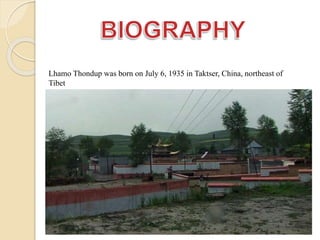
Lhamo Thondup was born on July 6, 1935 in Taktser, China, northeast of
Tibet
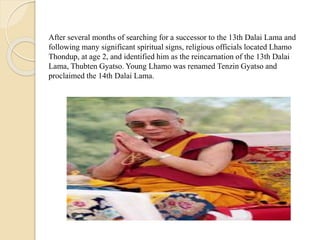
After several months of searching for a successor to the 13th Dalai Lama and
following many significant spiritual signs, religious officials located Lhamo
Thondup, at age 2, and identified him as the reincarnation of the 13th Dalai
Lama, Thubten Gyatso. Young Lhamo was renamed Tenzin Gyatso and
proclaimed the 14th Dalai Lama.
Dalai Lamas are believed to be the reincarnation of Avalokitesvara, an
important Buddhist deity and the personification of compassion. Dalai Lamas
are also enlightened beings who have postponed their own afterlife and
chosen to take rebirth to benefit humanity
Avalokitesvara
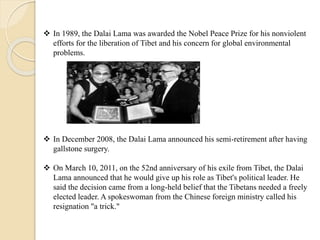
 In 1989, the Dalai Lama was awarded the Nobel Peace Prize for his nonviolent
efforts for the liberation of Tibet and his concern for global environmental
problems.
 In December 2008, the Dalai Lama announced his semi-retirement after having
gallstone surgery.
 On March 10, 2011, on the 52nd anniversary of his exile from Tibet, the Dalai
Lama announced that he would give up his role as Tibet's political leader. He
said the decision came from a long-held belief that the Tibetans needed a freely
elected leader. A spokeswoman from the Chinese foreign ministry called his
resignation "a trick."
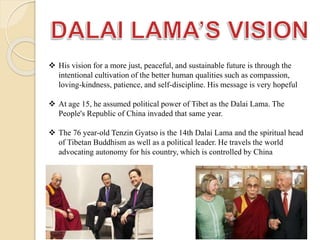
 His vision for a more just, peaceful, and sustainable future is through the
intentional cultivation of the better human qualities such as compassion,
loving-kindness, patience, and self-discipline. His message is very hopeful
 At age 15, he assumed political power of Tibet as the Dalai Lama. The
People's Republic of China invaded that same year.
 The 76 year-old Tenzin Gyatso is the 14th Dalai Lama and the spiritual head
of Tibetan Buddhism as well as a political leader. He travels the world
advocating autonomy for his country, which is controlled by China
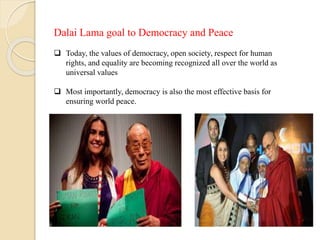
Dalai Lama goal to Democracy and Peace
 Today, the values of democracy, open society, respect for human
rights, and equality are becoming recognized all over the world as
universal values
 Most importantly, democracy is also the most effective basis for
ensuring world peace.
Lesson learned from Dalai Lama:
o Leaders behave ethically when they do what is right, good, just—and
authentic. Ethical leadership is not simply compliance to rules, or even
fairness. It is fundamentally about considering the impact of words and
actions on others. Ethical leaders make choices that align with their core
values and beliefs, and that honor others’ right to express their own values.
o When leaders are ethical, their actions and words reflect the values of their
company, society, and themselves as individuals
HUMAN RIGHT:
o Providing for equality under law, the declaration states that everyone is
entitled to equal rights and freedoms without discrimination of any kind.
Peace and freedom cannot be ensured as long as fundamental human
rights are violated. Similarly, there cannot be peace and stability as long
as there is oppression and suppression.
HUMAN RIGHT IN TIBET
o If we accept that others have an equal right to peace and happiness as
ourselves, we should have responsibility to help those in need
o The aspiration for democracy and respect for fundamental human rights
is as important to the people of Africa and Asia as it is to those in Europe
or the Americas
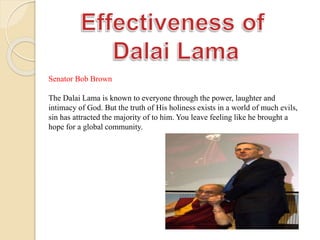
Senator Bob Brown
The Dalai Lama is known to everyone through the power, laughter and
intimacy of God. But the truth of His holiness exists in a world of much evils,
sin has attracted the majority of to him. You leave feeling like he brought a
hope for a global community.
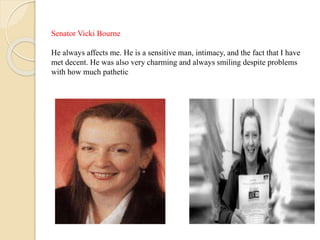
Senator Vicki Bourne
He always affects me. He is a sensitive man, intimacy, and the fact that I have
met decent. He was also very charming and always smiling despite problems
with how much pathetic
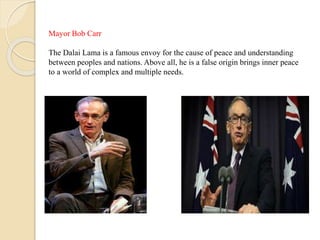
Mayor Bob Carr
The Dalai Lama is a famous envoy for the cause of peace and understanding
between peoples and nations. Above all, he is a false origin brings inner peace
to a world of complex and multiple needs.
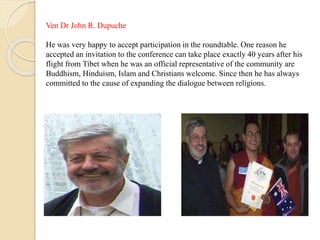
Ven Dr John R. Dupuche
He was very happy to accept participation in the roundtable. One reason he
accepted an invitation to the conference can take place exactly 40 years after his
flight from Tibet when he was an official representative of the community are
Buddhism, Hinduism, Islam and Christians welcome. Since then he has always
committed to the cause of expanding the dialogue between religions.
“Non-violence means dialogue, using our language, the human language.
Dialogue means compromise; respecting each other’s rights; in the spirit of
reconciliation there is a real solution to conflict and disagreement. There is no
hundred percent winner, no hundred percent loser—not that way but half-and-
half. That is the practical way, the only way.”
Dalai Lama
Lesson learned from Dalai Lama
Be gentle with the earth.
In order to survive, we have a duty to preserve this planet as best we can.
Learning how to recycle, looking at ways to create alternative energy, and
learning about the current issues are all ways that can help to delay the tipping
point.
Discover inner peace.
The Dalai Lama advises everybody to spend a little time alone each day. Time to
reflect and chase away the negative thoughts such as anger, resentment, jealousy,
and tiredness. Try to replace those with positive emotions such as optimism,
gratitude, love, and peace. He rightly says that the truly calm mind is the source
of happiness and good health.
Nurture your friendships.
Friendships should never be undervalued. They need tender loving care because
they can generate trust and affection. Real friendships will never depend on
money or political clout. It is a sad fact that neglected or stillborn friendships
lead to loneliness. This is one of the risk factors which probably contributes to
depression in our society.
Huu Tung

Huu Tung

  • 2.
    NHU DINH HOANGNAM HUYNH PHUC NGUYEN DOAN HUU DONG 1258012 CAO SON TRANG CHAN PHONG NGUYEN HUU TUNG 1258090
  • 3.
    Lhamo Thondup wasborn on July 6, 1935 in Taktser, China, northeast of Tibet
  • 4.
    After several monthsof searching for a successor to the 13th Dalai Lama and following many significant spiritual signs, religious officials located Lhamo Thondup, at age 2, and identified him as the reincarnation of the 13th Dalai Lama, Thubten Gyatso. Young Lhamo was renamed Tenzin Gyatso and proclaimed the 14th Dalai Lama.
  • 5.
    Dalai Lamas arebelieved to be the reincarnation of Avalokitesvara, an important Buddhist deity and the personification of compassion. Dalai Lamas are also enlightened beings who have postponed their own afterlife and chosen to take rebirth to benefit humanity Avalokitesvara
  • 6.
     In 1989,the Dalai Lama was awarded the Nobel Peace Prize for his nonviolent efforts for the liberation of Tibet and his concern for global environmental problems.  In December 2008, the Dalai Lama announced his semi-retirement after having gallstone surgery.  On March 10, 2011, on the 52nd anniversary of his exile from Tibet, the Dalai Lama announced that he would give up his role as Tibet's political leader. He said the decision came from a long-held belief that the Tibetans needed a freely elected leader. A spokeswoman from the Chinese foreign ministry called his resignation "a trick."
  • 7.
     His visionfor a more just, peaceful, and sustainable future is through the intentional cultivation of the better human qualities such as compassion, loving-kindness, patience, and self-discipline. His message is very hopeful  At age 15, he assumed political power of Tibet as the Dalai Lama. The People's Republic of China invaded that same year.  The 76 year-old Tenzin Gyatso is the 14th Dalai Lama and the spiritual head of Tibetan Buddhism as well as a political leader. He travels the world advocating autonomy for his country, which is controlled by China
  • 8.
    Dalai Lama goalto Democracy and Peace  Today, the values of democracy, open society, respect for human rights, and equality are becoming recognized all over the world as universal values  Most importantly, democracy is also the most effective basis for ensuring world peace.
  • 9.
    Lesson learned fromDalai Lama: o Leaders behave ethically when they do what is right, good, just—and authentic. Ethical leadership is not simply compliance to rules, or even fairness. It is fundamentally about considering the impact of words and actions on others. Ethical leaders make choices that align with their core values and beliefs, and that honor others’ right to express their own values. o When leaders are ethical, their actions and words reflect the values of their company, society, and themselves as individuals
  • 10.
    HUMAN RIGHT: o Providingfor equality under law, the declaration states that everyone is entitled to equal rights and freedoms without discrimination of any kind. Peace and freedom cannot be ensured as long as fundamental human rights are violated. Similarly, there cannot be peace and stability as long as there is oppression and suppression. HUMAN RIGHT IN TIBET o If we accept that others have an equal right to peace and happiness as ourselves, we should have responsibility to help those in need o The aspiration for democracy and respect for fundamental human rights is as important to the people of Africa and Asia as it is to those in Europe or the Americas
  • 11.
    Senator Bob Brown TheDalai Lama is known to everyone through the power, laughter and intimacy of God. But the truth of His holiness exists in a world of much evils, sin has attracted the majority of to him. You leave feeling like he brought a hope for a global community.
  • 12.
    Senator Vicki Bourne Healways affects me. He is a sensitive man, intimacy, and the fact that I have met decent. He was also very charming and always smiling despite problems with how much pathetic
  • 13.
    Mayor Bob Carr TheDalai Lama is a famous envoy for the cause of peace and understanding between peoples and nations. Above all, he is a false origin brings inner peace to a world of complex and multiple needs.
  • 14.
    Ven Dr JohnR. Dupuche He was very happy to accept participation in the roundtable. One reason he accepted an invitation to the conference can take place exactly 40 years after his flight from Tibet when he was an official representative of the community are Buddhism, Hinduism, Islam and Christians welcome. Since then he has always committed to the cause of expanding the dialogue between religions.
  • 19.
    “Non-violence means dialogue,using our language, the human language. Dialogue means compromise; respecting each other’s rights; in the spirit of reconciliation there is a real solution to conflict and disagreement. There is no hundred percent winner, no hundred percent loser—not that way but half-and- half. That is the practical way, the only way.” Dalai Lama
  • 20.
    Lesson learned fromDalai Lama Be gentle with the earth. In order to survive, we have a duty to preserve this planet as best we can. Learning how to recycle, looking at ways to create alternative energy, and learning about the current issues are all ways that can help to delay the tipping point. Discover inner peace. The Dalai Lama advises everybody to spend a little time alone each day. Time to reflect and chase away the negative thoughts such as anger, resentment, jealousy, and tiredness. Try to replace those with positive emotions such as optimism, gratitude, love, and peace. He rightly says that the truly calm mind is the source of happiness and good health. Nurture your friendships. Friendships should never be undervalued. They need tender loving care because they can generate trust and affection. Real friendships will never depend on money or political clout. It is a sad fact that neglected or stillborn friendships lead to loneliness. This is one of the risk factors which probably contributes to depression in our society.