Architecture
REST is a style of development for exposing data in such a way that it is easy to consume, easy to produce and makes use of HTTP.
REST is not a replacement for SOAP or WS* but an alternative to solve certain problems better.
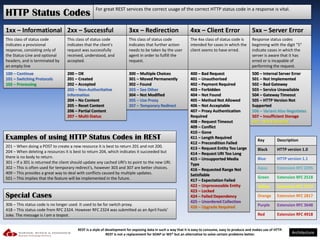
HTTP Status Codes
1xx – Informational 2xx – Successful 3xx – Redirection 4xx – Client Error 5xx – Server Error
This class of status code
indicates a provisional
response, consisting only of
the Status-Line and optional
headers, and is terminated by
an empty line
This class of status code
indicates that the client's
request was successfully
received, understood, and
accepted.
This class of status code
indicates that further action
needs to be taken by the user
agent in order to fulfill the
request.
The 4xx class of status code is
intended for cases in which the
client seems to have erred.
Response status codes
beginning with the digit "5"
indicate cases in which the
server is aware that it has
erred or is incapable of
performing the request.
100 – Continue
101 – Switching Protocols
102 – Processing
200 – OK
201 – Created
202 – Accepted
203 – Non-Authoritative
Information
204 – No Content
205 – Reset Content
206 – Partial Content
207 – Multi-Status
300 – Multiple Choices
301 – Moved Permanently
302 – Found
303 – See Other
304 – Not Modified
305 – Use Proxy
307 – Temporary Redirect
400 – Bad Request
401 – Unauthorised
402 – Payment Required
403 – Forbidden
404 – Not Found
405 – Method Not Allowed
406 – Not Acceptable
407 – Proxy Authentication
Required
408 – Request Timeout
409 – Conflict
410 – Gone
411 – Length Required
412 – Precondition Failed
413 – Request Entity Too Large
414 – Request URI Too Long
415 – Unsupported Media
Type
416 – Requested Range Not
Satisfiable
417 – Expectation Failed
422 – Unprocessable Entity
423 – Locked
424 – Failed Dependency
425 – Unordered Collection
426 – Upgrade Required
500 – Internal Server Error
501 – Not Implemented
502 – Bad Gateway
503 – Service Unavailable
504 – Gateway Timeout
505 – HTTP Version Not
Supported
506 – Variant Also Negotiates
507 – Insufficient Storage
510 – Not Extended
For great REST services the correct usage of the correct HTTP status code in a response is vital.
Key Description
Black HTTP version 1.0
Blue HTTP version 1.1
Aqua Extension RFC 2295
Green Extension RFC 2518
Yellow Extension RFC 2774
Orange Extension RFC 2817
Purple Extension RFC 3648
Red Extension RFC 4918
Examples of using HTTP Status Codes in REST
201 – When doing a POST to create a new resource it is best to return 201 and not 200.
204 – When deleting a resources it is best to return 204, which indicates it succeeded but
there is no body to return.
301 – If a 301 is returned the client should update any cached URI’s to point to the new URI.
302 – This is often used for temporary redirect’s, however 303 and 307 are better choices.
409 – This provides a great way to deal with conflicts caused by multiple updates.
501 – This implies that the feature will be implemented in the future.
Special Cases
306 – This status code is no longer used. It used to be for switch proxy.
418 – This status code from RFC 2324. However RFC 2324 was submitted as an April Fools’
Joke. The message is I am a teapot.

HTTP Status Codes

  • 1.
    Architecture REST is astyle of development for exposing data in such a way that it is easy to consume, easy to produce and makes use of HTTP. REST is not a replacement for SOAP or WS* but an alternative to solve certain problems better. HTTP Status Codes 1xx – Informational 2xx – Successful 3xx – Redirection 4xx – Client Error 5xx – Server Error This class of status code indicates a provisional response, consisting only of the Status-Line and optional headers, and is terminated by an empty line This class of status code indicates that the client's request was successfully received, understood, and accepted. This class of status code indicates that further action needs to be taken by the user agent in order to fulfill the request. The 4xx class of status code is intended for cases in which the client seems to have erred. Response status codes beginning with the digit "5" indicate cases in which the server is aware that it has erred or is incapable of performing the request. 100 – Continue 101 – Switching Protocols 102 – Processing 200 – OK 201 – Created 202 – Accepted 203 – Non-Authoritative Information 204 – No Content 205 – Reset Content 206 – Partial Content 207 – Multi-Status 300 – Multiple Choices 301 – Moved Permanently 302 – Found 303 – See Other 304 – Not Modified 305 – Use Proxy 307 – Temporary Redirect 400 – Bad Request 401 – Unauthorised 402 – Payment Required 403 – Forbidden 404 – Not Found 405 – Method Not Allowed 406 – Not Acceptable 407 – Proxy Authentication Required 408 – Request Timeout 409 – Conflict 410 – Gone 411 – Length Required 412 – Precondition Failed 413 – Request Entity Too Large 414 – Request URI Too Long 415 – Unsupported Media Type 416 – Requested Range Not Satisfiable 417 – Expectation Failed 422 – Unprocessable Entity 423 – Locked 424 – Failed Dependency 425 – Unordered Collection 426 – Upgrade Required 500 – Internal Server Error 501 – Not Implemented 502 – Bad Gateway 503 – Service Unavailable 504 – Gateway Timeout 505 – HTTP Version Not Supported 506 – Variant Also Negotiates 507 – Insufficient Storage 510 – Not Extended For great REST services the correct usage of the correct HTTP status code in a response is vital. Key Description Black HTTP version 1.0 Blue HTTP version 1.1 Aqua Extension RFC 2295 Green Extension RFC 2518 Yellow Extension RFC 2774 Orange Extension RFC 2817 Purple Extension RFC 3648 Red Extension RFC 4918 Examples of using HTTP Status Codes in REST 201 – When doing a POST to create a new resource it is best to return 201 and not 200. 204 – When deleting a resources it is best to return 204, which indicates it succeeded but there is no body to return. 301 – If a 301 is returned the client should update any cached URI’s to point to the new URI. 302 – This is often used for temporary redirect’s, however 303 and 307 are better choices. 409 – This provides a great way to deal with conflicts caused by multiple updates. 501 – This implies that the feature will be implemented in the future. Special Cases 306 – This status code is no longer used. It used to be for switch proxy. 418 – This status code from RFC 2324. However RFC 2324 was submitted as an April Fools’ Joke. The message is I am a teapot.