How Top React Design
Patterns Are Shaping the
Development Lifecycle?
This presentation explores key React design patterns and how they
streamline development.
What are React Design Patterns?
Reusable Solutions
Proven approaches to common challenges, like data
fetching or user interaction.
Code Optimization
Promote code reusability, maintainability, and scalability
for larger projects.
Importance of Design
Patterns in React
Development
1 Enhanced Code
Quality
Improve code quality by
establishing standards,
promoting best practices,
and reducing redundancy.
2 Streamlined
Development
Accelerate development
by leveraging pre-built
solutions, reducing time
spent on common tasks.
3 Improved Maintainability
Make it easier to understand, modify, and extend code,
reducing the risk of introducing errors.
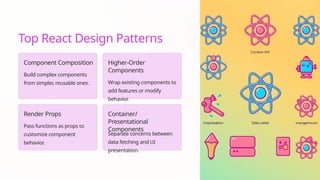
Top React Design Patterns
Component Composition
Build complex components
from simpler, reusable ones.
Higher-Order
Components
Wrap existing components to
add features or modify
behavior.
Render Props
Pass functions as props to
customize component
behavior.
Container/
Presentational
Components
Separate concerns between
data fetching and UI
presentation.
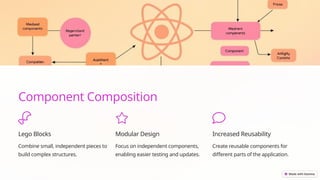
Component Composition
Lego Blocks
Combine small, independent pieces to
build complex structures.
Modular Design
Focus on independent components,
enabling easier testing and updates.
Increased Reusability
Create reusable components for
different parts of the application.
Higher-Order Components
1 Encapsulation
Hides implementation details, keeping code clean and
organized.
2 Functionality
Extends or modifies component behavior without
directly altering the original component.
3 Reusability
Share the same functionality across multiple
components without code duplication.
Render Props
Flexibility
Allow components to dynamically change behavior based on data or props.
Code Reusability
Promote code reuse and avoid repetitive code across different components.
Extensibility
Enable custom logic and interactions within components without direct modification.
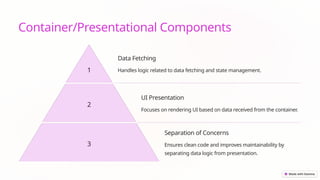
Container/Presentational Components
1
Data Fetching
Handles logic related to data fetching and state management.
2
UI Presentation
Focuses on rendering UI based on data received from the container.
3
Separation of Concerns
Ensures clean code and improves maintainability by
separating data logic from presentation.
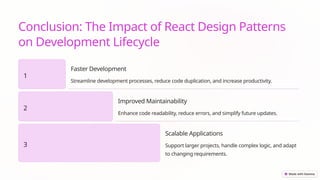
Conclusion: The Impact of React Design Patterns
on Development Lifecycle
1
Faster Development
Streamline development processes, reduce code duplication, and increase productivity.
2
Improved Maintainability
Enhance code readability, reduce errors, and simplify future updates.
3
Scalable Applications
Support larger projects, handle complex logic, and adapt
to changing requirements.

How Top React Design Patterns Are Shaping the Development Lifecycle?

  • 1.
    How Top ReactDesign Patterns Are Shaping the Development Lifecycle? This presentation explores key React design patterns and how they streamline development.
  • 2.
    What are ReactDesign Patterns? Reusable Solutions Proven approaches to common challenges, like data fetching or user interaction. Code Optimization Promote code reusability, maintainability, and scalability for larger projects.
  • 3.
    Importance of Design Patternsin React Development 1 Enhanced Code Quality Improve code quality by establishing standards, promoting best practices, and reducing redundancy. 2 Streamlined Development Accelerate development by leveraging pre-built solutions, reducing time spent on common tasks. 3 Improved Maintainability Make it easier to understand, modify, and extend code, reducing the risk of introducing errors.
  • 4.
    Top React DesignPatterns Component Composition Build complex components from simpler, reusable ones. Higher-Order Components Wrap existing components to add features or modify behavior. Render Props Pass functions as props to customize component behavior. Container/ Presentational Components Separate concerns between data fetching and UI presentation.
  • 5.
    Component Composition Lego Blocks Combinesmall, independent pieces to build complex structures. Modular Design Focus on independent components, enabling easier testing and updates. Increased Reusability Create reusable components for different parts of the application.
  • 6.
    Higher-Order Components 1 Encapsulation Hidesimplementation details, keeping code clean and organized. 2 Functionality Extends or modifies component behavior without directly altering the original component. 3 Reusability Share the same functionality across multiple components without code duplication.
  • 7.
    Render Props Flexibility Allow componentsto dynamically change behavior based on data or props. Code Reusability Promote code reuse and avoid repetitive code across different components. Extensibility Enable custom logic and interactions within components without direct modification.
  • 8.
    Container/Presentational Components 1 Data Fetching Handleslogic related to data fetching and state management. 2 UI Presentation Focuses on rendering UI based on data received from the container. 3 Separation of Concerns Ensures clean code and improves maintainability by separating data logic from presentation.
  • 9.
    Conclusion: The Impactof React Design Patterns on Development Lifecycle 1 Faster Development Streamline development processes, reduce code duplication, and increase productivity. 2 Improved Maintainability Enhance code readability, reduce errors, and simplify future updates. 3 Scalable Applications Support larger projects, handle complex logic, and adapt to changing requirements.