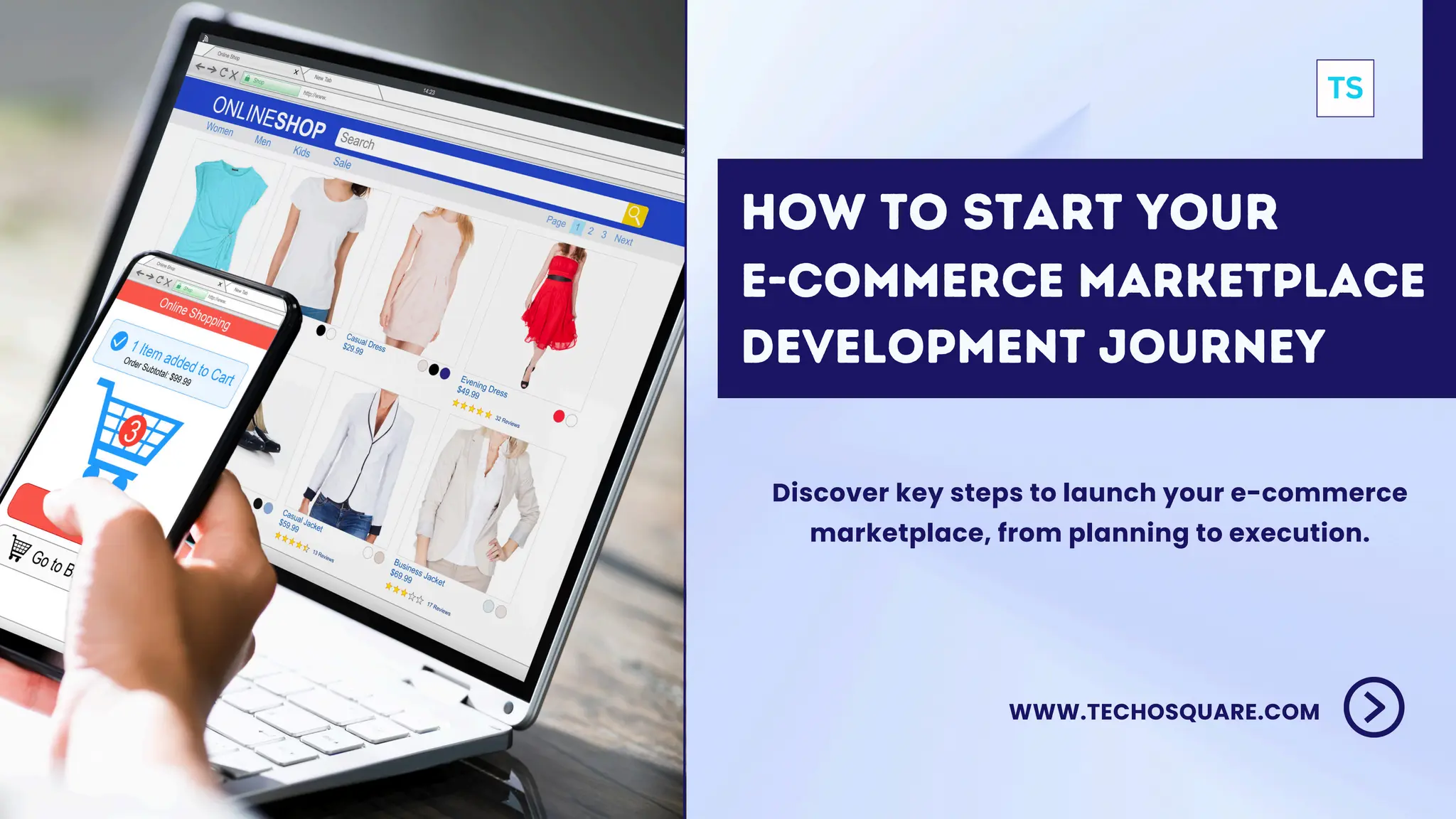
Discover key steps to launch your e-commerce
marketplace, from planning to execution.
WWW.TECHOSQUARE.COM
HOW TO START YOUR
E-COMMERCE MARKETPLACE
DEVELOPMENT JOURNEY
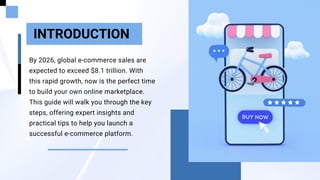
By 2026, global e-commerce sales are
expected to exceed $8.1 trillion. With
this rapid growth, now is the perfect time
to build your own online marketplace.
This guide will walk you through the key
steps, offering expert insights and
practical tips to help you launch a
successful e-commerce platform.
INTRODUCTION
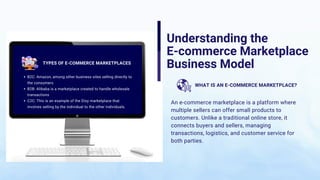
An e-commerce marketplace is a platform where
multiple sellers can offer small products to
customers. Unlike a traditional online store, it
connects buyers and sellers, managing
transactions, logistics, and customer service for
both parties.
B2C: Amazon, among other business sites selling directly to
the consumers
B2B: Alibaba is a marketplace created to handle wholesale
transactions
C2C: This is an example of the Etsy marketplace that
involves selling by the individual to the other individuals.
WHAT IS AN E-COMMERCE MARKETPLACE?
TYPES OF E-COMMERCE MARKETPLACES
Understanding the
E-commerce Marketplace
Business Model
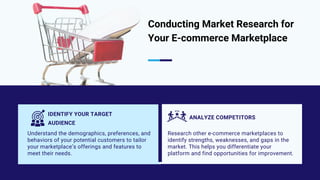
Understand the demographics, preferences, and
behaviors of your potential customers to tailor
your marketplace’s offerings and features to
meet their needs.
Research other e-commerce marketplaces to
identify strengths, weaknesses, and gaps in the
market. This helps you differentiate your
platform and find opportunities for improvement.
IDENTIFY YOUR TARGET
AUDIENCE
ANALYZE COMPETITORS
Conducting Market Research for
Your E-commerce Marketplace
Google Trends: Tracks search trends for product
demand.
SEMrush & Ahrefs: Identifies keywords and analyzes e-
commerce market competition.
Statista: Provides industry reports and insights into the
e-commerce market 2025.
Identify Pain Points – Use reviews and surveys to find
unmet customer needs.
Track Trends – Monitor industry shifts and new
technologies for opportunities.
Assess Competitors – Find weaknesses like poor
service or high fees to improve upon.
Tools to Analyze the Market
Finding Market Gaps
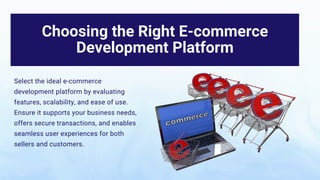
Choosing the Right E-commerce
Development Platform
Select the ideal e-commerce
development platform by evaluating
features, scalability, and ease of use.
Ensure it supports your business needs,
offers secure transactions, and enables
seamless user experiences for both
sellers and customers.
Features to Look for in an
E-commerce Platform
MULTI-VENDOR SUPPORT—THIS MEANS MULTIPLE SELLERS CAN LIST
AND MANAGE PRODUCTS.
CUSTOMIZABLE UI/UX—ENSURES A SMOOTH SHOPPING EXPERIENCE.
SECURE PAYMENT GATEWAYS—SUPPORTS VARIOUS PAYMENT
OPTIONS LIKE PAYPAL AND STRIPE.
SHOPIFY PLUS: GOOD FOR START-UPS AND VERY EASY TO GET
STARTED WITH.
MAGENTO: HIGHLY CUSTOMIZABLE AND WELL-SUITED FOR LARGER
MARKETPLACES.
WOOCOMMERCE IS GOOD FOR SMALL AND MEDIUM-SIZED
BUSINESSPERSONS HAVING A FIXED BUDGET.
Top E-commerce
Development Platforms
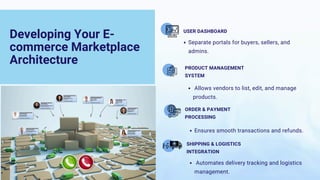
Separate portals for buyers, sellers, and
admins.
Allows vendors to list, edit, and manage
products.
USER DASHBOARD
PRODUCT MANAGEMENT
SYSTEM
Developing Your E-
commerce Marketplace
Architecture
Ensures smooth transactions and refunds.
ORDER & PAYMENT
PROCESSING
Automates delivery tracking and logistics
management.
SHIPPING & LOGISTICS
INTEGRATION
SCALING YOUR
E-COMMERCE
MARKETPLACE
Analyzing Performance Metrics
Providing trusted services by showing
successful customers
Expanding Product Offerings
Provide free seminar services for the first
members, so that they have more confidence.
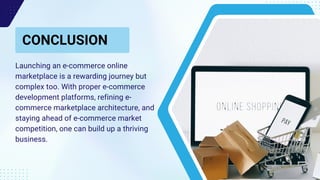
CONCLUSION
Call to Action
Launching an e-commerce online
marketplace is a rewarding journey but
complex too. With proper e-commerce
development platforms, refining e-
commerce marketplace architecture, and
staying ahead of e-commerce market
competition, one can build up a thriving
business.
www.techosquare.com
THANK YOU
+91 (172) 4639432
Sebiz Square, IT C6,
Sector 67, Mohali,

How to Start Your E-commerce Marketplace Development Journey.

  • 1.
    Discover key stepsto launch your e-commerce marketplace, from planning to execution. WWW.TECHOSQUARE.COM HOW TO START YOUR E-COMMERCE MARKETPLACE DEVELOPMENT JOURNEY
  • 2.
    By 2026, globale-commerce sales are expected to exceed $8.1 trillion. With this rapid growth, now is the perfect time to build your own online marketplace. This guide will walk you through the key steps, offering expert insights and practical tips to help you launch a successful e-commerce platform. INTRODUCTION
  • 3.
    An e-commerce marketplaceis a platform where multiple sellers can offer small products to customers. Unlike a traditional online store, it connects buyers and sellers, managing transactions, logistics, and customer service for both parties. B2C: Amazon, among other business sites selling directly to the consumers B2B: Alibaba is a marketplace created to handle wholesale transactions C2C: This is an example of the Etsy marketplace that involves selling by the individual to the other individuals. WHAT IS AN E-COMMERCE MARKETPLACE? TYPES OF E-COMMERCE MARKETPLACES Understanding the E-commerce Marketplace Business Model
  • 4.
    Understand the demographics,preferences, and behaviors of your potential customers to tailor your marketplace’s offerings and features to meet their needs. Research other e-commerce marketplaces to identify strengths, weaknesses, and gaps in the market. This helps you differentiate your platform and find opportunities for improvement. IDENTIFY YOUR TARGET AUDIENCE ANALYZE COMPETITORS Conducting Market Research for Your E-commerce Marketplace
  • 5.
    Google Trends: Trackssearch trends for product demand. SEMrush & Ahrefs: Identifies keywords and analyzes e- commerce market competition. Statista: Provides industry reports and insights into the e-commerce market 2025. Identify Pain Points – Use reviews and surveys to find unmet customer needs. Track Trends – Monitor industry shifts and new technologies for opportunities. Assess Competitors – Find weaknesses like poor service or high fees to improve upon. Tools to Analyze the Market Finding Market Gaps
  • 6.
    Choosing the RightE-commerce Development Platform Select the ideal e-commerce development platform by evaluating features, scalability, and ease of use. Ensure it supports your business needs, offers secure transactions, and enables seamless user experiences for both sellers and customers.
  • 7.
    Features to Lookfor in an E-commerce Platform MULTI-VENDOR SUPPORT—THIS MEANS MULTIPLE SELLERS CAN LIST AND MANAGE PRODUCTS. CUSTOMIZABLE UI/UX—ENSURES A SMOOTH SHOPPING EXPERIENCE. SECURE PAYMENT GATEWAYS—SUPPORTS VARIOUS PAYMENT OPTIONS LIKE PAYPAL AND STRIPE. SHOPIFY PLUS: GOOD FOR START-UPS AND VERY EASY TO GET STARTED WITH. MAGENTO: HIGHLY CUSTOMIZABLE AND WELL-SUITED FOR LARGER MARKETPLACES. WOOCOMMERCE IS GOOD FOR SMALL AND MEDIUM-SIZED BUSINESSPERSONS HAVING A FIXED BUDGET. Top E-commerce Development Platforms
  • 8.
    Separate portals forbuyers, sellers, and admins. Allows vendors to list, edit, and manage products. USER DASHBOARD PRODUCT MANAGEMENT SYSTEM Developing Your E- commerce Marketplace Architecture Ensures smooth transactions and refunds. ORDER & PAYMENT PROCESSING Automates delivery tracking and logistics management. SHIPPING & LOGISTICS INTEGRATION
  • 9.
    SCALING YOUR E-COMMERCE MARKETPLACE Analyzing PerformanceMetrics Providing trusted services by showing successful customers Expanding Product Offerings Provide free seminar services for the first members, so that they have more confidence.
  • 10.
    CONCLUSION Call to Action Launchingan e-commerce online marketplace is a rewarding journey but complex too. With proper e-commerce development platforms, refining e- commerce marketplace architecture, and staying ahead of e-commerce market competition, one can build up a thriving business.
  • 11.
    www.techosquare.com THANK YOU +91 (172)4639432 Sebiz Square, IT C6, Sector 67, Mohali,