How to Secure Medical
Devices
• IE3022 - Applied Information Assurance
• Assignment 03
Agenda
• Introduction
• Types of Medical Devices
• Cybersecurity Threats in Healthcare
• Regulatory Framework
• Vulnerabilities and Weaknesses
• Securing Medical Devices
• Future Trends and Challenges
• Recommendations and Action Plan
• Conclusion
Introduction
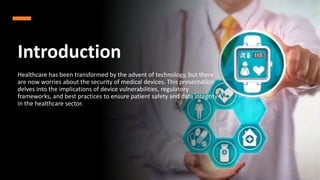
Healthcare has been transformed by the advent of technology, but there
are now worries about the security of medical devices. This presentation
delves into the implications of device vulnerabilities, regulatory
frameworks, and best practices to ensure patient safety and data integrity
in the healthcare sector.
Types of
Medical Devices
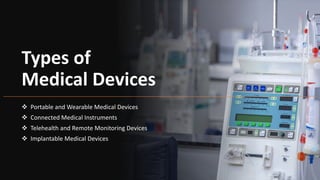
 Portable and Wearable Medical Devices
 Connected Medical Instruments
 Telehealth and Remote Monitoring Devices
 Implantable Medical Devices
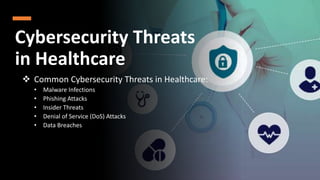
Cybersecurity Threats
in Healthcare
 Common Cybersecurity Threats in Healthcare:
• Malware Infections
• Phishing Attacks
• Insider Threats
• Denial of Service (DoS) Attacks
• Data Breaches
 Impact of Device Vulnerabilities:
• Patient Safety Concerns
• Data Integrity
• Operational Disruptions
• Reputational Damage
• Regulatory Consequences
Regulatory
Framework
 Overview of Regulatory Bodies and Standards
1. FDA (U.S. Food and Drug Administration)
2. NIST (National Institute of Standards and Technology)
 Compliance Requirements
1. HIPAA (Health Insurance Portability and Accountability Act)
2. GDPR (General Data Protection Regulation)
Vulnerabilities and Weaknesses
 Common Vulnerabilities in Medical Devices:
• Outdated Software
• Weak or Default Passwords
• Lack of Encryption
• Inadequate Authentication
• Lack of Security Updates
 Factors Contributing to Vulnerabilities:
• Historical Design Priorities
• Limited Resources
• Interconnected Ecosystem
Securing Medical Devices
 Best Practices for Device Manufacturers:
• Vulnerability Assessments
• Security Patching
• Authentication and Authorization
• Data Encryption
• Secure Boot and Firmware Updates
 Security by Design Principles:
• Incorporate Security Early
• Least Privilege
• Segregation of Duties
• Secure Communication
• Continuous Monitoring
Future Trends and
Challenges
 Upcoming Security Challenges
The Role of AI and Machine Learning
Recommendations and
Action Plan
Steps for Strengthening Medical Device Security
1. Risk Assessment
2. Secure Development Practices
3. Timely Patching
4. Continuous Monitoring
Collaboration Among Stakeholders
1. Multi-Stakeholder Cooperation
2. Information Sharing
3. Regulatory Engagement
Recommendations and
Action Plan
Creating a Roadmap for Improved Device Security
1. Strategic Planning
2. Training and Awareness
3. Incident Response Planning
4. Budgeting and Resource Allocation
Conclusion
The presentation emphasizes the importance of securing medical devices beyond
technology, focusing on the integrity of patient health and healthcare operations. It calls for
proactive security measures, stakeholder collaboration, and a comprehensive approach to
protect sensitive data, bolstering healthcare system resilience and patient trust. Integrity of
patient health and healthcare operations integrity of patient health and healthcare
operations.
How to Secure Medical Devices presentation.pptx

How to Secure Medical Devices presentation.pptx

  • 1.
    How to SecureMedical Devices • IE3022 - Applied Information Assurance • Assignment 03
  • 2.
    Agenda • Introduction • Typesof Medical Devices • Cybersecurity Threats in Healthcare • Regulatory Framework • Vulnerabilities and Weaknesses • Securing Medical Devices • Future Trends and Challenges • Recommendations and Action Plan • Conclusion
  • 3.
    Introduction Healthcare has beentransformed by the advent of technology, but there are now worries about the security of medical devices. This presentation delves into the implications of device vulnerabilities, regulatory frameworks, and best practices to ensure patient safety and data integrity in the healthcare sector.
  • 4.
    Types of Medical Devices Portable and Wearable Medical Devices  Connected Medical Instruments  Telehealth and Remote Monitoring Devices  Implantable Medical Devices
  • 5.
    Cybersecurity Threats in Healthcare Common Cybersecurity Threats in Healthcare: • Malware Infections • Phishing Attacks • Insider Threats • Denial of Service (DoS) Attacks • Data Breaches
  • 6.
     Impact ofDevice Vulnerabilities: • Patient Safety Concerns • Data Integrity • Operational Disruptions • Reputational Damage • Regulatory Consequences
  • 7.
    Regulatory Framework  Overview ofRegulatory Bodies and Standards 1. FDA (U.S. Food and Drug Administration) 2. NIST (National Institute of Standards and Technology)  Compliance Requirements 1. HIPAA (Health Insurance Portability and Accountability Act) 2. GDPR (General Data Protection Regulation)
  • 8.
    Vulnerabilities and Weaknesses Common Vulnerabilities in Medical Devices: • Outdated Software • Weak or Default Passwords • Lack of Encryption • Inadequate Authentication • Lack of Security Updates  Factors Contributing to Vulnerabilities: • Historical Design Priorities • Limited Resources • Interconnected Ecosystem
  • 9.
    Securing Medical Devices Best Practices for Device Manufacturers: • Vulnerability Assessments • Security Patching • Authentication and Authorization • Data Encryption • Secure Boot and Firmware Updates  Security by Design Principles: • Incorporate Security Early • Least Privilege • Segregation of Duties • Secure Communication • Continuous Monitoring
  • 10.
    Future Trends and Challenges Upcoming Security Challenges The Role of AI and Machine Learning
  • 11.
    Recommendations and Action Plan Stepsfor Strengthening Medical Device Security 1. Risk Assessment 2. Secure Development Practices 3. Timely Patching 4. Continuous Monitoring Collaboration Among Stakeholders 1. Multi-Stakeholder Cooperation 2. Information Sharing 3. Regulatory Engagement
  • 12.
    Recommendations and Action Plan Creatinga Roadmap for Improved Device Security 1. Strategic Planning 2. Training and Awareness 3. Incident Response Planning 4. Budgeting and Resource Allocation
  • 13.
    Conclusion The presentation emphasizesthe importance of securing medical devices beyond technology, focusing on the integrity of patient health and healthcare operations. It calls for proactive security measures, stakeholder collaboration, and a comprehensive approach to protect sensitive data, bolstering healthcare system resilience and patient trust. Integrity of patient health and healthcare operations integrity of patient health and healthcare operations.