How to Make a Healthy Study or Work
Environment
Setting yourself up for successful study sessions
starts with your work environment. A relaxing
environment improves focus, mental clarity and
agility, and makes it easier for you to recall and
retain information.
The winter is also the perfect time to create a
warm, cozy, relaxing work environment. Not only
will it help improve your study habits, it will also
help chase away the ‘cold weather blues.’ Here are
a few ideas for creating a healthy study area and
more.
Declutter and Get Organized
A clean, organized study space is good for your
mind, health and study habits. The more organized
your space, the more time you will want to spend
studying. Decluttering and organizing can improve
focus and clarity, allowing you to more efficiently
recall and retain information.
It can also minimize distractions caused by
unpleasant odours or dirty and unkempt areas; e.g.
a stinky pile of laundry, a stack of crusty dishes, or
scattered balls of paper.
Moreover, an organized space makes it easier to
find essential study materials, such as your notes,
pens, pencils, important paperwork, etc.
Dirty environments increase allergens, leading to
minor respiratory issues, headaches, and more.
Health issues caused by your work environment can
make it impossible to concentrate, not to mention
make studying undesirable.
Make sure your study space is clean, decluttered,
and organized. It will make the studying experience
more enjoyable while providing peace of mind.
Choose Good Lighting
Lighting is an important component of a room’s
ambience, style, comfort, and practicality. Different
types of lighting can send different types of
messages. They can also evoke different types of
emotions.
Stark, bright lights can heighten anxiety, stress,
nervousness, and discomfort while make you
almost too alert. This type of lighting can also be
distracting, harsh, and visually unappealing.
On the other hand, low lights can heighten sadness
and/or depression or become too relaxing,
prompting sleepiness or even laziness.
For the healthiest work environment, choose
natural lighting or lighting that is as close to natural
as possible. Additionally, ensure your lighting is
medium bright with a cool, blue hue.
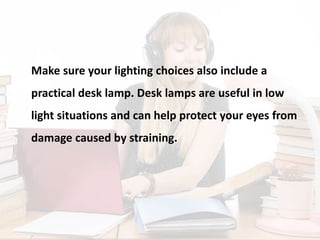
Make sure your lighting choices also include a
practical desk lamp. Desk lamps are useful in low
light situations and can help protect your eyes from
damage caused by straining.
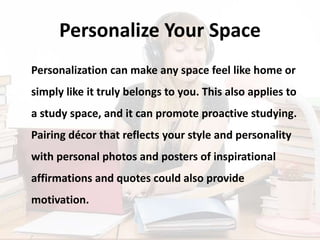
Personalize Your Space
Personalization can make any space feel like home or
simply like it truly belongs to you. This also applies to
a study space, and it can promote proactive studying.
Pairing décor that reflects your style and personality
with personal photos and posters of inspirational
affirmations and quotes could also provide
motivation.
Adding accents in calming colours and patterns can
also help improve mental clarity and focus.
Colours in shades of blue, green, and purple are
known to promote peace, balance, and tranquility.
If you live in our
student housing near Brock University and Niagara
College this décor can be a part of your home
environment, which could also help you create a
healthy study environment.
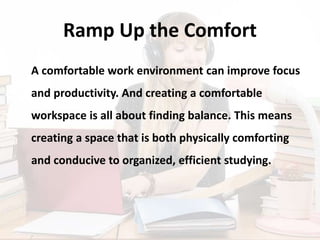
Ramp Up the Comfort
A comfortable work environment can improve focus
and productivity. And creating a comfortable
workspace is all about finding balance. This means
creating a space that is both physically comforting
and conducive to organized, efficient studying.
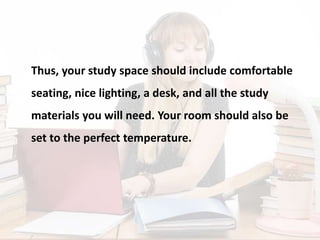
Thus, your study space should include comfortable
seating, nice lighting, a desk, and all the study
materials you will need. Your room should also be
set to the perfect temperature.
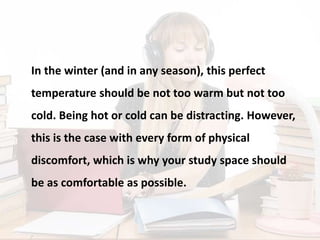
In the winter (and in any season), this perfect
temperature should be not too warm but not too
cold. Being hot or cold can be distracting. However,
this is the case with every form of physical
discomfort, which is why your study space should
be as comfortable as possible.
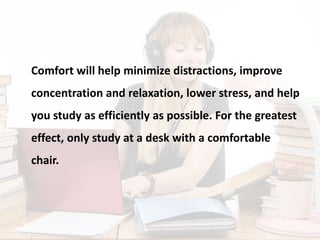
Comfort will help minimize distractions, improve
concentration and relaxation, lower stress, and help
you study as efficiently as possible. For the greatest
effect, only study at a desk with a comfortable
chair.
It may be tempting to study on the bed or a nice
bean bag chair, but these structures can almost be
too comfortable. If you’re slumped in a bean bag
chair or lying on the bed, these physical positions
could send brain signals associated with sleepiness.
Regent Student Living was designed with students
in mind. With comfortable suites, private bedrooms
and group study lounges, success is within reach!

How to Make a Healthy Study or Work Environment

  • 1.
    How to Makea Healthy Study or Work Environment
  • 2.
    Setting yourself upfor successful study sessions starts with your work environment. A relaxing environment improves focus, mental clarity and agility, and makes it easier for you to recall and retain information.
  • 3.
    The winter isalso the perfect time to create a warm, cozy, relaxing work environment. Not only will it help improve your study habits, it will also help chase away the ‘cold weather blues.’ Here are a few ideas for creating a healthy study area and more.
  • 4.
    Declutter and GetOrganized A clean, organized study space is good for your mind, health and study habits. The more organized your space, the more time you will want to spend studying. Decluttering and organizing can improve focus and clarity, allowing you to more efficiently recall and retain information.
  • 5.
    It can alsominimize distractions caused by unpleasant odours or dirty and unkempt areas; e.g. a stinky pile of laundry, a stack of crusty dishes, or scattered balls of paper.
  • 6.
    Moreover, an organizedspace makes it easier to find essential study materials, such as your notes, pens, pencils, important paperwork, etc.
  • 7.
    Dirty environments increaseallergens, leading to minor respiratory issues, headaches, and more. Health issues caused by your work environment can make it impossible to concentrate, not to mention make studying undesirable.
  • 8.
    Make sure yourstudy space is clean, decluttered, and organized. It will make the studying experience more enjoyable while providing peace of mind.
  • 9.
    Choose Good Lighting Lightingis an important component of a room’s ambience, style, comfort, and practicality. Different types of lighting can send different types of messages. They can also evoke different types of emotions.
  • 10.
    Stark, bright lightscan heighten anxiety, stress, nervousness, and discomfort while make you almost too alert. This type of lighting can also be distracting, harsh, and visually unappealing.
  • 11.
    On the otherhand, low lights can heighten sadness and/or depression or become too relaxing, prompting sleepiness or even laziness.
  • 12.
    For the healthiestwork environment, choose natural lighting or lighting that is as close to natural as possible. Additionally, ensure your lighting is medium bright with a cool, blue hue.
  • 13.
    Make sure yourlighting choices also include a practical desk lamp. Desk lamps are useful in low light situations and can help protect your eyes from damage caused by straining.
  • 14.
    Personalize Your Space Personalizationcan make any space feel like home or simply like it truly belongs to you. This also applies to a study space, and it can promote proactive studying. Pairing décor that reflects your style and personality with personal photos and posters of inspirational affirmations and quotes could also provide motivation.
  • 15.
    Adding accents incalming colours and patterns can also help improve mental clarity and focus.
  • 16.
    Colours in shadesof blue, green, and purple are known to promote peace, balance, and tranquility. If you live in our student housing near Brock University and Niagara College this décor can be a part of your home environment, which could also help you create a healthy study environment.
  • 17.
    Ramp Up theComfort A comfortable work environment can improve focus and productivity. And creating a comfortable workspace is all about finding balance. This means creating a space that is both physically comforting and conducive to organized, efficient studying.
  • 18.
    Thus, your studyspace should include comfortable seating, nice lighting, a desk, and all the study materials you will need. Your room should also be set to the perfect temperature.
  • 19.
    In the winter(and in any season), this perfect temperature should be not too warm but not too cold. Being hot or cold can be distracting. However, this is the case with every form of physical discomfort, which is why your study space should be as comfortable as possible.
  • 20.
    Comfort will helpminimize distractions, improve concentration and relaxation, lower stress, and help you study as efficiently as possible. For the greatest effect, only study at a desk with a comfortable chair.
  • 21.
    It may betempting to study on the bed or a nice bean bag chair, but these structures can almost be too comfortable. If you’re slumped in a bean bag chair or lying on the bed, these physical positions could send brain signals associated with sleepiness.
  • 22.
    Regent Student Livingwas designed with students in mind. With comfortable suites, private bedrooms and group study lounges, success is within reach!