A plumbing system is a network of pipes, valves, fixtures, and tanks that help transport water in and out of a building. It ensures that clean water reaches your taps while safely removing wastewater.
How the PlumbingSystem Works: A Beginner’s
Guide
A plumbing system is a network of pipes, valves, fixtures, and tanks that help transport water in
and out of a building. It ensures that clean water reaches your taps while safely removing
wastewater. Whether in homes, offices, or factories, plumbing is essential for everyday life. A
properly working system prevents leaks, saves water, and keeps your home safe from water
damage.
The Main Components of a Plumbing System
A plumbing system has two main parts: the water supply system and the drainage system. These
two systems work together to provide fresh water and remove waste.
1. Water Supply System
The water supply system brings water into your home. It comes from a main water line or aprivate
well. The water is distributed through pipes to different areas like the kitchen, bathroom, and
garden.
Pipes and Valves: Pipes carry water throughout the house, while valves control the water
flow. Turning off a valve can stop the water supply to a specific area.
Pressure System: Water flows through pipes due to pressure. If the pressure is too low,
you may get weak water flow from taps and showers. A house plumber in Inverness IL
can check and fix such issues.
Hot and Cold-Water Lines: Homes have two separate water lines—one for cold water
and one for hot water. The hot water comes from a water heater, which heats the water
before it reaches your taps.
2.
2. Drainage System
Onceyou use water, it must be removed safely. The drainage system takes wastewater and sewage
away from your house.
Drain Pipes: These pipes connect sinks, toilets, and showers to the main sewer line. They
have a slight slope to help water flow easily.
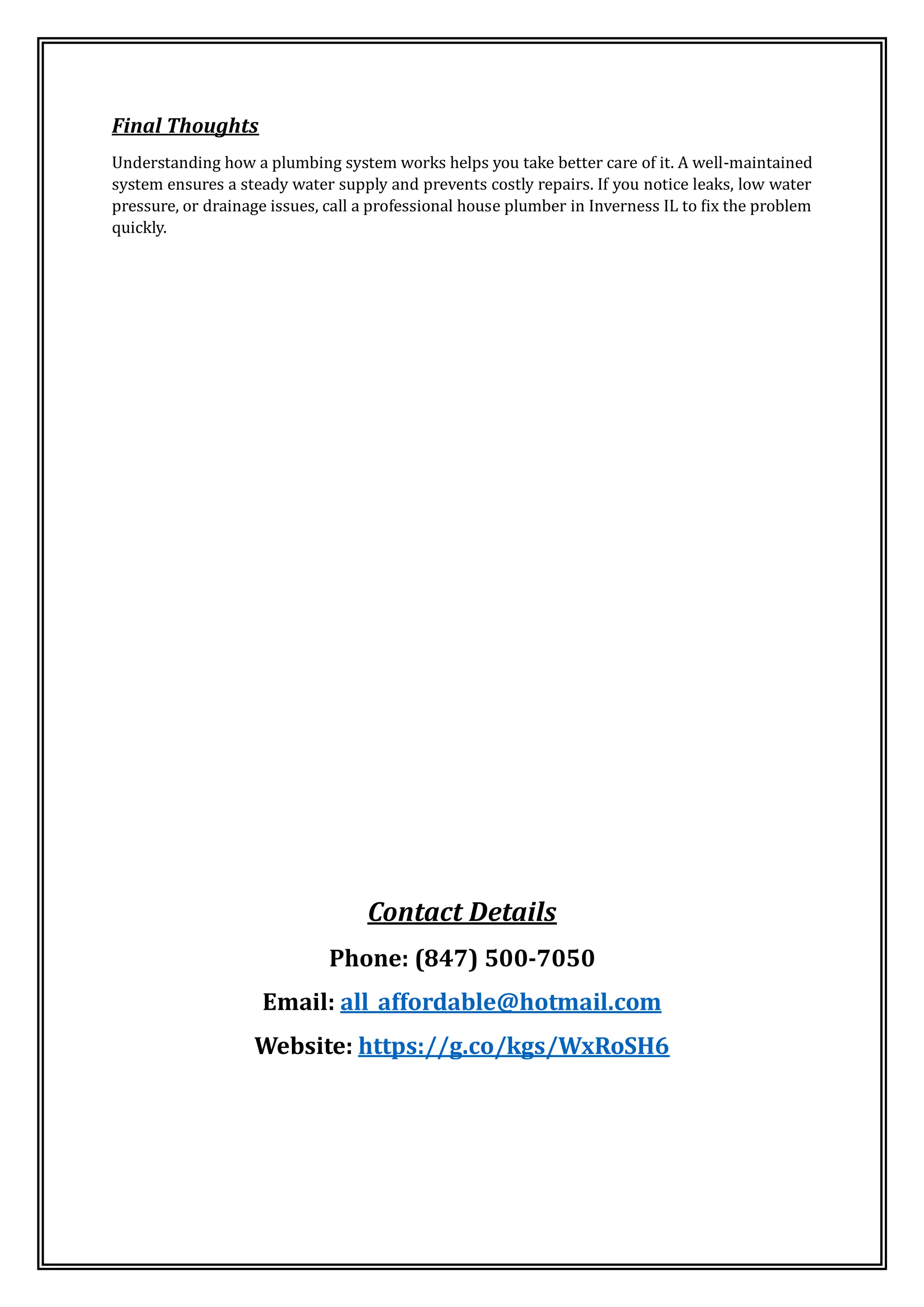
Traps and Vents: A P-trap is a curved pipe under sinks and toilets that holds water to
block sewer gases. Vents allow air to flow into pipes, preventing water from getting stuck.
Septic Tank or Sewer System: In cities, wastewater goes into a public sewer system. In
rural areas, homes often have a septic tank that holds and treats waste.
How Water Moves in a Plumbing System
Plumbing systems work using gravity, pressure, and air vents. The water supply relies on pressure
to push water through the pipes. The drainage system uses gravity to pull wastewater down and
out of the house. If a problem occurs, a house plumber can inspect the system to find leaks,
blockages, or broken pipes.
Common Plumbing Issues and Solutions
Even the best plumbing systems face problems. Some common issues include:
Leaky Pipes: Leaks waste water and cause damage to walls and floors. A house plumber
can seal or replace broken pipes.
Clogged Drains: Hair, grease, and food can block drains. A plumber can use tools like a
drain snake to remove the blockage.
Low Water Pressure: If the water flow is weak, it could be due to clogged pipes, faulty
valves, or leaks. A plumber can check and fix the issue.
Why Regular Plumbing Maintenance is Important
Regular plumbing maintenance helps prevent major problems. A house plumber can inspect
pipes, check water pressure, and clean drains to keep the system working well. Fixing small issues
early can save money on expensive repairs later.
3.
Final Thoughts
Understanding howa plumbing system works helps you take better care of it. A well-maintained
system ensures a steady water supply and prevents costly repairs. If you notice leaks, low water
pressure, or drainage issues, call a professional house plumber in Inverness IL to fix the problem
quickly.
Contact Details
Phone: (847) 500-7050
Email: all_affordable@hotmail.com
Website: https://g.co/kgs/WxRoSH6