Holistic
Approaches
to Anxiety
Nurturing Mind and Body
Marta Loveguard
Ladies and gentlemen, thank you for joining us today for a journey
toward holistic well-being. In a world that often feels fast-paced
and stressful, it's crucial to explore holistic approaches to anxiety,
which focus on nurturing both the mind and body.
Before we delve into holistic solutions, it's
essential to develop a comprehensive
understanding of anxiety. Anxiety is a complex
emotional state characterized by excessive
worry, fear, or apprehension about future
events. It's more than just occasional stress or
nervousness; it's a persistent, often
overwhelming condition that can significantly
impact one's quality of life.
Understanding what causes anxiety is crucial in managing it
effectively. Anxiety can have various triggers, and it's often the result
of a combination of factors:
• Biological Factors: Genetics can play a role in anxiety disorders. If
you have a family history of anxiety or other mental health
conditions, you may be at a higher risk.
• Brain Chemistry: Imbalances in brain chemicals, such as
neurotransmitters, can contribute to anxiety. These chemicals
regulate mood and emotions.
• Personality: Individuals with certain personality traits, such as
perfectionism or a tendency to be shy or timid, may be more
susceptible to anxiety.
• Trauma: Past traumatic experiences, such as physical or
emotional abuse, can increase the risk of developing anxiety
disorders.
• Stress: High levels of chronic stress, whether related to work,
relationships, or other factors, can trigger anxiety.
Anxiety manifests through a range of emotional, cognitive, and
physical symptoms. Recognizing these symptoms is essential in
seeking help and implementing effective coping strategies:
• Emotional Symptoms: Anxiety often leads to feelings of fear,
apprehension, and restlessness. You may experience irritability, a
constant sense of dread, or a fear of losing control.
• Cognitive Symptoms: Anxiety can affect your thoughts, leading to
excessive worry, racing thoughts, and difficulty concentrating or
making decisions.
• Physical Symptoms: Anxiety can manifest physically with
symptoms such as a rapid heart rate, sweating, trembling, muscle
tension, and an upset stomach. It can also lead to headaches and
fatigue.
• Behavioral Symptoms: Anxiety can influence your behavior,
leading to avoidance of certain situations or activities that trigger
anxiety. This avoidance can negatively impact your daily life.
Understanding these causes and symptoms provides a foundation for
exploring holistic approaches to anxiety. It's essential to approach
anxiety holistically, addressing both the mind and body to find relief
and improve overall well-being.
One of the most accessible holistic approaches is mindful
breathing. Mindful breathing involves focusing on your
breath and being fully present in the moment. It's simple, yet
incredibly effective.
When we practice mindful breathing, we calm the mind and
reduce the physiological responses associated with anxiety.
It's like hitting a reset button for our nervous system. During
moments of stress, taking a few deep, intentional breaths can
make all the difference.
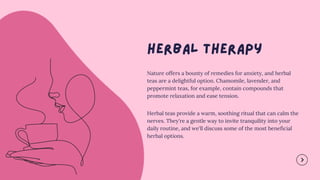
Nature offers a bounty of remedies for anxiety, and herbal
teas are a delightful option. Chamomile, lavender, and
peppermint teas, for example, contain compounds that
promote relaxation and ease tension.
Herbal teas provide a warm, soothing ritual that can calm the
nerves. They're a gentle way to invite tranquility into your
daily routine, and we'll discuss some of the most beneficial
herbal options.
Exercise is often called the "wonder drug" for good reason.
Physical activity releases endorphins, natural mood lifters.
But it also helps reduce the production of stress hormones
like cortisol.
You don't need to run marathons; even a daily walk or some
light yoga can make a significant difference. We'll explore
various exercises suitable for anxiety relief.
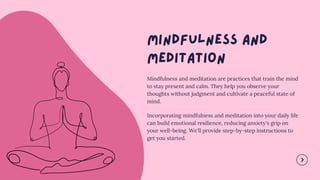
Mindfulness and meditation are practices that train the mind
to stay present and calm. They help you observe your
thoughts without judgment and cultivate a peaceful state of
mind.
Incorporating mindfulness and meditation into your daily life
can build emotional resilience, reducing anxiety's grip on
your well-being. We'll provide step-by-step instructions to
get you started.
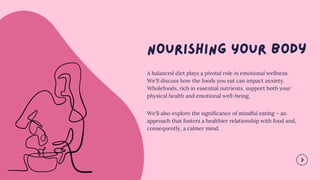
A balanced diet plays a pivotal role in emotional wellness.
We'll discuss how the foods you eat can impact anxiety.
Wholefoods, rich in essential nutrients, support both your
physical health and emotional well-being.
We'll also explore the significance of mindful eating – an
approach that fosters a healthier relationship with food and,
consequently, a calmer mind.
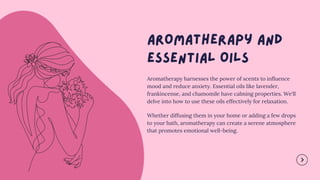
Aromatherapy harnesses the power of scents to influence
mood and reduce anxiety. Essential oils like lavender,
frankincense, and chamomile have calming properties. We'll
delve into how to use these oils effectively for relaxation.
Whether diffusing them in your home or adding a few drops
to your bath, aromatherapy can create a serene atmosphere
that promotes emotional well-being.
Holistic approaches to anxiety are about nurturing your
whole self—mind, body, and spirit. We'll emphasize the
interconnectedness of these elements and how practices like
mindfulness, nutrition, and exercise play a role.
As you incorporate holistic strategies into your daily life,
you'll take powerful steps toward a more peaceful, less
anxious existence. It's a journey of self-care and self-
discovery that can lead to profound transformations.
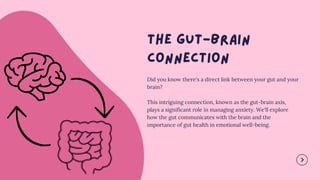
Did you know there's a direct link between your gut and your
brain?
This intriguing connection, known as the gut-brain axis,
plays a significant role in managing anxiety. We'll explore
how the gut communicates with the brain and the
importance of gut health in emotional well-being.
In conclusion, holistic approaches to anxiety offer a
multifaceted approach to nurturing your mental and physical
well-being. We've discussed the power of mindful breathing,
herbal therapy, exercise, mindfulness, nutrition,
aromatherapy, and the interconnectedness of these
practices.
By embracing holistic strategies, you can significantly reduce
anxiety and promote a sense of inner peace. Remember that
managing anxiety is an ongoing journey, and incorporating
these holistic approaches into your life is a profound act of
self-care.
Thank you for joining us on this exploration of holistic
approaches to anxiety, and we hope you find these
strategies beneficial on your path to well-being.

Holistic Approaches to Anxiety

  • 1.
  • 2.
    Ladies and gentlemen,thank you for joining us today for a journey toward holistic well-being. In a world that often feels fast-paced and stressful, it's crucial to explore holistic approaches to anxiety, which focus on nurturing both the mind and body.
  • 3.
    Before we delveinto holistic solutions, it's essential to develop a comprehensive understanding of anxiety. Anxiety is a complex emotional state characterized by excessive worry, fear, or apprehension about future events. It's more than just occasional stress or nervousness; it's a persistent, often overwhelming condition that can significantly impact one's quality of life.
  • 4.
    Understanding what causesanxiety is crucial in managing it effectively. Anxiety can have various triggers, and it's often the result of a combination of factors: • Biological Factors: Genetics can play a role in anxiety disorders. If you have a family history of anxiety or other mental health conditions, you may be at a higher risk. • Brain Chemistry: Imbalances in brain chemicals, such as neurotransmitters, can contribute to anxiety. These chemicals regulate mood and emotions. • Personality: Individuals with certain personality traits, such as perfectionism or a tendency to be shy or timid, may be more susceptible to anxiety. • Trauma: Past traumatic experiences, such as physical or emotional abuse, can increase the risk of developing anxiety disorders. • Stress: High levels of chronic stress, whether related to work, relationships, or other factors, can trigger anxiety.
  • 5.
    Anxiety manifests througha range of emotional, cognitive, and physical symptoms. Recognizing these symptoms is essential in seeking help and implementing effective coping strategies: • Emotional Symptoms: Anxiety often leads to feelings of fear, apprehension, and restlessness. You may experience irritability, a constant sense of dread, or a fear of losing control. • Cognitive Symptoms: Anxiety can affect your thoughts, leading to excessive worry, racing thoughts, and difficulty concentrating or making decisions. • Physical Symptoms: Anxiety can manifest physically with symptoms such as a rapid heart rate, sweating, trembling, muscle tension, and an upset stomach. It can also lead to headaches and fatigue. • Behavioral Symptoms: Anxiety can influence your behavior, leading to avoidance of certain situations or activities that trigger anxiety. This avoidance can negatively impact your daily life. Understanding these causes and symptoms provides a foundation for exploring holistic approaches to anxiety. It's essential to approach anxiety holistically, addressing both the mind and body to find relief and improve overall well-being.
  • 6.
    One of themost accessible holistic approaches is mindful breathing. Mindful breathing involves focusing on your breath and being fully present in the moment. It's simple, yet incredibly effective. When we practice mindful breathing, we calm the mind and reduce the physiological responses associated with anxiety. It's like hitting a reset button for our nervous system. During moments of stress, taking a few deep, intentional breaths can make all the difference.
  • 7.
    Nature offers abounty of remedies for anxiety, and herbal teas are a delightful option. Chamomile, lavender, and peppermint teas, for example, contain compounds that promote relaxation and ease tension. Herbal teas provide a warm, soothing ritual that can calm the nerves. They're a gentle way to invite tranquility into your daily routine, and we'll discuss some of the most beneficial herbal options.
  • 8.
    Exercise is oftencalled the "wonder drug" for good reason. Physical activity releases endorphins, natural mood lifters. But it also helps reduce the production of stress hormones like cortisol. You don't need to run marathons; even a daily walk or some light yoga can make a significant difference. We'll explore various exercises suitable for anxiety relief.
  • 9.
    Mindfulness and meditationare practices that train the mind to stay present and calm. They help you observe your thoughts without judgment and cultivate a peaceful state of mind. Incorporating mindfulness and meditation into your daily life can build emotional resilience, reducing anxiety's grip on your well-being. We'll provide step-by-step instructions to get you started.
  • 10.
    A balanced dietplays a pivotal role in emotional wellness. We'll discuss how the foods you eat can impact anxiety. Wholefoods, rich in essential nutrients, support both your physical health and emotional well-being. We'll also explore the significance of mindful eating – an approach that fosters a healthier relationship with food and, consequently, a calmer mind.
  • 11.
    Aromatherapy harnesses thepower of scents to influence mood and reduce anxiety. Essential oils like lavender, frankincense, and chamomile have calming properties. We'll delve into how to use these oils effectively for relaxation. Whether diffusing them in your home or adding a few drops to your bath, aromatherapy can create a serene atmosphere that promotes emotional well-being.
  • 12.
    Holistic approaches toanxiety are about nurturing your whole self—mind, body, and spirit. We'll emphasize the interconnectedness of these elements and how practices like mindfulness, nutrition, and exercise play a role. As you incorporate holistic strategies into your daily life, you'll take powerful steps toward a more peaceful, less anxious existence. It's a journey of self-care and self- discovery that can lead to profound transformations.
  • 13.
    Did you knowthere's a direct link between your gut and your brain? This intriguing connection, known as the gut-brain axis, plays a significant role in managing anxiety. We'll explore how the gut communicates with the brain and the importance of gut health in emotional well-being.
  • 14.
    In conclusion, holisticapproaches to anxiety offer a multifaceted approach to nurturing your mental and physical well-being. We've discussed the power of mindful breathing, herbal therapy, exercise, mindfulness, nutrition, aromatherapy, and the interconnectedness of these practices. By embracing holistic strategies, you can significantly reduce anxiety and promote a sense of inner peace. Remember that managing anxiety is an ongoing journey, and incorporating these holistic approaches into your life is a profound act of self-care.
  • 15.
    Thank you forjoining us on this exploration of holistic approaches to anxiety, and we hope you find these strategies beneficial on your path to well-being.