6.53
HIV AND AIDS
UNIT 5 – Health, social and environmental
responsibility: Responsible decision making
about health and safety.
By Miss Kubie
LESSON
OBJECTIVES
7/1/20XX Pitch deck title 2
BY THE END OF THE LESSON LEARNERS
SHOULD BE ABLE TO :
INFORMED, RESPONSIBLE
DECISION MAKING ABOUT HEALTH
AND SAFETY
• AIDS is a disease that cannot be cured.
• It is caused by the human immuno-deficiency
virus (HIV)
• What is your immune system ? What is it
responsible for ?
• It is a complex network of cells, tissues and
organs. Together they help the body fight
infections and other diseases.
• This virus affects people's immune systems,
leaving them unable to fight diseases and
infection.
7/1/20XX 3
Page 97
Acquired
Immuno-
Deficiency
Syndrome
MANAGEMENT
MEDICATION
• It is possible for a HIV+ person to live
longer if they take a type of medication
called anti-retroviral drugs (ARVs)
• The drugs slow down the spread of the
virus meaning your immune system does
not get weaker and weaker
• ARVs have unpleasant side effects:
vomiting, nausea, diarrhea and skin
rashes.
DIET
HEALTHY LIVING
POSITIVE ATTITUDE
7/1/20XX Pitch deck title 4
CONTRACTION
UNPROTECTED SEX
Having unsafe sex with a HIV+ partner is the most likely way that HIV
spreads, especially amongst young people.
BODILY FLUIDS
Direct contact with HIV infected blood and even breast milk
SHARING NEEDLES
Items such as needles or razors could have blood on them
5
PREGNANCY
You can be born HIV+. During pregnancy, the virus can pass through the
placenta and infect the fetus. During labor and delivery, the baby maybe
exposed to the virus from the mother's blood and other fluids.
PREVENTION AND SAFETY PRECAUTIONS
Ways to prevent becoming infected:
• DO NOT have sex
• If you do have sex, always use a condom
• NEVER reuse a condom
• Be faithful to one partner to reduce the spread
of HIV through unsafe sex
• Do not share items tat can have blood on
them such as needles or razors, with
someone who is infected with HIV
Precautions to take when in contact with
HIV infected blood:
• Always wear surgical gloves when dealing with blood or other bodily fluids
• Immediately wash any part of the skin that came into contact with blood
• Clean all cuts, wounds, sores, grazes and other breaks in the skin with
water and or antiseptics
• Wash any blood splashes in the face with running water for at least three
minutes
• Cover all open wounds, sores or any breaks in the skin completely
• Cleans with running water and not in containers of water
• Use bleach to clean any surfaces or instruments
6
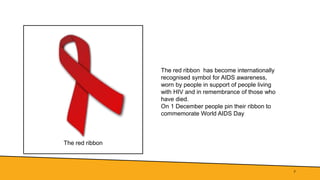
The red ribbon
7
The red ribbon has become internationally
recognised symbol for AIDS awareness,
worn by people in support of people living
with HIV and in remembrance of those who
have died.
On 1 December people pin their ribbon to
commemorate World AIDS Day
CARING FOR + PEOPLE
8
People living with HIV and ids may need help with
everyday tasks such as washing, cooking, feeding and
bathing. Being accepting of an HIV+ person and their
situation and loving and caring for them makes it easier
for them to be accepting and loving towards themselves.
Home based care organisations assist family caregivers
in providing HIV and AIDS related care. They help you
and your family in many ways such as:
• Washing the sick person
• Bringing or even cooking food
• Train you how t deal and help with pain, give
medication and disinfect the sick persons bed
WHO TO CONTACT..
NAPWA
• They have a national information number,
which you can call toget information abut the
organisation and the branch closest to you
• They will help you find support groups and
people to help you.
The Hospice Association of South Africa
• They provide care and support for people who
have terminal illness and their families
• Counsellors visit patients in their homes and
help with their physical needs as well giving
emotional support to the patients and their
families
• There are hospices in all provinces in SA
9
QUESTIONS?
https://www.youtube.com/watch?v=EqlyEYOI754
THANK YOU
GRADE 8’S !
11

HIV AND AIDS.pptx

  • 1.
    6.53 HIV AND AIDS UNIT5 – Health, social and environmental responsibility: Responsible decision making about health and safety. By Miss Kubie
  • 2.
    LESSON OBJECTIVES 7/1/20XX Pitch decktitle 2 BY THE END OF THE LESSON LEARNERS SHOULD BE ABLE TO :
  • 3.
    INFORMED, RESPONSIBLE DECISION MAKINGABOUT HEALTH AND SAFETY • AIDS is a disease that cannot be cured. • It is caused by the human immuno-deficiency virus (HIV) • What is your immune system ? What is it responsible for ? • It is a complex network of cells, tissues and organs. Together they help the body fight infections and other diseases. • This virus affects people's immune systems, leaving them unable to fight diseases and infection. 7/1/20XX 3 Page 97 Acquired Immuno- Deficiency Syndrome
  • 4.
    MANAGEMENT MEDICATION • It ispossible for a HIV+ person to live longer if they take a type of medication called anti-retroviral drugs (ARVs) • The drugs slow down the spread of the virus meaning your immune system does not get weaker and weaker • ARVs have unpleasant side effects: vomiting, nausea, diarrhea and skin rashes. DIET HEALTHY LIVING POSITIVE ATTITUDE 7/1/20XX Pitch deck title 4
  • 5.
    CONTRACTION UNPROTECTED SEX Having unsafesex with a HIV+ partner is the most likely way that HIV spreads, especially amongst young people. BODILY FLUIDS Direct contact with HIV infected blood and even breast milk SHARING NEEDLES Items such as needles or razors could have blood on them 5 PREGNANCY You can be born HIV+. During pregnancy, the virus can pass through the placenta and infect the fetus. During labor and delivery, the baby maybe exposed to the virus from the mother's blood and other fluids.
  • 6.
    PREVENTION AND SAFETYPRECAUTIONS Ways to prevent becoming infected: • DO NOT have sex • If you do have sex, always use a condom • NEVER reuse a condom • Be faithful to one partner to reduce the spread of HIV through unsafe sex • Do not share items tat can have blood on them such as needles or razors, with someone who is infected with HIV Precautions to take when in contact with HIV infected blood: • Always wear surgical gloves when dealing with blood or other bodily fluids • Immediately wash any part of the skin that came into contact with blood • Clean all cuts, wounds, sores, grazes and other breaks in the skin with water and or antiseptics • Wash any blood splashes in the face with running water for at least three minutes • Cover all open wounds, sores or any breaks in the skin completely • Cleans with running water and not in containers of water • Use bleach to clean any surfaces or instruments 6
  • 7.
    The red ribbon 7 Thered ribbon has become internationally recognised symbol for AIDS awareness, worn by people in support of people living with HIV and in remembrance of those who have died. On 1 December people pin their ribbon to commemorate World AIDS Day
  • 8.
    CARING FOR +PEOPLE 8 People living with HIV and ids may need help with everyday tasks such as washing, cooking, feeding and bathing. Being accepting of an HIV+ person and their situation and loving and caring for them makes it easier for them to be accepting and loving towards themselves. Home based care organisations assist family caregivers in providing HIV and AIDS related care. They help you and your family in many ways such as: • Washing the sick person • Bringing or even cooking food • Train you how t deal and help with pain, give medication and disinfect the sick persons bed
  • 9.
    WHO TO CONTACT.. NAPWA •They have a national information number, which you can call toget information abut the organisation and the branch closest to you • They will help you find support groups and people to help you. The Hospice Association of South Africa • They provide care and support for people who have terminal illness and their families • Counsellors visit patients in their homes and help with their physical needs as well giving emotional support to the patients and their families • There are hospices in all provinces in SA 9
  • 10.
  • 11.