A moccasin is a shoe made of deerskin or other
soft leather, consisting of a sole (made with
leather that has not been "worked") and sides
made of one piece of leather, stitched together at
the top, and sometimes with a vamp (additional
panel of leather). The sole is soft and flexible
and the upper part often is decorated with
embroidery. Though sometimes worn inside, it is
chiefly intended for outdoor use, as in exploring
wildernesses and running.
 In the 1800s, moccasins usually were part of a
Canadian regalia. The most common style is
that of the Plains Indians moccasin.
 The eastern Indian tribes wore soft-sole
moccasins, for walking in leaf-covered forest
ground. Moccasins are usually all brown, the
same color.
 Moccasins protect the foot while allowing the
wearer to feel the ground. The Plains Indians
wore hard-sole moccasins, given that their
territorial geography featured rock .
 Apron sewn to thevamp with heavy thread.
 Characteristic of hand sewing given agood appearance.
 True moccasin has no insole, with upperextending
across forepart under the foot.
 More materials will be consumed may be30%.
 Comfortableand expensive shoeas more leather is
consumed.
 Most widely used as formalshoe.
 A wide range of styles can be derived from this design.
• A driving moccasin (driving moc) is a
contemporary version of the traditional Native
American moccasin with the addition of rubber
tabs on the sole. The addition of rubber-pad sole
adds to the versatility and longevity of the shoe
while maintaining the flexibility and comfort of a
traditional moccasin.
• There are many variations of the sole including:
i. Rubber-dotted' - These have a uniform covering of
small, round rubber pads.
ii. Separated Pad - These have larger, flat rubber pads
separated by only small areas.
 Commonly referred as a "Mock Toe", the
boots are normally combined with hard
rubber compounded soles. The moccasin
toe work boot is a widely known style that
reflects the Native American moccasin.
Normally by weld stitching two pieces of
leather or fabric, the pattern creates a U-
shaped design around the toe box.
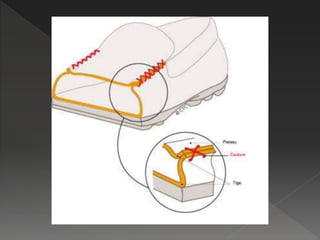
 The moccasin has a single layer section forming
the insole and quarters. The last is put in the
insole and a vamp “apron” stretched on top of the
last. The stretched apron is stitched to the
gathered edges of the quarters around the last
creating the characteristic look. The outsole is
then either attached by cement or by stitching.
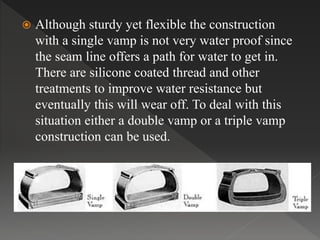
 Although sturdy yet flexible the construction
with a single vamp is not very water proof since
the seam line offers a path for water to get in.
There are silicone coated thread and other
treatments to improve water resistance but
eventually this will wear off. To deal with this
situation either a double vamp or a triple vamp
construction can be used.
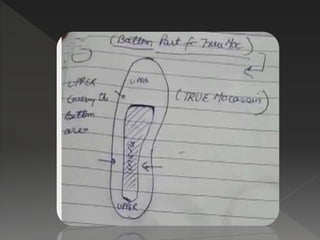
• Made by leather
• At bottom profile mudguard cover the waist
area.
• And the rest half is lasting margin (18 mm inside
and 20mm outside)
• Insole are inserted into upper by force lasting
• The piece is moulded upwards from the under
surface of the last.
• An apron is then stitched to the gathered edges
of the vamp and the sole is stitched to the base
of the shoe.
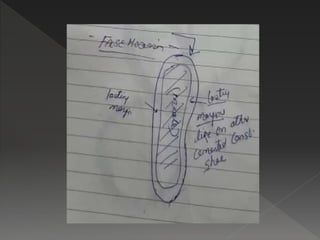
• Same as stuck on construction
• Cement Construction (also known as 'Stuck on
construction' in the UK) is used for lightweight
and flexible shoes and the outsole is stuck to the
upper by adhesive.
• Bonwelt is another variation with its
distinguishing feature being a strip of welting
attached by stitching or cementing to the top
edge of the insole. The shoe is then flat lasted.
• This is not a true welt construction wherein the
welt is attached to the rib of the insole.
History moccasin
History moccasin

History moccasin

  • 2.
    A moccasin isa shoe made of deerskin or other soft leather, consisting of a sole (made with leather that has not been "worked") and sides made of one piece of leather, stitched together at the top, and sometimes with a vamp (additional panel of leather). The sole is soft and flexible and the upper part often is decorated with embroidery. Though sometimes worn inside, it is chiefly intended for outdoor use, as in exploring wildernesses and running.
  • 3.
     In the1800s, moccasins usually were part of a Canadian regalia. The most common style is that of the Plains Indians moccasin.  The eastern Indian tribes wore soft-sole moccasins, for walking in leaf-covered forest ground. Moccasins are usually all brown, the same color.  Moccasins protect the foot while allowing the wearer to feel the ground. The Plains Indians wore hard-sole moccasins, given that their territorial geography featured rock .
  • 4.
     Apron sewnto thevamp with heavy thread.  Characteristic of hand sewing given agood appearance.  True moccasin has no insole, with upperextending across forepart under the foot.  More materials will be consumed may be30%.  Comfortableand expensive shoeas more leather is consumed.  Most widely used as formalshoe.  A wide range of styles can be derived from this design.
  • 5.
    • A drivingmoccasin (driving moc) is a contemporary version of the traditional Native American moccasin with the addition of rubber tabs on the sole. The addition of rubber-pad sole adds to the versatility and longevity of the shoe while maintaining the flexibility and comfort of a traditional moccasin.
  • 6.
    • There aremany variations of the sole including: i. Rubber-dotted' - These have a uniform covering of small, round rubber pads. ii. Separated Pad - These have larger, flat rubber pads separated by only small areas.
  • 7.
     Commonly referredas a "Mock Toe", the boots are normally combined with hard rubber compounded soles. The moccasin toe work boot is a widely known style that reflects the Native American moccasin. Normally by weld stitching two pieces of leather or fabric, the pattern creates a U- shaped design around the toe box.
  • 8.
     The moccasinhas a single layer section forming the insole and quarters. The last is put in the insole and a vamp “apron” stretched on top of the last. The stretched apron is stitched to the gathered edges of the quarters around the last creating the characteristic look. The outsole is then either attached by cement or by stitching.
  • 10.
     Although sturdyyet flexible the construction with a single vamp is not very water proof since the seam line offers a path for water to get in. There are silicone coated thread and other treatments to improve water resistance but eventually this will wear off. To deal with this situation either a double vamp or a triple vamp construction can be used.
  • 11.
    • Made byleather • At bottom profile mudguard cover the waist area. • And the rest half is lasting margin (18 mm inside and 20mm outside) • Insole are inserted into upper by force lasting • The piece is moulded upwards from the under surface of the last. • An apron is then stitched to the gathered edges of the vamp and the sole is stitched to the base of the shoe.
  • 13.
    • Same asstuck on construction • Cement Construction (also known as 'Stuck on construction' in the UK) is used for lightweight and flexible shoes and the outsole is stuck to the upper by adhesive. • Bonwelt is another variation with its distinguishing feature being a strip of welting attached by stitching or cementing to the top edge of the insole. The shoe is then flat lasted. • This is not a true welt construction wherein the welt is attached to the rib of the insole.