Highlander
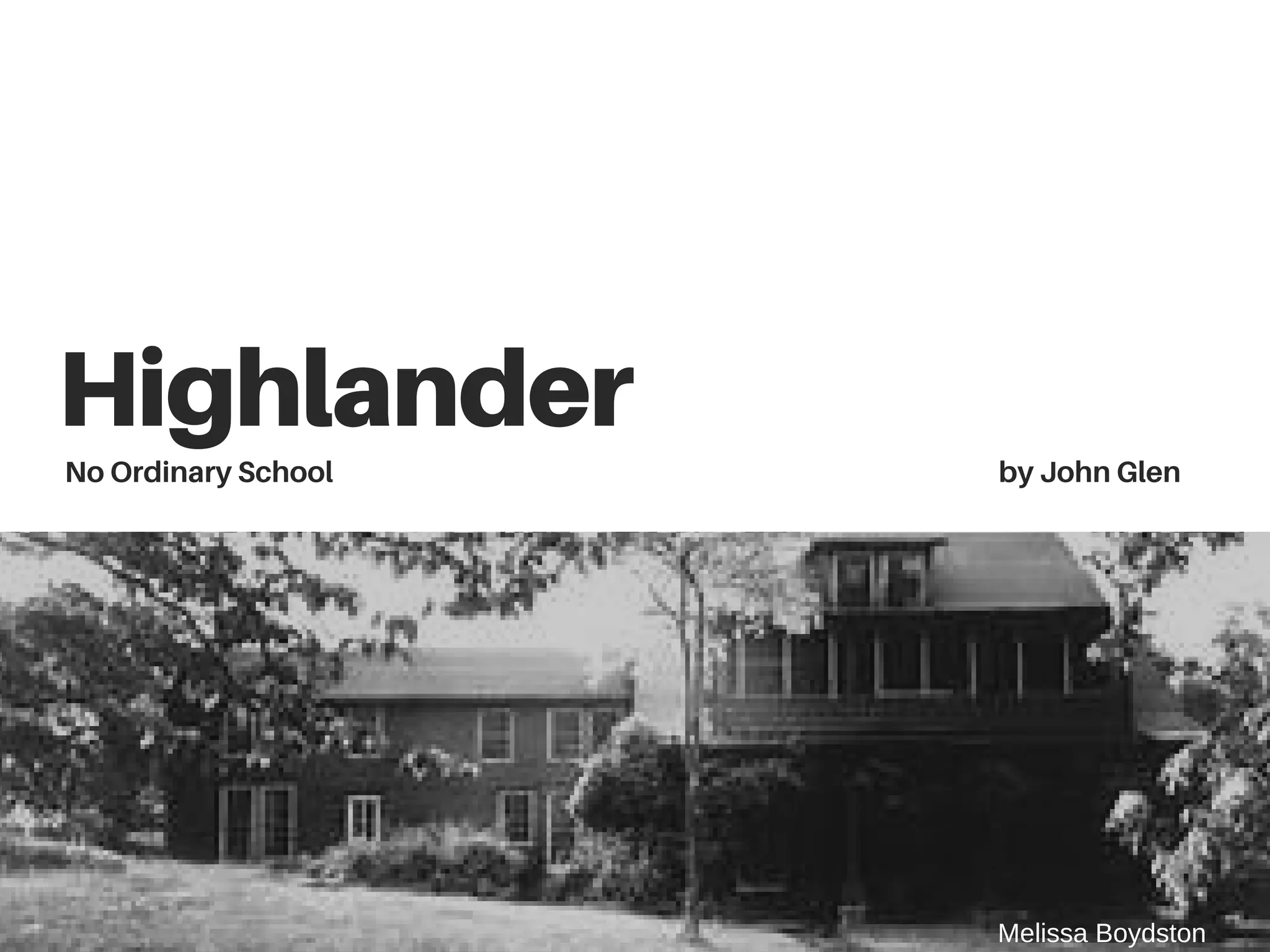
No Ordinary School by John Glen
Melissa Boydston
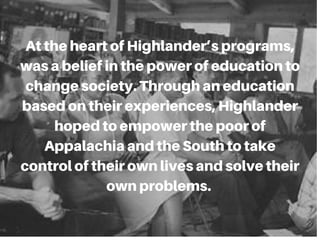
At the heart of Highlander’s programs,
was a belief in the power of education to
change society. Through an education
based on their experiences, Highlander
hoped to empower the poor of
Appalachia and the South to take
control of their own lives and solve their
own problems.
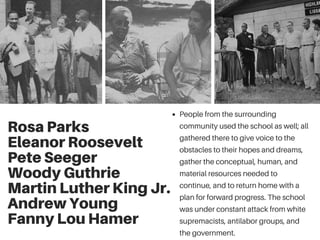
Rosa Parks
Eleanor Roosevelt
Pete Seeger
Woody Guthrie
Martin Luther King Jr.
Andrew Young
Fanny Lou Hamer
People from the surrounding
community used the school as well; all
gathered there to give voice to the
obstacles to their hopes and dreams,
gather the conceptual, human, and
material resources needed to
continue, and to return home with a
plan for forward progress. The school
was under constant attack from white
supremacists, antilabor groups, and
the government.
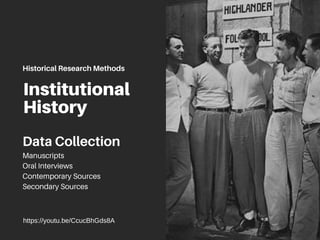
Institutional
History
Manuscripts
Oral Interviews
Contemporary Sources
Secondary Sources
Historical Research Methods
Data Collection
https://youtu.be/CcucBhGds8A
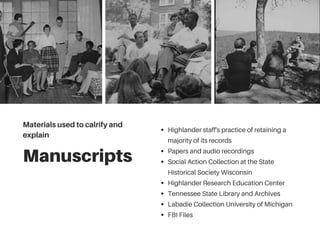
Manuscripts
Highlander staff's practice of retaining a
majority of its records
Papers and audio recordings
Social Action Collection at the State
Historical Society Wisconsin
Highlander Research Education Center
Tennessee State Library and Archives
Labadie Collection University of Michigan
FBI Files
Materials used to calrify and
explain
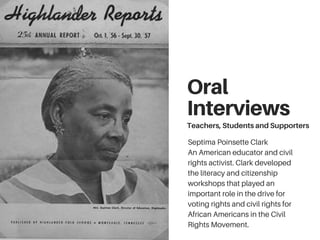
Oral
Interviews
Teachers, Students and Supporters
Septima Poinsette Clark
An American educator and civil
rights activist. Clark developed
the literacy and citizenship
workshops that played an
important role in the drive for
voting rights and civil rights for
African Americans in the Civil
Rights Movement.
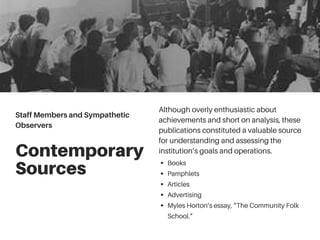
Contemporary
Sources
Books
Pamphlets
Articles
Advertising
Myles Horton’s essay, “The Community Folk
School.”
Staff Members and Sympathetic
Observers
Although overly enthusiastic about
achievements and short on analysis, these
publications constituted a valuable source
for understanding and assessing the
institution’s goals and operations.
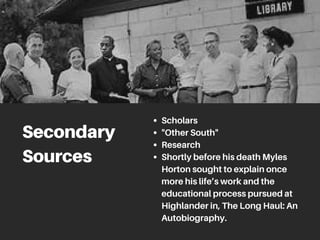
Secondary
Sources
Scholars
"Other South"
Research
Shortly before his death Myles
Horton sought to explain once
more his life’s work and the
educational process pursued at
Highlander in, The Long Haul: An
Autobiography.
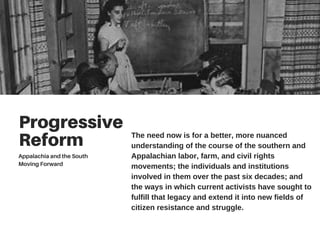
Progressive
Reform
Appalachia and the South
Moving Forward
The need now is for a better, more nuanced
understanding of the course of the southern and
Appalachian labor, farm, and civil rights
movements; the individuals and institutions
involved in them over the past six decades; and
the ways in which current activists have sought to
fulfill that legacy and extend it into new fields of
citizen resistance and struggle.

Highlander mlb

  • 1.
    Highlander No Ordinary Schoolby John Glen Melissa Boydston
  • 2.
    At the heartof Highlander’s programs, was a belief in the power of education to change society. Through an education based on their experiences, Highlander hoped to empower the poor of Appalachia and the South to take control of their own lives and solve their own problems.
  • 3.
    Rosa Parks Eleanor Roosevelt PeteSeeger Woody Guthrie Martin Luther King Jr. Andrew Young Fanny Lou Hamer People from the surrounding community used the school as well; all gathered there to give voice to the obstacles to their hopes and dreams, gather the conceptual, human, and material resources needed to continue, and to return home with a plan for forward progress. The school was under constant attack from white supremacists, antilabor groups, and the government.
  • 4.
    Institutional History Manuscripts Oral Interviews Contemporary Sources SecondarySources Historical Research Methods Data Collection https://youtu.be/CcucBhGds8A
  • 5.
    Manuscripts Highlander staff's practiceof retaining a majority of its records Papers and audio recordings Social Action Collection at the State Historical Society Wisconsin Highlander Research Education Center Tennessee State Library and Archives Labadie Collection University of Michigan FBI Files Materials used to calrify and explain
  • 6.
    Oral Interviews Teachers, Students andSupporters Septima Poinsette Clark An American educator and civil rights activist. Clark developed the literacy and citizenship workshops that played an important role in the drive for voting rights and civil rights for African Americans in the Civil Rights Movement.
  • 7.
    Contemporary Sources Books Pamphlets Articles Advertising Myles Horton’s essay,“The Community Folk School.” Staff Members and Sympathetic Observers Although overly enthusiastic about achievements and short on analysis, these publications constituted a valuable source for understanding and assessing the institution’s goals and operations.
  • 8.
    Secondary Sources Scholars "Other South" Research Shortly beforehis death Myles Horton sought to explain once more his life’s work and the educational process pursued at Highlander in, The Long Haul: An Autobiography.
  • 9.
    Progressive Reform Appalachia and theSouth Moving Forward The need now is for a better, more nuanced understanding of the course of the southern and Appalachian labor, farm, and civil rights movements; the individuals and institutions involved in them over the past six decades; and the ways in which current activists have sought to fulfill that legacy and extend it into new fields of citizen resistance and struggle.