Healthy Eating for Cardiac
Rehabilitation
Harriet Hale – Acute Dietitian
Contents
• Why is diet important
• The cardio – protective diet
• Lifestyle modifications
• Meal plan example
• Summary
• To increase awareness of healthy eating
• To increase knowledge of the cardioprotective
diet
• To be aware of dietary and lifestyle risk factors
Aims and objectives
Why is diet important?
• Following a cardioprotective diet can help to
improve your recovery and reduce your
chance of a further cardiac event.
• Improves mental health
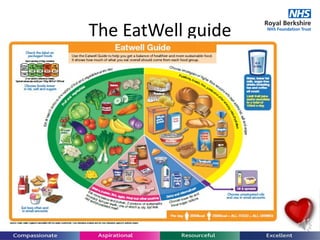
The EatWell guide
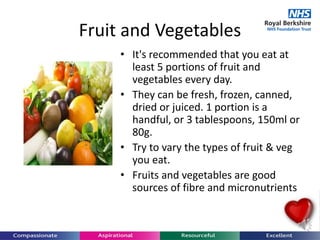
Fruit and Vegetables
• It's recommended that you eat at
least 5 portions of fruit and
vegetables every day.
• They can be fresh, frozen, canned,
dried or juiced. 1 portion is a
handful, or 3 tablespoons, 150ml or
80g.
• Try to vary the types of fruit & veg
you eat.
• Fruits and vegetables are good
sources of fibre and micronutrients
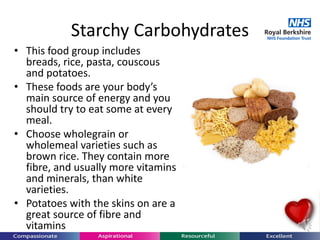
Starchy Carbohydrates
• This food group includes
breads, rice, pasta, couscous
and potatoes.
• These foods are your body’s
main source of energy and you
should try to eat some at every
meal.
• Choose wholegrain or
wholemeal varieties such as
brown rice. They contain more
fibre, and usually more vitamins
and minerals, than white
varieties.
• Potatoes with the skins on are a
great source of fibre and
vitamins.
Proteins
Fish
Fresh, frozen or canned fish all count. Remember fish canned
in brine and smoked fish are high in salt. Oily fish are good
sources of omega -3 fats which are good for your heart – try
to have at least one portion each week.
Beans and Pulses
Beans and pulses are naturally low in fat and high in fibre, so
are a filling protein choice. They're an important protein
source if you don’t eat meat, fish or dairy products.
Nuts and Seeds
These are high in fibre and contain healthy unsaturated fats.
But make sure you eat no more than a handful a day as they
are still high in calories. Choose the unsalted varieties.
Meat
Some types of meat are high in saturated fat. The type of
meat you choose and the way you cook it can make a
difference:
• Choose leaner meats where possible and avoid adding
extra fat or oil when cooking - grill instead of frying.
• Cut the fat off meat, remove the skin from chicken.
• Limit processed meats such as sausages, bacon and
cured meats.
Dairy and alternatives
This includes milk and milk products, like cheese, cream,
yoghurt, fromage frais, and soya, rice and nut-based milk
alternatives.
Dairy foods are a good source of protein and calcium which is
important for strong bones and teeth. However, the fat
content in dairy foods varies, and they're often high in
saturated fat.
Easy changes:
• Milk - Go for semi skimmed, 1% or skimmed.
• Yoghurt - Go for natural or low fat yoghurts with no
added sugar.
• Cheese - Choose reduced fat options like reduced fat
cheddar
• Cream - Choose single instead of double cream.
Fats
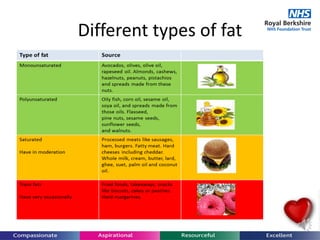
• Too much saturated fat can increase the amount of
cholesterol in the blood, which can increase the risk of
developing coronary heart disease. Replace saturated fats
with small amounts of mono and polyunsaturated fats.
• Cut down on foods containing trans fats as these raise the
amount of cholesterol in the blood.
• It's also important to remember that all fats and oils are
high in calories, so even the unsaturated fats should only be
used in small amounts.
Different types of fat
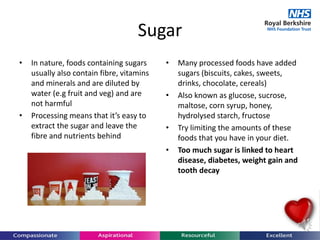
Sugar
• In nature, foods containing sugars
usually also contain fibre, vitamins
and minerals and are diluted by
water (e.g fruit and veg) and are
not harmful
• Processing means that it’s easy to
extract the sugar and leave the
fibre and nutrients behind
• Many processed foods have added
sugars (biscuits, cakes, sweets,
drinks, chocolate, cereals)
• Also known as glucose, sucrose,
maltose, corn syrup, honey,
hydrolysed starch, fructose
• Try limiting the amounts of these
foods that you have in your diet.
• Too much sugar is linked to heart
disease, diabetes, weight gain and
tooth decay
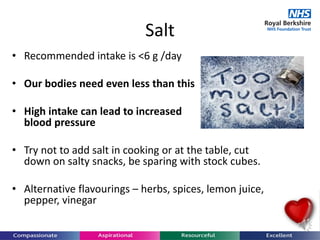
• Recommended intake is <6 g /day
• Our bodies need even less than this
• High intake can lead to increased
blood pressure
• Try not to add salt in cooking or at the table, cut
down on salty snacks, be sparing with stock cubes.
• Alternative flavourings – herbs, spices, lemon juice,
pepper, vinegar
Salt
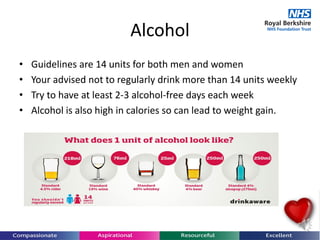
Alcohol
• Guidelines are 14 units for both men and women
• Your advised not to regularly drink more than 14 units weekly
• Try to have at least 2-3 alcohol-free days each week
• Alcohol is also high in calories so can lead to weight gain.
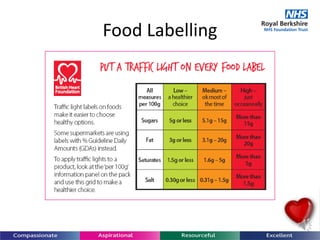
Food Labelling
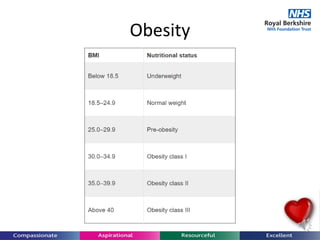
Obesity
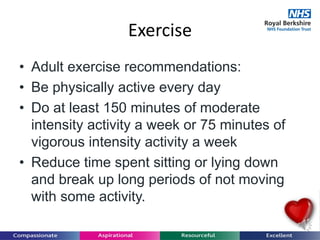
Exercise
• Adult exercise recommendations:
• Be physically active every day
• Do at least 150 minutes of moderate
intensity activity a week or 75 minutes of
vigorous intensity activity a week
• Reduce time spent sitting or lying down
and break up long periods of not moving
with some activity.
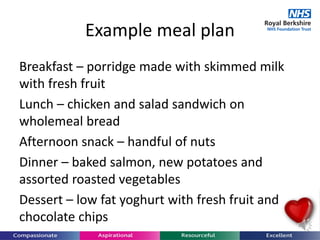
Example meal plan
Breakfast – porridge made with skimmed milk
with fresh fruit
Lunch – chicken and salad sandwich on
wholemeal bread
Afternoon snack – handful of nuts
Dinner – baked salmon, new potatoes and
assorted roasted vegetables
Dessert – low fat yoghurt with fresh fruit and
chocolate chips
Useful Links
https://www.bhf.org.uk/informationsupport/publications/healthy-eating-and-drinking/eat-better
https://www.bhf.org.uk/informationsupport/support/healthy-living/managing-your-weight
https://www.bda.uk.com/resource/food-facts-portion-sizes.html
https://www.bda.uk.com/resource/fruit-and-vegetables-how-to-get-five-a-day.html
https://www.nhs.uk/live-well/eat-well/
https://www.bhf.org.uk/informationsupport/risk-factors/high-cholesterol
https://www.bhf.org.uk/informationsupport/support/healthy-living/staying-active/exercise-calorie-calculator
https://www.bhf.org.uk/informationsupport/publications/healthy-eating-and-drinking/taking-control-of-food-
portions-and-labels
https://www.bhf.org.uk/informationsupport/support/healthy-living/healthy-eating
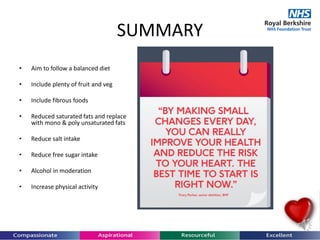
SUMMARY
• Aim to follow a balanced diet
• Include plenty of fruit and veg
• Include fibrous foods
• Reduced saturated fats and replace
with mono & poly unsaturated fats
• Reduce salt intake
• Reduce free sugar intake
• Alcohol in moderation
• Increase physical activity

healthy eating-lifestyle modification .pdf

  • 1.
    Healthy Eating forCardiac Rehabilitation Harriet Hale – Acute Dietitian
  • 2.
    Contents • Why isdiet important • The cardio – protective diet • Lifestyle modifications • Meal plan example • Summary
  • 3.
    • To increaseawareness of healthy eating • To increase knowledge of the cardioprotective diet • To be aware of dietary and lifestyle risk factors Aims and objectives
  • 4.
    Why is dietimportant? • Following a cardioprotective diet can help to improve your recovery and reduce your chance of a further cardiac event. • Improves mental health
  • 5.
  • 6.
    Fruit and Vegetables •It's recommended that you eat at least 5 portions of fruit and vegetables every day. • They can be fresh, frozen, canned, dried or juiced. 1 portion is a handful, or 3 tablespoons, 150ml or 80g. • Try to vary the types of fruit & veg you eat. • Fruits and vegetables are good sources of fibre and micronutrients
  • 7.
    Starchy Carbohydrates • Thisfood group includes breads, rice, pasta, couscous and potatoes. • These foods are your body’s main source of energy and you should try to eat some at every meal. • Choose wholegrain or wholemeal varieties such as brown rice. They contain more fibre, and usually more vitamins and minerals, than white varieties. • Potatoes with the skins on are a great source of fibre and vitamins.
  • 8.
    Proteins Fish Fresh, frozen orcanned fish all count. Remember fish canned in brine and smoked fish are high in salt. Oily fish are good sources of omega -3 fats which are good for your heart – try to have at least one portion each week. Beans and Pulses Beans and pulses are naturally low in fat and high in fibre, so are a filling protein choice. They're an important protein source if you don’t eat meat, fish or dairy products. Nuts and Seeds These are high in fibre and contain healthy unsaturated fats. But make sure you eat no more than a handful a day as they are still high in calories. Choose the unsalted varieties. Meat Some types of meat are high in saturated fat. The type of meat you choose and the way you cook it can make a difference: • Choose leaner meats where possible and avoid adding extra fat or oil when cooking - grill instead of frying. • Cut the fat off meat, remove the skin from chicken. • Limit processed meats such as sausages, bacon and cured meats. Dairy and alternatives This includes milk and milk products, like cheese, cream, yoghurt, fromage frais, and soya, rice and nut-based milk alternatives. Dairy foods are a good source of protein and calcium which is important for strong bones and teeth. However, the fat content in dairy foods varies, and they're often high in saturated fat. Easy changes: • Milk - Go for semi skimmed, 1% or skimmed. • Yoghurt - Go for natural or low fat yoghurts with no added sugar. • Cheese - Choose reduced fat options like reduced fat cheddar • Cream - Choose single instead of double cream.
  • 9.
    Fats • Too muchsaturated fat can increase the amount of cholesterol in the blood, which can increase the risk of developing coronary heart disease. Replace saturated fats with small amounts of mono and polyunsaturated fats. • Cut down on foods containing trans fats as these raise the amount of cholesterol in the blood. • It's also important to remember that all fats and oils are high in calories, so even the unsaturated fats should only be used in small amounts.
  • 10.
  • 11.
    Sugar • In nature,foods containing sugars usually also contain fibre, vitamins and minerals and are diluted by water (e.g fruit and veg) and are not harmful • Processing means that it’s easy to extract the sugar and leave the fibre and nutrients behind • Many processed foods have added sugars (biscuits, cakes, sweets, drinks, chocolate, cereals) • Also known as glucose, sucrose, maltose, corn syrup, honey, hydrolysed starch, fructose • Try limiting the amounts of these foods that you have in your diet. • Too much sugar is linked to heart disease, diabetes, weight gain and tooth decay
  • 12.
    • Recommended intakeis <6 g /day • Our bodies need even less than this • High intake can lead to increased blood pressure • Try not to add salt in cooking or at the table, cut down on salty snacks, be sparing with stock cubes. • Alternative flavourings – herbs, spices, lemon juice, pepper, vinegar Salt
  • 13.
    Alcohol • Guidelines are14 units for both men and women • Your advised not to regularly drink more than 14 units weekly • Try to have at least 2-3 alcohol-free days each week • Alcohol is also high in calories so can lead to weight gain.
  • 14.
  • 15.
  • 16.
    Exercise • Adult exerciserecommendations: • Be physically active every day • Do at least 150 minutes of moderate intensity activity a week or 75 minutes of vigorous intensity activity a week • Reduce time spent sitting or lying down and break up long periods of not moving with some activity.
  • 17.
    Example meal plan Breakfast– porridge made with skimmed milk with fresh fruit Lunch – chicken and salad sandwich on wholemeal bread Afternoon snack – handful of nuts Dinner – baked salmon, new potatoes and assorted roasted vegetables Dessert – low fat yoghurt with fresh fruit and chocolate chips
  • 18.
  • 19.
    SUMMARY • Aim tofollow a balanced diet • Include plenty of fruit and veg • Include fibrous foods • Reduced saturated fats and replace with mono & poly unsaturated fats • Reduce salt intake • Reduce free sugar intake • Alcohol in moderation • Increase physical activity