JAMSHORO COLLEGE OF NURSING
SUBJECT:
ADVANCED CONCEPT OF NURSING
TOPIC:
HEALTH PERCEPTION/MANAGEMENT PATTERN
PRESENTED BY: ABUBAKAR BAHALKANI
MEHVISH LIAQUAT
NAZIA MOHAMMAD HUSSAIN
PARVEEN PIRBUX
NAJMA MOHAMMAD ISMAIL
FIRST YEAR/FIRST SEMESTER
POST RN BSCN JCON
BATCH 2018-20
FACULTY:
SIR JAVED AHMED
OBJECTIVES
We will be able to,
• Learn about the Health perception/Management Patterns
• Understand the perceptions of health and illness.
• Analyse the Health Belief Model (HBM)
• Define the various terms related to Health perception.
HEALTH
Health, as defined by the World Health Organization
(WHO), is "a state of complete physical, mental and social
well-being and not merely the absence of disease or
infirmity."
Wellness
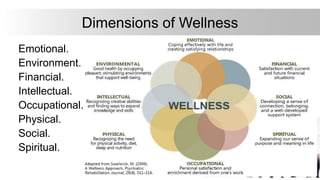
Wellness is much more than merely physical health,
exercise or nutrition. It is the full integration of states of
physical, mental, and spiritual well-being. The model used
by our campus includes social, emotional, spiritual,
environmental, occupational, intellectual and
physical wellness.
Dimensions of Wellness
Emotional.
Environment.
Financial.
Intellectual.
Occupational.
Physical.
Social.
Spiritual.
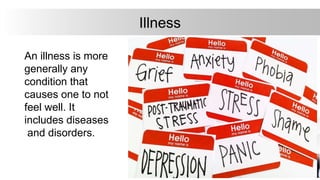
Illness
An illness is more
generally any
condition that
causes one to not
feel well. It
includes diseases
and disorders.
PERCEPTIONS OF HEALTH AND
ILLNESS
Using a self‐regulatory process, individuals act upon their
cognitive and emotional representations of health threats to
actively manage their health.
Leventhal’s common‐sense model describes cognitive
representations of illness that include perceptions about the
identity, timeline, consequences, control and cause of
illness.
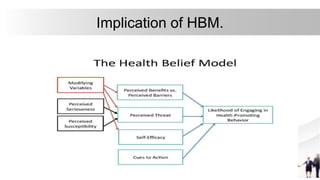
Health Belief Model (HBM)
The Health Belief Model (HBM) is a psychological model
that attempts to explain and predict health behaviours. This
is done by focusing on the attitudes and beliefs of
individuals.
The health belief model was developed in the 1950s by
social psychologists at the U.S. Public Health Service
Implication of HBM.
HEALTH PROMOTING BEHAVIOUR
Health promotion behaviors entail a positive approach to
living and a means of increasing well-being and self-
actualization.
Health-promoting behaviors prevent diseases, decrease
morbidities, improve the quality of life, and decrease
healthcare costs.
NURSING MEASURE FOR PROMOTION OF
HEALTH LIFESTYLE
Nurses need to assess effective health promotion activities.
In order to assess these activities, nurses should examine
the planning and implementation process.
As such, nurses strive to gain and apply new knowledge as
a way of using components of health education to
address health determinants.
INFECTION CONTROL
Infection control is the discipline
concerned with preventing
nosocomial or healthcare-
associated infection, a practical
(rather than academic) sub-
discipline of epidemiology.
It is an essential, though often
underrecognized and
undersupported, part of the
infrastructure of health care.
NO SMOKING
Tobacco smoke in enclosed spaces is breathed in by
everyone, exposing smokers and nonsmokers alike to its
harmful effects.
In adults, second-hand smokecauses serious
cardiovascular and respiratory diseases, including coronary
heart disease and lung cancer.
NO SMOKING
A short entertaining and motivational video on life of a
smoker
OBESITY CONTROL
To prevent obesity and maintain a healthy body weight, eat
a well-balanced diet and exercise regularly.
Once fat cells are formed, they remain in your body forever.
Although you can reduce the size of fat cells, BUT you
cannot get rid of them.
CHRONIC ILLNESS
A chronic condition is a human health condition or disease
that is persistent or otherwise long-lasting in its effects.
The term chronic is often applied when the course of the
disease lasts for more than three months.
ELDERLY CARE
Old age is a sensitive phase; elderly people need care and
comfort to lead a healthy life without worries and anxiety.
Lack of awareness regarding the changing behavioral
patterns in elderly people at home leads to abuse of them
by their kin.
THE END
ANY QUESTIONS?
THANK YOU

Health perception presentation

  • 2.
  • 3.
    SUBJECT: ADVANCED CONCEPT OFNURSING TOPIC: HEALTH PERCEPTION/MANAGEMENT PATTERN PRESENTED BY: ABUBAKAR BAHALKANI MEHVISH LIAQUAT NAZIA MOHAMMAD HUSSAIN PARVEEN PIRBUX NAJMA MOHAMMAD ISMAIL FIRST YEAR/FIRST SEMESTER POST RN BSCN JCON BATCH 2018-20 FACULTY: SIR JAVED AHMED
  • 4.
    OBJECTIVES We will beable to, • Learn about the Health perception/Management Patterns • Understand the perceptions of health and illness. • Analyse the Health Belief Model (HBM) • Define the various terms related to Health perception.
  • 5.
    HEALTH Health, as definedby the World Health Organization (WHO), is "a state of complete physical, mental and social well-being and not merely the absence of disease or infirmity."
  • 6.
    Wellness Wellness is muchmore than merely physical health, exercise or nutrition. It is the full integration of states of physical, mental, and spiritual well-being. The model used by our campus includes social, emotional, spiritual, environmental, occupational, intellectual and physical wellness.
  • 7.
  • 8.
    Illness An illness ismore generally any condition that causes one to not feel well. It includes diseases and disorders.
  • 9.
    PERCEPTIONS OF HEALTHAND ILLNESS Using a self‐regulatory process, individuals act upon their cognitive and emotional representations of health threats to actively manage their health. Leventhal’s common‐sense model describes cognitive representations of illness that include perceptions about the identity, timeline, consequences, control and cause of illness.
  • 10.
    Health Belief Model(HBM) The Health Belief Model (HBM) is a psychological model that attempts to explain and predict health behaviours. This is done by focusing on the attitudes and beliefs of individuals. The health belief model was developed in the 1950s by social psychologists at the U.S. Public Health Service
  • 11.
  • 12.
    HEALTH PROMOTING BEHAVIOUR Healthpromotion behaviors entail a positive approach to living and a means of increasing well-being and self- actualization. Health-promoting behaviors prevent diseases, decrease morbidities, improve the quality of life, and decrease healthcare costs.
  • 13.
    NURSING MEASURE FORPROMOTION OF HEALTH LIFESTYLE Nurses need to assess effective health promotion activities. In order to assess these activities, nurses should examine the planning and implementation process. As such, nurses strive to gain and apply new knowledge as a way of using components of health education to address health determinants.
  • 14.
    INFECTION CONTROL Infection controlis the discipline concerned with preventing nosocomial or healthcare- associated infection, a practical (rather than academic) sub- discipline of epidemiology. It is an essential, though often underrecognized and undersupported, part of the infrastructure of health care.
  • 15.
    NO SMOKING Tobacco smokein enclosed spaces is breathed in by everyone, exposing smokers and nonsmokers alike to its harmful effects. In adults, second-hand smokecauses serious cardiovascular and respiratory diseases, including coronary heart disease and lung cancer.
  • 16.
    NO SMOKING A shortentertaining and motivational video on life of a smoker
  • 17.
    OBESITY CONTROL To preventobesity and maintain a healthy body weight, eat a well-balanced diet and exercise regularly. Once fat cells are formed, they remain in your body forever. Although you can reduce the size of fat cells, BUT you cannot get rid of them.
  • 18.
    CHRONIC ILLNESS A chroniccondition is a human health condition or disease that is persistent or otherwise long-lasting in its effects. The term chronic is often applied when the course of the disease lasts for more than three months.
  • 19.
    ELDERLY CARE Old ageis a sensitive phase; elderly people need care and comfort to lead a healthy life without worries and anxiety. Lack of awareness regarding the changing behavioral patterns in elderly people at home leads to abuse of them by their kin.
  • 20.
  • 21.
  • 22.