Hazards & RISK in LNG Industry
Properties of LNG
• LNG is a natural gas.
• It is cooled to –160 degree centigrade and reduced
to 1/600th
of its original volume.
• Non corrosive
• Colorless
• Odorless
• The boiling point of LNG is -162°C
Note: LNG in liquid form cannot ignite
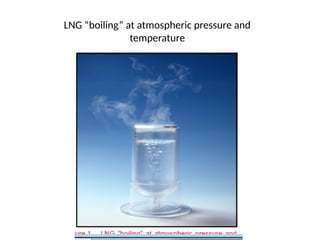
LNG “boiling” at atmospheric pressure and
temperature
• The flammability limits are 5% LFL and 15% UFL by
by volume in air.
• This “Flammable Range” is the range of a
concentration of a gas or vapour that will burn if an
ignition source is introduced. volume in air.
HAZARDS of LNG Storage
LNG Cold burns
LNG in liquid form cause cold burns. Damage the
tissues. Momentary contact is harmless but
extended contact result in Cold burns.
LNG Vapors- Asphyxia and Lung damage
Rapid Phase Transaction
When LNG is spilled onto water,such as the sea
surface,the heat in the water can cause the LNG
to vapourise rapidly.This is called rapid phase
traction.
This may cause a physical explosion with
overpressure that can cause damage to
equipment and property or injure person in
vicinity.
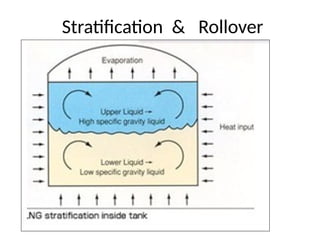
Stratification & Rollover
stratification
• The existence in the tank of two separate layers of
LNG of different density is called Stratification
Heat is lost from the upper layer by evaporation,but
because of the density difference and very low
thermal conductivity of LNG there is very little heat
transfer from the lower layer to the upper
layer.Instead, the heat, which is absorbed by the
lower layer through the tank wall and floor, causes a
rise in temperature and a decrease of density of the
lower layer
Cause of stratification
• Two different cargos having dissimilar
densities loaded without mixing in a LNG tank.
A layering will take place and instability
between the layers will occur due to the
genuine difference in the density
• Stratification may also occur when there is N2
content more than 1%. Boil off of N2 results in
less dense liquid at top surface.
Rollover
• “Rollover” refers to the rapid release of LNG
vapour that can occur as a result of the
spontaneous mixing of layers of different densities
of LNG in a storage or cargo tank.
• A pre-condition for rollover is that stratification has
occurred,
When the densities are approximately equal, the
lower superheated layer will rise through the upper
layer, releasing its superheat and thereby generating
large volumes of boil-off in a short period; this is
rollover.
Effect of Rollover
• Increase in the boil off rate up to 10 times
than the normal condition
• Increase or over pressurization of the tank
• Lifting of relief valve/Vent value of the tank
Measures to prevent rollover
• Different density cargo to be stored separately
• Prolong stoppage to be avoided when
loading ship’s tank
• Boil off rate to be continuously monitored
Both the tanks on the shore and ships are subjected
to rollover, but the possibility of Rollover to take place
is higher in ship tanks due to the size and capability of
handling different cargoes in the same tank.

Hazards in LNG Storage.pptxxxxxxxxxxxxxxxx

  • 1.
    Hazards & RISKin LNG Industry Properties of LNG • LNG is a natural gas. • It is cooled to –160 degree centigrade and reduced to 1/600th of its original volume. • Non corrosive • Colorless • Odorless • The boiling point of LNG is -162°C Note: LNG in liquid form cannot ignite
  • 2.
    LNG “boiling” atatmospheric pressure and temperature
  • 4.
    • The flammabilitylimits are 5% LFL and 15% UFL by by volume in air. • This “Flammable Range” is the range of a concentration of a gas or vapour that will burn if an ignition source is introduced. volume in air.
  • 5.
    HAZARDS of LNGStorage LNG Cold burns LNG in liquid form cause cold burns. Damage the tissues. Momentary contact is harmless but extended contact result in Cold burns. LNG Vapors- Asphyxia and Lung damage
  • 6.
    Rapid Phase Transaction RapidPhase Transaction When LNG is spilled onto water,such as the sea surface,the heat in the water can cause the LNG to vapourise rapidly.This is called rapid phase traction. This may cause a physical explosion with overpressure that can cause damage to equipment and property or injure person in vicinity.
  • 7.
  • 8.
    stratification • The existencein the tank of two separate layers of LNG of different density is called Stratification Heat is lost from the upper layer by evaporation,but because of the density difference and very low thermal conductivity of LNG there is very little heat transfer from the lower layer to the upper layer.Instead, the heat, which is absorbed by the lower layer through the tank wall and floor, causes a rise in temperature and a decrease of density of the lower layer
  • 9.
    Cause of stratification •Two different cargos having dissimilar densities loaded without mixing in a LNG tank. A layering will take place and instability between the layers will occur due to the genuine difference in the density • Stratification may also occur when there is N2 content more than 1%. Boil off of N2 results in less dense liquid at top surface.
  • 10.
    Rollover • “Rollover” refersto the rapid release of LNG vapour that can occur as a result of the spontaneous mixing of layers of different densities of LNG in a storage or cargo tank. • A pre-condition for rollover is that stratification has occurred, When the densities are approximately equal, the lower superheated layer will rise through the upper layer, releasing its superheat and thereby generating large volumes of boil-off in a short period; this is rollover.
  • 11.
    Effect of Rollover •Increase in the boil off rate up to 10 times than the normal condition • Increase or over pressurization of the tank • Lifting of relief valve/Vent value of the tank
  • 12.
    Measures to preventrollover • Different density cargo to be stored separately • Prolong stoppage to be avoided when loading ship’s tank • Boil off rate to be continuously monitored Both the tanks on the shore and ships are subjected to rollover, but the possibility of Rollover to take place is higher in ship tanks due to the size and capability of handling different cargoes in the same tank.