Harnessing the Power of
Data-Driven Decision Making
In today’s data-rich world, organizations are increasingly relying on data-driven decision
making to gain insights, optimize processes, and drive business growth. In this guide, we’ll
explore the concept of data-driven decision making, its importance, benefits, challenges,
and practical strategies for leveraging data to make informed decisions that drive success.
Understanding Data-Driven Decision Making
Data-driven decision making refers to the process of using data and analytics to inform
strategic and operational decisions within an organization. Instead of relying solely on
intuition or past experiences, data-driven decision making involves gathering, analyzing, and
interpreting data to gain actionable insights and guide decision-making processes.
Importance of Data-Driven Decision Making
1. Accuracy and Precision
Data-driven decision-making ensures that decisions are based on factual information rather
than assumptions or guesswork, leading to more accurate and precise outcomes.
2. Insight Generation
Data analysis generates valuable insights into customer behavior, market trends, and
business performance, enabling organizations to identify opportunities, mitigate risks, and
stay ahead of the competition.
3. Efficiency and Effectiveness
By leveraging data, organizations can streamline processes, optimize resource allocation,
and identify areas for improvement, leading to increased efficiency and effectiveness in
operations.
4. Innovation and Agility
Data-driven decision making fosters a culture of innovation and agility, allowing
organizations to adapt quickly to changing market conditions, customer preferences, and
emerging trends.
5. Risk Mitigation
Data analysis helps identify potential risks and vulnerabilities, allowing organizations to
proactively mitigate risks, enhance resilience, and make more informed decisions to protect
their interests.
Benefits of Data-Driven Decision Making
1. Improved Decision Quality
Data-driven decision-making leads to better-informed, evidence-based decisions that are
grounded in empirical evidence and supported by quantitative analysis.
2. Enhanced Strategic Planning
By leveraging data insights, organizations can develop more robust strategic plans, set
achievable goals, and allocate resources effectively to drive long-term success.
3. Increased Customer Satisfaction
Understanding customer needs and preferences through data analysis enables
organizations to deliver personalized experiences, tailor products and services to customer
demands, and enhance overall satisfaction and loyalty.
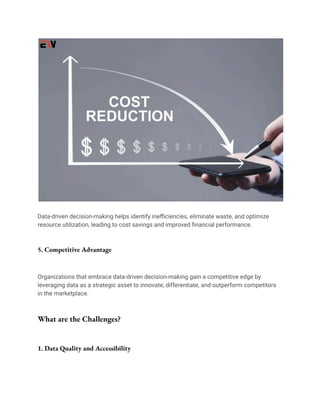
4. Cost Reduction
Data-driven decision-making helps identify inefficiencies, eliminate waste, and optimize
resource utilization, leading to cost savings and improved financial performance.
5. Competitive Advantage
Organizations that embrace data-driven decision-making gain a competitive edge by
leveraging data as a strategic asset to innovate, differentiate, and outperform competitors
in the marketplace.
What are the Challenges?
1. Data Quality and Accessibility
Ensuring data quality, consistency, and accessibility across different systems and sources
can be challenging, particularly in organizations with disparate data silos and legacy
systems.
2. Data Privacy and Security
Safeguarding sensitive data and ensuring compliance with data privacy regulations
presents significant challenges, particularly in industries where data protection and
confidentiality are paramount.
3. Skill and Talent Gap
Building a data-driven culture requires skilled data analysts, data scientists, and business
analysts who can extract insights from data and translate them into actionable
recommendations, posing challenges in talent acquisition and development.
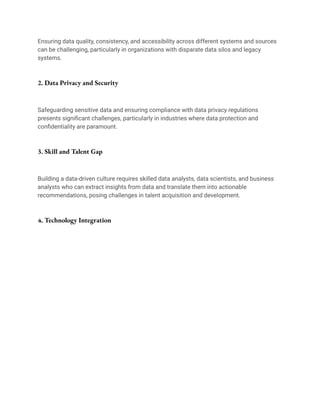
4. Technology Integration
Integrating disparate data sources, analytics tools, and technologies into existing workflows
and systems can be complex and resource-intensive, requiring careful planning and
investment in infrastructure and technology solutions.
5. Cultural Resistance
Overcoming organizational resistance to change and fostering a data-driven culture requires
strong leadership, effective change management strategies, and ongoing education and
training to instill confidence and buy-in from stakeholders at all levels.
Strategies for Effective Decision-Making
1. Define Clear Objectives
Start by defining clear business objectives and key performance indicators (KPIs) that align
with organizational goals and priorities, ensuring that data analysis efforts are focused on
addressing specific business challenges and opportunities.
2. Invest in Data Infrastructure
Invest in robust data infrastructure, including data storage, integration, and analytics
capabilities, to ensure that data is accessible, reliable, and actionable for decision-making
purposes.
3. Empower Data Literacy
Promote data literacy and fluency among employees at all levels of the organization
through training programs, workshops, and educational initiatives to build a data-driven
culture and empower individuals to make informed decisions based on data.
4. Utilize Advanced Analytics
Leverage advanced analytics techniques, such as predictive analytics, machine learning,
and data visualization, to extract actionable insights from large and complex datasets,
enabling organizations to anticipate trends, identify patterns, and make proactive decisions.
5. Iterative Approach
Adopt an iterative approach to data-driven decision-making, continuously collecting
feedback, refining analysis methodologies, and iterating on decision-making processes
based on real-time data and feedback loops.
6. Collaborative Decision Making
Foster collaboration and cross-functional teamwork among stakeholders from different
departments and disciplines, encouraging knowledge sharing, diverse perspectives, and
collective problem-solving to arrive at well-informed decisions.
7. Monitor and Evaluate
Establish mechanisms for monitoring and evaluating the impact of data-driven decisions
over time, tracking key performance metrics, and adjusting strategies as needed to optimize
outcomes and drive continuous improvement.
Summing Up
By embracing data-driven decision-making, organizations can unlock the full potential of
their data assets, drive innovation, and gain a competitive edge in today’s data-driven
economy. Through strategic investments in data infrastructure, talent development, and
organizational culture, businesses can harness the power of data to make smarter
decisions, achieve business objectives, and drive sustainable growth and success.

Harnessing the Power of Data-Driven Decision Making.pdf

  • 1.
    Harnessing the Powerof Data-Driven Decision Making In today’s data-rich world, organizations are increasingly relying on data-driven decision making to gain insights, optimize processes, and drive business growth. In this guide, we’ll explore the concept of data-driven decision making, its importance, benefits, challenges, and practical strategies for leveraging data to make informed decisions that drive success. Understanding Data-Driven Decision Making Data-driven decision making refers to the process of using data and analytics to inform strategic and operational decisions within an organization. Instead of relying solely on
  • 2.
    intuition or pastexperiences, data-driven decision making involves gathering, analyzing, and interpreting data to gain actionable insights and guide decision-making processes. Importance of Data-Driven Decision Making 1. Accuracy and Precision Data-driven decision-making ensures that decisions are based on factual information rather than assumptions or guesswork, leading to more accurate and precise outcomes. 2. Insight Generation Data analysis generates valuable insights into customer behavior, market trends, and business performance, enabling organizations to identify opportunities, mitigate risks, and stay ahead of the competition. 3. Efficiency and Effectiveness
  • 3.
    By leveraging data,organizations can streamline processes, optimize resource allocation, and identify areas for improvement, leading to increased efficiency and effectiveness in operations. 4. Innovation and Agility Data-driven decision making fosters a culture of innovation and agility, allowing organizations to adapt quickly to changing market conditions, customer preferences, and emerging trends. 5. Risk Mitigation Data analysis helps identify potential risks and vulnerabilities, allowing organizations to proactively mitigate risks, enhance resilience, and make more informed decisions to protect their interests.
  • 4.
    Benefits of Data-DrivenDecision Making 1. Improved Decision Quality Data-driven decision-making leads to better-informed, evidence-based decisions that are grounded in empirical evidence and supported by quantitative analysis. 2. Enhanced Strategic Planning By leveraging data insights, organizations can develop more robust strategic plans, set achievable goals, and allocate resources effectively to drive long-term success. 3. Increased Customer Satisfaction Understanding customer needs and preferences through data analysis enables organizations to deliver personalized experiences, tailor products and services to customer demands, and enhance overall satisfaction and loyalty. 4. Cost Reduction
  • 5.
    Data-driven decision-making helpsidentify inefficiencies, eliminate waste, and optimize resource utilization, leading to cost savings and improved financial performance. 5. Competitive Advantage Organizations that embrace data-driven decision-making gain a competitive edge by leveraging data as a strategic asset to innovate, differentiate, and outperform competitors in the marketplace. What are the Challenges? 1. Data Quality and Accessibility
  • 6.
    Ensuring data quality,consistency, and accessibility across different systems and sources can be challenging, particularly in organizations with disparate data silos and legacy systems. 2. Data Privacy and Security Safeguarding sensitive data and ensuring compliance with data privacy regulations presents significant challenges, particularly in industries where data protection and confidentiality are paramount. 3. Skill and Talent Gap Building a data-driven culture requires skilled data analysts, data scientists, and business analysts who can extract insights from data and translate them into actionable recommendations, posing challenges in talent acquisition and development. 4. Technology Integration
  • 7.
    Integrating disparate datasources, analytics tools, and technologies into existing workflows and systems can be complex and resource-intensive, requiring careful planning and investment in infrastructure and technology solutions. 5. Cultural Resistance Overcoming organizational resistance to change and fostering a data-driven culture requires strong leadership, effective change management strategies, and ongoing education and training to instill confidence and buy-in from stakeholders at all levels. Strategies for Effective Decision-Making 1. Define Clear Objectives
  • 8.
    Start by definingclear business objectives and key performance indicators (KPIs) that align with organizational goals and priorities, ensuring that data analysis efforts are focused on addressing specific business challenges and opportunities. 2. Invest in Data Infrastructure Invest in robust data infrastructure, including data storage, integration, and analytics capabilities, to ensure that data is accessible, reliable, and actionable for decision-making purposes. 3. Empower Data Literacy Promote data literacy and fluency among employees at all levels of the organization through training programs, workshops, and educational initiatives to build a data-driven culture and empower individuals to make informed decisions based on data. 4. Utilize Advanced Analytics Leverage advanced analytics techniques, such as predictive analytics, machine learning, and data visualization, to extract actionable insights from large and complex datasets, enabling organizations to anticipate trends, identify patterns, and make proactive decisions. 5. Iterative Approach Adopt an iterative approach to data-driven decision-making, continuously collecting feedback, refining analysis methodologies, and iterating on decision-making processes based on real-time data and feedback loops. 6. Collaborative Decision Making
  • 9.
    Foster collaboration andcross-functional teamwork among stakeholders from different departments and disciplines, encouraging knowledge sharing, diverse perspectives, and collective problem-solving to arrive at well-informed decisions. 7. Monitor and Evaluate Establish mechanisms for monitoring and evaluating the impact of data-driven decisions over time, tracking key performance metrics, and adjusting strategies as needed to optimize outcomes and drive continuous improvement. Summing Up By embracing data-driven decision-making, organizations can unlock the full potential of their data assets, drive innovation, and gain a competitive edge in today’s data-driven economy. Through strategic investments in data infrastructure, talent development, and organizational culture, businesses can harness the power of data to make smarter decisions, achieve business objectives, and drive sustainable growth and success.