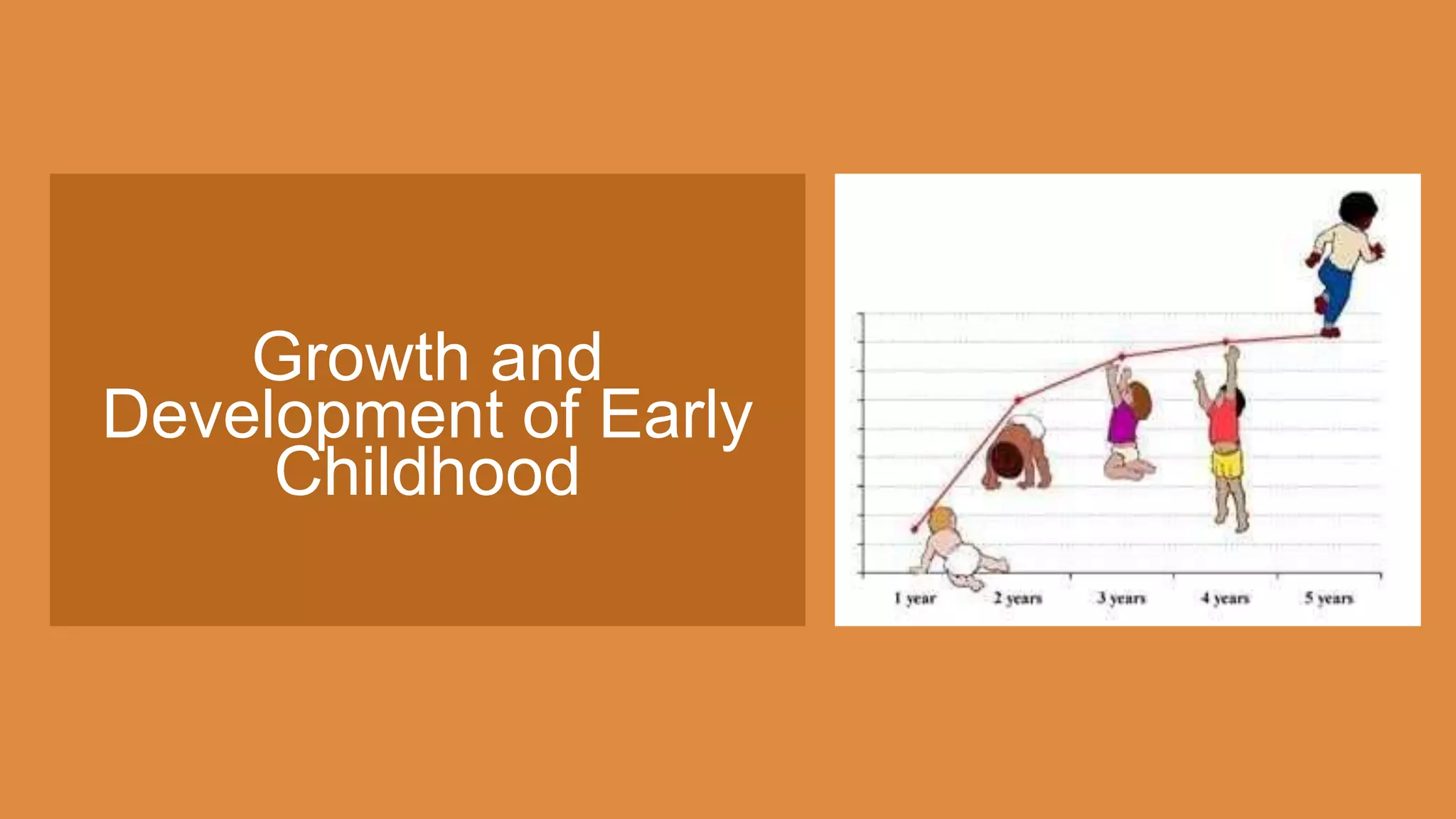
Growth and
Development of Early
Childhood
Concept of Early Childhood Development
Generally, early childhood is defined as a time that
“spans from prenatal period to eight years of age and it is the
most intensive period of brain development throughout the
lifespan” (WHO & UNICEF, 2012).
This period is the most critical time for the growth and
development of the child and needs the utmost attention and
appropriate care.
Concept of Early Childhood Development
Early childhood development is defined with many
different terminologies by different programs or
institutions. Here is how the ECD policy documents of the
governments of Malawi, Kenya, Zambia, and Philippines
define early childhood.
Government of Malawi
Early childhood care and development is a
“comprehensive approach to policies and programs for
children from conception to eight years. It encompasses
early learning and stimulation, health, education,
nutrition, hygiene, and sanitation.” (National Strategic
Plan for Early Childhood Development, 2008,
Government of Malawi).
Government of Kenya
Early childhood care and development is a
“framework that targets all children including the
vulnerable and marginalized from conception to eight
years of age…and all these children have the same
needs which consist of nutrition, health, nurture,
protection, stimulation, and training…” (National Early
Childhood Development Policy Framework, Republic of
Kenya, June 2006).
Government of Zambia
Early childhood care and development is a
provision of support “for every young child to realize
his/her right to survival, to protection, and to care that will
ensure optimal physical and psychosocial development
from birth to age eight…including infant stimulation, health
and nutrition, early childhood education, community
development…” (National Policy of Zambia on Early
Childhood Care, Development, and Education: Investing
into Our Children’s Future, Everyone’s Responsibility, 1st
Draft by Mulenga, n.d.)
Philippines
A system that shall promote the inclusion of
children with special needs and advocate respect for
cultural diversity. It shall be anchored on
complementary strategies for ECCD that include
service delivery for children from conception to age six
(6), educating parents and caregivers, encouraging the
active involvement of parents and communities in
ECCD programs, raising awareness about the
importance of ECCD, and promoting community
development efforts that improve the quality of life for
young children and families,
WHAT IS GROWTH?
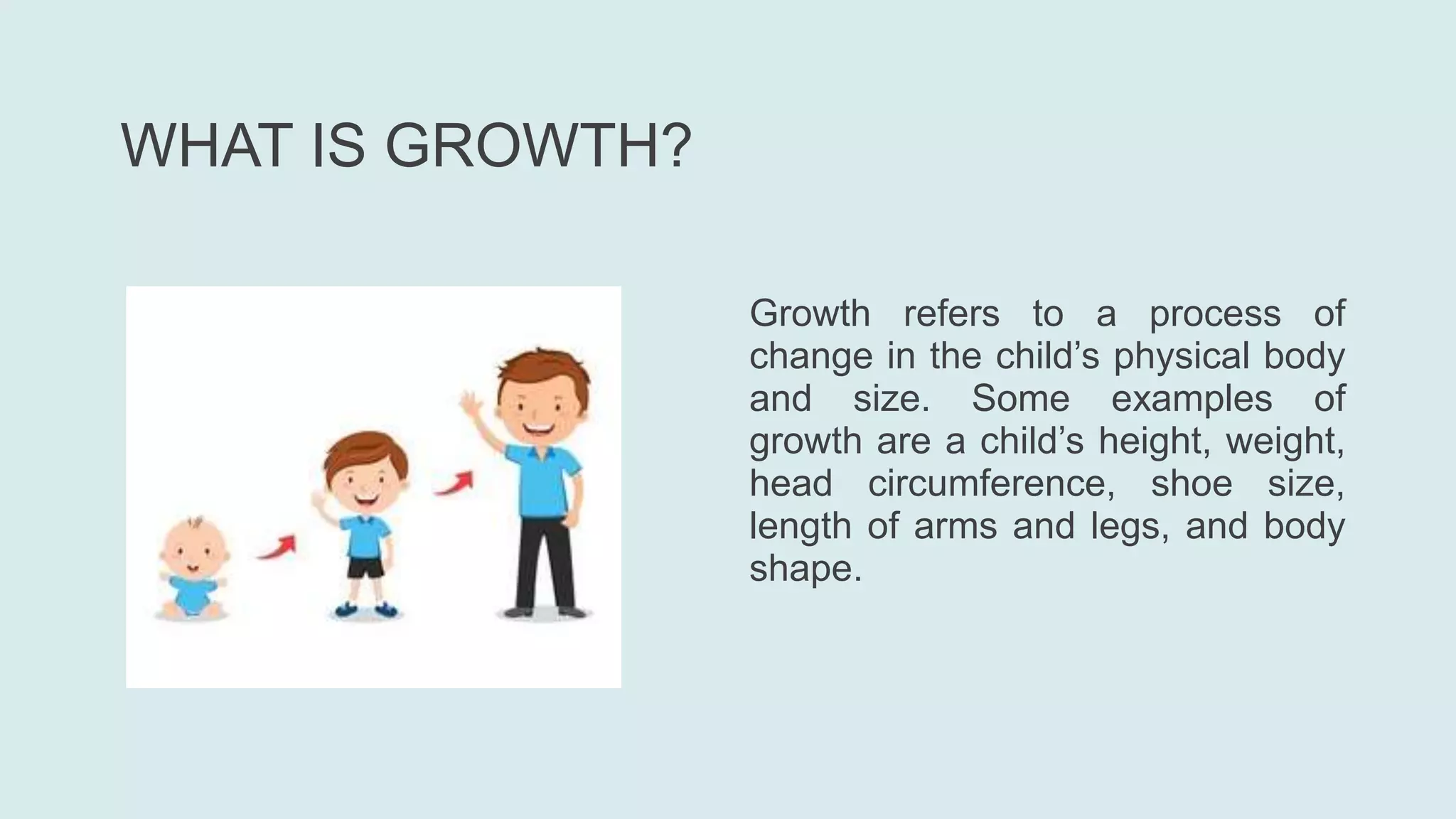
Growth refers to a process of
change in the child’s physical body
and size. Some examples of
growth are a child’s height, weight,
head circumference, shoe size,
length of arms and legs, and body
shape.
WHAT IS DEVELOPMENT?
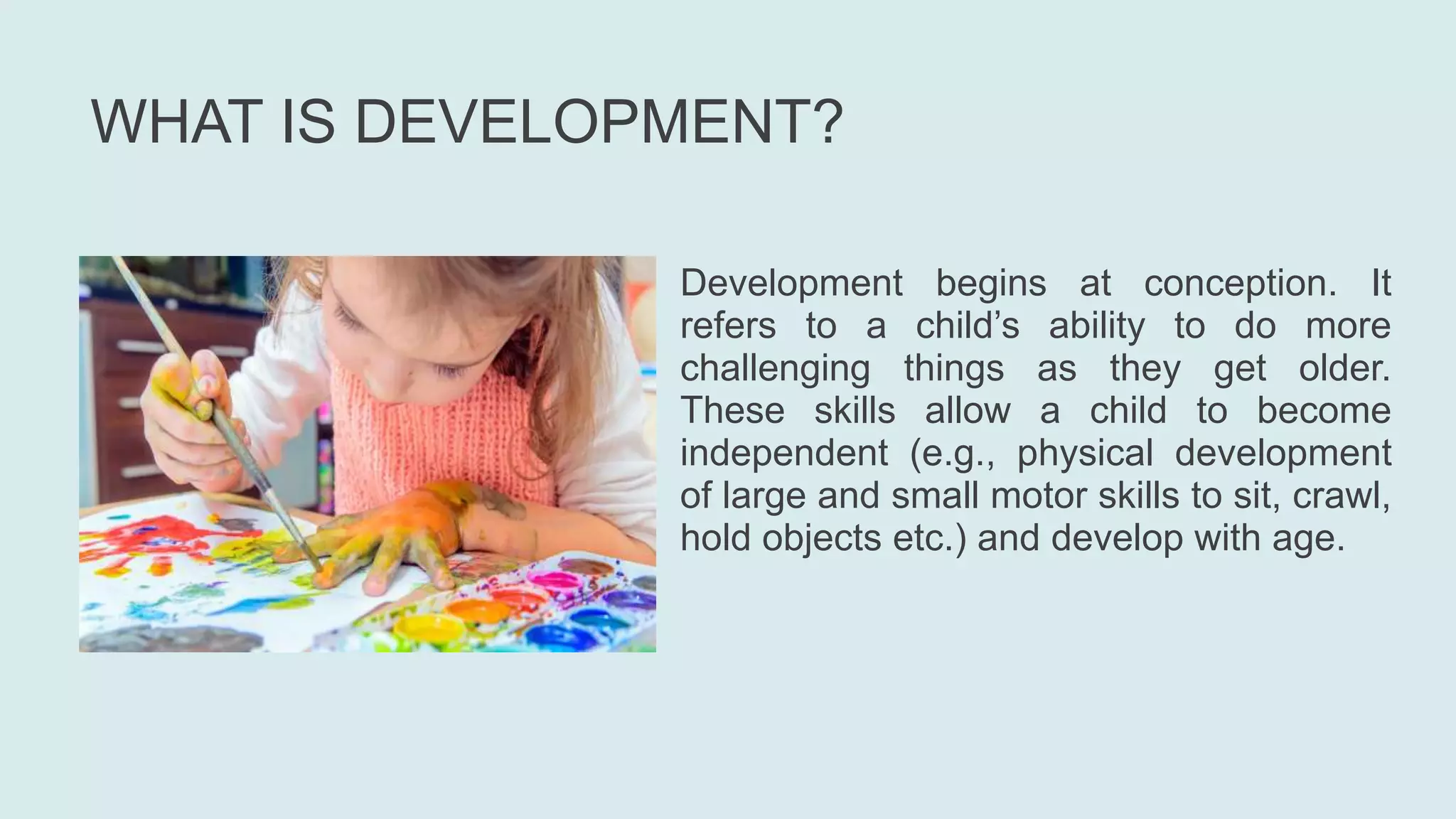
Development begins at conception. It
refers to a child’s ability to do more
challenging things as they get older.
These skills allow a child to become
independent (e.g., physical development
of large and small motor skills to sit, crawl,
hold objects etc.) and develop with age.
Thank you…

Growth and Development

  • 1.
  • 2.
    Concept of EarlyChildhood Development Generally, early childhood is defined as a time that “spans from prenatal period to eight years of age and it is the most intensive period of brain development throughout the lifespan” (WHO & UNICEF, 2012). This period is the most critical time for the growth and development of the child and needs the utmost attention and appropriate care.
  • 3.
    Concept of EarlyChildhood Development Early childhood development is defined with many different terminologies by different programs or institutions. Here is how the ECD policy documents of the governments of Malawi, Kenya, Zambia, and Philippines define early childhood.
  • 4.
    Government of Malawi Earlychildhood care and development is a “comprehensive approach to policies and programs for children from conception to eight years. It encompasses early learning and stimulation, health, education, nutrition, hygiene, and sanitation.” (National Strategic Plan for Early Childhood Development, 2008, Government of Malawi).
  • 5.
    Government of Kenya Earlychildhood care and development is a “framework that targets all children including the vulnerable and marginalized from conception to eight years of age…and all these children have the same needs which consist of nutrition, health, nurture, protection, stimulation, and training…” (National Early Childhood Development Policy Framework, Republic of Kenya, June 2006).
  • 6.
    Government of Zambia Earlychildhood care and development is a provision of support “for every young child to realize his/her right to survival, to protection, and to care that will ensure optimal physical and psychosocial development from birth to age eight…including infant stimulation, health and nutrition, early childhood education, community development…” (National Policy of Zambia on Early Childhood Care, Development, and Education: Investing into Our Children’s Future, Everyone’s Responsibility, 1st Draft by Mulenga, n.d.)
  • 7.
    Philippines A system thatshall promote the inclusion of children with special needs and advocate respect for cultural diversity. It shall be anchored on complementary strategies for ECCD that include service delivery for children from conception to age six (6), educating parents and caregivers, encouraging the active involvement of parents and communities in ECCD programs, raising awareness about the importance of ECCD, and promoting community development efforts that improve the quality of life for young children and families,
  • 8.
    WHAT IS GROWTH? Growthrefers to a process of change in the child’s physical body and size. Some examples of growth are a child’s height, weight, head circumference, shoe size, length of arms and legs, and body shape.
  • 9.
    WHAT IS DEVELOPMENT? Developmentbegins at conception. It refers to a child’s ability to do more challenging things as they get older. These skills allow a child to become independent (e.g., physical development of large and small motor skills to sit, crawl, hold objects etc.) and develop with age.
  • 10.