If you shave hair, it grows 
back thicker 
Allie Wendell
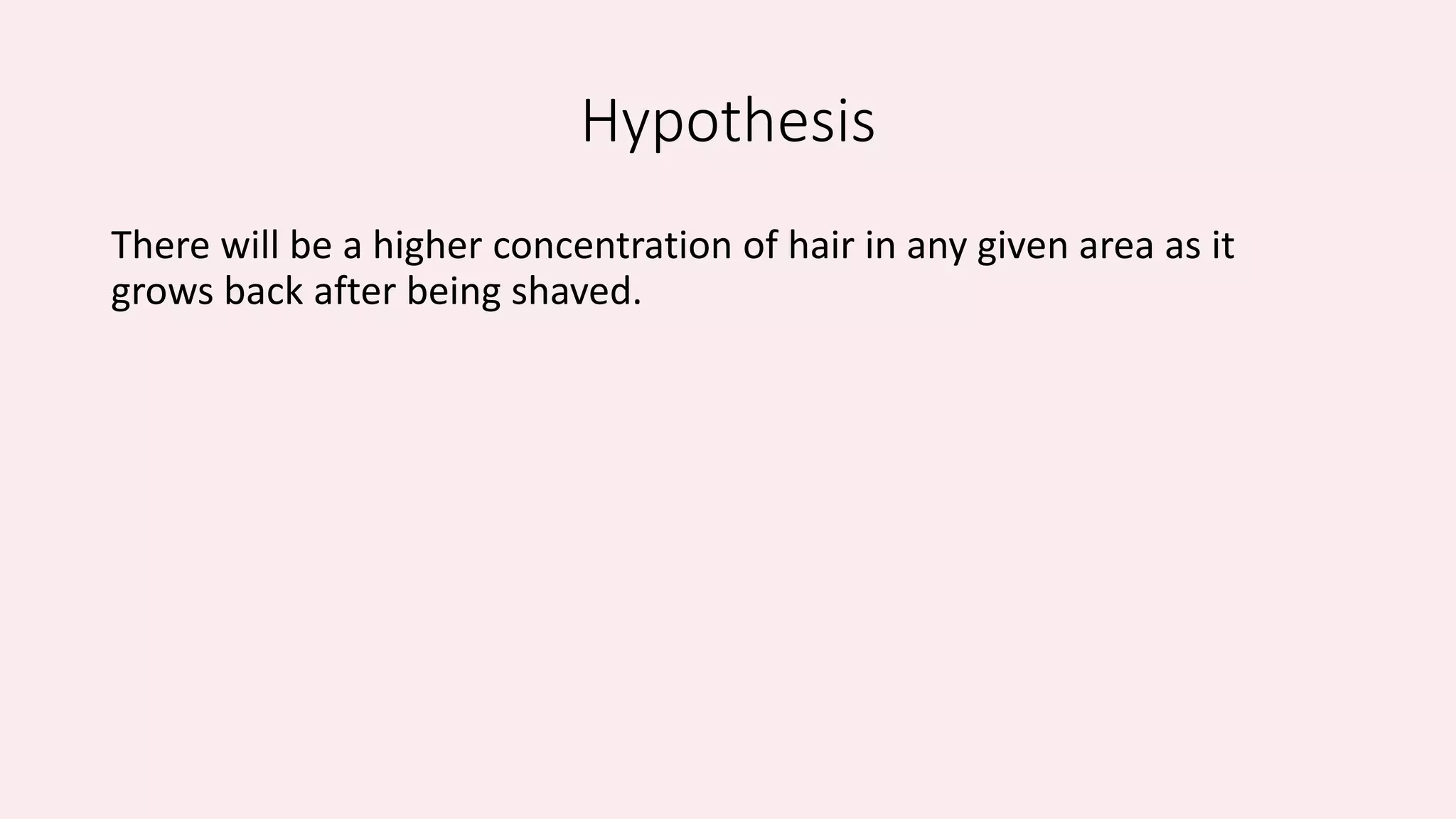
Hypothesis 
There will be a higher concentration of hair in any given area as it 
grows back after being shaved.
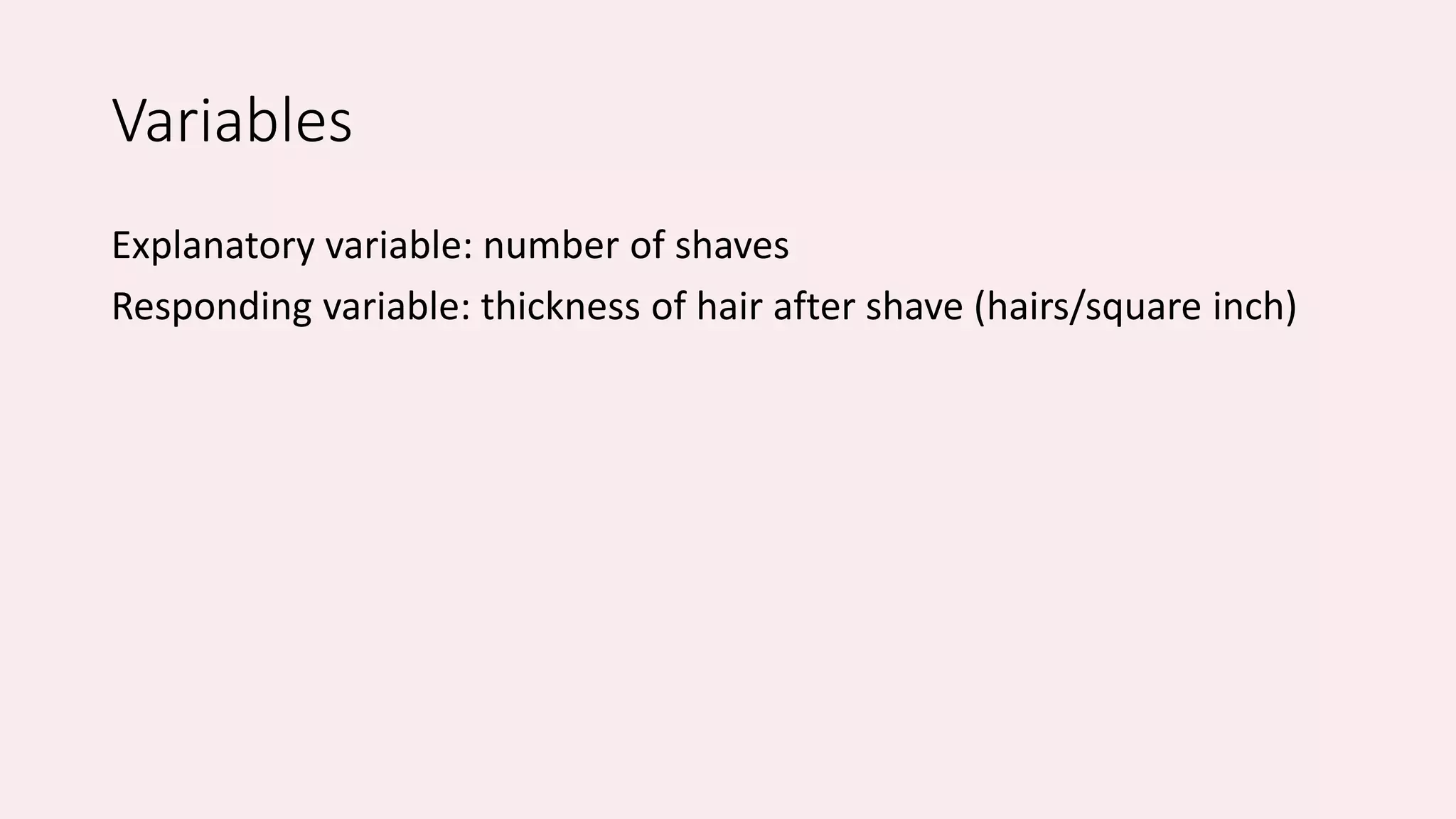
Variables 
Explanatory variable: number of shaves 
Responding variable: thickness of hair after shave (hairs/square inch)
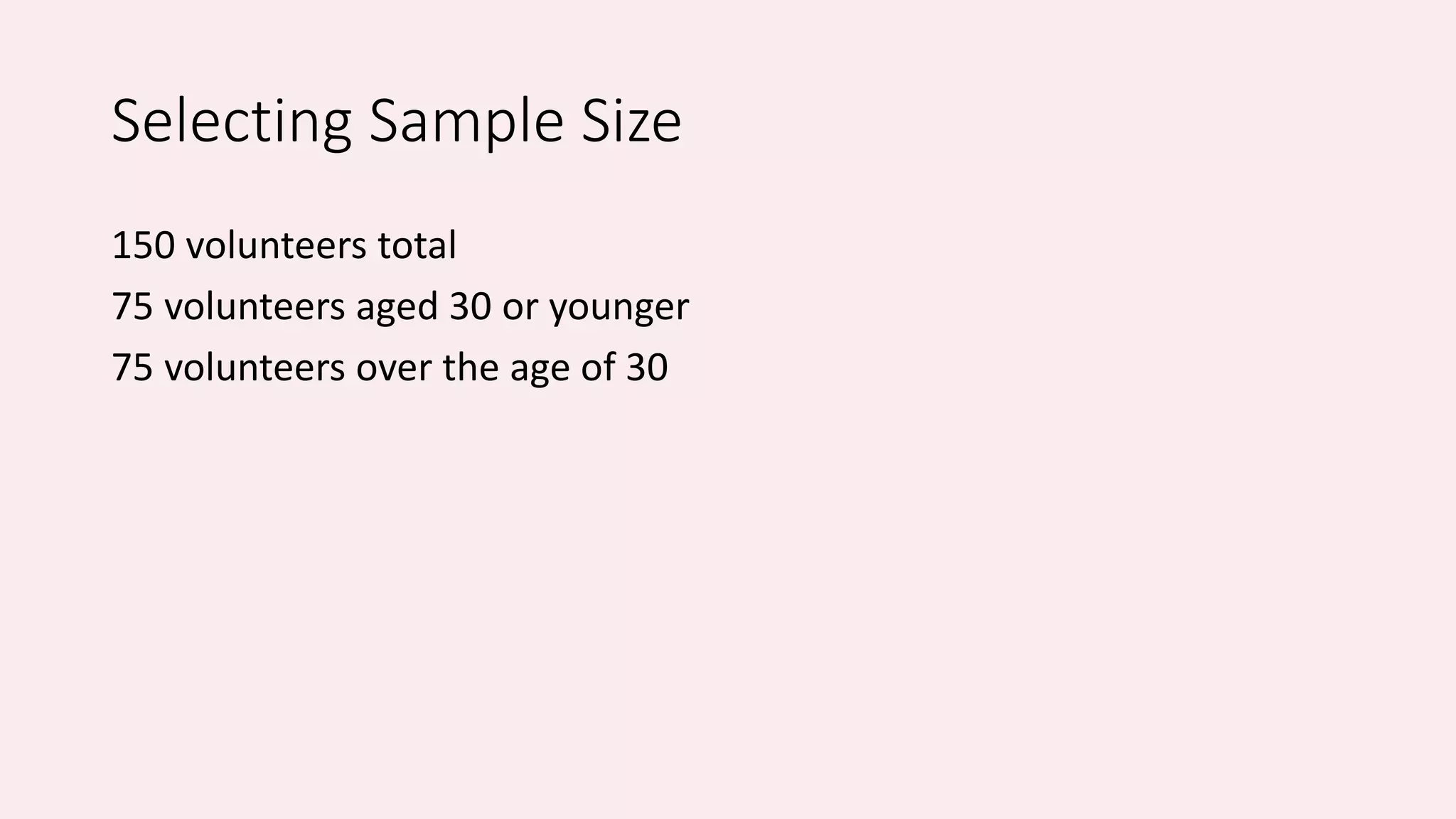
Selecting Sample Size 
150 volunteers total 
75 volunteers aged 30 or younger 
75 volunteers over the age of 30
Treatment 
The 150 volunteers are grouped by age—subjects 30 or younger in one experiment 
and subjects over the age of 30 in a different experiment sine age may influence 
hair growth. Before the experiment begins, the average number of hairs per square 
inch on each person will be calculated using data from both arms and legs as a 
sample. The 75 volunteers in each age group will be randomly assigned to 3 
different treatments—shaving body hair once, not shaving at all, and shaving twice 
on two separate occasions. The control group (not shaving at all) accounts for the 
possibility that hair grows thicker over time without shaving. Since counting all 
hairs on the arms and legs of every subject would be unrealistic, cluster samples 
could be used to compute an average number of hairs per square inch for each 
volunteer.
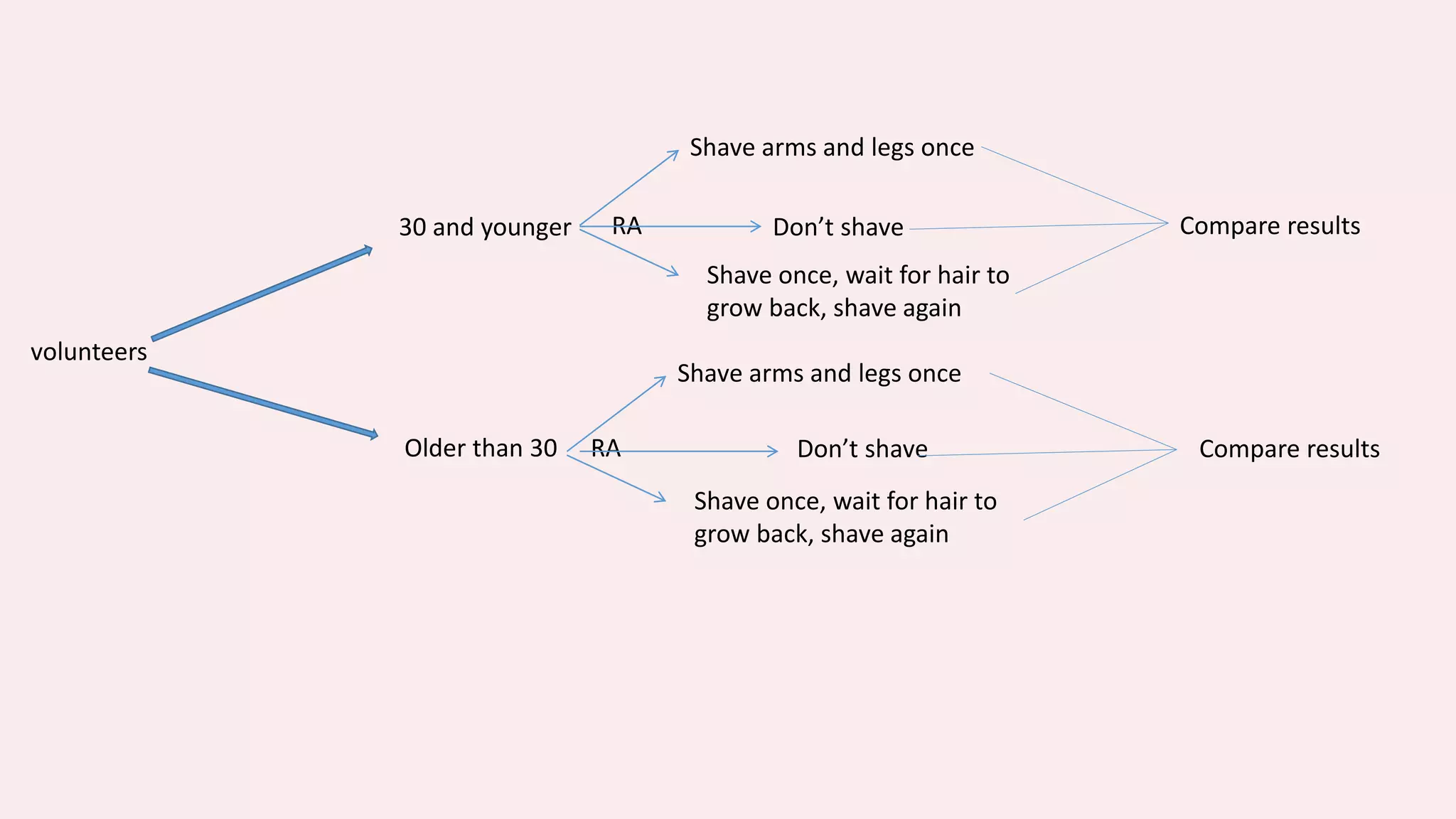
volunteers 
30 and younger 
Older than 30 
Shave arms and legs once 
Shave once, wait for hair to 
grow back, shave again 
Shave arms and legs once 
Shave once, wait for hair to 
grow back, shave again 
RA 
RA 
Don’t shave 
Don’t shave 
Compare results 
Compare results
Experimental Design 
The blocking of the subjects by age helps to ensure that the results are not skewed 
by a consistent difference in hair growth between the ages. For example, if older 
people grow less hair naturally, this could change the average results calculated 
amongst the younger group if blocking was not used. This experiment could not use 
blinding techniques because the subjects clearly know whether they have been 
instructed to shave their arms, and there is no alternative that can be disguised as 
the same treatment. The more the experiment is replicated with more 
subjects/larger sample sizes, the more accuracy can be assured if the results 
remain consistent through each experiment.
Calculating and Analyzing Results 
After the study, the same cluster method would be used to calculate 
the average number of hairs per square inch for each subject in the 
experiment. The beginning and end results would be compared. If the 
hypothesis is correct, the average concentration of hairs will be higher 
after the shaving treatment.
Concerns/Possible Sources of Error 
Since the treatment can’t be closely supervised, people might forget or 
neglect to perform the treatment on their own, which could skew the 
results.

Group p

  • 1.
    If you shavehair, it grows back thicker Allie Wendell
  • 2.
    Hypothesis There willbe a higher concentration of hair in any given area as it grows back after being shaved.
  • 3.
    Variables Explanatory variable:number of shaves Responding variable: thickness of hair after shave (hairs/square inch)
  • 4.
    Selecting Sample Size 150 volunteers total 75 volunteers aged 30 or younger 75 volunteers over the age of 30
  • 5.
    Treatment The 150volunteers are grouped by age—subjects 30 or younger in one experiment and subjects over the age of 30 in a different experiment sine age may influence hair growth. Before the experiment begins, the average number of hairs per square inch on each person will be calculated using data from both arms and legs as a sample. The 75 volunteers in each age group will be randomly assigned to 3 different treatments—shaving body hair once, not shaving at all, and shaving twice on two separate occasions. The control group (not shaving at all) accounts for the possibility that hair grows thicker over time without shaving. Since counting all hairs on the arms and legs of every subject would be unrealistic, cluster samples could be used to compute an average number of hairs per square inch for each volunteer.
  • 6.
    volunteers 30 andyounger Older than 30 Shave arms and legs once Shave once, wait for hair to grow back, shave again Shave arms and legs once Shave once, wait for hair to grow back, shave again RA RA Don’t shave Don’t shave Compare results Compare results
  • 7.
    Experimental Design Theblocking of the subjects by age helps to ensure that the results are not skewed by a consistent difference in hair growth between the ages. For example, if older people grow less hair naturally, this could change the average results calculated amongst the younger group if blocking was not used. This experiment could not use blinding techniques because the subjects clearly know whether they have been instructed to shave their arms, and there is no alternative that can be disguised as the same treatment. The more the experiment is replicated with more subjects/larger sample sizes, the more accuracy can be assured if the results remain consistent through each experiment.
  • 8.
    Calculating and AnalyzingResults After the study, the same cluster method would be used to calculate the average number of hairs per square inch for each subject in the experiment. The beginning and end results would be compared. If the hypothesis is correct, the average concentration of hairs will be higher after the shaving treatment.
  • 9.
    Concerns/Possible Sources ofError Since the treatment can’t be closely supervised, people might forget or neglect to perform the treatment on their own, which could skew the results.