LESSON 2.1 :
FITNESS GOALS
I. LEARNING OUTCOMES:
Identify the principles of physical activity. (A)
Appreciate the importance of FITT in doing
physical activities. (U)
Perform moderate to vigorous physical
activities following the designed fitness
plan.(AP)
The Principles of Physical Activity
1. Overload Principle
This is the most basic principle that indicates doing “more than normal”
for improvement to happen. In order for the skeletal muscles to get stronger,
additional load must be added and greater load exerted than what was used to.
2. Principle of Progression
It is a gradual increase in exerting effort or load that is done not too
slowly, nor too rapidly. This principle aids safe and effective results.
3. Principle of Specificity
This suggests that overloading must specifically train a
desired body part for it to improve. For example,
cardiovascular fitness may only improve flexibility to a small
degree, and so jogging and running will not be a part of the
exercise program for developing flexibility. Instead, select
exercises with emphasis on stretching out the muscles and
joints. Use the appropriate type of exercise that directly
improves your target muscles.
4. Principle of Reversibility
Development of muscles will take place if
regular movement and execution is done, and if
activity ceases, it will be reversed. This shows that
benefit and changes achieved from overload will
last only if training is continuous. The effect of
training is lost if the training is discontinued.
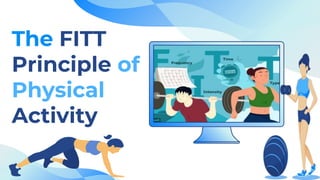
The FITT
Principle of
Physical
Activity
1. Frequency
The frequency of exercise refers to
number of times a physical activity is
done in each week. According to the
American College of Sports Medicine
guidelines, it is recommended to
exercise 3-5 days per week and for
more optimal results, exercise can be
done in most days of the week with a
combination of light moderate-
vigorous activity.
The rate at which the activity is performed
is called Intensity. It is also referred to as
the magnitude of the effort required to
perform an activity or exercise. It describes
how easy or how hard a person has to work
in a certain activity, and it varies from one
person to another. The determination of
intensity depends on some individual
factors such as exercise experience,
relative level of fitness, and needs of
fitness.
2. Intensity
The type of activity is
determined by following the
principle of progression and
specificity. To attain a higher
level of fitness, select the type
of physical activity that
challenges the body to accept
an increase in work and
answers your need.
3. Type
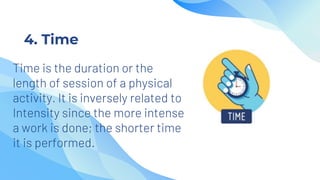
4. Time
Time is the duration or the
length of session of a physical
activity. It is inversely related to
Intensity since the more intense
a work is done; the shorter time
it is performed.
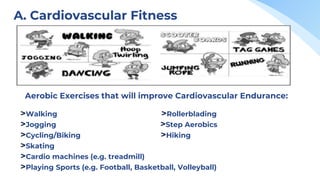
A. Cardiovascular Fitness
Aerobic Exercises that will improve Cardiovascular Endurance:
>Walking >Rollerblading
>Jogging >Step Aerobics
>Cycling/Biking >Hiking
>Skating
>Cardio machines (e.g. treadmill)
>Playing Sports (e.g. Football, Basketball, Volleyball)
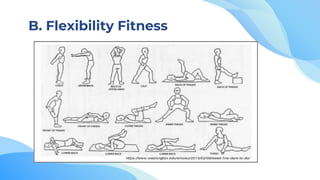
B. Flexibility Fitness
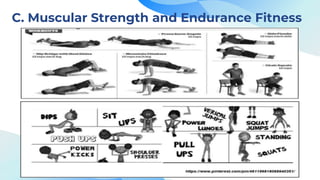
C. Muscular Strength and Endurance Fitness
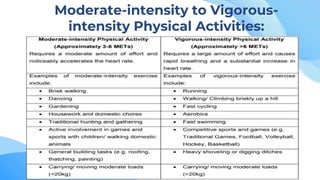
Moderate-intensity to Vigorous-
intensity Physical Activities:
THANKYOUUU!!

GREEN TEAM-PE2.pptx

  • 2.
  • 3.
    I. LEARNING OUTCOMES: Identifythe principles of physical activity. (A) Appreciate the importance of FITT in doing physical activities. (U) Perform moderate to vigorous physical activities following the designed fitness plan.(AP)
  • 4.
    The Principles ofPhysical Activity 1. Overload Principle This is the most basic principle that indicates doing “more than normal” for improvement to happen. In order for the skeletal muscles to get stronger, additional load must be added and greater load exerted than what was used to. 2. Principle of Progression It is a gradual increase in exerting effort or load that is done not too slowly, nor too rapidly. This principle aids safe and effective results.
  • 5.
    3. Principle ofSpecificity This suggests that overloading must specifically train a desired body part for it to improve. For example, cardiovascular fitness may only improve flexibility to a small degree, and so jogging and running will not be a part of the exercise program for developing flexibility. Instead, select exercises with emphasis on stretching out the muscles and joints. Use the appropriate type of exercise that directly improves your target muscles.
  • 6.
    4. Principle ofReversibility Development of muscles will take place if regular movement and execution is done, and if activity ceases, it will be reversed. This shows that benefit and changes achieved from overload will last only if training is continuous. The effect of training is lost if the training is discontinued.
  • 7.
  • 8.
    1. Frequency The frequencyof exercise refers to number of times a physical activity is done in each week. According to the American College of Sports Medicine guidelines, it is recommended to exercise 3-5 days per week and for more optimal results, exercise can be done in most days of the week with a combination of light moderate- vigorous activity.
  • 9.
    The rate atwhich the activity is performed is called Intensity. It is also referred to as the magnitude of the effort required to perform an activity or exercise. It describes how easy or how hard a person has to work in a certain activity, and it varies from one person to another. The determination of intensity depends on some individual factors such as exercise experience, relative level of fitness, and needs of fitness. 2. Intensity
  • 10.
    The type ofactivity is determined by following the principle of progression and specificity. To attain a higher level of fitness, select the type of physical activity that challenges the body to accept an increase in work and answers your need. 3. Type
  • 11.
    4. Time Time isthe duration or the length of session of a physical activity. It is inversely related to Intensity since the more intense a work is done; the shorter time it is performed.
  • 12.
    A. Cardiovascular Fitness AerobicExercises that will improve Cardiovascular Endurance: >Walking >Rollerblading >Jogging >Step Aerobics >Cycling/Biking >Hiking >Skating >Cardio machines (e.g. treadmill) >Playing Sports (e.g. Football, Basketball, Volleyball)
  • 13.
  • 14.
    C. Muscular Strengthand Endurance Fitness
  • 15.
  • 16.