Green HRM and Its
Impact on New Skills
Required in the Market
Sustainability, HR functions, culture, skills, green economy, future of work.
Group 10
Introduction to Green HRM
Green HRM is not just a trend; it's a strategic imperative. The growing concerns over climate change, resource
depletion, and biodiversity loss demand proactive action from organizations. Green HRM bridges the gap between
corporate responsibility and environmental stewardship. It embraces sustainability as a core value, fostering a
workforce committed to minimizing the organization’s environmental footprint.
Sustainability as a Core
Value
Green HRM incorporates
sustainability into all
organizational functions, from
recruitment and training to
performance management and
employee engagement.
Minimizing Environmental
Footprint
Green HRM focuses on reducing
the organization’s environmental
impact, including energy
consumption, waste generation,
and carbon emissions.
Building a Sustainable
Workforce
Green HRM nurtures a workforce
that embraces environmental
responsibility and actively
contributes to sustainable
practices.
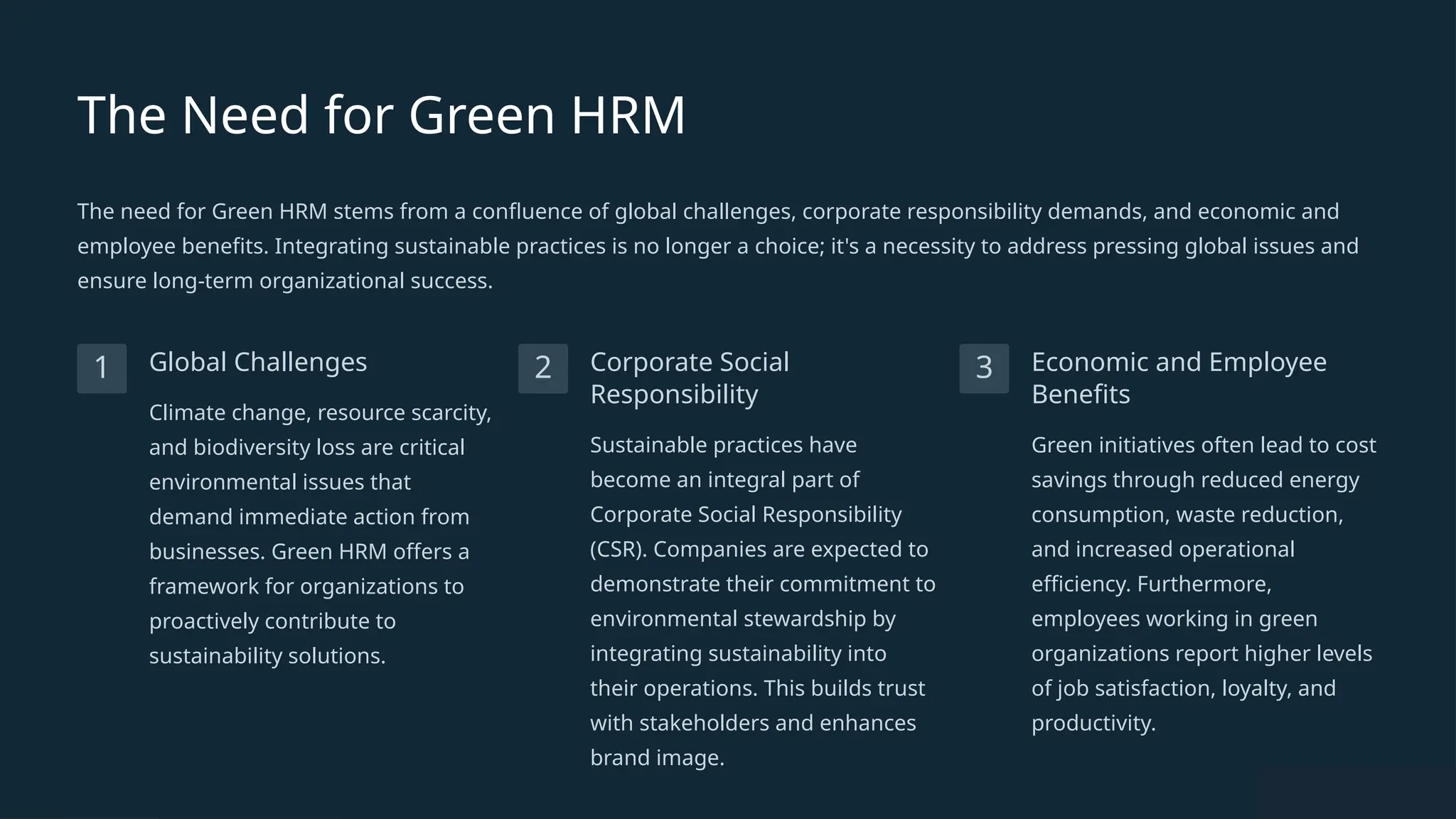
The Need for Green HRM
The need for Green HRM stems from a confluence of global challenges, corporate responsibility demands, and economic and
employee benefits. Integrating sustainable practices is no longer a choice; it's a necessity to address pressing global issues and
ensure long-term organizational success.
1 Global Challenges
Climate change, resource scarcity,
and biodiversity loss are critical
environmental issues that
demand immediate action from
businesses. Green HRM offers a
framework for organizations to
proactively contribute to
sustainability solutions.
2 Corporate Social
Responsibility
Sustainable practices have
become an integral part of
Corporate Social Responsibility
(CSR). Companies are expected to
demonstrate their commitment to
environmental stewardship by
integrating sustainability into
their operations. This builds trust
with stakeholders and enhances
brand image.
3 Economic and Employee
Benefits
Green initiatives often lead to cost
savings through reduced energy
consumption, waste reduction,
and increased operational
efficiency. Furthermore,
employees working in green
organizations report higher levels
of job satisfaction, loyalty, and
productivity.
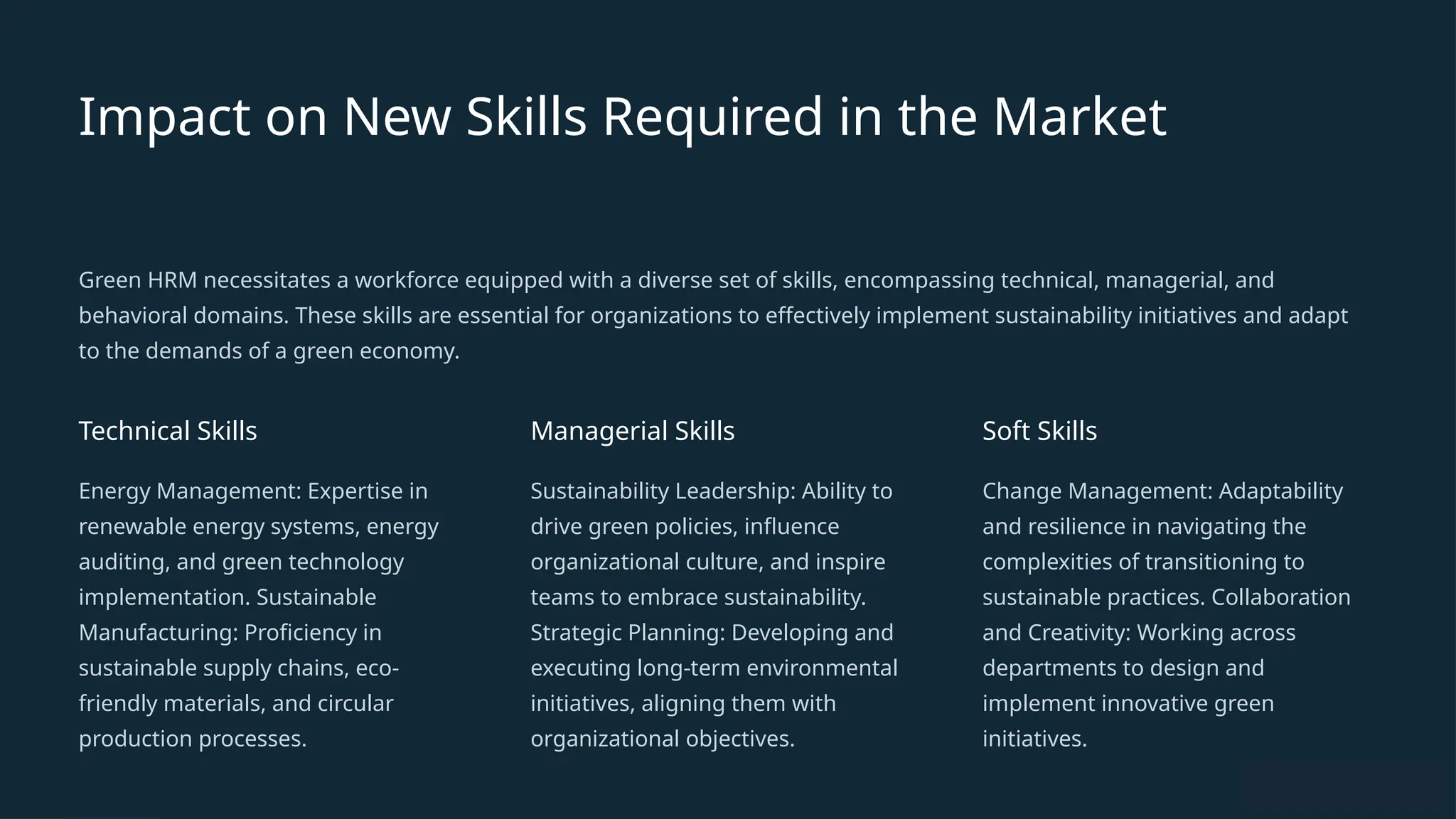
Impact on New Skills Required in the Market
Green HRM necessitates a workforce equipped with a diverse set of skills, encompassing technical, managerial, and
behavioral domains. These skills are essential for organizations to effectively implement sustainability initiatives and adapt
to the demands of a green economy.
Technical Skills
Energy Management: Expertise in
renewable energy systems, energy
auditing, and green technology
implementation. Sustainable
Manufacturing: Proficiency in
sustainable supply chains, eco-
friendly materials, and circular
production processes.
Managerial Skills
Sustainability Leadership: Ability to
drive green policies, influence
organizational culture, and inspire
teams to embrace sustainability.
Strategic Planning: Developing and
executing long-term environmental
initiatives, aligning them with
organizational objectives.
Soft Skills
Change Management: Adaptability
and resilience in navigating the
complexities of transitioning to
sustainable practices. Collaboration
and Creativity: Working across
departments to design and
implement innovative green
initiatives.
Emerging Roles in Green HRM
The growing focus on sustainability has spurred the emergence of new roles that specialize in
environmental stewardship. These roles require specialized training and knowledge to drive
organizational transformation towards a greener future.
Sustainability Analysts
Analyze data related to environmental
performance, identify areas for
improvement, and develop sustainable
strategies.
Green Compliance Officers
Ensure compliance with environmental
regulations, conduct audits, and implement
best practices for environmental
management.
Eco-Consultants
Provide expert advice on sustainability
practices, conduct assessments, and assist
organizations in developing and
implementing green initiatives.
Sustainability Managers
Develop and oversee sustainability
programs, manage environmental risks, and
promote a culture of sustainability within the
organization.
Example: Google’s Green HRM
Initiatives
Google is a prominent example of an organization successfully integrating Green HRM
into its practices. Their commitment to sustainability is not just a statement; it's embedded
in their daily operations and culture. Through a variety of initiatives, Google fosters a
workforce that embraces environmental responsibility and contributes to a greener future.
1 Employee Incentives
Subsidies for hybrid vehicles, green commuting vouchers, and support for
cycling programs encourage employees to adopt sustainable lifestyles.
2 Green Workspaces
Google’s offices are designed with energy-efficient architecture, leveraging
natural lighting and eco-friendly materials to reduce energy consumption.
3 Engagement Programs
On-site farmers’ markets, tree-planting initiatives, and green awareness
campaigns educate employees and foster a culture of sustainability.
Benefits of Green HRM
Green HRM offers a multitude of benefits, ranging from environmental impact to
employee engagement and enhanced organizational standing. These benefits
underscore the strategic value of integrating sustainability into HR practices.
Environmental Impact Significant reduction in waste, energy
consumption, and carbon emissions,
contributing to global sustainability
efforts.
Employee Engagement Employees derive pride and
motivation from working in
organizations that align with their
personal values for sustainability.
Organizational Edge A robust reputation for environmental
responsibility can attract top talent,
enhance customer loyalty, and ensure
compliance with environmental
regulations.
Challenges in Green HRM
Implementation
Implementing Green HRM successfully requires addressing certain challenges, including
financial considerations, mindset barriers, and skill gaps. Overcoming these challenges is
crucial for effective adoption and achieving sustainability goals.
Cost Implications
Adopting green technologies and conducting training programs require
upfront investments, which may be a barrier for smaller organizations.
Mindset Barriers
Resistance to change, both from employees and management, can hinder
the adoption of green initiatives.
Skill Gaps
The workforce often lacks the specific skills required for implementing and
managing sustainability initiatives, necessitating significant upskilling and
reskilling efforts.
Overcoming Challenges in Green
HRM Implementation
Overcoming the challenges in implementing Green HRM requires a strategic approach
that addresses both the practical and the cultural aspects of sustainability. This involves a
combination of effective communication, targeted training programs, and strategic
partnerships.
1 Financial Considerations
Seek out government incentives, tax
breaks, and partnerships with
organizations specializing in
sustainable solutions to reduce
financial barriers.
2 Mindset Barriers
Engage in transparent
communication, highlight the
benefits of sustainability, and involve
employees in the implementation
process to foster ownership and
buy-in.
3 Skill Gaps
Invest in targeted training programs to upskill and reskill employees, leverage
external expertise through partnerships, and create internal mentorship programs
to develop in-house expertise.
Conclusion
Green HRM is more than just a compliance strategy; it's a
transformative approach that redefines how we manage our
workforce within the context of sustainability. By embedding
environmental consciousness into every aspect of HR,
organizations can contribute to a greener future, enhance their
competitive edge, and prepare their workforce for the demands of
the green economy.
Google’s example demonstrates how Green HRM can create a win-
win situation, fostering employee satisfaction, building a
sustainable corporate culture, and driving long-term success.
Embracing Green HRM is not just about adapting to the changing
world; it's about shaping a better future for all.

Green Human Resource Management and Sustainability

  • 1.
    Green HRM andIts Impact on New Skills Required in the Market Sustainability, HR functions, culture, skills, green economy, future of work. Group 10
  • 2.
    Introduction to GreenHRM Green HRM is not just a trend; it's a strategic imperative. The growing concerns over climate change, resource depletion, and biodiversity loss demand proactive action from organizations. Green HRM bridges the gap between corporate responsibility and environmental stewardship. It embraces sustainability as a core value, fostering a workforce committed to minimizing the organization’s environmental footprint. Sustainability as a Core Value Green HRM incorporates sustainability into all organizational functions, from recruitment and training to performance management and employee engagement. Minimizing Environmental Footprint Green HRM focuses on reducing the organization’s environmental impact, including energy consumption, waste generation, and carbon emissions. Building a Sustainable Workforce Green HRM nurtures a workforce that embraces environmental responsibility and actively contributes to sustainable practices.
  • 3.
    The Need forGreen HRM The need for Green HRM stems from a confluence of global challenges, corporate responsibility demands, and economic and employee benefits. Integrating sustainable practices is no longer a choice; it's a necessity to address pressing global issues and ensure long-term organizational success. 1 Global Challenges Climate change, resource scarcity, and biodiversity loss are critical environmental issues that demand immediate action from businesses. Green HRM offers a framework for organizations to proactively contribute to sustainability solutions. 2 Corporate Social Responsibility Sustainable practices have become an integral part of Corporate Social Responsibility (CSR). Companies are expected to demonstrate their commitment to environmental stewardship by integrating sustainability into their operations. This builds trust with stakeholders and enhances brand image. 3 Economic and Employee Benefits Green initiatives often lead to cost savings through reduced energy consumption, waste reduction, and increased operational efficiency. Furthermore, employees working in green organizations report higher levels of job satisfaction, loyalty, and productivity.
  • 4.
    Impact on NewSkills Required in the Market Green HRM necessitates a workforce equipped with a diverse set of skills, encompassing technical, managerial, and behavioral domains. These skills are essential for organizations to effectively implement sustainability initiatives and adapt to the demands of a green economy. Technical Skills Energy Management: Expertise in renewable energy systems, energy auditing, and green technology implementation. Sustainable Manufacturing: Proficiency in sustainable supply chains, eco- friendly materials, and circular production processes. Managerial Skills Sustainability Leadership: Ability to drive green policies, influence organizational culture, and inspire teams to embrace sustainability. Strategic Planning: Developing and executing long-term environmental initiatives, aligning them with organizational objectives. Soft Skills Change Management: Adaptability and resilience in navigating the complexities of transitioning to sustainable practices. Collaboration and Creativity: Working across departments to design and implement innovative green initiatives.
  • 5.
    Emerging Roles inGreen HRM The growing focus on sustainability has spurred the emergence of new roles that specialize in environmental stewardship. These roles require specialized training and knowledge to drive organizational transformation towards a greener future. Sustainability Analysts Analyze data related to environmental performance, identify areas for improvement, and develop sustainable strategies. Green Compliance Officers Ensure compliance with environmental regulations, conduct audits, and implement best practices for environmental management. Eco-Consultants Provide expert advice on sustainability practices, conduct assessments, and assist organizations in developing and implementing green initiatives. Sustainability Managers Develop and oversee sustainability programs, manage environmental risks, and promote a culture of sustainability within the organization.
  • 6.
    Example: Google’s GreenHRM Initiatives Google is a prominent example of an organization successfully integrating Green HRM into its practices. Their commitment to sustainability is not just a statement; it's embedded in their daily operations and culture. Through a variety of initiatives, Google fosters a workforce that embraces environmental responsibility and contributes to a greener future. 1 Employee Incentives Subsidies for hybrid vehicles, green commuting vouchers, and support for cycling programs encourage employees to adopt sustainable lifestyles. 2 Green Workspaces Google’s offices are designed with energy-efficient architecture, leveraging natural lighting and eco-friendly materials to reduce energy consumption. 3 Engagement Programs On-site farmers’ markets, tree-planting initiatives, and green awareness campaigns educate employees and foster a culture of sustainability.
  • 7.
    Benefits of GreenHRM Green HRM offers a multitude of benefits, ranging from environmental impact to employee engagement and enhanced organizational standing. These benefits underscore the strategic value of integrating sustainability into HR practices. Environmental Impact Significant reduction in waste, energy consumption, and carbon emissions, contributing to global sustainability efforts. Employee Engagement Employees derive pride and motivation from working in organizations that align with their personal values for sustainability. Organizational Edge A robust reputation for environmental responsibility can attract top talent, enhance customer loyalty, and ensure compliance with environmental regulations.
  • 8.
    Challenges in GreenHRM Implementation Implementing Green HRM successfully requires addressing certain challenges, including financial considerations, mindset barriers, and skill gaps. Overcoming these challenges is crucial for effective adoption and achieving sustainability goals. Cost Implications Adopting green technologies and conducting training programs require upfront investments, which may be a barrier for smaller organizations. Mindset Barriers Resistance to change, both from employees and management, can hinder the adoption of green initiatives. Skill Gaps The workforce often lacks the specific skills required for implementing and managing sustainability initiatives, necessitating significant upskilling and reskilling efforts.
  • 9.
    Overcoming Challenges inGreen HRM Implementation Overcoming the challenges in implementing Green HRM requires a strategic approach that addresses both the practical and the cultural aspects of sustainability. This involves a combination of effective communication, targeted training programs, and strategic partnerships. 1 Financial Considerations Seek out government incentives, tax breaks, and partnerships with organizations specializing in sustainable solutions to reduce financial barriers. 2 Mindset Barriers Engage in transparent communication, highlight the benefits of sustainability, and involve employees in the implementation process to foster ownership and buy-in. 3 Skill Gaps Invest in targeted training programs to upskill and reskill employees, leverage external expertise through partnerships, and create internal mentorship programs to develop in-house expertise.
  • 10.
    Conclusion Green HRM ismore than just a compliance strategy; it's a transformative approach that redefines how we manage our workforce within the context of sustainability. By embedding environmental consciousness into every aspect of HR, organizations can contribute to a greener future, enhance their competitive edge, and prepare their workforce for the demands of the green economy. Google’s example demonstrates how Green HRM can create a win- win situation, fostering employee satisfaction, building a sustainable corporate culture, and driving long-term success. Embracing Green HRM is not just about adapting to the changing world; it's about shaping a better future for all.