Green computing, also known as green IT, refers to environmentally sustainable computing practices that can help conserve energy, reduce pollution, and lessen the environmental impact of computing. Some key tactics for green computing include using power management settings, purchasing energy efficient hardware, replacing paper systems with online communication, and properly disposing of or recycling electronics through reuse, refurbishment, or formal e-waste recycling programs. While green computing may require initial investments, it provides long term cost savings through reduced energy usage and aligns with environmental stewardship.
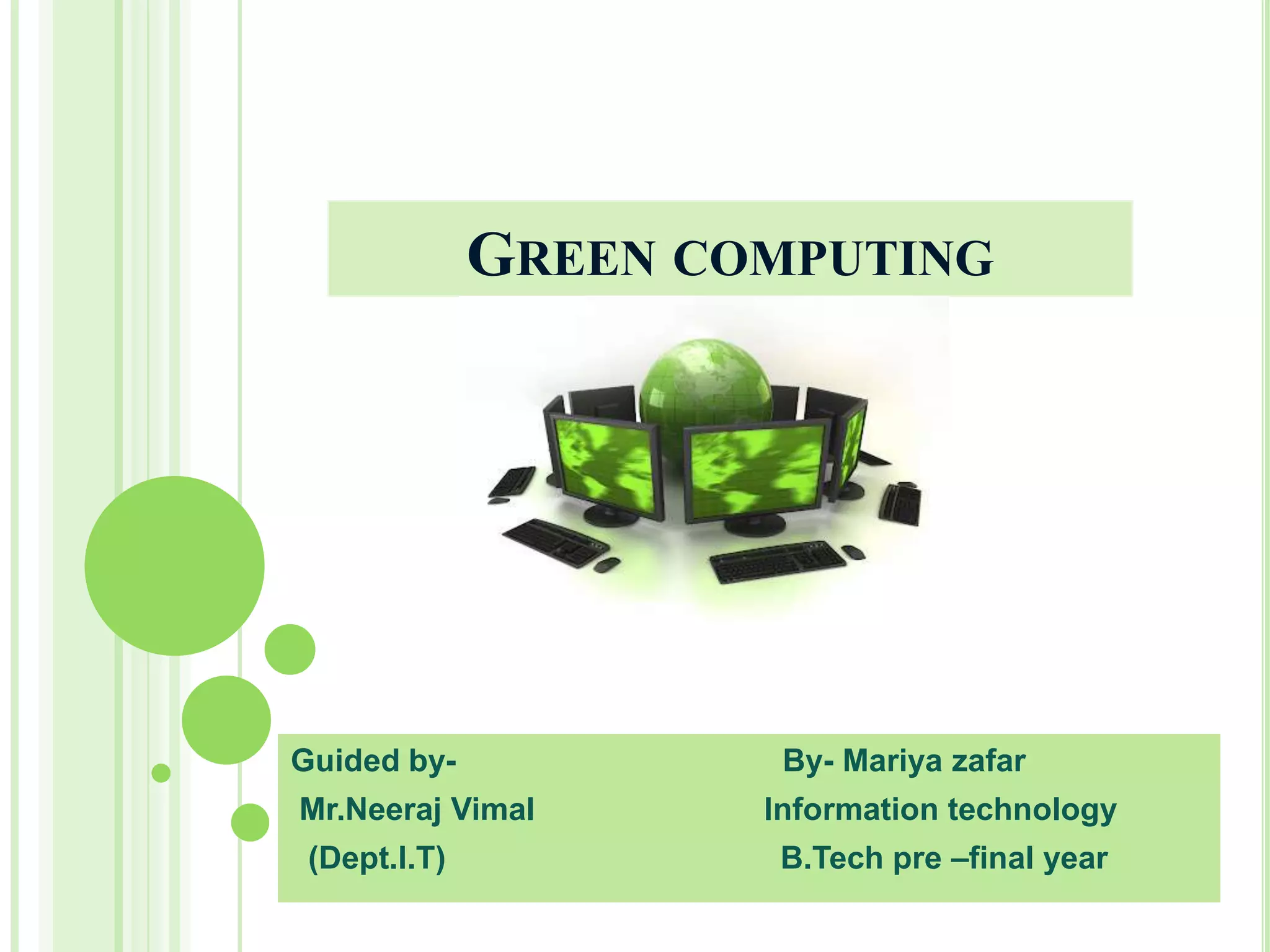
GREEN COMPUTING
Guided by-By- Mariya zafar
Mr.Neeraj Vimal Information technology
(Dept.I.T) B.Tech pre –final year
2.
CONTENT
Definition-what doesgreen computing mean
Why green computing?
Roads to green computing.
General tactics to make computing more green
Strategies which helps in implementation of green computing.
Green disposal
How to save energy while working on internet.
Energy use of pc.
Green manufacturing.
Advantages and Disadvantages.
Conclusion.
References.
Questions.
3.
DEFINITION - WHATDOES GREEN COMPUTING
MEAN?
Green computing practices came in 1992, when the
Environmental Protection Agency (EPA) launched the Energy
Star program.
Green computing is also known as green information
technology (green IT).
Green IT :-Green computing is the environmentally
responsible and eco-friendly use of computers and their
resources.
4.
WHY GREEN COMPUTING?
As we are familiar that plastic is a hazardous material, but the
electronic wastes (E-Waste ) is more hazardous than the
plastic.
The development and fabrication of an electronic device, we
use different kind of materials such as arsenic, antimony, lead
, cadmium etc.
The U.S. generates more than 2 million tons of e-waste
annually, and nearly 90 percent of that ends up in landfills
Disposal of such materials causes harm to the nature
and environment :THAT’S THE MAIN RESON OF GREEN
COMPUTING ESTABILISHMENT….
5.
ROADS TO GREENCOMPUTING :
Green use: Minimizing the electricity consumption.
Green disposal: Re-making an existing computer or
recycling, unwanted electronic equipments.
Green design: Designing energy-efficient
computers, and other digital devices.
Green manufacturing: Minimizing waste during the
manufacturing of computers and other subsystems to
reduce the environmental impact of these activities
6.
GENERAL TACTICS TOMAKE COMPUTING USAGE MORE
GREEN:
Turn off computers at the end of each day.
Use power saver mode.
Use liquid-crystal-display (LCD) monitors rather than cathode-
ray-tube (CRT) monitors.
Don’t print unless necessary .
Dispose of e-waste according to federal, state and local
regulations.
Instead of purchasing a new computer, try refurbishing an
existing device.
Use hardware software with a energy star label.
7.
STRATEGIES WHICH HELPIN IMPLEMENTATION OF
GREEN COMPUTING
Replacing Paper Systems with On-line Communication Systems.
Power Management .
Power supply.
Algorithmic efficiency.
Terminal Servers.
Storage.
Operating system issues.
Materials recycling.
8.
GREEN DISPOSAL
Reuse:-donate your computer components to people who
may not have or have lesser quality computers.
Refurbish: rather than discarding your computer upgrade it.
change its some of the parts in order to make it new.
Recycle
9.
HOW TO SAVEENERGY WHILE WORKING ON
THE INTERNET:
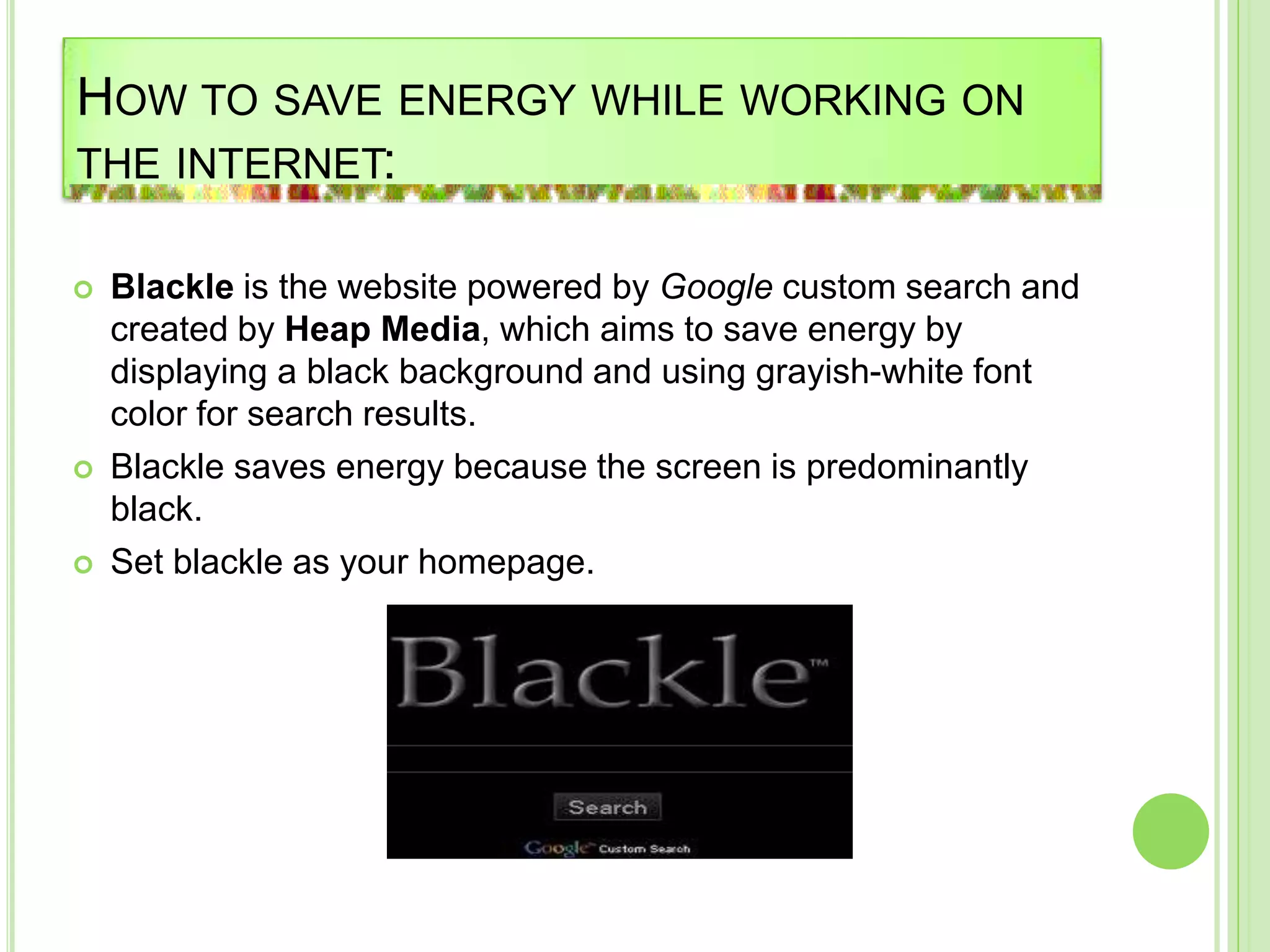
Blackle is the website powered by Google custom search and
created by Heap Media, which aims to save energy by
displaying a black background and using grayish-white font
color for search results.
Blackle saves energy because the screen is predominantly
black.
Set blackle as your homepage.
10.
ENERGY USE OFPC
CPU uses 120 watts
CRT uses 150 watts
-8 hr of usage,5 days a week =562 K watts.
Energy use comes from:-
Electrical current to run the
CPU, motherboard, memory.
Monitors
printers
11.
GREEN MANUFACTURING
Recyclableplastics : computers are constructed
from non-recyclable plastics ,i.e. Recyclable
polycarbonates resin.
Volume reduction : remove hazardous portion of
waste from non hazardous portion.
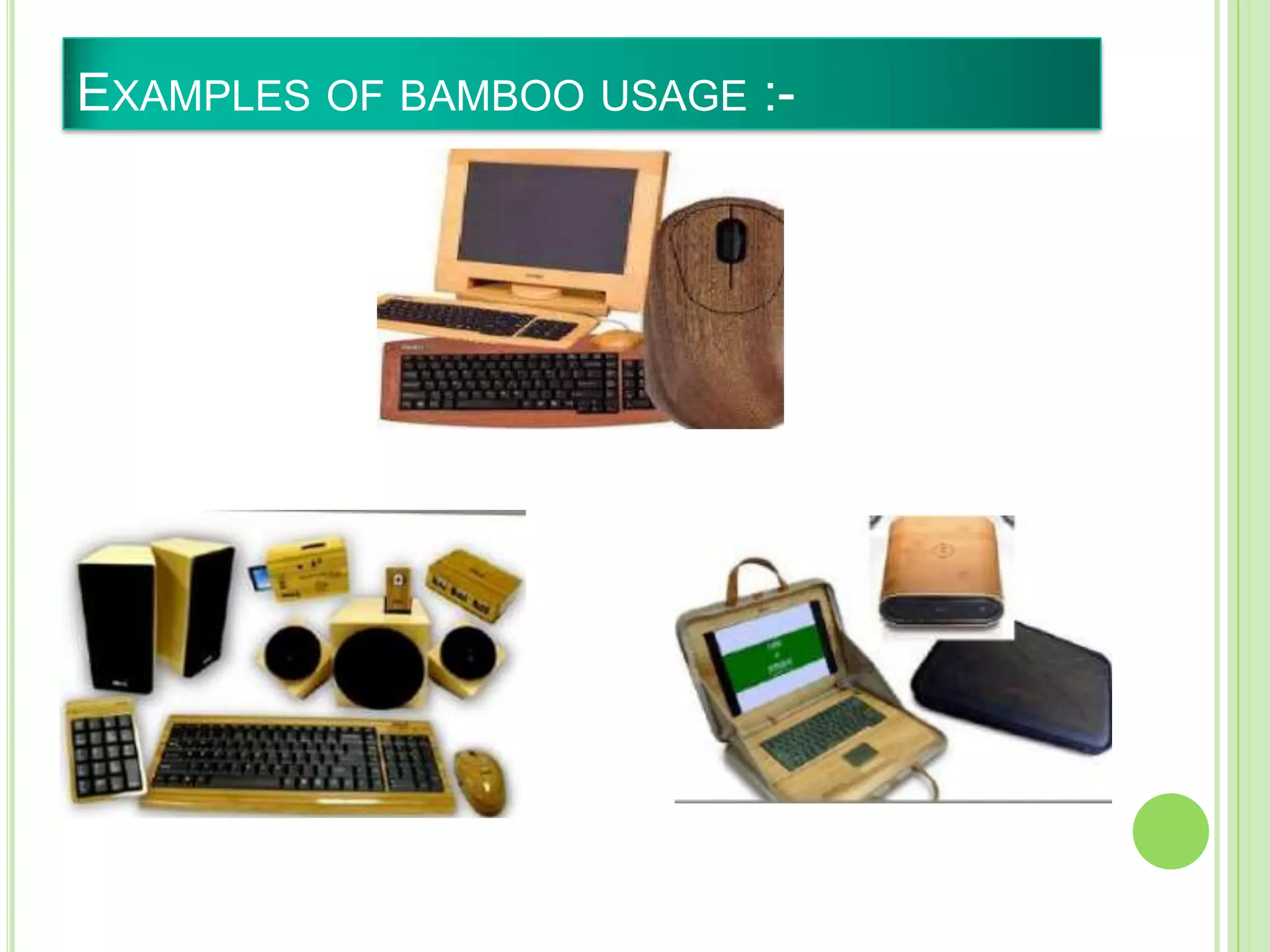
Bamboo : is becoming increasingly popular for
making casings for computers and peripherals.
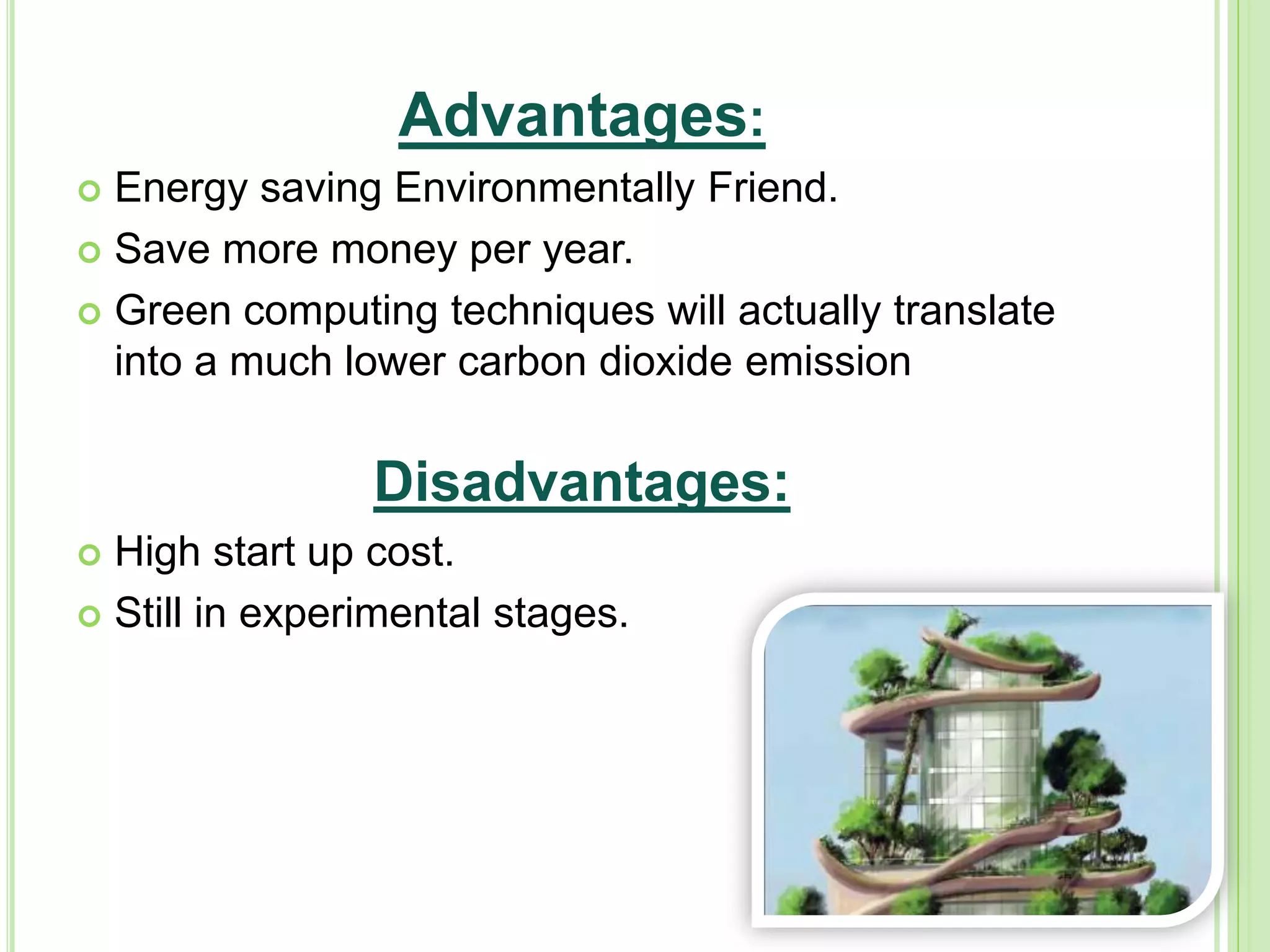
Advantages:
Energy savingEnvironmentally Friend.
Save more money per year.
Green computing techniques will actually translate
into a much lower carbon dioxide emission
Disadvantages:
High start up cost.
Still in experimental stages.
14.
CONCLUSION
Adopting GreenComputing Strategies make sense not only from an
ethical, or moral stand-point, but from a commercial stand-point.
There are many business benefits achievable through the
implementation of a green computing strategy such as cost
savings, resilience, disaster recovery, business continuity planning
and of course public relations.
Green computing is the utmost requirement to protect environment
and save energy along with operational expenses in today's
increasingly competitive world. Adopting a holistic approach to
greening IT is our responsibility towards creating a more sustainable
environment.
ANY QUESTION ?
1)Whyscreen saver in not effective now a days?
Ans) Now-a-days we generally uses an LCD inspite of CRT monitors.
thus “build in” property of CRT doesn’t exist in LCD, so screen saver
is not effective for energy saving.
2)How Blackle search saves energy?
Ans) Blackle is developed for saving the energy by displaying a black
background and using grayish-white font color for search results.
3)Is green computing is effective for future point of view?
Ans)Yes, because it provides an computing with eco-friendly. Changing
trends of technology day by day shows the big problem of E- waste.
Hence green IT is the best solution.