Introduction
Origin
E-Waste
Advantages & Disadvantages of green
computing
Pathways to green computing
Sri Lankan approaches
Future of green computing
CONTENT
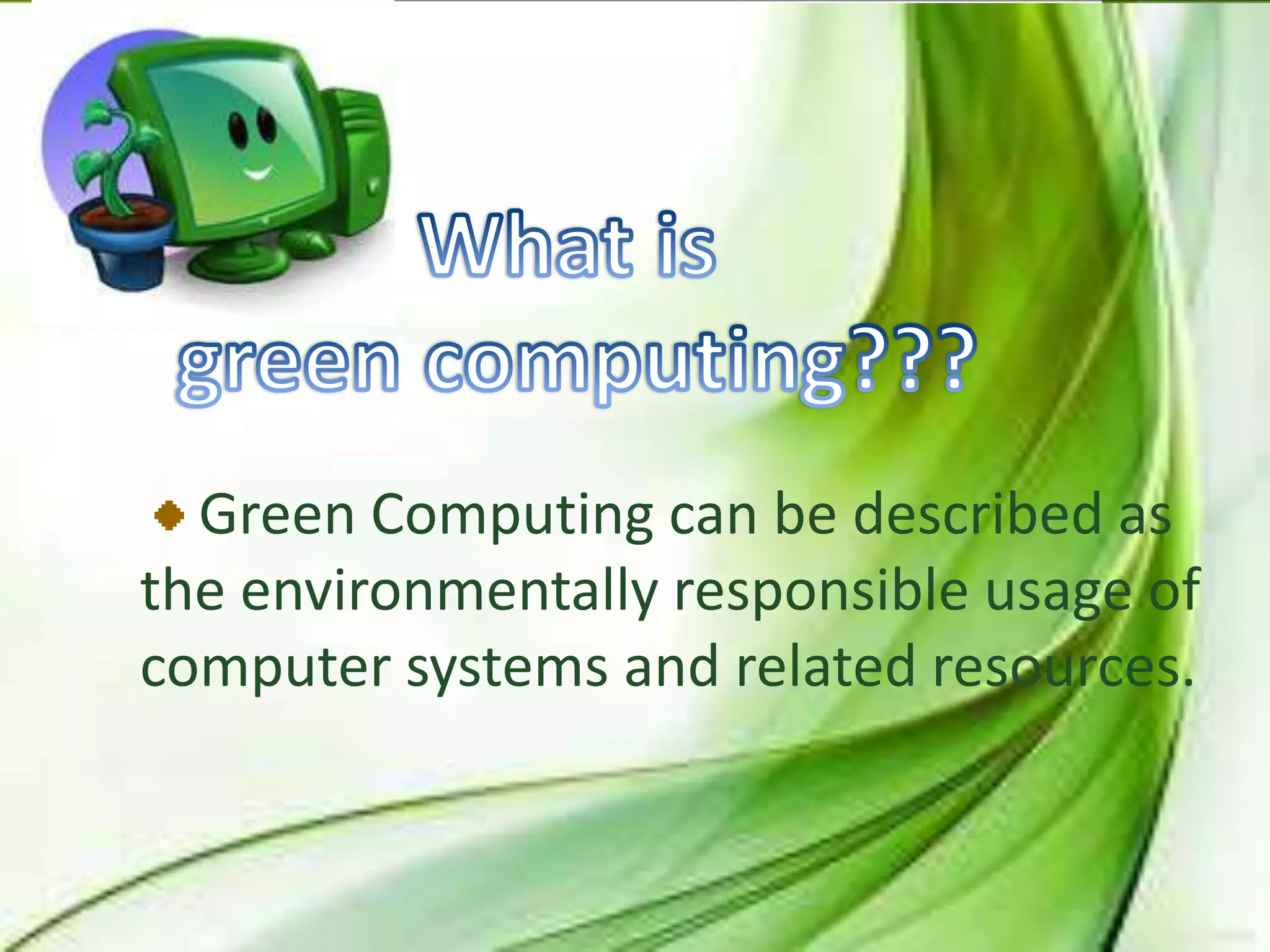
Green Computing can be described as
the environmentally responsible usage of
computer systems and related resources.
Contd…….
It is also known as the study
& practice of manufacturing, using &
disposing of computers, servers &
associated subsystems efficiently &
effectively.
ORIGIN
In 1992,the U.S Environmental Protection
Agency launched “Energy Star”,a labeling
programm designed to promote & recognize
energy efficiency in monitors, climate control
equipments and other technologies.
The term GREEN Computing was coined shortly
after energy star programme.
Contd…
….
Concurrently, the Swedish organization TCO
Development launched the TCO certification program
to promote low magnetic and electrical emissions
from CRT-based COMPUTER DISPLAYS.
The energy star program was revised in October
2006 to include stricter efficiency requirements for
computer equipment, along with a tiered ranking
system for approved products.
1.The main reason is the growing
of public environmental
awareness.
2.To reduce energy wastage.
3.It helps to save a lot of
money.
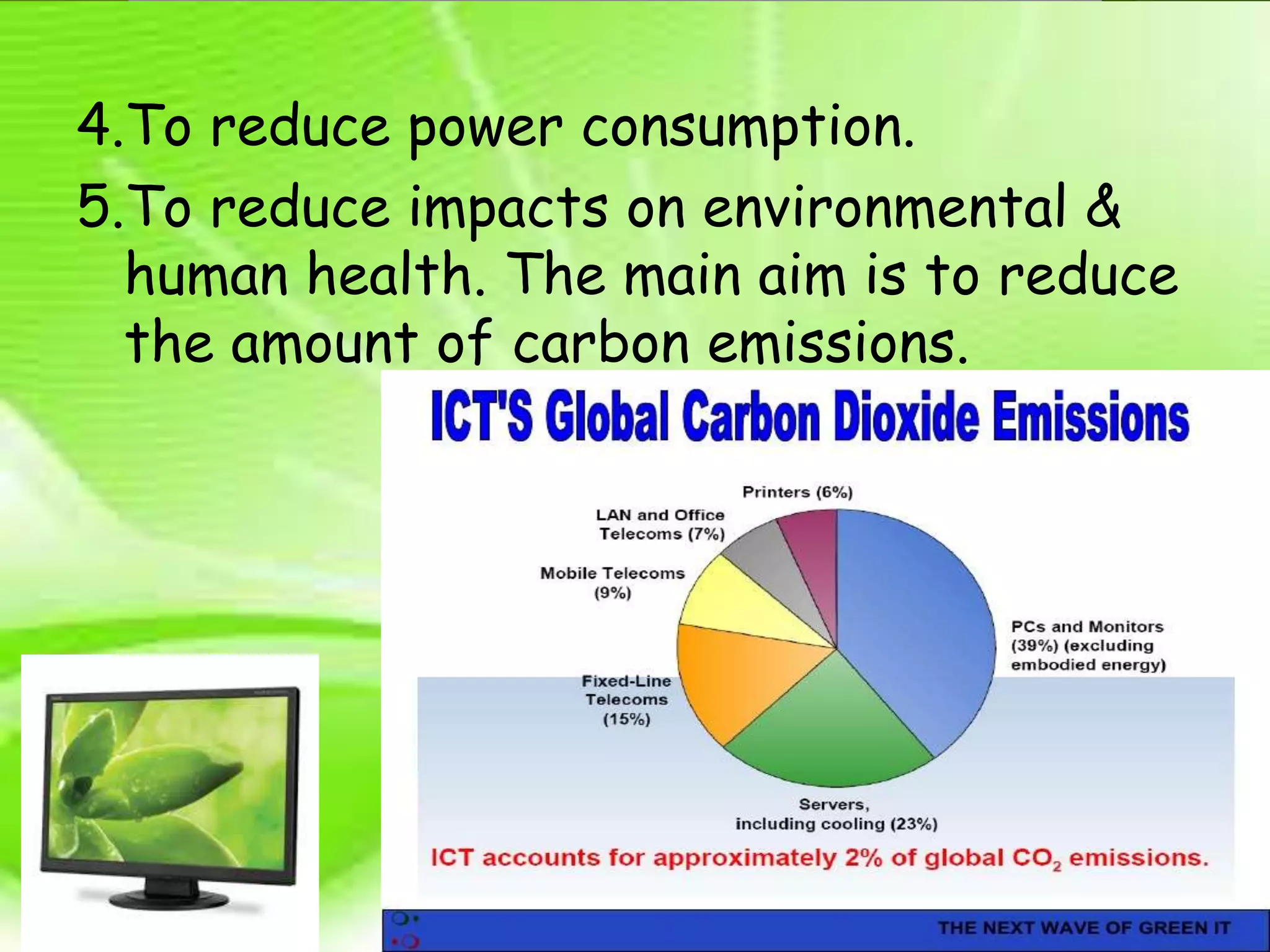
4.To reduce power consumption.
5.To reduce impacts on environmental &
human health. The main aim is to reduce
the amount of carbon emissions.
6.To avoid toxicity.
Lead:-can cause damage to the central &
peripheral nervous system.
Mercury:-can cause chronic brain damages.
Cadmium:-accumulate in the human body
specially the kidney.
7.To reduce IT maintenance activities.
8.To reduce the paper & other
consumables used.
9.A corporate social responsibility.
10.A step for need of tomorrows future.
E-Waste Definition
• Any discarded electronic or electrical devices or
their parts; also called electronic waste
• Examples: Computers, LCD / CRT screens,
cooling appliances, mobile phones, etc., contain
precious metals, flame retarded plastics, CFC
foams and many other substances.
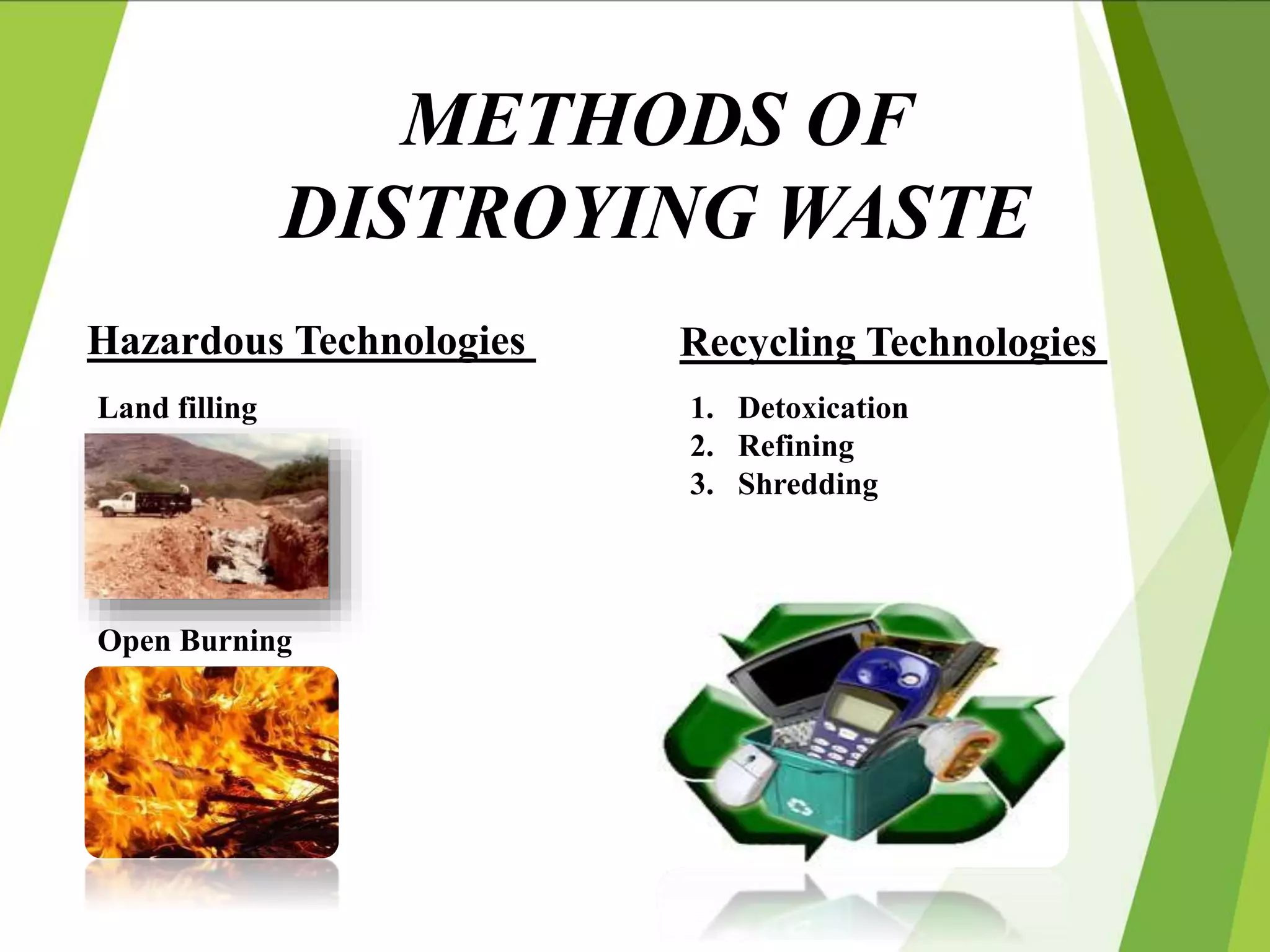
METHODS OF
DISTROYING WASTE
Hazardous Technologies Recycling Technologies
Open Burning
Land filling 1. Detoxication
2. Refining
3. Shredding
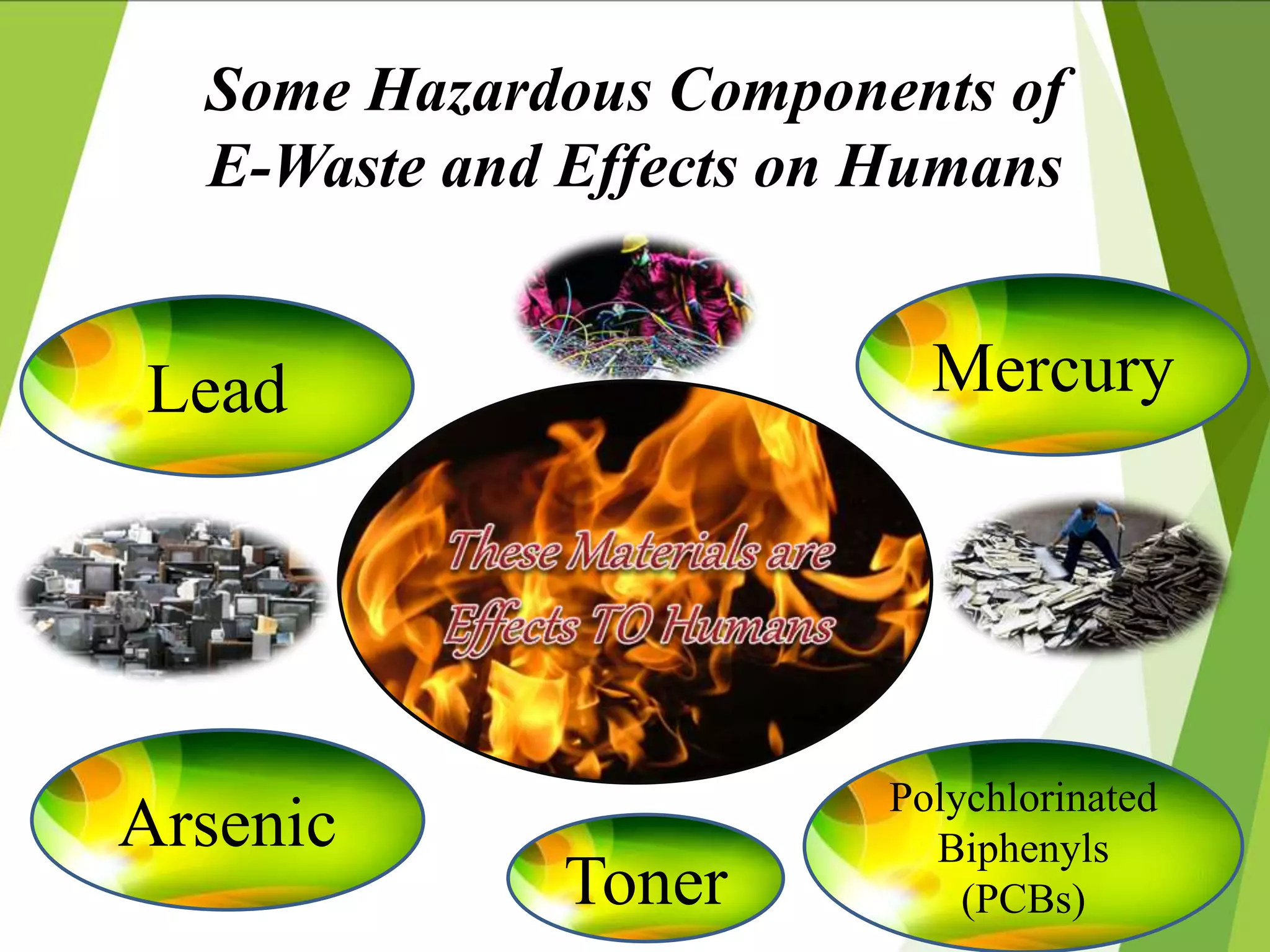
MercuryLead
Arsenic Polychlorinated
Biphenyls
(PCBs)Toner
Some Hazardous Components of
E-Waste and Effects on Humans
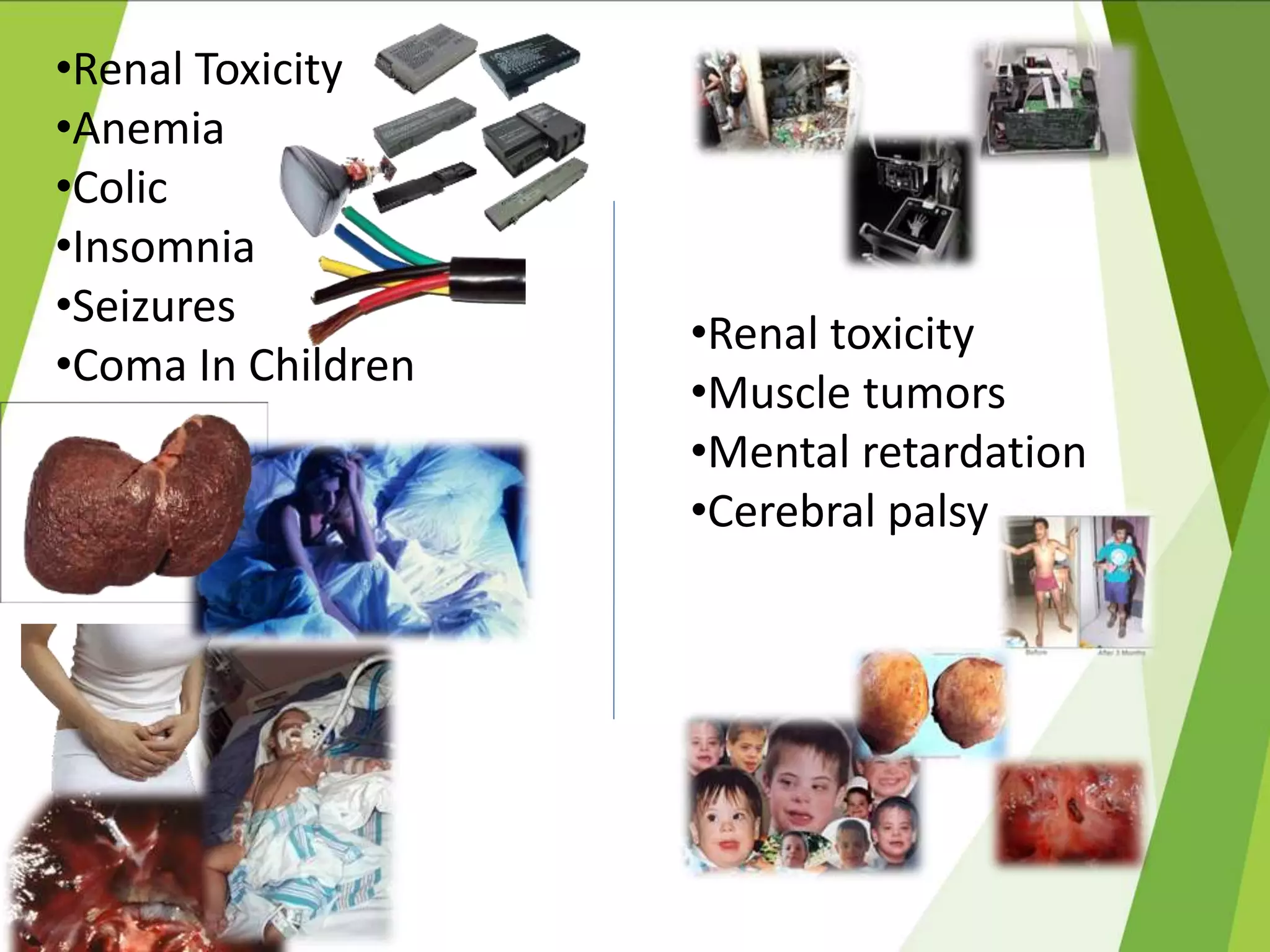
•Renal Toxicity
•Anemia
•Colic
•Insomnia
•Seizures
•Coma In Children
•Renal toxicity
•Muscle tumors
•Mental retardation
•Cerebral palsy
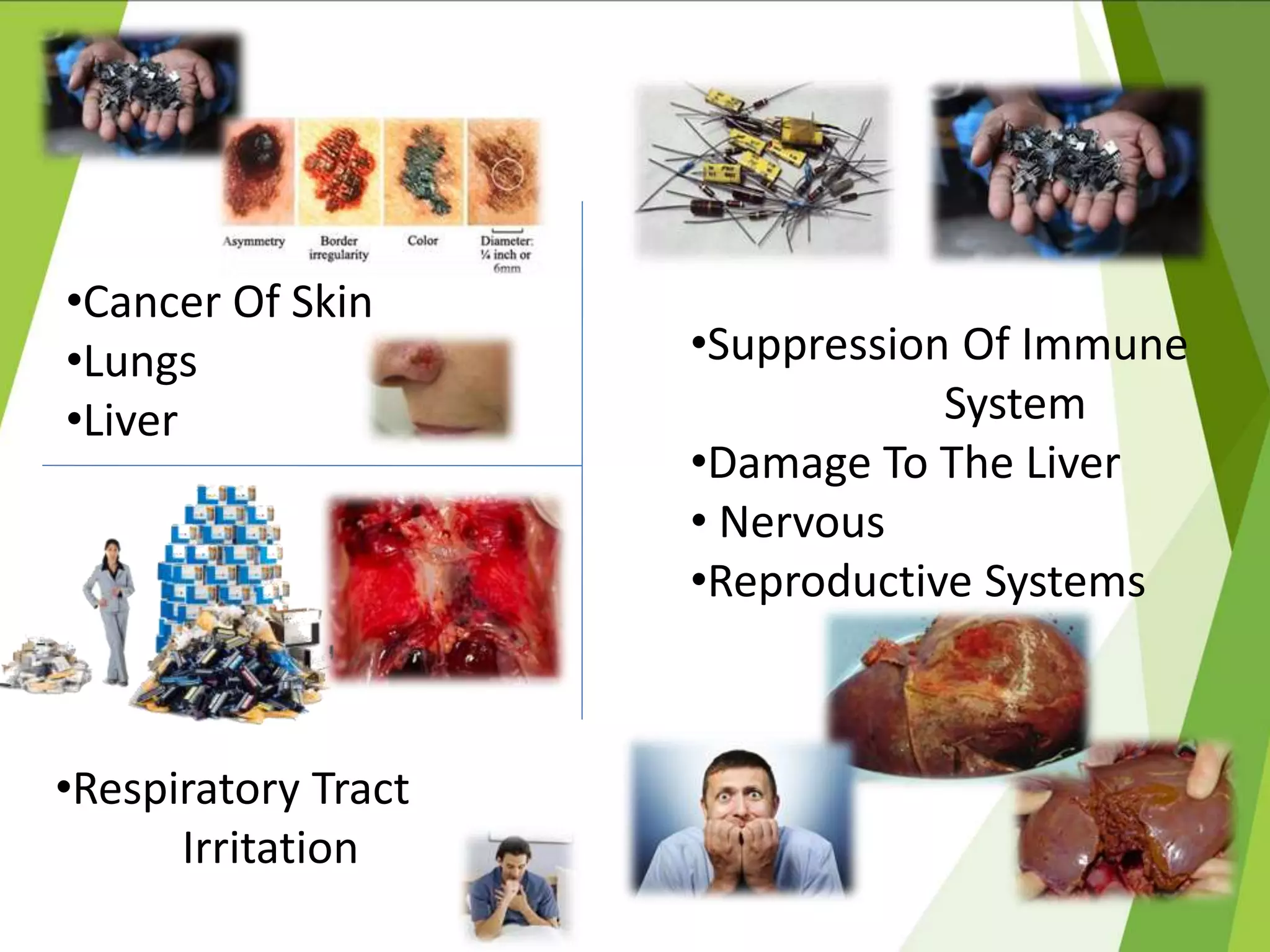
•Cancer Of Skin
•Lungs
•Liver
•Respiratory Tract
Irritation
•Suppression Of Immune
System
•Damage To The Liver
• Nervous
•Reproductive Systems
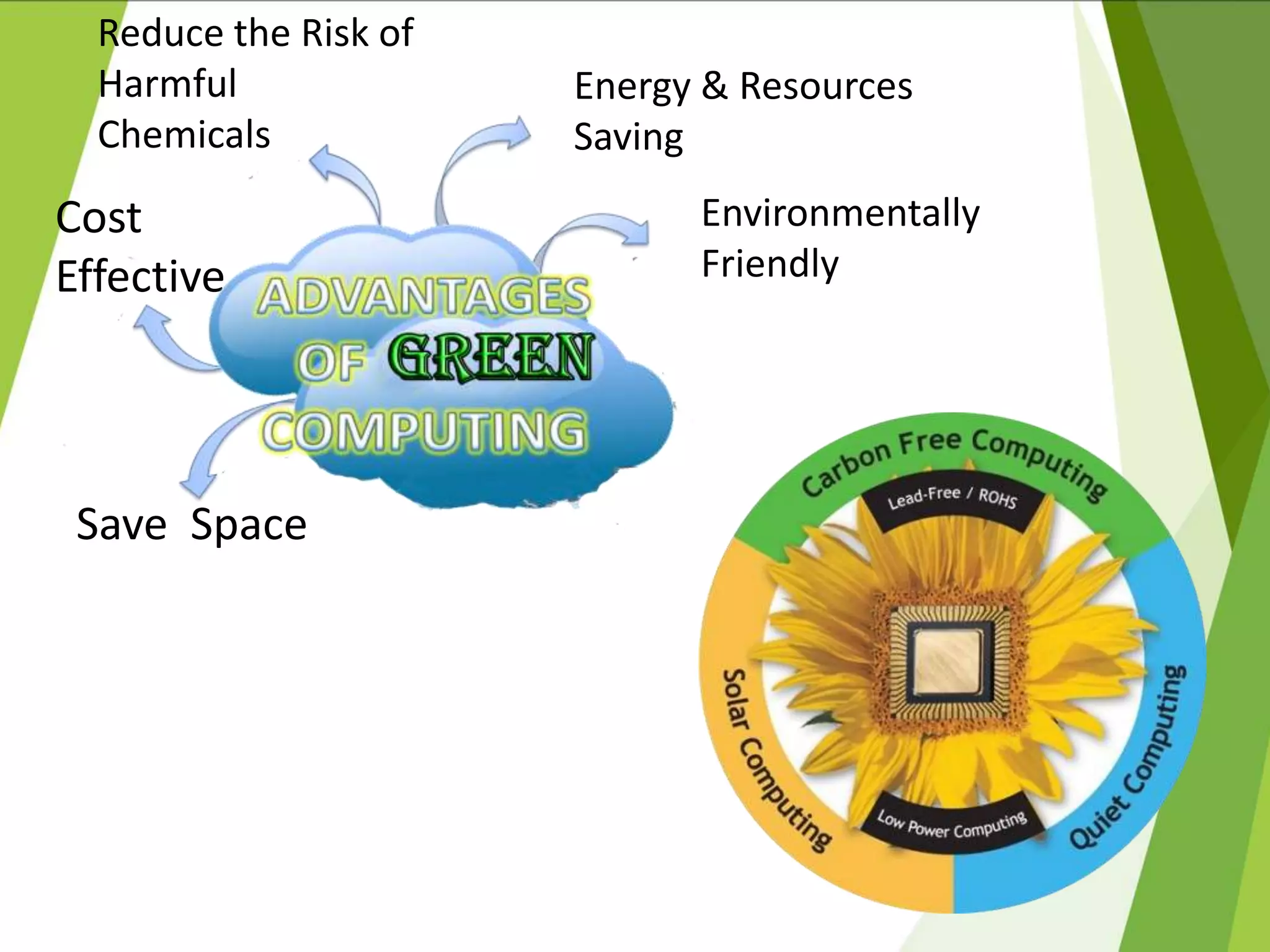
Energy & Resources
Saving
Environmentally
Friendly
Cost
Effective
Save Space
Reduce the Risk of
Harmful
Chemicals
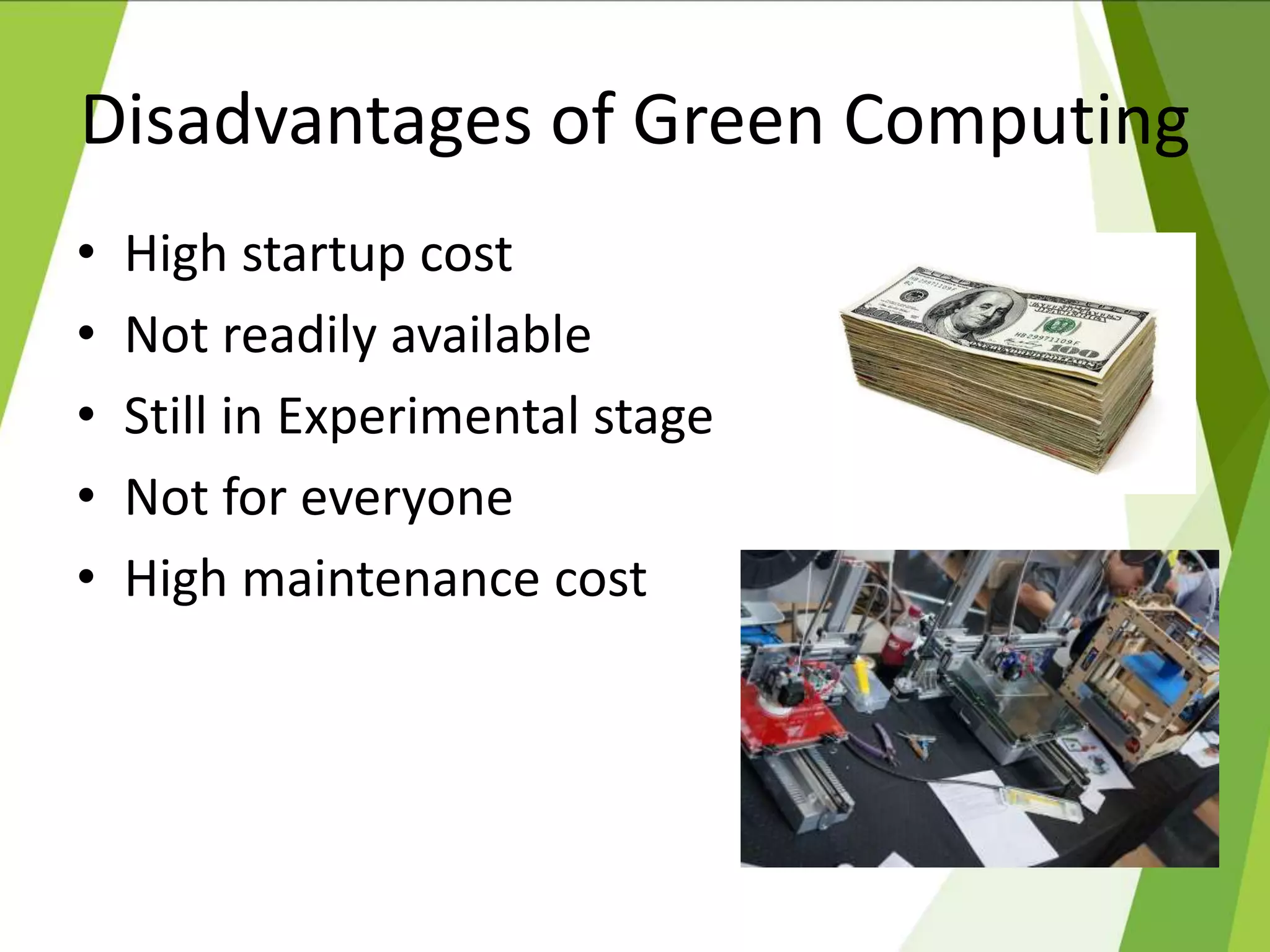
Disadvantages of Green Computing
• High startup cost
• Not readily available
• Still in Experimental stage
• Not for everyone
• High maintenance cost
1. Buy "Energy Star" labeled monitors,
desktops, laptops, and printers
2. Put laptops in "sleep" mode or
“Hibernate” mode when not in use
Pathways to
green computing
3. Turn OFF computers and other
equipments when not in use
4. E-cycle used computer equipments
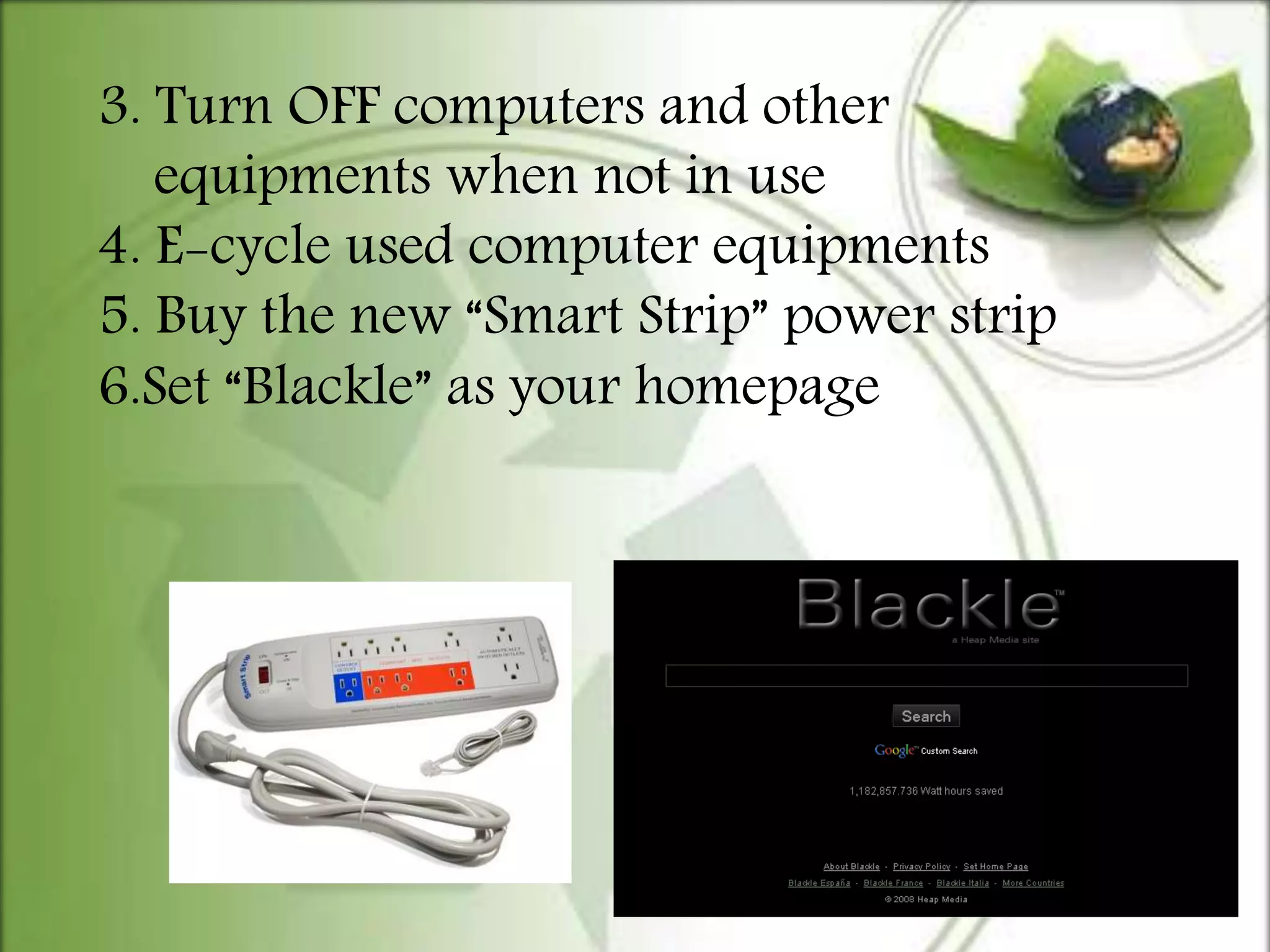
5. Buy the new “Smart Strip” power strip
6.Set “Blackle” as your homepage
7. Use LCDs instead of CRTs as they are more
power efficient
- CRT uses 150 Watts
8 hours of usage, 5 days a week=562KWatts
If the computer is left on all the time, without proper power
saver modes, this can leads to 1,600KWatts.
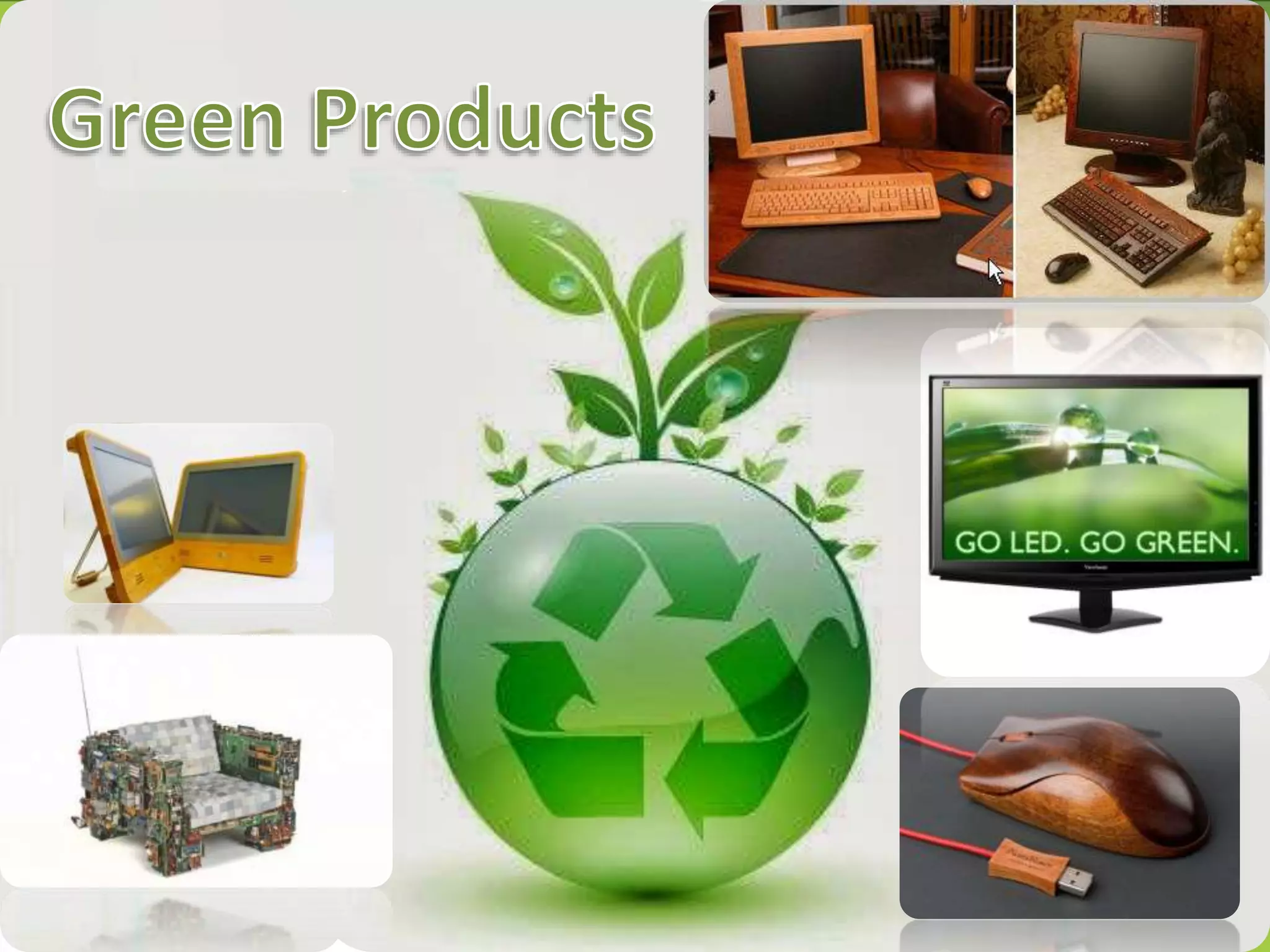
8. Buy Green products
E-Waste Management
• Sri Lankan Government has been initiated
e-waste collecting centers.
• Ceylon Waste Management and their
Material Refining Process .
Sri Lankan Approach of Green Compu
Companies and Organizations
• Most of Sri Lankan Companies and Organizations
already have took the first step to Green Computing.
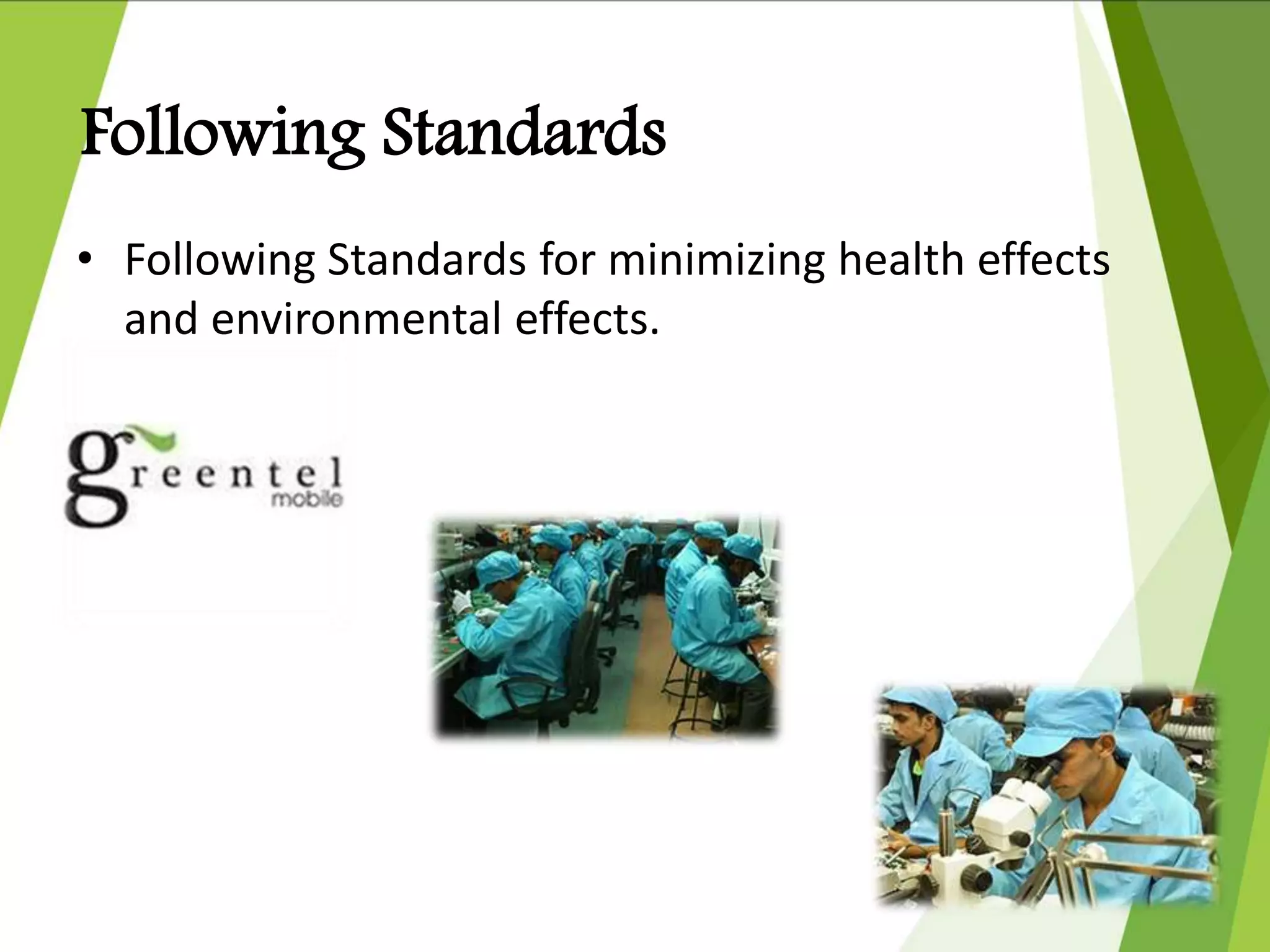
• Following Standards for minimizing health effects
and environmental effects.
Following Standards
Future of Green Computing
“ The plan towards green IT should include new
electronic products and services with optimum
efficiency and all possible options towards
energy savings “
The future of Green Computing will be
full of …
• Virtualization
• Energy Saving
• Eco Friendly Materials
• Recycling
And etc.
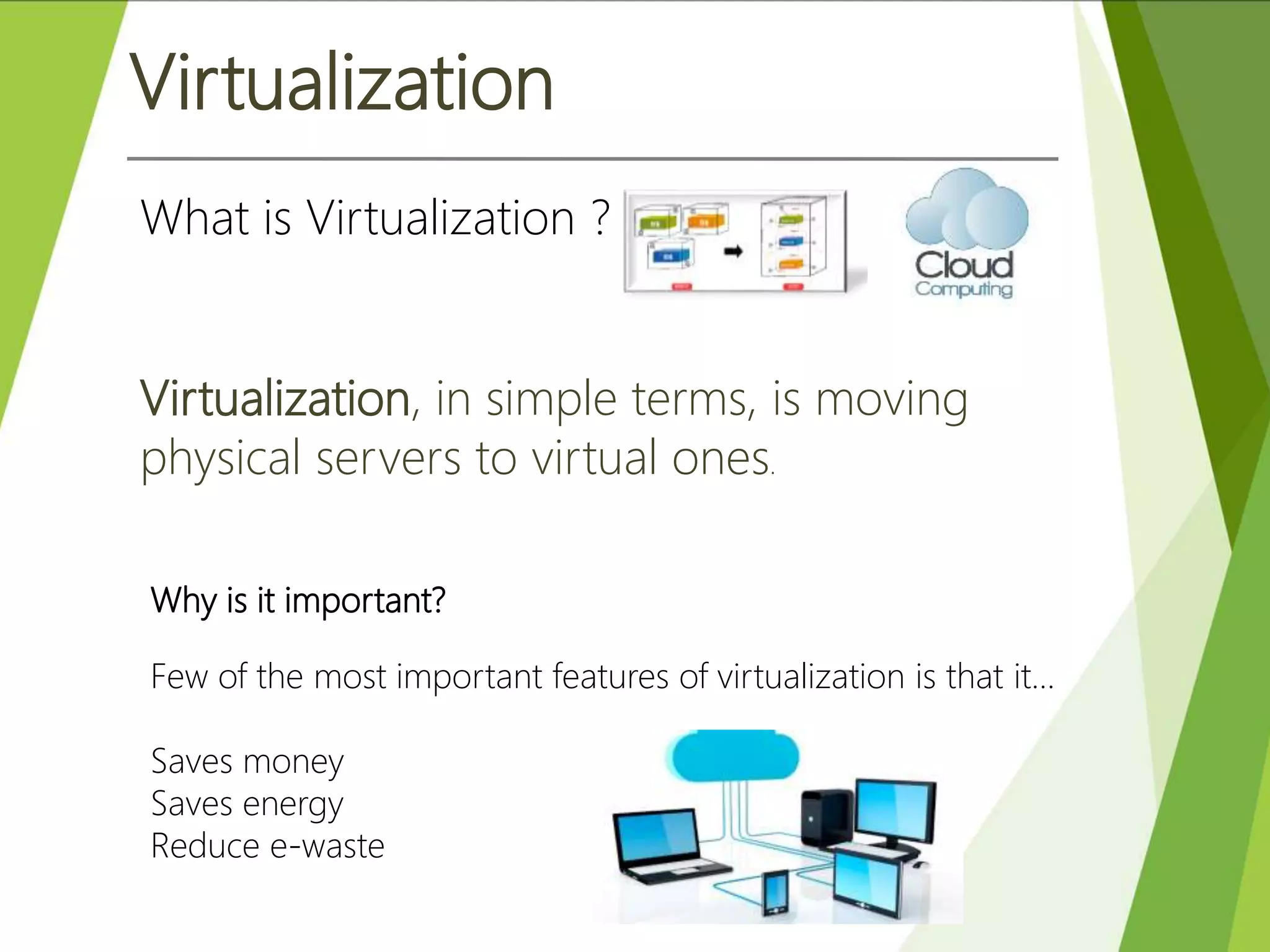
Virtualization
Virtualization, in simple terms, is moving
physical servers to virtual ones.
What is Virtualization ?
Why is it important?
Few of the most important features of virtualization is that it…
Saves money
Saves energy
Reduce e-waste
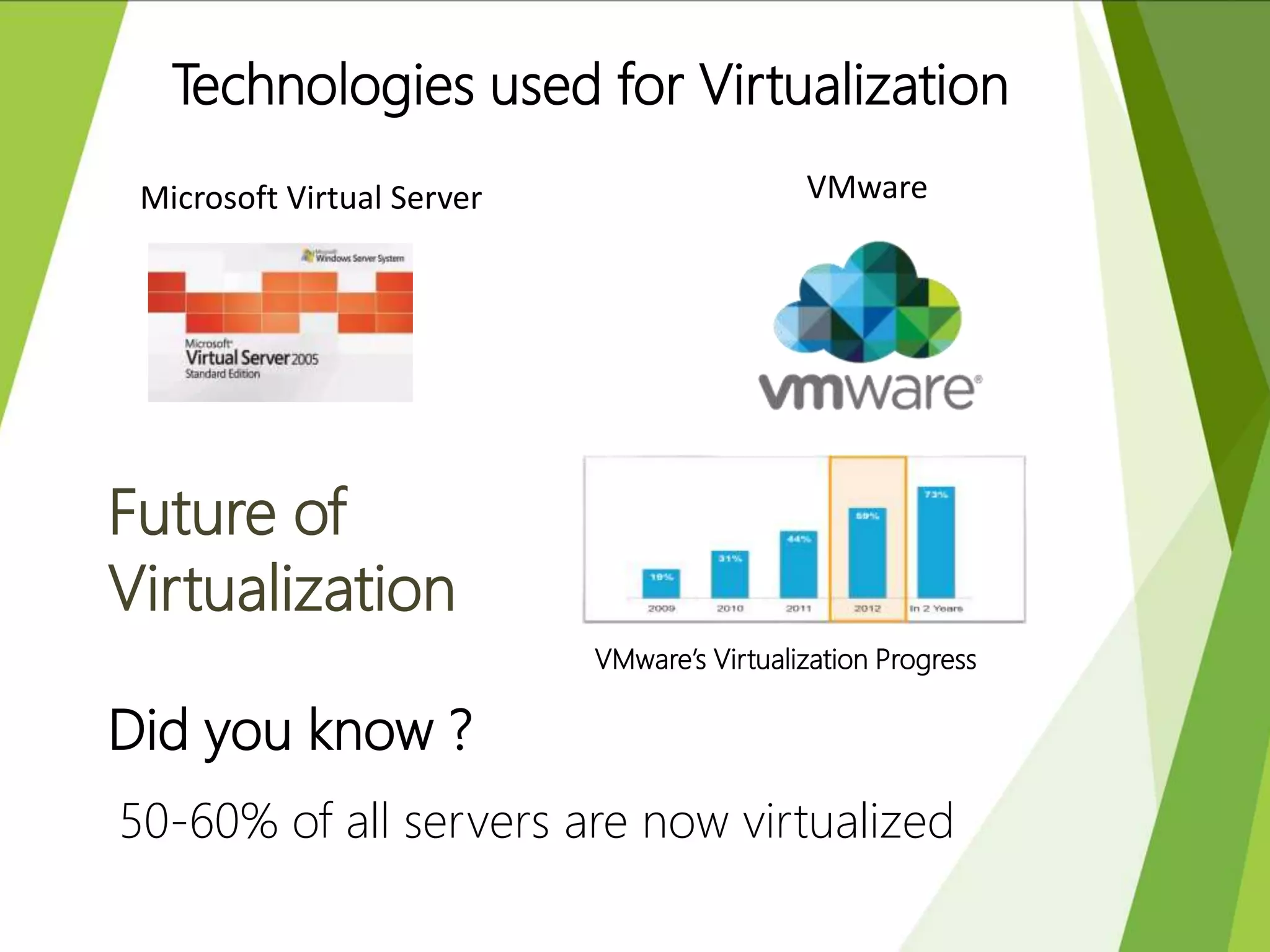
Technologies used for Virtualization
Microsoft Virtual Server VMware
Future of
Virtualization
VMware’s Virtualization Progress
Did you know ?
50-60% of all servers are now virtualized
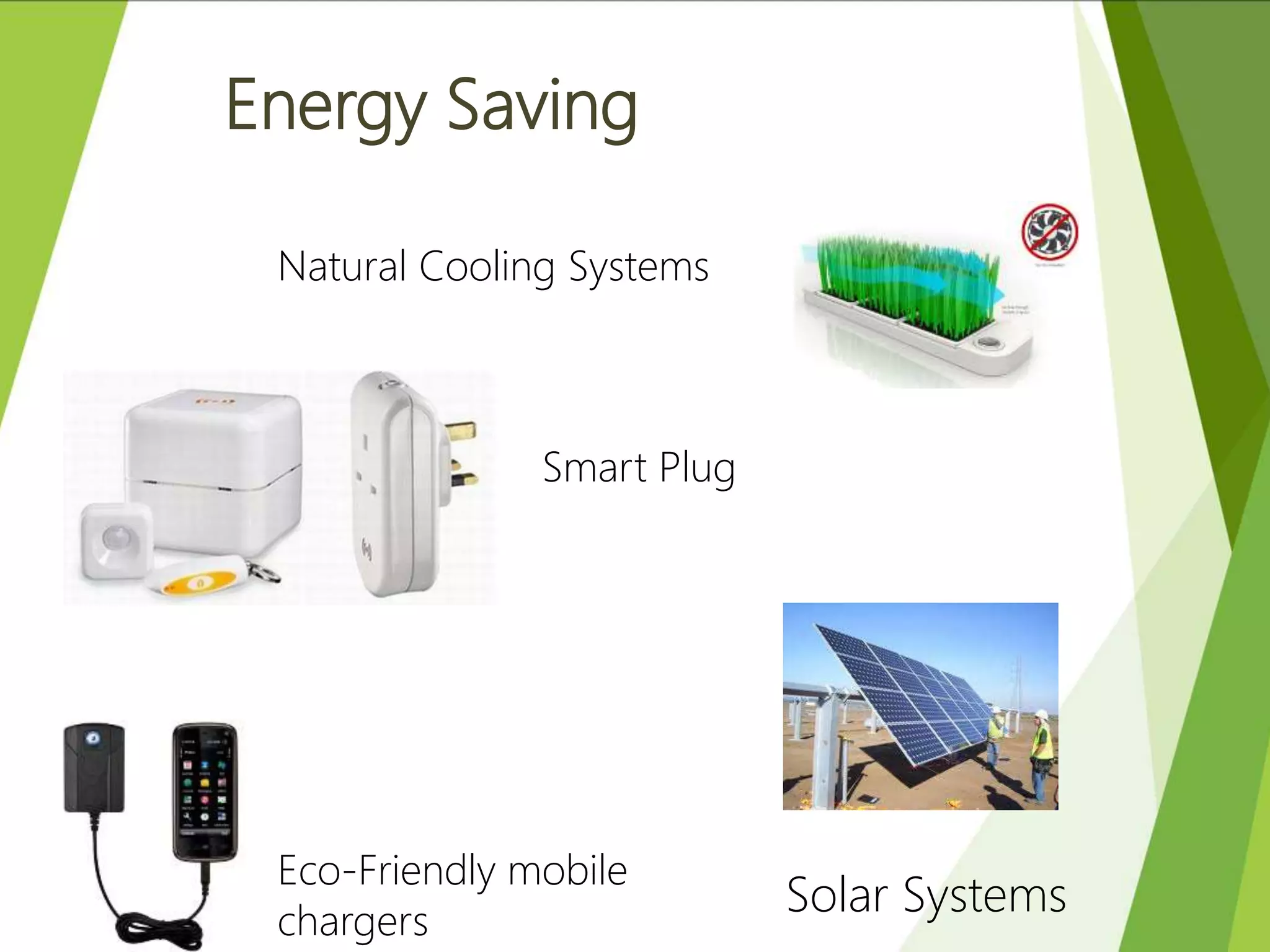
Natural Cooling Systems
Smart Plug
Solar Systems
Eco-Friendly mobile
chargers
Energy Saving
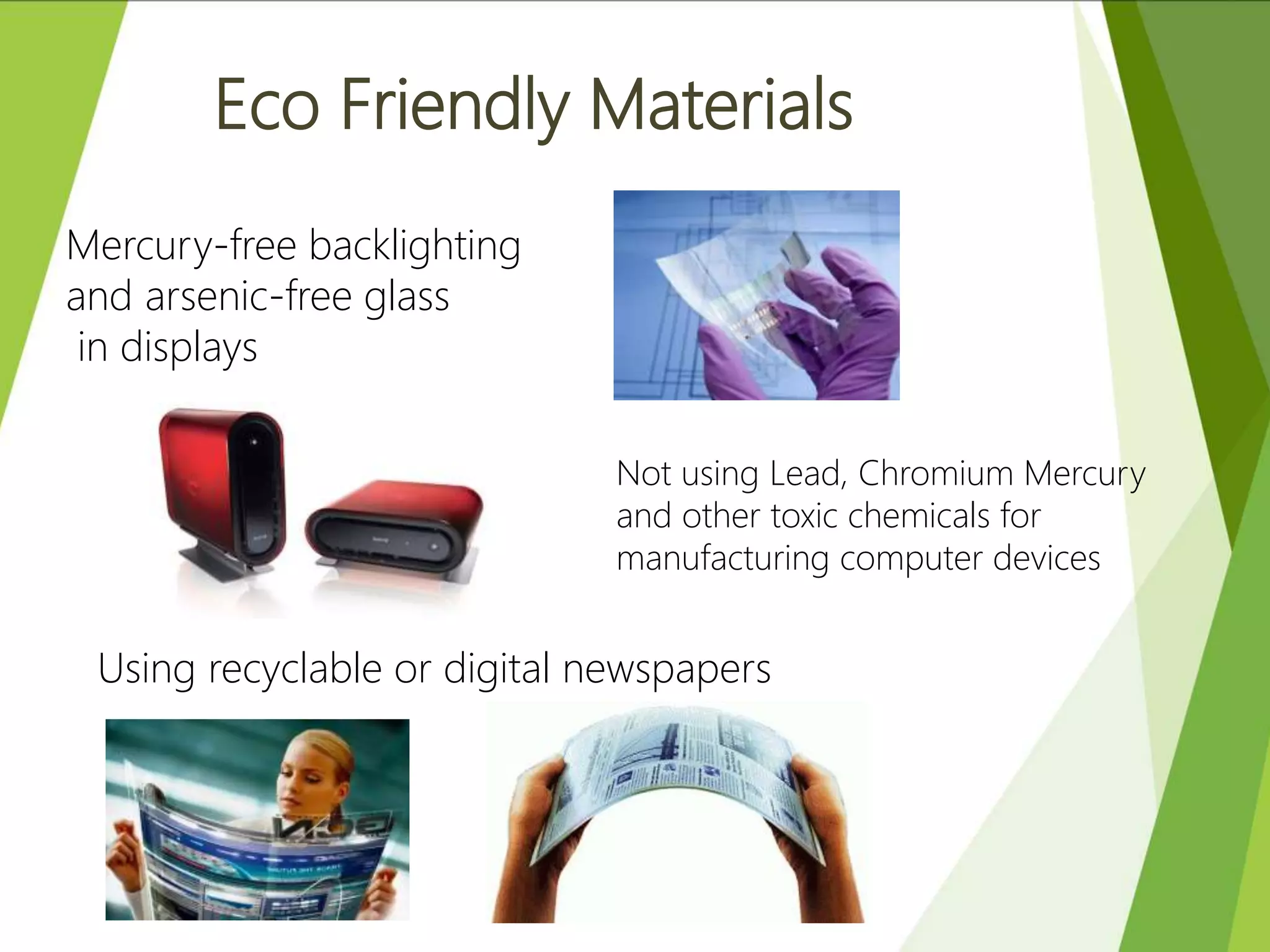
Eco Friendly Materials
Mercury-free backlighting
and arsenic-free glass
in displays
Not using Lead, Chromium Mercury
and other toxic chemicals for
manufacturing computer devices
Using recyclable or digital newspapers
Recycling
In future, almost all the computer devices and
items will be able to be recycled
Recyclable PCBs
Recyclable Batteries
Take-back
concept of the
manufactures
That’s all about the future
of Green Computing
It’s not easy not being green
So, Let’s Go Green!

Green computing

  • 2.
    Introduction Origin E-Waste Advantages & Disadvantagesof green computing Pathways to green computing Sri Lankan approaches Future of green computing CONTENT
  • 3.
    Green Computing canbe described as the environmentally responsible usage of computer systems and related resources.
  • 4.
    Contd……. It is alsoknown as the study & practice of manufacturing, using & disposing of computers, servers & associated subsystems efficiently & effectively.
  • 5.
    ORIGIN In 1992,the U.SEnvironmental Protection Agency launched “Energy Star”,a labeling programm designed to promote & recognize energy efficiency in monitors, climate control equipments and other technologies. The term GREEN Computing was coined shortly after energy star programme.
  • 6.
    Contd… …. Concurrently, the Swedishorganization TCO Development launched the TCO certification program to promote low magnetic and electrical emissions from CRT-based COMPUTER DISPLAYS. The energy star program was revised in October 2006 to include stricter efficiency requirements for computer equipment, along with a tiered ranking system for approved products.
  • 7.
    1.The main reasonis the growing of public environmental awareness. 2.To reduce energy wastage. 3.It helps to save a lot of money.
  • 8.
    4.To reduce powerconsumption. 5.To reduce impacts on environmental & human health. The main aim is to reduce the amount of carbon emissions.
  • 9.
    6.To avoid toxicity. Lead:-cancause damage to the central & peripheral nervous system. Mercury:-can cause chronic brain damages. Cadmium:-accumulate in the human body specially the kidney. 7.To reduce IT maintenance activities. 8.To reduce the paper & other consumables used. 9.A corporate social responsibility. 10.A step for need of tomorrows future.
  • 10.
    E-Waste Definition • Anydiscarded electronic or electrical devices or their parts; also called electronic waste • Examples: Computers, LCD / CRT screens, cooling appliances, mobile phones, etc., contain precious metals, flame retarded plastics, CFC foams and many other substances.
  • 11.
    METHODS OF DISTROYING WASTE HazardousTechnologies Recycling Technologies Open Burning Land filling 1. Detoxication 2. Refining 3. Shredding
  • 12.
  • 13.
    •Renal Toxicity •Anemia •Colic •Insomnia •Seizures •Coma InChildren •Renal toxicity •Muscle tumors •Mental retardation •Cerebral palsy
  • 14.
    •Cancer Of Skin •Lungs •Liver •RespiratoryTract Irritation •Suppression Of Immune System •Damage To The Liver • Nervous •Reproductive Systems
  • 15.
  • 16.
    Disadvantages of GreenComputing • High startup cost • Not readily available • Still in Experimental stage • Not for everyone • High maintenance cost
  • 17.
    1. Buy "EnergyStar" labeled monitors, desktops, laptops, and printers 2. Put laptops in "sleep" mode or “Hibernate” mode when not in use Pathways to green computing
  • 18.
    3. Turn OFFcomputers and other equipments when not in use 4. E-cycle used computer equipments 5. Buy the new “Smart Strip” power strip 6.Set “Blackle” as your homepage
  • 19.
    7. Use LCDsinstead of CRTs as they are more power efficient - CRT uses 150 Watts 8 hours of usage, 5 days a week=562KWatts If the computer is left on all the time, without proper power saver modes, this can leads to 1,600KWatts. 8. Buy Green products
  • 21.
    E-Waste Management • SriLankan Government has been initiated e-waste collecting centers. • Ceylon Waste Management and their Material Refining Process . Sri Lankan Approach of Green Compu
  • 22.
    Companies and Organizations •Most of Sri Lankan Companies and Organizations already have took the first step to Green Computing.
  • 23.
    • Following Standardsfor minimizing health effects and environmental effects. Following Standards
  • 24.
    Future of GreenComputing “ The plan towards green IT should include new electronic products and services with optimum efficiency and all possible options towards energy savings “ The future of Green Computing will be full of … • Virtualization • Energy Saving • Eco Friendly Materials • Recycling And etc.
  • 25.
    Virtualization Virtualization, in simpleterms, is moving physical servers to virtual ones. What is Virtualization ? Why is it important? Few of the most important features of virtualization is that it… Saves money Saves energy Reduce e-waste
  • 26.
    Technologies used forVirtualization Microsoft Virtual Server VMware Future of Virtualization VMware’s Virtualization Progress Did you know ? 50-60% of all servers are now virtualized
  • 27.
    Natural Cooling Systems SmartPlug Solar Systems Eco-Friendly mobile chargers Energy Saving
  • 28.
    Eco Friendly Materials Mercury-freebacklighting and arsenic-free glass in displays Not using Lead, Chromium Mercury and other toxic chemicals for manufacturing computer devices Using recyclable or digital newspapers
  • 29.
    Recycling In future, almostall the computer devices and items will be able to be recycled Recyclable PCBs Recyclable Batteries Take-back concept of the manufactures
  • 30.
    That’s all aboutthe future of Green Computing It’s not easy not being green So, Let’s Go Green!

Editor's Notes

  • #11 E-Waste for short - or Waste Electrical and Electronic Equipment - is the term used to describe old, end-of-life or discarded appliances using electricity. It includes computers, consumer electronics, fridges etc which have been disposed of by their original users. "e-waste" is used as a generic term embracing all types of waste containing electrically powered components. e-Waste contains both valuable materials as well as hazardous materials which require special handling and recycling methods. This guide covers all categories of e-waste but emphasizes categories which contain problematic, scarce and valuable or otherwise interesting materials.