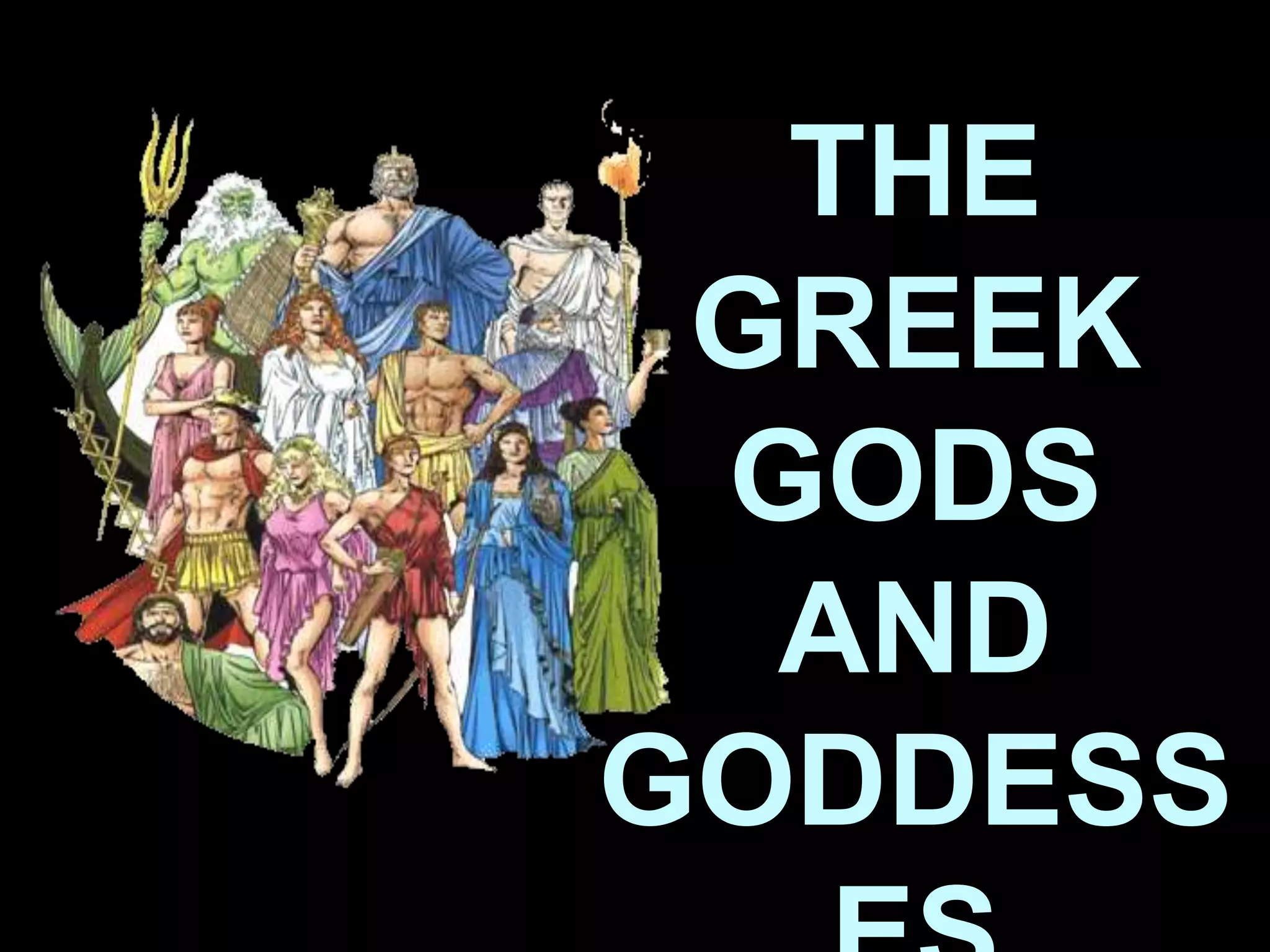
THE
GREEK
GODS
AND
GODDESS
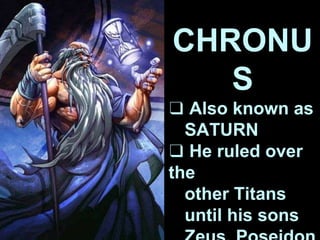
CHRONU
S
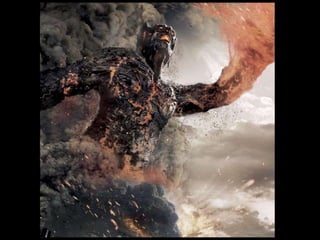
❑ Also known as
SATURN
❑ He ruled over
the
other Titans
until his sons
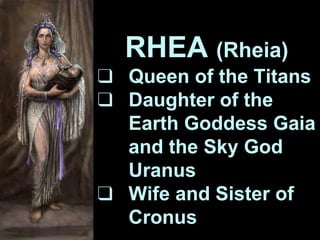
RHEA (Rheia)
❑ Queen of the Titans
❑ Daughter of the
Earth Goddess Gaia
and the Sky God
Uranus
❑ Wife and Sister of
Cronus
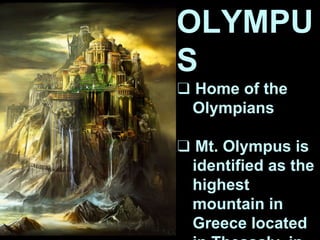
OLYMPU
S
❑ Home of the
Olympians
❑ Mt. Olympus is
identified as the
highest
mountain in
Greece located
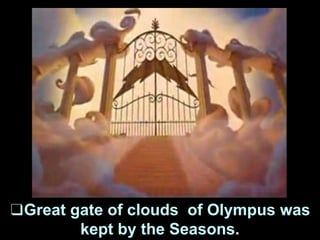
❑Great gate of clouds of Olympus was
kept by the Seasons.
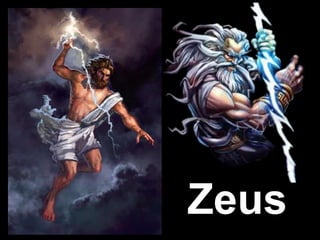
Zeus
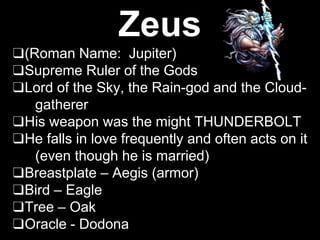
Zeus
❑(Roman Name: Jupiter)
❑Supreme Ruler of the Gods
❑Lord of the Sky, the Rain-god and the Cloud-
gatherer
❑His weapon was the might THUNDERBOLT
❑He falls in love frequently and often acts on it
(even though he is married)
❑Breastplate – Aegis (armor)
❑Bird – Eagle
❑Tree – Oak
❑Oracle - Dodona
HERA
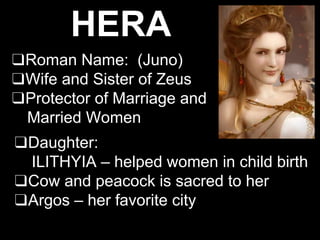
HERA
❑Roman Name: (Juno)
❑Wife and Sister of Zeus
❑Protector of Marriage and
Married Women
❑Daughter:
ILITHYIA – helped women in child birth
❑Cow and peacock is sacred to her
❑Argos – her favorite city
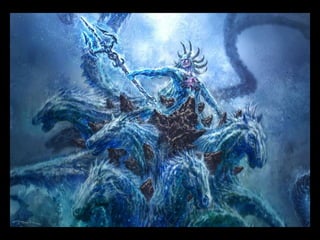
POSEIDON
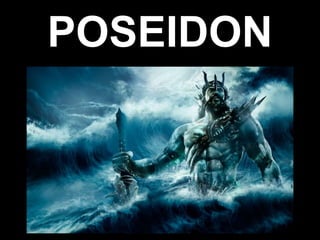
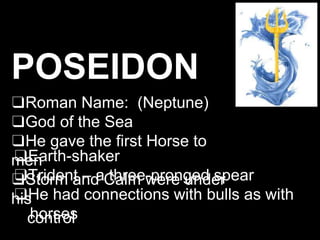
POSEIDON
❑Roman Name: (Neptune)
❑God of the Sea
❑He gave the first Horse to
men
❑Storm and Calm were under
his
control
❑Earth-shaker
❑Trident – a three-pronged spear
❑He had connections with bulls as with
horses
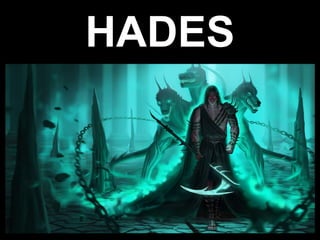
HADES
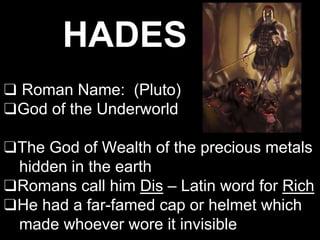
HADES
❑ Roman Name: (Pluto)
❑God of the Underworld
❑The God of Wealth of the precious metals
hidden in the earth
❑Romans call him Dis – Latin word for Rich
❑He had a far-famed cap or helmet which
made whoever wore it invisible
❑His wife Persephone (Proserpine) – Queen
of the Underworld
❑He is the King of the Dead – not Death
himself
❑Death – Greeks (Thanatos) – Romans
(Orcus)
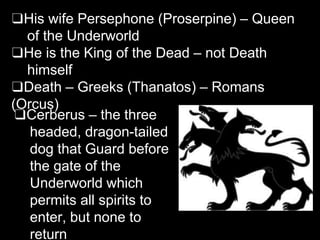
❑Cerberus – the three
headed, dragon-tailed
dog that Guard before
the gate of the
Underworld which
permits all spirits to
enter, but none to
return
PALLAS
ATHENA
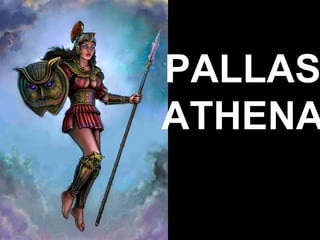
PALLAS
ATHENA
❑ Roman Name: (Minerva)
❑Goddess of War, Wisdom, Reason and
Purity
❑No mother bore her. She sprang from
Zeus’
head
❑She is fierce and ruthless battle
goddesses
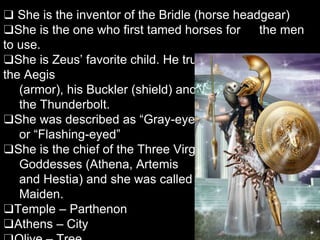
❑ She is the inventor of the Bridle (horse headgear)
❑She is the one who first tamed horses for the men
to use.
❑She is Zeus’ favorite child. He trusted her to carry
the Aegis
(armor), his Buckler (shield) and
the Thunderbolt.
❑She was described as “Gray-eyed”
or “Flashing-eyed”
❑She is the chief of the Three Virgin
Goddesses (Athena, Artemis
and Hestia) and she was called
Maiden.
❑Temple – Parthenon
❑Athens – City
PHOEBUS
APOLLO
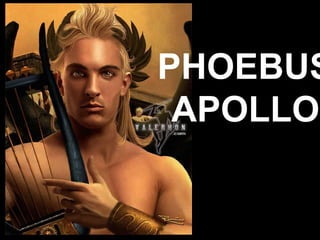
PHOEBUS
APOLLO
❑ Roman Name: (Apollo)
❑God of Light and Truth
❑Son of Zeus and Leto (Latona), born in
the
little island of Delos
❑He is the twin brother of Artemis
❑A beautiful figure in Greek poetry
❑The Master Musician who delights
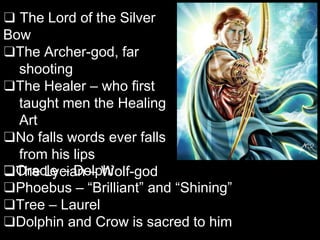
❑ The Lord of the Silver
Bow
❑The Archer-god, far
shooting
❑The Healer – who first
taught men the Healing
Art
❑No falls words ever falls
from his lips
❑The Lycian – Wolf-god
❑Oracle – Delphi
❑Phoebus – “Brilliant” and “Shining”
❑Tree – Laurel
❑Dolphin and Crow is sacred to him
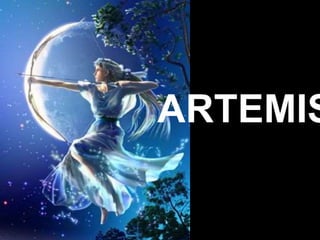
ARTEMIS
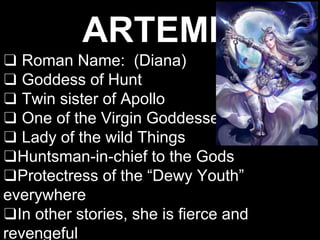
ARTEMIS
❑ Roman Name: (Diana)
❑ Goddess of Hunt
❑ Twin sister of Apollo
❑ One of the Virgin Goddesses
❑ Lady of the wild Things
❑Huntsman-in-chief to the Gods
❑Protectress of the “Dewy Youth”
everywhere
❑In other stories, she is fierce and
revengeful
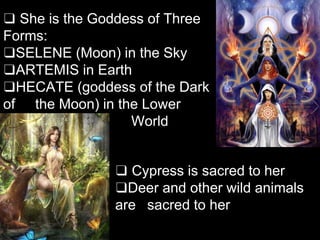
❑ She is the Goddess of Three
Forms:
❑SELENE (Moon) in the Sky
❑ARTEMIS in Earth
❑HECATE (goddess of the Dark
of the Moon) in the Lower
World
❑ Cypress is sacred to her
❑Deer and other wild animals
are sacred to her
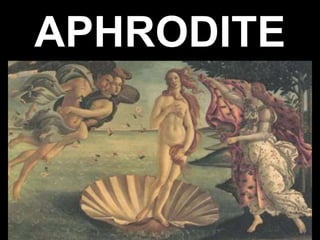
APHRODITE
APHRODIT
E
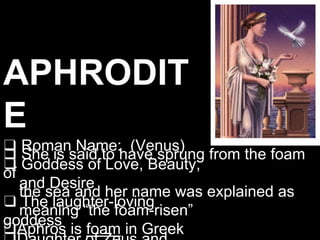
❑ Roman Name: (Venus)
❑ Goddess of Love, Beauty,
and Desire
❑ The laughter-loving
goddess
❑ She is said to have sprung from the foam
of
the sea and her name was explained as
meaning “the foam-risen”
❑Aphros is foam in Greek
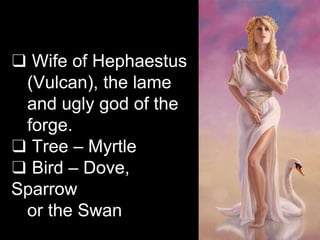
❑ Wife of Hephaestus
(Vulcan), the lame
and ugly god of the
forge.
❑ Tree – Myrtle
❑ Bird – Dove,
Sparrow
or the Swan
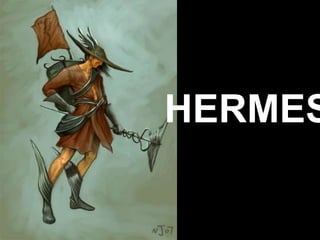
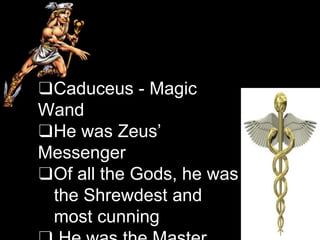
HERMES
HERMES
❑ Roman Name: (Mercury)
❑ Son of Zeus and Mia, his mother is the
daughter of Atlas
❑He was graceful and
swift
in motion.
❑On his feet were winged
sandals
❑Wings were on his low
crowned hat
❑Caduceus - Magic
Wand
❑He was Zeus’
Messenger
❑Of all the Gods, he was
the Shrewdest and
most cunning
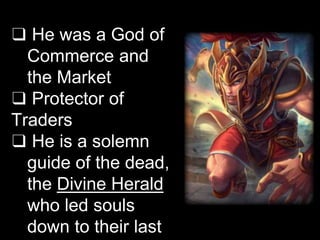
❑ He was a God of
Commerce and
the Market
❑ Protector of
Traders
❑ He is a solemn
guide of the dead,
the Divine Herald
who led souls
down to their last
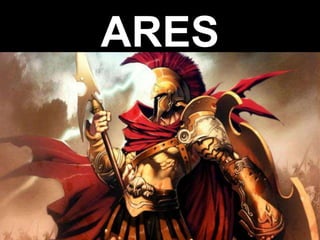
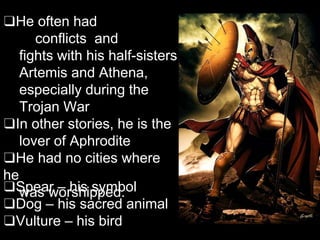
ARES
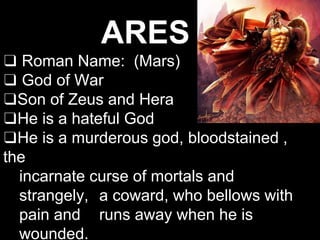
ARES
❑ Roman Name: (Mars)
❑ God of War
❑Son of Zeus and Hera
❑He is a hateful God
❑He is a murderous god, bloodstained ,
the
incarnate curse of mortals and
strangely, a coward, who bellows with
pain and runs away when he is
wounded.
❑He often had
conflicts and
fights with his half-sisters
Artemis and Athena,
especially during the
Trojan War
❑In other stories, he is the
lover of Aphrodite
❑He had no cities where
he
was worshipped.
❑Spear – his symbol
❑Dog – his sacred animal
❑Vulture – his bird
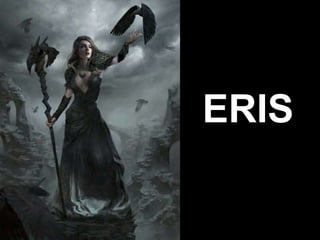
ERIS
ERIS
❑She is the Goddess of Discord
and Spite
❑She is the daughter of Zeus
and Hera
❑She is Ares’ twin
❑She often accompanies Ares into battle,
bringing along her son, Strife
❑She is very unpopular, and is often snubbed by
the
other gods.
❑She is said to be the direct cause of the Trojan
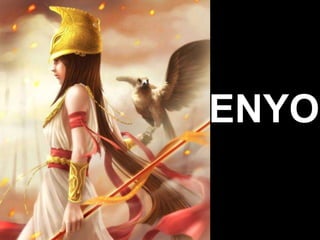
ENYO
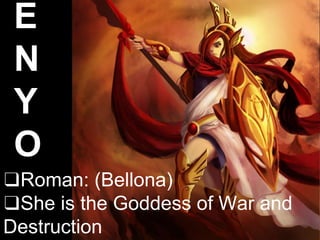
❑Roman: (Bellona)
❑She is the Goddess of War and
Destruction
E
N
Y
O
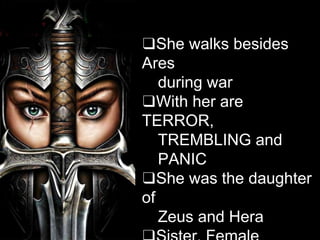
❑She walks besides
Ares
during war
❑With her are
TERROR,
TREMBLING and
PANIC
❑She was the daughter
of
Zeus and Hera
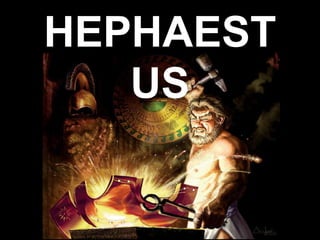
HEPHAEST
US
HEPHAEST
US
❑ Roman Name: (Vulcan
and Mulciber)
❑ God of Fire
❑Protector of Smith
❑Sometimes said to be the
son of Zeus and Hera
❑He is an ugly and lame god.
❑His wife is Aphrodite.
❑He is kindly, peace –loving god.
❑He is more popular in Earth than in Heaven.
❑He and Athena is important in life of the city
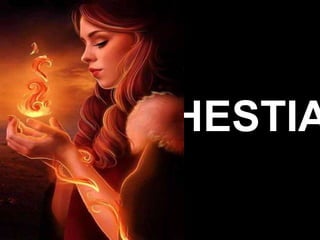
HESTIA
HESTI
A
❑ Roman
Name:
(Vesta)
❑ Goddess of
Hearth, the
VESTA
LS
❑ The Six Virgin
Priestesses
❑ In Rome, they
care for the fire
of Vesta
H
E
A
R
T
H
The
Symb
ol
Of
Home
THE
LESSER
GODS AND
GODDESSE
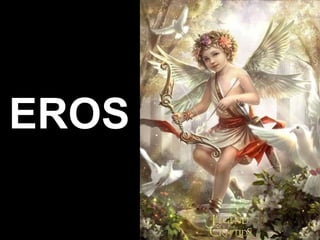
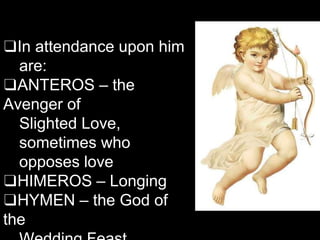
EROS
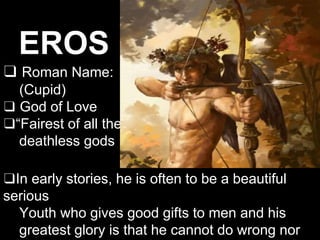
EROS
❑ Roman Name:
(Cupid)
❑ God of Love
❑“Fairest of all the
deathless gods
❑In early stories, he is often to be a beautiful
serious
Youth who gives good gifts to men and his
greatest glory is that he cannot do wrong nor
❑He is the son of Aphrodite and almost invariably
a
mischievous, naughty boy or worse.
❑He was often represented blindfolded, because
“Love is blind”.
❑In attendance upon him
are:
❑ANTEROS – the
Avenger of
Slighted Love,
sometimes who
opposes love
❑HIMEROS – Longing
❑HYMEN – the God of
the
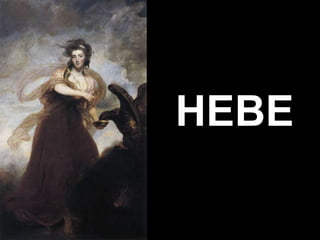
HEBE
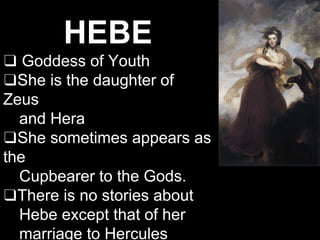
HEBE
❑ Goddess of Youth
❑She is the daughter of
Zeus
and Hera
❑She sometimes appears as
the
Cupbearer to the Gods.
❑There is no stories about
Hebe except that of her
marriage to Hercules
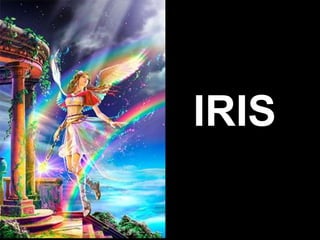
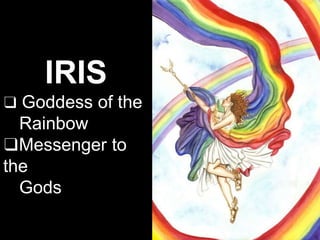
IRIS
IRIS
❑ Goddess of the
Rainbow
❑Messenger to
the
Gods
In Olympus,
there are two
bands of lovely
sisters:
The MUSES and
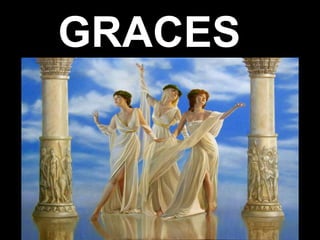
GRACES
GRACES
❑ Goddesses of
Charm, Beauty,
Nature, Human
Creativity and
Fertility
❑ They bestowed Charm and Goodness on
Young Women and gave joy to people.
❑The name refers to the “pleasing” or
“charming” appearance of a fertile field or
garden.
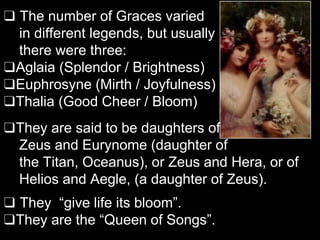
❑ The number of Graces varied
in different legends, but usually
there were three:
❑Aglaia (Splendor / Brightness)
❑Euphrosyne (Mirth / Joyfulness)
❑Thalia (Good Cheer / Bloom)
❑They are said to be daughters of
Zeus and Eurynome (daughter of
the Titan, Oceanus), or Zeus and Hera, or of
Helios and Aegle, (a daughter of Zeus).
❑ They “give life its bloom”.
❑They are the “Queen of Songs”.
❑ According to myths, the Graces were usually
attending the Greek Goddess of Beauty,
Aphrodite, and her companion, Eros, and loved
dancing around in a circle to Apollo’s divine
music, together with the Nymphs and the
Muses.
❑They are also known as the CHARITIES.
MUSES
MUSES
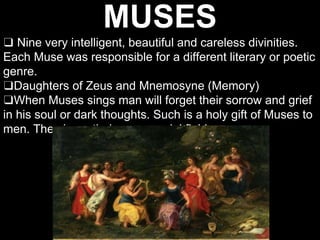
❑ Nine very intelligent, beautiful and careless divinities.
Each Muse was responsible for a different literary or poetic
genre.
❑Daughters of Zeus and Mnemosyne (Memory)
❑When Muses sings man will forget their sorrow and grief
in his soul or dark thoughts. Such is a holy gift of Muses to
men. They have their own special field.
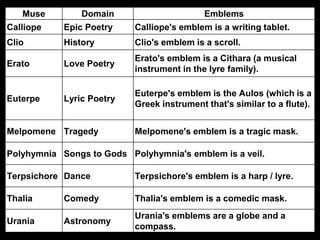
Muse Domain Emblems
Calliope Epic Poetry Calliope's emblem is a writing tablet.
Clio History Clio's emblem is a scroll.
Erato Love Poetry
Erato's emblem is a Cithara (a musical
instrument in the lyre family).
Euterpe Lyric Poetry
Euterpe's emblem is the Aulos (which is a
Greek instrument that's similar to a flute).
Melpomene Tragedy Melpomene's emblem is a tragic mask.
Polyhymnia Songs to Gods Polyhymnia's emblem is a veil.
Terpsichore Dance Terpsichore's emblem is a harp / lyre.
Thalia Comedy Thalia's emblem is a comedic mask.
Urania Astronomy
Urania's emblems are a globe and a
compass.
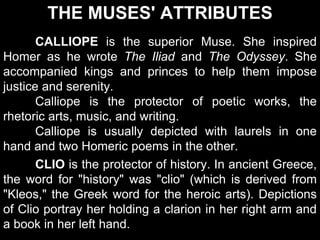
THE MUSES' ATTRIBUTES
CALLIOPE is the superior Muse. She inspired
Homer as he wrote The Iliad and The Odyssey. She
accompanied kings and princes to help them impose
justice and serenity.
Calliope is the protector of poetic works, the
rhetoric arts, music, and writing.
Calliope is usually depicted with laurels in one
hand and two Homeric poems in the other.
CLIO is the protector of history. In ancient Greece,
the word for "history" was "clio" (which is derived from
"Kleos," the Greek word for the heroic arts). Depictions
of Clio portray her holding a clarion in her right arm and
a book in her left hand.
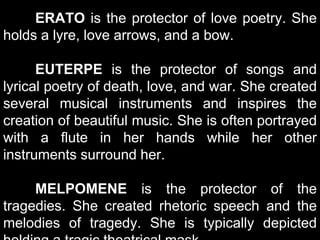
ERATO is the protector of love poetry. She
holds a lyre, love arrows, and a bow.
EUTERPE is the protector of songs and
lyrical poetry of death, love, and war. She created
several musical instruments and inspires the
creation of beautiful music. She is often portrayed
with a flute in her hands while her other
instruments surround her.
MELPOMENE is the protector of the
tragedies. She created rhetoric speech and the
melodies of tragedy. She is typically depicted
POLYHYMNIA is the protector of divine
hymns. She created geometry and
grammar. She is usually depicted wearing a
veil and looking up to the heavens.
TERPSICHORE is the creator and
protector of dance. She also created the
harp and education. She is usually depicted
with a laurel wreath on her head while she
holds her harp and dances.
THALIA is the opposite of Melpomene.
She is the protector of comedy, the
sciences (including geometry, architecture,
and agriculture,) and symposiums. She
typically holds a comedic theatrical mask in
her depictions.
URANIA is the protector of celestial
bodies. She created astronomy, and she
bears stars, a celestial sphere, and a
compass.
THE ROLE OF THE MUSES IN MYTHOLOGY AND
THE ARTS
Zeus brought the Muses to life to celebrate the victory of
the Olympian gods over the Titans, and to forget the evils of the
world. Their lovely voices and dancing helped to relieve the
sorrows of the past.
Each Muse had her own domain over a particular artistic
discipline. Apollo, the god of music, art, and poetry, is their
teacher.
The Muses followed Apollo, sang, and danced joyfully as
he wandered through the beauty of nature on Mount Helicon
where they lived and worshiped.
According to Pindar (c. 522 - 443 BC), a Greek lyric poet,
to "carry a mousa " is "to excel in the arts". MOUSA is a common
Greek noun. It means "arts" or "poetry."
The Muses inspire creation. Many people believe that the
inspiration they need to write literature, a poem, or create any
Other known
Heavenly Forms
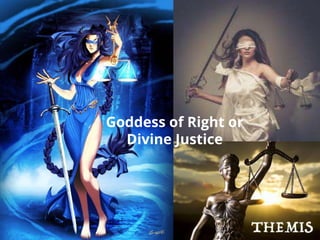
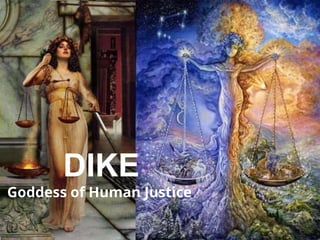
Goddess of Right or
Divine Justice
DIKE
Goddess of Human Justice
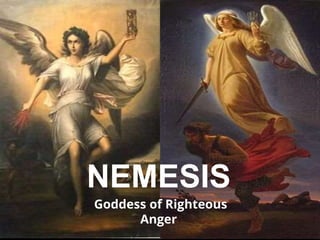
NEMESIS
Goddess of Righteous
Anger
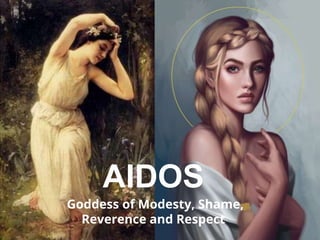
AIDOS
Goddess of Modesty, Shame,
Reverence and Respect
The Two Great
Gods of Earth
“Mankind’s Best
friends”
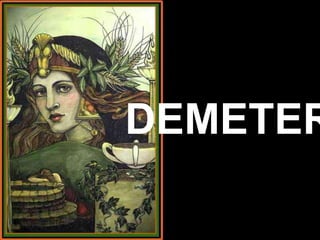
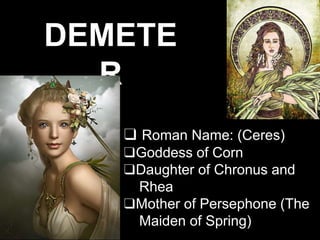
DEMETER
DEMETE
R
❑ Roman Name: (Ceres)
❑Goddess of Corn
❑Daughter of Chronus and
Rhea
❑Mother of Persephone (The
Maiden of Spring)
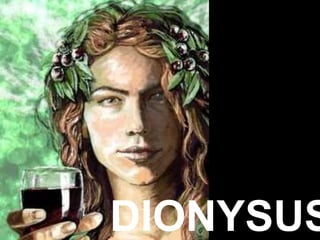
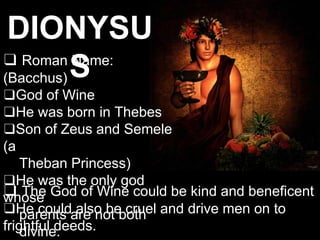
DIONYSUS
DIONYSU
S
❑ Roman Name:
(Bacchus)
❑God of Wine
❑He was born in Thebes
❑Son of Zeus and Semele
(a
Theban Princess)
❑He was the only god
whose
parents are not both
divine.
❑ The God of Wine could be kind and beneficent
❑He could also be cruel and drive men on to
frightful deeds.
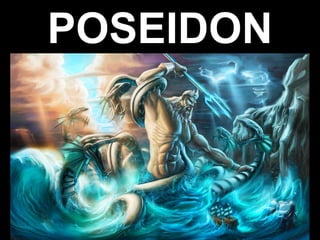
The Gods of
Waters
POSEIDON
❑ Roman Name: (NEPTUNE)
❑Lord and Ruler of the Sea
(Mediterranean)
❑The Friendly Sea (EUXINE, now the
Black Sea)
❑Underground rivers too were his.
POSEIDO
N
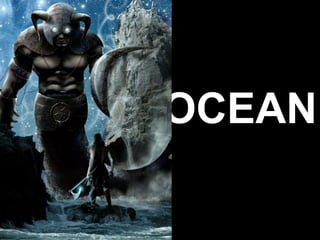
OCEAN
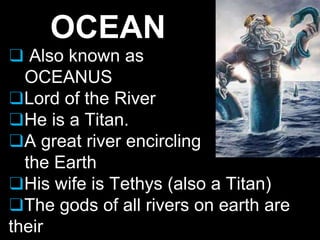
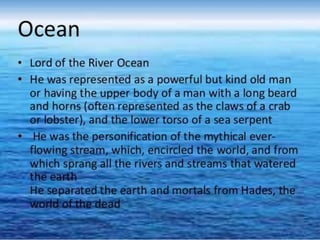
OCEAN
❑ Also known as
OCEANUS
❑Lord of the River
❑He is a Titan.
❑A great river encircling
the Earth
❑His wife is Tethys (also a Titan)
❑The gods of all rivers on earth are
their
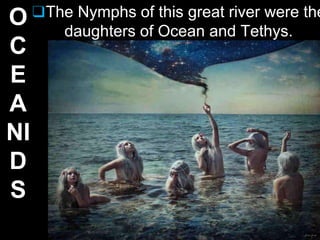
O
C
E
A
NI
D
S
❑The Nymphs of this great river were the
daughters of Ocean and Tethys.
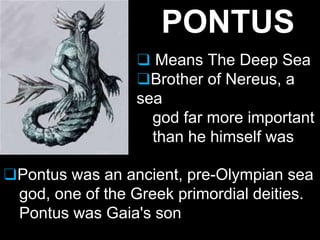
PONTUS
❑Pontus was an ancient, pre-Olympian sea
god, one of the Greek primordial deities.
Pontus was Gaia's son
PONTUS
❑ Means The Deep Sea
❑Brother of Nereus, a
sea
god far more important
than he himself was
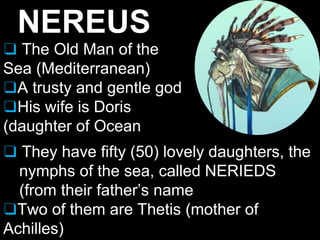
NEREUS
NEREUS
❑ The Old Man of the
Sea (Mediterranean)
❑A trusty and gentle god
❑His wife is Doris
(daughter of Ocean
❑ They have fifty (50) lovely daughters, the
nymphs of the sea, called NERIEDS
(from their father’s name
❑Two of them are Thetis (mother of
Achilles)
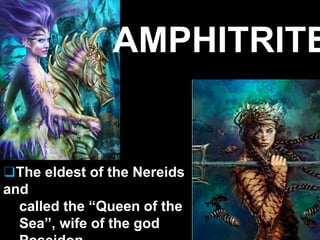
AMPHITRITE
❑The eldest of the Nereids
and
called the “Queen of the
Sea”, wife of the god
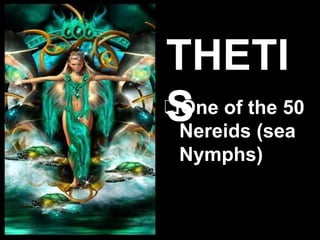
❑One of the 50
Nereids (sea
Nymphs)
THETI
S
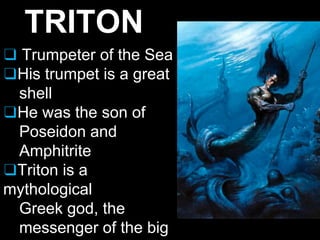
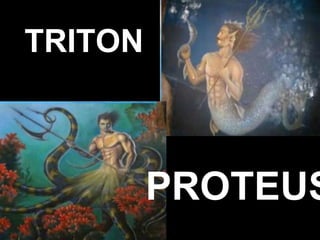
TRITON
TRITON
❑ Trumpeter of the Sea
❑His trumpet is a great
shell
❑He was the son of
Poseidon and
Amphitrite
❑Triton is a
mythological
Greek god, the
messenger of the big
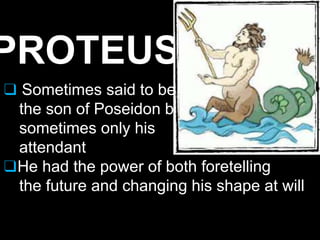
PROTEUS
❑ Sometimes said to be
the son of Poseidon but
sometimes only his
attendant
❑He had the power of both foretelling
the future and changing his shape at will
TRITON
PROTEUS
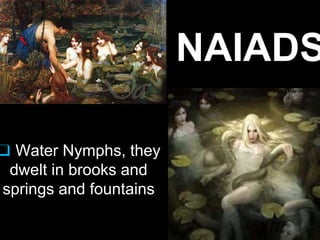
NAIADS
❑ Water Nymphs, they
dwelt in brooks and
springs and fountains
The
Underworld
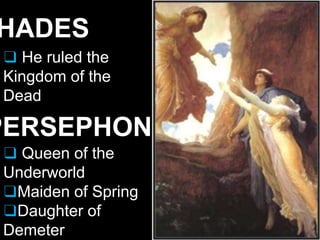
HADES
PERSEPHONE
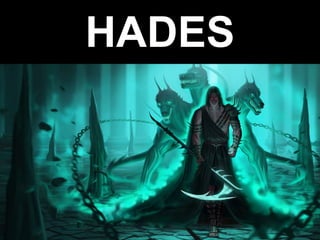
HADES
❑ He ruled the
Kingdom of the
Dead
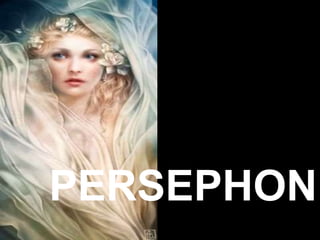
PERSEPHONE
❑ Queen of the
Underworld
❑Maiden of Spring
❑Daughter of
Demeter
TARTARUS
❑ The deeper of the two
❑The prison of the Sons of Earth
Two Divisions of
Underworld
EREBUS
❑ It is where the dead pass as soon as they
die.
❑The path to it leads to:
❑ACHERON – the River of Woe pours into
❑COCYTUS – the River of Lamentation
❑An aged boatman named CHARON ferries the
souls of those upon who gave the passage
money. It is the gold coin placed in the eyes of
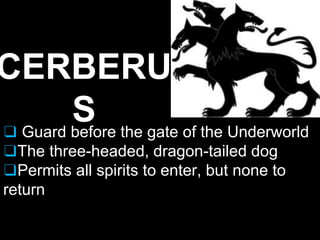
CERBERU
S
❑ Guard before the gate of the Underworld
❑The three-headed, dragon-tailed dog
❑Permits all spirits to enter, but none to
return
The Three Rivers
that separate the
Underworld from
the World above
❑ PHLEGETHON
❑The River of Fire
❑STYX
❑The River of Unbreakable Oath by
which the gods swear
❑LETHE
❑The River of Forgetfulness
Aside from Acheron and Cocytus, there are
three other rivers .that separate the
Underworld from the World above
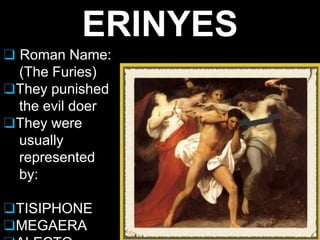
ERINYES
❑ Roman Name:
(The Furies)
❑They punished
the evil doer
❑They were
usually
represented
by:
❑TISIPHONE
❑MEGAERA
ERINYES (THE FURIES)
❑The three Goddesses of Vengeance
❑TISIPHONE – (avenger of murder)
❑MEGAERA – (the jealous)
❑ALECTO – (constant anger)
❑They were called the Daughters of
the Night, but were actually the
daughters of Uranus and Gaea.
❑Without mercy, the Erinyes or the
Furies
would punish all crime including the
breaking of rules considering all
aspects of society.
❑They would strike the offenders with
madness and never stopped
following criminals.
❑The worst of all crimes were patricide
or matricide, and first and foremost,
the Erinyes or the Furies would
❑SLEEP and DEATH – are
brothers
❑They dwelt in the lower world
❑DREAMS too ascended from there
to
men.
❑They passed through two gates:
❑One of the Horn – which true dreams
went
SATYRS
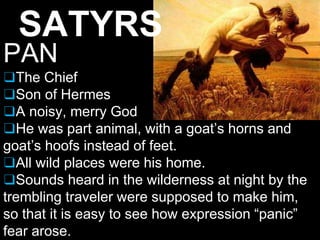
PAN
❑The Chief
❑Son of Hermes
❑A noisy, merry God
❑He was part animal, with a goat’s horns and
goat’s hoofs instead of feet.
❑All wild places were his home.
❑Sounds heard in the wilderness at night by the
trembling traveler were supposed to make him,
so that it is easy to see how expression “panic”
fear arose.
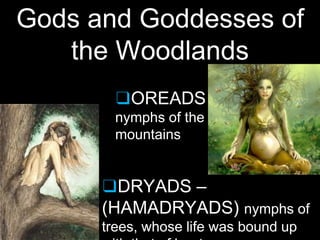
Gods and Goddesses of
the Woodlands
❑OREADS –
nymphs of the
mountains
❑DRYADS –
(HAMADRYADS) nymphs of
trees, whose life was bound up
GODS OF THE WIND
❑AEOLUS – the King of the Winds
❑Four Chief Winds:
❑BOREAS – (AQUILO) - the North
Wind
❑ZEPHYR – (FAVONIUS) – the West
Wind
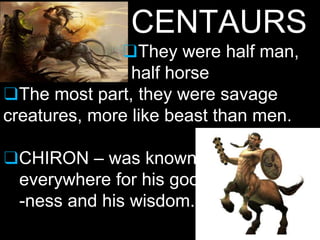
CENTAURS
❑They were half man,
half horse
❑The most part, they were savage
creatures, more like beast than men.
❑CHIRON – was known
everywhere for his good
-ness and his wisdom.
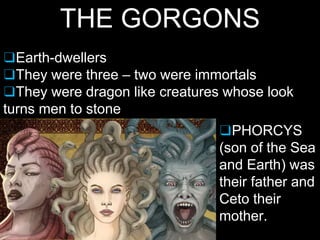
THE GORGONS
❑Earth-dwellers
❑They were three – two were immortals
❑They were dragon like creatures whose look
turns men to stone
❑PHORCYS
(son of the Sea
and Earth) was
their father and
Ceto their
mother.
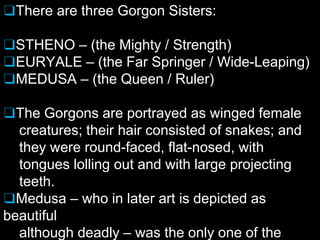
❑There are three Gorgon Sisters:
❑STHENO – (the Mighty / Strength)
❑EURYALE – (the Far Springer / Wide-Leaping)
❑MEDUSA – (the Queen / Ruler)
❑The Gorgons are portrayed as winged female
creatures; their hair consisted of snakes; and
they were round-faced, flat-nosed, with
tongues lolling out and with large projecting
teeth.
❑Medusa – who in later art is depicted as
beautiful
although deadly – was the only one of the
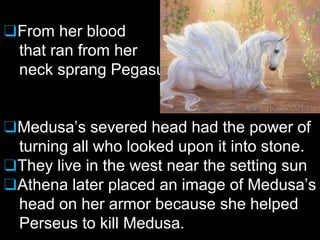
❑From her blood
that ran from her
neck sprang Pegasus
❑Medusa’s severed head had the power of
turning all who looked upon it into stone.
❑They live in the west near the setting sun
❑Athena later placed an image of Medusa’s
head on her armor because she helped
Perseus to kill Medusa.
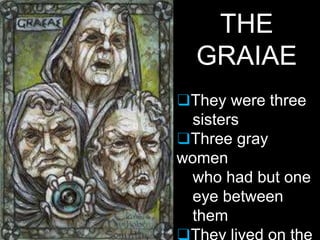
THE
GRAIAE
❑They were three
sisters
❑Three gray
women
who had but one
eye between
them
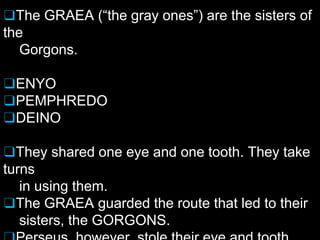
❑The GRAEA (“the gray ones”) are the sisters of
the
Gorgons.
❑ENYO
❑PEMPHREDO
❑DEINO
❑They shared one eye and one tooth. They take
turns
in using them.
❑The GRAEA guarded the route that led to their
sisters, the GORGONS.
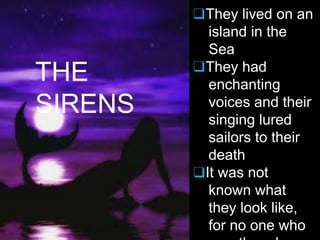
❑They lived on an
island in the
Sea
❑They had
enchanting
voices and their
singing lured
sailors to their
death
❑It was not
known what
they look like,
for no one who
THE
SIRENS
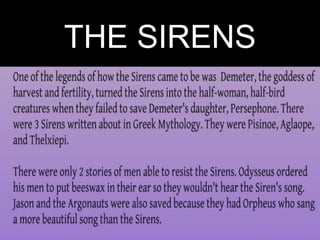
THE SIRENS
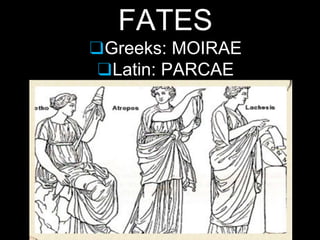
FATES
❑Greeks: MOIRAE
❑Latin: PARCAE
The FATES
❑They are very important but assigned to
no
abode whether in heaven or on earth.
❑The Fates have power to determine a
person’s
destiny.
❑They assign a man to good or evil.
❑Their most obvious choice is choosing
how
❑THERE ARE THREE FATES:
❑CLOTHO
❑the Spinner
❑She represents the present.
❑Her role is to spin the thread of life onto
her spindle.
❑She had the power to choose when
someone would be born.
❑LACHESIS
❑the Measurer or the Disposer of Lots
❑She represents the Past.
❑Her role is to measure the thread of life and
determine the length of one’s life.
❑She also helped the dead choose their next
lives.
❑ATROPOS
❑She represented the Future
❑Her role was to choose when and how one’s
life
would end by cutting the thread of life with
Writers of Mythology
❑HOMER
❑VIRGIL
❑OVID
❑HESIOD
❑AESCHYLUS
❑APULEIUS
❑APOLLONIUS of Rhodes and Theocritus
THA
NK
YOU
Prepared by
Ms. Requiz

Greek Gods & Goddesses.pptx

  • 1.
  • 2.
    CHRONU S ❑ Also knownas SATURN ❑ He ruled over the other Titans until his sons
  • 5.
    RHEA (Rheia) ❑ Queenof the Titans ❑ Daughter of the Earth Goddess Gaia and the Sky God Uranus ❑ Wife and Sister of Cronus
  • 6.
    OLYMPU S ❑ Home ofthe Olympians ❑ Mt. Olympus is identified as the highest mountain in Greece located
  • 7.
    ❑Great gate ofclouds of Olympus was kept by the Seasons.
  • 8.
  • 9.
    Zeus ❑(Roman Name: Jupiter) ❑SupremeRuler of the Gods ❑Lord of the Sky, the Rain-god and the Cloud- gatherer ❑His weapon was the might THUNDERBOLT ❑He falls in love frequently and often acts on it (even though he is married) ❑Breastplate – Aegis (armor) ❑Bird – Eagle ❑Tree – Oak ❑Oracle - Dodona
  • 10.
  • 11.
    HERA ❑Roman Name: (Juno) ❑Wifeand Sister of Zeus ❑Protector of Marriage and Married Women ❑Daughter: ILITHYIA – helped women in child birth ❑Cow and peacock is sacred to her ❑Argos – her favorite city
  • 12.
  • 14.
    POSEIDON ❑Roman Name: (Neptune) ❑Godof the Sea ❑He gave the first Horse to men ❑Storm and Calm were under his control ❑Earth-shaker ❑Trident – a three-pronged spear ❑He had connections with bulls as with horses
  • 15.
  • 16.
    HADES ❑ Roman Name:(Pluto) ❑God of the Underworld ❑The God of Wealth of the precious metals hidden in the earth ❑Romans call him Dis – Latin word for Rich ❑He had a far-famed cap or helmet which made whoever wore it invisible
  • 17.
    ❑His wife Persephone(Proserpine) – Queen of the Underworld ❑He is the King of the Dead – not Death himself ❑Death – Greeks (Thanatos) – Romans (Orcus) ❑Cerberus – the three headed, dragon-tailed dog that Guard before the gate of the Underworld which permits all spirits to enter, but none to return
  • 18.
  • 19.
    PALLAS ATHENA ❑ Roman Name:(Minerva) ❑Goddess of War, Wisdom, Reason and Purity ❑No mother bore her. She sprang from Zeus’ head ❑She is fierce and ruthless battle goddesses
  • 20.
    ❑ She isthe inventor of the Bridle (horse headgear) ❑She is the one who first tamed horses for the men to use. ❑She is Zeus’ favorite child. He trusted her to carry the Aegis (armor), his Buckler (shield) and the Thunderbolt. ❑She was described as “Gray-eyed” or “Flashing-eyed” ❑She is the chief of the Three Virgin Goddesses (Athena, Artemis and Hestia) and she was called Maiden. ❑Temple – Parthenon ❑Athens – City
  • 21.
  • 22.
    PHOEBUS APOLLO ❑ Roman Name:(Apollo) ❑God of Light and Truth ❑Son of Zeus and Leto (Latona), born in the little island of Delos ❑He is the twin brother of Artemis ❑A beautiful figure in Greek poetry ❑The Master Musician who delights
  • 23.
    ❑ The Lordof the Silver Bow ❑The Archer-god, far shooting ❑The Healer – who first taught men the Healing Art ❑No falls words ever falls from his lips ❑The Lycian – Wolf-god ❑Oracle – Delphi ❑Phoebus – “Brilliant” and “Shining” ❑Tree – Laurel ❑Dolphin and Crow is sacred to him
  • 24.
  • 25.
    ARTEMIS ❑ Roman Name:(Diana) ❑ Goddess of Hunt ❑ Twin sister of Apollo ❑ One of the Virgin Goddesses ❑ Lady of the wild Things ❑Huntsman-in-chief to the Gods ❑Protectress of the “Dewy Youth” everywhere ❑In other stories, she is fierce and revengeful
  • 26.
    ❑ She isthe Goddess of Three Forms: ❑SELENE (Moon) in the Sky ❑ARTEMIS in Earth ❑HECATE (goddess of the Dark of the Moon) in the Lower World ❑ Cypress is sacred to her ❑Deer and other wild animals are sacred to her
  • 27.
  • 28.
    APHRODIT E ❑ Roman Name:(Venus) ❑ Goddess of Love, Beauty, and Desire ❑ The laughter-loving goddess ❑ She is said to have sprung from the foam of the sea and her name was explained as meaning “the foam-risen” ❑Aphros is foam in Greek
  • 29.
    ❑ Wife ofHephaestus (Vulcan), the lame and ugly god of the forge. ❑ Tree – Myrtle ❑ Bird – Dove, Sparrow or the Swan
  • 30.
  • 31.
    HERMES ❑ Roman Name:(Mercury) ❑ Son of Zeus and Mia, his mother is the daughter of Atlas ❑He was graceful and swift in motion. ❑On his feet were winged sandals ❑Wings were on his low crowned hat
  • 32.
    ❑Caduceus - Magic Wand ❑Hewas Zeus’ Messenger ❑Of all the Gods, he was the Shrewdest and most cunning
  • 33.
    ❑ He wasa God of Commerce and the Market ❑ Protector of Traders ❑ He is a solemn guide of the dead, the Divine Herald who led souls down to their last
  • 34.
  • 35.
    ARES ❑ Roman Name:(Mars) ❑ God of War ❑Son of Zeus and Hera ❑He is a hateful God ❑He is a murderous god, bloodstained , the incarnate curse of mortals and strangely, a coward, who bellows with pain and runs away when he is wounded.
  • 36.
    ❑He often had conflictsand fights with his half-sisters Artemis and Athena, especially during the Trojan War ❑In other stories, he is the lover of Aphrodite ❑He had no cities where he was worshipped. ❑Spear – his symbol ❑Dog – his sacred animal ❑Vulture – his bird
  • 37.
  • 38.
    ERIS ❑She is theGoddess of Discord and Spite ❑She is the daughter of Zeus and Hera ❑She is Ares’ twin ❑She often accompanies Ares into battle, bringing along her son, Strife ❑She is very unpopular, and is often snubbed by the other gods. ❑She is said to be the direct cause of the Trojan
  • 39.
  • 40.
    ❑Roman: (Bellona) ❑She isthe Goddess of War and Destruction E N Y O
  • 41.
    ❑She walks besides Ares duringwar ❑With her are TERROR, TREMBLING and PANIC ❑She was the daughter of Zeus and Hera
  • 42.
  • 43.
    HEPHAEST US ❑ Roman Name:(Vulcan and Mulciber) ❑ God of Fire ❑Protector of Smith ❑Sometimes said to be the son of Zeus and Hera ❑He is an ugly and lame god. ❑His wife is Aphrodite. ❑He is kindly, peace –loving god. ❑He is more popular in Earth than in Heaven. ❑He and Athena is important in life of the city
  • 44.
  • 45.
  • 46.
    VESTA LS ❑ The SixVirgin Priestesses ❑ In Rome, they care for the fire of Vesta
  • 47.
  • 48.
  • 49.
  • 50.
    EROS ❑ Roman Name: (Cupid) ❑God of Love ❑“Fairest of all the deathless gods ❑In early stories, he is often to be a beautiful serious Youth who gives good gifts to men and his greatest glory is that he cannot do wrong nor
  • 51.
    ❑He is theson of Aphrodite and almost invariably a mischievous, naughty boy or worse. ❑He was often represented blindfolded, because “Love is blind”.
  • 52.
    ❑In attendance uponhim are: ❑ANTEROS – the Avenger of Slighted Love, sometimes who opposes love ❑HIMEROS – Longing ❑HYMEN – the God of the
  • 53.
  • 54.
    HEBE ❑ Goddess ofYouth ❑She is the daughter of Zeus and Hera ❑She sometimes appears as the Cupbearer to the Gods. ❑There is no stories about Hebe except that of her marriage to Hercules
  • 55.
  • 56.
    IRIS ❑ Goddess ofthe Rainbow ❑Messenger to the Gods
  • 57.
    In Olympus, there aretwo bands of lovely sisters: The MUSES and
  • 58.
  • 59.
    GRACES ❑ Goddesses of Charm,Beauty, Nature, Human Creativity and Fertility ❑ They bestowed Charm and Goodness on Young Women and gave joy to people. ❑The name refers to the “pleasing” or “charming” appearance of a fertile field or garden.
  • 60.
    ❑ The numberof Graces varied in different legends, but usually there were three: ❑Aglaia (Splendor / Brightness) ❑Euphrosyne (Mirth / Joyfulness) ❑Thalia (Good Cheer / Bloom) ❑They are said to be daughters of Zeus and Eurynome (daughter of the Titan, Oceanus), or Zeus and Hera, or of Helios and Aegle, (a daughter of Zeus). ❑ They “give life its bloom”. ❑They are the “Queen of Songs”.
  • 61.
    ❑ According tomyths, the Graces were usually attending the Greek Goddess of Beauty, Aphrodite, and her companion, Eros, and loved dancing around in a circle to Apollo’s divine music, together with the Nymphs and the Muses. ❑They are also known as the CHARITIES.
  • 62.
  • 63.
    MUSES ❑ Nine veryintelligent, beautiful and careless divinities. Each Muse was responsible for a different literary or poetic genre. ❑Daughters of Zeus and Mnemosyne (Memory) ❑When Muses sings man will forget their sorrow and grief in his soul or dark thoughts. Such is a holy gift of Muses to men. They have their own special field.
  • 64.
    Muse Domain Emblems CalliopeEpic Poetry Calliope's emblem is a writing tablet. Clio History Clio's emblem is a scroll. Erato Love Poetry Erato's emblem is a Cithara (a musical instrument in the lyre family). Euterpe Lyric Poetry Euterpe's emblem is the Aulos (which is a Greek instrument that's similar to a flute). Melpomene Tragedy Melpomene's emblem is a tragic mask. Polyhymnia Songs to Gods Polyhymnia's emblem is a veil. Terpsichore Dance Terpsichore's emblem is a harp / lyre. Thalia Comedy Thalia's emblem is a comedic mask. Urania Astronomy Urania's emblems are a globe and a compass.
  • 65.
    THE MUSES' ATTRIBUTES CALLIOPEis the superior Muse. She inspired Homer as he wrote The Iliad and The Odyssey. She accompanied kings and princes to help them impose justice and serenity. Calliope is the protector of poetic works, the rhetoric arts, music, and writing. Calliope is usually depicted with laurels in one hand and two Homeric poems in the other. CLIO is the protector of history. In ancient Greece, the word for "history" was "clio" (which is derived from "Kleos," the Greek word for the heroic arts). Depictions of Clio portray her holding a clarion in her right arm and a book in her left hand.
  • 66.
    ERATO is theprotector of love poetry. She holds a lyre, love arrows, and a bow. EUTERPE is the protector of songs and lyrical poetry of death, love, and war. She created several musical instruments and inspires the creation of beautiful music. She is often portrayed with a flute in her hands while her other instruments surround her. MELPOMENE is the protector of the tragedies. She created rhetoric speech and the melodies of tragedy. She is typically depicted
  • 67.
    POLYHYMNIA is theprotector of divine hymns. She created geometry and grammar. She is usually depicted wearing a veil and looking up to the heavens. TERPSICHORE is the creator and protector of dance. She also created the harp and education. She is usually depicted with a laurel wreath on her head while she holds her harp and dances.
  • 68.
    THALIA is theopposite of Melpomene. She is the protector of comedy, the sciences (including geometry, architecture, and agriculture,) and symposiums. She typically holds a comedic theatrical mask in her depictions. URANIA is the protector of celestial bodies. She created astronomy, and she bears stars, a celestial sphere, and a compass.
  • 69.
    THE ROLE OFTHE MUSES IN MYTHOLOGY AND THE ARTS Zeus brought the Muses to life to celebrate the victory of the Olympian gods over the Titans, and to forget the evils of the world. Their lovely voices and dancing helped to relieve the sorrows of the past. Each Muse had her own domain over a particular artistic discipline. Apollo, the god of music, art, and poetry, is their teacher. The Muses followed Apollo, sang, and danced joyfully as he wandered through the beauty of nature on Mount Helicon where they lived and worshiped. According to Pindar (c. 522 - 443 BC), a Greek lyric poet, to "carry a mousa " is "to excel in the arts". MOUSA is a common Greek noun. It means "arts" or "poetry." The Muses inspire creation. Many people believe that the inspiration they need to write literature, a poem, or create any
  • 70.
  • 71.
    Goddess of Rightor Divine Justice
  • 72.
  • 73.
  • 74.
    AIDOS Goddess of Modesty,Shame, Reverence and Respect
  • 75.
    The Two Great Godsof Earth “Mankind’s Best friends”
  • 76.
  • 77.
    DEMETE R ❑ Roman Name:(Ceres) ❑Goddess of Corn ❑Daughter of Chronus and Rhea ❑Mother of Persephone (The Maiden of Spring)
  • 78.
  • 79.
    DIONYSU S ❑ Roman Name: (Bacchus) ❑Godof Wine ❑He was born in Thebes ❑Son of Zeus and Semele (a Theban Princess) ❑He was the only god whose parents are not both divine. ❑ The God of Wine could be kind and beneficent ❑He could also be cruel and drive men on to frightful deeds.
  • 80.
  • 81.
  • 82.
    ❑ Roman Name:(NEPTUNE) ❑Lord and Ruler of the Sea (Mediterranean) ❑The Friendly Sea (EUXINE, now the Black Sea) ❑Underground rivers too were his. POSEIDO N
  • 83.
  • 84.
    OCEAN ❑ Also knownas OCEANUS ❑Lord of the River ❑He is a Titan. ❑A great river encircling the Earth ❑His wife is Tethys (also a Titan) ❑The gods of all rivers on earth are their
  • 86.
    O C E A NI D S ❑The Nymphs ofthis great river were the daughters of Ocean and Tethys.
  • 87.
  • 88.
    ❑Pontus was anancient, pre-Olympian sea god, one of the Greek primordial deities. Pontus was Gaia's son PONTUS ❑ Means The Deep Sea ❑Brother of Nereus, a sea god far more important than he himself was
  • 89.
  • 90.
    NEREUS ❑ The OldMan of the Sea (Mediterranean) ❑A trusty and gentle god ❑His wife is Doris (daughter of Ocean ❑ They have fifty (50) lovely daughters, the nymphs of the sea, called NERIEDS (from their father’s name ❑Two of them are Thetis (mother of Achilles)
  • 91.
    AMPHITRITE ❑The eldest ofthe Nereids and called the “Queen of the Sea”, wife of the god
  • 92.
    ❑One of the50 Nereids (sea Nymphs) THETI S
  • 93.
  • 94.
    TRITON ❑ Trumpeter ofthe Sea ❑His trumpet is a great shell ❑He was the son of Poseidon and Amphitrite ❑Triton is a mythological Greek god, the messenger of the big
  • 95.
    PROTEUS ❑ Sometimes saidto be the son of Poseidon but sometimes only his attendant ❑He had the power of both foretelling the future and changing his shape at will
  • 96.
  • 97.
    NAIADS ❑ Water Nymphs,they dwelt in brooks and springs and fountains
  • 98.
  • 99.
  • 100.
  • 101.
    HADES ❑ He ruledthe Kingdom of the Dead PERSEPHONE ❑ Queen of the Underworld ❑Maiden of Spring ❑Daughter of Demeter
  • 102.
    TARTARUS ❑ The deeperof the two ❑The prison of the Sons of Earth Two Divisions of Underworld
  • 103.
    EREBUS ❑ It iswhere the dead pass as soon as they die. ❑The path to it leads to: ❑ACHERON – the River of Woe pours into ❑COCYTUS – the River of Lamentation ❑An aged boatman named CHARON ferries the souls of those upon who gave the passage money. It is the gold coin placed in the eyes of
  • 104.
    CERBERU S ❑ Guard beforethe gate of the Underworld ❑The three-headed, dragon-tailed dog ❑Permits all spirits to enter, but none to return
  • 105.
    The Three Rivers thatseparate the Underworld from the World above
  • 106.
    ❑ PHLEGETHON ❑The Riverof Fire ❑STYX ❑The River of Unbreakable Oath by which the gods swear ❑LETHE ❑The River of Forgetfulness Aside from Acheron and Cocytus, there are three other rivers .that separate the Underworld from the World above
  • 107.
    ERINYES ❑ Roman Name: (TheFuries) ❑They punished the evil doer ❑They were usually represented by: ❑TISIPHONE ❑MEGAERA
  • 108.
    ERINYES (THE FURIES) ❑Thethree Goddesses of Vengeance ❑TISIPHONE – (avenger of murder) ❑MEGAERA – (the jealous) ❑ALECTO – (constant anger) ❑They were called the Daughters of the Night, but were actually the daughters of Uranus and Gaea.
  • 109.
    ❑Without mercy, theErinyes or the Furies would punish all crime including the breaking of rules considering all aspects of society. ❑They would strike the offenders with madness and never stopped following criminals. ❑The worst of all crimes were patricide or matricide, and first and foremost, the Erinyes or the Furies would
  • 110.
    ❑SLEEP and DEATH– are brothers ❑They dwelt in the lower world ❑DREAMS too ascended from there to men. ❑They passed through two gates: ❑One of the Horn – which true dreams went
  • 111.
    SATYRS PAN ❑The Chief ❑Son ofHermes ❑A noisy, merry God ❑He was part animal, with a goat’s horns and goat’s hoofs instead of feet. ❑All wild places were his home. ❑Sounds heard in the wilderness at night by the trembling traveler were supposed to make him, so that it is easy to see how expression “panic” fear arose.
  • 112.
    Gods and Goddessesof the Woodlands ❑OREADS – nymphs of the mountains ❑DRYADS – (HAMADRYADS) nymphs of trees, whose life was bound up
  • 113.
    GODS OF THEWIND ❑AEOLUS – the King of the Winds ❑Four Chief Winds: ❑BOREAS – (AQUILO) - the North Wind ❑ZEPHYR – (FAVONIUS) – the West Wind
  • 114.
    CENTAURS ❑They were halfman, half horse ❑The most part, they were savage creatures, more like beast than men. ❑CHIRON – was known everywhere for his good -ness and his wisdom.
  • 115.
    THE GORGONS ❑Earth-dwellers ❑They werethree – two were immortals ❑They were dragon like creatures whose look turns men to stone ❑PHORCYS (son of the Sea and Earth) was their father and Ceto their mother.
  • 116.
    ❑There are threeGorgon Sisters: ❑STHENO – (the Mighty / Strength) ❑EURYALE – (the Far Springer / Wide-Leaping) ❑MEDUSA – (the Queen / Ruler) ❑The Gorgons are portrayed as winged female creatures; their hair consisted of snakes; and they were round-faced, flat-nosed, with tongues lolling out and with large projecting teeth. ❑Medusa – who in later art is depicted as beautiful although deadly – was the only one of the
  • 117.
    ❑From her blood thatran from her neck sprang Pegasus ❑Medusa’s severed head had the power of turning all who looked upon it into stone. ❑They live in the west near the setting sun ❑Athena later placed an image of Medusa’s head on her armor because she helped Perseus to kill Medusa.
  • 118.
    THE GRAIAE ❑They were three sisters ❑Threegray women who had but one eye between them
  • 119.
    ❑The GRAEA (“thegray ones”) are the sisters of the Gorgons. ❑ENYO ❑PEMPHREDO ❑DEINO ❑They shared one eye and one tooth. They take turns in using them. ❑The GRAEA guarded the route that led to their sisters, the GORGONS.
  • 120.
    ❑They lived onan island in the Sea ❑They had enchanting voices and their singing lured sailors to their death ❑It was not known what they look like, for no one who THE SIRENS
  • 121.
  • 122.
  • 123.
    The FATES ❑They arevery important but assigned to no abode whether in heaven or on earth. ❑The Fates have power to determine a person’s destiny. ❑They assign a man to good or evil. ❑Their most obvious choice is choosing how
  • 124.
    ❑THERE ARE THREEFATES: ❑CLOTHO ❑the Spinner ❑She represents the present. ❑Her role is to spin the thread of life onto her spindle. ❑She had the power to choose when someone would be born.
  • 125.
    ❑LACHESIS ❑the Measurer orthe Disposer of Lots ❑She represents the Past. ❑Her role is to measure the thread of life and determine the length of one’s life. ❑She also helped the dead choose their next lives. ❑ATROPOS ❑She represented the Future ❑Her role was to choose when and how one’s life would end by cutting the thread of life with
  • 126.
  • 127.