GraphQL.net
Tyler Ayers
tyler.ayers@gmail.com
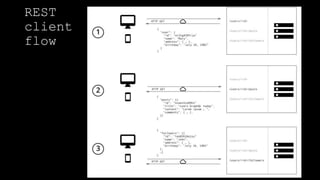
REST
client
flow
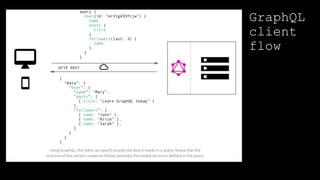
GraphQL
client
flow
Why GraphQL?
• REST and SOAP often provide APIs from the server perspective, not optimized for
data and flows from user interfaces
• Apps have to usually make multiple expensive REST calls and do data juggling
to get the data in the for that they need
• Facebook noticed this in their mobile app development around 2012, released
the project as an open source project in 2015
• No over or under-fetching of data, client always gets exactly what they asked
for
• Do everything the client needs in one call, always
• https://www.graphql.org is only a schema definition from Facebook, along with a
reference implementation for nodejs/react
• Open source implementations on GitHub for Python, Go, .NET Core, Scala, etc…
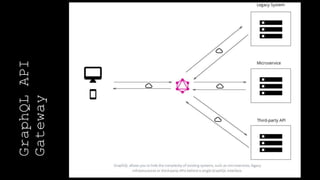
GraphQLAPI
Gateway
Why GraphQL instead of OData?
• GraphQL is a different approach than OData – OData grew out of the SQL Server
team at Microsoft, basically making the database queryable/editably from web
clients
• It doesn’t however solve the problem of overly complex request flows to get
user interface optimized data
• …and may make the situation worse since you are married to the data model
• Also can offer too much power to clients – they can discover and manipulate
the database and data directly, which is usually not a good idea - only
makes sense in trusted environments
• GraphQL offers more flexibility and simplicity on the client side, probably a
big win for client productivity and speed
Why OData instead of GraphQL?
• GraphQL requires a new approach to define and implement GraphQL APIs, with
little built-in support in .NET environments
• Odata has built in support in several key Microsoft technology stacks, could
make it faster to offer internal APIs to clients
Why maybe not GraphQL?
• It is a new API format – be prepared to learn a new schema format, basically
replaces Open API definitions with new GraphQL Schemas, and do completely new
implementations for services (very different code than a typical ASP.NET Core
REST API controller)
• .NET GraphQL open source projects are functional, but still relatively young
and maybe not production-ready
• Doesn’t conform to REST principles that built the web – uses POST for
everything
How’s GraphQL.net?
• Good! Works great with ASP.net Core, translation from strongly-typed DTOs in
.NET Core to dynamic JSON response payloads works like a charm
• https://graphql-dotnet.github.io/
• ORM / DB integrations lacking, maybe should also be avoided, best if used as an
API gateway which integrates with backend services
Demo
Who’s publicly using GraphQL?
• GitHub
• Twitter
• The New York Times
• Yelp
• ...
• Your neighbor’s dog?
Do some homework..
• Do the intro exercises, they are fast and fun, and do an excellent job of
explaining the intention, platform, and concrete implementation steps
• https://www.howtographql.com/
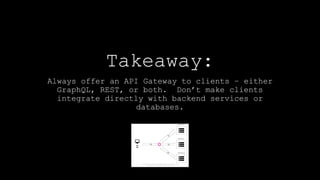
Takeaway:
Always offer an API Gateway to clients – either
GraphQL, REST, or both. Don’t make clients
integrate directly with backend services or
databases.

GraphQL.net

  • 1.
  • 2.
  • 3.
  • 4.
    Why GraphQL? • RESTand SOAP often provide APIs from the server perspective, not optimized for data and flows from user interfaces • Apps have to usually make multiple expensive REST calls and do data juggling to get the data in the for that they need • Facebook noticed this in their mobile app development around 2012, released the project as an open source project in 2015 • No over or under-fetching of data, client always gets exactly what they asked for • Do everything the client needs in one call, always • https://www.graphql.org is only a schema definition from Facebook, along with a reference implementation for nodejs/react • Open source implementations on GitHub for Python, Go, .NET Core, Scala, etc…
  • 5.
  • 6.
    Why GraphQL insteadof OData? • GraphQL is a different approach than OData – OData grew out of the SQL Server team at Microsoft, basically making the database queryable/editably from web clients • It doesn’t however solve the problem of overly complex request flows to get user interface optimized data • …and may make the situation worse since you are married to the data model • Also can offer too much power to clients – they can discover and manipulate the database and data directly, which is usually not a good idea - only makes sense in trusted environments • GraphQL offers more flexibility and simplicity on the client side, probably a big win for client productivity and speed
  • 7.
    Why OData insteadof GraphQL? • GraphQL requires a new approach to define and implement GraphQL APIs, with little built-in support in .NET environments • Odata has built in support in several key Microsoft technology stacks, could make it faster to offer internal APIs to clients
  • 8.
    Why maybe notGraphQL? • It is a new API format – be prepared to learn a new schema format, basically replaces Open API definitions with new GraphQL Schemas, and do completely new implementations for services (very different code than a typical ASP.NET Core REST API controller) • .NET GraphQL open source projects are functional, but still relatively young and maybe not production-ready • Doesn’t conform to REST principles that built the web – uses POST for everything
  • 9.
    How’s GraphQL.net? • Good!Works great with ASP.net Core, translation from strongly-typed DTOs in .NET Core to dynamic JSON response payloads works like a charm • https://graphql-dotnet.github.io/ • ORM / DB integrations lacking, maybe should also be avoided, best if used as an API gateway which integrates with backend services
  • 10.
  • 11.
    Who’s publicly usingGraphQL? • GitHub • Twitter • The New York Times • Yelp • ... • Your neighbor’s dog?
  • 12.
    Do some homework.. •Do the intro exercises, they are fast and fun, and do an excellent job of explaining the intention, platform, and concrete implementation steps • https://www.howtographql.com/
  • 13.
    Takeaway: Always offer anAPI Gateway to clients – either GraphQL, REST, or both. Don’t make clients integrate directly with backend services or databases.