Real Mathematics: Shapes Assessment
Name: ……………………………………………….
1.
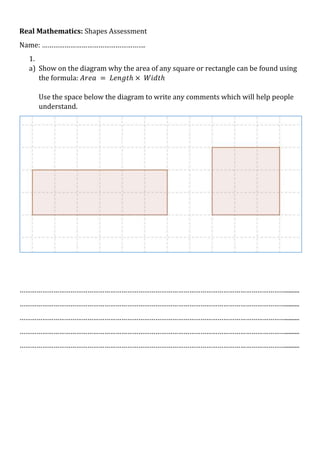
a) Show on the diagram why the area of any square or rectangle can be found using
the formula:
Use the space below the diagram to write any comments which will help people
understand.

…………………………………………………………………………………………………………………………….........
…………………………………………………………………………………………………………………………….........
…………………………………………………………………………………………………………………………….........
…………………………………………………………………………………………………………………………….........
…………………………………………………………………………………………………………………………….........
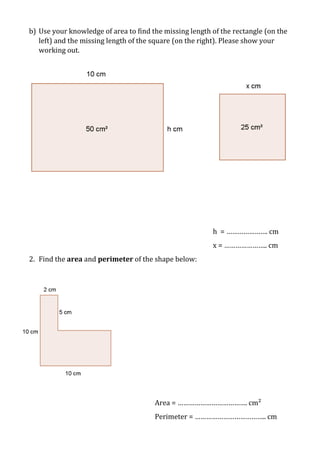
b) Use your knowledge of area to find the missing length of the rectangle (on the
left) and the missing length of the square (on the right). Please show your
working out.

h = …………………. cm
x = ………………….. cm
2. Find the area and perimeter of the shape below:

Area = ………………………………. cm²
Perimeter = ……………………………….. cm
3.
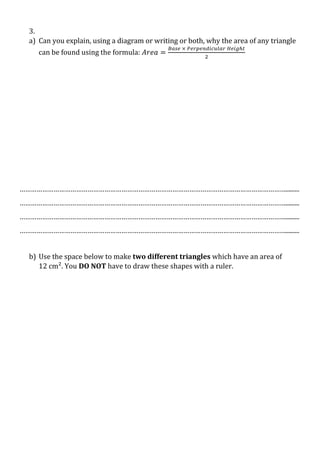
a) Can you explain, using a diagram or writing or both, why the area of any triangle
can be found using the formula:

…………………………………………………………………………………………………………………………….........
…………………………………………………………………………………………………………………………….........
…………………………………………………………………………………………………………………………….........
…………………………………………………………………………………………………………………………….........
b) Use the space below to make two different triangles which have an area of
12 cm². You DO NOT have to draw these shapes with a ruler.
4.
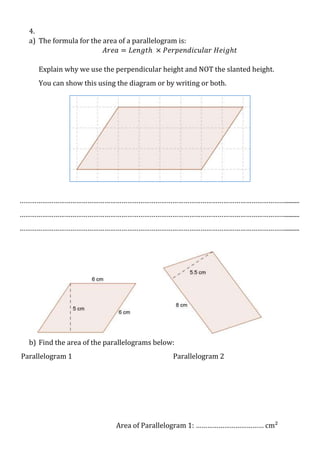
a) The formula for the area of a parallelogram is:

Explain why we use the perpendicular height and NOT the slanted height.
You can show this using the diagram or by writing or both.

…………………………………………………………………………………………………………………………….........
…………………………………………………………………………………………………………………………….........
…………………………………………………………………………………………………………………………….........

b) Find the area of the parallelograms below:
Parallelogram 1

Parallelogram 2

Area of Parallelogram 1: ……………………………… cm²
Area of Parallelogram 2: ……………………………… cm²
5.
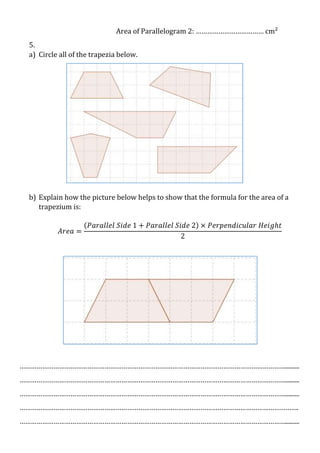
a) Circle all of the trapezia below.

b) Explain how the picture below helps to show that the formula for the area of a
trapezium is:

…………………………………………………………………………………………………………………………….........
…………………………………………………………………………………………………………………………….........
…………………………………………………………………………………………………………………………….........
………………………………………………………………………………………………………………………………….
…………………………………………………………………………………………………………………………….........
………………………………………………………………………………………………………………………………….
6.
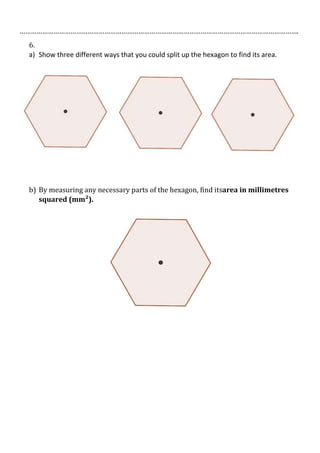
a) Show three different ways that you could split up the hexagon to find its area.

b) By measuring any necessary parts of the hexagon, find itsarea in millimetres
squared (mm²).
Area of Hexagon = ………………………………mm²

Grade 6 shapes assessment

  • 1.
    Real Mathematics: ShapesAssessment Name: ………………………………………………. 1. a) Show on the diagram why the area of any square or rectangle can be found using the formula: Use the space below the diagram to write any comments which will help people understand. ……………………………………………………………………………………………………………………………......... ……………………………………………………………………………………………………………………………......... ……………………………………………………………………………………………………………………………......... ……………………………………………………………………………………………………………………………......... …………………………………………………………………………………………………………………………….........
  • 2.
    b) Use yourknowledge of area to find the missing length of the rectangle (on the left) and the missing length of the square (on the right). Please show your working out. h = …………………. cm x = ………………….. cm 2. Find the area and perimeter of the shape below: Area = ………………………………. cm² Perimeter = ……………………………….. cm
  • 3.
    3. a) Can youexplain, using a diagram or writing or both, why the area of any triangle can be found using the formula: ……………………………………………………………………………………………………………………………......... ……………………………………………………………………………………………………………………………......... ……………………………………………………………………………………………………………………………......... ……………………………………………………………………………………………………………………………......... b) Use the space below to make two different triangles which have an area of 12 cm². You DO NOT have to draw these shapes with a ruler.
  • 4.
    4. a) The formulafor the area of a parallelogram is: Explain why we use the perpendicular height and NOT the slanted height. You can show this using the diagram or by writing or both. ……………………………………………………………………………………………………………………………......... ……………………………………………………………………………………………………………………………......... ……………………………………………………………………………………………………………………………......... b) Find the area of the parallelograms below: Parallelogram 1 Parallelogram 2 Area of Parallelogram 1: ……………………………… cm²
  • 5.
    Area of Parallelogram2: ……………………………… cm² 5. a) Circle all of the trapezia below. b) Explain how the picture below helps to show that the formula for the area of a trapezium is: ……………………………………………………………………………………………………………………………......... ……………………………………………………………………………………………………………………………......... ……………………………………………………………………………………………………………………………......... …………………………………………………………………………………………………………………………………. …………………………………………………………………………………………………………………………….........
  • 6.
    …………………………………………………………………………………………………………………………………. 6. a) Show threedifferent ways that you could split up the hexagon to find its area. b) By measuring any necessary parts of the hexagon, find itsarea in millimetres squared (mm²).
  • 7.
    Area of Hexagon= ………………………………mm²