The Good Citizen Russell Dalton Chapters 1 - 3
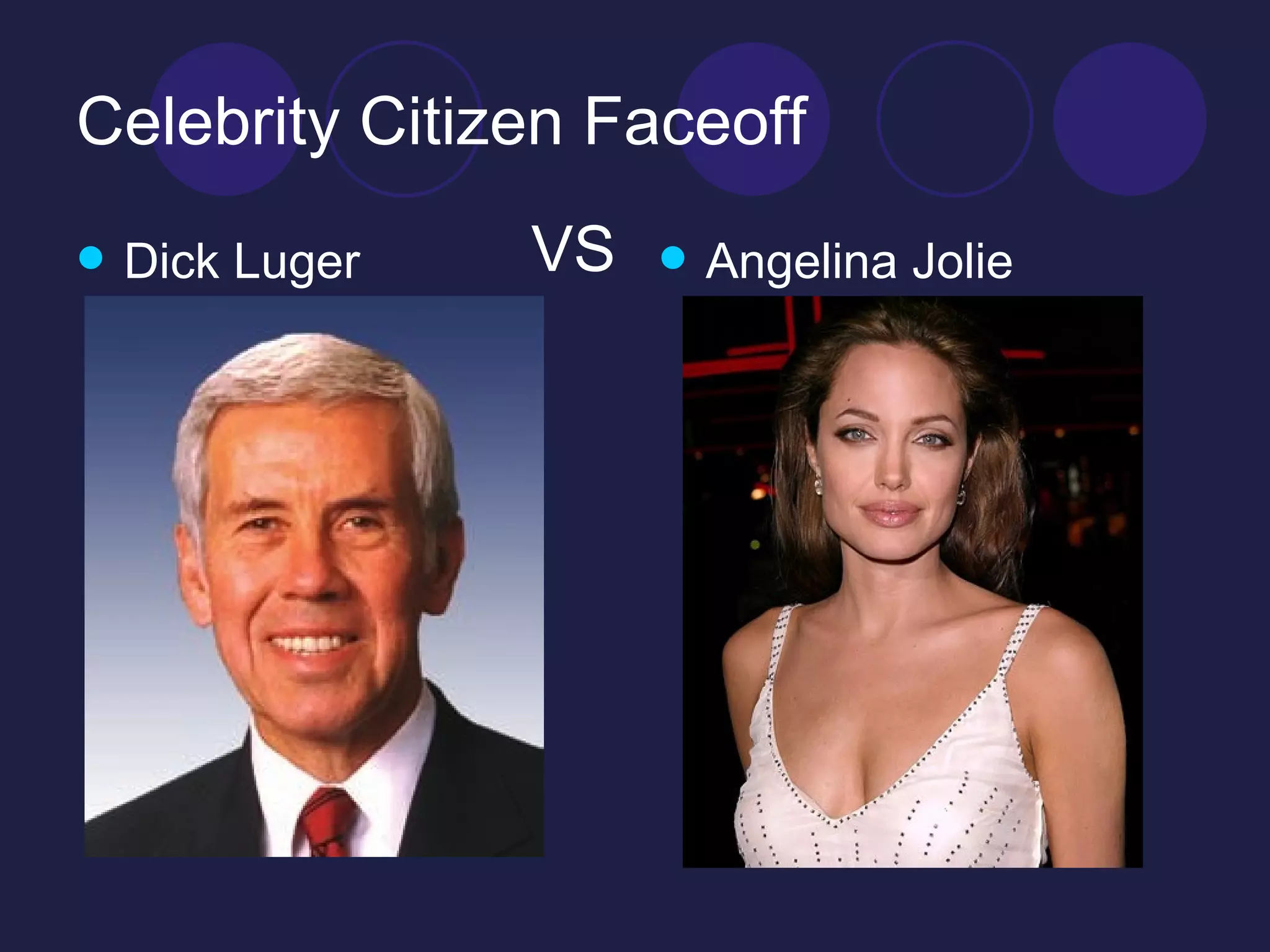
Celebrity Citizen Faceoff Dick Luger Angelina Jolie VS
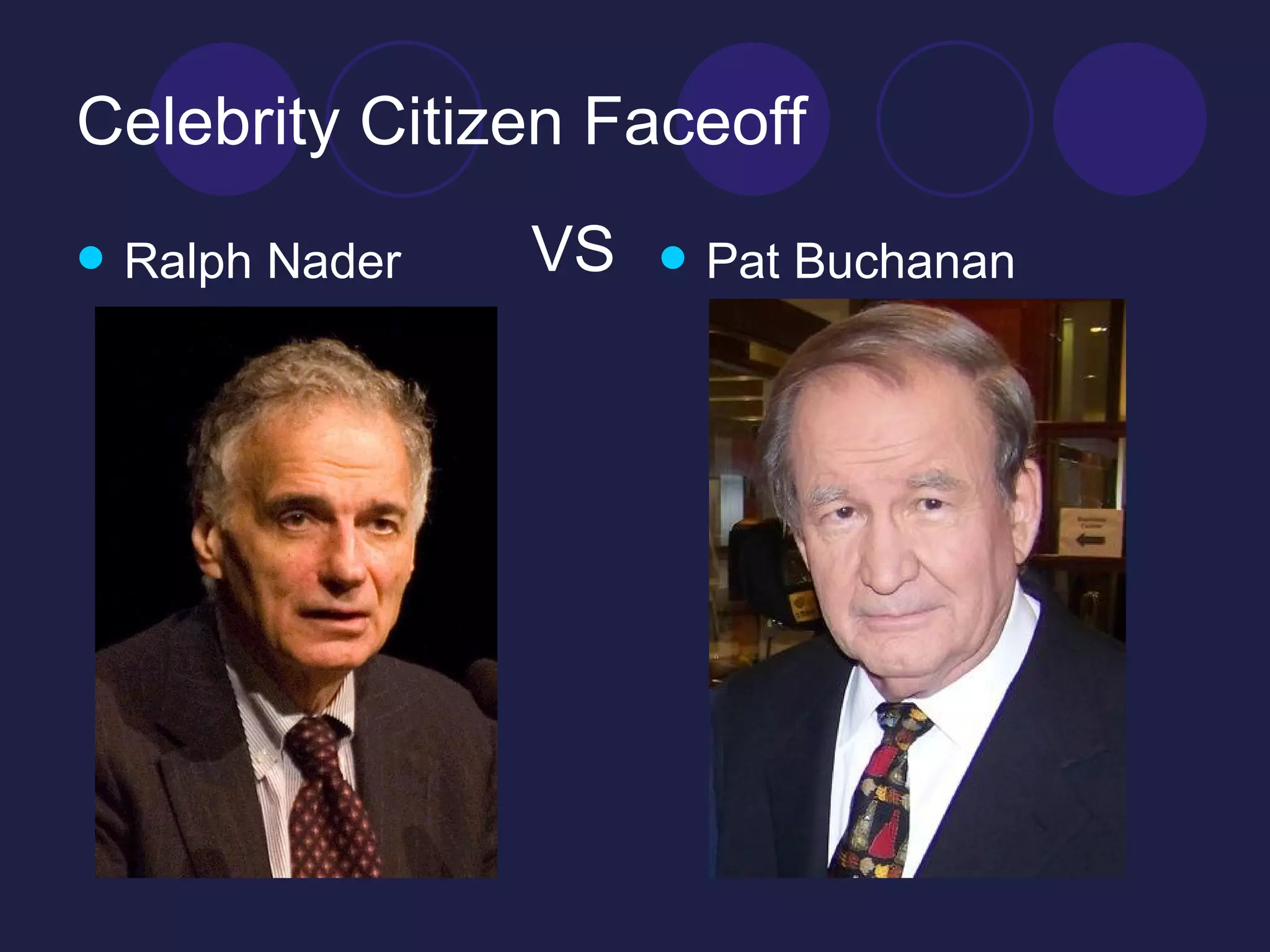
Celebrity Citizen Faceoff Ralph Nader Pat Buchanan VS
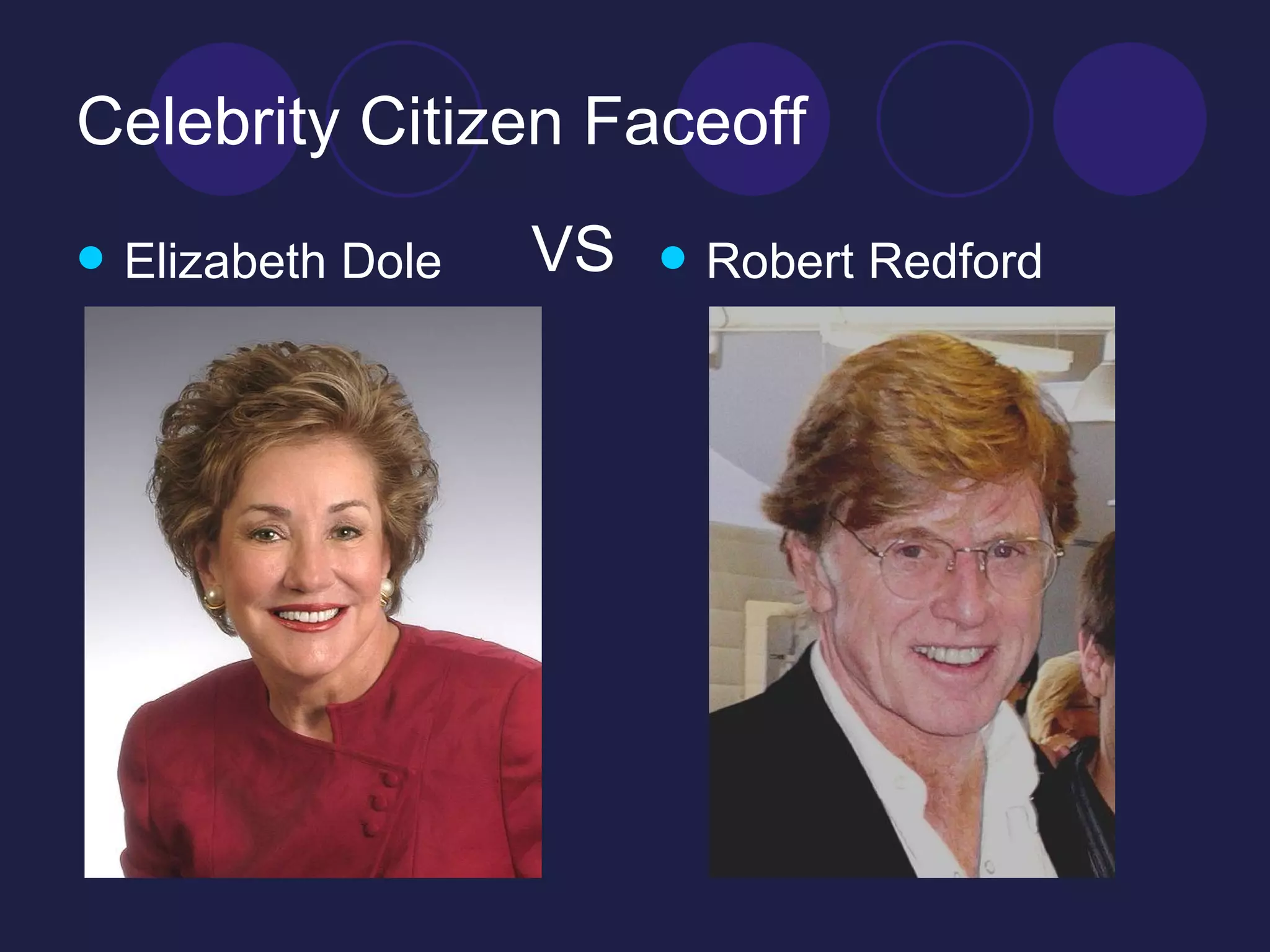
Celebrity Citizen Faceoff Elizabeth Dole Robert Redford VS
Citizenship What is your traditional understanding of being a good citizen? What is Dalton’s definition? Are you a good citizen? Better than your parents?
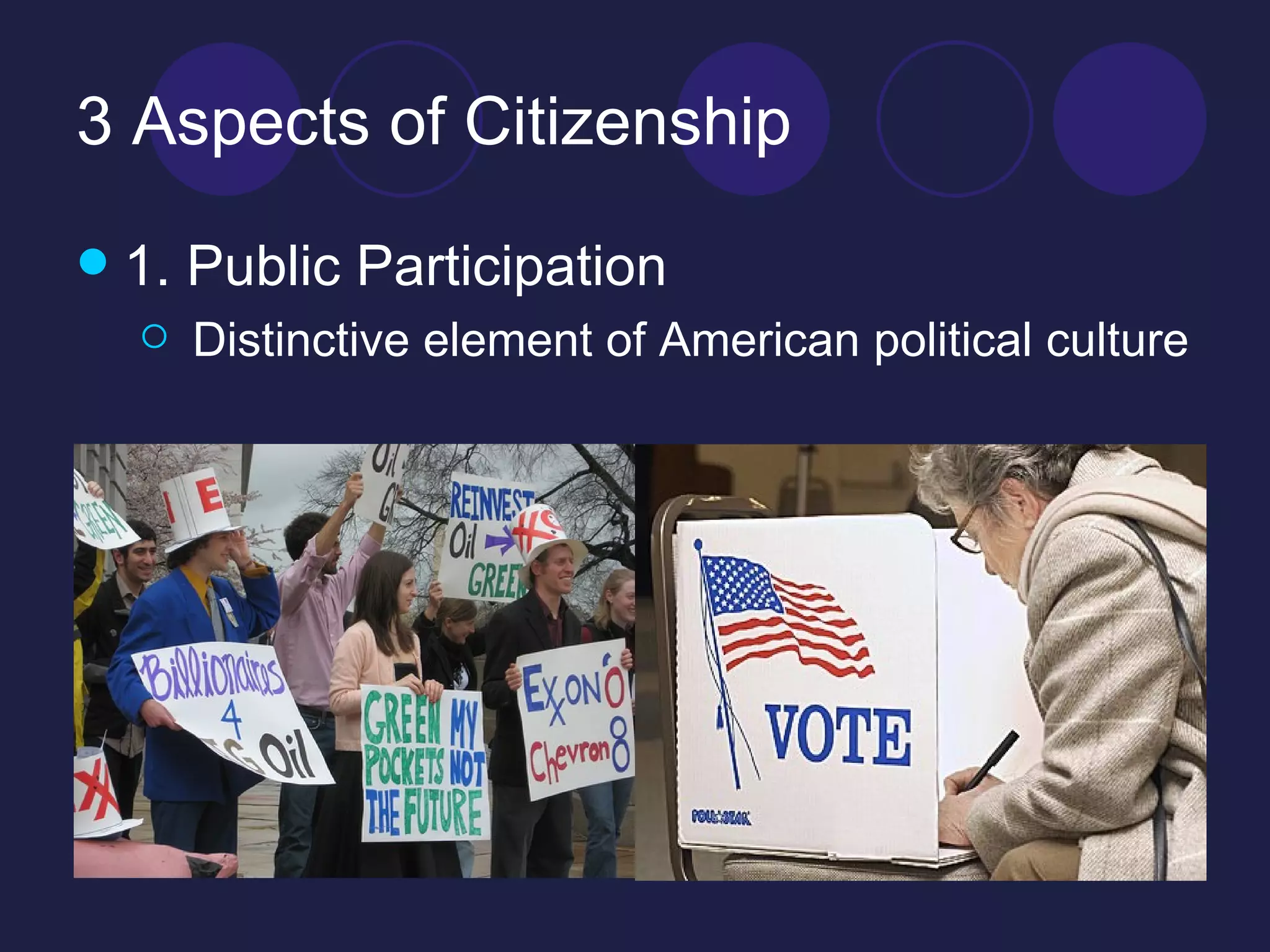
3 Aspects of Citizenship 1. Public Participation Distinctive element of American political culture
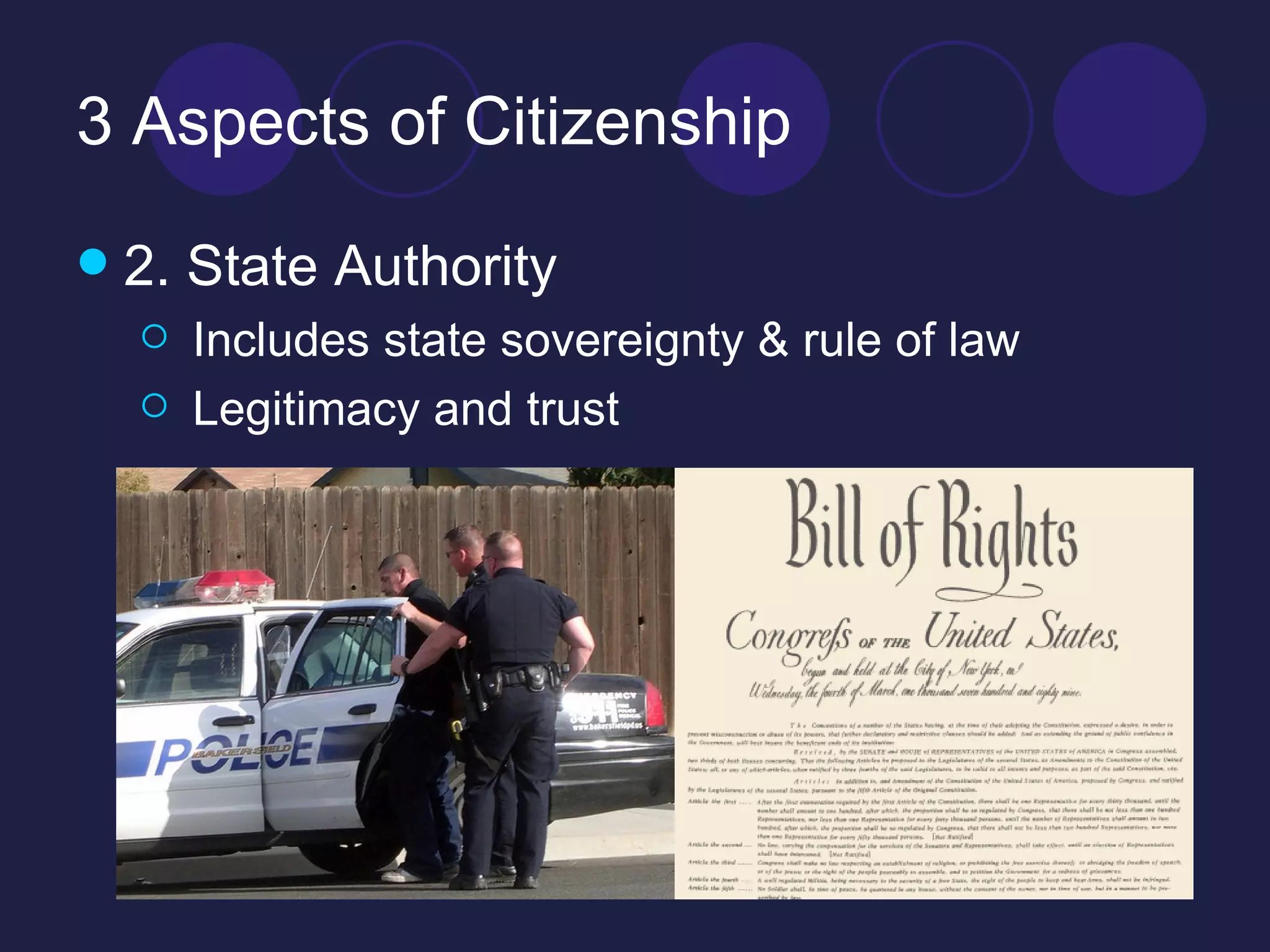
3 Aspects of Citizenship 2. State Authority Includes state sovereignty & rule of law Legitimacy and trust
3 Aspects of Citizenship 3. Social Rights Relationships to others Ethical and moral responsibility
4 Norms of Good Citizenship 1. Participation What encompasses participation and why is it important? 2. Autonomy What is autonomy and why is it important? 3. Social Order What does social order citizenship entail? 4. Solidarity How does solidarity play out within the United States? In other countries?
2 Dimensions of Citizenship Citizen Duty Reflects traditional notions of citizenship as the responsibilities of a citizen-subject. What kinds of things does a good duty citizen do? Engaged Citizen Reflects changing and more expansive notions of citizenship. How is an engaged citizen different from a duty citizen?
Dalton’s Argument A  decline of duty citizenship has been counterbalanced by a rise in engaged citizenship What do you think this change means for democracy?
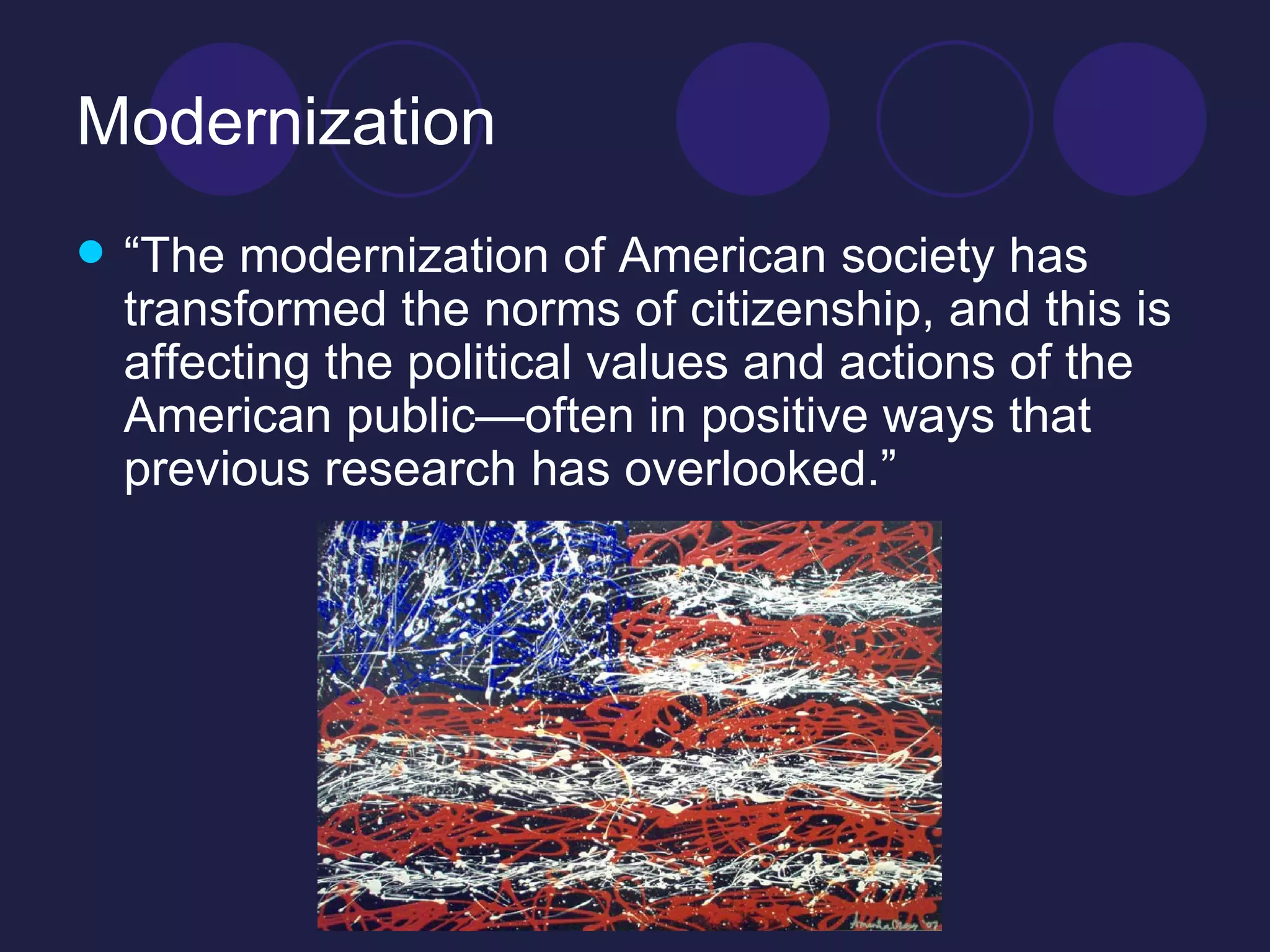
Modernization “ The modernization of American society has transformed the norms of citizenship, and this is affecting the political values and actions of the American public—often in positive ways that previous research has overlooked.”
Generation Change “ Older Americans … were raised in a different era, with different expectations and practices of citizenship” 1952: 85% of electorate 2004: 5% of electorate
Education Change “ Advanced industrial societies require more educated … citizens, and modern affluence has expanded educational opportunities” How does education affect engaged citizenship?
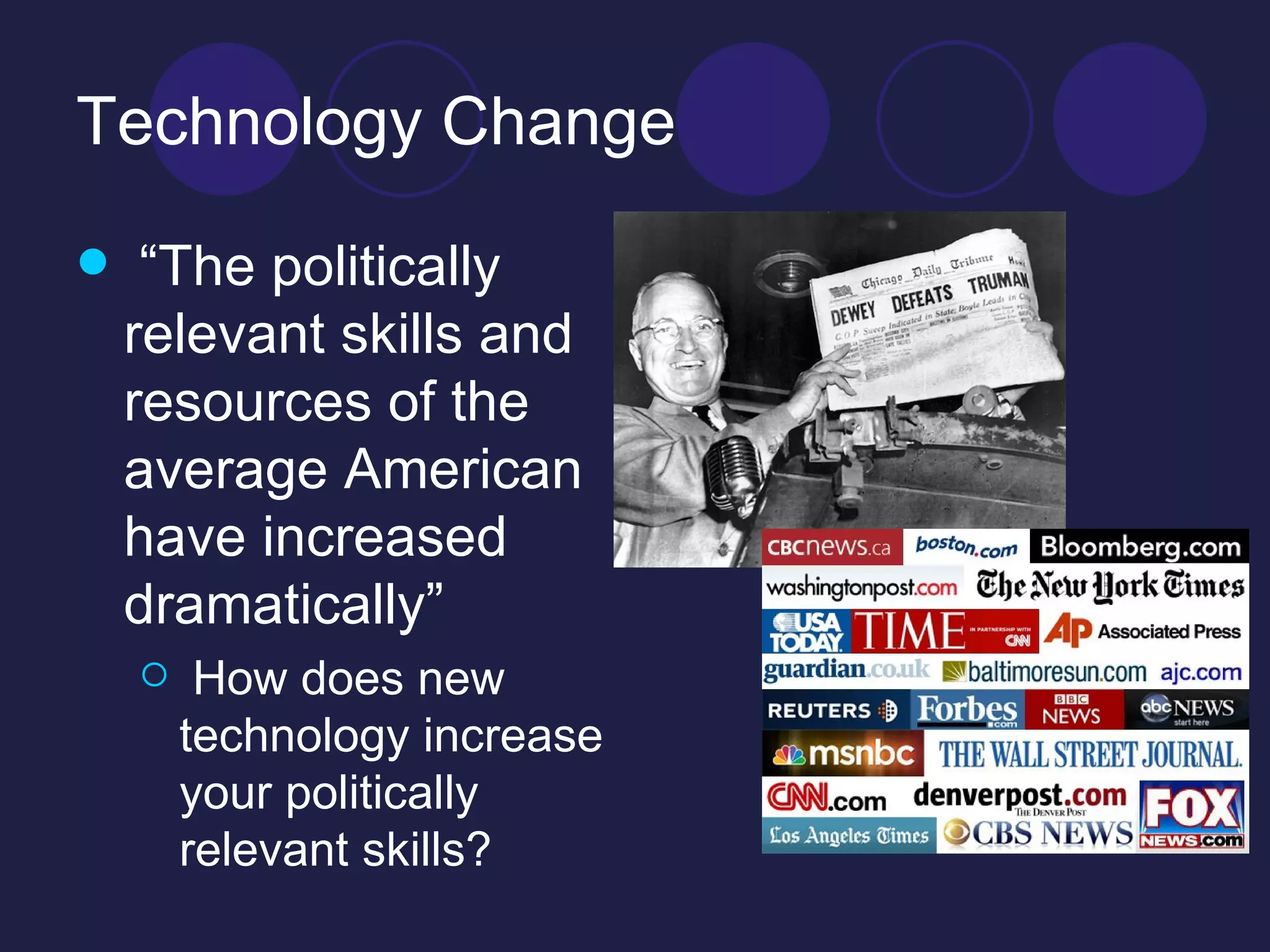
Technology Change “ The politically relevant skills and resources of the average American have increased dramatically” How does new technology increase your politically relevant skills?
Labor Change “ The traditional blue-collar employee works in a hierarchical organization…” Knowledge workers are “creative, adaptive, and technologically adept” Individuality, diversity, openness, meritocracy
Gender Change “The women’s movement changed these social roles in a relatively brief span of time. Women steadily moved into the workplace, entered universities and became more engaged in the political process”
Racial Change Racial minorities have been incorporated into the American electorate more than ever before. How did the civil rights movement encourage the development of engaged citizenship?
Religious Change … “ strength of religious attachments is positively related to adherence in duty-based citizenship” Gradual secularization of American society may be another factor in the rise of engagement over duty citizenship
Partisan Differences “ Support for democracy and principles of good government and good citizenship should not be the domain of only one party” Republican Party: more emphasis on duty-based elements of citizenship Democratic Party: more emphasis on social dimension of citizenship
Conclusion Dalton suggests the shift in citizenship norms will continue Younger generations are unlikely to start thinking like their grandparents; we need to understand how shifting norms will reshape democratic politics Both duty and engagement citizenship have positive impacts on the political process, and both have limitations
1-Minute Paper Which citizenship value is most important to you personally? Why? Vote Serve in military Be active in groups Pay taxes Understand others Help worse off in US Obey the law Form own opinions Volunteer Help worse off elsewhere Keep watch on government

Good Citizen 1-3

  • 1.
    The Good CitizenRussell Dalton Chapters 1 - 3
  • 2.
    Celebrity Citizen FaceoffDick Luger Angelina Jolie VS
  • 3.
    Celebrity Citizen FaceoffRalph Nader Pat Buchanan VS
  • 4.
    Celebrity Citizen FaceoffElizabeth Dole Robert Redford VS
  • 5.
    Citizenship What isyour traditional understanding of being a good citizen? What is Dalton’s definition? Are you a good citizen? Better than your parents?
  • 6.
    3 Aspects ofCitizenship 1. Public Participation Distinctive element of American political culture
  • 7.
    3 Aspects ofCitizenship 2. State Authority Includes state sovereignty & rule of law Legitimacy and trust
  • 8.
    3 Aspects ofCitizenship 3. Social Rights Relationships to others Ethical and moral responsibility
  • 9.
    4 Norms ofGood Citizenship 1. Participation What encompasses participation and why is it important? 2. Autonomy What is autonomy and why is it important? 3. Social Order What does social order citizenship entail? 4. Solidarity How does solidarity play out within the United States? In other countries?
  • 10.
    2 Dimensions ofCitizenship Citizen Duty Reflects traditional notions of citizenship as the responsibilities of a citizen-subject. What kinds of things does a good duty citizen do? Engaged Citizen Reflects changing and more expansive notions of citizenship. How is an engaged citizen different from a duty citizen?
  • 11.
    Dalton’s Argument A decline of duty citizenship has been counterbalanced by a rise in engaged citizenship What do you think this change means for democracy?
  • 12.
    Modernization “ Themodernization of American society has transformed the norms of citizenship, and this is affecting the political values and actions of the American public—often in positive ways that previous research has overlooked.”
  • 13.
    Generation Change “Older Americans … were raised in a different era, with different expectations and practices of citizenship” 1952: 85% of electorate 2004: 5% of electorate
  • 14.
    Education Change “Advanced industrial societies require more educated … citizens, and modern affluence has expanded educational opportunities” How does education affect engaged citizenship?
  • 15.
    Technology Change “The politically relevant skills and resources of the average American have increased dramatically” How does new technology increase your politically relevant skills?
  • 16.
    Labor Change “The traditional blue-collar employee works in a hierarchical organization…” Knowledge workers are “creative, adaptive, and technologically adept” Individuality, diversity, openness, meritocracy
  • 17.
    Gender Change “Thewomen’s movement changed these social roles in a relatively brief span of time. Women steadily moved into the workplace, entered universities and became more engaged in the political process”
  • 18.
    Racial Change Racialminorities have been incorporated into the American electorate more than ever before. How did the civil rights movement encourage the development of engaged citizenship?
  • 19.
    Religious Change …“ strength of religious attachments is positively related to adherence in duty-based citizenship” Gradual secularization of American society may be another factor in the rise of engagement over duty citizenship
  • 20.
    Partisan Differences “Support for democracy and principles of good government and good citizenship should not be the domain of only one party” Republican Party: more emphasis on duty-based elements of citizenship Democratic Party: more emphasis on social dimension of citizenship
  • 21.
    Conclusion Dalton suggeststhe shift in citizenship norms will continue Younger generations are unlikely to start thinking like their grandparents; we need to understand how shifting norms will reshape democratic politics Both duty and engagement citizenship have positive impacts on the political process, and both have limitations
  • 22.
    1-Minute Paper Whichcitizenship value is most important to you personally? Why? Vote Serve in military Be active in groups Pay taxes Understand others Help worse off in US Obey the law Form own opinions Volunteer Help worse off elsewhere Keep watch on government