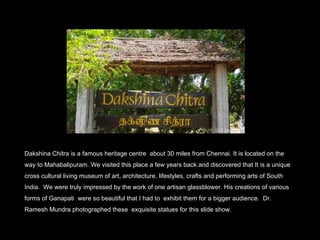
Dakshina Chitra is a famous heritage centre  about 30 miles from Chennai. It is located on the way to Mahabalipuram. We visited this place a few years back and discovered that It is a unique cross cultural living museum of art, architecture, lifestyles, crafts and performing arts of South India.  We were truly impressed by the work of one artisan glassblower. His creations of various forms of Ganapati  were so beautiful that I had to  exhibit them for a bigger audience.  Dr. Ramesh Mundra photographed these  exquisite statues for this slide show.
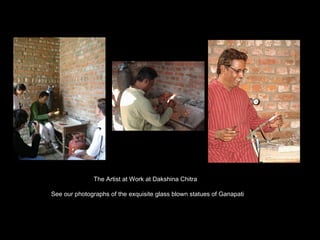
  The Artist at Work at Dakshina Chitra See our photographs of the exquisite glass blown statues of Ganapati
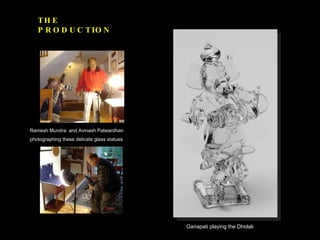
THE PRODUCTION Ganapati playing the Dholak Ramesh Mundra  and Avinash Patwardhan photographing these delicate glass statues
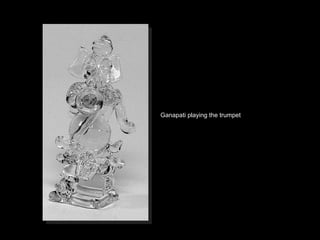
Ganapati playing the trumpet
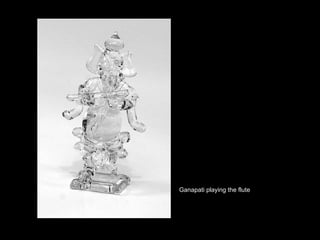
Ganapati playing the flute
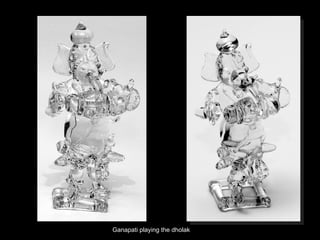
Ganapati playing the dholak
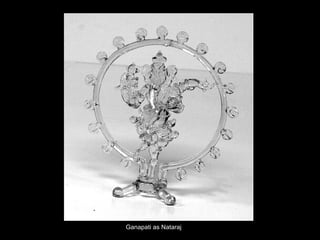
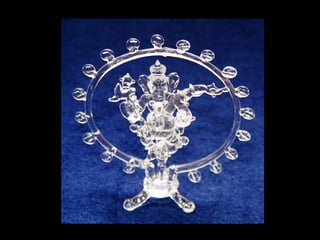
Ganapati as Nataraj
 
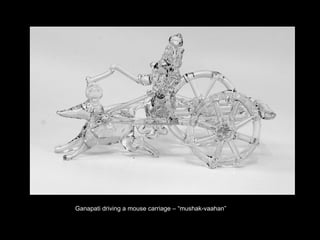
Ganapati driving a mouse carriage – “mushak-vaahan”
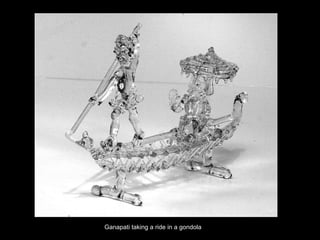
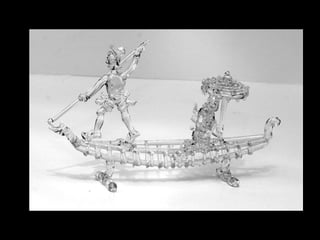
Ganapati taking a ride in a gondola
 
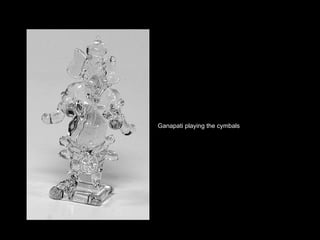
Ganapati playing the cymbals
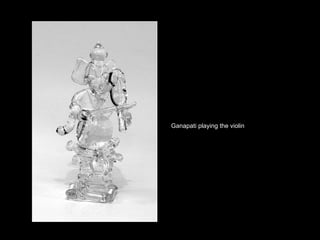
Ganapati playing the violin
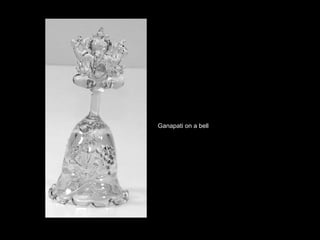
Ganapati on a bell
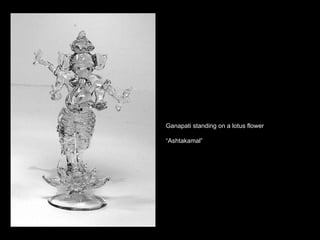
Ganapati standing on a lotus flower “ Ashtakamal”
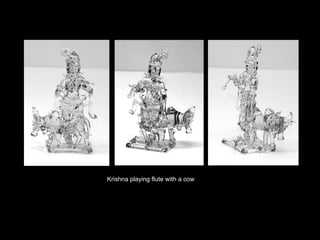
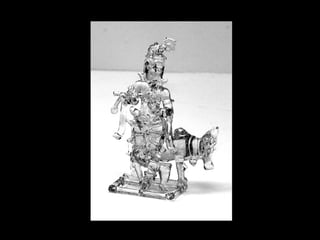
Krishna playing flute with a cow
GANAPATI AN ANALYSIS Hindu gods with their numerous limbs, partial animal forms, and unusual presentations, were created by the sages of the Vedic and Puranic period with a certain symbolic significance. Ganapati a mythological deity is a classic example of this concept. The books that tell us the most about Ganapati are the Mudgala Purana, and the Chandogya Upanishad. In Sanskrit, everything that our mind can grasp or our senses can perceive and all that can be counted or comprehended is called “gana”.  “ Ganapati” is thus the Lord of all “ganas”, or of all creation. Hindus also believe that all of creation started with Ganapati’s intervention. He exists in all manifestations and unites man to God. Ganapati stands for one of the basic concepts of Hindu mythological symbolism, the principle, that man is the image of God. “Tat Tvam Asi”. He is our visible icon of the Divine. Hence we always bow to Ganapati first and worship him at the beginning of every enterprise. As a protector his image is always kept at the entrance of every house and temple.  He has become such a common household deity, that the seemingly ludicrous amalgam of elephant head and a human body somehow manages to appear natural. He participates in our lives in a variety of ways and personalities as seen in the slides that follow. Ganapati has charm, mystery, popularity, power, political importance plus everything you can think of. One can start from Ganapati and work from there in an unbroken line to almost any aspect of Indian culture.
 

Glass Statues Ganapati

  • 1.
    Dakshina Chitra isa famous heritage centre about 30 miles from Chennai. It is located on the way to Mahabalipuram. We visited this place a few years back and discovered that It is a unique cross cultural living museum of art, architecture, lifestyles, crafts and performing arts of South India. We were truly impressed by the work of one artisan glassblower. His creations of various forms of Ganapati were so beautiful that I had to exhibit them for a bigger audience. Dr. Ramesh Mundra photographed these exquisite statues for this slide show.
  • 2.
    TheArtist at Work at Dakshina Chitra See our photographs of the exquisite glass blown statues of Ganapati
  • 3.
    THE PRODUCTION Ganapatiplaying the Dholak Ramesh Mundra and Avinash Patwardhan photographing these delicate glass statues
  • 4.
  • 5.
  • 6.
  • 7.
  • 8.
  • 9.
    Ganapati driving amouse carriage – “mushak-vaahan”
  • 10.
    Ganapati taking aride in a gondola
  • 11.
  • 12.
  • 13.
  • 14.
  • 15.
    Ganapati standing ona lotus flower “ Ashtakamal”
  • 16.
  • 17.
    GANAPATI AN ANALYSISHindu gods with their numerous limbs, partial animal forms, and unusual presentations, were created by the sages of the Vedic and Puranic period with a certain symbolic significance. Ganapati a mythological deity is a classic example of this concept. The books that tell us the most about Ganapati are the Mudgala Purana, and the Chandogya Upanishad. In Sanskrit, everything that our mind can grasp or our senses can perceive and all that can be counted or comprehended is called “gana”. “ Ganapati” is thus the Lord of all “ganas”, or of all creation. Hindus also believe that all of creation started with Ganapati’s intervention. He exists in all manifestations and unites man to God. Ganapati stands for one of the basic concepts of Hindu mythological symbolism, the principle, that man is the image of God. “Tat Tvam Asi”. He is our visible icon of the Divine. Hence we always bow to Ganapati first and worship him at the beginning of every enterprise. As a protector his image is always kept at the entrance of every house and temple. He has become such a common household deity, that the seemingly ludicrous amalgam of elephant head and a human body somehow manages to appear natural. He participates in our lives in a variety of ways and personalities as seen in the slides that follow. Ganapati has charm, mystery, popularity, power, political importance plus everything you can think of. One can start from Ganapati and work from there in an unbroken line to almost any aspect of Indian culture.
  • 18.