Get It Unclogged!
   By: Justin Beaumont
    (Not liable for use of information)
Figuring out where to start:
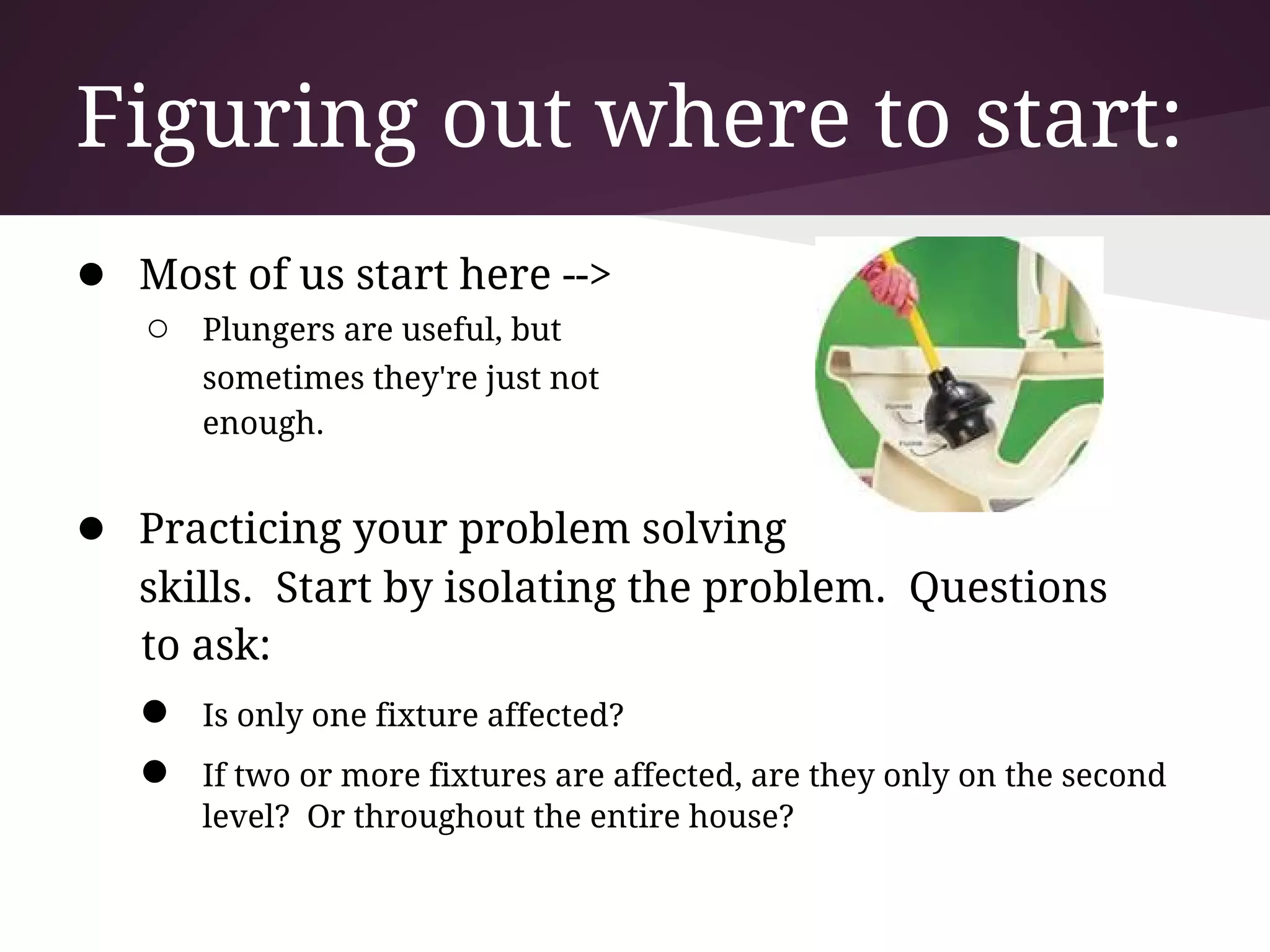
● Most of us start here -->
   ○   Plungers are useful, but
       sometimes they're just not
       enough.


● Practicing your problem solving
   skills. Start by isolating the problem. Questions
   to ask:
   ●   Is only one fixture affected?
   ●   If two or more fixtures are affected, are they only on the second
       level? Or throughout the entire house?
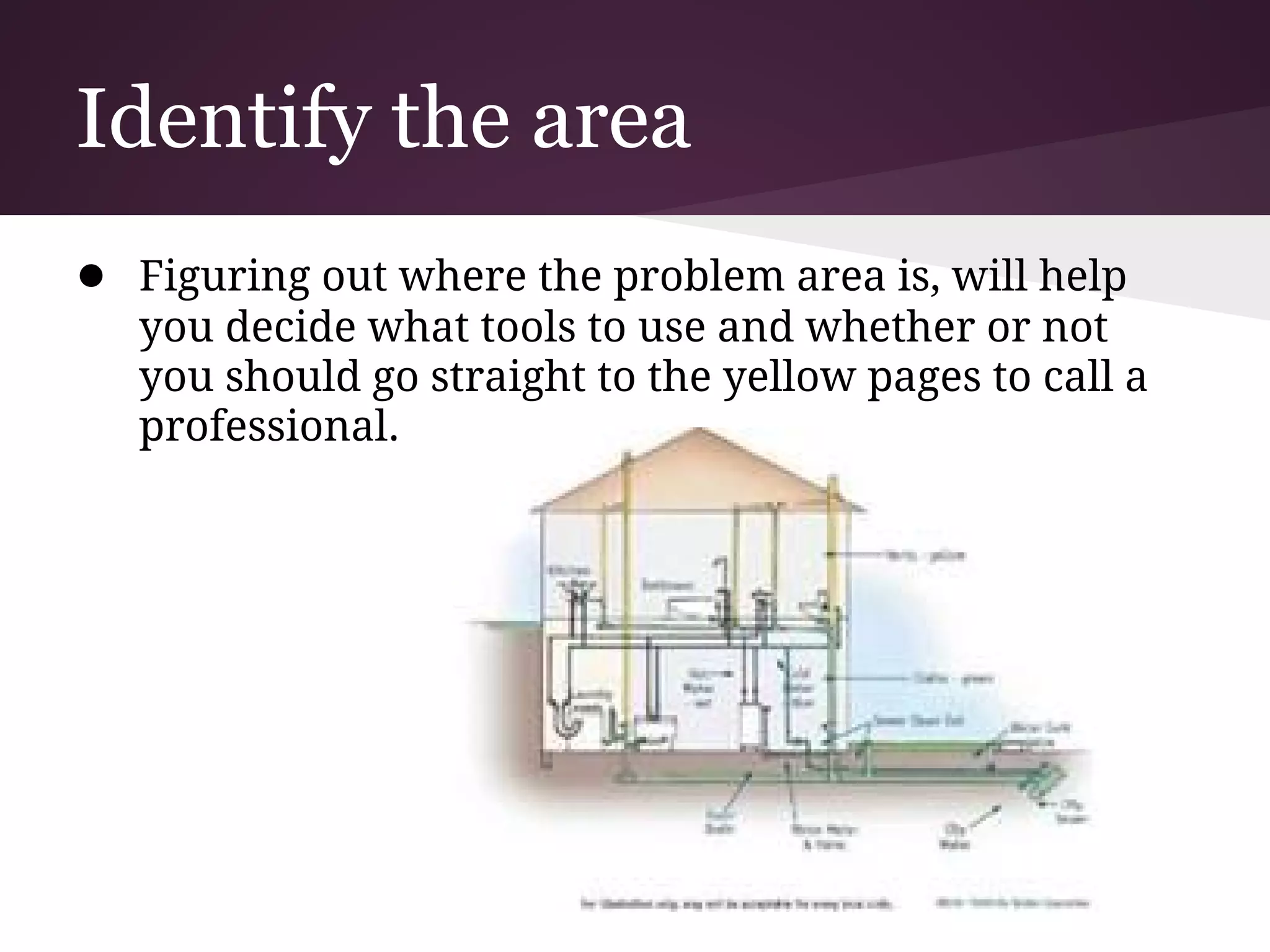
Identify the area
● Figuring out where the problem area is, will help
   you decide what tools to use and whether or not
   you should go straight to the yellow pages to call a
   professional.
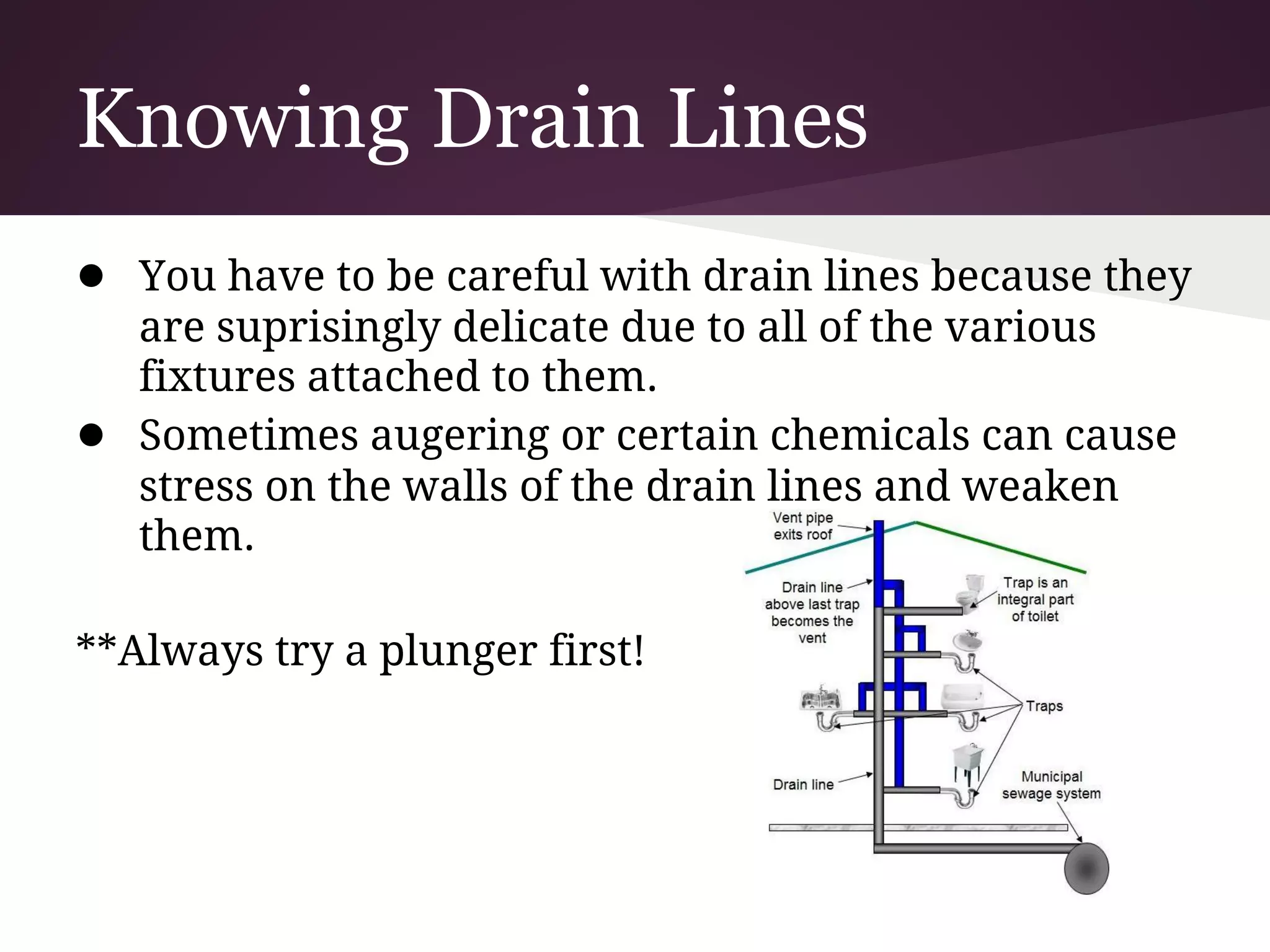
Knowing Drain Lines
● You have to be careful with drain lines because they
    are suprisingly delicate due to all of the various
    fixtures attached to them.
●   Sometimes augering or certain chemicals can cause
    stress on the walls of the drain lines and weaken
    them.

**Always try a plunger first!
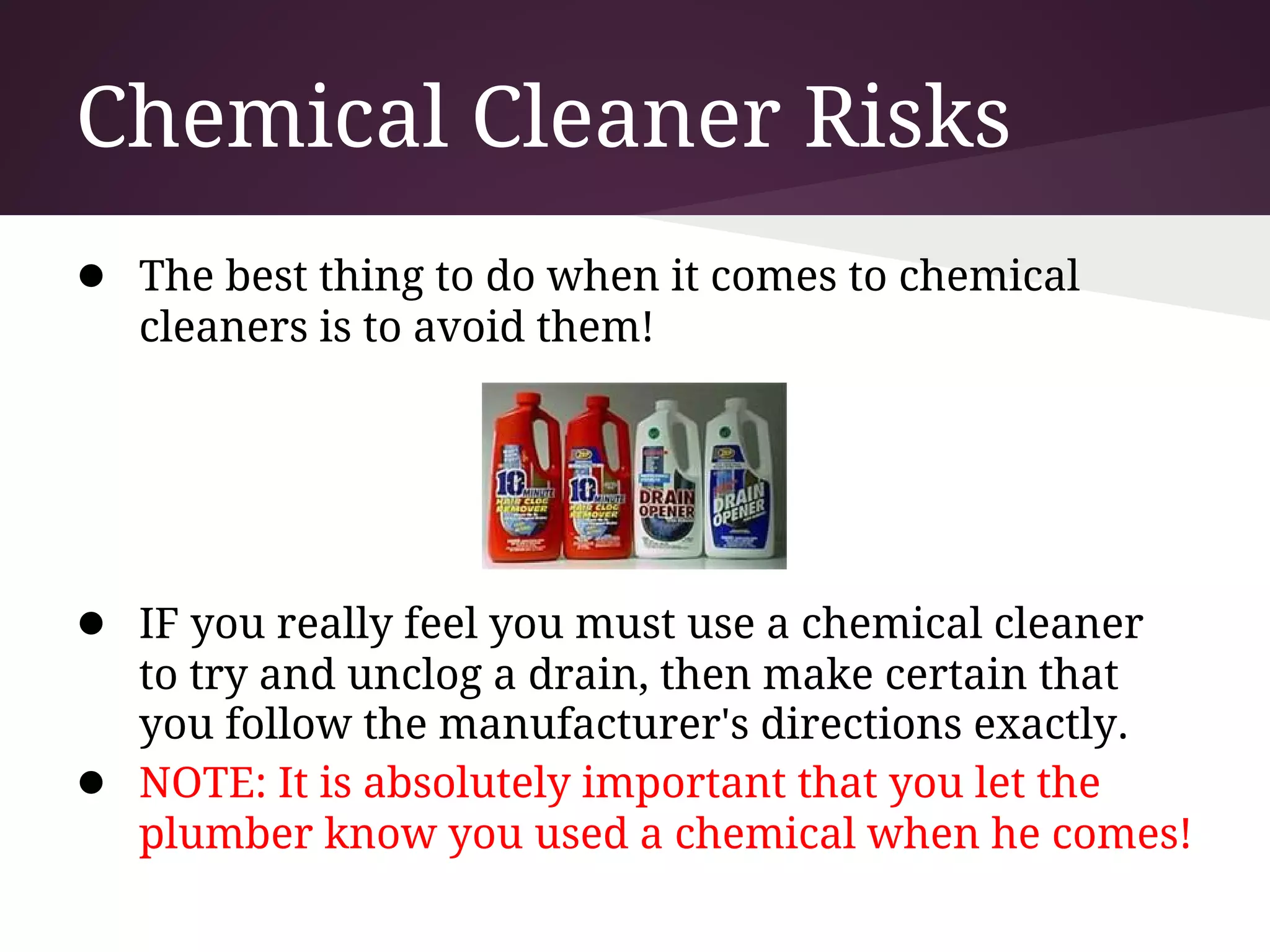
Chemical Cleaner Risks
● The best thing to do when it comes to chemical
    cleaners is to avoid them!


● IF you really feel you must use a chemical cleaner
    to try and unclog a drain, then make certain that
    you follow the manufacturer's directions exactly.
●   NOTE: It is absolutely important that you let the
    plumber know you used a chemical when he comes!
Chemical Cleaners Continued
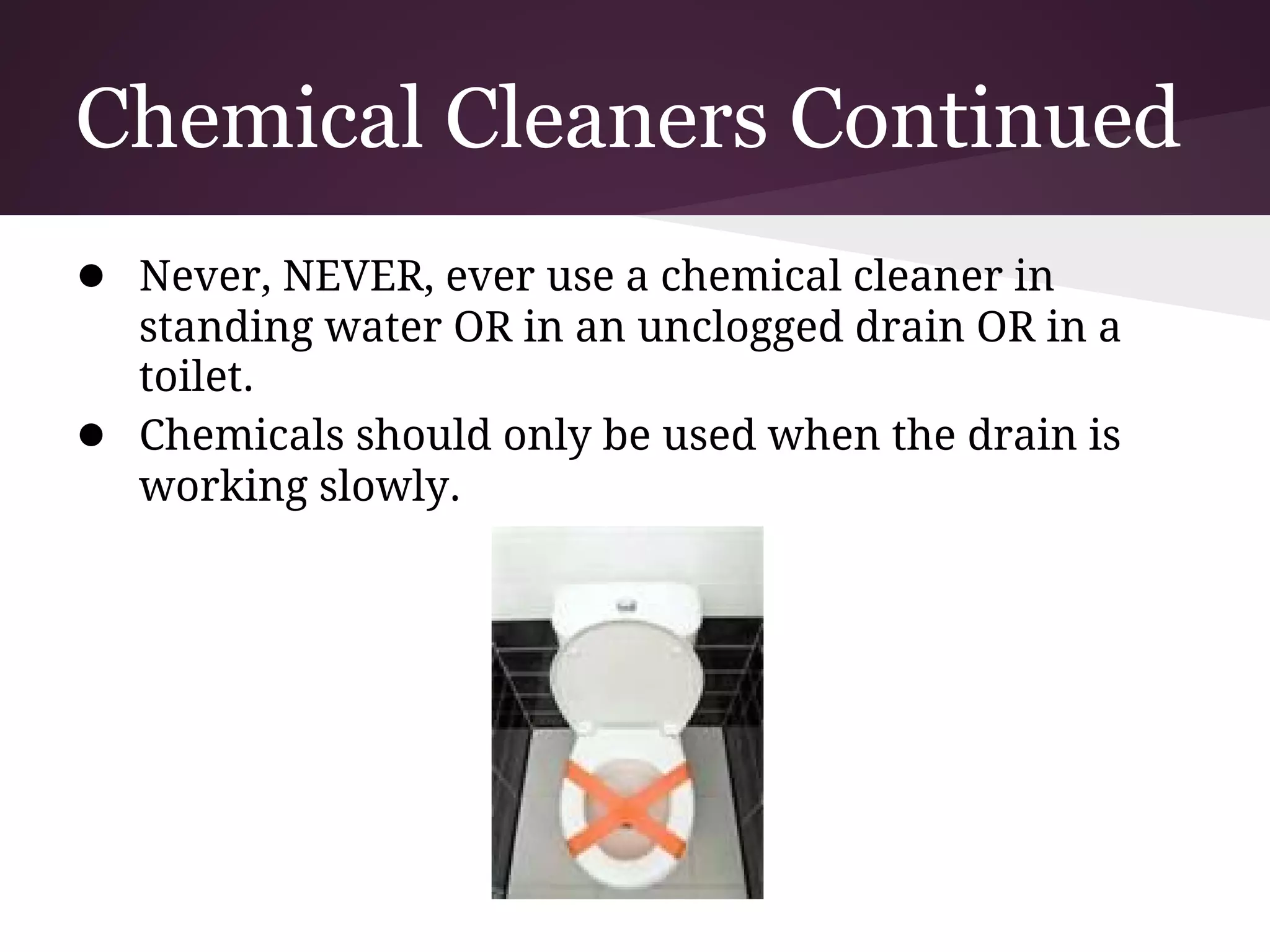
● Never, NEVER, ever use a chemical cleaner in
    standing water OR in an unclogged drain OR in a
    toilet.
●   Chemicals should only be used when the drain is
    working slowly.
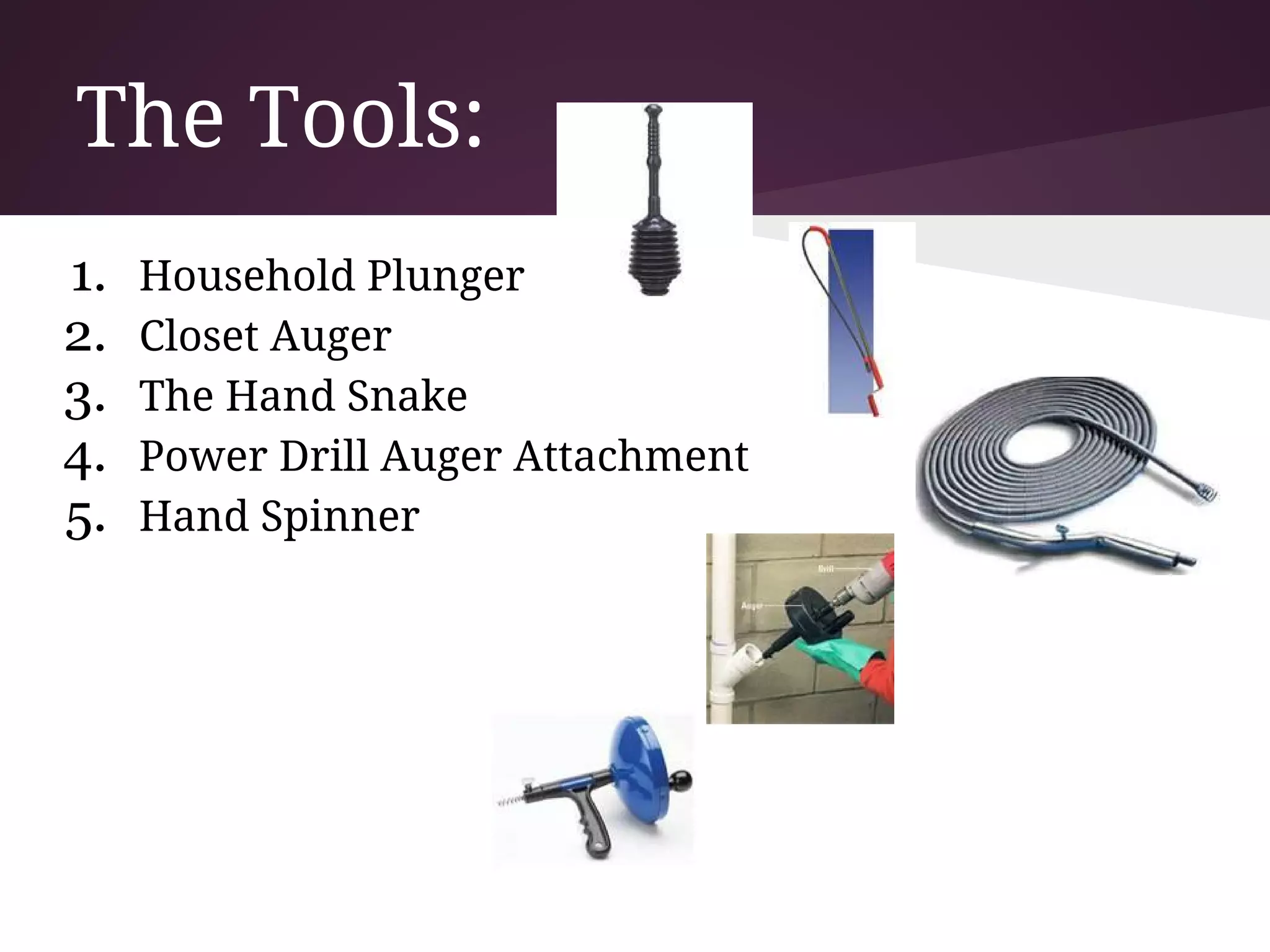
The Tools:
1.   Household Plunger
2.   Closet Auger
3.   The Hand Snake
4.   Power Drill Auger Attachment
5.   Hand Spinner
Unclogging Drains/Waste Lines

What you need to get started:
      ● Water-pump pliers, hand auger, bucket, rags
         to clean up with.

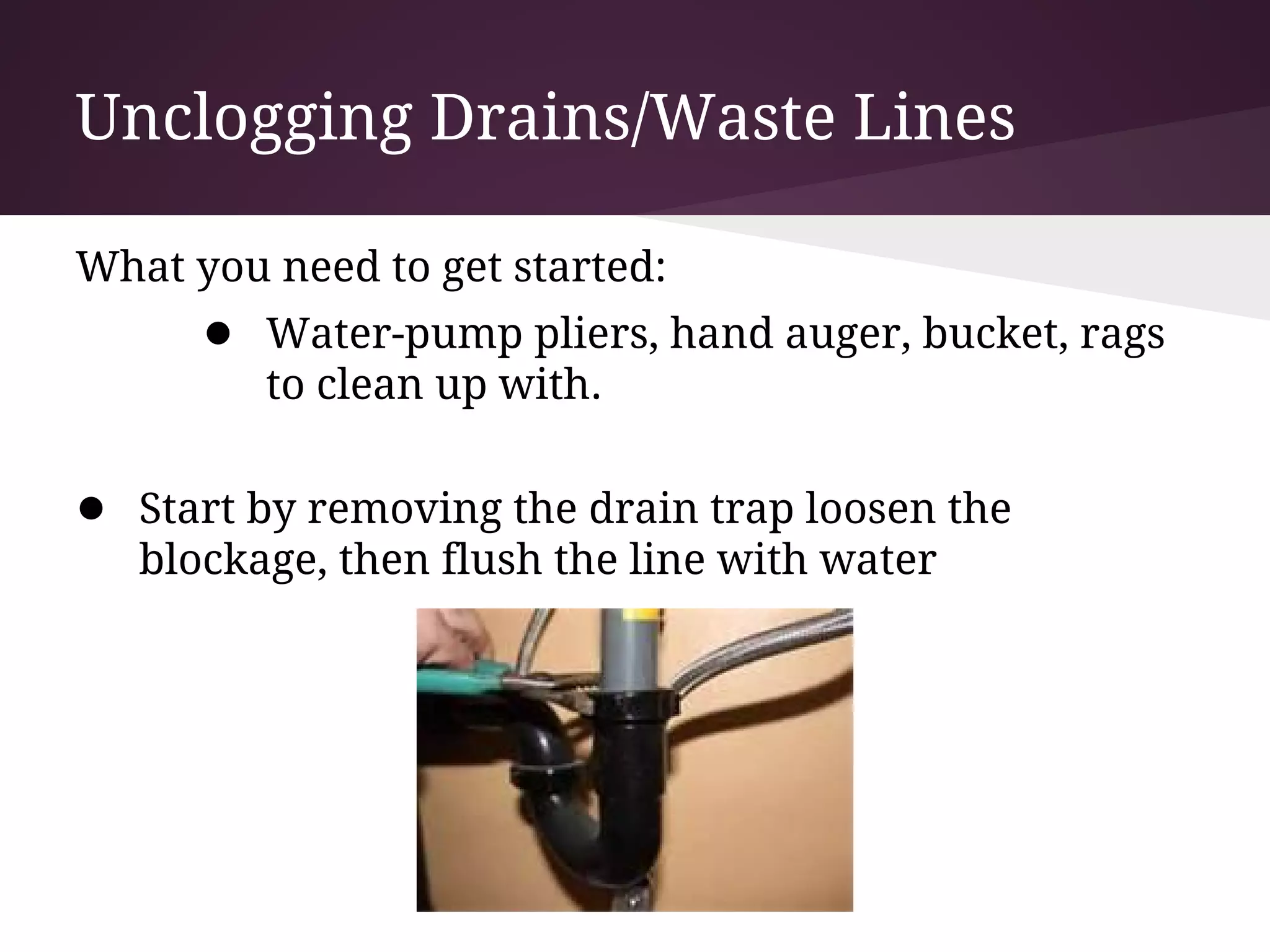
● Start by removing the drain trap loosen the
   blockage, then flush the line with water
Using the Hand Auger...
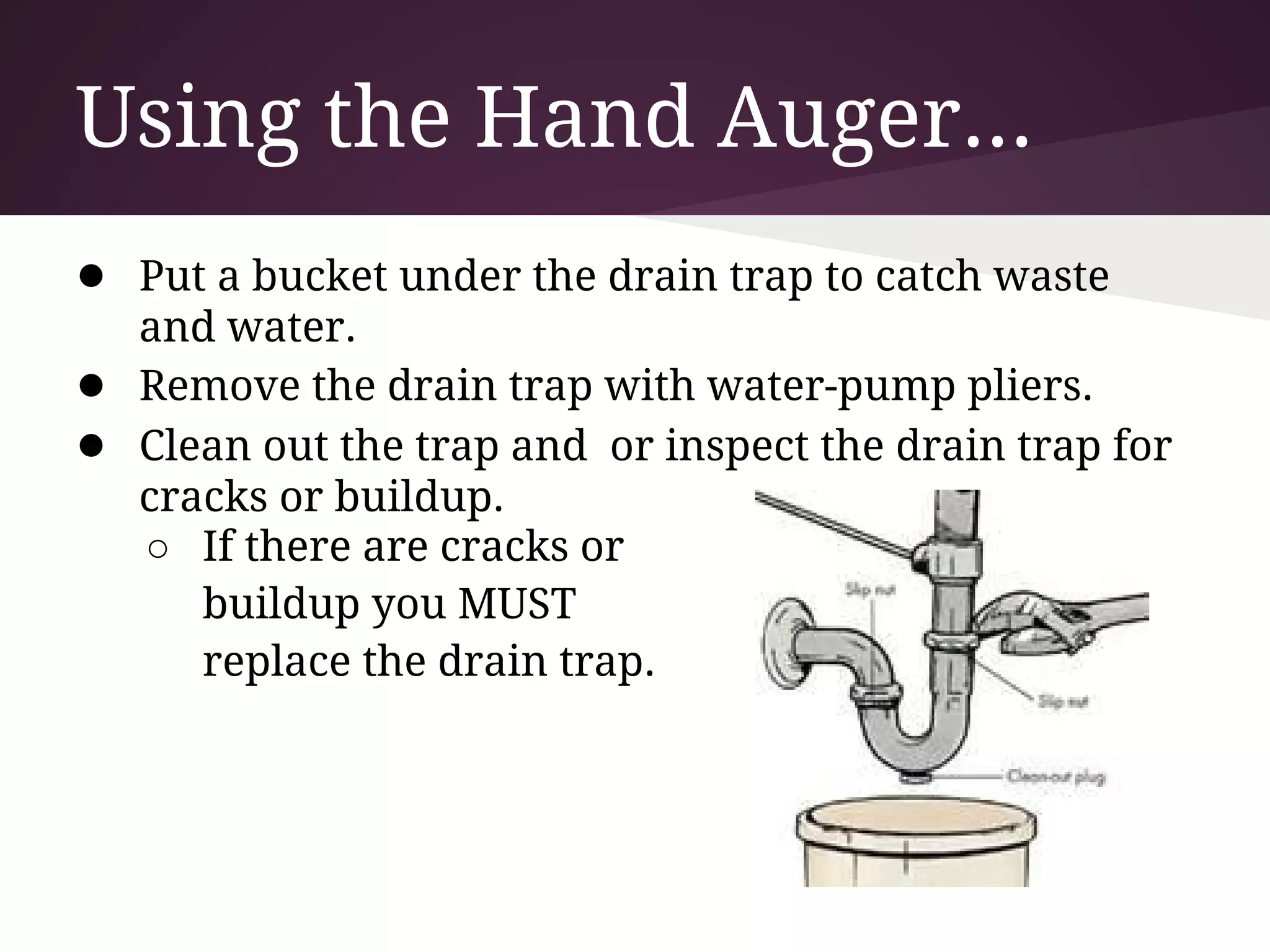
● Put a bucket under the drain trap to catch waste
    and water.
●   Remove the drain trap with water-pump pliers.
●   Clean out the trap and or inspect the drain trap for
    cracks or buildup.
    ○ If there are cracks or
       buildup you MUST
       replace the drain trap.
Using the Hand Auger Cont...

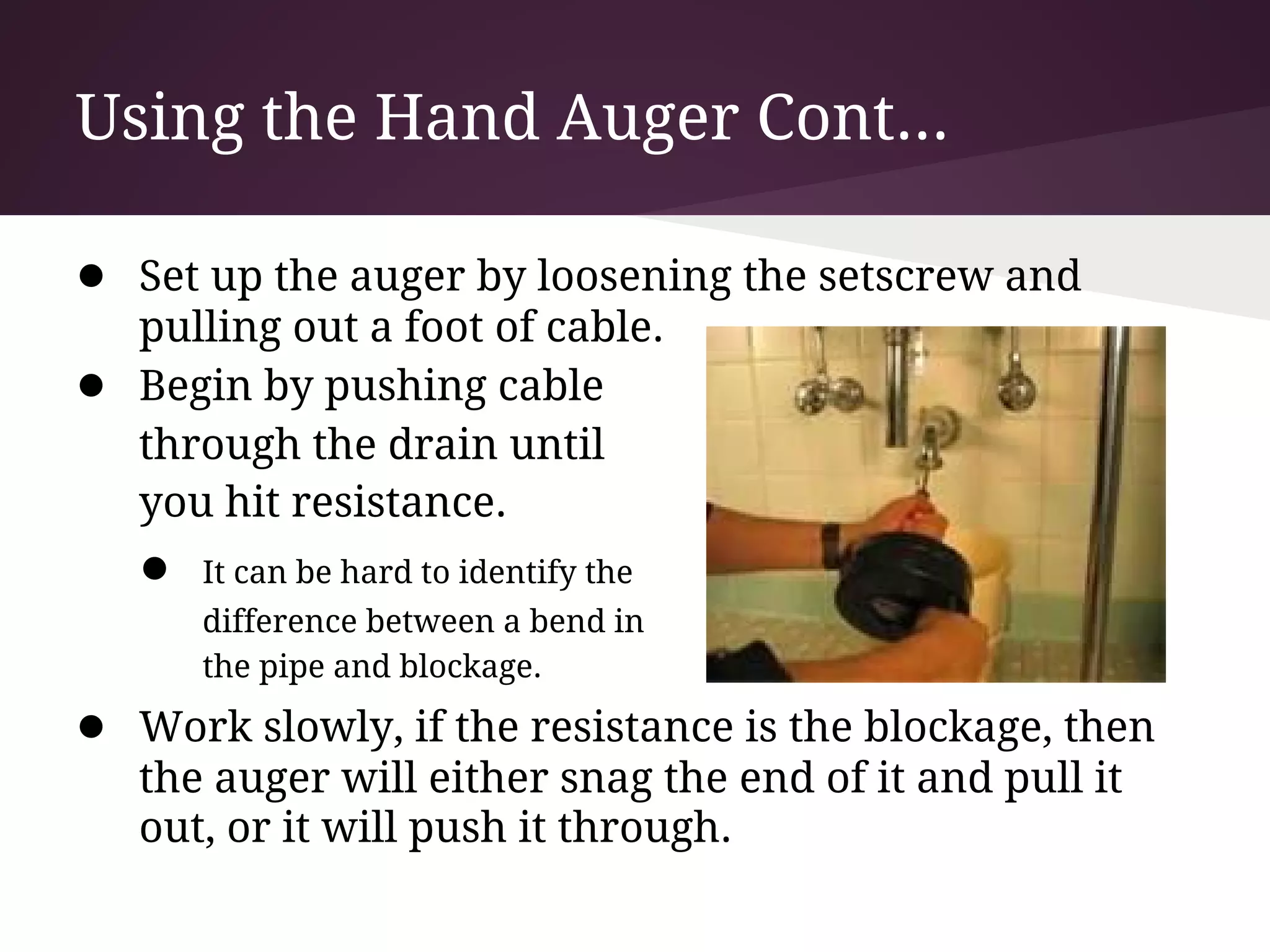
● Set up the auger by loosening the setscrew and
    pulling out a foot of cable.
●   Begin by pushing cable
    through the drain until
    you hit resistance.
    ●   It can be hard to identify the
        difference between a bend in
        the pipe and blockage.

● Work slowly, if the resistance is the blockage, then
    the auger will either snag the end of it and pull it
    out, or it will push it through.
Hand Auger Continued...
● After clearing the blockage, tighten the setscrew on
    the auger and turn the handle in a clockwise
    direction until the cable moves forward.
●   Then loosen the setscrew and push the cable further
    until you meet more resistance.
●   Continue this process until you are confident the
    blockage is removed.
●   Remove the cable and clean the tip.
●   Replace the drain trap and run the water, IF the
    blockage is still there call a professional and make
    certain that you write down all of the steps you took
    to remove it yourself.
Unclogging a Sink
What you will need:
● Start with Plunger, water-pump pliers, sink auger,
   bucket, clean up rags.

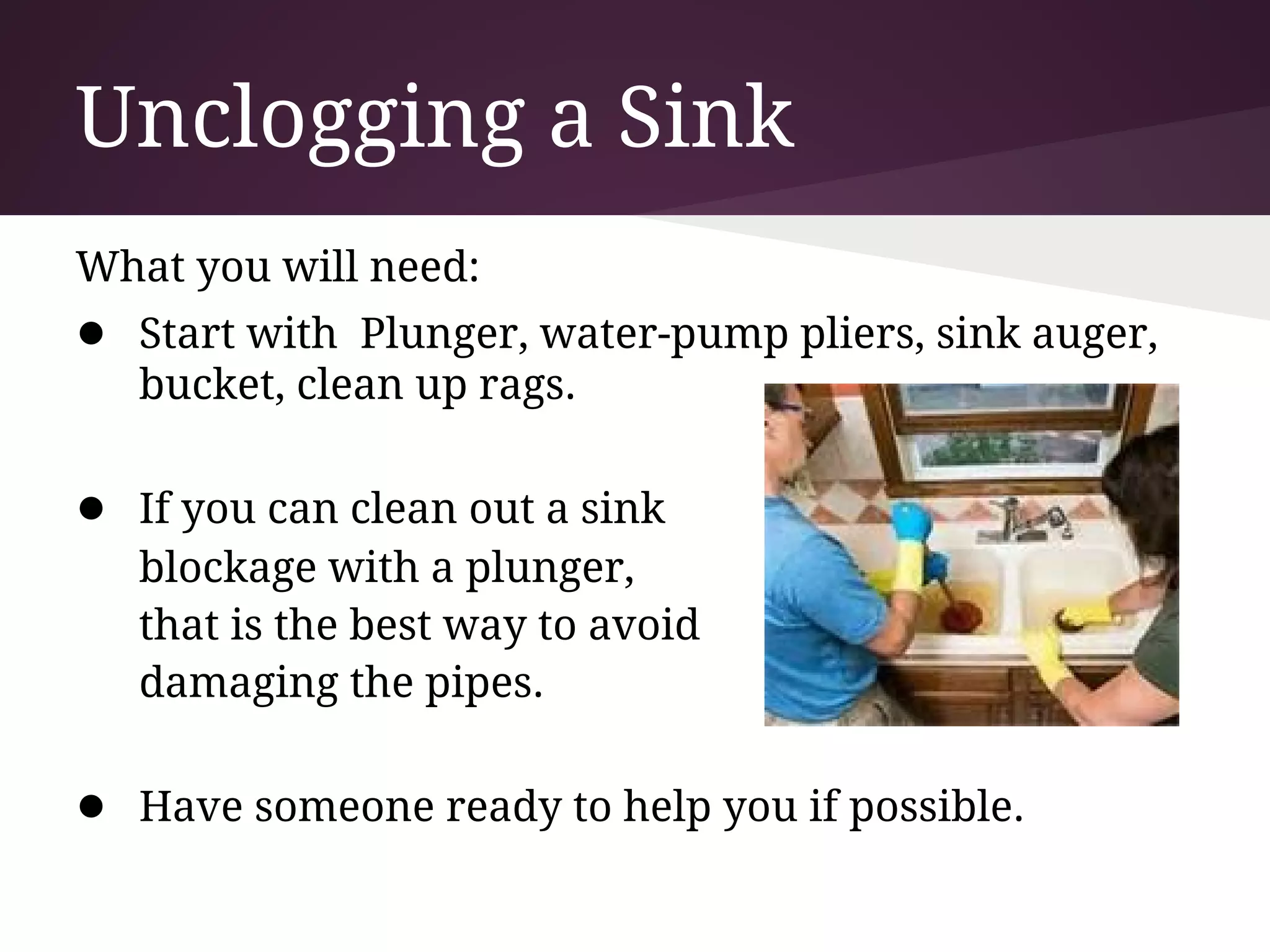
● If you can clean out a sink
   blockage with a plunger,
   that is the best way to avoid
   damaging the pipes.

● Have someone ready to help you if possible.
Unclogging a Sink Continued

● Fill both sides of the sink with about 4 in. of water.
● Get your helper a rag to hold over the opening of
    the disposal drain (if you are unclogging a kitchen
    sink).
●   Using the plunger, quickly plunge the drain on the
    other side.
●   If the drain is still clogged after 12 to 15 plunges,
    move to the other side of the sink and have the
    helper plug the side the you first plunged.
Stubborn Sinks...
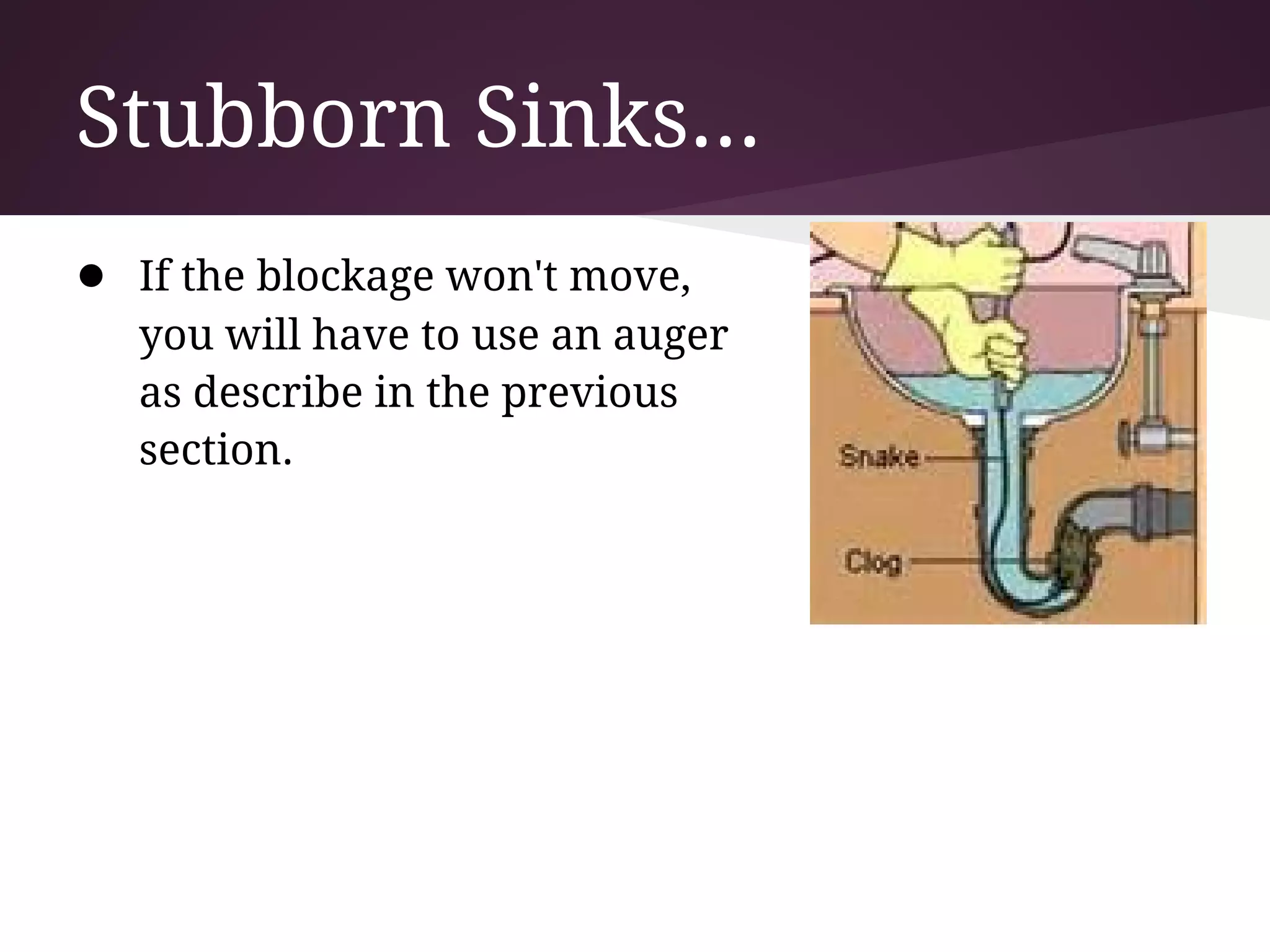
● If the blockage won't move,
  you will have to use an auger
  as describe in the previous
  section.
Unclogging the Bathtub
What you will need:
Screw driver, Auger, Plunger

● Begin by plunging the drain vigorously. If the
    plunger doesn't work switch to an Auger.
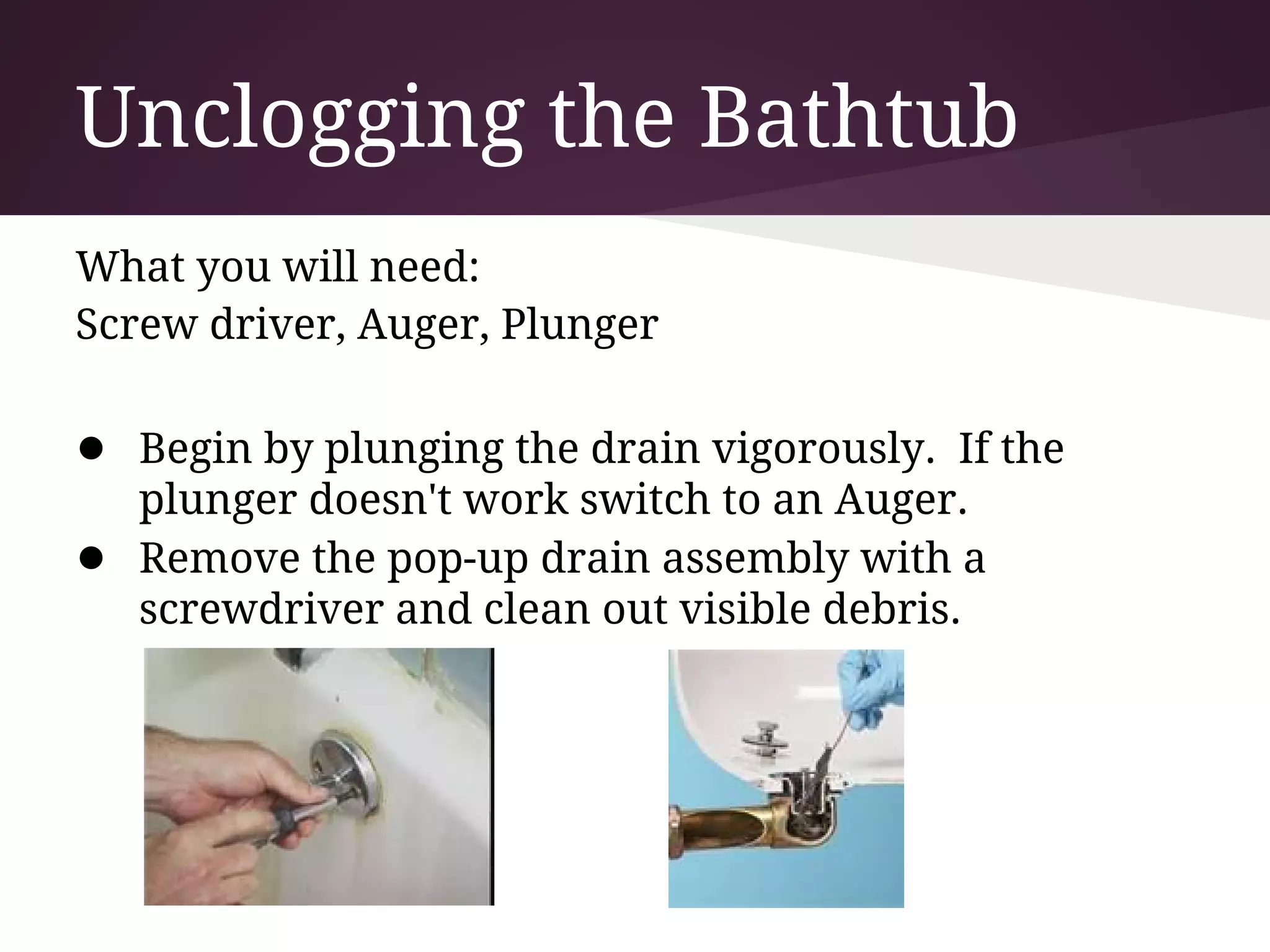
●   Remove the pop-up drain assembly with a
    screwdriver and clean out visible debris.
Uncloggin Bathtub Continued...

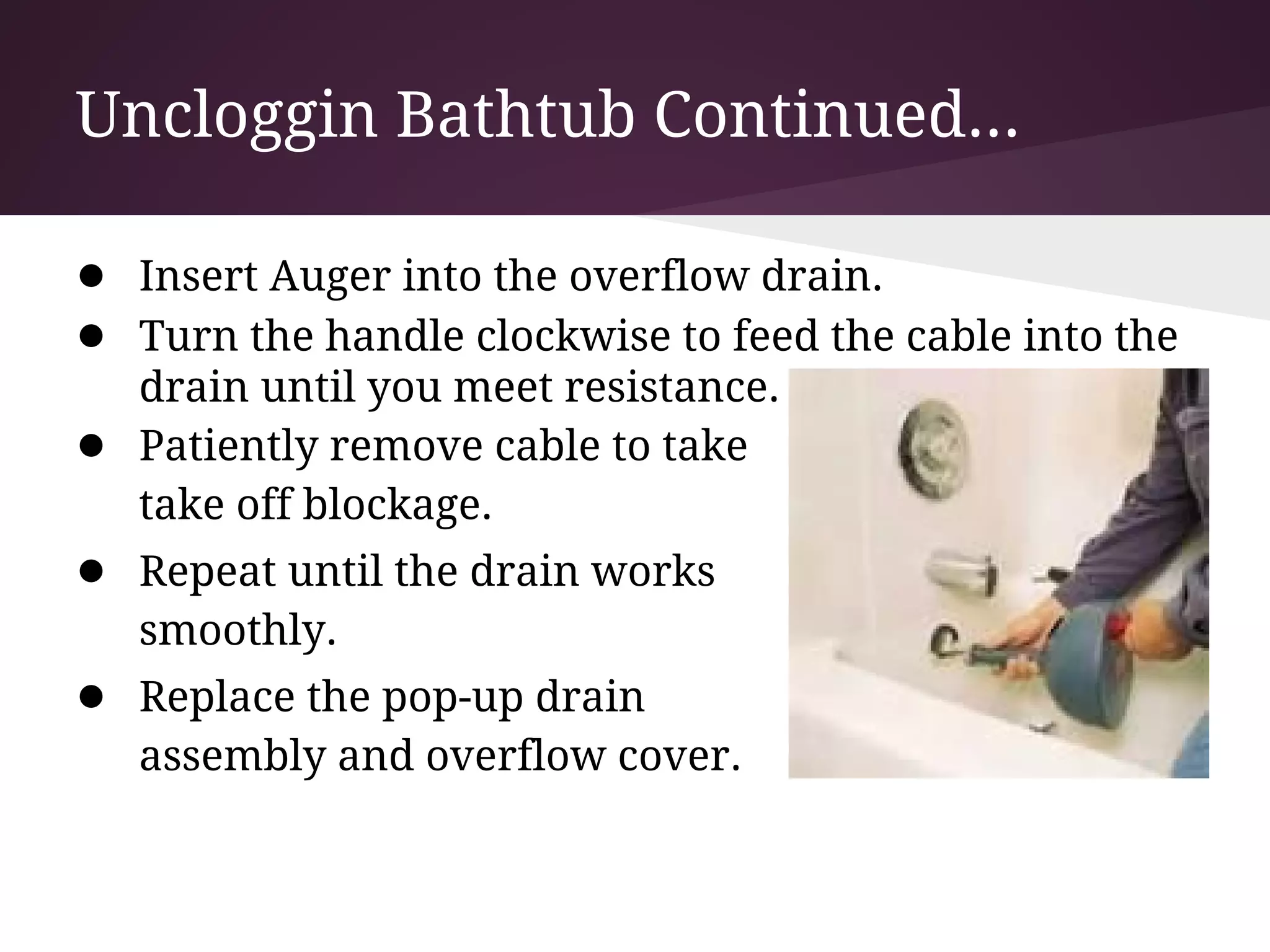
● Insert Auger into the overflow drain.
● Turn the handle clockwise to feed the cable into the
    drain until you meet resistance.
●   Patiently remove cable to take
    take off blockage.
● Repeat until the drain works
    smoothly.
● Replace the pop-up drain
    assembly and overflow cover.
Unclogging the Toilet
What you will need:
Plunger, Closet Auger, Bucket, Rags

● Don't even think about using a
    chemical drain cleaner in a toilet.
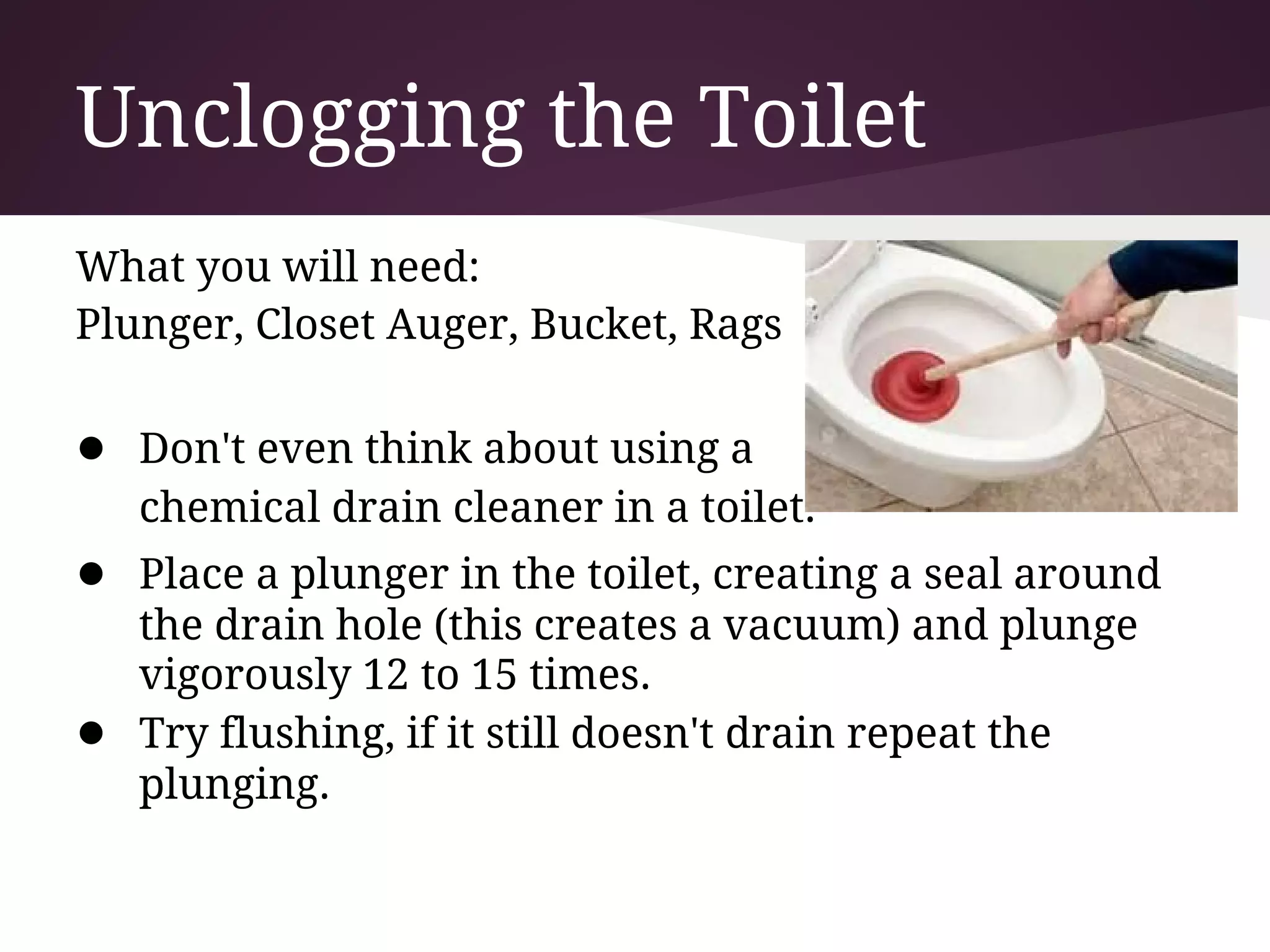
● Place a plunger in the toilet, creating a seal around
    the drain hole (this creates a vacuum) and plunge
    vigorously 12 to 15 times.
●   Try flushing, if it still doesn't drain repeat the
    plunging.
When the plunger doesn't unclog the
toilet...
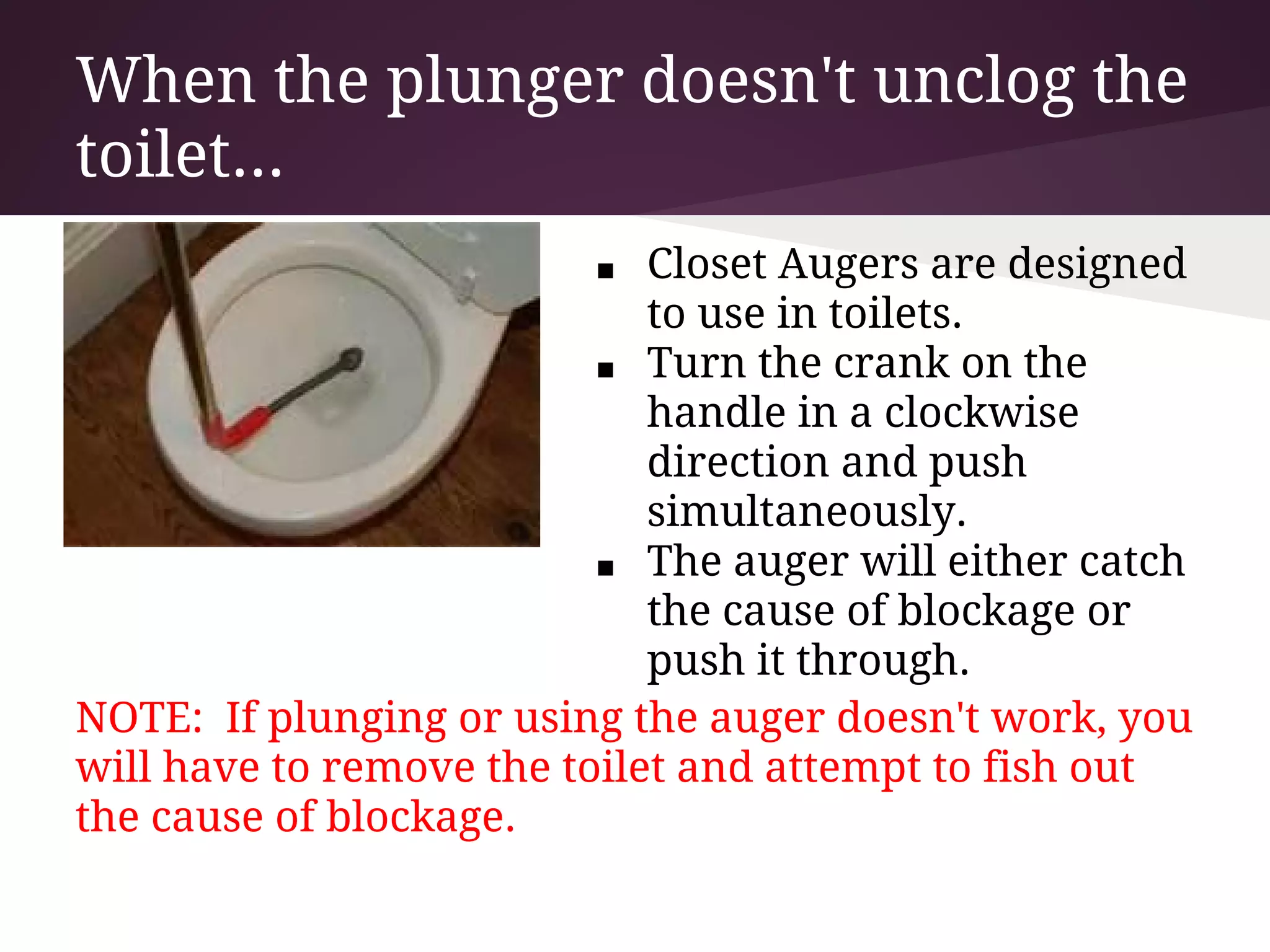
                         ■   Closet Augers are designed
                             to use in toilets.
                          ■ Turn the crank on the
                             handle in a clockwise
                             direction and push
                             simultaneously.
                          ■ The auger will either catch
                             the cause of blockage or
                             push it through.
NOTE: If plunging or using the auger doesn't work, you
will have to remove the toilet and attempt to fish out
the cause of blockage.
Side Note
● I have done a lot of drain cleaning in my various
   jobs, and it is not fun or pretty, BUT the average
   home owner can save a lot of money knowing how
   to fix some of these issues themselves.

● Plumbers are expensive, some will charge over
   $100 just to come and inspect the problem.

Get it unclogged!

  • 1.
    Get It Unclogged! By: Justin Beaumont (Not liable for use of information)
  • 2.
    Figuring out whereto start: ● Most of us start here --> ○ Plungers are useful, but sometimes they're just not enough. ● Practicing your problem solving skills. Start by isolating the problem. Questions to ask: ● Is only one fixture affected? ● If two or more fixtures are affected, are they only on the second level? Or throughout the entire house?
  • 3.
    Identify the area ●Figuring out where the problem area is, will help you decide what tools to use and whether or not you should go straight to the yellow pages to call a professional.
  • 4.
    Knowing Drain Lines ●You have to be careful with drain lines because they are suprisingly delicate due to all of the various fixtures attached to them. ● Sometimes augering or certain chemicals can cause stress on the walls of the drain lines and weaken them. **Always try a plunger first!
  • 5.
    Chemical Cleaner Risks ●The best thing to do when it comes to chemical cleaners is to avoid them! ● IF you really feel you must use a chemical cleaner to try and unclog a drain, then make certain that you follow the manufacturer's directions exactly. ● NOTE: It is absolutely important that you let the plumber know you used a chemical when he comes!
  • 6.
    Chemical Cleaners Continued ●Never, NEVER, ever use a chemical cleaner in standing water OR in an unclogged drain OR in a toilet. ● Chemicals should only be used when the drain is working slowly.
  • 7.
    The Tools: 1. Household Plunger 2. Closet Auger 3. The Hand Snake 4. Power Drill Auger Attachment 5. Hand Spinner
  • 8.
    Unclogging Drains/Waste Lines Whatyou need to get started: ● Water-pump pliers, hand auger, bucket, rags to clean up with. ● Start by removing the drain trap loosen the blockage, then flush the line with water
  • 9.
    Using the HandAuger... ● Put a bucket under the drain trap to catch waste and water. ● Remove the drain trap with water-pump pliers. ● Clean out the trap and or inspect the drain trap for cracks or buildup. ○ If there are cracks or buildup you MUST replace the drain trap.
  • 10.
    Using the HandAuger Cont... ● Set up the auger by loosening the setscrew and pulling out a foot of cable. ● Begin by pushing cable through the drain until you hit resistance. ● It can be hard to identify the difference between a bend in the pipe and blockage. ● Work slowly, if the resistance is the blockage, then the auger will either snag the end of it and pull it out, or it will push it through.
  • 11.
    Hand Auger Continued... ●After clearing the blockage, tighten the setscrew on the auger and turn the handle in a clockwise direction until the cable moves forward. ● Then loosen the setscrew and push the cable further until you meet more resistance. ● Continue this process until you are confident the blockage is removed. ● Remove the cable and clean the tip. ● Replace the drain trap and run the water, IF the blockage is still there call a professional and make certain that you write down all of the steps you took to remove it yourself.
  • 12.
    Unclogging a Sink Whatyou will need: ● Start with Plunger, water-pump pliers, sink auger, bucket, clean up rags. ● If you can clean out a sink blockage with a plunger, that is the best way to avoid damaging the pipes. ● Have someone ready to help you if possible.
  • 13.
    Unclogging a SinkContinued ● Fill both sides of the sink with about 4 in. of water. ● Get your helper a rag to hold over the opening of the disposal drain (if you are unclogging a kitchen sink). ● Using the plunger, quickly plunge the drain on the other side. ● If the drain is still clogged after 12 to 15 plunges, move to the other side of the sink and have the helper plug the side the you first plunged.
  • 14.
    Stubborn Sinks... ● Ifthe blockage won't move, you will have to use an auger as describe in the previous section.
  • 15.
    Unclogging the Bathtub Whatyou will need: Screw driver, Auger, Plunger ● Begin by plunging the drain vigorously. If the plunger doesn't work switch to an Auger. ● Remove the pop-up drain assembly with a screwdriver and clean out visible debris.
  • 16.
    Uncloggin Bathtub Continued... ●Insert Auger into the overflow drain. ● Turn the handle clockwise to feed the cable into the drain until you meet resistance. ● Patiently remove cable to take take off blockage. ● Repeat until the drain works smoothly. ● Replace the pop-up drain assembly and overflow cover.
  • 17.
    Unclogging the Toilet Whatyou will need: Plunger, Closet Auger, Bucket, Rags ● Don't even think about using a chemical drain cleaner in a toilet. ● Place a plunger in the toilet, creating a seal around the drain hole (this creates a vacuum) and plunge vigorously 12 to 15 times. ● Try flushing, if it still doesn't drain repeat the plunging.
  • 18.
    When the plungerdoesn't unclog the toilet... ■ Closet Augers are designed to use in toilets. ■ Turn the crank on the handle in a clockwise direction and push simultaneously. ■ The auger will either catch the cause of blockage or push it through. NOTE: If plunging or using the auger doesn't work, you will have to remove the toilet and attempt to fish out the cause of blockage.
  • 19.
    Side Note ● Ihave done a lot of drain cleaning in my various jobs, and it is not fun or pretty, BUT the average home owner can save a lot of money knowing how to fix some of these issues themselves. ● Plumbers are expensive, some will charge over $100 just to come and inspect the problem.