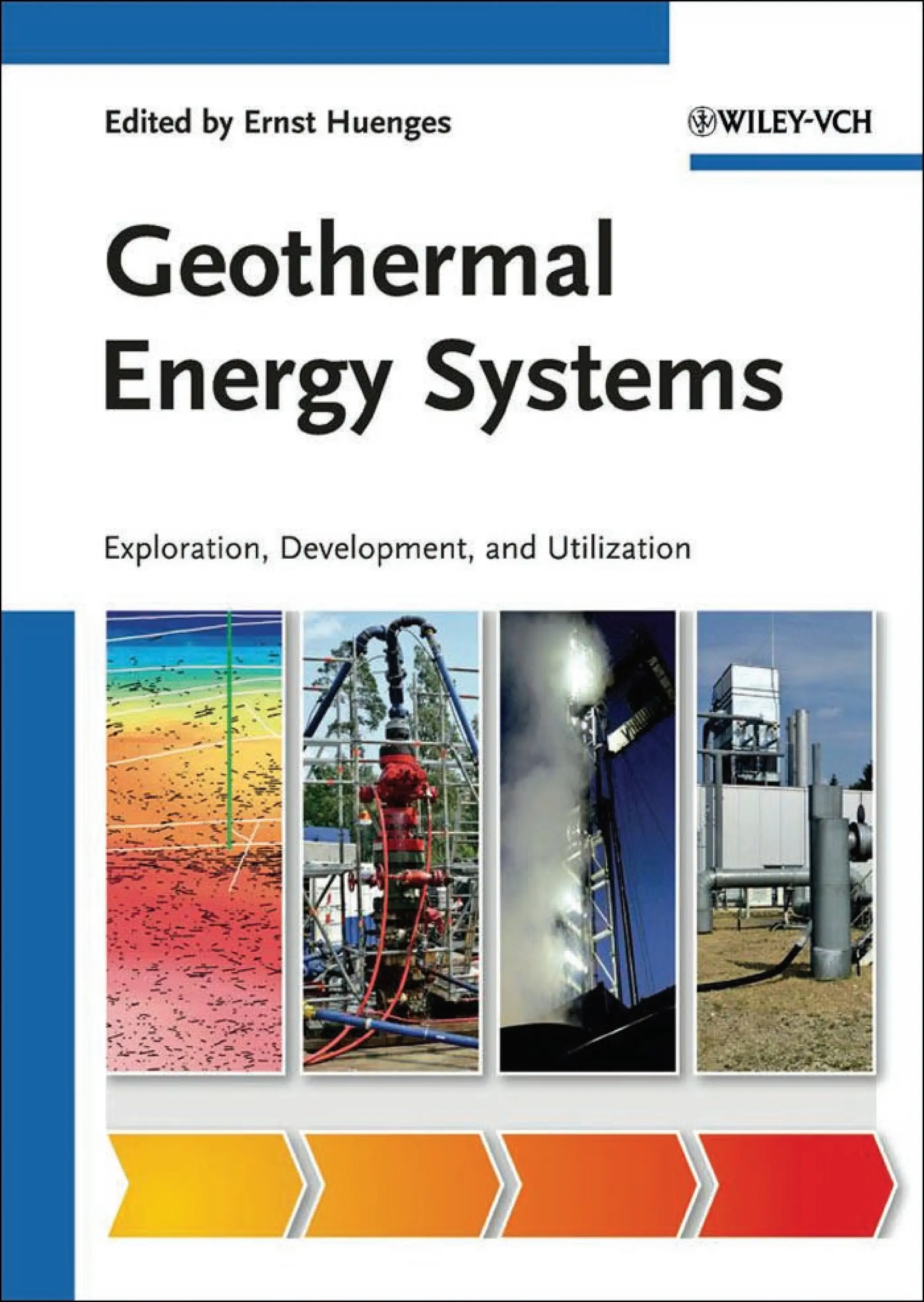
Geothermal Energy Systems Exploration
Development And Utilization 1st Edition Ernst
Huenges download
https://ebookbell.com/product/geothermal-energy-systems-
exploration-development-and-utilization-1st-edition-ernst-
huenges-2526086
Explore and download more ebooks at ebookbell.com
Here are some recommended products that we believe you will be
interested in. You can click the link to download.
Geothermal Energy Systems Ibrahim Dincer Murat Ozturk
https://ebookbell.com/product/geothermal-energy-systems-ibrahim-
dincer-murat-ozturk-26081968
Renewable Energy Engineering Solar Wind Biomass Hydrogen And
Geothermal Energy Systems 1st Edition Emmanuel D Rogdakis Irene P
Koronaki
https://ebookbell.com/product/renewable-energy-engineering-solar-wind-
biomass-hydrogen-and-geothermal-energy-systems-1st-edition-emmanuel-d-
rogdakis-irene-p-koronaki-51644366
The Future Of Geothermal Energy Impact Of Enhanced Geothermal Systems
Egs On The United States In The 21st Century An Assessment
Massachusetts Institute Of Technology
https://ebookbell.com/product/the-future-of-geothermal-energy-impact-
of-enhanced-geothermal-systems-egs-on-the-united-states-in-the-21st-
century-an-assessment-massachusetts-institute-of-technology-1135494
Shallow Geothermal Systems Recommendations On Design Construction
Operation And Monitoring Of The Geothermal Energy Study Group At The
Specialist Hydrogeology Section Of The German Geological Society
Fhdggv And The Engineering Geology Section Of T Deutsche Gesellschaft
Fr Geotechnik Ev German Geotechnical Society
https://ebookbell.com/product/shallow-geothermal-systems-
recommendations-on-design-construction-operation-and-monitoring-of-
the-geothermal-energy-study-group-at-the-specialist-hydrogeology-
section-of-the-german-geological-society-fhdggv-and-the-engineering-
geology-section-of-t-deutsche-gesellschaft-fr-geotechnik-ev-german-
geotechnical-society-5700260
Geothermal Systems And Energy Resources Turkey And Greece 1st Edition
Alper Baba
https://ebookbell.com/product/geothermal-systems-and-energy-resources-
turkey-and-greece-1st-edition-alper-baba-4747862
Introduction To The Numerical Modeling Of Groundwater And Geothermal
Systems Fundamentals Of Mass Energy And Solute Transport In
Poroelastic Rocks 1st Jochen Bundschuh
https://ebookbell.com/product/introduction-to-the-numerical-modeling-
of-groundwater-and-geothermal-systems-fundamentals-of-mass-energy-and-
solute-transport-in-poroelastic-rocks-1st-jochen-bundschuh-4421818
Geothermal Energy The Resource Under Our Feet The Resource Under Our
Feet 1st Edition Charles T Malloy
https://ebookbell.com/product/geothermal-energy-the-resource-under-
our-feet-the-resource-under-our-feet-1st-edition-charles-t-
malloy-51357788
Geothermal Energy An Alternative Resource For The 21st Century Harsh K
Gupta
https://ebookbell.com/product/geothermal-energy-an-alternative-
resource-for-the-21st-century-harsh-k-gupta-2164174
Geothermal Energy From Theoretical Models To Exploration And
Development 2nd Edition Ingrid Bucher Kurt Stober
https://ebookbell.com/product/geothermal-energy-from-theoretical-
models-to-exploration-and-development-2nd-edition-ingrid-bucher-kurt-
stober-30972710
Edited by
Ernst Huenges
Geothermal Energy Systems
Related Titles
Cocks, F. H.
Energy Demand and Climate
Change
Issues and Resolutions
267 pages with 30 figures
2009
Softcover
ISBN: 978-3-527-32446-0
Wengenmayr, R., B
..
uhrke, T. (eds.)
Renewable Energy
Sustainable Energy Concepts for the
Future
120 pages
2008
Hardcover
ISBN: 978-3-527-40804-7
Kruger, P.
Alternative Energy Resources
The Quest for Sustainable Energy
272 pages
2006
Hardcover
ISBN: 978-0-471-77208-8
Kutz, M. (ed.)
Mechanical Engineers’
Handbook, Energy and Power
1104 pages
2005
Hardcover
ISBN: 978-0-471-71988-5
Edited by Ernst Huenges
Geothermal Energy Systems
Exploration, Development, and Utilization
The Editor
Dr. Ernst Huenges
GeoForschungsZentrum
Potsdam
Telegrafenberg
14473 Potsdam
Germany
All books published by Wiley-VCH are
carefully produced. Nevertheless, authors,
editors, and publisher do not warrant the
information contained in these books,
including this book, to be free of errors.
Readers are advised to keep in mind that
statements, data, illustrations, procedural
details or other items may inadvertently be
inaccurate.
Library of Congress Card No.: applied for
British Library Cataloguing-in-Publication
Data
A catalogue record for this book is available
from the British Library.
Bibliographic information published by
the Deutsche Nationalbibliothek
The Deutsche Nationalbibliothek lists this
publication in the Deutsche Nationalbib-
liografie; detailed bibliographic data are
available on the Internet at http://dnb.d-
nb.de.
 2010 WILEY-VCH Verlag GmbH & Co. KGaA,
Weinheim
All rights reserved (including those of
translation into other languages). No part
of this book may be reproduced in any
form – by photoprinting, microfilm, or any
other means – nor transmitted or translated
into a machine language without written
permission from the publishers. Registered
names, trademarks, etc. used in this book,
even when not specifically marked as such,
are not to be considered unprotected by law.
Cover Design Adam Design, Weinheim
Typesetting Laserwords Private Limited,
Chennai, India
Printing and Binding betz-druck GmbH,
Darmstadt
Printed in the Federal Republic of Germany
Printed on acid-free paper
ISBN: 978-3-527-40831-3
V
Contents
Preface XV
List of Contributors XIX
1 Reservoir Definition 1
Patrick Ledru and Laurent Guillou Frottier
1.1 Expressions of Earth’s Heat Sources 1
1.1.1 Introduction to Earth’s Heat and Geothermics 1
1.1.2 Cooling of the Core, Radiogenic Heat Production, and Mantle
Cooling 2
1.1.3 Mantle Convection and Heat Loss beneath the Lithosphere 4
1.1.3.1 Mantle Heat Flow Variations 4
1.1.3.2 Subcontinental Thermal Boundary Condition 5
1.1.4 Fourier’ Law and Crustal Geotherms 6
1.1.5 Two-dimensional Effects of Crustal Heterogeneities on Temperature
Profiles 8
1.1.5.1 Steady-state Heat Refraction 8
1.1.5.2 Transient Effects 10
1.1.5.3 Role of Anisotropy of Thermal Conductivity 10
1.1.6 Fluid Circulation and Associated Thermal Anomalies 12
1.1.7 Summary 13
1.2 Heat Flow and Deep Temperatures in Europe 13
1.2.1 Far-field Conditions 14
1.2.2 Thermal Conductivity, Temperature Gradient, and Heat Flow Density
in Europe 17
1.2.3 Calculating Extrapolated Temperature at Depth 18
1.2.4 Summary 20
1.3 Conceptual Models of Geothermal Reservoirs 21
1.3.1 The Geology of Potential Heat Sources 22
1.3.2 Porosity, Permeability, and Fluid Flow in Relation to the Stress
Field 27
1.3.3 Summary 30
References 32
Geothermal Energy Systems. Edited by Ernst Huenges
Copyright  2010 WILEY-VCH Verlag GmbH & Co. KGaA, Weinheim
ISBN: 978-3-527-40831-3
VI Contents
2 Exploration Methods 37
David Bruhn, Adele Manzella, François Vuataz, James Faulds,
Inga Moeck, and Kemal Erbas
2.1 Introduction 37
2.2 Geological Characterization 39
2.3 Relevance of the Stress Field for EGS 44
2.4 Geophysics 52
2.4.1 Electrical Methods (DC, EM, MT) 53
2.4.1.1 Direct Current (DC) Methods 54
2.4.1.2 Electromagnetic Methods 55
2.4.1.3 The Magnetotelluric Method 55
2.4.1.4 Active Electromagnetic Methods 63
2.4.2 Seismic Methods 66
2.4.2.1 Active Seismic Sources 67
2.4.2.2 Seismic Anisotropy and Fractures 71
2.4.2.3 Passive Seismic Methods 73
2.4.3 Potential Methods 76
2.4.3.1 Gravity 76
2.4.3.2 Geomagnetics and Airborne Magnetic 78
2.4.4 Data Integration 80
2.4.4.1 Joint Inversion Procedures 81
2.5 Geochemistry 81
2.5.1 Introduction 81
2.5.2 Fluids and Minerals as Indicators of Deep Circulation and
Reservoirs 83
2.5.3 Mud and Fluid Logging while Drilling 85
2.5.4 Hydrothermal Reactions 86
2.5.4.1 Boiling and Mixing 88
2.5.5 Chemical Characteristics of Fluids 91
2.5.5.1 Sodium–Chloride Waters 92
2.5.5.2 Acid–Sulfate Waters 92
2.5.5.3 Sodium–Bicarbonate Waters 93
2.5.5.4 Acid Chloride–Sulfate Waters 93
2.5.6 Isotopic Characteristics of Fluids 94
2.5.7 Estimation of Reservoir Temperature 97
2.5.7.1 Geothermometric Methods for Geothermal
Waters 98
2.5.7.2 Silica Geothermometer 98
2.5.7.3 Ionic Solutes Geothermometers 99
2.5.7.4 Gas (Steam) Geothermometers 100
2.5.7.5 Isotope Geothermometers 100
2.5.8 Forecast of Corrosion and Scaling
Processes 100
References 103
Further Reading 111
Contents VII
3 Drilling into Geothermal Reservoirs 113
Axel Sperber, Inga Moeck, and Wulf Brandt
3.1 Introduction 113
3.1.1 Geothermal Environments and General Tasks 114
3.2 Drilling Equipment and Techniques 115
3.2.1 Rigs and Their Basic Concepts 115
3.2.1.1 Hoisting System 115
3.2.1.2 Top Drive or Rotary Table 115
3.2.1.3 Mud Pumps 116
3.2.1.4 Solids Control Equipment 118
3.2.1.5 Blowout Preventer (BOP) 118
3.2.2 Drillstring 118
3.2.2.1 Bottomhole Assembly 118
3.2.2.2 Drillpipe 121
3.2.3 Directional Drilling 122
3.2.3.1 Downhole Motor (DHM) 122
3.2.3.2 Rotary Steerable Systems (RSS) 122
3.2.3.3 Downhole Measuring System (MWD) with Signal Transmission Unit
(Pulser) 123
3.2.3.4 Surface Receiver to Receive and Decode the Pulser Signals 123
3.2.3.5 Special Computer Program to Evaluate Where the Bottom of the Hole
Is at Survey Depth 123
3.2.4 Coring 125
3.3 Drilling Mud 125
3.3.1 Mud Types 126
3.3.1.1 Water-based Mud 126
3.3.1.2 Oil-based Mud 126
3.3.1.3 Foams 126
3.3.1.4 Air 126
3.3.2 The Importance of Mud Technology in Certain Geological
Environments 127
3.3.2.1 Drilling through Plastic/Creeping Formations (Salt, Clay) 127
3.3.2.2 Formation Pressure and Formation Damage (Hydrostatic Head,
ECD) 127
3.4 Casing and Cementation 128
3.4.1 Casing and Liner Concepts 129
3.4.2 Casing Materials 129
3.4.3 Pipe Centralization 131
3.4.4 Cementation 132
3.4.5 Cement Slurries, ECD 133
3.4.6 Influence of Temperature on Casing and Cement 136
3.5 Planning a Well 136
3.5.1 Geological Forecast 136
3.5.1.1 Target Definition 137
3.5.1.2 Pore Pressures/Fracture Pressure/Temperature 137
VIII Contents
3.5.1.3 Critical Formations/Fault Zones 138
3.5.1.4 Hydrocarbon Bearing Formations 138
3.5.1.5 Permeabilities 138
3.5.2 Well Design 139
3.5.2.1 Trajectory 139
3.5.2.2 Casing Setting Depths 139
3.5.2.3 Casing Sizes 139
3.5.2.4 Casing String Design 140
3.6 Drilling a Well 142
3.6.1 Contract Types and Influence on Project Organization 142
3.6.1.1 Turnkey Contract 142
3.6.1.2 Meter-contract 143
3.6.1.3 Time-based Contract 143
3.6.1.4 Incentive Contract 143
3.6.2 Site Preparation and Infrastructure 144
3.6.2.1 General 144
3.6.2.2 Excavating and Trenching 144
3.6.2.3 Environmental Impact (Noise, Pollution Prevention) 144
3.6.3 Drilling Operations 144
3.6.4 Problems and Trouble Shooting 145
3.7 Well Completion Techniques 148
3.7.1 Casing (Please Refer Also to ‘‘Casing String Design’’) 148
3.7.1.1 Allowance of Vertical Movement of Casing 148
3.7.1.2 Pretensioning 148
3.7.1.3 Liner in Pay Zone (Slotted/Predrilled) or Barefoot Completion 150
3.7.2 Wellheads, Valves and so on 150
3.7.3 Well Completion without Pumps with Naturally Flowing Wells 151
3.7.4 Well Completion with Pumps 152
3.8 Risks 152
3.8.1 Evaluating Risks 153
3.8.1.1 Poor or Wrong Geological Profile Forecast 153
3.8.1.2 Poor Well Design 153
3.8.2 Technical Risks 154
3.8.2.1 Failure of Surface Equipment 154
3.8.2.2 Failure of Subsurface Equipment 154
3.8.3 Geological–Technical Risks 155
3.8.4 Geological Risks 157
3.8.5 Geotectonical Risks 159
3.9 Case Study Groß Schönebeck Well 159
3.10 Economics (Drilling Concepts) 162
3.10.1 Influence of Well Design on Costs 164
3.10.1.1 Casing Scheme 164
3.10.1.2 Vertical Wells versus Deviated Wells 165
3.11 Recent Developments, Perspectives in R&D 165
3.11.1 Technical Trends 165
Contents IX
3.11.1.1 Topdrive 166
3.11.1.2 Rotary Steerable Systems (RSS) 166
3.11.1.3 Multilateral Wells 169
3.11.2 Other R&D-Themes of high Interest 169
References 170
4 Enhancing Geothermal Reservoirs 173
Thomas Schulte, Günter Zimmermann, Francois Vuataz, Sandrine
Portier, Torsten Tischner, Ralf Junker, Reiner Jatho, and Ernst Huenges
4.1 Introduction 173
4.1.1 Hydraulic Stimulation 174
4.1.2 Thermal Stimulation 174
4.1.3 Chemical Stimulation 174
4.2 Initial Situation at the Specific Location 174
4.2.1 Typical Geological Settings 174
4.2.2 Appropriate Stimulation Method According to Geological System
and Objective 175
4.3 Stimulation and Well path Design 176
4.4 Investigations Ahead of Stimulation 178
4.5 Definition and Description of Methods (Theoretical) 180
4.5.1 Hydraulic Stimulation 180
4.5.1.1 General 180
4.5.1.2 Waterfrac Treatments 181
4.5.1.3 Gel-Proppant Treatments 182
4.5.1.4 Hybrid Frac Treatments 183
4.5.2 Thermal Stimulation 183
4.5.3 Chemical Stimulation 184
4.6 Application (Practical) 187
4.6.1 Hydraulic Stimulation 187
4.6.1.1 Induced Seismicity 189
4.6.2 Thermal Stimulation 193
4.6.3 Chemical Stimulation 194
4.7 Verification of Treatment Success 197
4.7.1 General 197
4.7.1.1 Wireline Based Evaluation 197
4.7.1.2 Hydraulic Well Tests 197
4.7.1.3 Tracer Testing 198
4.7.1.4 Monitoring Techniques 200
4.7.2 Evaluation of Chemical Stimulations 201
4.8 Outcome 202
4.8.1 Hydraulic Stimulation 202
4.8.1.1 Hydraulic Stimulation – Soultz 202
4.8.1.2 Hydraulic Stimulation Groß Schönebeck 203
4.8.2 Thermal Stimulation 204
4.8.3 Chemical Stimulation 204
X Contents
4.9 Sustainability of Treatment 206
4.9.1 Hydraulic Stimulation 206
4.9.1.1 Proppant Selection 206
4.9.1.2 Coated Proppants 209
4.9.2 Thermal Stimulation 209
4.9.3 Chemical Stimulation 210
4.10 Case Studies 210
4.10.1 Groß Schönebeck 210
4.10.1.1 Introduction 210
4.10.1.2 Hydraulic Fracturing Treatments in GrSk3/90 211
4.10.1.3 Hydraulic Fracturing in Sandstones (Gel-Proppant Stimulation) 211
4.10.1.4 Hydraulic fracturing in Volcanics (Waterfrac Stimulation) 212
4.10.1.5 Hydraulic Fracturing Treatments in GrSk4/05 213
4.10.1.6 Hydraulic Fracturing Treatment in Volcanics (Waterfrac
Stimulation) 214
4.10.1.7 Hydraulic Fracturing in Sandstones (Gel-Proppant Stimulation) 215
4.10.1.8 Conclusions 216
4.10.2 Soultz 217
4.10.2.1 Hydraulic Stimulation 217
4.10.2.2 Chemical Stimulation 223
4.10.3 Horstberg 226
4.10.3.1 Introduction 226
4.10.3.2 Fracturing Experiments 228
4.10.3.3 Summary and Conclusion 232
References 233
Further Reading 240
5 Geothermal Reservoir Simulation 245
Olaf Kolditz, Mando Guido Blöcher, Christoph Clauser, Hans-Jörg
G. Diersch, Thomas Kohl, Michael Kühn, Christopher I. McDermott,
Wenqing Wang, Norihiro Watanabe, Günter Zimmermann, and
Dominique Bruel
5.1 Introduction 245
5.1.1 Geothermal Modeling 246
5.1.2 Uncertainty Analysis 247
5.2 Theory 248
5.2.1 Conceptual Approaches 248
5.2.2 THM Mechanics 248
5.2.2.1 Heat Transport 249
5.2.2.2 Liquid Flow in Deformable Porous Media 250
5.2.2.3 Thermoporoelastic Deformation 250
5.3 Reservoir Characterization 250
5.3.1 Reservoir Properties 251
5.3.1.1 Reservoir Permeability 251
5.3.1.2 Poroperm Relationships 251
Contents XI
5.3.2 Fluid Properties 254
5.3.2.1 Density and Viscosity 254
5.3.2.2 Heat Capacity and Thermal Conductivity 255
5.3.3 Supercritical Fluids 257
5.3.4 Uncertainty Assessment 258
5.4 Site Studies 260
5.5 Groß Schönebeck 260
5.5.1 Introduction 260
5.5.2 Model Description 261
5.5.2.1 Geology 261
5.5.2.2 Structure 262
5.5.2.3 Thermal Conditions 263
5.5.2.4 Hydraulic Conditions 263
5.5.3 Modeling Approach 264
5.5.4 Results 265
5.5.5 Conclusions 268
5.6 Bad Urach 268
5.6.1 The Influence of Parameter Uncertainty on Reservoir Evolution 268
5.6.1.1 Conceptual Model 268
5.6.1.2 Simulation Results 270
5.6.1.3 Stimulated Reservoir Model 270
5.6.1.4 Monte Carlo Analysis 271
5.6.1.5 Conclusions 275
5.6.2 The Influence of Coupled Processes on Differential Reservoir
Cooling 275
5.6.2.1 Conceptual Model 275
5.6.2.2 Development of Preferential Flow Paths due to Positive Feedback
Loops in Coupled Processes and Potential Reservoir Damage 276
5.6.3 The Importance of Thermal Stress in the Rock Mass 278
5.7 Rosemanowes (United Kingdom) 279
5.8 Soultz-sous-Forets (France) 280
5.9 KTB (Germany) 284
5.9.1 Introduction 284
5.9.2 Geomechanical Facies and Modeling the HM Behavior of the KTB
Pump Test 285
5.10 Stralsund (Germany) 287
5.10.1 Site Description 290
5.10.2 Model Setup 290
5.10.3 Long-Term Development of Reservoir Properties 291
References 293
6 Energetic Use of EGS Reservoirs 303
Ali Saadat, Stephanie Frick, Stefan Kranz, and Simona Regenspurg
6.1 Utilization Options 303
6.1.1 Energetic Considerations 303
XII Contents
6.1.2 Heat Provision 306
6.1.3 Chill Provision 308
6.1.4 Power Provision 312
6.2 EGS Plant Design 316
6.2.1 Geothermal Fluid Loop 316
6.2.1.1 Fluid Properties 317
6.2.1.2 Operational Reliability Aspects 323
6.2.1.3 Fluid Production Technology 329
6.2.2 Heat Exchanger 332
6.2.2.1 Heat Exchanger Analysis – General Considerations 333
6.2.2.2 Selection of Heat Exchangers 335
6.2.2.3 Specific Issues Related to Geothermal Energy 337
6.2.3 Direct Heat Use 338
6.2.4 Binary Power Conversion 341
6.2.4.1 General Cycle Design 342
6.2.4.2 Working Fluid 347
6.2.4.3 Recooling Systems 352
6.2.5 Combined Energy Provision 359
6.2.5.1 Cogeneration 359
6.2.5.2 Serial Connection 360
6.2.5.3 Parallel Connection 361
6.3 Case Studies 362
6.3.1 Power Provision 363
6.3.1.1 Objective 363
6.3.1.2 Design Approach 363
6.3.1.3 Gross Power versus Net Power Maximization 364
6.3.2 Power and Heat Provision 366
6.3.2.1 Objective 366
6.3.2.2 Design Approach 367
6.3.2.3 Serial versus Parallel Connection 367
References 368
7 Economic Performance and Environmental Assessment 373
Stephanie Frick, Jan Diederik Van Wees, Martin Kaltschmitt,
and Gerd Schröder
7.1 Introduction 373
7.2 Economic Aspects for Implementing EGS Projects 375
7.2.1 Levelized Cost of Energy (LCOE) 375
7.2.1.1 Methodological Approach 376
7.2.1.2 Cost Analysis 377
7.2.1.3 Case Studies 383
7.2.2 Decision and Risk Analysis 393
7.2.2.1 Methodology 394
7.2.2.2 Case Study 397
7.3 Impacts on the Environment 405
Contents XIII
7.3.1 Life Cycle Assessment 406
7.3.1.1 Methodological Approach 406
7.3.1.2 Case Studies 408
7.3.2 Impacts on the Local Environment 412
7.3.2.1 Local Impacts 412
7.3.2.2 Environmental Impact Assessment 417
References 419
8 Deployment of Enhanced Geothermal Systems Plants and CO2
Mitigation 423
Ernst Huenges
8.1 Introduction 423
8.2 CO2 Emission by Electricity Generation from Different Energy
Sources 423
8.3 Costs of Mitigation of CO2 Emissions 424
8.4 Potential Deployment 426
8.5 Controlling Factors of Geothermal Deployment 426
8.5.1 Technological Factors 426
8.5.2 Economic and Political Factors 427
References 428
Color Plates 429
Index 445
XV
Preface
The book presents basic knowledge about geothermal technology for the utilization
of geothermal resources. It helps to understand the basic geology needed for the
utilization of geothermal energy and describes the methods to create access to
geothermal reservoirs by drilling and the engineering of the reservoir. The book
describes the technology available to make use of the earth’s heat for direct use,
power, and/or chilling, and gives the economic and environmental conditions
limiting its utilization. Special emphasis is given to enhanced or engineered
geothermal systems (EGS), which are based on concepts that bring a priori less
productive reservoirs to an economic use. These concepts require the geothermal
technology described here. The idea of EGS is not yet very old. Therefore, this book
aims to provide a baseline of the technologies, taking into account the fact that due
to a growing interest in EGS, a dynamic development may increase the specific
knowledge to a large extent in the near future.
The book begins with a large-scale picture of geothermal resources, addressing
expressions of the earth’s heat sources and measured heat flow at different places
world wide. This leads to conceptual models with a geological point of view
influencing geothermal reservoir definitions based on physical parameters like
porosity, permeability, and stress distribution in the underground, indicating that
geothermal applications can be deployed anywhere, but some locations are more
favorable than others.
The second chapter addresses the characterization of geothermal reservoirs
and the implications of their exploration. A best practice for the exploration of
EGS reservoirs is still to be determined and the different methods in geology,
geophysics, and geochemistry have a strong local character. Some methods are
successful in exploring conventional geothermal reservoirs like the magnetotel-
lurics, whereas for EGS, seismic methods become more and more important.
An overall conceptual exploration approach integrating the geophysical measure-
ments into a geological model taking into account the earth’s stress conditions
is addressed in this chapter, but it has to be further developed in future
contributions.
The baseline know-how of EGS drilling given in the third chapter, is based on
a few case studies and therefore, somewhat different from hydrocarbon drilling
Geothermal Energy Systems. Edited by Ernst Huenges
Copyright  2010 WILEY-VCH Verlag GmbH & Co. KGaA, Weinheim
ISBN: 978-3-527-40831-3
XVI Preface
with reference to issues like large diameter holes, deviated wells, and mitiga-
tion of formation damage. The latter is also important for drilling conventional
geothermal reservoirs, which to a great extent follow standards in operation and
completion. The knowledge of underground physical conditions, especially the
magnitude and direction of the local stress, is important for reliable drilling
into EGS reservoirs. Awareness of the stress conditions is also a prerequisite
for starting hydraulic fracturing treatment which is addressed in a following
chapter.
In the fourth chapter, techniques and experiences from several EGS sites are
described providing a set of methods available for addressing the goal of increasing
well productivity. The case studies cover several geological environments such as
deep sediments and granites. Significant progress was made in the last few years
in recovering enhancing factors in the order of magnitudes. Chances and risks of
companion effects of the treatments, such as induced seismicity, are addressed and
will be a subject of forthcoming research.
In the fifth chapter, the state-of-the-art numerical instruments used to simulate
geothermal reservoirs during exploitation are given in different case studies.
Different coupled processes such as thermal–hydraulic or hydraulic–mechanical,
including coupled chemical processes, are discussed. The development of the
coupling of thermal, hydraulic, mechanical, and chemical processes is ongoing,
hence the chapter provides the basics.
The benefits of using geothermal energy technologies for the direct use and
conversion of the earth’s heat into chilling or heating power (as required), are
described in the sixth chapter. Technical solutions for all tasks within the goal of
energy provision exist, and approaches for improving the performance of system
components are given. Special emphasis is given to techniques that can assure
reliable and efficient operation at the interface of underground fluids with technical
components. Processes like corrosion and scaling have to be addressed and they
are still a subject of future research.
The economic learning curve is shown in the seventh chapter that provides some
methods to analyze the risks of a project. A decision-making methodology is given
for several stages of the project. Environmental aspects are discussed, and results
of life cycle assessment with illustrations of greenhouse gas emissions are reported
in the chapter.
The final chapter discusses the possibility of geothermal deployment as a part
of future energy provision and an important contribution to the mitigation of
CO2 emissions. The technological, economic, and political factors controlling
such deployment are discussed and should provide some assistance for decision
makers.
The book was compiled by the authors, but also significantly improved by
competent reviewers. Therefore, we like to thank Magdalene Scheck-Wenderoth,
Albert Genter, Dominique Bruel, Claus Chur, Don DiPippo, Wolfram Krewitt, and
Harald Milsch for their excellent comments on the different chapters. In addition,
we acknowledge the funds received from the EU commission, for example, for the
projects ENGINE and I-GET, and the German government, especially, the Federal
Preface XVII
Ministry for the Environment, Nature Conservation and Nuclear Safety (BMU).
Special thanks go to the coworkers of the International Centre for Geothermal
Research at the Helmholtz Centre in Potsdam. These colleagues assisted the
development of the book with fruitful discussions over the last two years.
Potsdam,Germany Ernst Huenges
December 2009
XIX
List of Contributors
Mando G. Blöcher
Helmholtz Centre Potsdam GFZ
German Research Centre for
Geosciences
Reservoir Technologies
Telegrafenberg A6 R. 104
14473 Potsdam
Germany
Wulf Brandt
Helmholtz Centre Potsdam GFZ
German Research Centre for
Geoscience
International Centre for
Geothermal Research
Telegrafenberg
14473 Potsdam
Germany
Dominique Bruel
Ecole des Mines de Paris
Centre de Géosciences
35 rue Saint-Honoré
77300 Fontainebleau
France
David Bruhn
Helmholtz Centre Potsdam GFZ
German Research Centre for
Geoscience
International Centre for
Geothermal Research
Germany
Christoph Clauser
Applied Geophysics and
Geothermal Energy
E.ON Energy Research Center
RWTH Aachen University
Mathieustr. 6,
E.ON ERC Gebäude
52074 Aachen
Germany
Hans-Jörg G. Diersch
WASY Gesellschaft für
wasserwirtschaftliche Planung
und Systemforschung mbH
Walterdorfer Straße 105
12526 Berlin-Bohnsdorf
Germany
Kemal Erbas
Helmholtz Centre Potsdam GFZ
German Research Centre for
Geoscience
International Centre for
Geothermal Research
Telegrafenberg
14473 Potsdam
Germany
Geothermal Energy Systems. Edited by Ernst Huenges
Copyright  2010 WILEY-VCH Verlag GmbH & Co. KGaA, Weinheim
ISBN: 978-3-527-40831-3
XX List of Contributors
James Faulds
University of Nevada
Nevada Bureau of Mines
and Geology
Mackay School of Mines
Reno, NV
USA
Stephanie Frick
Helmholtz Centre Potsdam GFZ
German Research Centre for
Geoscience
International Centre for
Geothermal Research
Telegrafenberg
14473 Potsdam
Germany
Laurent Guillou-Frottier
Bureau de Recherches
Géologiques et Minières (BRGM)
Mineral Resources Division
3 av. C. Guillemin
BP36009
45060 Orléans Cx 2
France
Ernst Huenges
Helmholtz Centre Potsdam GFZ
German Research Centre for
Geoscience
International Centre for
Geothermal Research
Telegrafenberg
14473 Potsdam
Germany
Reiner Jatho
Federal Institute for Geosciences
and Natural Resources (BGR)
Stilleweg 2
30655 Hannover
Germany
Ralf Junker
Leibniz Institute for Applied
Geophysics
Stilleweg 2
30655 Hannover
Germany
Martin Kaltschmitt
Technische Universität
Hamburg-Harburg
Institute for Environmental
Technology and Energy Economic
Eißendorfer Straße 40
21073 Hamburg
Germany
Thomas Kohl
GeoWatt AG
Dohlenweg 28
8050 Zürich
Switzerland
Olaf Kolditz
Helmholtz Centre for
Environmental Research
Department of Environmental
Informatics
TU Dresden, Environmental
Systems Analysis
Permoser Str. 15
04318 Leipzig
Germany
Stefan Kranz
Helmholtz Centre Potsdam GFZ
German Research Centre for
Geoscience
International Centre for
Geothermal Research
Telegrafenberg
14473 Potsdam
Germany
List of Contributors XXI
Michael Kühn
Helmholtz Centre Potsdam GFZ
German Research Centre for
Geoscience
International Centre for
Geothermal Research
Telegrafenberg
14473 Potsdam
Germany
Patrick Ledru
AREVA Business Group Mines
KATCO
Av. Dostyk 282
050000 ALMATY
Kazakhstan
Adele Manzella
National Research Council
Institute of Geosciences and
Earth Resources
Pisa
Italy
Chris McDermott
University of Edinburgh
School of GeoSciences
UK
Inga Moeck
Helmholtz Centre Potsdam GFZ
German Research Centre for
Geoscience
International Centre for
Geothermal Research
Telegrafenberg
14473 Potsdam
Germany
Sandrine Portier
Centre de recherche en
géothermie (CREGE)
University of Neuchâtel
Emile-Argand 11, CP 158
2009 Neuchâtel
Switzerland
Simona Regenspurg
Helmholtz Centre Potsdam GFZ
German Research Centre for
Geoscience
International Centre for
Geothermal Research
Telegrafenberg
14473 Potsdam
Germany
Ali Saadat
Helmholtz Centre Potsdam GFZ
German Research Centre for
Geoscience
International Centre for
Geothermal Research
Telegrafenberg
14473 Potsdam
Germany
Gerd Schröder
Leipziger Institut für Energie
GmbH
Torgauer Strape 116
04347 Leipzig
Germany
Thomas Schulte
Helmholtz Centre Potsdam GFZ
German Research Centre for
Geoscience
International Centre for
Geothermal Research
Telegrafenberg
14473 Potsdam
Germany
XXII List of Contributors
Axel Sperber
Ing. Büro A. Sperber
Eddesser Straße 1
31234 Edemissen
Germany
Torsten Tischner
Federal Institute for Geosciences
and Natural Resources (BGR)
Stilleweg 2
30655 Hannover
Germany
Jan Diederik Van Wees
Vrije Universiteit Amsterdam
Integrated Basin Information
Systems
De Boclean 1085
1081 HV Amsterdam
The Netherlands
Francois Vuataz
Centre de recherche en
géothermie (CREGE)
University of Neuchâtel
Emile-Argand 11, CP 158
2009 Neuchâtel
Switzerland
Wenqing Wang
Helmholtz Centre for
Environmental Research–UFZ
Environmental System Analysis
Germany
Norihiro Watanabe
Helmholtz Centre for
Environmental Research–UFZ
Environmental System Analysis
Germany
Günter Zimmermann
Helmholtz Centre Potsdam GFZ
German Research Centre for
Geosciences International Centre
for Geothermal Research
Telegrafenberg
14473 Potsdam
Germany
1
1
Reservoir Definition
Patrick Ledru and Laurent Guillou Frottier
1.1
Expressions of Earth’s Heat Sources
1.1.1
Introduction to Earth’s Heat and Geothermics
Scientific background concerning the heat flow and the geothermal activity of the
earth is of fundamental interest. It is established that plate tectonics and activities
along plate margins are controlled by thermal processes responsible for density con-
trasts and changes in rheology. Thus, any attempt to better understand the earth’s
thermal budget contributes to the knowledge of the global dynamics of the planet.
Information on the sources and expressions of heat on earth since its formation
can be deduced from combined analyses of seismic studies with mineral physics,
chemical composition of primitive materials (chondrites), as well as pressure–
temperature–time paths reconstituted from mineralogical assemblages in past and
eroded orogens.
Knowledge of heat transfer processes within the earth has greatly improved
our understanding of global geodynamics. Variations of surface heat flow above
the ocean floor has provided additional evidence for seafloor spreading (Parsons
and McKenzie, 1978), and improved theoretical models of heat conduction within
oceanic plates or continental crust helped to constrain mantle dynamics (Sclater,
Jaupart, and Galson, 1980; Jaupart and Parsons, 1985). When deeper heat trans-
fer processes are considered, thermal convection models explain a number of
geophysical and geochemical observations (Schubert, Turcotte, and Olson, 2002).
It must be, however, noted that at a smaller scale (closer to the objective of this
chapter), say within the few kilometers of the subsurface where water is much more
present than at depths, a number of geological and geothermal observations are
not well understood. As emphasized by Elder (1981), crustal geothermal systems
may appear as liquid- or vapor-dominated systems, where physics of water–rock
interactions greatly differs from one case to the other. Actually, as soon as hy-
drothermal convection arises among the active heat transfer processes, everything
goes faster since heat exchanges are more efficient than without circulating water.
Geothermal Energy Systems. Edited by Ernst Huenges
Copyright  2010 WILEY-VCH Verlag GmbH & Co. KGaA, Weinheim
ISBN: 978-3-527-40831-3
2 1 Reservoir Definition
It is thus important to delineate which type of heat transfer process is dominant
when geothermal applications are considered. Examples of diverse geothermal
systems are given below.
Within the continental crust, a given heat source can be maintained for distinct
time periods according to the associated geological system. Hydrothermal fields
seem to be active within a temporal window around 104
–105
years (Cathles, 1977),
whereas a magma reservoir would stay at high temperatures 10–100 times longer
(Burov, Jaupart, and Guillou-Frottier, 2003). When radiogenic heat production is
considered, half-lives of significant radioactive elements imply timescales up to
109
years (Turcotte and Schubert, 2002). At the lower limit, one can also invoke
phase changes of specific minerals involving highly exothermic chemical reactions
(e.g., sulfide oxidation and serpentinization) producing localized but significant
heat excess over a short (103
–104
years) period (Emmanuel and Berkowicz, 2006;
Delescluse and Chamot-Rooke, 2008). Thus, description and understanding of
all diverse expressions of earth’s heat sources involve a large range of physical,
chemical, and geological processes that enable the creation of geothermal reservoirs
of distinct timescales.
Similarly, one can assign to earth’ heat sources either a steady state or a transient
nature. High heat producing (HHP) granites (e.g., in Australia, McLaren et al.,
2002) can be considered as permanent crustal heat sources, inducing heating of
the surrounding rocks over a long time. Consequently, thermal regime around
HHP granites exhibits higher temperatures than elsewhere, yielding promising
areas for geothermal reservoirs. On the contrary, sedimentary basins where heat is
extracted from thin aquifers may be considered as transient geothermal systems
since cold water reinjection tends to decrease the exploitable heat potential within
a few decades.
Finally, regardless of the studied geological system, and independent of the
involved heat transfer mechanism, existence of geothermal systems is first con-
ditioned by thermal regime of the surroundings, and thus by thermal boundary
conditions affecting the bulk crust. Consequently, it is worth to understand
and assess the whole range of thermal constraints on crustal rocks (phys-
ical properties as well as boundary conditions) in order to figure out how
different heat transfer mechanisms could lead to generation of geothermal
systems.
The following subsections present some generalities on earth’ heat sources and
losses in order to constrain thermal boundary conditions and thermal processes
that prevail within the crust. Once crustal geotherms are physically constrained by
the latter and by rock thermal properties, distinct causes for the genesis of thermal
anomalies are discussed.
1.1.2
Cooling of the Core, Radiogenic Heat Production, and Mantle Cooling
The earth’s core releases heat at the base of the mantle, through distinct
mechanisms. Inner-core crystallization, secular cooling of the core, chemical
1.1 Expressions of Earth’s Heat Sources 3
separation of the inner core, and possibly radiogenic heat generation within
the core yield estimates of core heat loss ranging from 4 to 12 TW (Jaupart,
Labrosse, and Mareschal, 2007). Precise determinations of ohmic dissipation and
radiogenic heat production should improve this estimate. Independent studies
based on core–mantle interactions tend to favor large values (Labrosse, 2002),
while according to Roberts, Jones, and Calderwood (2003), ohmic dissipation
in the earth’s core would involve between 5 and 10 TW of heat loss across the
core–mantle boundary. The averaged value of 8 TW (Jaupart, Labrosse, and
Mareschal, 2007) is proposed in Figure 1.1.
Total heat loss = 46 TW
Heat production within the crust and mantle lithosphere = 7 TW
Heat loss from the mantle = 39 TW
Heating from
the core
Heating source
within the mantle
Mantle cooling
8 TW 13 TW 18 TW
Figure 1.1 Heat sources and losses in the earth’s core and
mantle. (After Jaupart, Labrosse, and Mareschal, 2007.)
The earth’s mantle releases heat at the base of the crust. Radiogenic heat
production can be estimated through chemical analyses of either meteorites,
considered as the starting material, or samples of present-day mantle rocks.
Different methods have been used; the objective being to determine uranium,
thorium, and potassium concentrations. Applying radioactive decay constants
for these elements, the total rate of heat production for the bulk silicate earth
(thus including the continental crust) equals 20 TW, among which 7 TW comes
from the continental crust. Thus, heat production within the mantle amounts
to 13 TW (Figure 1.1, Jaupart, Labrosse, and Mareschal, 2007). Since total heat
loss from the mantle is larger than heat input from the core and heat generation
within it, the remaining heat content stands for mantle cooling through earth’s
history.
Mantle cooling corresponds to the difference between total heat loss from the
mantle (39 TW) and heat input (from the core, 8 TW) plus internal generation
(13 TW). This 18 TW difference can be converted into an averaged mantle cooling
of 120 ◦
C Gy−1
, but over long timescales, geological constraints favor lower values
of about 50 ◦
C Gy−1
. Knowledge of the cooling rate enables one to draw a more
accurate radial temperature profile through the earth (Jaupart, Labrosse, and
Mareschal, 2007). However, as it is shown below, precise temperature profile
within the deep earth does not necessarily constrain shallow temperature profiles
within the continental crust.
4 1 Reservoir Definition
1.1.3
Mantle Convection and Heat Loss beneath the Lithosphere
Heat from the mantle is released through the overlying lithosphere. Spatially
averaged heat flow data over oceans and continents show a strong discrepancy
between oceanic and continental mantle heat losses. Among the 46 TW of total
heat loss, only 14 TW is released over continents. In terms of heat losses, two major
differences between continental and oceanic lithospheres must be explained.
First, oceanic lithosphere can be considered as a thermal boundary layer of the
convective mantle since it does participate in convective motions. Actually, oceanic
heat flow data show a similar decrease from mid-oceanic ridges to old subducting
lithosphere as that deduced from theoretical heat flow variation from upwelling-
to downwelling parts of a convecting system (Parsons and Sclater, 1977). Second,
heat production within the oceanic lithosphere is negligible when compared to that
of the continental lithosphere, enriched in radioactive elements. It follows that the
oceanic lithosphere can be considered as a ‘‘thermally inactive’’ upper boundary
layer of the convective mantle. In other words, the appropriate thermal boundary
condition at the top of the oceanic mantle corresponds to a fixed temperature
condition, which is indeed imposed by oceanic water.
Contrary to oceanic lithosphere, continental lithosphere is not directly subducted
bymantle downwellings and behaves as afloating bodyof finite thermal conductivity
overlying a convective system (Elder, 1967; Whitehead, 1976; Gurnis, 1988; Lenardic
and Kaula, 1995; Guillou and Jaupart, 1995; Jaupart et al., 1998; Grigné and
Labrosse, 2001; Trubitsyn et al., 2006). Even if atmospheric temperature can be
considered as a fixed temperature condition at the top of continents, it does not
apply to their bottom parts (i.e., at the subcontinental lithosphere–asthenosphere
boundary) since heat production within continents create temperature differences
at depths. Depending on crustal composition, heat production rates can vary from
one continental province to the other, and lateral temperature variations at the
conducting lithosphere–convecting asthenosphere boundary are thus expected. It
follows that thermal boundary condition at the base of the continental lithosphere
may be difficult to infer since thermal regime of continents differs from one case
to the other. However, as it is suggested below, some large-scale trends in thermal
behavior of continental masses can be drawn and thus a subcontinental thermal
boundary condition may be inferred.
1.1.3.1 Mantle Heat Flow Variations
Since radiogenic heat production is negligible in oceanic lithosphere, heat flow
through the ocean floor corresponds to mantle heat flow at the bottom of the
oceanic lithosphere. This suboceanic heat flow varies from several hundreds of
milliwatts per square meter at mid-oceanic ridges to about 50 mW m−2
over
oceanic lithosphere older than 80 Myr (Lister et al., 1990). When thermal effects
of hydrothermal circulation are removed, this variation is well explained by the
cooling plate model.
1.1 Expressions of Earth’s Heat Sources 5
Beneath continents, mantle heat flow variations do not follow such simple
physical consideration since large contrasts exist for both crustal heat production
and lithospheric thickness. However, at the scale of the mantle, heat loss is
mainly sensitive to large-scale thermal boundary conditions at the top of the
convecting system, and not to the detailed thermal structures of the overlying
lithospheres. Beneath continents, the earth’s mantle is not constrained by a fixed
temperature condition as is the case beneath oceanic lithosphere (see above), and
thus large-scale temperature and heat flow variations are expected at the top surface
of the subcontinental convecting system.
Surface heat flow measurements over continents and estimates of associated heat
production rates have shown that mantle heat flow values beneath thermally stable
(older than about 500 Myr) continental areas would be low, around 15 ± 3 mW m−2
(Pinet et al., 1991; Guillou et al., 1994; Kukkonen and Peltonen, 1999; Mareschal
et al., 2000). On the contrary, mantle heat flow would be significantly enhanced
beneath continental margins (Goutorbe, Lucazeau, and Bonneville, 2007; Lucazeau
et al., 2008) where crustal thickness and heat production rates decrease. Old central
parts of continents would be associated with a low subcontinental mantle heat
flow while younger continental edges would receive more heat from the mantle.
The so-called ‘‘insulating effect’’ of continents is described here in terms of heat
transfer from the mantle to the upper surface, where most of mantle heat flow is
laterally evacuated toward continental margins and oceanic lithosphere. The term
insulating should in fact be replaced by blanketing since thermal conductivity values
of continental rocks are not lower than that of oceanic rocks (Clauser and Huenges,
1995).
1.1.3.2 Subcontinental Thermal Boundary Condition
A fixed temperature condition applies to the top of oceanic lithosphere while a
low subcontinental heat flow is inferred from surface heat flow data over stable
continental areas. As shown by laboratory experiments, this low mantle heat flow
beneath continents cannot be sustained if continental size is small (Guillou and
Jaupart, 1995). Indeed, a constant and low heat flux settles beneath a continental
area for continental sizes larger than two mantle thicknesses. For smaller sizes,
subcontinental heat flow is increased.
In the field, it was shown that mantle heat flow beneath stable continents may be
as low as 10 mW m−2
(Guillou-Frottier et al., 1995), whereas beneath continental
margins, values around 50 mW m−2
have been proposed (Goutorbe, Lucazeau, and
Bonneville, 2007; Lucazeau et al., 2008). Beneath young perturbed areas, similar
elevated values have been suggested, such as the mantle heat flow estimate of
60–70 mW m−2
beneath the French Massif Central (FMC) (Lucazeau, Vasseur,
and Bayer, 1984).
At large scale, one may infer a continuous increase of mantle heat flow from con-
tinental centers to continental margins, but laboratory and numerical simulations
of thermal interaction between a convecting mantle and an overlying conducting
continent have shown that the mantle heat flow increase is mainly focused on
6 1 Reservoir Definition
Heat production
High Low
Continent
Continental
margin
Mid-oceanic
ridge
Ocean
300
50
Mantle heat flow (mW m−2
)
15
Figure 1.2 Sketch of mantle heat flow variations from con-
tinental center to mid-oceanic ridge, emphasizing a low sub-
continental heat flow with a localized increase at continental
margin, corresponding to a lateral decrease in crustal heat
production.
continental margin areas (Lenardic et al., 2000). In other words, the low and con-
stant heat flow beneath the continent can be considered as the dominant large-scale
thermal boundary condition applying above the subcontinental mantle (Figure 1.2).
1.1.4
Fourier’ Law and Crustal Geotherms
Heat transfer within the continental crust occurs mainly through heat conduction.
Heat advection may occur during magmatism episodes (arrival of hot magma at
shallow depths enhancing local temperatures), intense erosion episodes (uplift of
isotherms), and periods of hydrothermal convection. All these phenomena can
be considered as short-lived processes when equilibrium thermal regime of the
crust is considered. In steady state and without advective processes, the simplest
form of Fourier law, with a constant thermal conductivity, a depth-dependent
temperature field, and with appropriate boundary conditions for continental crust,
can be written as











k

d2
T
dz2

+ A = 0
T(z = 0) = T0
kdT
dz
(z = h) = Qm
(1.1)
where k is the crustal thermal conductivity, A heat production, T0 surface tem-
perature, h the thickness of the crust, and Qm the mantle heat flow. Temperature
profile within the crust thus can be written as
T(z) =
−A
2k
z2
+

Qm + Ah

k
z + T0 (1.2)
1.1 Expressions of Earth’s Heat Sources 7
1000
900
800
700
600
500
400
300
200
100
0
0 10000 20000
Depth (m)
Temperature
(°C)
30000 40000 50000
Crustal geotherms with varying Qm and A
3
2
1
1
2
3
Qm = 25 mW m−2 ; A = 3 µW m−3
Qm = 15 mW m−2 ; A = 3 µW m−3
Qm = 40 mW m−2
; A = 1 µW m−3
250
200
150
50
0
100
0 2000 4000 6000
3
2
1
Shallow depths
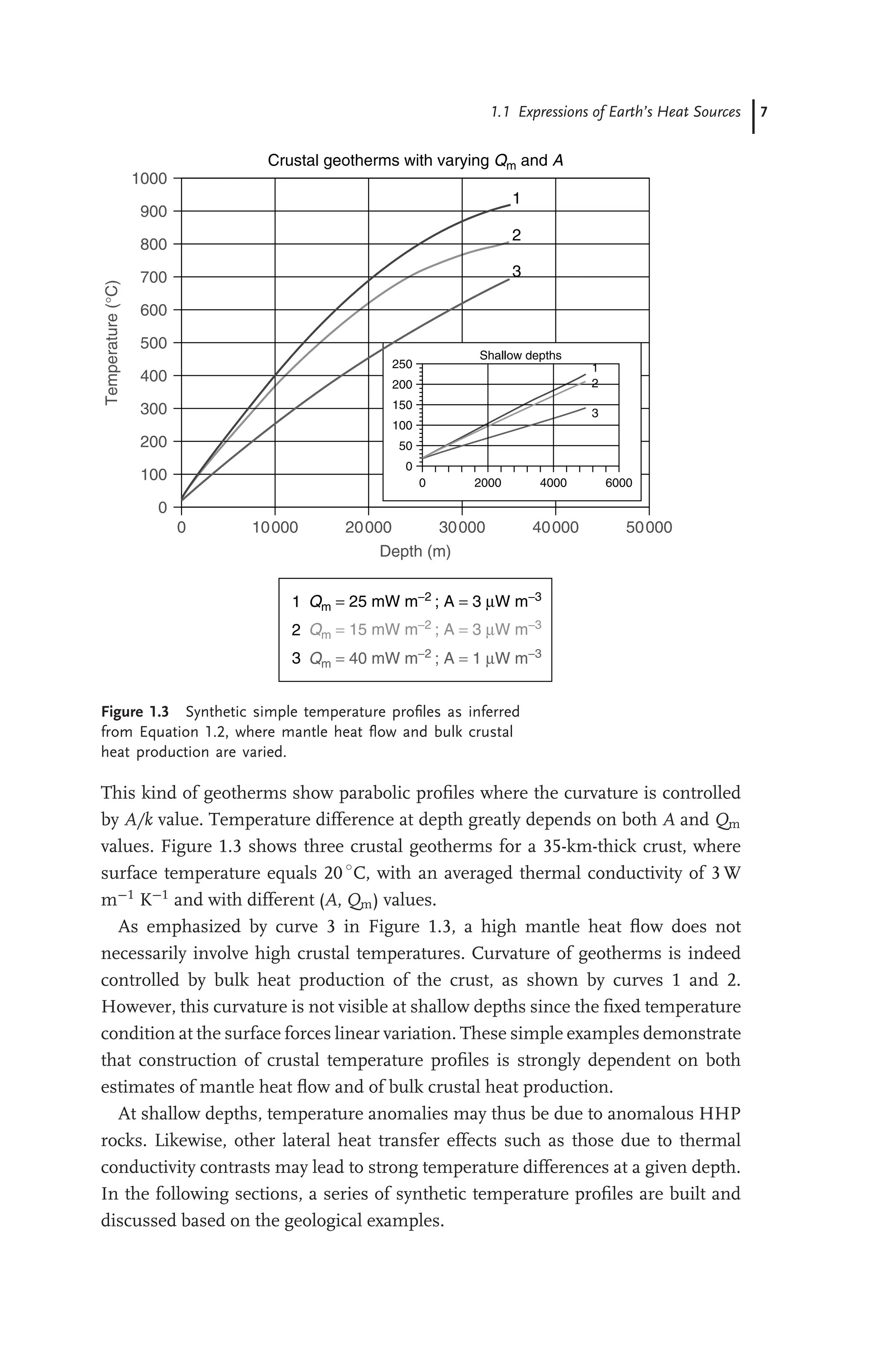
Figure 1.3 Synthetic simple temperature profiles as inferred
from Equation 1.2, where mantle heat flow and bulk crustal
heat production are varied.
This kind of geotherms show parabolic profiles where the curvature is controlled
by A/k value. Temperature difference at depth greatly depends on both A and Qm
values. Figure 1.3 shows three crustal geotherms for a 35-km-thick crust, where
surface temperature equals 20 ◦
C, with an averaged thermal conductivity of 3 W
m−1
K−1
and with different (A, Qm) values.
As emphasized by curve 3 in Figure 1.3, a high mantle heat flow does not
necessarily involve high crustal temperatures. Curvature of geotherms is indeed
controlled by bulk heat production of the crust, as shown by curves 1 and 2.
However, this curvature is not visible at shallow depths since the fixed temperature
condition at the surface forces linear variation. These simple examples demonstrate
that construction of crustal temperature profiles is strongly dependent on both
estimates of mantle heat flow and of bulk crustal heat production.
At shallow depths, temperature anomalies may thus be due to anomalous HHP
rocks. Likewise, other lateral heat transfer effects such as those due to thermal
conductivity contrasts may lead to strong temperature differences at a given depth.
In the following sections, a series of synthetic temperature profiles are built and
discussed based on the geological examples.
8 1 Reservoir Definition
1.1.5
Two-dimensional Effects of Crustal Heterogeneities on Temperature Profiles
1.1.5.1 Steady-state Heat Refraction
The two-dimensional heterogeneity of the upper crust is outlined by geological
maps, where, for example, each rock composition is assigned one color. However,
it must be emphasized that thermal properties are not necessarily correlated with
rock composition, except for extreme cases (Clauser and Huenges, 1995). On one
hand, one may record similar temperature profiles through distinct areas where
small-scale lithological differences are observed, because the averaging effect of
heterogeneities smoothes out small-scale variations. On the other hand, when
large bodies with significantly distinct thermal properties are present, temperature
profiles may differ by several tens of degrees at shallow depths. In other words,
the horizontal geometry of anomalous bodies shall play a significant role in the
establishment of temperature differences at depth.
As far as surface heat flow is concerned, small-scale lithological contrast may
create large differences. For example, subvertical mineralized bodies can be rich
in highly conducting minerals (e.g., volcanic massive sulfides deposits, Mweni-
fumbo, 1993), which may result in large surface heat flow variations, whereas
Large aspect-ratio
insulating body
Small aspect-ratio
conducting body
(e.g., sedimentary basin,
ash-flow caldeira)
(e.g., Quartzites, volcanic
massive sulphide deposit)
Surface
heat
flow
– Heat flow variations focused
at boundaries
– Heat flow variations above the
anomaly
– Strong temperature variations – No temperature variations
Isotherms
Figure 1.4 Heat refraction in two dimensions, leading to
opposite effects according to the conductivity contrast or the
anomaly geometry.
1.1 Expressions of Earth’s Heat Sources 9
differences in subsurface temperatures may be negligible. These subtle effects
are illustrated in Figure 1.4, where two scenarios of heat refraction effects are
illustrated. The objective here is to show that high surface heat flow variations
do not necessarily correlate with large subsurface temperature differences since
geometrical effects have to be accounted for. Indeed, above a large aspect-ratio
insulating body, isotherms are uplifted so that surface heat flow above the anomaly
center corresponds to the equilibrium one. On the contrary, isotherms cannot be
distorted for a small aspect-ratio conducting body but the resulting surface heat
flow is enhanced.
In sedimentary basins, presence of salt may also induce heat refraction effects
since thermal conductivity of halite may be four times greater than surrounding
sediments (e.g., 1.5 W m−1
K−1
for sediments and around 6–7 W m−1
K−1
for rock
salt and halite, according to Clauser, 2006). Consequently, temperature gradient
within a thick evaporitic layer may thus be decreased by a factor of 4, leading to a
cooling effect of several tens of degrees centigrade for a 2–3-km-thick layer.
100 °C
600 °C
200
300
400
500
High heat producing
granite: A = 10–20 µW m−3
A B
0
4
8
35
700
600
500
400
300
200
100
0
Depth
(km)
Temperature
(°C)
0 5 10 15 20 25 30 35
Depth (km)
∆T = 42 °C
∆T = 90 °C
Mantle heat flow = 25 mW m−2
A, Q = 10 µW m−3
B, Q = 10 µW m−3
B, Q = 20 µW m−3
(a)
(b)
Figure 1.5 Two-dimensional effect of a high heat producing
granite on temperature field (a) and geotherms (b). Here, a
fixed mantle heat flow of 25 mW m−2 is imposed, as well as
an averaged thermal conductivity of 3 W m−1 K−1 and a bulk
crustal heat production of 1 µW m−3.
10 1 Reservoir Definition
Apart from thermal conductivity contrasts, heat production rates may also vary by
a factor of 10 or more between two lithologies (Sandiford, McLaren, and Neumann,
2002; McLaren et al., 2002). In the case of HHP granites, radiogenic content is
so high that heat production rates may reach 10–20 µW m−3
, as it is the case
of the synthetic example of Figure 1.5, where embeddings have an averaged heat
production rate of 1 µW m−3
. At 5 km depth, a temperature difference of 42 ◦
C
(90 ◦
C) is obtained for a high heat production of 10 (20) µW m−3
.
In the case of Figure 1.5, the obtained temperature anomaly depends on several
other parameters such as the emplacement depth of the anomalous body. For
example, same granite of Figure 1.5 emplaced at 10 km depth would involve a 30 ◦
C
anomaly at 5 km depth. This temperature difference also corresponds to the case
of a shallow emplacement of 500 m below the surface. This nonobvious result can
be explained by detailed analysis of geotherm curvature, as presented by Sandiford,
Fredericksen, and Braun (2003).
1.1.5.2 Transient Effects
A number of studies have demonstrated the role of transient geological processes
on crustal temperatures. Large-scale tectonic processes (thrusting events, erosion,
and sedimentation) can result in temperature differences reaching several tens
of degrees centigrade at a few kilometers depth (England and Thompson, 1984;
Ruppel and Hodges, 1994). Magma emplacement or presence of hydrothermal
convection at shallow depths may also explain disturbed temperature profiles
(Cathles, 1977; Norton and Hulen, 2001).
Because thermal diffusivity of rocks is low, transient thermal evolution of
rocks undergoing conducting processes is very slow, and return to equilibrium
temperatures may last several tens to hundreds of million years. Figure 1.6
illustrates some examples of large-scale thermal evolution of the crust undergoing
tectonic events. One may note that in the case of a thrusting event, the equilibrium
thermal field (with a maximum temperature of 820 ◦
C) is reached 120 Myr after the
onset of thrusting. On the contrary, when convective processes are involved around
intrusive bodies, heat transfer mechanisms through fluid circulation are acceler-
ated, and typical timescales are lower than 1 Myr (Cathles, 1977). When smaller
scale systems are considered, thermal equilibrium is reached faster. For example,
serpentinization of oceanic crust may result in large amplitude thermal signatures
lasting less than a few thousands of years (Emmanuel and Berkowicz, 2006).
1.1.5.3 Role of Anisotropy of Thermal Conductivity
Apart from steady-state heat refraction due to thermal conductivity contrasts or
variations in heat production rates, other subtle effects affecting thermal properties
may trigger thermal anomalies. Temperature dependence of thermal conductivity is
one example, as shown in Clauser and Huenges (1995). In the case of sedimentary
basins, porosity dependence of thermal conductivity is also significant, as shown
in several studies (Beziat, Dardaine, and Gabis, 1988; Waples and Tirsgaard, 2002).
Sedimentary basins correspond to interesting geothermal targets all the more
that numerous temperature measurements may be available. When thick clayey
1.1 Expressions of Earth’s Heat Sources 11
t
0
t
0
+
1
Ma
t
0
+
2.5
Ma
t
0
+
5
Ma
t
0
+
10
Ma
t
0
+
30
Ma
30
km
T
max
=
500
°C
428
°C
424
°C
446
°C
530
°C
750
°C
0
0
−50
−100
−150
−200
−250
−300
300
km
25
50
75
100
125
150
175
200
0
25
50
75
100
125
150
175
200
225
250
0
50
100
150
200
250
300
350
400
500
450
550
600
Depth
(km)
Depth
(km)
Trench
32
km
Coast
81
km
180
km
Popocatepetl
(PPR
0.97)
600°
800°
1000°
1200°
1400°
150°
250°
450°
600°
800°
1000°
1200°
1
0
0
0
°
8
0
0
°
1
0
0
0
°
1
2
0
0
°
1
4
0
0
°
32
km
81
km
180
km
81
km
Seismogenic
zone
(large
interplate
earthquakes)
Transition
zone
(slow
earthquakes)
Distance
from
the
trench
(km)
0
km
0
(c)
Central
costa
rica
(d)
SE
Costa
rica
0
300
km
0
1450
C
MOHO
=
40
Km
T
(°C)
1300
1200
1100
1000
900
800
700
600
500
400
300
200
100
Thrusting
event
Subduction
(a)
(b)
Figure
1.6
Examples
of
large-scale
transient
and
steady-state
thermal
perturbations:
(a)
thrusting
event
resulting
in
a
thickened
and
more
radiogenic
crust
and
(b)
distinct
models
of
thermal
fields
around
subduction
zones,
where
slab
dip
angle
and
plate
velocities
differ
from
one
case
to
the
other.
(After,
from
top
to
bottom,
Cagnioncle,
Parmentier,
and
Elkins-Tanton,
2007;
Manea
et
al.,
2004;
Peacock
et
al.,
2005.)
(Please
find
a
color
version
of
this
figure
on
the
color
plates.)
12 1 Reservoir Definition
formations are present in a basin, the role of compaction has to be accounted
for since porosity decreases with compaction pressure and particles’ orientation
becomes horizontal with increasing pressure (Vasseur, Brigaud, and Demongodin,
1995). Both effects together with temperature-dependence effect induce important
changes in thermal conductivity. First, the decreasing porosity (and thus amount
of water) with depth tends to increase thermal conductivity, while temperature
dependence tends to decrease it (see Harcouët et al., 2007 for details). Second,
the horizontal orientation of individual clay particles develops anisotropy, favoring
lateral heat transfer and hindering vertical heat flow.
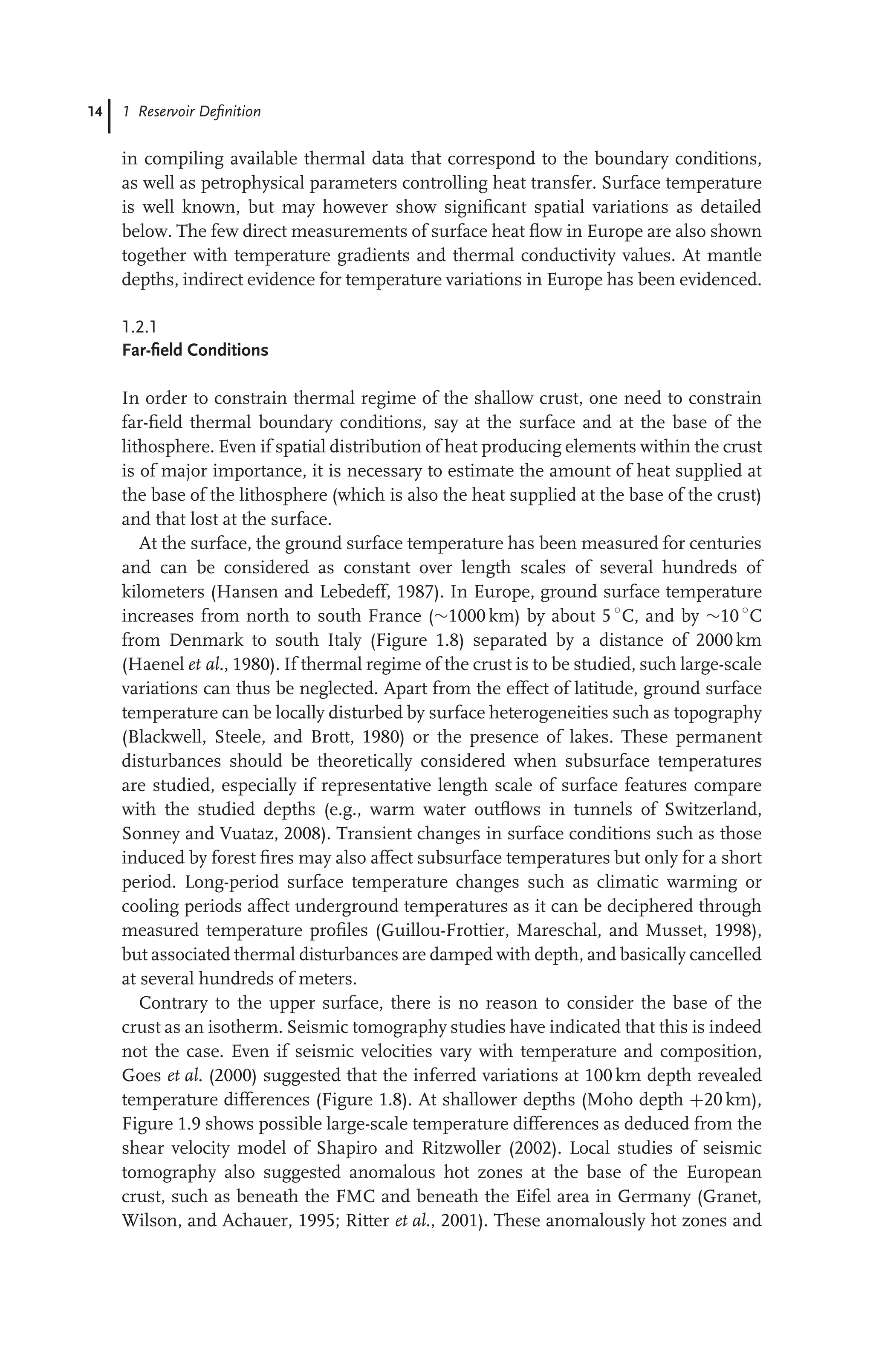
An example of the effect of thermal conductivity anisotropy on thermal field is
illustrated in Figure 1.7, where the Paris basin is modeled according to Demongodin
et al. study (1991)). Anisotropy ratio is increased with depth and thermal boundary
conditions enable to reproduce measured surface heat flow values. Figure 1.8b
shows horizontal temperature profiles at 1500 m depth, with and without anisotropy
effect. When anisotropy is accounted for, heat accumulates more efficiently within
the basin and a 20 ◦
C difference with the isotropic case is reached at basin
boundaries. Obviously, the importance of the anomaly critically depends on thermal
conductivity values and anisotropy ratios. Measurements on representative core
samples, and scaling with in situ conditions are thus of major importance when
thermal modeling of a sedimentary basin is performed (Gallagher et al., 1997).
80
70
60
50
0 0.5 1 1.5 2 2.5 3 3.5 4 4.5
Horizontal distance (×105
m)
T
(°C)
6 km
400 km
No anisotropy
With anisotropy
Depth = 1500 m
1500 m
3.1– 2.9
2.6 –1.8
2.3 –1.5
3.1 – 2.0
3.0
Vertical exageraion ×20
(a)
(b)
Figure 1.7 (a) Chosen model for the Paris
basin (after Demongodin et al., 1991),
with thermal conductivity values indicated
as follows: ‘‘horizontal component–vertical
component.’’ When anisotropy is not
accounted for, the first value is considered
as homogeneous. (b) Horizontal temperature
profiles at 1500 m depth across the basin
(see text).
1.1.6
Fluid Circulation and Associated Thermal Anomalies
In previous sections, heat transfer was described by pure conduction, where no
heat transfer by fluid motion could occur. However, shallow geological systems
are sometimes characterized by sufficiently porous layers (sedimentary units) or
1.2 Heat Flow and Deep Temperatures in Europe 13
highly permeable areas (fault zones) in which crustal fluids may freely circulate.
Depending on fluid velocity, permeability, or thickness of the porous layer, heat
from several kilometers depth may be entrained by fluid circulation and thus create
temperature anomalies.
Several studies have demonstrated the possibility to detect fluid motion by
temperature measurements within boreholes (Drury, Jessop, and Lewis, 1984;
Pribnow and Schellschmidt, 2000). Small-scale water flows through a fracture
crossing the borehole may disturb locally the measured geotherm by a few degrees
centigrade (Vasseur et al., 1991), and large-scale fluid circulation (convective flows)
may lead to cooling or warming effects exceeding tens of degrees centigrade (Lopez
and Smith, 1995; Bächler, Kohl, and Rybach, 2003; Wisian and Blackwell, 2004). In
some cases, the measured temperature anomalies cannot be explained by purely
conductive processes and one must account for free convection in highly permeable
fault zones (Rühaak, 2009; Garibaldi et al., 2010).
1.1.7
Summary
Crustal temperatures are controlled by thermal boundary conditions and thermal
properties of rocks. In the pure conductive regime, knowledge of mantle heat flow
and crustal heat production enables to determine a probable averaged geotherm,
but the natural heterogeneity of crustal composition may lead to local variations
reaching several tens of degrees centigrade at a few kilometers depth. When
available thermal data are used to infer deep temperatures (as it is the case in the
next section), similar uncertainties can be assigned to extrapolated data.
Despite the fact that crustal temperatures are not easy to estimate, it is shown
in Section 1.1 that models of geothermal reservoirs depend on several other
parameters, which may be less constrained than thermal properties. In particular,
the presence of fluids, which is important in the development of geothermal
energy, may completely distort temperature field as soon as rock permeability
is high enough (Manning and Ingebritsen, 1999). Within sedimentary basins,
permeability can vary by approximately four orders of magnitude, thus allowing
or preventing fluid circulation. The detailed knowledge of temperature field in an
area is probably not sufficient to characterize a geothermal reservoir.
Before defining the concept of geothermal reservoir, heat flow data from Europe
are reviewed and presented. The objective of this second section is to illustrate
how surface heat flow and deep temperatures are not necessarily correlated, and
how significant errors in deep temperature estimates can be made when shallow
measurements are extrapolated at depth.
1.2
Heat Flow and Deep Temperatures in Europe
Independent of numerical modeling of heat transfer within geological systems,
the best way to search for thermal anomalies in the shallow crust consists first
14 1 Reservoir Definition
in compiling available thermal data that correspond to the boundary conditions,
as well as petrophysical parameters controlling heat transfer. Surface temperature
is well known, but may however show significant spatial variations as detailed
below. The few direct measurements of surface heat flow in Europe are also shown
together with temperature gradients and thermal conductivity values. At mantle
depths, indirect evidence for temperature variations in Europe has been evidenced.
1.2.1
Far-field Conditions
In order to constrain thermal regime of the shallow crust, one need to constrain
far-field thermal boundary conditions, say at the surface and at the base of the
lithosphere. Even if spatial distribution of heat producing elements within the crust
is of major importance, it is necessary to estimate the amount of heat supplied at
the base of the lithosphere (which is also the heat supplied at the base of the crust)
and that lost at the surface.
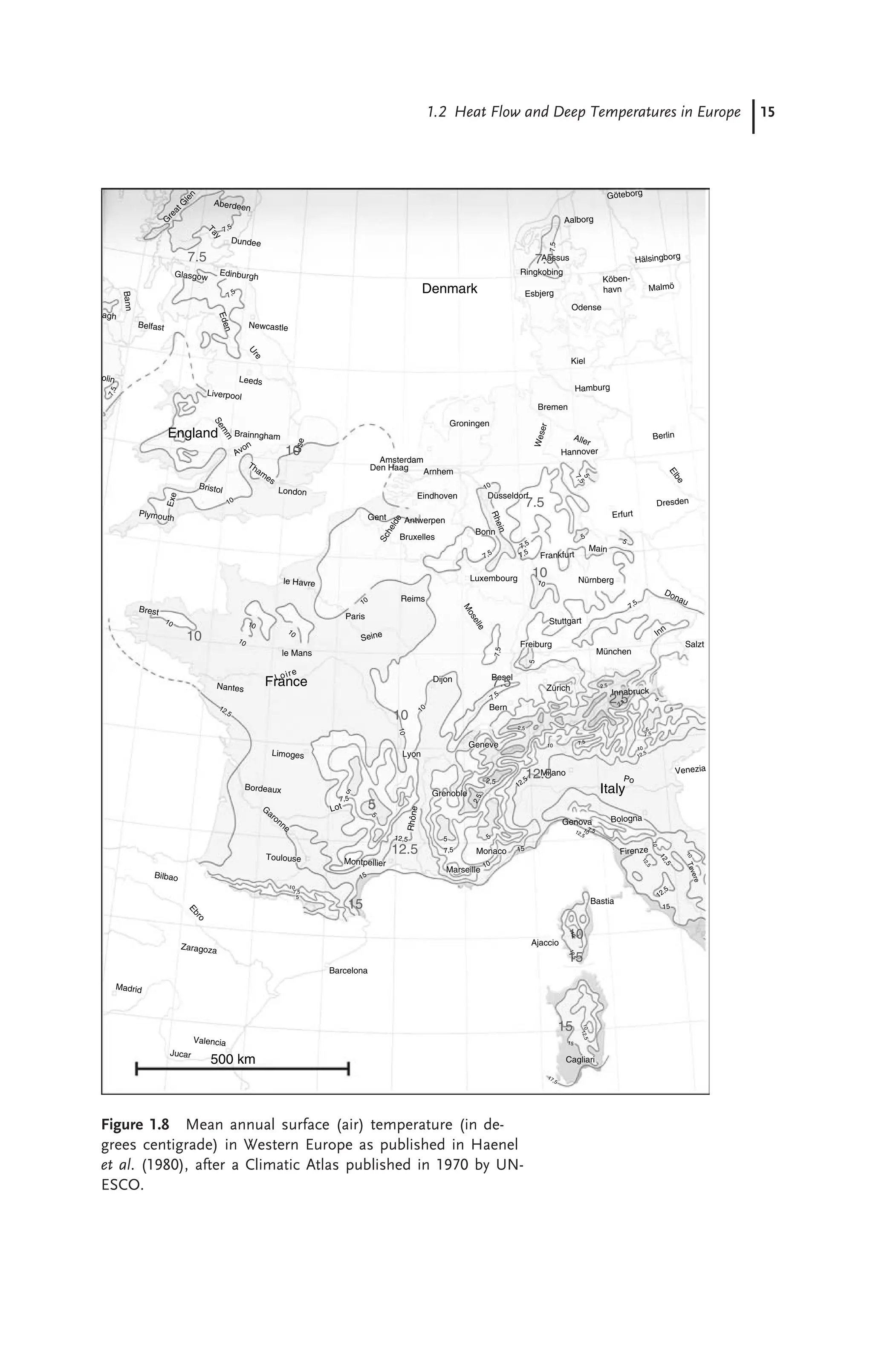
At the surface, the ground surface temperature has been measured for centuries
and can be considered as constant over length scales of several hundreds of
kilometers (Hansen and Lebedeff, 1987). In Europe, ground surface temperature
increases from north to south France (∼1000 km) by about 5 ◦
C, and by ∼10 ◦
C
from Denmark to south Italy (Figure 1.8) separated by a distance of 2000 km
(Haenel et al., 1980). If thermal regime of the crust is to be studied, such large-scale
variations can thus be neglected. Apart from the effect of latitude, ground surface
temperature can be locally disturbed by surface heterogeneities such as topography
(Blackwell, Steele, and Brott, 1980) or the presence of lakes. These permanent
disturbances should be theoretically considered when subsurface temperatures
are studied, especially if representative length scale of surface features compare
with the studied depths (e.g., warm water outflows in tunnels of Switzerland,
Sonney and Vuataz, 2008). Transient changes in surface conditions such as those
induced by forest fires may also affect subsurface temperatures but only for a short
period. Long-period surface temperature changes such as climatic warming or
cooling periods affect underground temperatures as it can be deciphered through
measured temperature profiles (Guillou-Frottier, Mareschal, and Musset, 1998),
but associated thermal disturbances are damped with depth, and basically cancelled
at several hundreds of meters.
Contrary to the upper surface, there is no reason to consider the base of the
crust as an isotherm. Seismic tomography studies have indicated that this is indeed
not the case. Even if seismic velocities vary with temperature and composition,
Goes et al. (2000) suggested that the inferred variations at 100 km depth revealed
temperature differences (Figure 1.8). At shallower depths (Moho depth +20 km),
Figure 1.9 shows possible large-scale temperature differences as deduced from the
shear velocity model of Shapiro and Ritzwoller (2002). Local studies of seismic
tomography also suggested anomalous hot zones at the base of the European
crust, such as beneath the FMC and beneath the Eifel area in Germany (Granet,
Wilson, and Achauer, 1995; Ritter et al., 2001). These anomalously hot zones and
1.2 Heat Flow and Deep Temperatures in Europe 15
Milano
U
s
e
Aassus
7.5
10
10
10
5
12.5
10
15
15
10
England
Denmark
France
Italy
500 km
Dundee
Edinburgh
Newcastle
Glasgow
Belfast
E
d
e
n
agh
Ba
nn
G
r
e
a
t
G
l
e
n
Aberdeen
T
a
y
7,5
7,5
7
,5
olin
U
r
e
Leeds
Liverpool
Avon
S
e
m
m
Brainngham
Bristol
E
x
e
Plymouth
Thames
London
Brest
Nantes
le Havre
le Mans
Loire
12,5
Limoges
Bordeaux
G
aronne
Toulouse
Bilbao
E
b
r
o
Zaragoza
Madrid
Valencia
Jucar
Barcelona
10
7,5
5
15
12,5
Montpellier
5
7,5
7,5
Lot
5
5
Grenoble
R
hô
ne
Lyon
1
0
10
Dijon
Seine
Paris
Reims
Bruxelles
Antwerpen
Eindhoven
Arnhem
Amsterdam
Den Haag
Groningen
Gent
S
c
h
e
l
d
e
Bonn
Düsseldorf
Nürnberg
R
h
e
in
Luxembourg
Frankfurt
Main
Erfurt
Dresden
E
l
b
e
Berlin
Aller
Hannover
Bremen
Hamburg
Kiel
W
e
s
e
r
Esbjerg
Odense
Köben-
havn Malmö
Göteborg
Hälsingborg
Aalborg
Ringkobing
7,5
Donau
Inn
München
Stuttgart
Freiburg
M
o
s
e
l
l
e
Besel
Bern
Geneve
10
10
10
10
Marseille
Monaco
10
15
5
2
,5
2,5
12,5
1
2
,5
1
2
,5
1
0
1
2
,5
10
15
17,5
15
12,5
1
2
,
5
10
1
0
107,5
12,5
10
7,5
7,5
7,5
7,5
7,5
10
10
7,5
7
,
5
5
5 5
7,5
5
10
7,5
2,5
10
2,5
2,3
5
5
5
12,5
Genova Bologna
Firenze
Bastia
T
e
v
e
re
Cagliari
Ajaccio
Venezia
Po
Innabruck
Zürich
10
Salzt
12.5
7.5
15
2.5
7.5
7.5
Figure 1.8 Mean annual surface (air) temperature (in de-
grees centigrade) in Western Europe as published in Haenel
et al. (1980), after a Climatic Atlas published in 1970 by UN-
ESCO.
16 1 Reservoir Definition
−9.0−5.4−4.5−3.6−2.7−1.8−0.9 0.0 0.7 1.4 2.1 2.8 3.5 4.2 7.0
−9.0−5.4−4.5−3.6−2.7−1.8−0.9 0.0 0.7 1.4 2.1 2.8 3.5 4.2 7.0
50°
40°
50°
40°
350° 0° 10° 20°
0 500 1000 1500
Temperature (°C)
P
S
Depth 100 km
60°N
50°N
40°N
30°N
60°N
50°N
40°N
30°N
20°W
20°W
0° 20°E
0° 20°E
SRT - Moho+20 km
SDT - Moho+20 km
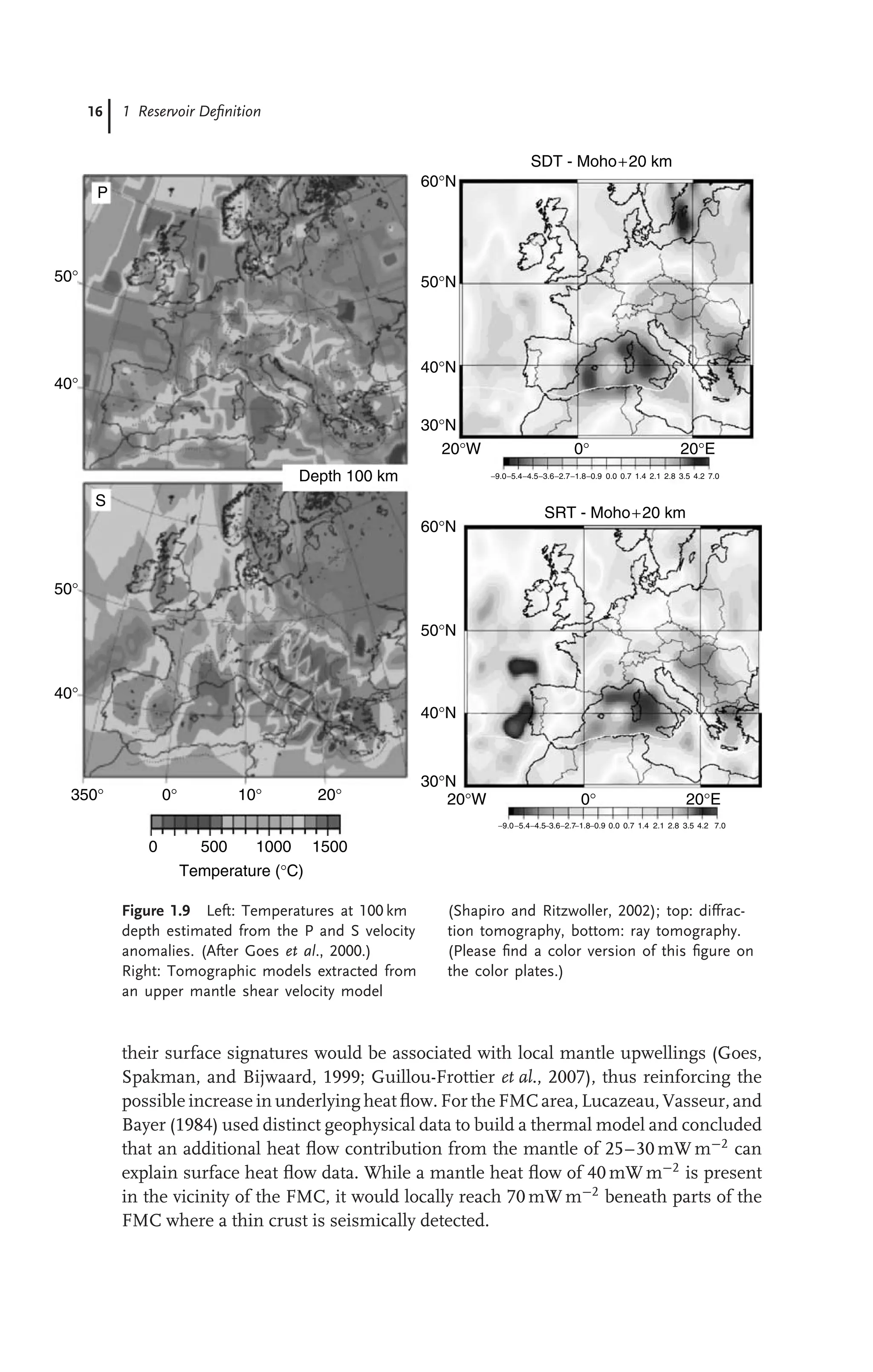
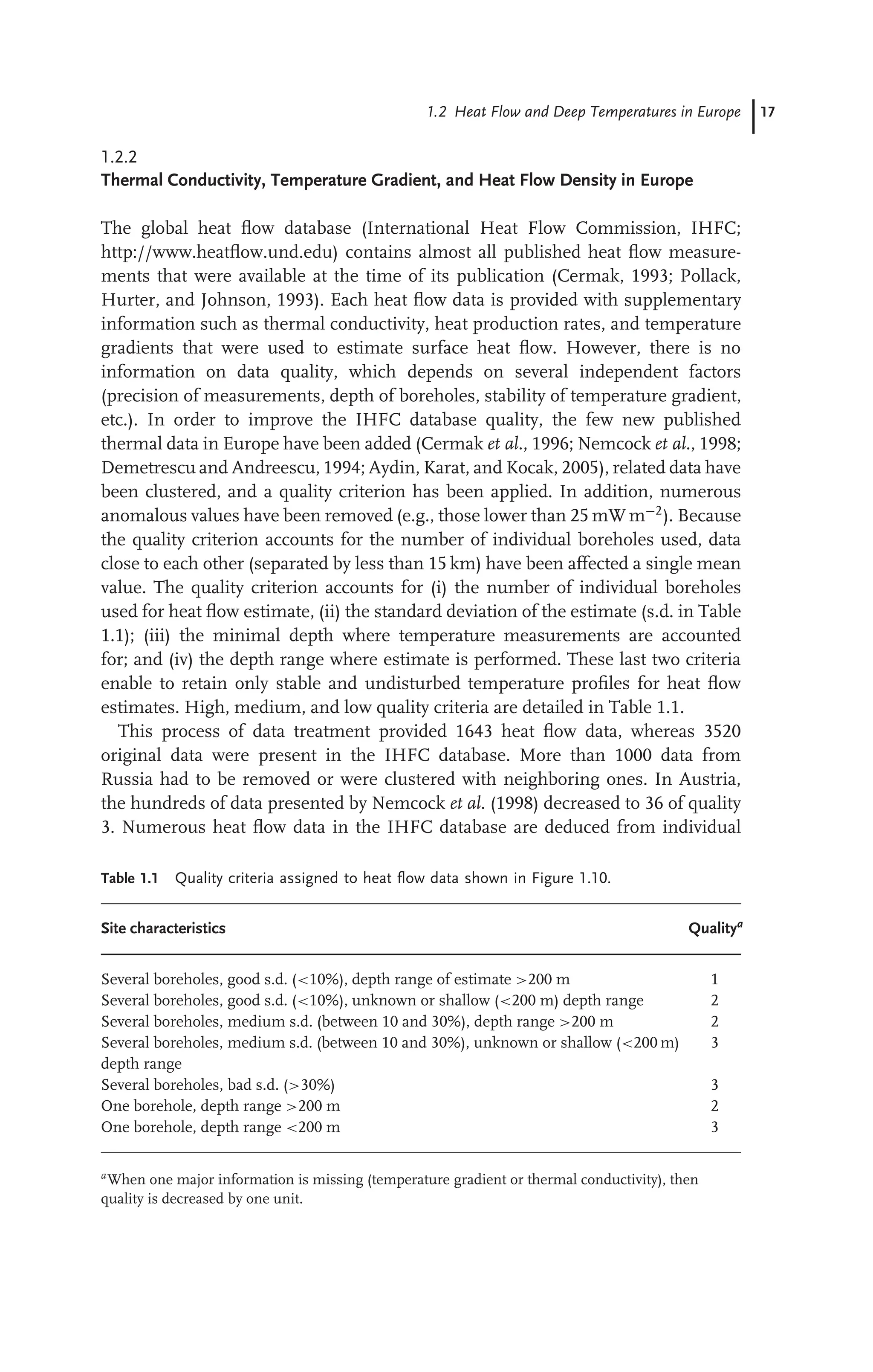
Figure 1.9 Left: Temperatures at 100 km
depth estimated from the P and S velocity
anomalies. (After Goes et al., 2000.)
Right: Tomographic models extracted from
an upper mantle shear velocity model
(Shapiro and Ritzwoller, 2002); top: diffrac-
tion tomography, bottom: ray tomography.
(Please find a color version of this figure on
the color plates.)
their surface signatures would be associated with local mantle upwellings (Goes,
Spakman, and Bijwaard, 1999; Guillou-Frottier et al., 2007), thus reinforcing the
possible increase in underlying heat flow. For the FMC area, Lucazeau, Vasseur, and
Bayer (1984) used distinct geophysical data to build a thermal model and concluded
that an additional heat flow contribution from the mantle of 25–30 mW m−2
can
explain surface heat flow data. While a mantle heat flow of 40 mW m−2
is present
in the vicinity of the FMC, it would locally reach 70 mW m−2
beneath parts of the
FMC where a thin crust is seismically detected.
1.2 Heat Flow and Deep Temperatures in Europe 17
1.2.2
Thermal Conductivity, Temperature Gradient, and Heat Flow Density in Europe
The global heat flow database (International Heat Flow Commission, IHFC;
http://www.heatflow.und.edu) contains almost all published heat flow measure-
ments that were available at the time of its publication (Cermak, 1993; Pollack,
Hurter, and Johnson, 1993). Each heat flow data is provided with supplementary
information such as thermal conductivity, heat production rates, and temperature
gradients that were used to estimate surface heat flow. However, there is no
information on data quality, which depends on several independent factors
(precision of measurements, depth of boreholes, stability of temperature gradient,
etc.). In order to improve the IHFC database quality, the few new published
thermal data in Europe have been added (Cermak et al., 1996; Nemcock et al., 1998;
Demetrescu and Andreescu, 1994; Aydin, Karat, and Kocak, 2005), related data have
been clustered, and a quality criterion has been applied. In addition, numerous
anomalous values have been removed (e.g., those lower than 25 mW m−2
). Because
the quality criterion accounts for the number of individual boreholes used, data
close to each other (separated by less than 15 km) have been affected a single mean
value. The quality criterion accounts for (i) the number of individual boreholes
used for heat flow estimate, (ii) the standard deviation of the estimate (s.d. in Table
1.1); (iii) the minimal depth where temperature measurements are accounted
for; and (iv) the depth range where estimate is performed. These last two criteria
enable to retain only stable and undisturbed temperature profiles for heat flow
estimates. High, medium, and low quality criteria are detailed in Table 1.1.
This process of data treatment provided 1643 heat flow data, whereas 3520
original data were present in the IHFC database. More than 1000 data from
Russia had to be removed or were clustered with neighboring ones. In Austria,
the hundreds of data presented by Nemcock et al. (1998) decreased to 36 of quality
3. Numerous heat flow data in the IHFC database are deduced from individual
Table 1.1 Quality criteria assigned to heat flow data shown in Figure 1.10.
Site characteristics Qualitya
Several boreholes, good s.d. (10%), depth range of estimate 200 m 1
Several boreholes, good s.d. (10%), unknown or shallow (200 m) depth range 2
Several boreholes, medium s.d. (between 10 and 30%), depth range 200 m 2
Several boreholes, medium s.d. (between 10 and 30%), unknown or shallow (200 m)
depth range
3
Several boreholes, bad s.d. (30%) 3
One borehole, depth range 200 m 2
One borehole, depth range 200 m 3
aWhen one major information is missing (temperature gradient or thermal conductivity), then
quality is decreased by one unit.
18 1 Reservoir Definition
measurements where temperature gradient or thermal conductivity is not indicated,
thus involving removal of the data. At last, a total of 257 data of high quality, 869 of
medium quality, and 517 of low quality were obtained. Figure 1.10 illustrates the
newly obtained heat flow map together with thermal conductivity and temperature
gradient values.
Figure 1.10 does not present any contours of thermal data, which are simply
gathered according to their range of values. Indeed, as previously indicated,
there are many reasons to explain short-scale variations in temperature gradient
and heat flow data. It is thus somehow dangerous to assign a given thermal
regime in a geological area since even lithological changes may lead to significant
local variations. In addition, one can see that thermal conductivity data appear
surprisingly constant in some areas (Ukraine, Belorussia), revealing that the same
value was probably assumed for tens of boreholes. These maps also indicate that
heat flow values are sometimes estimated with no thermal conductivity data (e.g.,
Spain).
1.2.3
Calculating Extrapolated Temperature at Depth
Temperature measurements in mining or petroleum boreholes were used in the last
decades to construct temperature maps at different depth levels (Haenel et al., 1980;
Hurtig et al., 1992). Bottomhole temperature (BHT) measurements in petroleum
boreholes are not necessarily representative of the equilibrium temperatures, and
some corrections are needed (Goutorbe, Lucazeau, and Bonneville, 2007). However,
because of the lack of information, a statistical method is often used to infer
possible equilibrium temperatures. When temporal history of BHT measurements
is well documented, appropriate corrections for transient disturbances can yield
temperature estimates at a few kilometers depth with uncertainties of ±10 ◦
C
(Bonté et al., 2010).
In the last decade, the extrapolation of European temperatures to 5 km depth
was performed by petroleum industry using such BHT measurements (which
are unavailable), and where any uncertainty propagates and increases with depth
through a linear extrapolation. This map was reviewed and analyzed by Gen-
ter et al. (2003). Using the deepest equilibrium temperature gradients inferred
from measurements in mining boreholes (present in the IHFC database) and
from recent studies (Fernàndez et al., 1998), the authors performed a critical
analysis of the temperature map presented by Hurtig et al. (1992), which was
then modified by the ‘‘heat mining Economic Interest European Group’’ but
only available as an unpublished map. Results of color validation are shown in
Figure 1.11. It must be emphasized that the objective of this work was simply
to use available thermal data to check the interest of some areas which was
deduced from confidential data. When one color code is not confirmed, a tem-
perature difference greater than 20 ◦
C is obtained. When it is partly confirmed,
it means that extrapolations are coherent for only a restricted area. The analysis
1.2 Heat Flow and Deep Temperatures in Europe 19
Gradient (°C/km)
 10
 50
10 - 20
20 - 30
30 - 40
40 - 50
Data quality
1 (good)
2 (medium)
3 (low)
Heat_Flow
 40
40 - 55
55 - 70
70 - 85
85 - 100
 100
Conductivity
(w/m/K)
 1.3
 3.3
1.3 - 1.8
1.8 - 2.3
2.3 - 2.8
2.8 - 3.3
(a)
(b)
(c)
Figure 1.10 Thermal conductivity (a), temperature gradi-
ent (b), and heat flow data (c) as compiled from this study.
Each color is assigned a range of values, and for heat flow
data, a quality criterion is added (see text). (Please find a
color version of this figure on the color plates.)
20 1 Reservoir Definition
Color code
confirmed
Color code
corrected or
inferred
Color code
partly confirmed
Color code
not confirmed or
zone of low interest
Zone investigated
with asociated
color code
-60 °C
-240° C
60-80 °C
60-100° C
100-120° C
120-140° C
140-160° C
160-180° C
180-200° C
200-240° C
Figure 1.11 Map of temperature at 5 km depth, as inferred
from unavailable (confidential) BHT measurements (Hurtig
et al., 1992; EIEG, 2000) and critical analysis by Genter et al.
(2003) from published thermal data (see text). (Please find a
color version of this figure on the color plates.)
was not exhaustive but it shows that differences of several tens of degrees centi-
grade at 5 km depth may be easily reached when two extrapolation methods are
investigated.
1.2.4
Summary
These different data sets were used for a predictive survey to evaluate potential zones
of high heat flow where enhanced geothermal systems could be experimented. This
approach takes only the thermal aspect of the geothermal systems into account
without any geological a priori. At the scale of Europe (Figure 1.11), it reveals large
wavelength positive anomalies in Italy, Central-Eastern Europe, and Turkey, which
correspond to well-knowngeothermalsystems located inextensionalsettings within
active geodynamic systems and to which Iceland could be associated although it is
not represented on the map.
In Italy, since Miocene, the Northern Apennine fold belt has been progressively
thinned, heated, and intruded by mafic magmas. In Tuscany, this evolution is
1.3 Conceptual Models of Geothermal Reservoirs 21
the source of a granitic complex that has been emplaced between 3.8 and 1.3
Ma. A long-lived hydrothermal activity is recorded in this area by both fossil
(Plio-Quaternary ore deposits) and active (Larderello geothermal field) systems
(Dini et al., 2004). In Central-Eastern Europe, the Pannonian basin is characterized
since Middle Miocene by an upwelling of the asthenosphere and thinning of the
lithosphere, responsible for coeval rifting in the basin and compression in the
flanking Carpathian and Dinaric belts (Huismans, Podladchikov, and Cloetingh,
2001). In Turkey, the collision between the Arabian and Eurasion plates has
induced the westward escape of the Anatolian block, which is accommodated by
the right-lateral movement of the Anatolian fault network. Much of the geothermal
activity appears to be focused along kinematically linked normal and strike-slip
fault systems most commonly within E-W-trending grabens (Sengör, Gorur, and
Saroglu, 1985; Ercan, 2002).
Besides these active tectonic zones, other positive anomalies are mainly dis-
tributed along a series of intracontinental grabens that cut the western European
platform, corresponding to the west European rift system (Dèzes, Schmid, and
Ziegler, 2004). These rift structures, the upper Rhine graben, the Limagne system,
the Rhône valley, a part of Provence, the Catalonia, and the Eger grabens, were
created in the Oligocene as a result of the thinning of the continental crust. Among
these structures, the Rhine graben has been intensively studied over the last 10
years for its potential. It is about 300 km long, with an average width of 40 km,
limited by large-scale normal faults. The post-Paleozoic sediments of the western
European platform have overlain the Hercynian basement, which is made of gran-
ite, granodiorite, or other related basement rocks (Edel and Fluck, 1989). This area
– characterized by a thin continental crust and a Moho at 25 km depth – shows
a Tertiary volcanism that occurred in the form of isolated volcanoes of alkaline
composition related to a mantle magmatic activity (Wenzel and Brun, 1991).
This preliminary analysis shows that the thermal aspect of the geothermal
systems is directlylinked and controlled bythe past and present geodynamiccontext.
This framework provides a first-order constrain on the location of favorable and
unfavorable geodynamic sites for the exploration of potential geothermal reservoirs.
In order to define conceptual models, these different contexts will be reviewed and
complemented by an evaluation of the main properties of the potential reservoir in
terms of porosity, permeability, fluid flow with respect to the stress field.
1.3
Conceptual Models of Geothermal Reservoirs
From a geological point of view, geothermal reservoirs are heated and pressurized
water and/or vapor accumulations from which heat can be extracted from the
underground to the surface. From a technical, environmental, and economic
approach, the geothermal reservoir can be defined by the cost-efficiency of this
extraction depending on the temperature, depth and size of the accumulation, the
fluid flow, and the industrial process under which it will be processed. Although
22 1 Reservoir Definition
this approach is highly dependent on economical indicators that are not linked
to geology (price of energy, incentives politics for access to renewable energies,
etc.), reference to present-day parameters will be provided for the different types of
reservoirs.
1.3.1
The Geology of Potential Heat Sources
To get heat is the first condition for defining a geothermal reservoir. How can we
explore potential heat sources? It has been shown that thermal boundary conditions
(the mean annual surface temperature, temperatures at depth estimated from the
P and S velocity anomalies) and thermal properties of the main lithologies and
structure at depth enable the first calculation of extrapolated temperature at depth
and thus the delineation of potential zones of high-thermal gradient.
Such zones can also be determined through a geological empiric approach. Heat
is transferred within the crust through two mechanisms:
• The main active and permanent phenomenon at the scale of the continental
crust is the conduction of heat. In conduction, heat moves through the material
from a hotter to a cooler zone. The feasibility and intensity of such transfer is
directly linked to the thermal properties of the mineral constituting the rock that
is evaluated as the thermal conductivity. As continental crust is heterogeneous
and a result of the superposition of layers with different conductivity properties
(stacked allochthonous units over autochthonous cover sequence or basement in
orogenic zones, sedimentary basins over basement within intracratonic zones,
etc.), conduction will not be homogenous at the scale of the whole continental
crust. Highly conductive zones such as fractured granites will be explored with
interest while refractory units such as mafic units will be considered as potential
thermal insulator.
• Inconvection,heat is transported bythe movement of hot material.The ascent and
emplacement of a granitic body or of a volcanic dyke network is a typical example
of convection where heat is transferred from deep source and then dissipated by
conduction in the host rocks at shallow level. Contact metamorphism is a direct
expression of the elevation of temperature with respect to extreme geothermal
gradients reaching 500 ◦
C for granites emplaced at around 5 km depth. Globally,
convection leads to anisotropic diffusion of heat; the movement of hot material
being, most of the time, controlled by the permeability system of the continental
crust, mainly fracture network.
The past or present geodynamic context gives a first-order constrain on the loca-
tion of favorable and unfavorable geodynamic sites for high geothermal gradients.
Conduction is directly controlled by the thickness, heterogeneity, and composition
of the continental crust, whereas convection processes are mainly located within
active zones of magmatism and metamorphism.
Rift in accretionary systems are characterized by thinned crust and lithosphere, in
relation with asthenospheric doming and upwelling. This definition covers both
1.3 Conceptual Models of Geothermal Reservoirs 23
mid-oceanic ridges and back arc extensional systems, immerged or emerged, and
to less extent pulls part systems developed along strike-slip faults. The geological
setting of such rift zones is then the most favorable context because of the high
mantle heat flow (Figure 1.2), the shallow depth of the mantle crust boundary,
and the periodic magmatic activity (emplacement of stocks, sills, and dykes)
and volcanic flow of hot mafic lavas. Moreover, convection of heat is enhanced
by fluid – rock interaction – intense fracturing related to extensional tectonics
favoring exchange between fluids of superficial and deep origin in the vicinity of
magma chambers. Numerical modeling of rifting processes illustrates the shift of
the isotherms toward surface depending on rifting velocities, presence of strain
softening, and time (Huismans and Beaumont, (2002), Figure 1.12).
Iceland is the best case history for illustrating this first-order parameter for
location of high geothermal gradients (Figure 1.13). A large active volcanic zone,
corresponding to the mid-oceanic ridge, is running SW–NE, and displays various
heat sources (dikes and magma chambers). Seawater, meteoric water, and volcanic
fluids are mixed in pressurized water-dominated reservoirs, often associated with
young tectonic fractures, carrying heat from several kilometers depth toward
the surface (Flóvenz and Saemundsson, 1993; Arnórsson, 1995). The regional
temperature gradient varies from 50 to 150 ◦
C km−1
and the highest values are
found close to the volcanic rift zone.
Active margins related to subduction are sites of intense convection with respect to
magmatic activity. A computed model at the scale of the lithosphere (Figure 1.6)
shows that the subduction of cold lithosphere is accompanied by a raise of hot
lithosphere just above the main plate boundary. Thus, large crustal zones have
temperatures greater than 300 ◦
C at very shallow depth and undergo melting con-
ditions at few kilometers depth. Generated calc-alkaline magmatism is responsible
for the intrusion of voluminous granitic suites at shallow depth and related vol-
canism of intermediate to felsitic composition. This convective phenomenon at the
scale of the lithosphere is also responsible of the concentration of U, K, and Th
radioelements in the upper crust, which will contribute to the thermal budget of
the continents over a long period.
Active margin settings are zones with almost infinite source of fluids from
meteoric origin, as generated high relief is bordered by oceanic areas, and from
deep source, in relation to magmatic and metamorphic processes.
Presently, New Zealand and Philippines are the zones where the exploita-
tion of geothermal energy is the most advanced within these subduction-related
contexts.
Collision zones and convergent plate boundaries may also be sites of high geothermal
gradients. Collision is responsible for the development of large thrust systems that
lead to a crustal thickening of several tens of kilometers. Zones situated at mid-
crustal depth within the underthrust slab will then be buried and will undergo
an immediate increase in pressure and a progressive increase in temperature.
As discussed previously (Figure 1.6), the equilibrium thermal field is reached
several ten million years after the thrusting event has ceased. This evolution is
24 1 Reservoir Definition
550 °C
1000 °C
550 °C
1000 °C
550 °C
1000 °C
1200 °C
1200 °C
1200 °C
Time, t = 1.3 Ma, Dx = 110 km
Time, t = 41 Ma, Dx = 135 km
Time, t = 67 Ma, Dx = 211 km
Initial Moho depth = 35 km
Initial Moho temperature = 550 °C
0.3 cm yr−1
0.3 cm yr−1
30 cm yr−1
(a)
(b)
(c)
Figure 1.12 Uplifted isotherms (thick grey
line) created by lithospheric extension, af-
ter Huismans and Beaumont, 2002. Crust
and lithosphere are rheologically stratified.
Lateral boundary conditions reproducing ex-
tension correspond to the imposed rifting
velocities given in centimeters per year. (a)
Case of no strain softening, after 211 km of
extension; (b) asymmetric extension obtained
with the introduction of strain softening and
41 Myr after rifting initiation; and (c) case of
a fast rifting velocity, involving a large zone
(∼40 km) of hot middle crust.
1.3 Conceptual Models of Geothermal Reservoirs 25
Atlantic
ocean
M
i
d
-
A
t
l
a
n
t
i
c
r
i
d
g
e
M
id
-A
tla
n
tic
North
American
Plate
Eurasian
Plate
Ri
dg
e
Thingvellir
Reykjanik
Iceland
Kraffa
Hengill
Geothermal
map
of
Iceland
Figure
1.13
Geothermal
map
of
Iceland.
The
main
geothermal
fields
are
located
within
prehistoric
and
historic
lava
centers
and
interglacial
lavas,
within
the
active
rift
zone.
26 1 Reservoir Definition
well documented in the European Variscan belt where high paleogradients de-
termined from mineral assemblages show that a regional geothermal system,
responsible for many ore deposits (Au, U, etc.), has been generated during the
late orogenic evolution of this collision belt (Bouchot et al., 2005). The melting
of large mid-crustal zones has been enhanced by the fertility of the crust rich
in radioelements and hydrated minerals generating large volume of migmatites
and granites over a long period, from 360 to 300 Ma (Ledru et al., 2001). This
situation reflects probably what is occurring within the Tibet Plateau – crustal
thickening resulting from the collision between Asia and India being responsible
for the development of migmatitic layers at depth. Taking this time delay related
to the progressive re-equilibration of the isotherms in the thickened crust, such
collision plate boundaries can be considered as favorable zones for high geother-
mal gradients. Moreover, like in the case of active margins, the concentration of
radioelement-rich geological units (differentiated granites, uranium-bearing sed-
imentary basins, volcanic ash flows, overthrust Precambrian radiogenic granites,
etc.) in the upper crust contributes to the thermal budget of the continents over
several hundreds of million years.
The location of high geothermal gradients in the vicinity of transform margins
and of thermal anomalies along continental-scale strike-slip faults can be related
to thickening processes inherited from an early stage of collision, or linked to
zones of pull-apart extension (that can be assimilated to the general case of rift
systems), or a combination of both processes. In the case of the San Andreas Fault
and its satellites in Nevada, it seems that the dominant feature for exploration
at the regional scale is the presence of structural discontinuities bordering such
pull-apart basins (Figure 1.14, Faulds, Henry, and Hinz, 2005; Faulds et al.,
2006).
Within plates, out of these plate boundaries, the lithosphere is considered as
stabilized and the main mechanism of heat transfer is conduction. Depending on
its composition (i.e., conductivity of its main lithologies) and thickness, geothermal
gradients vary between 15 and 25 ◦
C km−1
. The main source of thermal anomalies
is the presence of highly radiogenic lithologies such as alkaline and aluminous
granites, uranium-bearing sedimentary basins, or highly conductive materials
(massive sulfide). The radioactive decay is the cause of heat anomalies in the
vicinity and at the apex of these radiogenic bodies, generally of small to medium
amplitude and wavelength (Figure 1.5). This is the model on which exploration
of deep geothermal resources is done presently in the Southern Australian craton
(McLaren et al., 2002; Hillis et al., 2004). Highly radiogenic Precambrian granites
(∼16 mW m−3
), outcropping in large ranges and found laterally at the base of
a Paleozoic sedimentary basins resting unconformably over this basement, are
considered as the source of local thermal anomalies that are superposed to a regional
anomaly know as the south Australian heat flow anomaly (SAHFA) (McLaren et al.,
2003; Chopra and Holgate, 2005). Paralana hot springs are observed along the main
faulted contact between the basement and cover sequences and uranium-bearing
sediments deposited during the erosion of the radiogenic Precambrian granites are
presently exploited by in situ recovery (Berveley mine). The company Petratherm
Other documents randomly have
different content
back
back
back
back
back
back
back
back
back
back
back
back
back
back
back
back
back
back
back
back
back
back
back
back
back
back
back
Welcome to our website – the perfect destination for book lovers and
knowledge seekers. We believe that every book holds a new world,
offering opportunities for learning, discovery, and personal growth.
That’s why we are dedicated to bringing you a diverse collection of
books, ranging from classic literature and specialized publications to
self-development guides and children's books.
More than just a book-buying platform, we strive to be a bridge
connecting you with timeless cultural and intellectual values. With an
elegant, user-friendly interface and a smart search system, you can
quickly find the books that best suit your interests. Additionally,
our special promotions and home delivery services help you save time
and fully enjoy the joy of reading.
Join us on a journey of knowledge exploration, passion nurturing, and
personal growth every day!
ebookbell.com

Geothermal Energy Systems Exploration Development And Utilization 1st Edition Ernst Huenges
  • 1.
    Geothermal Energy SystemsExploration Development And Utilization 1st Edition Ernst Huenges download https://ebookbell.com/product/geothermal-energy-systems- exploration-development-and-utilization-1st-edition-ernst- huenges-2526086 Explore and download more ebooks at ebookbell.com
  • 2.
    Here are somerecommended products that we believe you will be interested in. You can click the link to download. Geothermal Energy Systems Ibrahim Dincer Murat Ozturk https://ebookbell.com/product/geothermal-energy-systems-ibrahim- dincer-murat-ozturk-26081968 Renewable Energy Engineering Solar Wind Biomass Hydrogen And Geothermal Energy Systems 1st Edition Emmanuel D Rogdakis Irene P Koronaki https://ebookbell.com/product/renewable-energy-engineering-solar-wind- biomass-hydrogen-and-geothermal-energy-systems-1st-edition-emmanuel-d- rogdakis-irene-p-koronaki-51644366 The Future Of Geothermal Energy Impact Of Enhanced Geothermal Systems Egs On The United States In The 21st Century An Assessment Massachusetts Institute Of Technology https://ebookbell.com/product/the-future-of-geothermal-energy-impact- of-enhanced-geothermal-systems-egs-on-the-united-states-in-the-21st- century-an-assessment-massachusetts-institute-of-technology-1135494 Shallow Geothermal Systems Recommendations On Design Construction Operation And Monitoring Of The Geothermal Energy Study Group At The Specialist Hydrogeology Section Of The German Geological Society Fhdggv And The Engineering Geology Section Of T Deutsche Gesellschaft Fr Geotechnik Ev German Geotechnical Society https://ebookbell.com/product/shallow-geothermal-systems- recommendations-on-design-construction-operation-and-monitoring-of- the-geothermal-energy-study-group-at-the-specialist-hydrogeology- section-of-the-german-geological-society-fhdggv-and-the-engineering- geology-section-of-t-deutsche-gesellschaft-fr-geotechnik-ev-german- geotechnical-society-5700260
  • 3.
    Geothermal Systems AndEnergy Resources Turkey And Greece 1st Edition Alper Baba https://ebookbell.com/product/geothermal-systems-and-energy-resources- turkey-and-greece-1st-edition-alper-baba-4747862 Introduction To The Numerical Modeling Of Groundwater And Geothermal Systems Fundamentals Of Mass Energy And Solute Transport In Poroelastic Rocks 1st Jochen Bundschuh https://ebookbell.com/product/introduction-to-the-numerical-modeling- of-groundwater-and-geothermal-systems-fundamentals-of-mass-energy-and- solute-transport-in-poroelastic-rocks-1st-jochen-bundschuh-4421818 Geothermal Energy The Resource Under Our Feet The Resource Under Our Feet 1st Edition Charles T Malloy https://ebookbell.com/product/geothermal-energy-the-resource-under- our-feet-the-resource-under-our-feet-1st-edition-charles-t- malloy-51357788 Geothermal Energy An Alternative Resource For The 21st Century Harsh K Gupta https://ebookbell.com/product/geothermal-energy-an-alternative- resource-for-the-21st-century-harsh-k-gupta-2164174 Geothermal Energy From Theoretical Models To Exploration And Development 2nd Edition Ingrid Bucher Kurt Stober https://ebookbell.com/product/geothermal-energy-from-theoretical- models-to-exploration-and-development-2nd-edition-ingrid-bucher-kurt- stober-30972710
  • 7.
  • 8.
    Related Titles Cocks, F.H. Energy Demand and Climate Change Issues and Resolutions 267 pages with 30 figures 2009 Softcover ISBN: 978-3-527-32446-0 Wengenmayr, R., B .. uhrke, T. (eds.) Renewable Energy Sustainable Energy Concepts for the Future 120 pages 2008 Hardcover ISBN: 978-3-527-40804-7 Kruger, P. Alternative Energy Resources The Quest for Sustainable Energy 272 pages 2006 Hardcover ISBN: 978-0-471-77208-8 Kutz, M. (ed.) Mechanical Engineers’ Handbook, Energy and Power 1104 pages 2005 Hardcover ISBN: 978-0-471-71988-5
  • 9.
    Edited by ErnstHuenges Geothermal Energy Systems Exploration, Development, and Utilization
  • 10.
    The Editor Dr. ErnstHuenges GeoForschungsZentrum Potsdam Telegrafenberg 14473 Potsdam Germany All books published by Wiley-VCH are carefully produced. Nevertheless, authors, editors, and publisher do not warrant the information contained in these books, including this book, to be free of errors. Readers are advised to keep in mind that statements, data, illustrations, procedural details or other items may inadvertently be inaccurate. Library of Congress Card No.: applied for British Library Cataloguing-in-Publication Data A catalogue record for this book is available from the British Library. Bibliographic information published by the Deutsche Nationalbibliothek The Deutsche Nationalbibliothek lists this publication in the Deutsche Nationalbib- liografie; detailed bibliographic data are available on the Internet at http://dnb.d- nb.de.  2010 WILEY-VCH Verlag GmbH & Co. KGaA, Weinheim All rights reserved (including those of translation into other languages). No part of this book may be reproduced in any form – by photoprinting, microfilm, or any other means – nor transmitted or translated into a machine language without written permission from the publishers. Registered names, trademarks, etc. used in this book, even when not specifically marked as such, are not to be considered unprotected by law. Cover Design Adam Design, Weinheim Typesetting Laserwords Private Limited, Chennai, India Printing and Binding betz-druck GmbH, Darmstadt Printed in the Federal Republic of Germany Printed on acid-free paper ISBN: 978-3-527-40831-3
  • 11.
    V Contents Preface XV List ofContributors XIX 1 Reservoir Definition 1 Patrick Ledru and Laurent Guillou Frottier 1.1 Expressions of Earth’s Heat Sources 1 1.1.1 Introduction to Earth’s Heat and Geothermics 1 1.1.2 Cooling of the Core, Radiogenic Heat Production, and Mantle Cooling 2 1.1.3 Mantle Convection and Heat Loss beneath the Lithosphere 4 1.1.3.1 Mantle Heat Flow Variations 4 1.1.3.2 Subcontinental Thermal Boundary Condition 5 1.1.4 Fourier’ Law and Crustal Geotherms 6 1.1.5 Two-dimensional Effects of Crustal Heterogeneities on Temperature Profiles 8 1.1.5.1 Steady-state Heat Refraction 8 1.1.5.2 Transient Effects 10 1.1.5.3 Role of Anisotropy of Thermal Conductivity 10 1.1.6 Fluid Circulation and Associated Thermal Anomalies 12 1.1.7 Summary 13 1.2 Heat Flow and Deep Temperatures in Europe 13 1.2.1 Far-field Conditions 14 1.2.2 Thermal Conductivity, Temperature Gradient, and Heat Flow Density in Europe 17 1.2.3 Calculating Extrapolated Temperature at Depth 18 1.2.4 Summary 20 1.3 Conceptual Models of Geothermal Reservoirs 21 1.3.1 The Geology of Potential Heat Sources 22 1.3.2 Porosity, Permeability, and Fluid Flow in Relation to the Stress Field 27 1.3.3 Summary 30 References 32 Geothermal Energy Systems. Edited by Ernst Huenges Copyright  2010 WILEY-VCH Verlag GmbH & Co. KGaA, Weinheim ISBN: 978-3-527-40831-3
  • 12.
    VI Contents 2 ExplorationMethods 37 David Bruhn, Adele Manzella, François Vuataz, James Faulds, Inga Moeck, and Kemal Erbas 2.1 Introduction 37 2.2 Geological Characterization 39 2.3 Relevance of the Stress Field for EGS 44 2.4 Geophysics 52 2.4.1 Electrical Methods (DC, EM, MT) 53 2.4.1.1 Direct Current (DC) Methods 54 2.4.1.2 Electromagnetic Methods 55 2.4.1.3 The Magnetotelluric Method 55 2.4.1.4 Active Electromagnetic Methods 63 2.4.2 Seismic Methods 66 2.4.2.1 Active Seismic Sources 67 2.4.2.2 Seismic Anisotropy and Fractures 71 2.4.2.3 Passive Seismic Methods 73 2.4.3 Potential Methods 76 2.4.3.1 Gravity 76 2.4.3.2 Geomagnetics and Airborne Magnetic 78 2.4.4 Data Integration 80 2.4.4.1 Joint Inversion Procedures 81 2.5 Geochemistry 81 2.5.1 Introduction 81 2.5.2 Fluids and Minerals as Indicators of Deep Circulation and Reservoirs 83 2.5.3 Mud and Fluid Logging while Drilling 85 2.5.4 Hydrothermal Reactions 86 2.5.4.1 Boiling and Mixing 88 2.5.5 Chemical Characteristics of Fluids 91 2.5.5.1 Sodium–Chloride Waters 92 2.5.5.2 Acid–Sulfate Waters 92 2.5.5.3 Sodium–Bicarbonate Waters 93 2.5.5.4 Acid Chloride–Sulfate Waters 93 2.5.6 Isotopic Characteristics of Fluids 94 2.5.7 Estimation of Reservoir Temperature 97 2.5.7.1 Geothermometric Methods for Geothermal Waters 98 2.5.7.2 Silica Geothermometer 98 2.5.7.3 Ionic Solutes Geothermometers 99 2.5.7.4 Gas (Steam) Geothermometers 100 2.5.7.5 Isotope Geothermometers 100 2.5.8 Forecast of Corrosion and Scaling Processes 100 References 103 Further Reading 111
  • 13.
    Contents VII 3 Drillinginto Geothermal Reservoirs 113 Axel Sperber, Inga Moeck, and Wulf Brandt 3.1 Introduction 113 3.1.1 Geothermal Environments and General Tasks 114 3.2 Drilling Equipment and Techniques 115 3.2.1 Rigs and Their Basic Concepts 115 3.2.1.1 Hoisting System 115 3.2.1.2 Top Drive or Rotary Table 115 3.2.1.3 Mud Pumps 116 3.2.1.4 Solids Control Equipment 118 3.2.1.5 Blowout Preventer (BOP) 118 3.2.2 Drillstring 118 3.2.2.1 Bottomhole Assembly 118 3.2.2.2 Drillpipe 121 3.2.3 Directional Drilling 122 3.2.3.1 Downhole Motor (DHM) 122 3.2.3.2 Rotary Steerable Systems (RSS) 122 3.2.3.3 Downhole Measuring System (MWD) with Signal Transmission Unit (Pulser) 123 3.2.3.4 Surface Receiver to Receive and Decode the Pulser Signals 123 3.2.3.5 Special Computer Program to Evaluate Where the Bottom of the Hole Is at Survey Depth 123 3.2.4 Coring 125 3.3 Drilling Mud 125 3.3.1 Mud Types 126 3.3.1.1 Water-based Mud 126 3.3.1.2 Oil-based Mud 126 3.3.1.3 Foams 126 3.3.1.4 Air 126 3.3.2 The Importance of Mud Technology in Certain Geological Environments 127 3.3.2.1 Drilling through Plastic/Creeping Formations (Salt, Clay) 127 3.3.2.2 Formation Pressure and Formation Damage (Hydrostatic Head, ECD) 127 3.4 Casing and Cementation 128 3.4.1 Casing and Liner Concepts 129 3.4.2 Casing Materials 129 3.4.3 Pipe Centralization 131 3.4.4 Cementation 132 3.4.5 Cement Slurries, ECD 133 3.4.6 Influence of Temperature on Casing and Cement 136 3.5 Planning a Well 136 3.5.1 Geological Forecast 136 3.5.1.1 Target Definition 137 3.5.1.2 Pore Pressures/Fracture Pressure/Temperature 137
  • 14.
    VIII Contents 3.5.1.3 CriticalFormations/Fault Zones 138 3.5.1.4 Hydrocarbon Bearing Formations 138 3.5.1.5 Permeabilities 138 3.5.2 Well Design 139 3.5.2.1 Trajectory 139 3.5.2.2 Casing Setting Depths 139 3.5.2.3 Casing Sizes 139 3.5.2.4 Casing String Design 140 3.6 Drilling a Well 142 3.6.1 Contract Types and Influence on Project Organization 142 3.6.1.1 Turnkey Contract 142 3.6.1.2 Meter-contract 143 3.6.1.3 Time-based Contract 143 3.6.1.4 Incentive Contract 143 3.6.2 Site Preparation and Infrastructure 144 3.6.2.1 General 144 3.6.2.2 Excavating and Trenching 144 3.6.2.3 Environmental Impact (Noise, Pollution Prevention) 144 3.6.3 Drilling Operations 144 3.6.4 Problems and Trouble Shooting 145 3.7 Well Completion Techniques 148 3.7.1 Casing (Please Refer Also to ‘‘Casing String Design’’) 148 3.7.1.1 Allowance of Vertical Movement of Casing 148 3.7.1.2 Pretensioning 148 3.7.1.3 Liner in Pay Zone (Slotted/Predrilled) or Barefoot Completion 150 3.7.2 Wellheads, Valves and so on 150 3.7.3 Well Completion without Pumps with Naturally Flowing Wells 151 3.7.4 Well Completion with Pumps 152 3.8 Risks 152 3.8.1 Evaluating Risks 153 3.8.1.1 Poor or Wrong Geological Profile Forecast 153 3.8.1.2 Poor Well Design 153 3.8.2 Technical Risks 154 3.8.2.1 Failure of Surface Equipment 154 3.8.2.2 Failure of Subsurface Equipment 154 3.8.3 Geological–Technical Risks 155 3.8.4 Geological Risks 157 3.8.5 Geotectonical Risks 159 3.9 Case Study Groß Schönebeck Well 159 3.10 Economics (Drilling Concepts) 162 3.10.1 Influence of Well Design on Costs 164 3.10.1.1 Casing Scheme 164 3.10.1.2 Vertical Wells versus Deviated Wells 165 3.11 Recent Developments, Perspectives in R&D 165 3.11.1 Technical Trends 165
  • 15.
    Contents IX 3.11.1.1 Topdrive166 3.11.1.2 Rotary Steerable Systems (RSS) 166 3.11.1.3 Multilateral Wells 169 3.11.2 Other R&D-Themes of high Interest 169 References 170 4 Enhancing Geothermal Reservoirs 173 Thomas Schulte, Günter Zimmermann, Francois Vuataz, Sandrine Portier, Torsten Tischner, Ralf Junker, Reiner Jatho, and Ernst Huenges 4.1 Introduction 173 4.1.1 Hydraulic Stimulation 174 4.1.2 Thermal Stimulation 174 4.1.3 Chemical Stimulation 174 4.2 Initial Situation at the Specific Location 174 4.2.1 Typical Geological Settings 174 4.2.2 Appropriate Stimulation Method According to Geological System and Objective 175 4.3 Stimulation and Well path Design 176 4.4 Investigations Ahead of Stimulation 178 4.5 Definition and Description of Methods (Theoretical) 180 4.5.1 Hydraulic Stimulation 180 4.5.1.1 General 180 4.5.1.2 Waterfrac Treatments 181 4.5.1.3 Gel-Proppant Treatments 182 4.5.1.4 Hybrid Frac Treatments 183 4.5.2 Thermal Stimulation 183 4.5.3 Chemical Stimulation 184 4.6 Application (Practical) 187 4.6.1 Hydraulic Stimulation 187 4.6.1.1 Induced Seismicity 189 4.6.2 Thermal Stimulation 193 4.6.3 Chemical Stimulation 194 4.7 Verification of Treatment Success 197 4.7.1 General 197 4.7.1.1 Wireline Based Evaluation 197 4.7.1.2 Hydraulic Well Tests 197 4.7.1.3 Tracer Testing 198 4.7.1.4 Monitoring Techniques 200 4.7.2 Evaluation of Chemical Stimulations 201 4.8 Outcome 202 4.8.1 Hydraulic Stimulation 202 4.8.1.1 Hydraulic Stimulation – Soultz 202 4.8.1.2 Hydraulic Stimulation Groß Schönebeck 203 4.8.2 Thermal Stimulation 204 4.8.3 Chemical Stimulation 204
  • 16.
    X Contents 4.9 Sustainabilityof Treatment 206 4.9.1 Hydraulic Stimulation 206 4.9.1.1 Proppant Selection 206 4.9.1.2 Coated Proppants 209 4.9.2 Thermal Stimulation 209 4.9.3 Chemical Stimulation 210 4.10 Case Studies 210 4.10.1 Groß Schönebeck 210 4.10.1.1 Introduction 210 4.10.1.2 Hydraulic Fracturing Treatments in GrSk3/90 211 4.10.1.3 Hydraulic Fracturing in Sandstones (Gel-Proppant Stimulation) 211 4.10.1.4 Hydraulic fracturing in Volcanics (Waterfrac Stimulation) 212 4.10.1.5 Hydraulic Fracturing Treatments in GrSk4/05 213 4.10.1.6 Hydraulic Fracturing Treatment in Volcanics (Waterfrac Stimulation) 214 4.10.1.7 Hydraulic Fracturing in Sandstones (Gel-Proppant Stimulation) 215 4.10.1.8 Conclusions 216 4.10.2 Soultz 217 4.10.2.1 Hydraulic Stimulation 217 4.10.2.2 Chemical Stimulation 223 4.10.3 Horstberg 226 4.10.3.1 Introduction 226 4.10.3.2 Fracturing Experiments 228 4.10.3.3 Summary and Conclusion 232 References 233 Further Reading 240 5 Geothermal Reservoir Simulation 245 Olaf Kolditz, Mando Guido Blöcher, Christoph Clauser, Hans-Jörg G. Diersch, Thomas Kohl, Michael Kühn, Christopher I. McDermott, Wenqing Wang, Norihiro Watanabe, Günter Zimmermann, and Dominique Bruel 5.1 Introduction 245 5.1.1 Geothermal Modeling 246 5.1.2 Uncertainty Analysis 247 5.2 Theory 248 5.2.1 Conceptual Approaches 248 5.2.2 THM Mechanics 248 5.2.2.1 Heat Transport 249 5.2.2.2 Liquid Flow in Deformable Porous Media 250 5.2.2.3 Thermoporoelastic Deformation 250 5.3 Reservoir Characterization 250 5.3.1 Reservoir Properties 251 5.3.1.1 Reservoir Permeability 251 5.3.1.2 Poroperm Relationships 251
  • 17.
    Contents XI 5.3.2 FluidProperties 254 5.3.2.1 Density and Viscosity 254 5.3.2.2 Heat Capacity and Thermal Conductivity 255 5.3.3 Supercritical Fluids 257 5.3.4 Uncertainty Assessment 258 5.4 Site Studies 260 5.5 Groß Schönebeck 260 5.5.1 Introduction 260 5.5.2 Model Description 261 5.5.2.1 Geology 261 5.5.2.2 Structure 262 5.5.2.3 Thermal Conditions 263 5.5.2.4 Hydraulic Conditions 263 5.5.3 Modeling Approach 264 5.5.4 Results 265 5.5.5 Conclusions 268 5.6 Bad Urach 268 5.6.1 The Influence of Parameter Uncertainty on Reservoir Evolution 268 5.6.1.1 Conceptual Model 268 5.6.1.2 Simulation Results 270 5.6.1.3 Stimulated Reservoir Model 270 5.6.1.4 Monte Carlo Analysis 271 5.6.1.5 Conclusions 275 5.6.2 The Influence of Coupled Processes on Differential Reservoir Cooling 275 5.6.2.1 Conceptual Model 275 5.6.2.2 Development of Preferential Flow Paths due to Positive Feedback Loops in Coupled Processes and Potential Reservoir Damage 276 5.6.3 The Importance of Thermal Stress in the Rock Mass 278 5.7 Rosemanowes (United Kingdom) 279 5.8 Soultz-sous-Forets (France) 280 5.9 KTB (Germany) 284 5.9.1 Introduction 284 5.9.2 Geomechanical Facies and Modeling the HM Behavior of the KTB Pump Test 285 5.10 Stralsund (Germany) 287 5.10.1 Site Description 290 5.10.2 Model Setup 290 5.10.3 Long-Term Development of Reservoir Properties 291 References 293 6 Energetic Use of EGS Reservoirs 303 Ali Saadat, Stephanie Frick, Stefan Kranz, and Simona Regenspurg 6.1 Utilization Options 303 6.1.1 Energetic Considerations 303
  • 18.
    XII Contents 6.1.2 HeatProvision 306 6.1.3 Chill Provision 308 6.1.4 Power Provision 312 6.2 EGS Plant Design 316 6.2.1 Geothermal Fluid Loop 316 6.2.1.1 Fluid Properties 317 6.2.1.2 Operational Reliability Aspects 323 6.2.1.3 Fluid Production Technology 329 6.2.2 Heat Exchanger 332 6.2.2.1 Heat Exchanger Analysis – General Considerations 333 6.2.2.2 Selection of Heat Exchangers 335 6.2.2.3 Specific Issues Related to Geothermal Energy 337 6.2.3 Direct Heat Use 338 6.2.4 Binary Power Conversion 341 6.2.4.1 General Cycle Design 342 6.2.4.2 Working Fluid 347 6.2.4.3 Recooling Systems 352 6.2.5 Combined Energy Provision 359 6.2.5.1 Cogeneration 359 6.2.5.2 Serial Connection 360 6.2.5.3 Parallel Connection 361 6.3 Case Studies 362 6.3.1 Power Provision 363 6.3.1.1 Objective 363 6.3.1.2 Design Approach 363 6.3.1.3 Gross Power versus Net Power Maximization 364 6.3.2 Power and Heat Provision 366 6.3.2.1 Objective 366 6.3.2.2 Design Approach 367 6.3.2.3 Serial versus Parallel Connection 367 References 368 7 Economic Performance and Environmental Assessment 373 Stephanie Frick, Jan Diederik Van Wees, Martin Kaltschmitt, and Gerd Schröder 7.1 Introduction 373 7.2 Economic Aspects for Implementing EGS Projects 375 7.2.1 Levelized Cost of Energy (LCOE) 375 7.2.1.1 Methodological Approach 376 7.2.1.2 Cost Analysis 377 7.2.1.3 Case Studies 383 7.2.2 Decision and Risk Analysis 393 7.2.2.1 Methodology 394 7.2.2.2 Case Study 397 7.3 Impacts on the Environment 405
  • 19.
    Contents XIII 7.3.1 LifeCycle Assessment 406 7.3.1.1 Methodological Approach 406 7.3.1.2 Case Studies 408 7.3.2 Impacts on the Local Environment 412 7.3.2.1 Local Impacts 412 7.3.2.2 Environmental Impact Assessment 417 References 419 8 Deployment of Enhanced Geothermal Systems Plants and CO2 Mitigation 423 Ernst Huenges 8.1 Introduction 423 8.2 CO2 Emission by Electricity Generation from Different Energy Sources 423 8.3 Costs of Mitigation of CO2 Emissions 424 8.4 Potential Deployment 426 8.5 Controlling Factors of Geothermal Deployment 426 8.5.1 Technological Factors 426 8.5.2 Economic and Political Factors 427 References 428 Color Plates 429 Index 445
  • 21.
    XV Preface The book presentsbasic knowledge about geothermal technology for the utilization of geothermal resources. It helps to understand the basic geology needed for the utilization of geothermal energy and describes the methods to create access to geothermal reservoirs by drilling and the engineering of the reservoir. The book describes the technology available to make use of the earth’s heat for direct use, power, and/or chilling, and gives the economic and environmental conditions limiting its utilization. Special emphasis is given to enhanced or engineered geothermal systems (EGS), which are based on concepts that bring a priori less productive reservoirs to an economic use. These concepts require the geothermal technology described here. The idea of EGS is not yet very old. Therefore, this book aims to provide a baseline of the technologies, taking into account the fact that due to a growing interest in EGS, a dynamic development may increase the specific knowledge to a large extent in the near future. The book begins with a large-scale picture of geothermal resources, addressing expressions of the earth’s heat sources and measured heat flow at different places world wide. This leads to conceptual models with a geological point of view influencing geothermal reservoir definitions based on physical parameters like porosity, permeability, and stress distribution in the underground, indicating that geothermal applications can be deployed anywhere, but some locations are more favorable than others. The second chapter addresses the characterization of geothermal reservoirs and the implications of their exploration. A best practice for the exploration of EGS reservoirs is still to be determined and the different methods in geology, geophysics, and geochemistry have a strong local character. Some methods are successful in exploring conventional geothermal reservoirs like the magnetotel- lurics, whereas for EGS, seismic methods become more and more important. An overall conceptual exploration approach integrating the geophysical measure- ments into a geological model taking into account the earth’s stress conditions is addressed in this chapter, but it has to be further developed in future contributions. The baseline know-how of EGS drilling given in the third chapter, is based on a few case studies and therefore, somewhat different from hydrocarbon drilling Geothermal Energy Systems. Edited by Ernst Huenges Copyright  2010 WILEY-VCH Verlag GmbH & Co. KGaA, Weinheim ISBN: 978-3-527-40831-3
  • 22.
    XVI Preface with referenceto issues like large diameter holes, deviated wells, and mitiga- tion of formation damage. The latter is also important for drilling conventional geothermal reservoirs, which to a great extent follow standards in operation and completion. The knowledge of underground physical conditions, especially the magnitude and direction of the local stress, is important for reliable drilling into EGS reservoirs. Awareness of the stress conditions is also a prerequisite for starting hydraulic fracturing treatment which is addressed in a following chapter. In the fourth chapter, techniques and experiences from several EGS sites are described providing a set of methods available for addressing the goal of increasing well productivity. The case studies cover several geological environments such as deep sediments and granites. Significant progress was made in the last few years in recovering enhancing factors in the order of magnitudes. Chances and risks of companion effects of the treatments, such as induced seismicity, are addressed and will be a subject of forthcoming research. In the fifth chapter, the state-of-the-art numerical instruments used to simulate geothermal reservoirs during exploitation are given in different case studies. Different coupled processes such as thermal–hydraulic or hydraulic–mechanical, including coupled chemical processes, are discussed. The development of the coupling of thermal, hydraulic, mechanical, and chemical processes is ongoing, hence the chapter provides the basics. The benefits of using geothermal energy technologies for the direct use and conversion of the earth’s heat into chilling or heating power (as required), are described in the sixth chapter. Technical solutions for all tasks within the goal of energy provision exist, and approaches for improving the performance of system components are given. Special emphasis is given to techniques that can assure reliable and efficient operation at the interface of underground fluids with technical components. Processes like corrosion and scaling have to be addressed and they are still a subject of future research. The economic learning curve is shown in the seventh chapter that provides some methods to analyze the risks of a project. A decision-making methodology is given for several stages of the project. Environmental aspects are discussed, and results of life cycle assessment with illustrations of greenhouse gas emissions are reported in the chapter. The final chapter discusses the possibility of geothermal deployment as a part of future energy provision and an important contribution to the mitigation of CO2 emissions. The technological, economic, and political factors controlling such deployment are discussed and should provide some assistance for decision makers. The book was compiled by the authors, but also significantly improved by competent reviewers. Therefore, we like to thank Magdalene Scheck-Wenderoth, Albert Genter, Dominique Bruel, Claus Chur, Don DiPippo, Wolfram Krewitt, and Harald Milsch for their excellent comments on the different chapters. In addition, we acknowledge the funds received from the EU commission, for example, for the projects ENGINE and I-GET, and the German government, especially, the Federal
  • 23.
    Preface XVII Ministry forthe Environment, Nature Conservation and Nuclear Safety (BMU). Special thanks go to the coworkers of the International Centre for Geothermal Research at the Helmholtz Centre in Potsdam. These colleagues assisted the development of the book with fruitful discussions over the last two years. Potsdam,Germany Ernst Huenges December 2009
  • 25.
    XIX List of Contributors MandoG. Blöcher Helmholtz Centre Potsdam GFZ German Research Centre for Geosciences Reservoir Technologies Telegrafenberg A6 R. 104 14473 Potsdam Germany Wulf Brandt Helmholtz Centre Potsdam GFZ German Research Centre for Geoscience International Centre for Geothermal Research Telegrafenberg 14473 Potsdam Germany Dominique Bruel Ecole des Mines de Paris Centre de Géosciences 35 rue Saint-Honoré 77300 Fontainebleau France David Bruhn Helmholtz Centre Potsdam GFZ German Research Centre for Geoscience International Centre for Geothermal Research Germany Christoph Clauser Applied Geophysics and Geothermal Energy E.ON Energy Research Center RWTH Aachen University Mathieustr. 6, E.ON ERC Gebäude 52074 Aachen Germany Hans-Jörg G. Diersch WASY Gesellschaft für wasserwirtschaftliche Planung und Systemforschung mbH Walterdorfer Straße 105 12526 Berlin-Bohnsdorf Germany Kemal Erbas Helmholtz Centre Potsdam GFZ German Research Centre for Geoscience International Centre for Geothermal Research Telegrafenberg 14473 Potsdam Germany Geothermal Energy Systems. Edited by Ernst Huenges Copyright  2010 WILEY-VCH Verlag GmbH & Co. KGaA, Weinheim ISBN: 978-3-527-40831-3
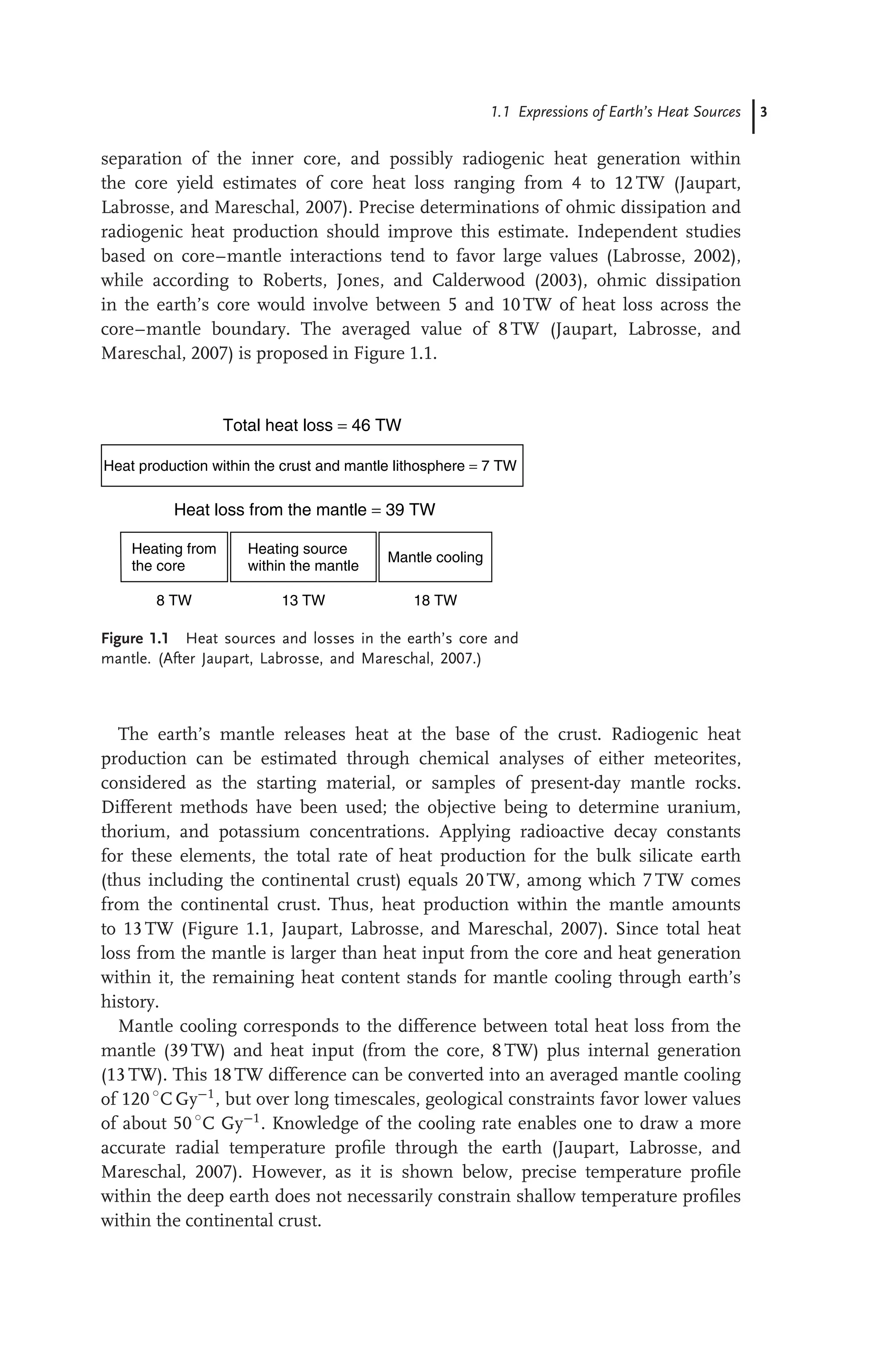
  • 26.
    XX List ofContributors James Faulds University of Nevada Nevada Bureau of Mines and Geology Mackay School of Mines Reno, NV USA Stephanie Frick Helmholtz Centre Potsdam GFZ German Research Centre for Geoscience International Centre for Geothermal Research Telegrafenberg 14473 Potsdam Germany Laurent Guillou-Frottier Bureau de Recherches Géologiques et Minières (BRGM) Mineral Resources Division 3 av. C. Guillemin BP36009 45060 Orléans Cx 2 France Ernst Huenges Helmholtz Centre Potsdam GFZ German Research Centre for Geoscience International Centre for Geothermal Research Telegrafenberg 14473 Potsdam Germany Reiner Jatho Federal Institute for Geosciences and Natural Resources (BGR) Stilleweg 2 30655 Hannover Germany Ralf Junker Leibniz Institute for Applied Geophysics Stilleweg 2 30655 Hannover Germany Martin Kaltschmitt Technische Universität Hamburg-Harburg Institute for Environmental Technology and Energy Economic Eißendorfer Straße 40 21073 Hamburg Germany Thomas Kohl GeoWatt AG Dohlenweg 28 8050 Zürich Switzerland Olaf Kolditz Helmholtz Centre for Environmental Research Department of Environmental Informatics TU Dresden, Environmental Systems Analysis Permoser Str. 15 04318 Leipzig Germany Stefan Kranz Helmholtz Centre Potsdam GFZ German Research Centre for Geoscience International Centre for Geothermal Research Telegrafenberg 14473 Potsdam Germany
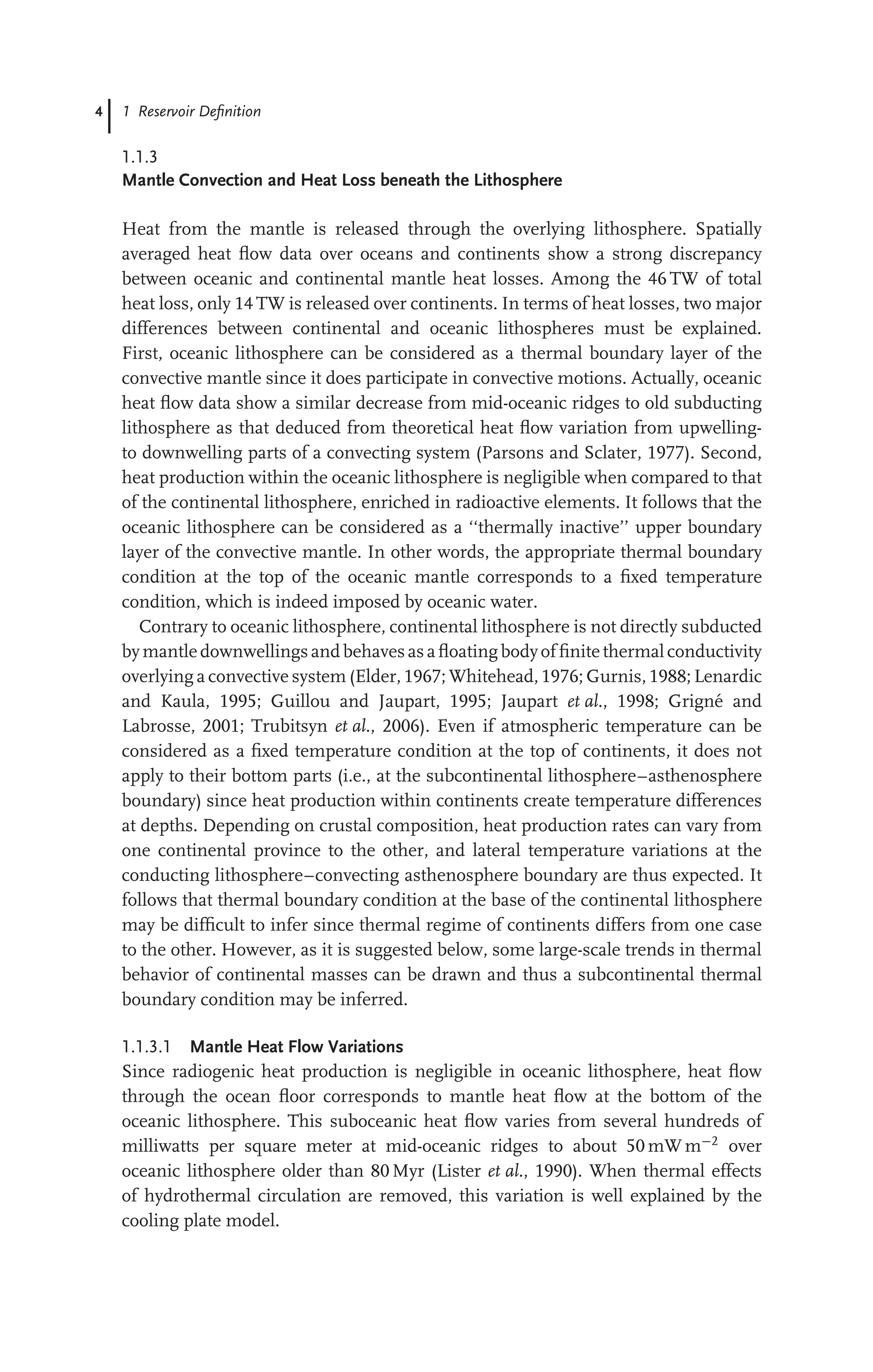
  • 27.
    List of ContributorsXXI Michael Kühn Helmholtz Centre Potsdam GFZ German Research Centre for Geoscience International Centre for Geothermal Research Telegrafenberg 14473 Potsdam Germany Patrick Ledru AREVA Business Group Mines KATCO Av. Dostyk 282 050000 ALMATY Kazakhstan Adele Manzella National Research Council Institute of Geosciences and Earth Resources Pisa Italy Chris McDermott University of Edinburgh School of GeoSciences UK Inga Moeck Helmholtz Centre Potsdam GFZ German Research Centre for Geoscience International Centre for Geothermal Research Telegrafenberg 14473 Potsdam Germany Sandrine Portier Centre de recherche en géothermie (CREGE) University of Neuchâtel Emile-Argand 11, CP 158 2009 Neuchâtel Switzerland Simona Regenspurg Helmholtz Centre Potsdam GFZ German Research Centre for Geoscience International Centre for Geothermal Research Telegrafenberg 14473 Potsdam Germany Ali Saadat Helmholtz Centre Potsdam GFZ German Research Centre for Geoscience International Centre for Geothermal Research Telegrafenberg 14473 Potsdam Germany Gerd Schröder Leipziger Institut für Energie GmbH Torgauer Strape 116 04347 Leipzig Germany Thomas Schulte Helmholtz Centre Potsdam GFZ German Research Centre for Geoscience International Centre for Geothermal Research Telegrafenberg 14473 Potsdam Germany
  • 28.
    XXII List ofContributors Axel Sperber Ing. Büro A. Sperber Eddesser Straße 1 31234 Edemissen Germany Torsten Tischner Federal Institute for Geosciences and Natural Resources (BGR) Stilleweg 2 30655 Hannover Germany Jan Diederik Van Wees Vrije Universiteit Amsterdam Integrated Basin Information Systems De Boclean 1085 1081 HV Amsterdam The Netherlands Francois Vuataz Centre de recherche en géothermie (CREGE) University of Neuchâtel Emile-Argand 11, CP 158 2009 Neuchâtel Switzerland Wenqing Wang Helmholtz Centre for Environmental Research–UFZ Environmental System Analysis Germany Norihiro Watanabe Helmholtz Centre for Environmental Research–UFZ Environmental System Analysis Germany Günter Zimmermann Helmholtz Centre Potsdam GFZ German Research Centre for Geosciences International Centre for Geothermal Research Telegrafenberg 14473 Potsdam Germany
  • 29.
    1 1 Reservoir Definition Patrick Ledruand Laurent Guillou Frottier 1.1 Expressions of Earth’s Heat Sources 1.1.1 Introduction to Earth’s Heat and Geothermics Scientific background concerning the heat flow and the geothermal activity of the earth is of fundamental interest. It is established that plate tectonics and activities along plate margins are controlled by thermal processes responsible for density con- trasts and changes in rheology. Thus, any attempt to better understand the earth’s thermal budget contributes to the knowledge of the global dynamics of the planet. Information on the sources and expressions of heat on earth since its formation can be deduced from combined analyses of seismic studies with mineral physics, chemical composition of primitive materials (chondrites), as well as pressure– temperature–time paths reconstituted from mineralogical assemblages in past and eroded orogens. Knowledge of heat transfer processes within the earth has greatly improved our understanding of global geodynamics. Variations of surface heat flow above the ocean floor has provided additional evidence for seafloor spreading (Parsons and McKenzie, 1978), and improved theoretical models of heat conduction within oceanic plates or continental crust helped to constrain mantle dynamics (Sclater, Jaupart, and Galson, 1980; Jaupart and Parsons, 1985). When deeper heat trans- fer processes are considered, thermal convection models explain a number of geophysical and geochemical observations (Schubert, Turcotte, and Olson, 2002). It must be, however, noted that at a smaller scale (closer to the objective of this chapter), say within the few kilometers of the subsurface where water is much more present than at depths, a number of geological and geothermal observations are not well understood. As emphasized by Elder (1981), crustal geothermal systems may appear as liquid- or vapor-dominated systems, where physics of water–rock interactions greatly differs from one case to the other. Actually, as soon as hy- drothermal convection arises among the active heat transfer processes, everything goes faster since heat exchanges are more efficient than without circulating water. Geothermal Energy Systems. Edited by Ernst Huenges Copyright  2010 WILEY-VCH Verlag GmbH & Co. KGaA, Weinheim ISBN: 978-3-527-40831-3
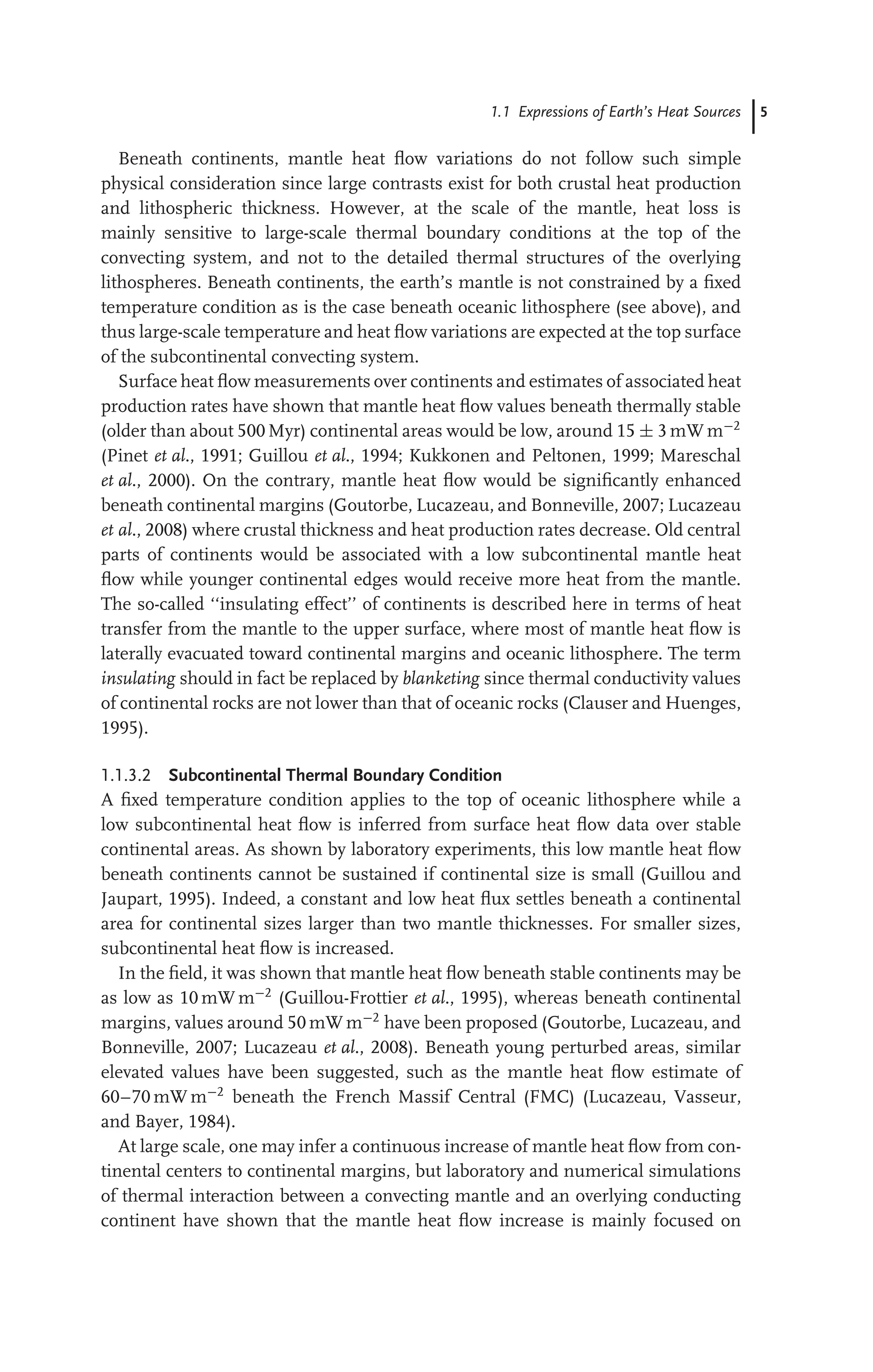
  • 30.
    2 1 ReservoirDefinition It is thus important to delineate which type of heat transfer process is dominant when geothermal applications are considered. Examples of diverse geothermal systems are given below. Within the continental crust, a given heat source can be maintained for distinct time periods according to the associated geological system. Hydrothermal fields seem to be active within a temporal window around 104 –105 years (Cathles, 1977), whereas a magma reservoir would stay at high temperatures 10–100 times longer (Burov, Jaupart, and Guillou-Frottier, 2003). When radiogenic heat production is considered, half-lives of significant radioactive elements imply timescales up to 109 years (Turcotte and Schubert, 2002). At the lower limit, one can also invoke phase changes of specific minerals involving highly exothermic chemical reactions (e.g., sulfide oxidation and serpentinization) producing localized but significant heat excess over a short (103 –104 years) period (Emmanuel and Berkowicz, 2006; Delescluse and Chamot-Rooke, 2008). Thus, description and understanding of all diverse expressions of earth’s heat sources involve a large range of physical, chemical, and geological processes that enable the creation of geothermal reservoirs of distinct timescales. Similarly, one can assign to earth’ heat sources either a steady state or a transient nature. High heat producing (HHP) granites (e.g., in Australia, McLaren et al., 2002) can be considered as permanent crustal heat sources, inducing heating of the surrounding rocks over a long time. Consequently, thermal regime around HHP granites exhibits higher temperatures than elsewhere, yielding promising areas for geothermal reservoirs. On the contrary, sedimentary basins where heat is extracted from thin aquifers may be considered as transient geothermal systems since cold water reinjection tends to decrease the exploitable heat potential within a few decades. Finally, regardless of the studied geological system, and independent of the involved heat transfer mechanism, existence of geothermal systems is first con- ditioned by thermal regime of the surroundings, and thus by thermal boundary conditions affecting the bulk crust. Consequently, it is worth to understand and assess the whole range of thermal constraints on crustal rocks (phys- ical properties as well as boundary conditions) in order to figure out how different heat transfer mechanisms could lead to generation of geothermal systems. The following subsections present some generalities on earth’ heat sources and losses in order to constrain thermal boundary conditions and thermal processes that prevail within the crust. Once crustal geotherms are physically constrained by the latter and by rock thermal properties, distinct causes for the genesis of thermal anomalies are discussed. 1.1.2 Cooling of the Core, Radiogenic Heat Production, and Mantle Cooling The earth’s core releases heat at the base of the mantle, through distinct mechanisms. Inner-core crystallization, secular cooling of the core, chemical
  • 31.
    1.1 Expressions ofEarth’s Heat Sources 3 separation of the inner core, and possibly radiogenic heat generation within the core yield estimates of core heat loss ranging from 4 to 12 TW (Jaupart, Labrosse, and Mareschal, 2007). Precise determinations of ohmic dissipation and radiogenic heat production should improve this estimate. Independent studies based on core–mantle interactions tend to favor large values (Labrosse, 2002), while according to Roberts, Jones, and Calderwood (2003), ohmic dissipation in the earth’s core would involve between 5 and 10 TW of heat loss across the core–mantle boundary. The averaged value of 8 TW (Jaupart, Labrosse, and Mareschal, 2007) is proposed in Figure 1.1. Total heat loss = 46 TW Heat production within the crust and mantle lithosphere = 7 TW Heat loss from the mantle = 39 TW Heating from the core Heating source within the mantle Mantle cooling 8 TW 13 TW 18 TW Figure 1.1 Heat sources and losses in the earth’s core and mantle. (After Jaupart, Labrosse, and Mareschal, 2007.) The earth’s mantle releases heat at the base of the crust. Radiogenic heat production can be estimated through chemical analyses of either meteorites, considered as the starting material, or samples of present-day mantle rocks. Different methods have been used; the objective being to determine uranium, thorium, and potassium concentrations. Applying radioactive decay constants for these elements, the total rate of heat production for the bulk silicate earth (thus including the continental crust) equals 20 TW, among which 7 TW comes from the continental crust. Thus, heat production within the mantle amounts to 13 TW (Figure 1.1, Jaupart, Labrosse, and Mareschal, 2007). Since total heat loss from the mantle is larger than heat input from the core and heat generation within it, the remaining heat content stands for mantle cooling through earth’s history. Mantle cooling corresponds to the difference between total heat loss from the mantle (39 TW) and heat input (from the core, 8 TW) plus internal generation (13 TW). This 18 TW difference can be converted into an averaged mantle cooling of 120 ◦ C Gy−1 , but over long timescales, geological constraints favor lower values of about 50 ◦ C Gy−1 . Knowledge of the cooling rate enables one to draw a more accurate radial temperature profile through the earth (Jaupart, Labrosse, and Mareschal, 2007). However, as it is shown below, precise temperature profile within the deep earth does not necessarily constrain shallow temperature profiles within the continental crust.
  • 32.
    4 1 ReservoirDefinition 1.1.3 Mantle Convection and Heat Loss beneath the Lithosphere Heat from the mantle is released through the overlying lithosphere. Spatially averaged heat flow data over oceans and continents show a strong discrepancy between oceanic and continental mantle heat losses. Among the 46 TW of total heat loss, only 14 TW is released over continents. In terms of heat losses, two major differences between continental and oceanic lithospheres must be explained. First, oceanic lithosphere can be considered as a thermal boundary layer of the convective mantle since it does participate in convective motions. Actually, oceanic heat flow data show a similar decrease from mid-oceanic ridges to old subducting lithosphere as that deduced from theoretical heat flow variation from upwelling- to downwelling parts of a convecting system (Parsons and Sclater, 1977). Second, heat production within the oceanic lithosphere is negligible when compared to that of the continental lithosphere, enriched in radioactive elements. It follows that the oceanic lithosphere can be considered as a ‘‘thermally inactive’’ upper boundary layer of the convective mantle. In other words, the appropriate thermal boundary condition at the top of the oceanic mantle corresponds to a fixed temperature condition, which is indeed imposed by oceanic water. Contrary to oceanic lithosphere, continental lithosphere is not directly subducted bymantle downwellings and behaves as afloating bodyof finite thermal conductivity overlying a convective system (Elder, 1967; Whitehead, 1976; Gurnis, 1988; Lenardic and Kaula, 1995; Guillou and Jaupart, 1995; Jaupart et al., 1998; Grigné and Labrosse, 2001; Trubitsyn et al., 2006). Even if atmospheric temperature can be considered as a fixed temperature condition at the top of continents, it does not apply to their bottom parts (i.e., at the subcontinental lithosphere–asthenosphere boundary) since heat production within continents create temperature differences at depths. Depending on crustal composition, heat production rates can vary from one continental province to the other, and lateral temperature variations at the conducting lithosphere–convecting asthenosphere boundary are thus expected. It follows that thermal boundary condition at the base of the continental lithosphere may be difficult to infer since thermal regime of continents differs from one case to the other. However, as it is suggested below, some large-scale trends in thermal behavior of continental masses can be drawn and thus a subcontinental thermal boundary condition may be inferred. 1.1.3.1 Mantle Heat Flow Variations Since radiogenic heat production is negligible in oceanic lithosphere, heat flow through the ocean floor corresponds to mantle heat flow at the bottom of the oceanic lithosphere. This suboceanic heat flow varies from several hundreds of milliwatts per square meter at mid-oceanic ridges to about 50 mW m−2 over oceanic lithosphere older than 80 Myr (Lister et al., 1990). When thermal effects of hydrothermal circulation are removed, this variation is well explained by the cooling plate model.
  • 33.
    1.1 Expressions ofEarth’s Heat Sources 5 Beneath continents, mantle heat flow variations do not follow such simple physical consideration since large contrasts exist for both crustal heat production and lithospheric thickness. However, at the scale of the mantle, heat loss is mainly sensitive to large-scale thermal boundary conditions at the top of the convecting system, and not to the detailed thermal structures of the overlying lithospheres. Beneath continents, the earth’s mantle is not constrained by a fixed temperature condition as is the case beneath oceanic lithosphere (see above), and thus large-scale temperature and heat flow variations are expected at the top surface of the subcontinental convecting system. Surface heat flow measurements over continents and estimates of associated heat production rates have shown that mantle heat flow values beneath thermally stable (older than about 500 Myr) continental areas would be low, around 15 ± 3 mW m−2 (Pinet et al., 1991; Guillou et al., 1994; Kukkonen and Peltonen, 1999; Mareschal et al., 2000). On the contrary, mantle heat flow would be significantly enhanced beneath continental margins (Goutorbe, Lucazeau, and Bonneville, 2007; Lucazeau et al., 2008) where crustal thickness and heat production rates decrease. Old central parts of continents would be associated with a low subcontinental mantle heat flow while younger continental edges would receive more heat from the mantle. The so-called ‘‘insulating effect’’ of continents is described here in terms of heat transfer from the mantle to the upper surface, where most of mantle heat flow is laterally evacuated toward continental margins and oceanic lithosphere. The term insulating should in fact be replaced by blanketing since thermal conductivity values of continental rocks are not lower than that of oceanic rocks (Clauser and Huenges, 1995). 1.1.3.2 Subcontinental Thermal Boundary Condition A fixed temperature condition applies to the top of oceanic lithosphere while a low subcontinental heat flow is inferred from surface heat flow data over stable continental areas. As shown by laboratory experiments, this low mantle heat flow beneath continents cannot be sustained if continental size is small (Guillou and Jaupart, 1995). Indeed, a constant and low heat flux settles beneath a continental area for continental sizes larger than two mantle thicknesses. For smaller sizes, subcontinental heat flow is increased. In the field, it was shown that mantle heat flow beneath stable continents may be as low as 10 mW m−2 (Guillou-Frottier et al., 1995), whereas beneath continental margins, values around 50 mW m−2 have been proposed (Goutorbe, Lucazeau, and Bonneville, 2007; Lucazeau et al., 2008). Beneath young perturbed areas, similar elevated values have been suggested, such as the mantle heat flow estimate of 60–70 mW m−2 beneath the French Massif Central (FMC) (Lucazeau, Vasseur, and Bayer, 1984). At large scale, one may infer a continuous increase of mantle heat flow from con- tinental centers to continental margins, but laboratory and numerical simulations of thermal interaction between a convecting mantle and an overlying conducting continent have shown that the mantle heat flow increase is mainly focused on
  • 34.
    6 1 ReservoirDefinition Heat production High Low Continent Continental margin Mid-oceanic ridge Ocean 300 50 Mantle heat flow (mW m−2 ) 15 Figure 1.2 Sketch of mantle heat flow variations from con- tinental center to mid-oceanic ridge, emphasizing a low sub- continental heat flow with a localized increase at continental margin, corresponding to a lateral decrease in crustal heat production. continental margin areas (Lenardic et al., 2000). In other words, the low and con- stant heat flow beneath the continent can be considered as the dominant large-scale thermal boundary condition applying above the subcontinental mantle (Figure 1.2). 1.1.4 Fourier’ Law and Crustal Geotherms Heat transfer within the continental crust occurs mainly through heat conduction. Heat advection may occur during magmatism episodes (arrival of hot magma at shallow depths enhancing local temperatures), intense erosion episodes (uplift of isotherms), and periods of hydrothermal convection. All these phenomena can be considered as short-lived processes when equilibrium thermal regime of the crust is considered. In steady state and without advective processes, the simplest form of Fourier law, with a constant thermal conductivity, a depth-dependent temperature field, and with appropriate boundary conditions for continental crust, can be written as            k d2 T dz2 + A = 0 T(z = 0) = T0 kdT dz (z = h) = Qm (1.1) where k is the crustal thermal conductivity, A heat production, T0 surface tem- perature, h the thickness of the crust, and Qm the mantle heat flow. Temperature profile within the crust thus can be written as T(z) = −A 2k z2 + Qm + Ah k z + T0 (1.2)
  • 35.
    1.1 Expressions ofEarth’s Heat Sources 7 1000 900 800 700 600 500 400 300 200 100 0 0 10000 20000 Depth (m) Temperature (°C) 30000 40000 50000 Crustal geotherms with varying Qm and A 3 2 1 1 2 3 Qm = 25 mW m−2 ; A = 3 µW m−3 Qm = 15 mW m−2 ; A = 3 µW m−3 Qm = 40 mW m−2 ; A = 1 µW m−3 250 200 150 50 0 100 0 2000 4000 6000 3 2 1 Shallow depths Figure 1.3 Synthetic simple temperature profiles as inferred from Equation 1.2, where mantle heat flow and bulk crustal heat production are varied. This kind of geotherms show parabolic profiles where the curvature is controlled by A/k value. Temperature difference at depth greatly depends on both A and Qm values. Figure 1.3 shows three crustal geotherms for a 35-km-thick crust, where surface temperature equals 20 ◦ C, with an averaged thermal conductivity of 3 W m−1 K−1 and with different (A, Qm) values. As emphasized by curve 3 in Figure 1.3, a high mantle heat flow does not necessarily involve high crustal temperatures. Curvature of geotherms is indeed controlled by bulk heat production of the crust, as shown by curves 1 and 2. However, this curvature is not visible at shallow depths since the fixed temperature condition at the surface forces linear variation. These simple examples demonstrate that construction of crustal temperature profiles is strongly dependent on both estimates of mantle heat flow and of bulk crustal heat production. At shallow depths, temperature anomalies may thus be due to anomalous HHP rocks. Likewise, other lateral heat transfer effects such as those due to thermal conductivity contrasts may lead to strong temperature differences at a given depth. In the following sections, a series of synthetic temperature profiles are built and discussed based on the geological examples.
  • 36.
    8 1 ReservoirDefinition 1.1.5 Two-dimensional Effects of Crustal Heterogeneities on Temperature Profiles 1.1.5.1 Steady-state Heat Refraction The two-dimensional heterogeneity of the upper crust is outlined by geological maps, where, for example, each rock composition is assigned one color. However, it must be emphasized that thermal properties are not necessarily correlated with rock composition, except for extreme cases (Clauser and Huenges, 1995). On one hand, one may record similar temperature profiles through distinct areas where small-scale lithological differences are observed, because the averaging effect of heterogeneities smoothes out small-scale variations. On the other hand, when large bodies with significantly distinct thermal properties are present, temperature profiles may differ by several tens of degrees at shallow depths. In other words, the horizontal geometry of anomalous bodies shall play a significant role in the establishment of temperature differences at depth. As far as surface heat flow is concerned, small-scale lithological contrast may create large differences. For example, subvertical mineralized bodies can be rich in highly conducting minerals (e.g., volcanic massive sulfides deposits, Mweni- fumbo, 1993), which may result in large surface heat flow variations, whereas Large aspect-ratio insulating body Small aspect-ratio conducting body (e.g., sedimentary basin, ash-flow caldeira) (e.g., Quartzites, volcanic massive sulphide deposit) Surface heat flow – Heat flow variations focused at boundaries – Heat flow variations above the anomaly – Strong temperature variations – No temperature variations Isotherms Figure 1.4 Heat refraction in two dimensions, leading to opposite effects according to the conductivity contrast or the anomaly geometry.
  • 37.
    1.1 Expressions ofEarth’s Heat Sources 9 differences in subsurface temperatures may be negligible. These subtle effects are illustrated in Figure 1.4, where two scenarios of heat refraction effects are illustrated. The objective here is to show that high surface heat flow variations do not necessarily correlate with large subsurface temperature differences since geometrical effects have to be accounted for. Indeed, above a large aspect-ratio insulating body, isotherms are uplifted so that surface heat flow above the anomaly center corresponds to the equilibrium one. On the contrary, isotherms cannot be distorted for a small aspect-ratio conducting body but the resulting surface heat flow is enhanced. In sedimentary basins, presence of salt may also induce heat refraction effects since thermal conductivity of halite may be four times greater than surrounding sediments (e.g., 1.5 W m−1 K−1 for sediments and around 6–7 W m−1 K−1 for rock salt and halite, according to Clauser, 2006). Consequently, temperature gradient within a thick evaporitic layer may thus be decreased by a factor of 4, leading to a cooling effect of several tens of degrees centigrade for a 2–3-km-thick layer. 100 °C 600 °C 200 300 400 500 High heat producing granite: A = 10–20 µW m−3 A B 0 4 8 35 700 600 500 400 300 200 100 0 Depth (km) Temperature (°C) 0 5 10 15 20 25 30 35 Depth (km) ∆T = 42 °C ∆T = 90 °C Mantle heat flow = 25 mW m−2 A, Q = 10 µW m−3 B, Q = 10 µW m−3 B, Q = 20 µW m−3 (a) (b) Figure 1.5 Two-dimensional effect of a high heat producing granite on temperature field (a) and geotherms (b). Here, a fixed mantle heat flow of 25 mW m−2 is imposed, as well as an averaged thermal conductivity of 3 W m−1 K−1 and a bulk crustal heat production of 1 µW m−3.
  • 38.
    10 1 ReservoirDefinition Apart from thermal conductivity contrasts, heat production rates may also vary by a factor of 10 or more between two lithologies (Sandiford, McLaren, and Neumann, 2002; McLaren et al., 2002). In the case of HHP granites, radiogenic content is so high that heat production rates may reach 10–20 µW m−3 , as it is the case of the synthetic example of Figure 1.5, where embeddings have an averaged heat production rate of 1 µW m−3 . At 5 km depth, a temperature difference of 42 ◦ C (90 ◦ C) is obtained for a high heat production of 10 (20) µW m−3 . In the case of Figure 1.5, the obtained temperature anomaly depends on several other parameters such as the emplacement depth of the anomalous body. For example, same granite of Figure 1.5 emplaced at 10 km depth would involve a 30 ◦ C anomaly at 5 km depth. This temperature difference also corresponds to the case of a shallow emplacement of 500 m below the surface. This nonobvious result can be explained by detailed analysis of geotherm curvature, as presented by Sandiford, Fredericksen, and Braun (2003). 1.1.5.2 Transient Effects A number of studies have demonstrated the role of transient geological processes on crustal temperatures. Large-scale tectonic processes (thrusting events, erosion, and sedimentation) can result in temperature differences reaching several tens of degrees centigrade at a few kilometers depth (England and Thompson, 1984; Ruppel and Hodges, 1994). Magma emplacement or presence of hydrothermal convection at shallow depths may also explain disturbed temperature profiles (Cathles, 1977; Norton and Hulen, 2001). Because thermal diffusivity of rocks is low, transient thermal evolution of rocks undergoing conducting processes is very slow, and return to equilibrium temperatures may last several tens to hundreds of million years. Figure 1.6 illustrates some examples of large-scale thermal evolution of the crust undergoing tectonic events. One may note that in the case of a thrusting event, the equilibrium thermal field (with a maximum temperature of 820 ◦ C) is reached 120 Myr after the onset of thrusting. On the contrary, when convective processes are involved around intrusive bodies, heat transfer mechanisms through fluid circulation are acceler- ated, and typical timescales are lower than 1 Myr (Cathles, 1977). When smaller scale systems are considered, thermal equilibrium is reached faster. For example, serpentinization of oceanic crust may result in large amplitude thermal signatures lasting less than a few thousands of years (Emmanuel and Berkowicz, 2006). 1.1.5.3 Role of Anisotropy of Thermal Conductivity Apart from steady-state heat refraction due to thermal conductivity contrasts or variations in heat production rates, other subtle effects affecting thermal properties may trigger thermal anomalies. Temperature dependence of thermal conductivity is one example, as shown in Clauser and Huenges (1995). In the case of sedimentary basins, porosity dependence of thermal conductivity is also significant, as shown in several studies (Beziat, Dardaine, and Gabis, 1988; Waples and Tirsgaard, 2002). Sedimentary basins correspond to interesting geothermal targets all the more that numerous temperature measurements may be available. When thick clayey
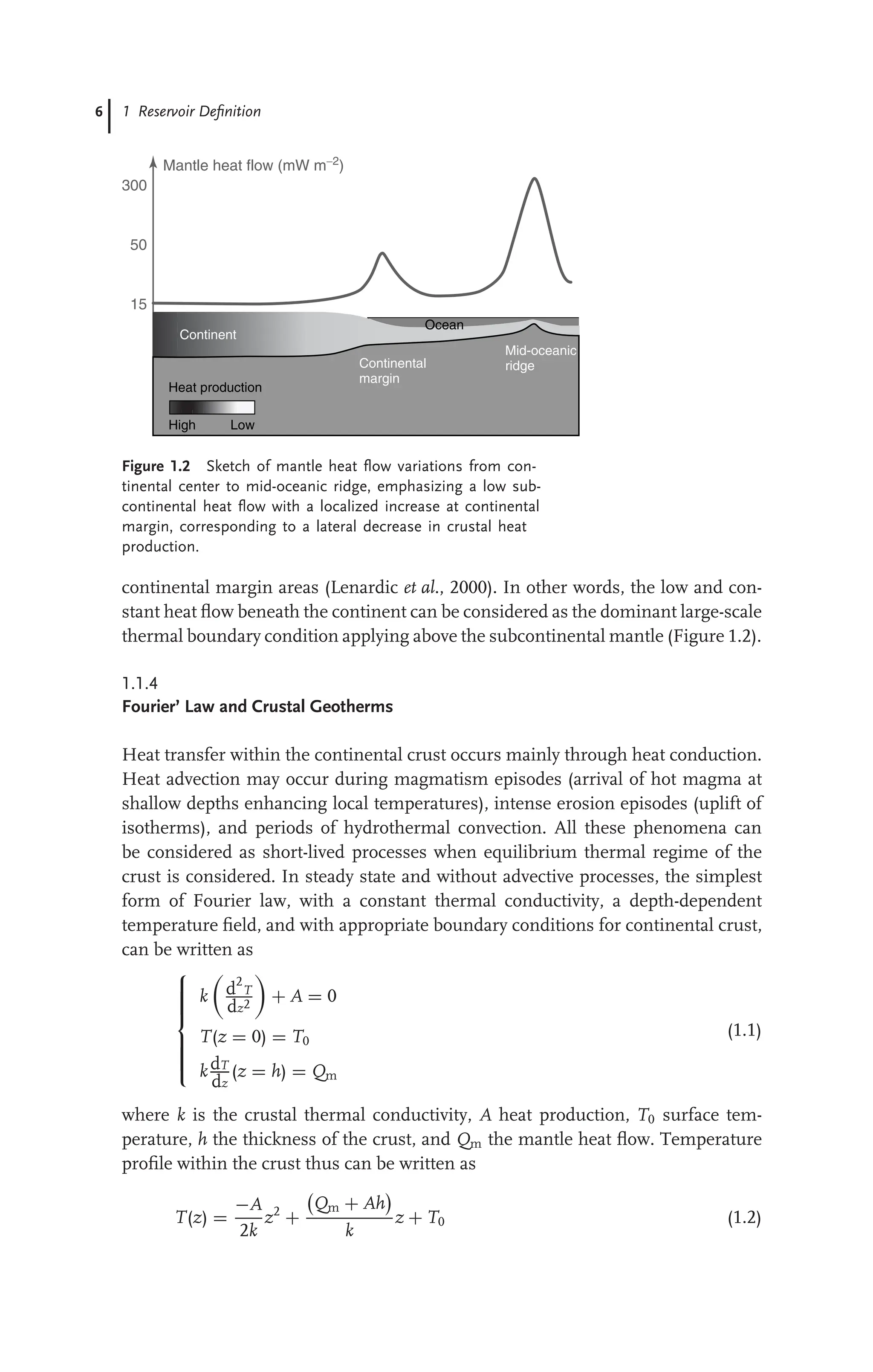
  • 39.
    1.1 Expressions ofEarth’s Heat Sources 11 t 0 t 0 + 1 Ma t 0 + 2.5 Ma t 0 + 5 Ma t 0 + 10 Ma t 0 + 30 Ma 30 km T max = 500 °C 428 °C 424 °C 446 °C 530 °C 750 °C 0 0 −50 −100 −150 −200 −250 −300 300 km 25 50 75 100 125 150 175 200 0 25 50 75 100 125 150 175 200 225 250 0 50 100 150 200 250 300 350 400 500 450 550 600 Depth (km) Depth (km) Trench 32 km Coast 81 km 180 km Popocatepetl (PPR 0.97) 600° 800° 1000° 1200° 1400° 150° 250° 450° 600° 800° 1000° 1200° 1 0 0 0 ° 8 0 0 ° 1 0 0 0 ° 1 2 0 0 ° 1 4 0 0 ° 32 km 81 km 180 km 81 km Seismogenic zone (large interplate earthquakes) Transition zone (slow earthquakes) Distance from the trench (km) 0 km 0 (c) Central costa rica (d) SE Costa rica 0 300 km 0 1450 C MOHO = 40 Km T (°C) 1300 1200 1100 1000 900 800 700 600 500 400 300 200 100 Thrusting event Subduction (a) (b) Figure 1.6 Examples of large-scale transient and steady-state thermal perturbations: (a) thrusting event resulting in a thickened and more radiogenic crust and (b) distinct models of thermal fields around subduction zones, where slab dip angle and plate velocities differ from one case to the other. (After, from top to bottom, Cagnioncle, Parmentier, and Elkins-Tanton, 2007; Manea et al., 2004; Peacock et al., 2005.) (Please find a color version of this figure on the color plates.)
  • 40.
    12 1 ReservoirDefinition formations are present in a basin, the role of compaction has to be accounted for since porosity decreases with compaction pressure and particles’ orientation becomes horizontal with increasing pressure (Vasseur, Brigaud, and Demongodin, 1995). Both effects together with temperature-dependence effect induce important changes in thermal conductivity. First, the decreasing porosity (and thus amount of water) with depth tends to increase thermal conductivity, while temperature dependence tends to decrease it (see Harcouët et al., 2007 for details). Second, the horizontal orientation of individual clay particles develops anisotropy, favoring lateral heat transfer and hindering vertical heat flow. An example of the effect of thermal conductivity anisotropy on thermal field is illustrated in Figure 1.7, where the Paris basin is modeled according to Demongodin et al. study (1991)). Anisotropy ratio is increased with depth and thermal boundary conditions enable to reproduce measured surface heat flow values. Figure 1.8b shows horizontal temperature profiles at 1500 m depth, with and without anisotropy effect. When anisotropy is accounted for, heat accumulates more efficiently within the basin and a 20 ◦ C difference with the isotropic case is reached at basin boundaries. Obviously, the importance of the anomaly critically depends on thermal conductivity values and anisotropy ratios. Measurements on representative core samples, and scaling with in situ conditions are thus of major importance when thermal modeling of a sedimentary basin is performed (Gallagher et al., 1997). 80 70 60 50 0 0.5 1 1.5 2 2.5 3 3.5 4 4.5 Horizontal distance (×105 m) T (°C) 6 km 400 km No anisotropy With anisotropy Depth = 1500 m 1500 m 3.1– 2.9 2.6 –1.8 2.3 –1.5 3.1 – 2.0 3.0 Vertical exageraion ×20 (a) (b) Figure 1.7 (a) Chosen model for the Paris basin (after Demongodin et al., 1991), with thermal conductivity values indicated as follows: ‘‘horizontal component–vertical component.’’ When anisotropy is not accounted for, the first value is considered as homogeneous. (b) Horizontal temperature profiles at 1500 m depth across the basin (see text). 1.1.6 Fluid Circulation and Associated Thermal Anomalies In previous sections, heat transfer was described by pure conduction, where no heat transfer by fluid motion could occur. However, shallow geological systems are sometimes characterized by sufficiently porous layers (sedimentary units) or
  • 41.
    1.2 Heat Flowand Deep Temperatures in Europe 13 highly permeable areas (fault zones) in which crustal fluids may freely circulate. Depending on fluid velocity, permeability, or thickness of the porous layer, heat from several kilometers depth may be entrained by fluid circulation and thus create temperature anomalies. Several studies have demonstrated the possibility to detect fluid motion by temperature measurements within boreholes (Drury, Jessop, and Lewis, 1984; Pribnow and Schellschmidt, 2000). Small-scale water flows through a fracture crossing the borehole may disturb locally the measured geotherm by a few degrees centigrade (Vasseur et al., 1991), and large-scale fluid circulation (convective flows) may lead to cooling or warming effects exceeding tens of degrees centigrade (Lopez and Smith, 1995; Bächler, Kohl, and Rybach, 2003; Wisian and Blackwell, 2004). In some cases, the measured temperature anomalies cannot be explained by purely conductive processes and one must account for free convection in highly permeable fault zones (Rühaak, 2009; Garibaldi et al., 2010). 1.1.7 Summary Crustal temperatures are controlled by thermal boundary conditions and thermal properties of rocks. In the pure conductive regime, knowledge of mantle heat flow and crustal heat production enables to determine a probable averaged geotherm, but the natural heterogeneity of crustal composition may lead to local variations reaching several tens of degrees centigrade at a few kilometers depth. When available thermal data are used to infer deep temperatures (as it is the case in the next section), similar uncertainties can be assigned to extrapolated data. Despite the fact that crustal temperatures are not easy to estimate, it is shown in Section 1.1 that models of geothermal reservoirs depend on several other parameters, which may be less constrained than thermal properties. In particular, the presence of fluids, which is important in the development of geothermal energy, may completely distort temperature field as soon as rock permeability is high enough (Manning and Ingebritsen, 1999). Within sedimentary basins, permeability can vary by approximately four orders of magnitude, thus allowing or preventing fluid circulation. The detailed knowledge of temperature field in an area is probably not sufficient to characterize a geothermal reservoir. Before defining the concept of geothermal reservoir, heat flow data from Europe are reviewed and presented. The objective of this second section is to illustrate how surface heat flow and deep temperatures are not necessarily correlated, and how significant errors in deep temperature estimates can be made when shallow measurements are extrapolated at depth. 1.2 Heat Flow and Deep Temperatures in Europe Independent of numerical modeling of heat transfer within geological systems, the best way to search for thermal anomalies in the shallow crust consists first
  • 42.
    14 1 ReservoirDefinition in compiling available thermal data that correspond to the boundary conditions, as well as petrophysical parameters controlling heat transfer. Surface temperature is well known, but may however show significant spatial variations as detailed below. The few direct measurements of surface heat flow in Europe are also shown together with temperature gradients and thermal conductivity values. At mantle depths, indirect evidence for temperature variations in Europe has been evidenced. 1.2.1 Far-field Conditions In order to constrain thermal regime of the shallow crust, one need to constrain far-field thermal boundary conditions, say at the surface and at the base of the lithosphere. Even if spatial distribution of heat producing elements within the crust is of major importance, it is necessary to estimate the amount of heat supplied at the base of the lithosphere (which is also the heat supplied at the base of the crust) and that lost at the surface. At the surface, the ground surface temperature has been measured for centuries and can be considered as constant over length scales of several hundreds of kilometers (Hansen and Lebedeff, 1987). In Europe, ground surface temperature increases from north to south France (∼1000 km) by about 5 ◦ C, and by ∼10 ◦ C from Denmark to south Italy (Figure 1.8) separated by a distance of 2000 km (Haenel et al., 1980). If thermal regime of the crust is to be studied, such large-scale variations can thus be neglected. Apart from the effect of latitude, ground surface temperature can be locally disturbed by surface heterogeneities such as topography (Blackwell, Steele, and Brott, 1980) or the presence of lakes. These permanent disturbances should be theoretically considered when subsurface temperatures are studied, especially if representative length scale of surface features compare with the studied depths (e.g., warm water outflows in tunnels of Switzerland, Sonney and Vuataz, 2008). Transient changes in surface conditions such as those induced by forest fires may also affect subsurface temperatures but only for a short period. Long-period surface temperature changes such as climatic warming or cooling periods affect underground temperatures as it can be deciphered through measured temperature profiles (Guillou-Frottier, Mareschal, and Musset, 1998), but associated thermal disturbances are damped with depth, and basically cancelled at several hundreds of meters. Contrary to the upper surface, there is no reason to consider the base of the crust as an isotherm. Seismic tomography studies have indicated that this is indeed not the case. Even if seismic velocities vary with temperature and composition, Goes et al. (2000) suggested that the inferred variations at 100 km depth revealed temperature differences (Figure 1.8). At shallower depths (Moho depth +20 km), Figure 1.9 shows possible large-scale temperature differences as deduced from the shear velocity model of Shapiro and Ritzwoller (2002). Local studies of seismic tomography also suggested anomalous hot zones at the base of the European crust, such as beneath the FMC and beneath the Eifel area in Germany (Granet, Wilson, and Achauer, 1995; Ritter et al., 2001). These anomalously hot zones and
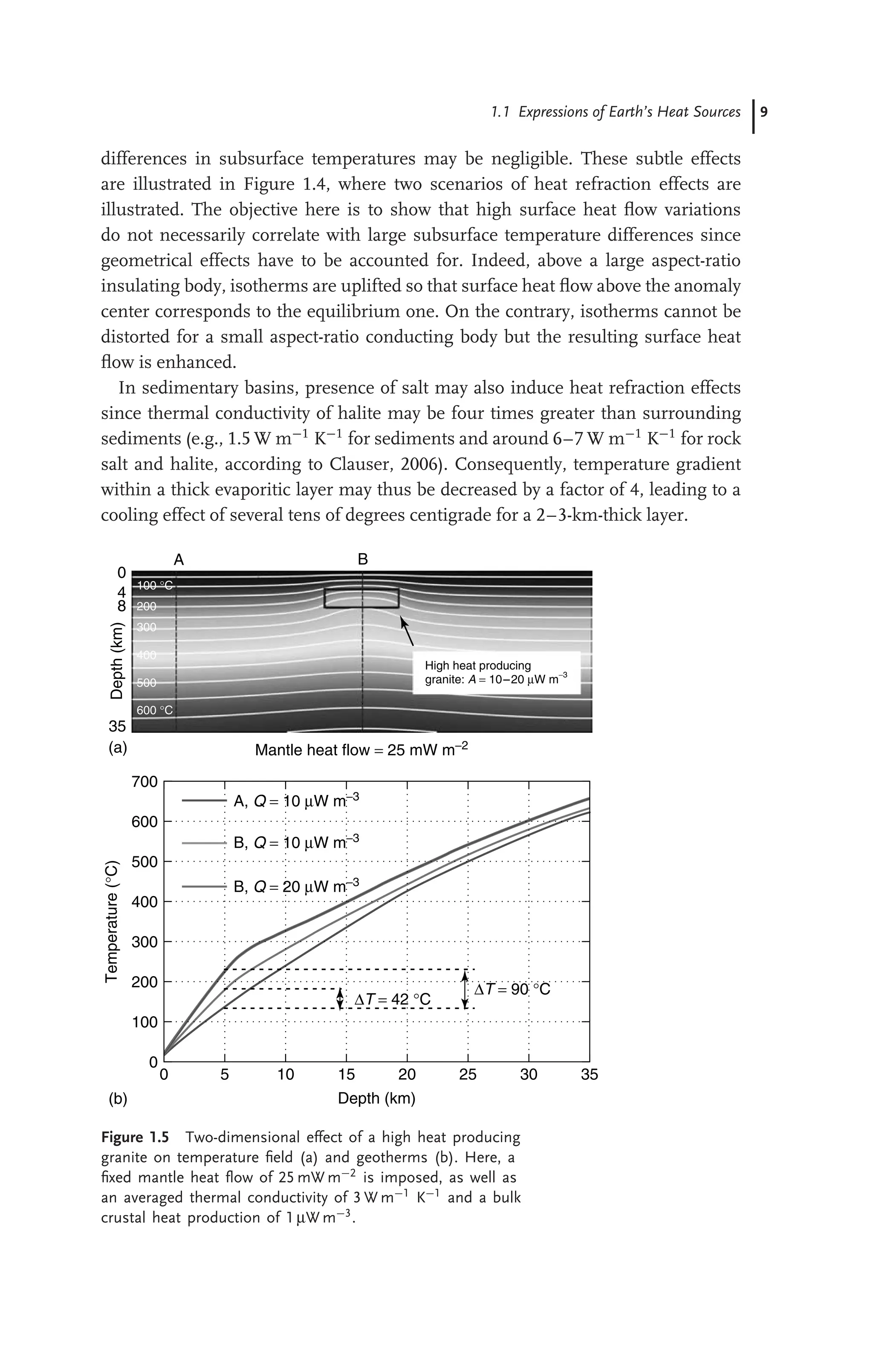
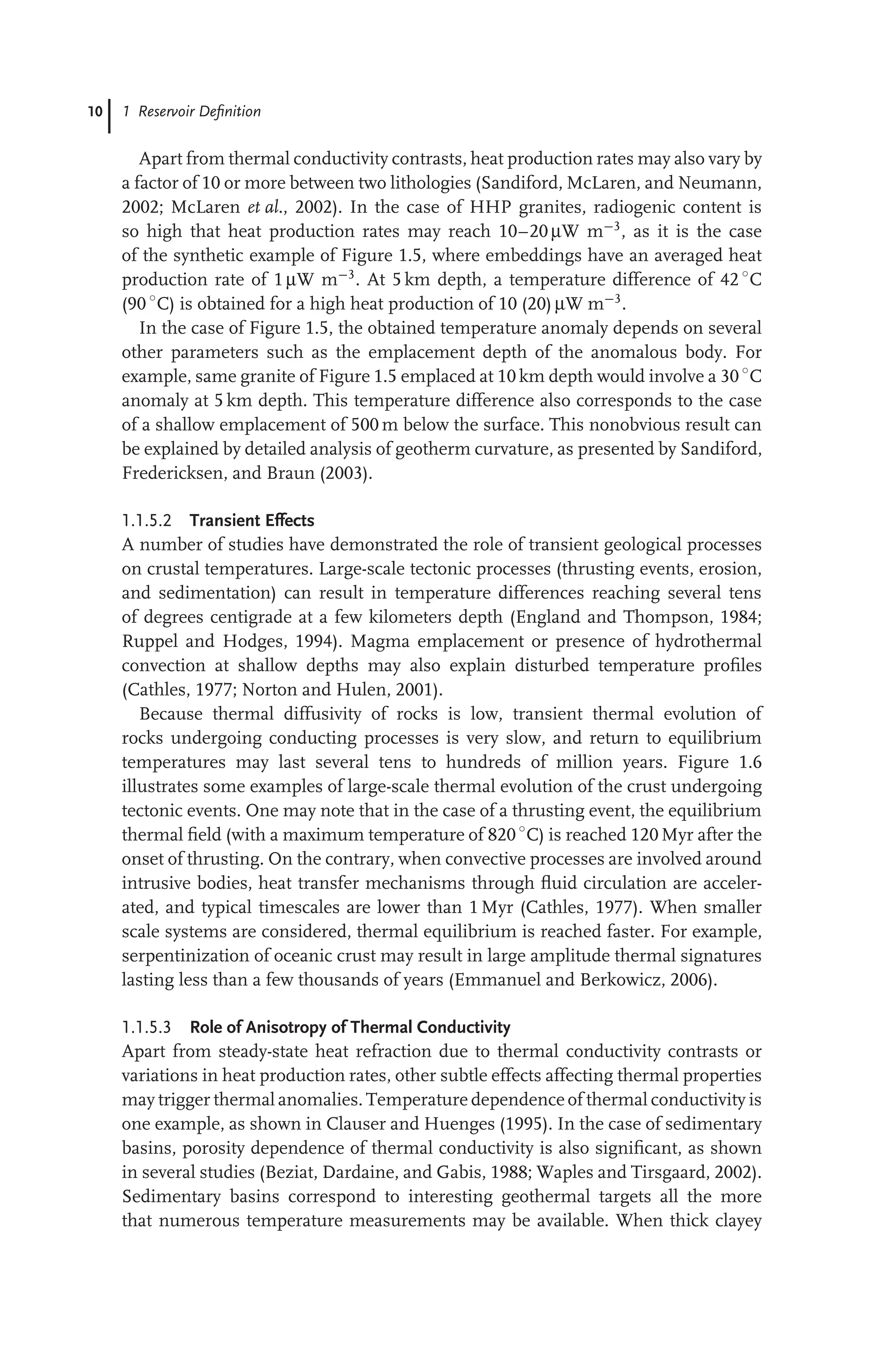
  • 43.
    1.2 Heat Flowand Deep Temperatures in Europe 15 Milano U s e Aassus 7.5 10 10 10 5 12.5 10 15 15 10 England Denmark France Italy 500 km Dundee Edinburgh Newcastle Glasgow Belfast E d e n agh Ba nn G r e a t G l e n Aberdeen T a y 7,5 7,5 7 ,5 olin U r e Leeds Liverpool Avon S e m m Brainngham Bristol E x e Plymouth Thames London Brest Nantes le Havre le Mans Loire 12,5 Limoges Bordeaux G aronne Toulouse Bilbao E b r o Zaragoza Madrid Valencia Jucar Barcelona 10 7,5 5 15 12,5 Montpellier 5 7,5 7,5 Lot 5 5 Grenoble R hô ne Lyon 1 0 10 Dijon Seine Paris Reims Bruxelles Antwerpen Eindhoven Arnhem Amsterdam Den Haag Groningen Gent S c h e l d e Bonn Düsseldorf Nürnberg R h e in Luxembourg Frankfurt Main Erfurt Dresden E l b e Berlin Aller Hannover Bremen Hamburg Kiel W e s e r Esbjerg Odense Köben- havn Malmö Göteborg Hälsingborg Aalborg Ringkobing 7,5 Donau Inn München Stuttgart Freiburg M o s e l l e Besel Bern Geneve 10 10 10 10 Marseille Monaco 10 15 5 2 ,5 2,5 12,5 1 2 ,5 1 2 ,5 1 0 1 2 ,5 10 15 17,5 15 12,5 1 2 , 5 10 1 0 107,5 12,5 10 7,5 7,5 7,5 7,5 7,5 10 10 7,5 7 , 5 5 5 5 7,5 5 10 7,5 2,5 10 2,5 2,3 5 5 5 12,5 Genova Bologna Firenze Bastia T e v e re Cagliari Ajaccio Venezia Po Innabruck Zürich 10 Salzt 12.5 7.5 15 2.5 7.5 7.5 Figure 1.8 Mean annual surface (air) temperature (in de- grees centigrade) in Western Europe as published in Haenel et al. (1980), after a Climatic Atlas published in 1970 by UN- ESCO.
  • 44.
    16 1 ReservoirDefinition −9.0−5.4−4.5−3.6−2.7−1.8−0.9 0.0 0.7 1.4 2.1 2.8 3.5 4.2 7.0 −9.0−5.4−4.5−3.6−2.7−1.8−0.9 0.0 0.7 1.4 2.1 2.8 3.5 4.2 7.0 50° 40° 50° 40° 350° 0° 10° 20° 0 500 1000 1500 Temperature (°C) P S Depth 100 km 60°N 50°N 40°N 30°N 60°N 50°N 40°N 30°N 20°W 20°W 0° 20°E 0° 20°E SRT - Moho+20 km SDT - Moho+20 km Figure 1.9 Left: Temperatures at 100 km depth estimated from the P and S velocity anomalies. (After Goes et al., 2000.) Right: Tomographic models extracted from an upper mantle shear velocity model (Shapiro and Ritzwoller, 2002); top: diffrac- tion tomography, bottom: ray tomography. (Please find a color version of this figure on the color plates.) their surface signatures would be associated with local mantle upwellings (Goes, Spakman, and Bijwaard, 1999; Guillou-Frottier et al., 2007), thus reinforcing the possible increase in underlying heat flow. For the FMC area, Lucazeau, Vasseur, and Bayer (1984) used distinct geophysical data to build a thermal model and concluded that an additional heat flow contribution from the mantle of 25–30 mW m−2 can explain surface heat flow data. While a mantle heat flow of 40 mW m−2 is present in the vicinity of the FMC, it would locally reach 70 mW m−2 beneath parts of the FMC where a thin crust is seismically detected.
  • 45.
    1.2 Heat Flowand Deep Temperatures in Europe 17 1.2.2 Thermal Conductivity, Temperature Gradient, and Heat Flow Density in Europe The global heat flow database (International Heat Flow Commission, IHFC; http://www.heatflow.und.edu) contains almost all published heat flow measure- ments that were available at the time of its publication (Cermak, 1993; Pollack, Hurter, and Johnson, 1993). Each heat flow data is provided with supplementary information such as thermal conductivity, heat production rates, and temperature gradients that were used to estimate surface heat flow. However, there is no information on data quality, which depends on several independent factors (precision of measurements, depth of boreholes, stability of temperature gradient, etc.). In order to improve the IHFC database quality, the few new published thermal data in Europe have been added (Cermak et al., 1996; Nemcock et al., 1998; Demetrescu and Andreescu, 1994; Aydin, Karat, and Kocak, 2005), related data have been clustered, and a quality criterion has been applied. In addition, numerous anomalous values have been removed (e.g., those lower than 25 mW m−2 ). Because the quality criterion accounts for the number of individual boreholes used, data close to each other (separated by less than 15 km) have been affected a single mean value. The quality criterion accounts for (i) the number of individual boreholes used for heat flow estimate, (ii) the standard deviation of the estimate (s.d. in Table 1.1); (iii) the minimal depth where temperature measurements are accounted for; and (iv) the depth range where estimate is performed. These last two criteria enable to retain only stable and undisturbed temperature profiles for heat flow estimates. High, medium, and low quality criteria are detailed in Table 1.1. This process of data treatment provided 1643 heat flow data, whereas 3520 original data were present in the IHFC database. More than 1000 data from Russia had to be removed or were clustered with neighboring ones. In Austria, the hundreds of data presented by Nemcock et al. (1998) decreased to 36 of quality 3. Numerous heat flow data in the IHFC database are deduced from individual Table 1.1 Quality criteria assigned to heat flow data shown in Figure 1.10. Site characteristics Qualitya Several boreholes, good s.d. (10%), depth range of estimate 200 m 1 Several boreholes, good s.d. (10%), unknown or shallow (200 m) depth range 2 Several boreholes, medium s.d. (between 10 and 30%), depth range 200 m 2 Several boreholes, medium s.d. (between 10 and 30%), unknown or shallow (200 m) depth range 3 Several boreholes, bad s.d. (30%) 3 One borehole, depth range 200 m 2 One borehole, depth range 200 m 3 aWhen one major information is missing (temperature gradient or thermal conductivity), then quality is decreased by one unit.
  • 46.
    18 1 ReservoirDefinition measurements where temperature gradient or thermal conductivity is not indicated, thus involving removal of the data. At last, a total of 257 data of high quality, 869 of medium quality, and 517 of low quality were obtained. Figure 1.10 illustrates the newly obtained heat flow map together with thermal conductivity and temperature gradient values. Figure 1.10 does not present any contours of thermal data, which are simply gathered according to their range of values. Indeed, as previously indicated, there are many reasons to explain short-scale variations in temperature gradient and heat flow data. It is thus somehow dangerous to assign a given thermal regime in a geological area since even lithological changes may lead to significant local variations. In addition, one can see that thermal conductivity data appear surprisingly constant in some areas (Ukraine, Belorussia), revealing that the same value was probably assumed for tens of boreholes. These maps also indicate that heat flow values are sometimes estimated with no thermal conductivity data (e.g., Spain). 1.2.3 Calculating Extrapolated Temperature at Depth Temperature measurements in mining or petroleum boreholes were used in the last decades to construct temperature maps at different depth levels (Haenel et al., 1980; Hurtig et al., 1992). Bottomhole temperature (BHT) measurements in petroleum boreholes are not necessarily representative of the equilibrium temperatures, and some corrections are needed (Goutorbe, Lucazeau, and Bonneville, 2007). However, because of the lack of information, a statistical method is often used to infer possible equilibrium temperatures. When temporal history of BHT measurements is well documented, appropriate corrections for transient disturbances can yield temperature estimates at a few kilometers depth with uncertainties of ±10 ◦ C (Bonté et al., 2010). In the last decade, the extrapolation of European temperatures to 5 km depth was performed by petroleum industry using such BHT measurements (which are unavailable), and where any uncertainty propagates and increases with depth through a linear extrapolation. This map was reviewed and analyzed by Gen- ter et al. (2003). Using the deepest equilibrium temperature gradients inferred from measurements in mining boreholes (present in the IHFC database) and from recent studies (Fernàndez et al., 1998), the authors performed a critical analysis of the temperature map presented by Hurtig et al. (1992), which was then modified by the ‘‘heat mining Economic Interest European Group’’ but only available as an unpublished map. Results of color validation are shown in Figure 1.11. It must be emphasized that the objective of this work was simply to use available thermal data to check the interest of some areas which was deduced from confidential data. When one color code is not confirmed, a tem- perature difference greater than 20 ◦ C is obtained. When it is partly confirmed, it means that extrapolations are coherent for only a restricted area. The analysis
  • 47.
    1.2 Heat Flowand Deep Temperatures in Europe 19 Gradient (°C/km) 10 50 10 - 20 20 - 30 30 - 40 40 - 50 Data quality 1 (good) 2 (medium) 3 (low) Heat_Flow 40 40 - 55 55 - 70 70 - 85 85 - 100 100 Conductivity (w/m/K) 1.3 3.3 1.3 - 1.8 1.8 - 2.3 2.3 - 2.8 2.8 - 3.3 (a) (b) (c) Figure 1.10 Thermal conductivity (a), temperature gradi- ent (b), and heat flow data (c) as compiled from this study. Each color is assigned a range of values, and for heat flow data, a quality criterion is added (see text). (Please find a color version of this figure on the color plates.)
  • 48.
    20 1 ReservoirDefinition Color code confirmed Color code corrected or inferred Color code partly confirmed Color code not confirmed or zone of low interest Zone investigated with asociated color code -60 °C -240° C 60-80 °C 60-100° C 100-120° C 120-140° C 140-160° C 160-180° C 180-200° C 200-240° C Figure 1.11 Map of temperature at 5 km depth, as inferred from unavailable (confidential) BHT measurements (Hurtig et al., 1992; EIEG, 2000) and critical analysis by Genter et al. (2003) from published thermal data (see text). (Please find a color version of this figure on the color plates.) was not exhaustive but it shows that differences of several tens of degrees centi- grade at 5 km depth may be easily reached when two extrapolation methods are investigated. 1.2.4 Summary These different data sets were used for a predictive survey to evaluate potential zones of high heat flow where enhanced geothermal systems could be experimented. This approach takes only the thermal aspect of the geothermal systems into account without any geological a priori. At the scale of Europe (Figure 1.11), it reveals large wavelength positive anomalies in Italy, Central-Eastern Europe, and Turkey, which correspond to well-knowngeothermalsystems located inextensionalsettings within active geodynamic systems and to which Iceland could be associated although it is not represented on the map. In Italy, since Miocene, the Northern Apennine fold belt has been progressively thinned, heated, and intruded by mafic magmas. In Tuscany, this evolution is
  • 49.
    1.3 Conceptual Modelsof Geothermal Reservoirs 21 the source of a granitic complex that has been emplaced between 3.8 and 1.3 Ma. A long-lived hydrothermal activity is recorded in this area by both fossil (Plio-Quaternary ore deposits) and active (Larderello geothermal field) systems (Dini et al., 2004). In Central-Eastern Europe, the Pannonian basin is characterized since Middle Miocene by an upwelling of the asthenosphere and thinning of the lithosphere, responsible for coeval rifting in the basin and compression in the flanking Carpathian and Dinaric belts (Huismans, Podladchikov, and Cloetingh, 2001). In Turkey, the collision between the Arabian and Eurasion plates has induced the westward escape of the Anatolian block, which is accommodated by the right-lateral movement of the Anatolian fault network. Much of the geothermal activity appears to be focused along kinematically linked normal and strike-slip fault systems most commonly within E-W-trending grabens (Sengör, Gorur, and Saroglu, 1985; Ercan, 2002). Besides these active tectonic zones, other positive anomalies are mainly dis- tributed along a series of intracontinental grabens that cut the western European platform, corresponding to the west European rift system (Dèzes, Schmid, and Ziegler, 2004). These rift structures, the upper Rhine graben, the Limagne system, the Rhône valley, a part of Provence, the Catalonia, and the Eger grabens, were created in the Oligocene as a result of the thinning of the continental crust. Among these structures, the Rhine graben has been intensively studied over the last 10 years for its potential. It is about 300 km long, with an average width of 40 km, limited by large-scale normal faults. The post-Paleozoic sediments of the western European platform have overlain the Hercynian basement, which is made of gran- ite, granodiorite, or other related basement rocks (Edel and Fluck, 1989). This area – characterized by a thin continental crust and a Moho at 25 km depth – shows a Tertiary volcanism that occurred in the form of isolated volcanoes of alkaline composition related to a mantle magmatic activity (Wenzel and Brun, 1991). This preliminary analysis shows that the thermal aspect of the geothermal systems is directlylinked and controlled bythe past and present geodynamiccontext. This framework provides a first-order constrain on the location of favorable and unfavorable geodynamic sites for the exploration of potential geothermal reservoirs. In order to define conceptual models, these different contexts will be reviewed and complemented by an evaluation of the main properties of the potential reservoir in terms of porosity, permeability, fluid flow with respect to the stress field. 1.3 Conceptual Models of Geothermal Reservoirs From a geological point of view, geothermal reservoirs are heated and pressurized water and/or vapor accumulations from which heat can be extracted from the underground to the surface. From a technical, environmental, and economic approach, the geothermal reservoir can be defined by the cost-efficiency of this extraction depending on the temperature, depth and size of the accumulation, the fluid flow, and the industrial process under which it will be processed. Although
  • 50.
    22 1 ReservoirDefinition this approach is highly dependent on economical indicators that are not linked to geology (price of energy, incentives politics for access to renewable energies, etc.), reference to present-day parameters will be provided for the different types of reservoirs. 1.3.1 The Geology of Potential Heat Sources To get heat is the first condition for defining a geothermal reservoir. How can we explore potential heat sources? It has been shown that thermal boundary conditions (the mean annual surface temperature, temperatures at depth estimated from the P and S velocity anomalies) and thermal properties of the main lithologies and structure at depth enable the first calculation of extrapolated temperature at depth and thus the delineation of potential zones of high-thermal gradient. Such zones can also be determined through a geological empiric approach. Heat is transferred within the crust through two mechanisms: • The main active and permanent phenomenon at the scale of the continental crust is the conduction of heat. In conduction, heat moves through the material from a hotter to a cooler zone. The feasibility and intensity of such transfer is directly linked to the thermal properties of the mineral constituting the rock that is evaluated as the thermal conductivity. As continental crust is heterogeneous and a result of the superposition of layers with different conductivity properties (stacked allochthonous units over autochthonous cover sequence or basement in orogenic zones, sedimentary basins over basement within intracratonic zones, etc.), conduction will not be homogenous at the scale of the whole continental crust. Highly conductive zones such as fractured granites will be explored with interest while refractory units such as mafic units will be considered as potential thermal insulator. • Inconvection,heat is transported bythe movement of hot material.The ascent and emplacement of a granitic body or of a volcanic dyke network is a typical example of convection where heat is transferred from deep source and then dissipated by conduction in the host rocks at shallow level. Contact metamorphism is a direct expression of the elevation of temperature with respect to extreme geothermal gradients reaching 500 ◦ C for granites emplaced at around 5 km depth. Globally, convection leads to anisotropic diffusion of heat; the movement of hot material being, most of the time, controlled by the permeability system of the continental crust, mainly fracture network. The past or present geodynamic context gives a first-order constrain on the loca- tion of favorable and unfavorable geodynamic sites for high geothermal gradients. Conduction is directly controlled by the thickness, heterogeneity, and composition of the continental crust, whereas convection processes are mainly located within active zones of magmatism and metamorphism. Rift in accretionary systems are characterized by thinned crust and lithosphere, in relation with asthenospheric doming and upwelling. This definition covers both
  • 51.
    1.3 Conceptual Modelsof Geothermal Reservoirs 23 mid-oceanic ridges and back arc extensional systems, immerged or emerged, and to less extent pulls part systems developed along strike-slip faults. The geological setting of such rift zones is then the most favorable context because of the high mantle heat flow (Figure 1.2), the shallow depth of the mantle crust boundary, and the periodic magmatic activity (emplacement of stocks, sills, and dykes) and volcanic flow of hot mafic lavas. Moreover, convection of heat is enhanced by fluid – rock interaction – intense fracturing related to extensional tectonics favoring exchange between fluids of superficial and deep origin in the vicinity of magma chambers. Numerical modeling of rifting processes illustrates the shift of the isotherms toward surface depending on rifting velocities, presence of strain softening, and time (Huismans and Beaumont, (2002), Figure 1.12). Iceland is the best case history for illustrating this first-order parameter for location of high geothermal gradients (Figure 1.13). A large active volcanic zone, corresponding to the mid-oceanic ridge, is running SW–NE, and displays various heat sources (dikes and magma chambers). Seawater, meteoric water, and volcanic fluids are mixed in pressurized water-dominated reservoirs, often associated with young tectonic fractures, carrying heat from several kilometers depth toward the surface (Flóvenz and Saemundsson, 1993; Arnórsson, 1995). The regional temperature gradient varies from 50 to 150 ◦ C km−1 and the highest values are found close to the volcanic rift zone. Active margins related to subduction are sites of intense convection with respect to magmatic activity. A computed model at the scale of the lithosphere (Figure 1.6) shows that the subduction of cold lithosphere is accompanied by a raise of hot lithosphere just above the main plate boundary. Thus, large crustal zones have temperatures greater than 300 ◦ C at very shallow depth and undergo melting con- ditions at few kilometers depth. Generated calc-alkaline magmatism is responsible for the intrusion of voluminous granitic suites at shallow depth and related vol- canism of intermediate to felsitic composition. This convective phenomenon at the scale of the lithosphere is also responsible of the concentration of U, K, and Th radioelements in the upper crust, which will contribute to the thermal budget of the continents over a long period. Active margin settings are zones with almost infinite source of fluids from meteoric origin, as generated high relief is bordered by oceanic areas, and from deep source, in relation to magmatic and metamorphic processes. Presently, New Zealand and Philippines are the zones where the exploita- tion of geothermal energy is the most advanced within these subduction-related contexts. Collision zones and convergent plate boundaries may also be sites of high geothermal gradients. Collision is responsible for the development of large thrust systems that lead to a crustal thickening of several tens of kilometers. Zones situated at mid- crustal depth within the underthrust slab will then be buried and will undergo an immediate increase in pressure and a progressive increase in temperature. As discussed previously (Figure 1.6), the equilibrium thermal field is reached several ten million years after the thrusting event has ceased. This evolution is
  • 52.
    24 1 ReservoirDefinition 550 °C 1000 °C 550 °C 1000 °C 550 °C 1000 °C 1200 °C 1200 °C 1200 °C Time, t = 1.3 Ma, Dx = 110 km Time, t = 41 Ma, Dx = 135 km Time, t = 67 Ma, Dx = 211 km Initial Moho depth = 35 km Initial Moho temperature = 550 °C 0.3 cm yr−1 0.3 cm yr−1 30 cm yr−1 (a) (b) (c) Figure 1.12 Uplifted isotherms (thick grey line) created by lithospheric extension, af- ter Huismans and Beaumont, 2002. Crust and lithosphere are rheologically stratified. Lateral boundary conditions reproducing ex- tension correspond to the imposed rifting velocities given in centimeters per year. (a) Case of no strain softening, after 211 km of extension; (b) asymmetric extension obtained with the introduction of strain softening and 41 Myr after rifting initiation; and (c) case of a fast rifting velocity, involving a large zone (∼40 km) of hot middle crust.
  • 53.
    1.3 Conceptual Modelsof Geothermal Reservoirs 25 Atlantic ocean M i d - A t l a n t i c r i d g e M id -A tla n tic North American Plate Eurasian Plate Ri dg e Thingvellir Reykjanik Iceland Kraffa Hengill Geothermal map of Iceland Figure 1.13 Geothermal map of Iceland. The main geothermal fields are located within prehistoric and historic lava centers and interglacial lavas, within the active rift zone.
  • 54.
    26 1 ReservoirDefinition well documented in the European Variscan belt where high paleogradients de- termined from mineral assemblages show that a regional geothermal system, responsible for many ore deposits (Au, U, etc.), has been generated during the late orogenic evolution of this collision belt (Bouchot et al., 2005). The melting of large mid-crustal zones has been enhanced by the fertility of the crust rich in radioelements and hydrated minerals generating large volume of migmatites and granites over a long period, from 360 to 300 Ma (Ledru et al., 2001). This situation reflects probably what is occurring within the Tibet Plateau – crustal thickening resulting from the collision between Asia and India being responsible for the development of migmatitic layers at depth. Taking this time delay related to the progressive re-equilibration of the isotherms in the thickened crust, such collision plate boundaries can be considered as favorable zones for high geother- mal gradients. Moreover, like in the case of active margins, the concentration of radioelement-rich geological units (differentiated granites, uranium-bearing sed- imentary basins, volcanic ash flows, overthrust Precambrian radiogenic granites, etc.) in the upper crust contributes to the thermal budget of the continents over several hundreds of million years. The location of high geothermal gradients in the vicinity of transform margins and of thermal anomalies along continental-scale strike-slip faults can be related to thickening processes inherited from an early stage of collision, or linked to zones of pull-apart extension (that can be assimilated to the general case of rift systems), or a combination of both processes. In the case of the San Andreas Fault and its satellites in Nevada, it seems that the dominant feature for exploration at the regional scale is the presence of structural discontinuities bordering such pull-apart basins (Figure 1.14, Faulds, Henry, and Hinz, 2005; Faulds et al., 2006). Within plates, out of these plate boundaries, the lithosphere is considered as stabilized and the main mechanism of heat transfer is conduction. Depending on its composition (i.e., conductivity of its main lithologies) and thickness, geothermal gradients vary between 15 and 25 ◦ C km−1 . The main source of thermal anomalies is the presence of highly radiogenic lithologies such as alkaline and aluminous granites, uranium-bearing sedimentary basins, or highly conductive materials (massive sulfide). The radioactive decay is the cause of heat anomalies in the vicinity and at the apex of these radiogenic bodies, generally of small to medium amplitude and wavelength (Figure 1.5). This is the model on which exploration of deep geothermal resources is done presently in the Southern Australian craton (McLaren et al., 2002; Hillis et al., 2004). Highly radiogenic Precambrian granites (∼16 mW m−3 ), outcropping in large ranges and found laterally at the base of a Paleozoic sedimentary basins resting unconformably over this basement, are considered as the source of local thermal anomalies that are superposed to a regional anomaly know as the south Australian heat flow anomaly (SAHFA) (McLaren et al., 2003; Chopra and Holgate, 2005). Paralana hot springs are observed along the main faulted contact between the basement and cover sequences and uranium-bearing sediments deposited during the erosion of the radiogenic Precambrian granites are presently exploited by in situ recovery (Berveley mine). The company Petratherm
  • 55.
    Other documents randomlyhave different content
  • 56.
  • 57.
  • 58.
  • 59.
  • 60.
  • 61.
  • 62.
  • 63.
  • 64.
  • 65.
  • 66.
  • 67.
  • 68.
  • 69.
  • 70.
  • 71.
  • 72.
  • 73.
  • 74.
  • 75.
  • 76.
  • 77.
  • 78.
  • 79.
  • 80.
  • 81.
  • 82.
  • 83.
    Welcome to ourwebsite – the perfect destination for book lovers and knowledge seekers. We believe that every book holds a new world, offering opportunities for learning, discovery, and personal growth. That’s why we are dedicated to bringing you a diverse collection of books, ranging from classic literature and specialized publications to self-development guides and children's books. More than just a book-buying platform, we strive to be a bridge connecting you with timeless cultural and intellectual values. With an elegant, user-friendly interface and a smart search system, you can quickly find the books that best suit your interests. Additionally, our special promotions and home delivery services help you save time and fully enjoy the joy of reading. Join us on a journey of knowledge exploration, passion nurturing, and personal growth every day! ebookbell.com