Gentle
Architecture
By: Stephanie Tivnan
Malcolm Wells:
Malcolm Wells’ Goals:
ď‚› An architect from New Jersey later moved
  to Cape Cod
ď‚› 83 years old when he died
ď‚› Teacher of environmental design at
  Harvard
ď‚› He set 15 goals for his own work in 1971
 Some were to “use and store solar
  energy, to consume their own waste, to
  provide wildlife habitat and human
  habitat, and to be beautiful.” Boston Globe
A Change of Heart:
ď‚› Became  an architect in 1953
ď‚› He designed a pavilion for RCA in The
  World’s Fair in New York.
ď‚› Malcolm realized that just 2 years after
  putting the pavilion up it would be torn
  down.
ď‚› He started to notice the concrete
  footprints that all of his designs left
  behind.
ď‚› Wells developed his theory on gentle
  architecture
Eco- Friendly (gentle)
Architecture
ď‚› After Malcolm set these goals he made his
  designs eco- friendly.
ď‚› Some designs were partially borrowed in
  the ground or had sky lights to suit the
  landscape they were on.
A home designed by Wells:
Earth Roofs
 “In general, his roofs were covered with
  layers of earth, suitable for gardens or
  other green growth.” Boston Globe
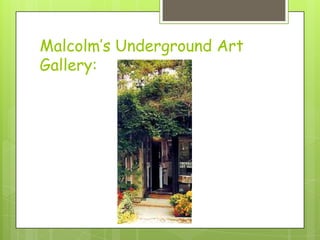
ď‚› His Art Gallery was covered in soil and
  grass.
Malcolm’s Underground Art
Gallery:
Eco- Friendly at Heart
 Malcolm  Wells on bridges: “It is a land-
 killer, a dead footprint on land or water. To
 last for centuries, to provide a sheltered
 roadway, to serve all creatures and to
 present a living surface to the sky, a bridge
 must have a roof and a deep covering of
 earth.’’
Gentile Architecture
ď‚› After  designing concrete parking lots
  Malcolm realized he wanted to preserve the
  land that they were built on
ď‚› Decided upon gentile architecture:
  ď‚›   Designed his own underground home and
      office
     Wrote three books: “Gentle Architecture’’
      (1981), “Infra Structures’’ (1994), and
      “Recovering America’’ (1999).
  ď‚›   Taught his ideas to his students at Harvard
Citation
ď‚› Weber, Bruce. "Malcolm
 Wells, 83, Advocate for `gentle
 Architecture'." Boston Globe: 10. Dec 07
 2009. Boston Globe. Web. 19 Sep. 2012 .

Gentle architectre

  • 1.
  • 2.
  • 3.
    Malcolm Wells’ Goals: An architect from New Jersey later moved to Cape Cod  83 years old when he died  Teacher of environmental design at Harvard  He set 15 goals for his own work in 1971  Some were to “use and store solar energy, to consume their own waste, to provide wildlife habitat and human habitat, and to be beautiful.” Boston Globe
  • 4.
    A Change ofHeart:  Became an architect in 1953  He designed a pavilion for RCA in The World’s Fair in New York.  Malcolm realized that just 2 years after putting the pavilion up it would be torn down.  He started to notice the concrete footprints that all of his designs left behind.  Wells developed his theory on gentle architecture
  • 5.
    Eco- Friendly (gentle) Architecture ď‚›After Malcolm set these goals he made his designs eco- friendly. ď‚› Some designs were partially borrowed in the ground or had sky lights to suit the landscape they were on.
  • 6.
    A home designedby Wells:
  • 7.
    Earth Roofs  “Ingeneral, his roofs were covered with layers of earth, suitable for gardens or other green growth.” Boston Globe  His Art Gallery was covered in soil and grass.
  • 8.
  • 9.
    Eco- Friendly atHeart  Malcolm Wells on bridges: “It is a land- killer, a dead footprint on land or water. To last for centuries, to provide a sheltered roadway, to serve all creatures and to present a living surface to the sky, a bridge must have a roof and a deep covering of earth.’’
  • 11.
    Gentile Architecture  After designing concrete parking lots Malcolm realized he wanted to preserve the land that they were built on  Decided upon gentile architecture:  Designed his own underground home and office  Wrote three books: “Gentle Architecture’’ (1981), “Infra Structures’’ (1994), and “Recovering America’’ (1999).  Taught his ideas to his students at Harvard
  • 12.
    Citation ď‚› Weber, Bruce."Malcolm Wells, 83, Advocate for `gentle Architecture'." Boston Globe: 10. Dec 07 2009. Boston Globe. Web. 19 Sep. 2012 .