Download as PDF, PPTX

















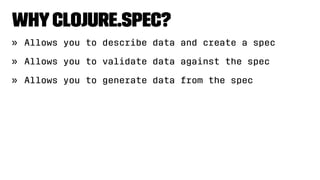
![Describe Dataand Create Spec
foo is a integer
(require '[clojure.spec :as s])
;; => nil
(s/def ::foo int?)
;; => :user/foo](https://image.slidesharecdn.com/genetic-programming-with-clojure-spec-161026215419/85/Genetic-programming-with-clojure-spec-and-Beyond-27-320.jpg)
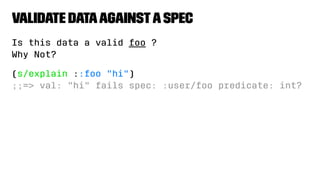
![Generate DatafromaSpec
Can you give me some example data?
(s/exercise ::foo 1)
;; => ([-1 -1])](https://image.slidesharecdn.com/genetic-programming-with-clojure-spec-161026215419/85/Genetic-programming-with-clojure-spec-and-Beyond-30-320.jpg)
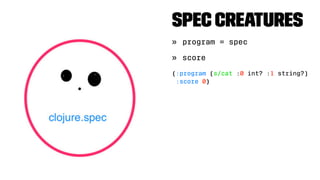
![Spec Creatures
Eat Data
["hi" true 5 10 "boo"]](https://image.slidesharecdn.com/genetic-programming-with-clojure-spec-161026215419/85/Genetic-programming-with-clojure-spec-and-Beyond-35-320.jpg)
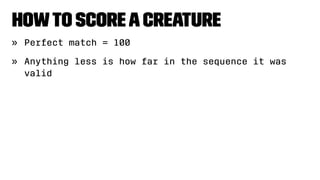
![PerfectScore
(s/explain-data (s/cat :0 int? :1 string?) [1 "hi"])
;=> nil](https://image.slidesharecdn.com/genetic-programming-with-clojure-spec-161026215419/85/Genetic-programming-with-clojure-spec-and-Beyond-38-320.jpg)
![NotPerfectScore
Use explain-datato figure itout
(s/explain-data (s/cat :0 int? :1 string?) [1 true])
;=> #:clojure.spec{:problems
[{:path [:1]
:pred string?
:val true
:via []
:in [1]}]}](https://image.slidesharecdn.com/genetic-programming-with-clojure-spec-161026215419/85/Genetic-programming-with-clojure-spec-and-Beyond-39-320.jpg)
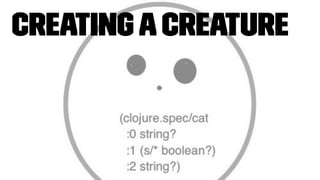

![Creature Create!
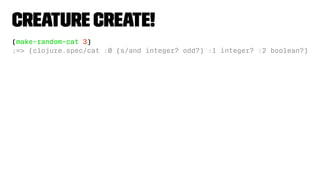
Make an initial population
(defn initial-population [popsize max-cat-length]
(for [i (range popsize)]
{:program (make-random-cat (inc (rand-int max-cat-length)))}))](https://image.slidesharecdn.com/genetic-programming-with-clojure-spec-161026215419/85/Genetic-programming-with-clojure-spec-and-Beyond-47-320.jpg)








![Readyto Evolve
Makeafunctionthathas inputs
population size
how many generations
tournament size
test data
Ends with creature that is perfect fit or max
generations
(defn perfect-fit [creatures]
(first (filter #(= 100 (:score %)) creatures)))](https://image.slidesharecdn.com/genetic-programming-with-clojure-spec-161026215419/85/Genetic-programming-with-clojure-spec-and-Beyond-64-320.jpg)

![Evolve
(def creature-specs (evolve 100 100 7 ["hi" true 5 10 "boo"]))](https://image.slidesharecdn.com/genetic-programming-with-clojure-spec-161026215419/85/Genetic-programming-with-clojure-spec-and-Beyond-66-320.jpg)
![Evolve
(def creature-specs (evolve 100 100 7 ["hi" true 5 10 "boo"]))
(perfect-fit creature-specs)](https://image.slidesharecdn.com/genetic-programming-with-clojure-spec-161026215419/85/Genetic-programming-with-clojure-spec-and-Beyond-67-320.jpg)
![Evolve
(def creature-specs (evolve 100 100 7 ["hi" true 5 10 "boo"]))
(perfect-fit creature-specs)
;=>{:program (clojure.spec/cat :0 string?
; :1 boolean?
; :2 (s/and integer? odd?)
; :3 integer?
; :4 string?)
; :score 100}](https://image.slidesharecdn.com/genetic-programming-with-clojure-spec-161026215419/85/Genetic-programming-with-clojure-spec-and-Beyond-68-320.jpg)



![Specs can generate data
(s/exercise (eval (:program (perfect-fit creature-specs))) 5)
;; ([("" true -1 -1 "") {:0 "", :1 true, :2 -1, :3 -1, :4 ""}]
;; [("D" false -1 -1 "G") {:0 "D", :1 false, :2 -1, :3 -1, :4 "G"}]
;; [("12" false -1 0 "l0") {:0 "12", :1 false, :2 -1, :3 0, :4 "l0"}]
;; [("" false -1 -2 "") {:0 "", :1 false, :2 -1, :3 -2, :4 ""}]
;; [("2" false 1 0 "Jro") {:0 "2", :1 false, :2 1, :3 0, :4 "Jro"}])](https://image.slidesharecdn.com/genetic-programming-with-clojure-spec-161026215419/85/Genetic-programming-with-clojure-spec-and-Beyond-72-320.jpg)
















![SelfHealing Clojure Experiment
(defn report [earnings]
(-> earnings
(clean-bad-data)
(calc-average)
(display-report)))](https://image.slidesharecdn.com/genetic-programming-with-clojure-spec-161026215419/85/Genetic-programming-with-clojure-spec-and-Beyond-96-320.jpg)
![SelfHealing Clojure Experiment
(defn report [earnings]
(-> earnings
(clean-bad-data)
(calc-average)
(display-report)))
Divide by zero error waiting in calc-average!!!](https://image.slidesharecdn.com/genetic-programming-with-clojure-spec-161026215419/85/Genetic-programming-with-clojure-spec-and-Beyond-97-320.jpg)
![The Setup
reportfunction - dive in
(defn report [earnings]
(-> earnings
(clean-bad-data)
(calc-average)
(display-report)))](https://image.slidesharecdn.com/genetic-programming-with-clojure-spec-161026215419/85/Genetic-programming-with-clojure-spec-and-Beyond-99-320.jpg)
![clean-bad-data
It takes in a vector of anything and filters out only
those elements that are numbers.
(defn clean-bad-data [earnings]
(filter number? earnings))](https://image.slidesharecdn.com/genetic-programming-with-clojure-spec-161026215419/85/Genetic-programming-with-clojure-spec-and-Beyond-100-320.jpg)
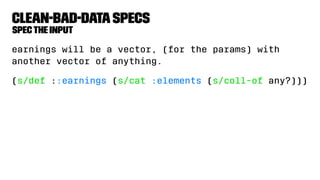
![clean-bad-dataspecs
specthe output
Custom generator - which will constrain the generator
to just returning the value [[1 2 3 4 5]] as its
example data* will explain why later
(s/def ::cleaned-earnings (s/with-gen
(s/cat :clean-elements (s/coll-of number?))
#(gen/return [[1 2 3 4 5]]))](https://image.slidesharecdn.com/genetic-programming-with-clojure-spec-161026215419/85/Genetic-programming-with-clojure-spec-and-Beyond-102-320.jpg)
![clean-bad-dataspecs
example ofrunningthe functionwith specs
(clean-bad-data [1 2 "cat" 3])
;=>(1 2 3)](https://image.slidesharecdn.com/genetic-programming-with-clojure-spec-161026215419/85/Genetic-programming-with-clojure-spec-and-Beyond-103-320.jpg)
![clean-bad-dataspecs
example ofrunning exercise on it
(s/exercise ::cleaned-earnings 1)
;=> ([[[1 2 3 4 5]] {:clean-elements [1 2 3 4 5]}])](https://image.slidesharecdn.com/genetic-programming-with-clojure-spec-161026215419/85/Genetic-programming-with-clojure-spec-and-Beyond-104-320.jpg)
![spec calc-average functionwith vital/fatal flaw
(defn calc-average [earnings]
(/ (apply + earnings) (count earnings)))
(s/def ::average number?)
(s/fdef calc-average
:args ::cleaned-earnings
:ret ::average)](https://image.slidesharecdn.com/genetic-programming-with-clojure-spec-161026215419/85/Genetic-programming-with-clojure-spec-and-Beyond-105-320.jpg)
![display-reportfunction
(s/def ::report-format string?)
(defn display-report [avg]
(str "The average is " avg))
(s/fdef display-report
:args ::average
:ret ::report-format)](https://image.slidesharecdn.com/genetic-programming-with-clojure-spec-161026215419/85/Genetic-programming-with-clojure-spec-and-Beyond-106-320.jpg)
![reportfunction
(defn report [earnings]
(-> earnings
(clean-bad-data)
(calc-average)
(display-report)))
(s/fdef report
:args ::earnings
:ret ::report-format)](https://image.slidesharecdn.com/genetic-programming-with-clojure-spec-161026215419/85/Genetic-programming-with-clojure-spec-and-Beyond-107-320.jpg)

![ReadyforTestDrive
(report [1 2 3 4 5])
;=> "The average is 3"
And the fatal flaw:
(report [])
;=> EXCEPTION! Divide by zero](https://image.slidesharecdn.com/genetic-programming-with-clojure-spec-161026215419/85/Genetic-programming-with-clojure-spec-and-Beyond-109-320.jpg)



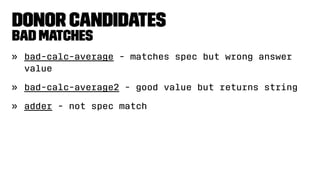
![Donor Candidates
Good Match better calc average
(s/def ::numbers (s/cat :elements (s/coll-of number?)))
(s/def ::result number?)
(defn better-calc-average [earnings]
(if (empty? earnings)
0
(/ (apply + earnings) (count earnings))))](https://image.slidesharecdn.com/genetic-programming-with-clojure-spec-161026215419/85/Genetic-programming-with-clojure-spec-and-Beyond-114-320.jpg)


![Tryitout!!
First we call the report function with a non-empty
vector.
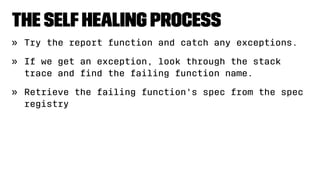
(healing/with-healing (report [1 2 3 4 5 "a" "b"]))
;=>"The average is 3"](https://image.slidesharecdn.com/genetic-programming-with-clojure-spec-161026215419/85/Genetic-programming-with-clojure-spec-and-Beyond-122-320.jpg)

![(healing/with-healing (report []))
; ERROR in function self-healing.core/calc-average
; Divide by zero -- looking for replacement
; Retreiving spec information for function
; {:args :self-healing.core/cleaned-earnings
; :ret :self-healing.core/average, :fn nil}
; Checking candidates better-calc-average
; adder bad-calc-average bad-calc-average2)
; ----------](https://image.slidesharecdn.com/genetic-programming-with-clojure-spec-161026215419/85/Genetic-programming-with-clojure-spec-and-Beyond-124-320.jpg)
![; **Looking at candidate better-calc-average
; ****Comparing args :numbers :cleaned-earnings with input [[]]
; ****Comparing seed [[1 2 3 4 5]] with new function
; ****Result: old 3 new 3
; Found a matching candidate replacement;
; Replacing with candidate match better-calc-average
; ----------
; Calling function again
; Healed function result is: The average is 0
;=>"The average is 0"](https://image.slidesharecdn.com/genetic-programming-with-clojure-spec-161026215419/85/Genetic-programming-with-clojure-spec-and-Beyond-125-320.jpg)
![Sincethe function is nowhealedwe can call
itagainand itwon'thavethe same issue.
(healing/with-healing (report []))
;=>"The average is 0"](https://image.slidesharecdn.com/genetic-programming-with-clojure-spec-161026215419/85/Genetic-programming-with-clojure-spec-and-Beyond-126-320.jpg)










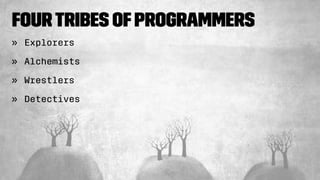
This document discusses using genetic programming and Clojure.spec to evolve program specifications that can describe sample data. It begins with an overview of genetic programming and the four tribes of programmers. It then explains how Clojure.spec allows defining specs, validating data against specs, and generating data from specs. The document demonstrates evolving a population of spec programs to find one that perfectly describes some sample data, and discusses how the evolved spec can now generate new data. It concludes by discussing possibilities for using Clojure.spec to enable self-healing code through horizontal code transfer between donor functions.


