



Image   by flickr user deia
Images   by flickr users library of congress, takomabibelot, findsiddiqui, prep4md, zeke
Image   by flickr user rickbradley
Image   by Bernd Ahlers
Image   by flickr user 20158323@N04
Image   by flickr user joyless joyless
Image   by flickr user cwsteeds
Image   by flickr user jamescridland
Image   by flickr user schmilblick
Image   by flickr user therichbrooks
Image   by flickr user darwinbell
Image   by Wikimedia Commons user Silly rabbit
Image   by flickr user jurvetson
Image is in the public domain
Image   by flickr user heydrienne
Image   by Wikimedia Commons user Pastorius
Image is in the public domain
Image   by flickr user walkingsf
Image   by flickr user marksurman
Image is in the public domain
Text accociated to the slides:
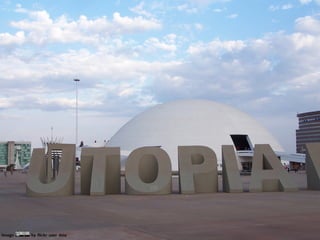
           Slide 1: A short disclaimer: You might classify many ideas I will tell you in the next 5 minutes as utopian dreaming. Please remember that
           most of the things we have around us today were utopian at some point. The future needs dreams.
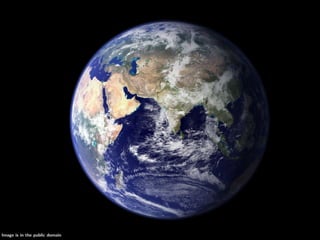
           Slide 2: Today’s society suffers global problems like war, poverty, destruction of the environment, crime, psychological stress and
           widespread but neglected diseases.
           Slide 3: Part of the problem is how we handle problems in general. Too often we look only at symptoms and do quick and dirty
           short-lasting fixes.
           Slide 4: How we deal with SPAM is an example: SPAM exist due to the fact that there are uneducated people and other people exploit
           them to make money that they need for their living. We try to tackle the problem at the very end by filtering messages ... with little
           success.
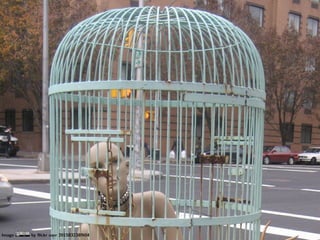
           Slide 5: We are trapped in a mental cage and don’t think enough out of the box. We have to take a step back and have a look at our
           fundamental problems.
           Slide 6: The underlying problem is scarcity - the limitation of resources. This leads to egoistic and anti-social behaviour.
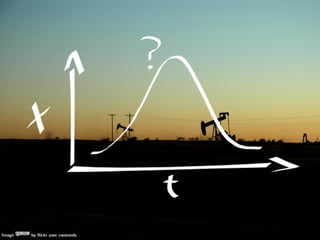
           Slide 7: And we need to hurry up as the problems grow. The Hubbard curve is well known for describing our global oil resources but can
           be applied to many other resources, too. In many cases we don’t know at which stage we are currently.
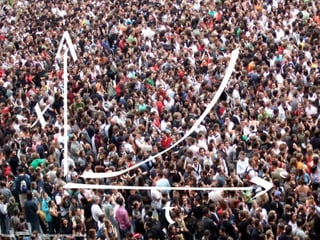
           Slide 8: Additionally the world’s population is growing exponentially. And with it pollution and consumption.
           Slide 9: Our economy is even built on this insane growth and relies on inefficiency, planned obsolescence and cyclic consumption.
           Slide 10: Due to the limited resources we are programmed from an early stages of our life to behave egocentric and competitive. It has
           become part of our value system.
           Slide 11: People with aberrant and anti-social behaviour make most of the profit. Think about the weapon industry, exploitation of
           natural resources and corruption.
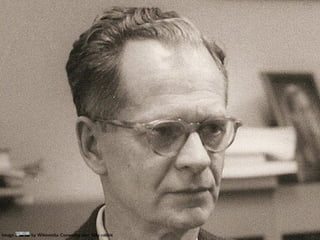
           Slide 12: But there are proposal for solutions: Already in 1948 B. F. Skinner’ published a novel called “Walden 2” in which he projected
           the consequences of his research to a more of less isolated community.
           Slide 13: The community is constantly questioning the status quo, is testing new solutions and by doing so gets rid of many burdens of
           the todays society.
           Slide 14: What we need today is “Walden 3” - A global system approach to tackle the underlying problems of our world.
           Slide 15: We need to know and we have to share the full amount of our physical and intellectual resources in a wise manner.
           Slide 16: We have to apply the scientific method to question the status quo and all of our current behaviour. We have to benchmark any
           action regarding its effect on the society.
           Slide 17: There are grass root organisations that are one this track: The Venus Project and the associated Zeitgeist Movement are
           promoting a so called Resourced Based Economy.
           Slide 18: Jacque Fresco and Roxanne Meadows - the minds behind the Venus Project - came up with many social and technical solutions
           in the last decades.
           Slide 19: But we should not consider this as finished but as the starting point and a platform for more end even better ideas.
           Slide 20: My intention is to make more people to think in this way and to focus on solution for the fundamental problems of toady’s
           society. I hope you feel inspired. Thank you.


Image is in the public domain
These are the slides of the Ignite 2010 talk given by Konrad U. F¨rstner.
                                                                                                 o


           No Copyright - The person who associated a work with this document has dedicated the work to the Commons by
           waiving all of his or her rights to the work worldwide under copyright law and all related or neighboring legal rights
                                          he or she had in the work, to the extent allowable by law.
             Works under CC0 do not require attribution. When citing the work, you should not imply endorsement by the
                                                                   author.


Image is in the public domain

General thoughts about how to fix the world

  • 1.
    Image by flickr user deia
  • 2.
    Images by flickr users library of congress, takomabibelot, findsiddiqui, prep4md, zeke
  • 3.
    Image by flickr user rickbradley
  • 4.
    Image by Bernd Ahlers
  • 5.
    Image by flickr user 20158323@N04
  • 6.
    Image by flickr user joyless joyless
  • 7.
    Image by flickr user cwsteeds
  • 8.
    Image by flickr user jamescridland
  • 9.
    Image by flickr user schmilblick
  • 10.
    Image by flickr user therichbrooks
  • 11.
    Image by flickr user darwinbell
  • 12.
    Image by Wikimedia Commons user Silly rabbit
  • 13.
    Image by flickr user jurvetson
  • 14.
    Image is inthe public domain
  • 15.
    Image by flickr user heydrienne
  • 16.
    Image by Wikimedia Commons user Pastorius
  • 17.
    Image is inthe public domain
  • 18.
    Image by flickr user walkingsf
  • 19.
    Image by flickr user marksurman
  • 20.
    Image is inthe public domain
  • 21.
    Text accociated tothe slides: Slide 1: A short disclaimer: You might classify many ideas I will tell you in the next 5 minutes as utopian dreaming. Please remember that most of the things we have around us today were utopian at some point. The future needs dreams. Slide 2: Today’s society suffers global problems like war, poverty, destruction of the environment, crime, psychological stress and widespread but neglected diseases. Slide 3: Part of the problem is how we handle problems in general. Too often we look only at symptoms and do quick and dirty short-lasting fixes. Slide 4: How we deal with SPAM is an example: SPAM exist due to the fact that there are uneducated people and other people exploit them to make money that they need for their living. We try to tackle the problem at the very end by filtering messages ... with little success. Slide 5: We are trapped in a mental cage and don’t think enough out of the box. We have to take a step back and have a look at our fundamental problems. Slide 6: The underlying problem is scarcity - the limitation of resources. This leads to egoistic and anti-social behaviour. Slide 7: And we need to hurry up as the problems grow. The Hubbard curve is well known for describing our global oil resources but can be applied to many other resources, too. In many cases we don’t know at which stage we are currently. Slide 8: Additionally the world’s population is growing exponentially. And with it pollution and consumption. Slide 9: Our economy is even built on this insane growth and relies on inefficiency, planned obsolescence and cyclic consumption. Slide 10: Due to the limited resources we are programmed from an early stages of our life to behave egocentric and competitive. It has become part of our value system. Slide 11: People with aberrant and anti-social behaviour make most of the profit. Think about the weapon industry, exploitation of natural resources and corruption. Slide 12: But there are proposal for solutions: Already in 1948 B. F. Skinner’ published a novel called “Walden 2” in which he projected the consequences of his research to a more of less isolated community. Slide 13: The community is constantly questioning the status quo, is testing new solutions and by doing so gets rid of many burdens of the todays society. Slide 14: What we need today is “Walden 3” - A global system approach to tackle the underlying problems of our world. Slide 15: We need to know and we have to share the full amount of our physical and intellectual resources in a wise manner. Slide 16: We have to apply the scientific method to question the status quo and all of our current behaviour. We have to benchmark any action regarding its effect on the society. Slide 17: There are grass root organisations that are one this track: The Venus Project and the associated Zeitgeist Movement are promoting a so called Resourced Based Economy. Slide 18: Jacque Fresco and Roxanne Meadows - the minds behind the Venus Project - came up with many social and technical solutions in the last decades. Slide 19: But we should not consider this as finished but as the starting point and a platform for more end even better ideas. Slide 20: My intention is to make more people to think in this way and to focus on solution for the fundamental problems of toady’s society. I hope you feel inspired. Thank you. Image is in the public domain
  • 22.
    These are theslides of the Ignite 2010 talk given by Konrad U. F¨rstner. o No Copyright - The person who associated a work with this document has dedicated the work to the Commons by waiving all of his or her rights to the work worldwide under copyright law and all related or neighboring legal rights he or she had in the work, to the extent allowable by law. Works under CC0 do not require attribution. When citing the work, you should not imply endorsement by the author. Image is in the public domain