Case Analysis over General Electric after GE Capital
General Electric
2
-Larry Culp-
Chief Executive Officer
 The GE conglomerate consists of eight subsidiaries in different industries
 GE Aviation, GE Capital, GE Global Research, GE Healthcare, GE Home & Business Solutions, GE Oil & Gas, GE Power & Water,
and GE Transportation
 Culp is the first outsider to helm GE in its more than 120 years of operation
3
Periods of The Leaders Throughout General Electric History
Timeline of General Electric
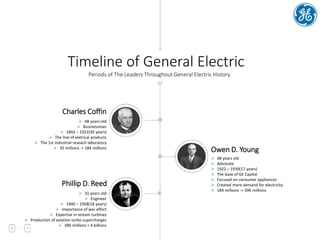
Charles Coffin
 48 years old
 Businessman
 1892 – 1922(30 years)
 The line of eletrical products
 The 1st industrial reseach laboratory
 35 millions -> 184 millions
Owen D. Young
 48 years old
 Advocate
 1922 – 1939(17 years)
 The base of GE Capital
 Focused on consumer appliances
 Created more demand for electricity
 184 millions -> 396 millions
Phillip D. Reed
 31 years old
 Engineer
 1940 – 1958(18 years)
 Importance of war effort
 Expertise in stream turbines
 Production of aviation turbo supercharges
 396 millions > 4 billions
4
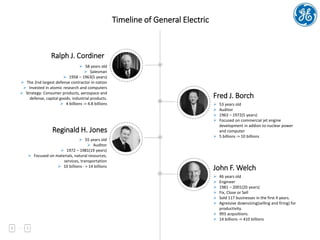
Ralph J. Cordiner
 58 years old
 Salesman
 1958 – 1963(5 years)
 The 2nd largest defense contractor in nation
 Invested in atomic research and computers
 Strategy: Consumer products, aerospace and
defense, capital goods, industrial products.
 4 billions -> 4.8 billions
Fred J. Borch
 53 years old
 Auditor
 1963 – 1972(5 years)
 Focused on commercial jet engine
development in addion to nuclear power
and computer
 5 billions -> 10 billions
John F. Welch
 46 years old
 Engineer
 1981 – 2001(20 years)
 Fix, Close or Sell
 Sold 117 businesses in the first 4 years.
 Agressive downsizing(selling and firing) for
productivity.
 993 acqusitions.
 14 billions -> 410 billions
Reginald H. Jones
 55 years old
 Auditor
 1972 – 1981(19 years)
 Focused on materials, natural resources,
services, transportation
 10 billions - > 14 billions
Timeline of General Electric
5
If the rate of CHANGE on the outside exceeds the
rate of change on the inside, the end is near.
”
“
John F. Welch
Former CEO – Generel Electric
6
GE’s External Environment
Strategic
Immelt became CEO four days before the september 11 terrorist
attack followed by several disasters: Enron, Hurricane Katrina,
Fukushima, the global financal crisis.
The financial crisis had the greatest impact on GE. GE had cut its
dividend for the first time since the great depression, and it would
lose its AAA credit rating three days later. For the second time in its
corporate history, GE’s existence was threatened by its vast financial
holdings. It is about the environment, not the immelt.
7
Immelt decided that GE needed to focus on its industrial roots
and he drove this change in four distinct ways:
 Divesting non core businesses
 Acquiring industrial companies
 Prioritizing globalization
 Increasing spending on R&D
Strategic
Immelt as a Strategic Leader
8
Strategic
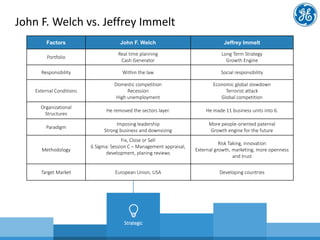
Factors John F. Welch Jeffrey Immelt
Portfolio
Real time planning
Cash Generator
Long Term Strategy
Growth Engine
Responsibility Within the law Social responsibility
External Conditions
Domestic competition
Recession
High unemployment
Economic global slowdown
Terrorist attack
Global competition
Organizational
Structures
He removed the sectors layer. He made 11 business units into 6.
Paradigm
Imposing leadership
Strong business and downsizing
More people-oriented paternal
Growth engine for the future
Methodology
Fix, Close or Sell
6 Sigma: Session C – Management appraisal,
development, planing reviews
Risk Taking, innovation
External growth, marketing, more openness
and trust
Target Market European Union, USA Developing countries
John F. Welch vs. Jeffrey Immelt
SWOT Analysis
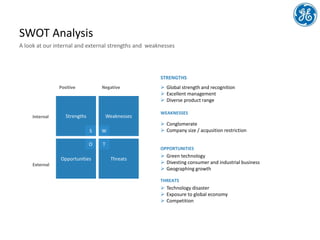
A look at our internal and external strengths and weaknesses
 Global strength and recognition
 Excellent management
 Diverse product range
STRENGTHS
 Conglomerate
 Company size / acqusition restriction
WEAKNESSES
 Green technology
 Divesting consumer and industrial business
 Geographing growth
OPPORTUNITIES
 Technology disaster
 Exposure to global economy
 Competition
THREATS
Positive Negative
Internal
External
Strengths
S
Weaknesses
W
Threats
T
Opportunities
O
10
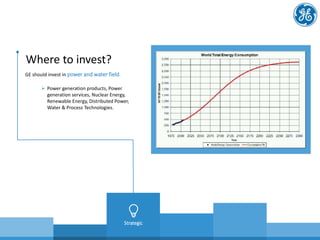
GE should invest in power and water field.
 Power generation products, Power
generation services, Nuclear Energy,
Renewable Energy, Distributed Power,
Water & Process Technologies.
Strategic
Where to invest?
Case Analysis over General Electric after GE Capital
General Electric
Thank you…

General Electric (Case Study)

  • 1.
    Case Analysis overGeneral Electric after GE Capital General Electric
  • 2.
    2 -Larry Culp- Chief ExecutiveOfficer  The GE conglomerate consists of eight subsidiaries in different industries  GE Aviation, GE Capital, GE Global Research, GE Healthcare, GE Home & Business Solutions, GE Oil & Gas, GE Power & Water, and GE Transportation  Culp is the first outsider to helm GE in its more than 120 years of operation
  • 3.
    3 Periods of TheLeaders Throughout General Electric History Timeline of General Electric Charles Coffin  48 years old  Businessman  1892 – 1922(30 years)  The line of eletrical products  The 1st industrial reseach laboratory  35 millions -> 184 millions Owen D. Young  48 years old  Advocate  1922 – 1939(17 years)  The base of GE Capital  Focused on consumer appliances  Created more demand for electricity  184 millions -> 396 millions Phillip D. Reed  31 years old  Engineer  1940 – 1958(18 years)  Importance of war effort  Expertise in stream turbines  Production of aviation turbo supercharges  396 millions > 4 billions
  • 4.
    4 Ralph J. Cordiner 58 years old  Salesman  1958 – 1963(5 years)  The 2nd largest defense contractor in nation  Invested in atomic research and computers  Strategy: Consumer products, aerospace and defense, capital goods, industrial products.  4 billions -> 4.8 billions Fred J. Borch  53 years old  Auditor  1963 – 1972(5 years)  Focused on commercial jet engine development in addion to nuclear power and computer  5 billions -> 10 billions John F. Welch  46 years old  Engineer  1981 – 2001(20 years)  Fix, Close or Sell  Sold 117 businesses in the first 4 years.  Agressive downsizing(selling and firing) for productivity.  993 acqusitions.  14 billions -> 410 billions Reginald H. Jones  55 years old  Auditor  1972 – 1981(19 years)  Focused on materials, natural resources, services, transportation  10 billions - > 14 billions Timeline of General Electric
  • 5.
    5 If the rateof CHANGE on the outside exceeds the rate of change on the inside, the end is near. ” “ John F. Welch Former CEO – Generel Electric
  • 6.
    6 GE’s External Environment Strategic Immeltbecame CEO four days before the september 11 terrorist attack followed by several disasters: Enron, Hurricane Katrina, Fukushima, the global financal crisis. The financial crisis had the greatest impact on GE. GE had cut its dividend for the first time since the great depression, and it would lose its AAA credit rating three days later. For the second time in its corporate history, GE’s existence was threatened by its vast financial holdings. It is about the environment, not the immelt.
  • 7.
    7 Immelt decided thatGE needed to focus on its industrial roots and he drove this change in four distinct ways:  Divesting non core businesses  Acquiring industrial companies  Prioritizing globalization  Increasing spending on R&D Strategic Immelt as a Strategic Leader
  • 8.
    8 Strategic Factors John F.Welch Jeffrey Immelt Portfolio Real time planning Cash Generator Long Term Strategy Growth Engine Responsibility Within the law Social responsibility External Conditions Domestic competition Recession High unemployment Economic global slowdown Terrorist attack Global competition Organizational Structures He removed the sectors layer. He made 11 business units into 6. Paradigm Imposing leadership Strong business and downsizing More people-oriented paternal Growth engine for the future Methodology Fix, Close or Sell 6 Sigma: Session C – Management appraisal, development, planing reviews Risk Taking, innovation External growth, marketing, more openness and trust Target Market European Union, USA Developing countries John F. Welch vs. Jeffrey Immelt
  • 9.
    SWOT Analysis A lookat our internal and external strengths and weaknesses  Global strength and recognition  Excellent management  Diverse product range STRENGTHS  Conglomerate  Company size / acqusition restriction WEAKNESSES  Green technology  Divesting consumer and industrial business  Geographing growth OPPORTUNITIES  Technology disaster  Exposure to global economy  Competition THREATS Positive Negative Internal External Strengths S Weaknesses W Threats T Opportunities O
  • 10.
    10 GE should investin power and water field.  Power generation products, Power generation services, Nuclear Energy, Renewable Energy, Distributed Power, Water & Process Technologies. Strategic Where to invest?
  • 11.
    Case Analysis overGeneral Electric after GE Capital General Electric Thank you…