Presenters: Ayesha & Bakhtawar
Presented to: Dr Saima
Department: Education
Subject: Sustainable Development of Education
Pa
Gender and
Education in
Pakistan
An introduction to the topic of gender and education in Pakistan.
Pa
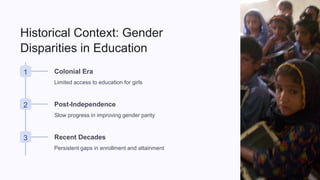
Historical Context: Gender
Disparities in Education
1 Colonial Era
Limited access to education for girls
2 Post-Independence
Slow progress in improving gender parity
3 Recent Decades
Persistent gaps in enrollment and attainment
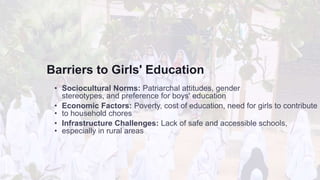
Barriers to Girls' Education
• Sociocultural Norms: Patriarchal attitudes, gender
stereotypes, and preference for boys' education
• Economic Factors: Poverty, cost of education, need for girls to contribute
• to household chores
• Infrastructure Challenges: Lack of safe and accessible schools,
• especially in rural areas
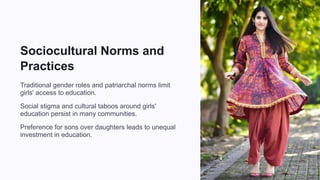
Sociocultural Norms and
Practices
Traditional gender roles and patriarchal norms limit
girls' access to education.
Social stigma and cultural taboos around girls'
education persist in many communities.
Preference for sons over daughters leads to unequal
investment in education.
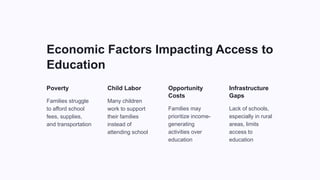
Economic Factors Impacting Access to
Education
Poverty
Families struggle
to afford school
fees, supplies,
and transportation
Child Labor
Many children
work to support
their families
instead of
attending school
Opportunity
Costs
Families may
prioritize income-
generating
activities over
education
Infrastructure
Gaps
Lack of schools,
especially in rural
areas, limits
access to
education
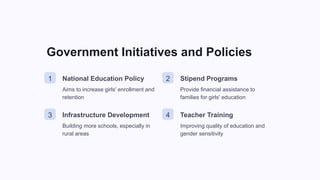
Government Initiatives and Policies
1 National Education Policy
Aims to increase girls' enrollment and
retention
2 Stipend Programs
Provide financial assistance to
families for girls' education
3 Infrastructure Development
Building more schools, especially in
rural areas
4 Teacher Training
Improving quality of education and
gender sensitivity
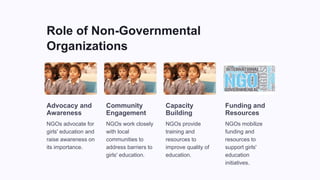
Role of Non-Governmental
Organizations
Advocacy and
Awareness
NGOs advocate for
girls' education and
raise awareness on
its importance.
Community
Engagement
NGOs work closely
with local
communities to
address barriers to
girls' education.
Capacity
Building
NGOs provide
training and
resources to
improve quality of
education.
Funding and
Resources
NGOs mobilize
funding and
resources to
support girls'
education
initiatives.
Challenges in Implementation and
Enforcement
1
Lack of Funding
Insufficient resources for education programs
2
Cultural Resistance
Entrenched societal norms against girls' education
3
Weak Governance
Ineffective policy implementation and
monitoring
Despite government initiatives and NGO efforts, significant challenges remain in
effectively implementing and enforcing policies to promote gender equality in
education across Pakistan.
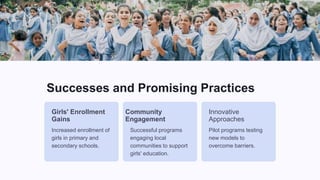
Successes and Promising Practices
Girls' Enrollment
Gains
Increased enrollment of
girls in primary and
secondary schools.
Community
Engagement
Successful programs
engaging local
communities to support
girls' education.
Innovative
Approaches
Pilot programs testing
new models to
overcome barriers.
Conclusion and Call to Action
Sustain Progress
Maintain momentum in girls' education initiatives
Increase Investments
Allocate more resources to address barriers
Empower Communities
Engage local stakeholders to drive change
References:
Zaman K, Khan MM, Ahmad M, Ikram W. Do female enrolment rates cause economic growth in Pakistan?
Asian Social Science. 2010;6(11):256. doi: 10.5539/ass.v6n11p256.
Chaudhry IS, Farooq F. Gender inequality in education and household poverty in Pakistan:
A case of Multan District. Review of Economics and Development Studies. 2018;4(1):115–126. doi: 10.26710/reads.v4i1.286.
Shaheen N, Ahmad N. Women entrepreneurship and empowerment in Pakistan: Gender, culture, education
and policy in broader perspective. International Research Journal of Education & Social Sciences. 2022;1(1):25–36.
Sen G. Gender equality and women’s empowerment: Feminist mobilization for the SDG s. Global Policy.
2019;10:28–38. doi: 10.1111/1758-5899.12593.
Ali, A., Audi, M., Bibi, C., & Roussel, Y. (2021). The impact of gender inequality and environmental degradation on
human well-being in the case of Pakistan: A time series analysis
Ali A, Mottaleb KA, Aryal JP. Wealth, education and cooking-fuel choices among rural households in Pakistan.
Energy Strategy Reviews. 2019;24:236–243. doi: 10.1016/j.esr.2019.03.005.

Gender-and-Education-in-Pakistan....pptx

  • 1.
    Presenters: Ayesha &Bakhtawar Presented to: Dr Saima Department: Education Subject: Sustainable Development of Education Pa
  • 2.
    Gender and Education in Pakistan Anintroduction to the topic of gender and education in Pakistan. Pa
  • 3.
    Historical Context: Gender Disparitiesin Education 1 Colonial Era Limited access to education for girls 2 Post-Independence Slow progress in improving gender parity 3 Recent Decades Persistent gaps in enrollment and attainment
  • 4.
    Barriers to Girls'Education • Sociocultural Norms: Patriarchal attitudes, gender stereotypes, and preference for boys' education • Economic Factors: Poverty, cost of education, need for girls to contribute • to household chores • Infrastructure Challenges: Lack of safe and accessible schools, • especially in rural areas
  • 5.
    Sociocultural Norms and Practices Traditionalgender roles and patriarchal norms limit girls' access to education. Social stigma and cultural taboos around girls' education persist in many communities. Preference for sons over daughters leads to unequal investment in education.
  • 6.
    Economic Factors ImpactingAccess to Education Poverty Families struggle to afford school fees, supplies, and transportation Child Labor Many children work to support their families instead of attending school Opportunity Costs Families may prioritize income- generating activities over education Infrastructure Gaps Lack of schools, especially in rural areas, limits access to education
  • 7.
    Government Initiatives andPolicies 1 National Education Policy Aims to increase girls' enrollment and retention 2 Stipend Programs Provide financial assistance to families for girls' education 3 Infrastructure Development Building more schools, especially in rural areas 4 Teacher Training Improving quality of education and gender sensitivity
  • 8.
    Role of Non-Governmental Organizations Advocacyand Awareness NGOs advocate for girls' education and raise awareness on its importance. Community Engagement NGOs work closely with local communities to address barriers to girls' education. Capacity Building NGOs provide training and resources to improve quality of education. Funding and Resources NGOs mobilize funding and resources to support girls' education initiatives.
  • 9.
    Challenges in Implementationand Enforcement 1 Lack of Funding Insufficient resources for education programs 2 Cultural Resistance Entrenched societal norms against girls' education 3 Weak Governance Ineffective policy implementation and monitoring Despite government initiatives and NGO efforts, significant challenges remain in effectively implementing and enforcing policies to promote gender equality in education across Pakistan.
  • 10.
    Successes and PromisingPractices Girls' Enrollment Gains Increased enrollment of girls in primary and secondary schools. Community Engagement Successful programs engaging local communities to support girls' education. Innovative Approaches Pilot programs testing new models to overcome barriers.
  • 11.
    Conclusion and Callto Action Sustain Progress Maintain momentum in girls' education initiatives Increase Investments Allocate more resources to address barriers Empower Communities Engage local stakeholders to drive change
  • 12.
    References: Zaman K, KhanMM, Ahmad M, Ikram W. Do female enrolment rates cause economic growth in Pakistan? Asian Social Science. 2010;6(11):256. doi: 10.5539/ass.v6n11p256. Chaudhry IS, Farooq F. Gender inequality in education and household poverty in Pakistan: A case of Multan District. Review of Economics and Development Studies. 2018;4(1):115–126. doi: 10.26710/reads.v4i1.286. Shaheen N, Ahmad N. Women entrepreneurship and empowerment in Pakistan: Gender, culture, education and policy in broader perspective. International Research Journal of Education & Social Sciences. 2022;1(1):25–36. Sen G. Gender equality and women’s empowerment: Feminist mobilization for the SDG s. Global Policy. 2019;10:28–38. doi: 10.1111/1758-5899.12593. Ali, A., Audi, M., Bibi, C., & Roussel, Y. (2021). The impact of gender inequality and environmental degradation on human well-being in the case of Pakistan: A time series analysis Ali A, Mottaleb KA, Aryal JP. Wealth, education and cooking-fuel choices among rural households in Pakistan. Energy Strategy Reviews. 2019;24:236–243. doi: 10.1016/j.esr.2019.03.005.