t
SIDE EVENT – PAEPARD CASE STUDY
PAEPARD: The Platform for African-European Partnership in
Agricultural Research for Development
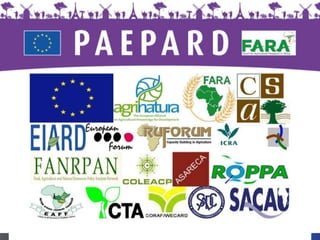
PAEPARD Partners
t
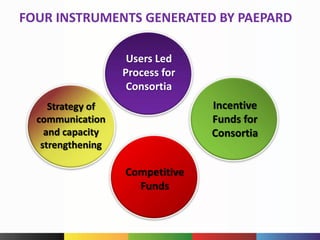
FOUR INSTRUMENTS GENERATED BY PAEPARD
Users Led
Process for
Consortia
Incentive
Funds for
Consortia
Competitive
Funds
Strategy of
communication
and capacity
strengthening
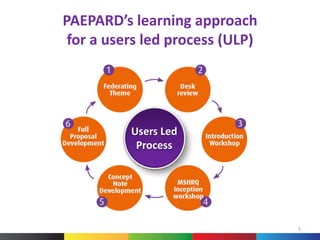
PAEPARD’s learning approach
for a users led process (ULP)
5
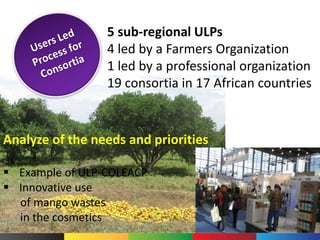
Users Led
Process
5 sub-regional ULPs
4 led by a Farmers Organization
1 led by a professional organization
19 consortia in 17 African countries
Analyze of the needs and priorities
 Example of ULP-COLEACP
 Innovative use
of mango wastes
in the cosmetics
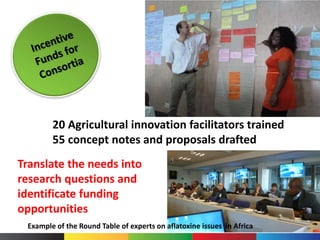
20 Agricultural innovation facilitators trained
55 concept notes and proposals drafted
Translate the needs into
research questions and
identificate funding
opportunities
Example of the Round Table of experts on aflatoxine issues in Africa
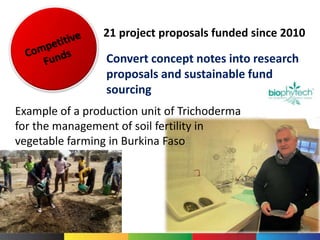
Example of a production unit of Trichoderma
for the management of soil fertility in
vegetable farming in Burkina Faso
21 project proposals funded since 2010
Convert concept notes into research
proposals and sustainable fund
sourcing
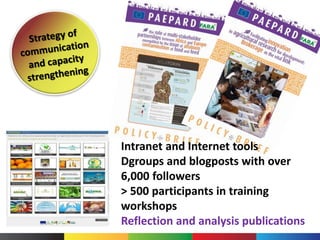
Intranet and Internet tools
Dgroups and blogposts with over
6,000 followers
> 500 participants in training
workshops
Reflection and analysis publications
Some lessons from PAEPARD’s experience to be
further discussed:
• A crucial stage is to translate users needs into
research questions
• Diversifying the funding sources is essential
• The benefits of a multi-stakeholder partnership
cannot be restricted to financial aspects
• Brokerage is key to organize and strengthen multi-
stakeholder partnerships in ARD

Gcard3 global event side event paepard

  • 2.
    t SIDE EVENT –PAEPARD CASE STUDY PAEPARD: The Platform for African-European Partnership in Agricultural Research for Development
  • 3.
  • 4.
    t FOUR INSTRUMENTS GENERATEDBY PAEPARD Users Led Process for Consortia Incentive Funds for Consortia Competitive Funds Strategy of communication and capacity strengthening
  • 5.
    PAEPARD’s learning approach fora users led process (ULP) 5 Users Led Process
  • 6.
    5 sub-regional ULPs 4led by a Farmers Organization 1 led by a professional organization 19 consortia in 17 African countries Analyze of the needs and priorities  Example of ULP-COLEACP  Innovative use of mango wastes in the cosmetics
  • 7.
    20 Agricultural innovationfacilitators trained 55 concept notes and proposals drafted Translate the needs into research questions and identificate funding opportunities Example of the Round Table of experts on aflatoxine issues in Africa
  • 8.
    Example of aproduction unit of Trichoderma for the management of soil fertility in vegetable farming in Burkina Faso 21 project proposals funded since 2010 Convert concept notes into research proposals and sustainable fund sourcing
  • 9.
    Intranet and Internettools Dgroups and blogposts with over 6,000 followers > 500 participants in training workshops Reflection and analysis publications
  • 10.
    Some lessons fromPAEPARD’s experience to be further discussed: • A crucial stage is to translate users needs into research questions • Diversifying the funding sources is essential • The benefits of a multi-stakeholder partnership cannot be restricted to financial aspects • Brokerage is key to organize and strengthen multi- stakeholder partnerships in ARD