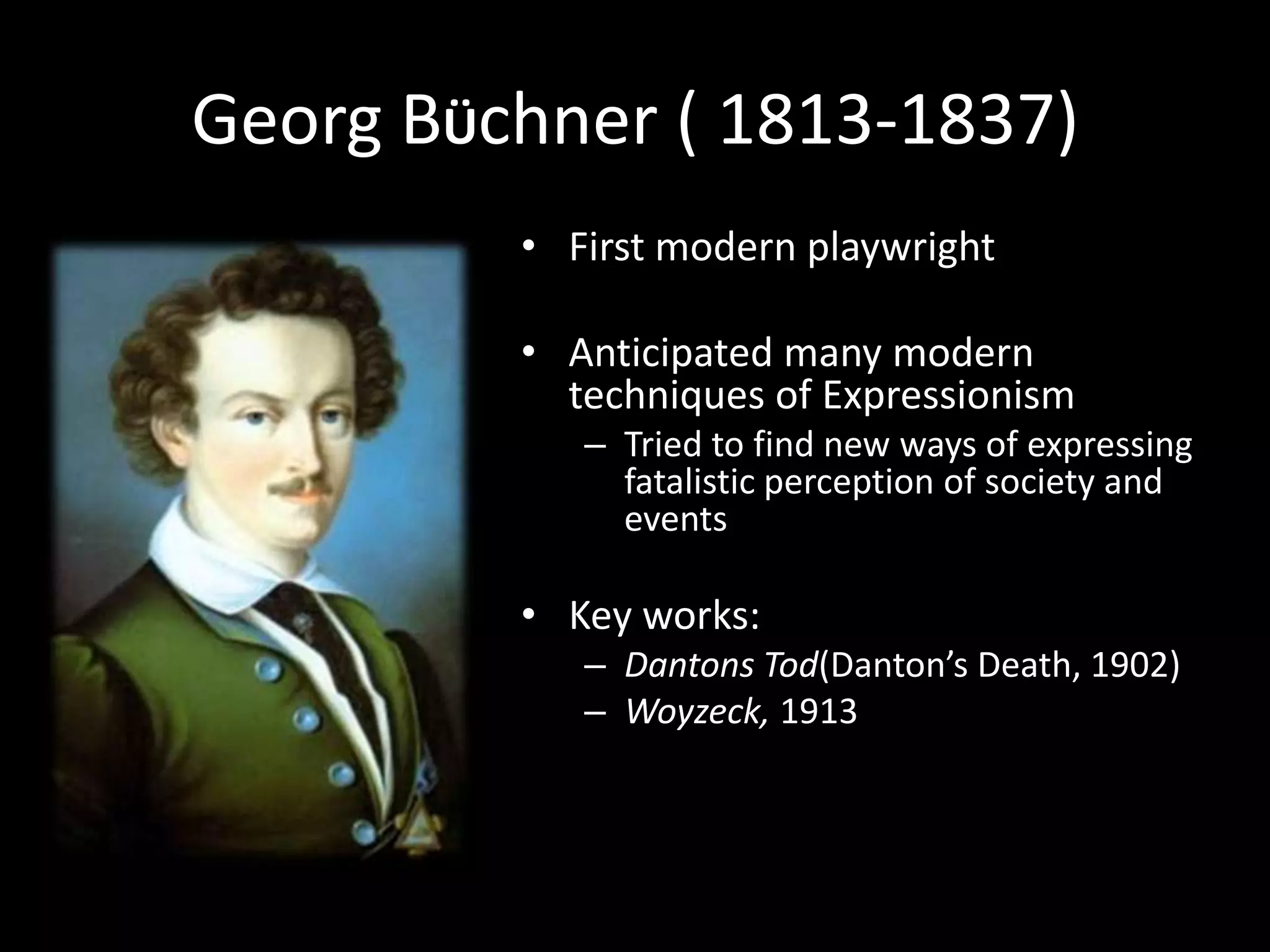
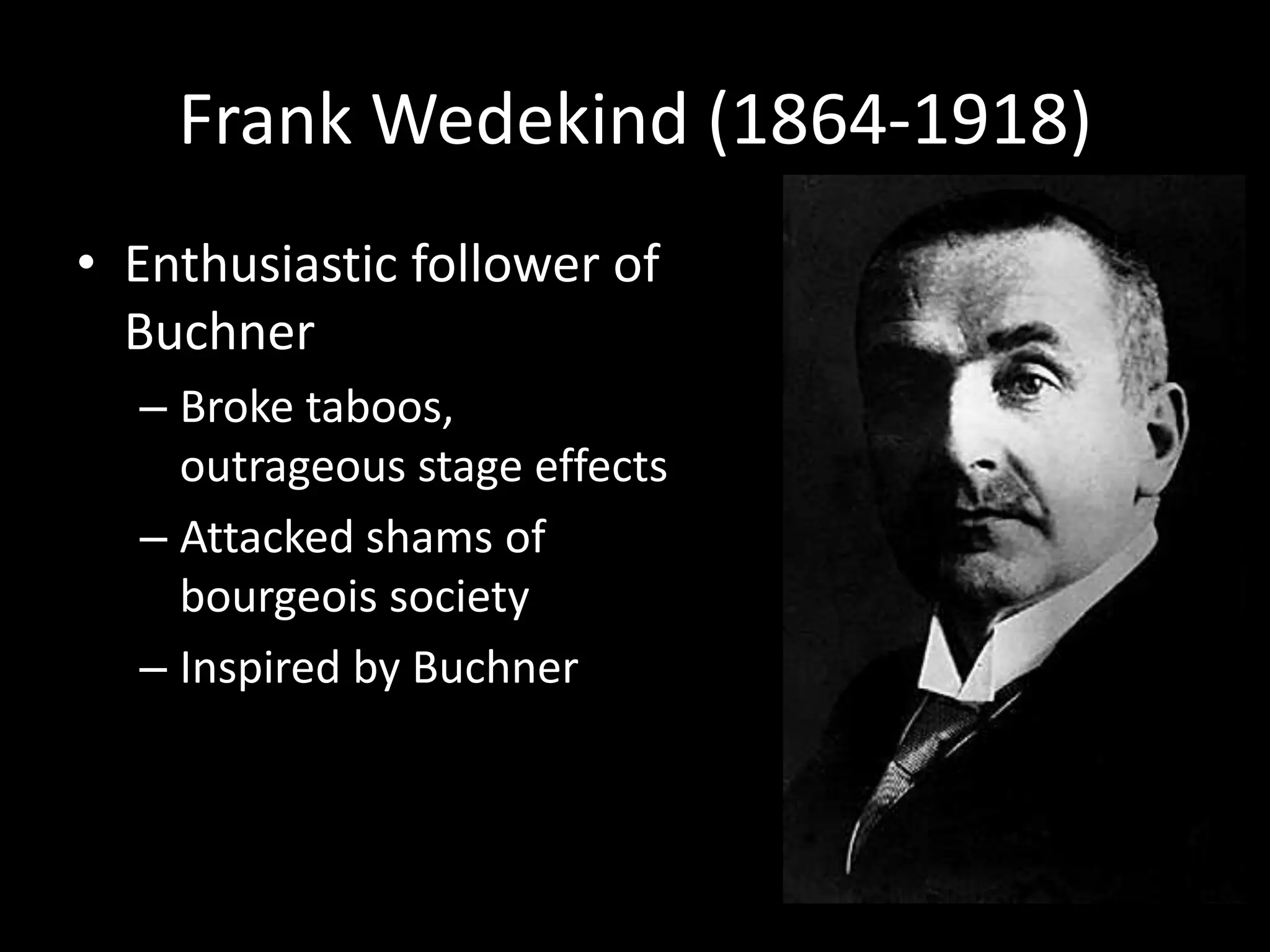
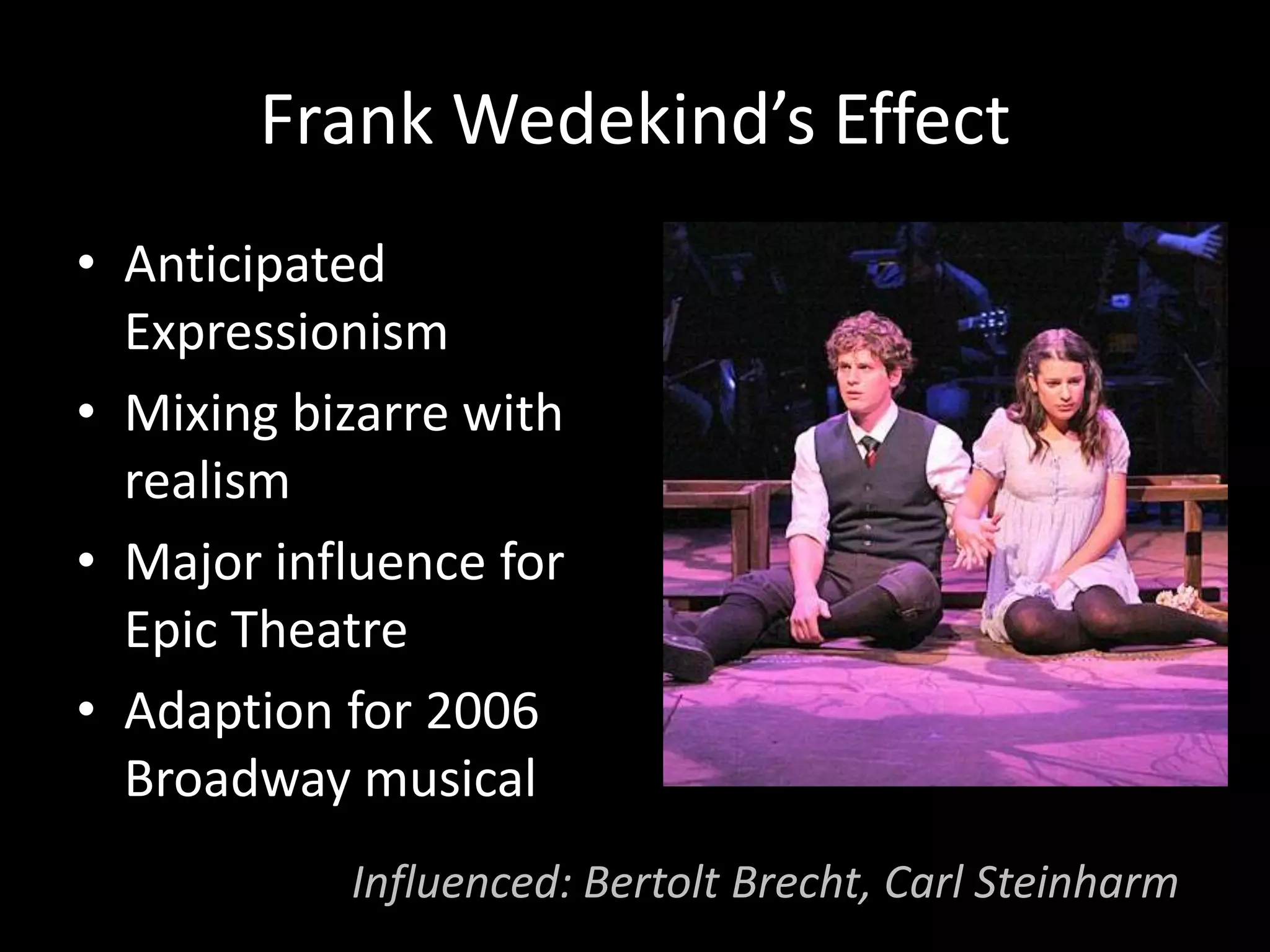
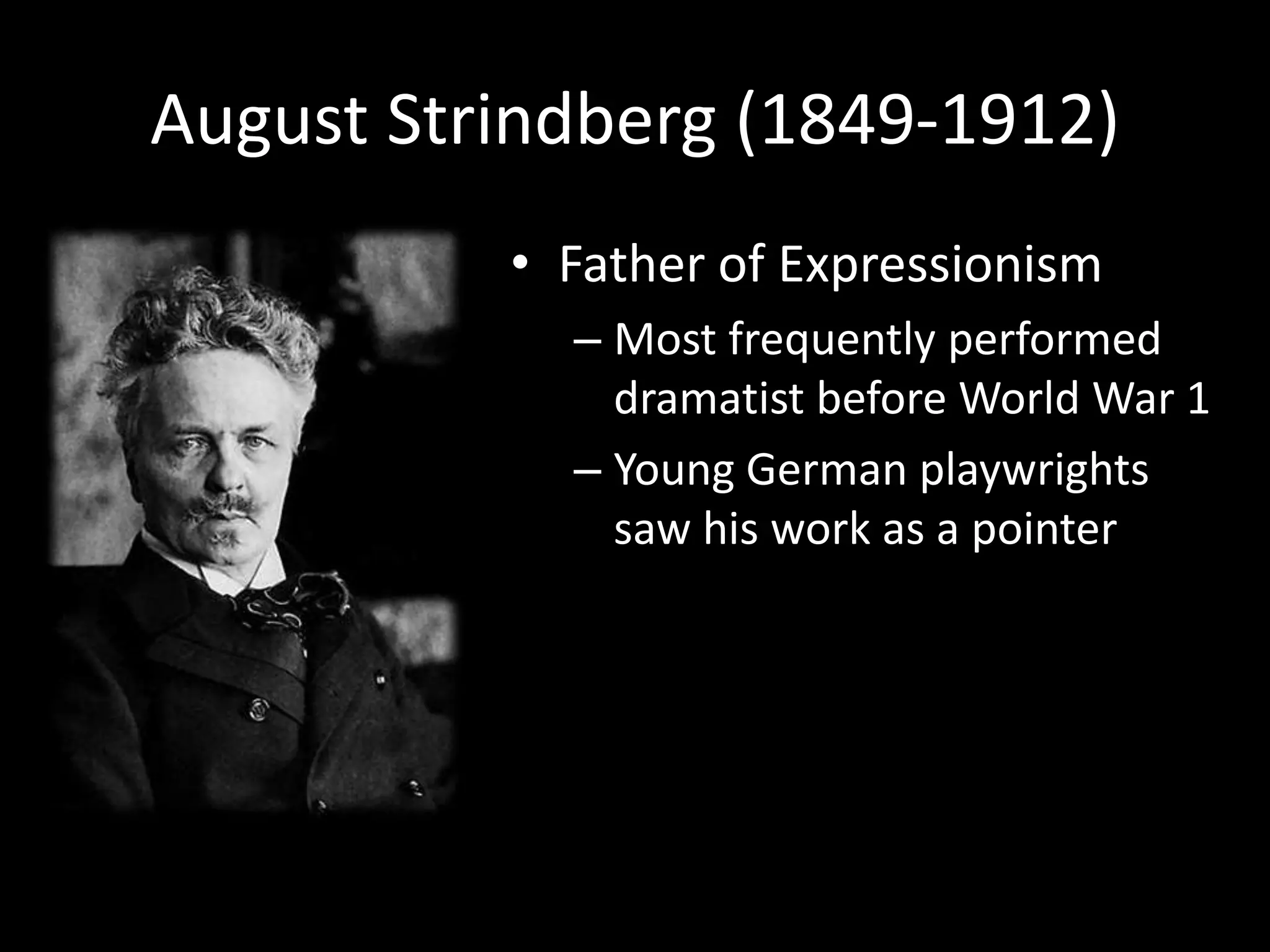
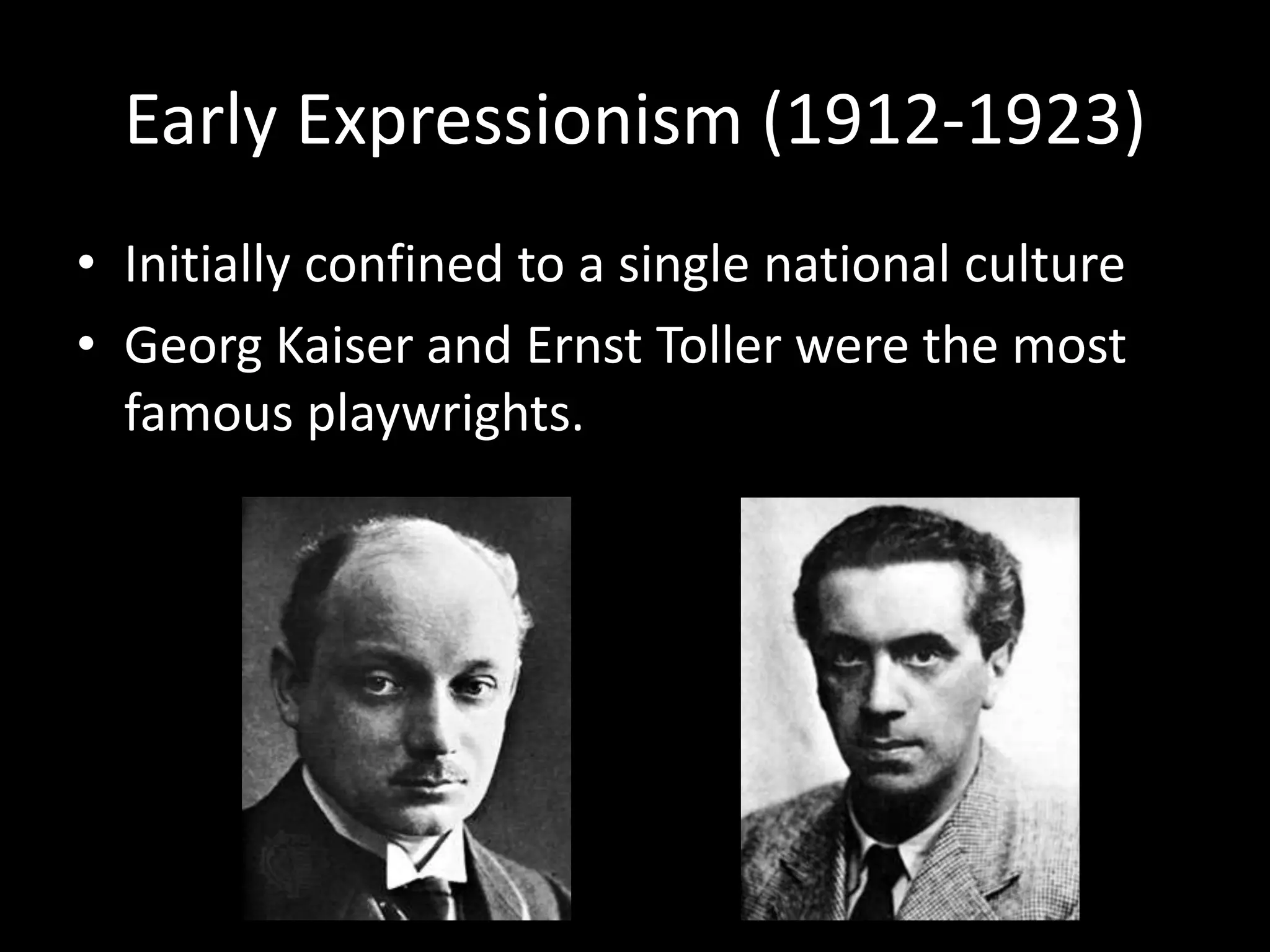
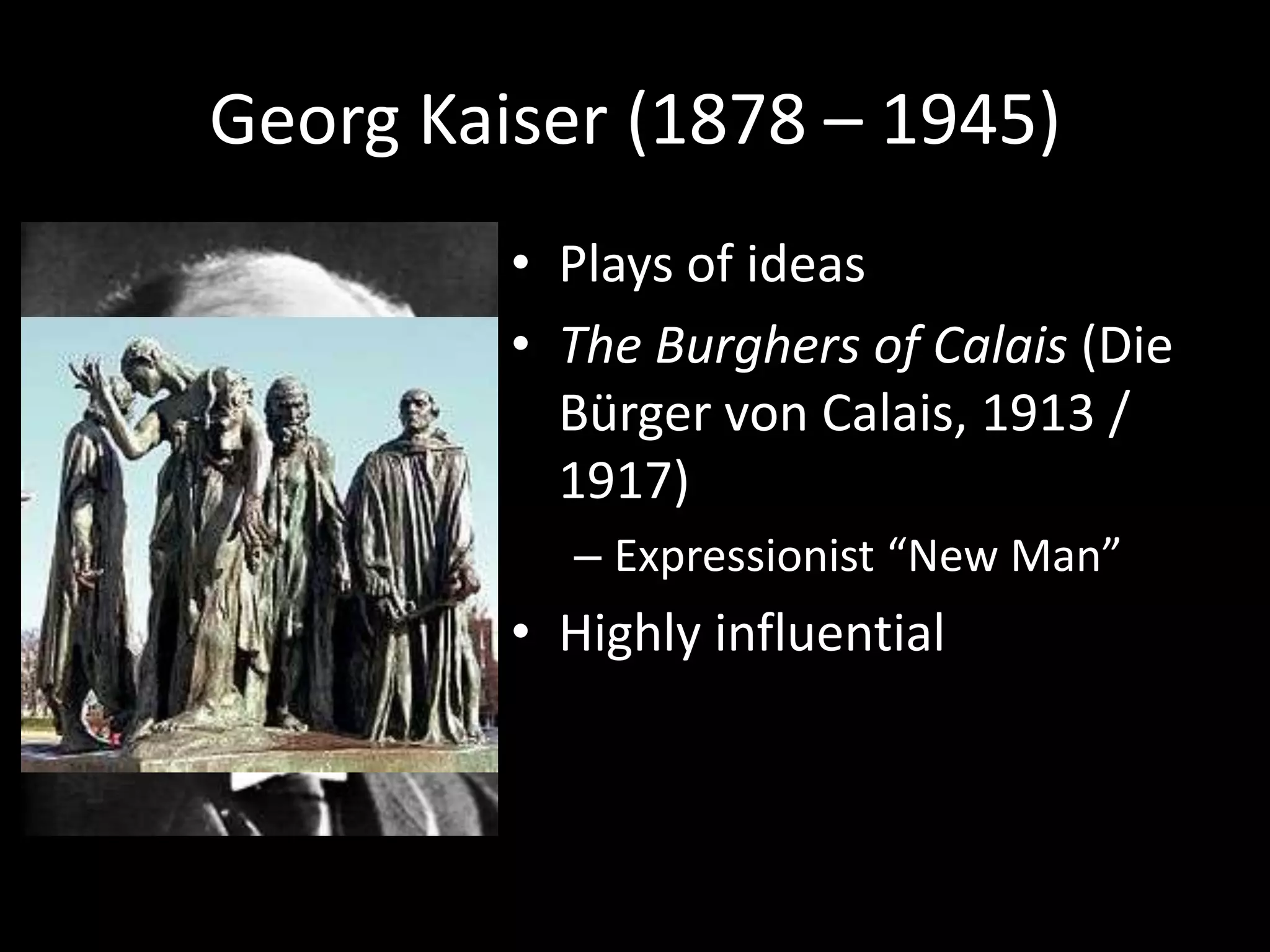
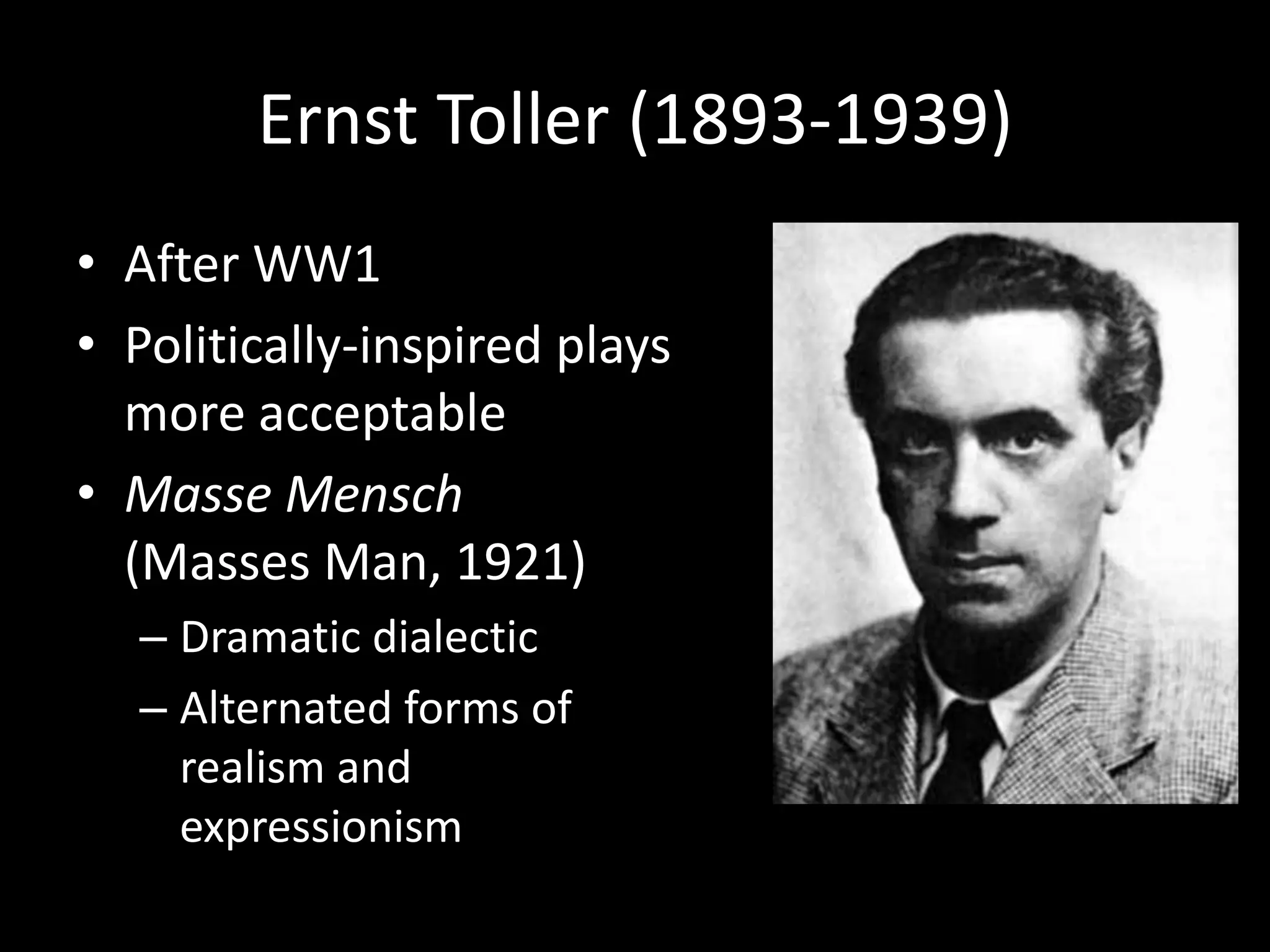
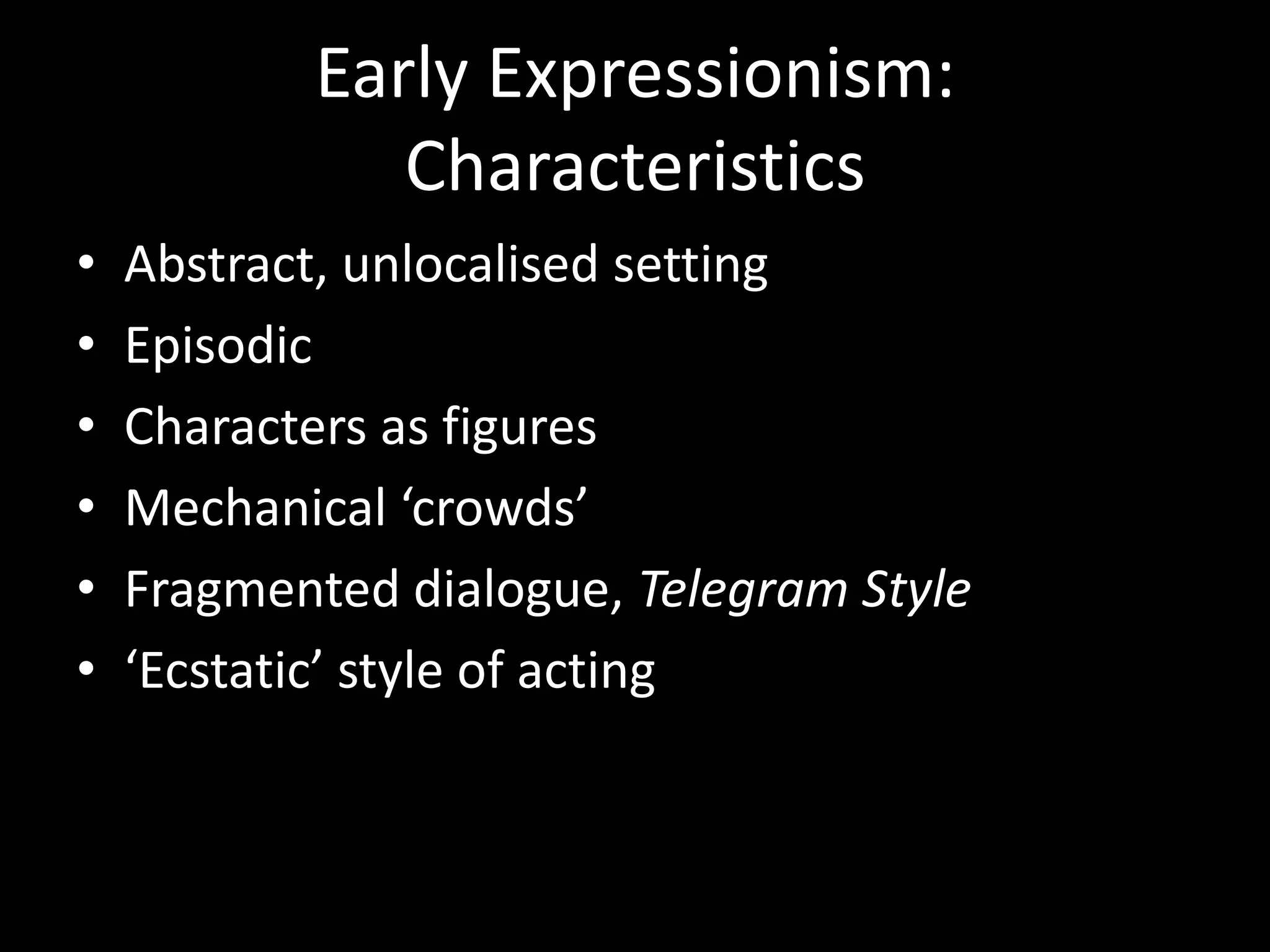
Early Expressionism in German theatre emerged around 1910, influenced by the experimental works of Georg Büchner, Frank Wedekind, and August Strindberg. Büchner introduced new techniques like dialectical presentation in his plays Danton's Death and Woyzeck. Wedekind broke taboos in works like Spring Awakening and Pandora's Box. Strindberg further developed expressionism in plays like A Dream Play, which featured split personalities and characters representing conditions of mankind. Georg Kaiser and Ernst Toller were leading expressionist playwrights in the early 1900s, with works like The Burghers of Calais and Masses Man employing expressionist techniques like abstract settings, episodic structure