HUM 406 – STARTING A BUSINESS
Module 1- Fundamentals of Entrepreneurship
“An individual who bears the risk
of operating a business in the face
of uncertainty about the future
conditions.”
“A person who
organizes, operates,
and assumes the risk
for a business
venture.”
“Someone who exercises
initiative by organizing a venture
to take benefit of an
opportunity and as the decision
maker, decides what, how, and
how much of a good or service
will be produced.”
ILO’S Definition
“Entrepreneurs are those
people who have the ability to
see and evaluate business
opportunities together with the
necessary resources to take
advantage of them and to
initiate appropriate action to
ensure success.”
Why as a subject “Entrepreneurship” is important to CS/IT
students?
• Low Capital Costs
• Faster to Launch
• Lower Business Risk
• Flexibility and Adaptability
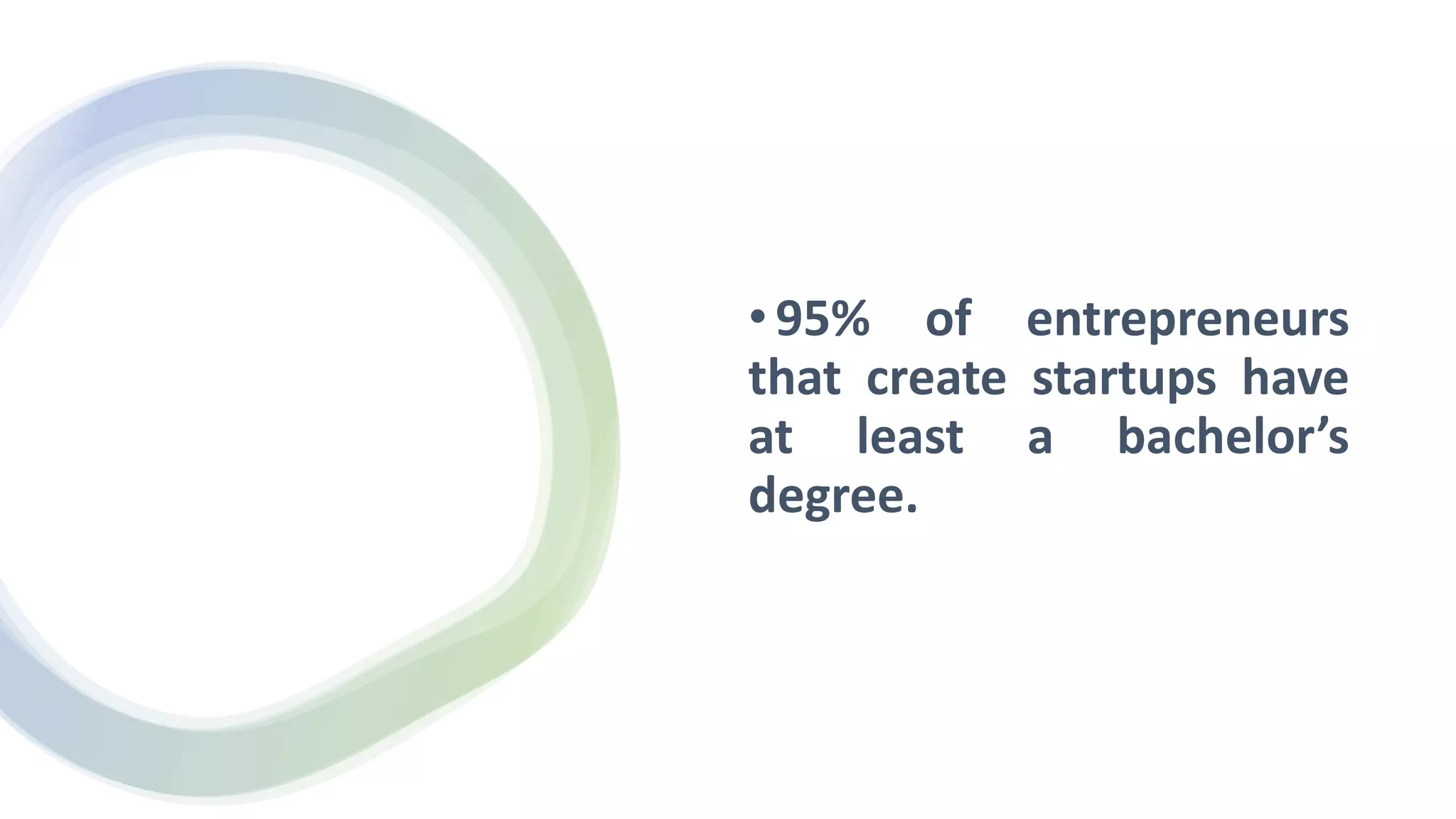
•95% of entrepreneurs
that create startups have
at least a bachelor’s
degree.
• Characteristics of Entrepreneur: -
• Need for achievement
• Desire for Independence or Autonomy
• Desire for Responsibility
• Risk Taking
• Self Confidence
• Characteristics of Entrepreneur: -
• Future Oriented and Optimistic
• Energetic Activity
• Organizing Capacity
• Decision Making
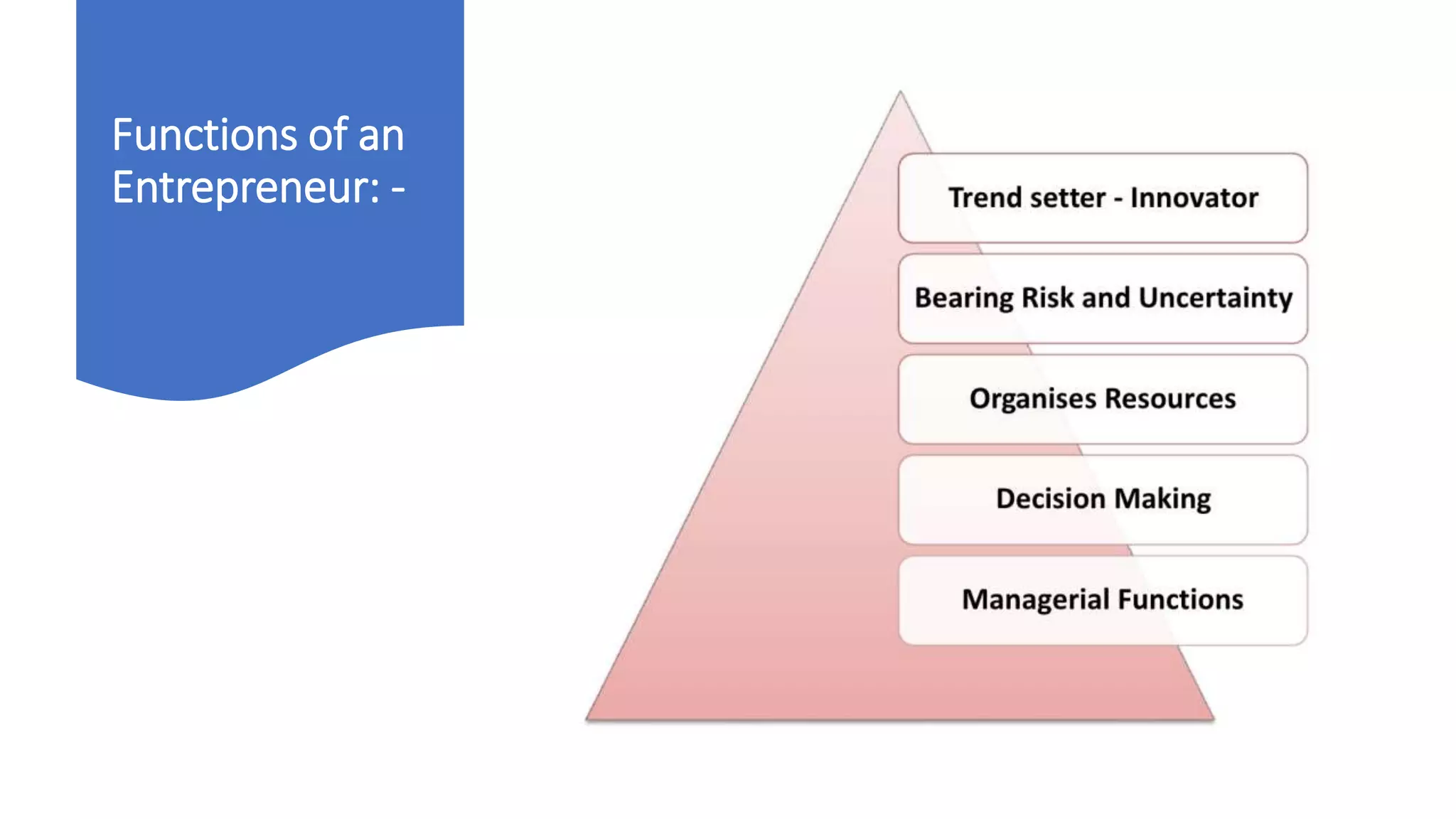
Functions of an
Entrepreneur: -
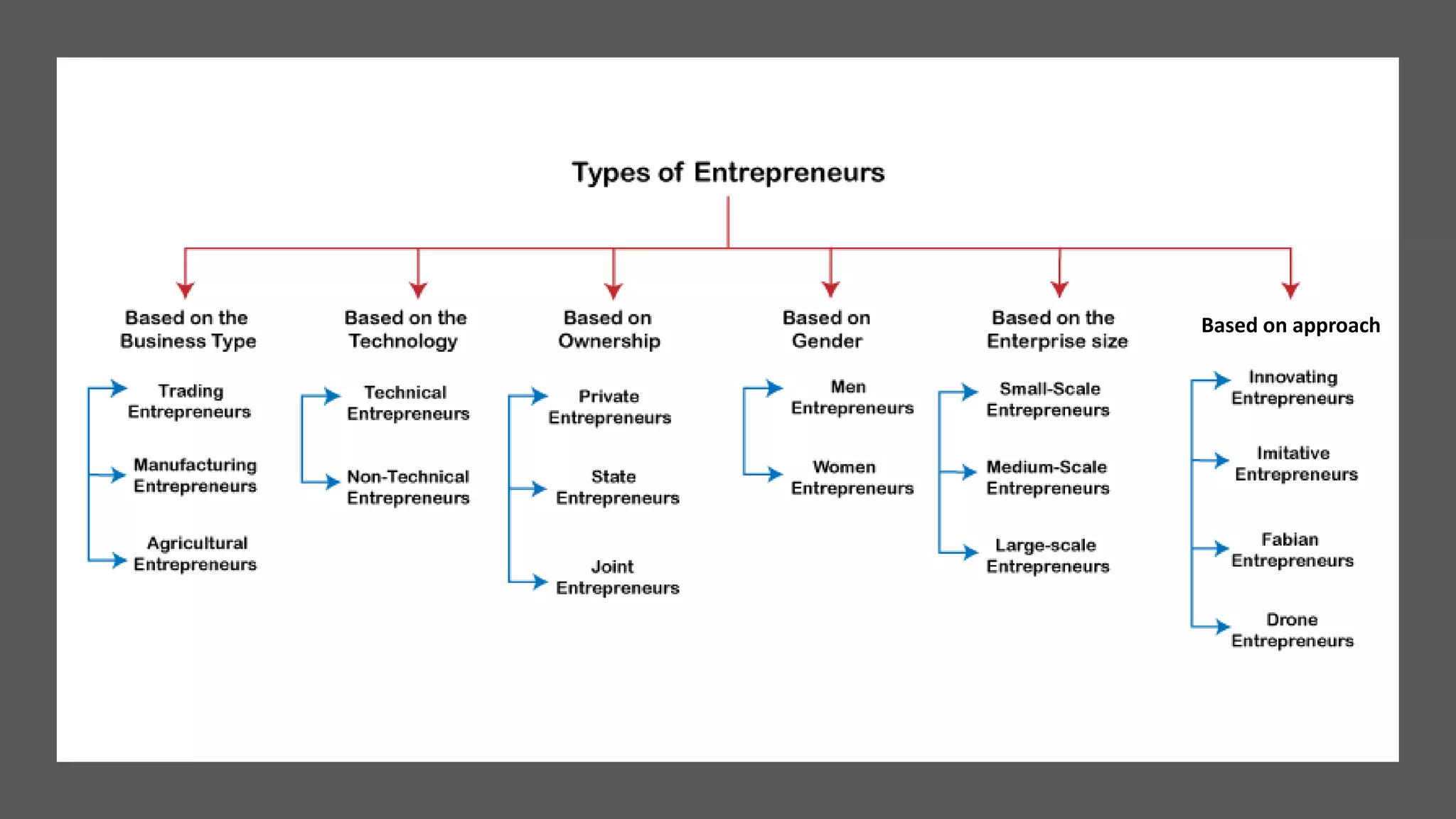
Based on approach
Entrepreneurship
Entrepreneurship is the process
of developing, organizing, and
running a new business to
generate profit while taking on
financial risk.
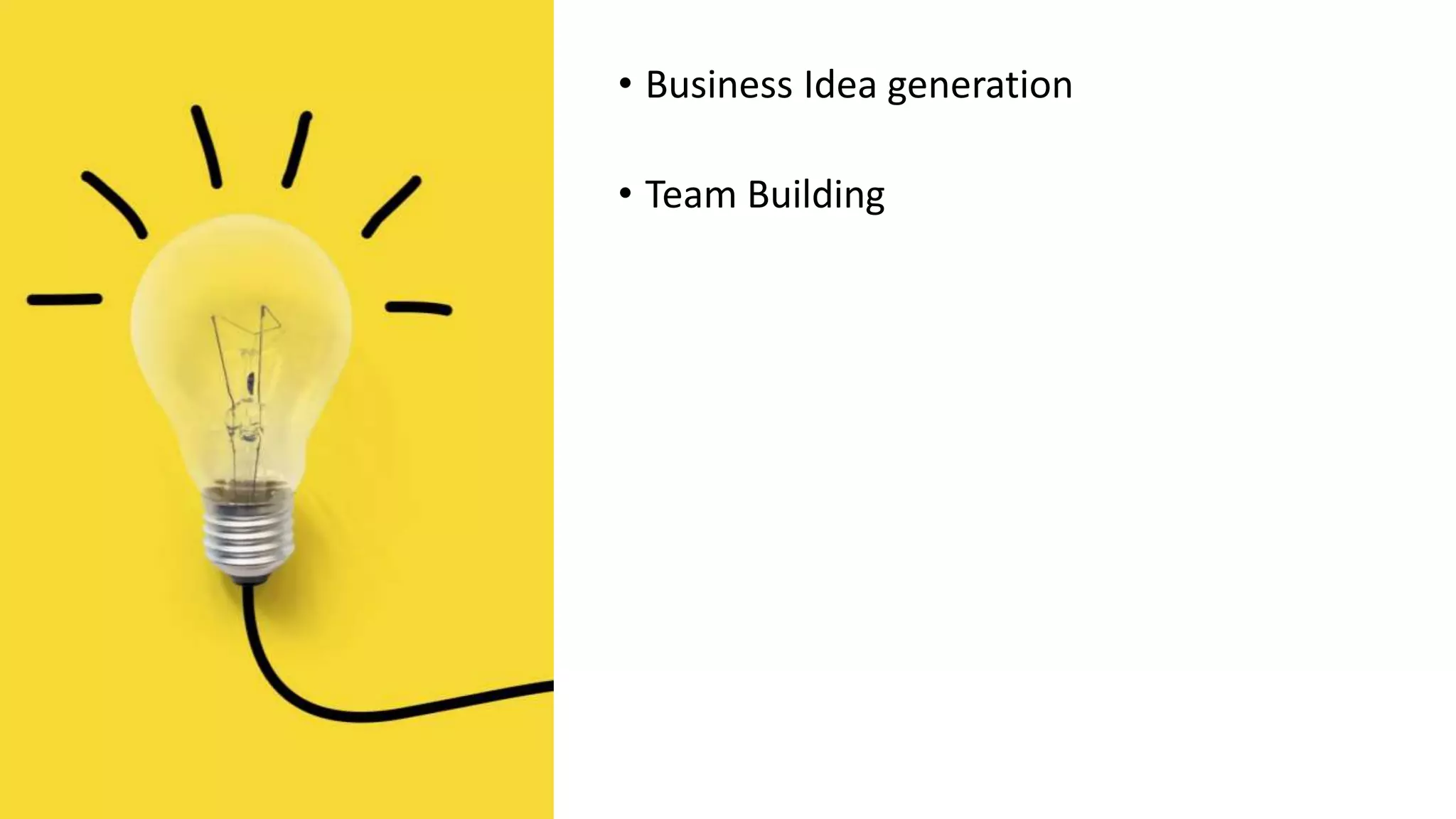
• Business Idea generation
• Team Building
• Business Idea generation
• Team Building
• Business Plan
• Business Idea generation
• Team Building
• Business Plan
• Raising Capital
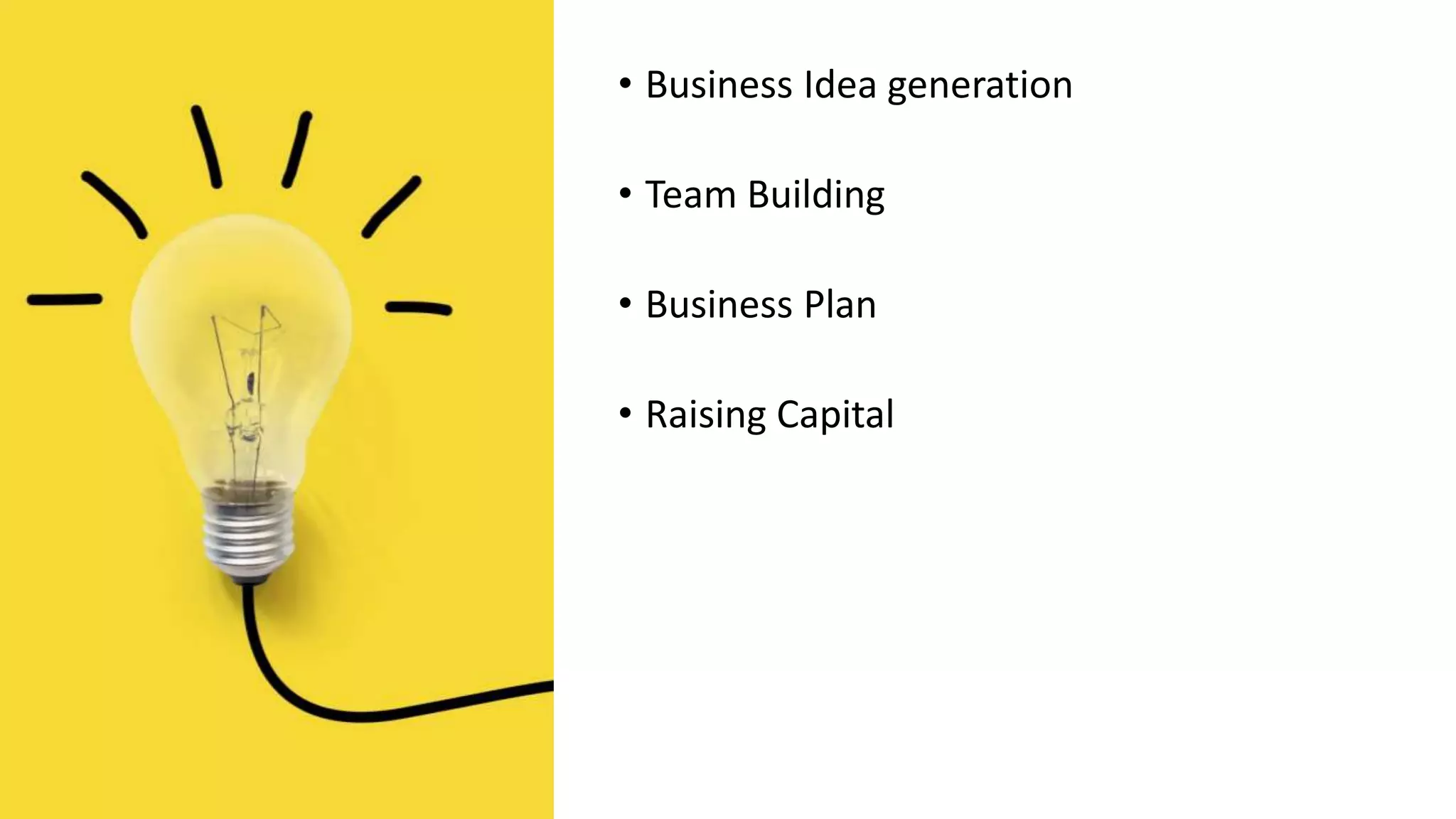
• Business Idea generation
• Team Building
• Business Plan
• Raising Capital
• Launching your Business
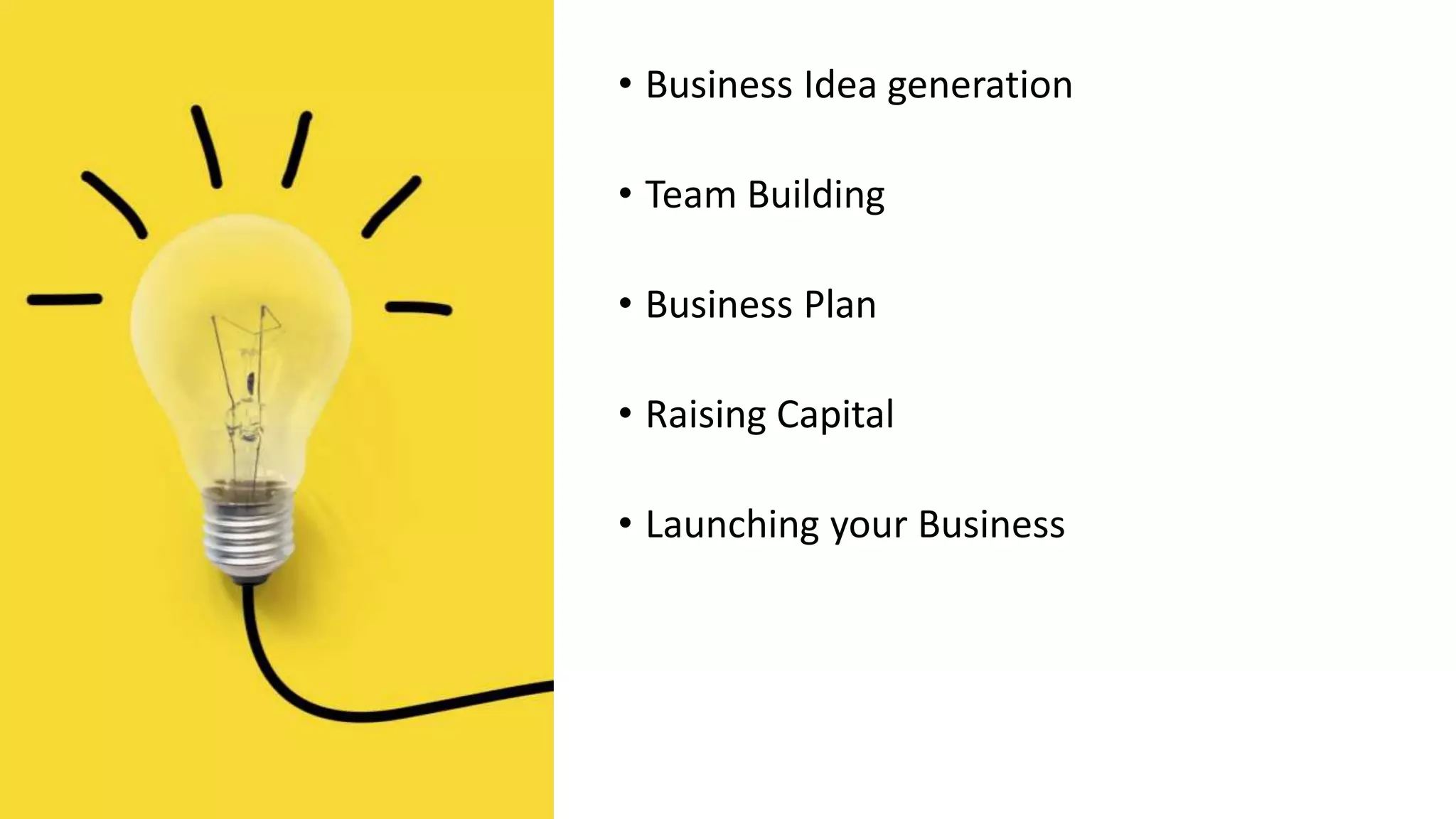
• Business Idea generation
• Team Building
• Business Plan
• Raising Capital
• Launching your Business
• Growing your Business
• Business Idea generation
• Team Building
• Business Plan
• Raising Capital
• Launching your Business
• Growing your Business
• Exit your Business
Product / Business ideas
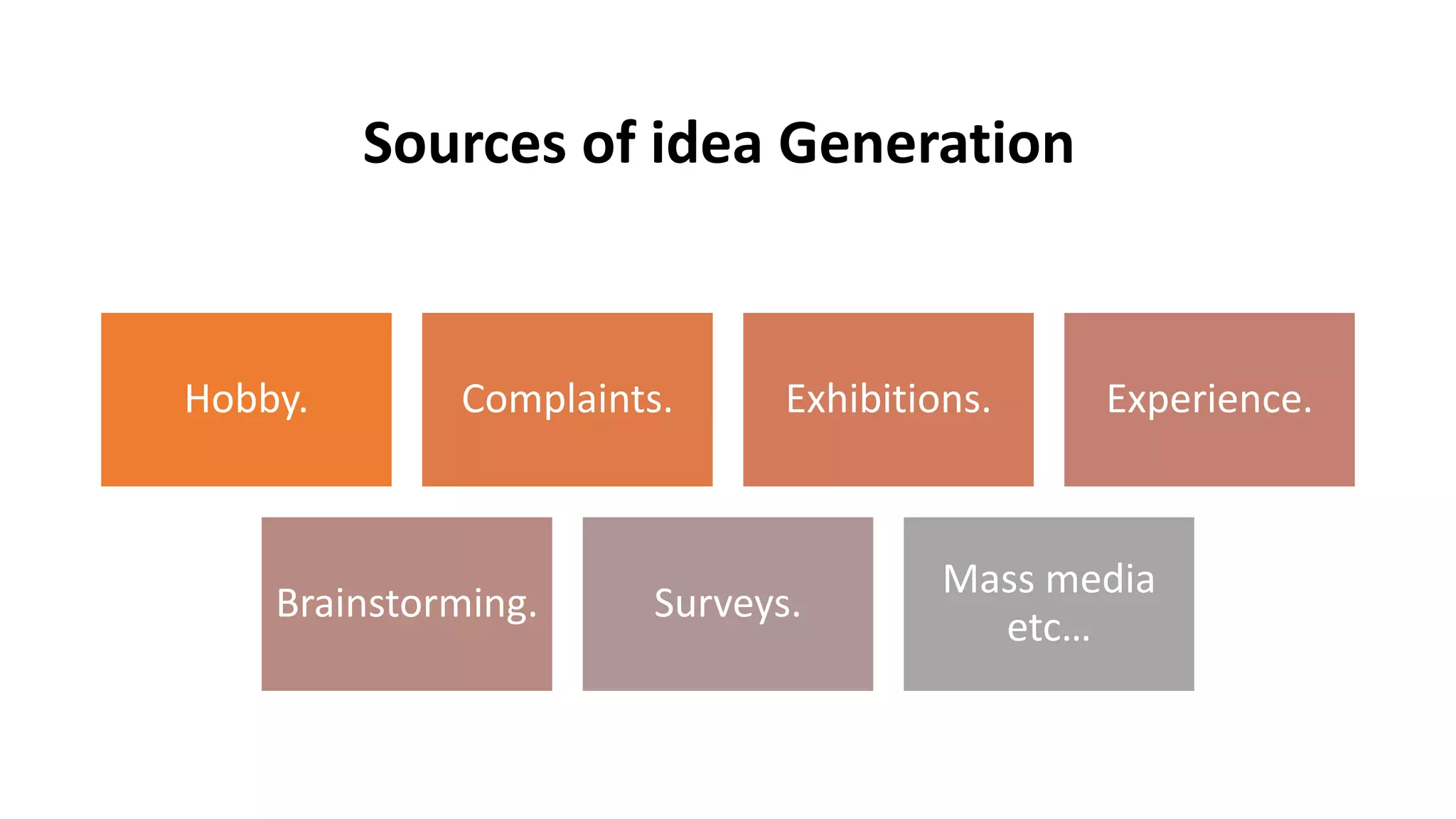
Sources of idea Generation
Hobby. Complaints. Exhibitions. Experience.
Brainstorming. Surveys.
Mass media
etc…
Sources of idea Generation
Potential Market
Types of Potential Markets
Potential markets take one of three forms:
•New products you market to your current customers.
•New products you market to new customers.
•Current products you market to new customers.
Purchase situation
analysis
• When do people buy our
product or service?
• Is it when they need it?
• Where do people make the
purchase?
• How do they pay?
• Direct competitor analysis
• Indirect competitor analysis
• Complementary product and
service analysis
• Diversification analysis
• Foreign market
analysis
• Environmental analysis
• Advantages: -
• Independence
• Life-Style
• Financial Rewards
• Learning Opportunities
• Creative Freedom and Personal Satisfaction
• Limitations: -
• Financial risk
• Stress.
• Time commitment.
• Undesirable duties
Fundamentals of Entrepreneurship

Fundamentals of Entrepreneurship